半导体行业观察

Search documents
谷歌TPU,卖爆了
半导体行业观察· 2025-12-16 01:22
Core Insights - Google is significantly increasing its orders for Tensor Processing Units (TPUs) from MediaTek, with the order volume exceeding initial plans by multiple times [2] - MediaTek's first TPU, the v7e, is set to enter risk trial production by the end of next season, and it has also secured orders for the next-generation TPU, v8e [2][3] - The collaboration with TSMC is expected to boost MediaTek's production capacity for Google projects, with a projected sevenfold increase in CoWoS capacity by 2027 [2][3] Group 1 - The demand for Google TPUs is driven by strong client needs, leading to an increase in CoWoS capacity from 10,000 to 20,000 units annually for the v7e project [3] - MediaTek's ASIC business is anticipated to contribute significantly to its revenue, with estimates suggesting that the v7e could add over two times its equity in profits by 2027 [2][3] - MediaTek's CEO expressed confidence in the growth of ASIC revenue, targeting $1 billion in cloud-related ASIC revenue by 2026 and potentially reaching several billion by 2027 [4] Group 2 - Meta is exploring a partnership with Google to utilize TPUs for its AI projects, which could challenge NVIDIA's market dominance [6][7] - If successful, Meta plans to start renting TPUs from Google Cloud in 2026 and deploy them in its data centers by 2027, marking a significant shift in its AI infrastructure [6][7] - The potential collaboration has led to a drop in NVIDIA's stock price, reflecting investor concerns about Meta's future chip orders [7] Group 3 - Analysts predict that Google plans to double its TPU production by 2028, with TSMC expected to produce 3.2 million TPUs in 2024, increasing to 5 million by 2027 and 7 million by 2028 [10] - Morgan Stanley estimates that Google could generate up to $13 billion in revenue for every 500,000 TPUs sold to external clients [9] - Google's vertical integration strategy aims to enhance its technological advantages and profitability by developing its AI hardware and software [8][11]




激光雷达公司宣布破产,股价暴跌60%
半导体行业观察· 2025-12-16 01:22
Core Viewpoint - Luminar Technologies has filed for Chapter 11 bankruptcy protection, planning to sell its assets, which has led to a 58% drop in its stock price [2][4]. Group 1: Bankruptcy Filing and Financial Situation - Luminar entered bankruptcy with the support of approximately 91.3% of first lien noteholders and 85.9% of second lien noteholders, citing "traditional debt obligations and industry adoption pace" as challenges to its sustainable operations [2]. - The company claims its assets are valued between $100 million and $500 million, while its liabilities range from $500 million to $1 billion, including $10 million owed to Scale AI and over $1 million to Applied Intuition [7]. Group 2: Asset Sale and Operational Continuity - As part of the restructuring, Luminar has agreed to sell its subsidiary Luminar Semiconductors Inc. for $110 million in cash to Quantum Computing Inc., which saw a 6.8% drop in its stock price following the announcement [2]. - Luminar plans to continue operations during the bankruptcy process, maintaining deliveries of its lidar hardware and software to customers [4]. Group 3: Leadership and Strategic Decisions - CEO Paul Ricci stated that the board determined a court-supervised sale process is the best path forward after a comprehensive review of various options [5]. - The company has hired Weil, Gotshal & Manges LLP as legal counsel, Jefferies LLC as investment banking advisor, and Portage Point Partners as restructuring advisor to assist during the bankruptcy [3]. Group 4: Challenges and Market Position - Luminar has faced significant challenges, including layoffs, executive departures, and a legal dispute with its largest customer, Volvo, which canceled a five-year contract [6][7]. - The company has undergone a 25% workforce reduction, marking its second round of layoffs this year, and has been involved in multiple legal disputes, including a lawsuit against Volvo [6].

英特尔的ASIC雄心
半导体行业观察· 2025-12-15 01:33
Core Viewpoint - Intel's AI strategy is shifting focus towards ASIC and edge AI, aiming to regain competitiveness in the AI sector where it lags behind Nvidia and AMD [2][6]. Group 1: AI Strategy and Market Position - Intel has historically dominated general computing and server-level computing but has struggled in the AI domain, as acknowledged by former CEO Pat Gelsinger [2]. - The company is working on a power-optimized GPU for inference as part of its edge AI strategy, with products like Meteor Lake, Lunar Lake, and the upcoming Panther Lake series [2]. - Intel plans to expand its edge product line with Crescent Island, a processor focused on inference, featuring LPDDR5X memory [2]. Group 2: ASIC Business Development - Intel has established a dedicated ASIC department under Srini Iyengar, aiming to provide customized chips for specific workloads, similar to Google's TPU and Amazon's Trainium [3][5]. - The ASIC business is expected to play a crucial role in Intel's operations, potentially opening new revenue streams and addressing past missteps in the AI market [5][6]. - The company aims to offer a "one-stop" solution for customers seeking custom AI chips, leveraging its chip technology expertise and internal foundry services [6]. Group 3: Competitive Landscape and Future Prospects - Intel's ASIC business is positioned to compete with companies like Broadcom and Marvell, focusing on custom network ASIC chips for network-intensive workloads [4][6]. - The centralized engineering group (CEG) is expected to reduce costs by integrating design services with manufacturing and packaging [6]. - If executed effectively, the custom chip business could become a significant revenue source for Intel, enhancing its position in the AI supply chain [7].

美国半导体版图,太强了
半导体行业观察· 2025-12-15 01:33
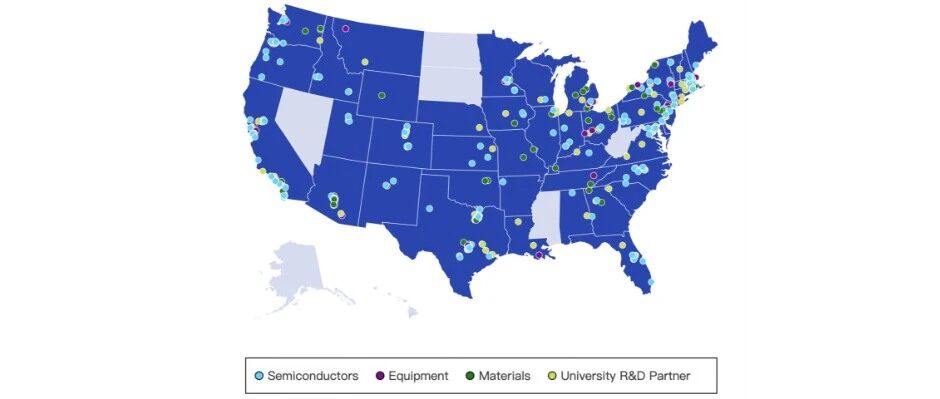
Core Insights - The article discusses the significant restructuring of the semiconductor industry in the United States over the past three years, driven by initiatives like the CHIPS Act and state-level competition to attract wafer fabs and R&D centers [2][11]. Group 1: California Semiconductor Ecosystem - California is home to the largest integrated cluster of design, software, IP, and equipment, primarily located in the San Jose-Santa Clara-San Diego corridor, which focuses on GPU, AI, mobile communications, and server SoCs [5][9]. - Major companies in California include NVIDIA, AMD, Broadcom, Qualcomm, and many others, making it a vital hub for chip innovation [9]. - California also leads in semiconductor equipment and materials, with companies like ASML, Lam Research, and Applied Materials contributing to a comprehensive advanced manufacturing ecosystem [10]. Group 2: Arizona as a New Wafer Manufacturing Center - Arizona has become a focal point for wafer manufacturing, with TSMC and Intel establishing significant operations, supported by favorable environmental policies and infrastructure [11][13]. - The state boasts a complete semiconductor ecosystem, including advanced processes, OSAT capabilities, and a robust materials supply chain [14]. - Arizona is positioned to become a major player in U.S. wafer manufacturing, akin to Taiwan's Hsinchu Science Park, aiming to mitigate geopolitical risks in global supply chains [14]. Group 3: Texas as a Center for IDM and Automotive Electronics - Texas is recognized as the largest center for Integrated Device Manufacturers (IDM), microcontroller units (MCU), and automotive electronics in the U.S. [15]. - Key players include Texas Instruments, Samsung, and NXP, with a strong focus on automotive and power semiconductor applications [17]. - The state is evolving into a new growth hub for semiconductors, driven by the convergence of automotive, power, and AI technologies [18]. Group 4: Northeast Research Corridor - The Northeast region, encompassing New York, Massachusetts, and New Jersey, is a leading area for semiconductor research, hosting prestigious institutions like MIT and Harvard [19][20]. - Companies such as IBM and GlobalFoundries are pivotal in advancing semiconductor technology and manufacturing capabilities in this corridor [20]. - The region's ecosystem is further strengthened by a network of universities and research institutions, fostering innovation in materials, EDA, and photonics [24][27].


博通CEO:硅光是必经之路,但还要时间
半导体行业观察· 2025-12-15 01:33
Core Viewpoint - Broadcom's CEO Hock Tan indicated that silicon photonics technology will not have an immediate impact on data centers, suggesting that the transition to this technology will take time and require two waves of innovation before it becomes essential [2]. Group 1: Silicon Photonics Technology - The CEO believes that the adoption of silicon photonics technology will occur in the future, but it is not imminent. The first wave involves expanding copper interconnect technology for rack-level systems, followed by a second wave of pluggable optical devices that combine electronic and photonic components [2]. - Tan emphasized that the transition to silicon photonics is inevitable but will require time, stating that Broadcom is preparing for this shift through necessary R&D efforts [2]. Group 2: AI Hardware Demand - Broadcom is currently focused on producing AI hardware to fulfill a backlog of orders valued at $73 billion, with over $50 billion coming from large-scale customers ordering custom AI accelerators, referred to as "XPUs" [3]. - The CEO expressed confidence in the sustained demand for AI hardware, countering claims of a cooling market, and highlighted a recent $1 billion XPU order from a new customer and an additional $11 billion order from Anthropic [3]. Group 3: Financial Performance - In the fourth quarter, Broadcom's semiconductor business revenue reached $11 billion, a 35% year-over-year increase, with $6.7 billion attributed to AI products, marking a tenfold growth in AI hardware revenue in less than three years [4]. - The company's infrastructure software business generated $6.9 billion in revenue, up 19% year-over-year, primarily driven by VMware software sales, which are expected to maintain low double-digit growth until 2026 [4]. - The CEO projected that the semiconductor business will continue to drive rapid growth, with first-quarter revenue expectations for fiscal year 2026 set at $19.1 billion, reflecting a 28% increase [4]. Group 4: Stock Market Reaction - Following the earnings announcement, Broadcom's stock price initially rose by approximately 3% but quickly fell by 5% [5].
巨头们的MEMS创新
半导体行业观察· 2025-12-15 01:33
Group 1 - The MEMS device market is projected to reach 35 billion units and generate revenue of 19.2 billion USD by 2030, with a CAGR of 3.7% from 2024 to 2030 [2] - The MEMS industry continues to innovate despite its maturity, showcasing advancements in microphone architecture, next-generation timing devices, and high-performance automotive sensors [4] - A new sealed dual-membrane XSENSIVE™ microphone design developed by Infineon and used in GoerTek products enhances noise-canceling audio capture with a signal-to-noise ratio of 68-75 dB(A) [7] Group 2 - The new MEMS microphone for Apple products, starting with the iPhone 16, has a chip area reduced by 27% from 2.89 mm² to 2.10 mm², featuring larger vent holes and improved structural design [7] - SiTime's Symphonic™ SiT30100 clock generator, based on MEMS resonators, replaces traditional quartz technology in Apple devices, achieving higher integration density with a chip area of only 2.22 mm² [8] - Melexis Technologies NV introduced a MEMS absolute pressure sensor designed for automotive applications, featuring a compact size of 10.4 mm × 10.3 mm × 2.3 mm and enhanced measurement accuracy through a specialized design [11][15] Group 3 - The MEMS industry is experiencing a wave of innovation, with new architectures, materials, and smarter integrations that are just the beginning of broader transformations [15] - MEMS devices are expanding into emerging fields such as artificial intelligence, data centers, robotics, and advanced mobile technologies, playing a crucial role in shaping future technologies [15]

韩国芯片,卖疯了
半导体行业观察· 2025-12-15 01:33
Core Insights - South Korea's export growth is increasingly reliant on the semiconductor industry, leading to a polarized export structure despite an overall increase in export value [2][3] - The semiconductor sector is experiencing a historic boom driven by the rise of artificial intelligence (AI), with chip exports reaching a record $152.6 billion, accounting for 28.3% of total exports [3][5] - There are concerns about the sustainability of this semiconductor boom, as any downturn in the market could significantly impact South Korea's economic stability [3][4] Export Performance - In the first 11 months of the year, South Korea's total exports reached $640.2 billion, a 2.9% year-on-year increase, with only 5 out of 15 flagship export items showing growth [2] - The semiconductor, shipbuilding, and biopharmaceutical sectors saw significant growth rates of 19.8%, 28.6%, and 7% respectively, while other sectors like automotive and computing showed minimal growth [2] - A stark decline was observed in 10 other sectors, with machinery down 8.9%, petroleum products down 11.1%, and petrochemicals down 11.7% [2] Semiconductor Industry Outlook - The semiconductor industry is expected to continue expanding, particularly in high-value products like high-bandwidth memory (HBM), but overall export growth is projected to slow from 16.6% this year to 4.7% next year [4] - Analysts have raised profit expectations for major semiconductor companies, with Samsung Electronics and SK Hynix's combined operating profit forecast to approach 200 trillion won [5][6] - The memory semiconductor market is facing a severe supply shortage due to rapidly growing demand, particularly from cloud service providers investing in AI data centers [5] Competitive Landscape - Samsung Electronics is positioned to benefit from its leading DRAM production capacity, while SK Hynix is expected to see significant profit improvements despite facing stricter capacity expansion limitations [6] - The demand for high-bandwidth memory is anticipated to surge as major tech companies develop custom AI chips, further driving growth in the semiconductor sector [6][8]
DRAM严重短缺:苹果告急,戴尔大幅涨价
半导体行业观察· 2025-12-15 01:33
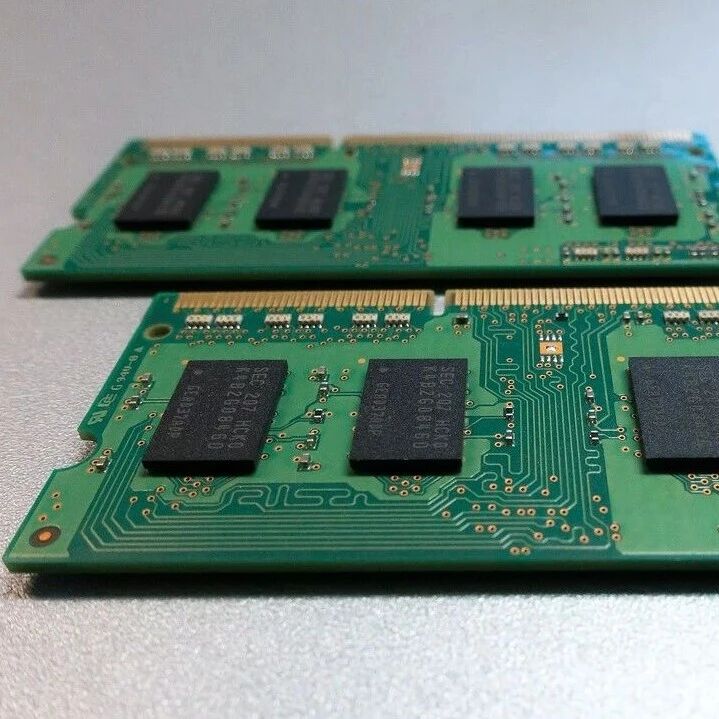
Group 1 - The DRAM supply shortage is expected to persist until 2028, with limited growth in commodity DRAM due to a shift in focus by major manufacturers towards AI server demands [2][6] - Existing suppliers' inventories have reached historical lows, exacerbating allocation pressures, and manufacturers are adopting conservative capacity expansion strategies [6] - The demand for server DRAM is projected to grow exponentially, with server share expected to rise from 38% in 2025 to 53% by 2030, driven by AI developments [6] Group 2 - Apple is facing significant cost increases for DRAM chips as its long-term agreement with Korean manufacturers is set to expire, potentially leading to higher product prices [8][9] - Dell has announced substantial price increases for various products due to the DRAM shortage, with expected hikes of hundreds of dollars for laptops and PCs [11][12] - The semiconductor market is entering a super cycle, with unprecedented supply shortages anticipated, particularly for server memory and high-bandwidth memory (HBM) [14][15]

高通收购Arduino,引发争议
半导体行业观察· 2025-12-15 01:33
Core Viewpoint - The acquisition of Arduino by Qualcomm has sparked discussions in the open-source hardware community regarding new terms and conditions that may threaten the principles of openness and user rights [2][3]. Group 1: New Terms and Conditions - Adafruit, a competitor, claims that Arduino's new terms restrict reverse engineering of cloud tools and impose permanent licensing on user-uploaded content, raising concerns about user rights [2][3]. - Arduino defends these changes, stating that the restrictions apply only to its SaaS cloud applications and that its commitment to open-source hardware remains unchanged [2][3]. Group 2: Reverse Engineering and User Rights - EFF's Mitch Stoltz confirms that Arduino has not imposed new bans on modifying or reverse engineering Arduino boards, countering some of the criticisms [4]. - Adafruit's founder, Limor Fried, argues that the cloud tools are central to the Arduino experience, and the restrictions on SaaS affect many new users [5][6]. - Arduino clarifies that users retain ownership of their uploaded content, but the new terms remove the ability to revoke licenses, which Stoltz finds disappointing [7][8]. Group 3: User Data and Privacy - Arduino states that users can request account and content deletion, and usernames will be anonymized after five years of inactivity [9]. - Adafruit expresses concern that retaining usernames instead of deleting them treats community identity and data as managed assets rather than user-controlled [9]. Group 4: AI Features and Monitoring - Arduino's new terms include monitoring user accounts and AI product usage to ensure compliance with laws and policies, which Adafruit criticizes as overly broad [10][11]. - Fried emphasizes that true open-source licenses should not impose restrictions on usage areas, arguing that such limitations contradict the essence of open-source [11]. Group 5: Future Directions - Arduino expresses a commitment to transparency and open dialogue with the community, while Adafruit plans to continue developing open-source hardware and software [12][13].


三星晶圆代工市占,跌破7%
半导体行业观察· 2025-12-15 01:33
Core Viewpoint - TrendForce's latest survey indicates that TSMC's market share surged to 71% in Q3, solidifying its position as the global leader in foundry services, while Samsung's market share decreased by 0.5 percentage points to 6.8%, widening the gap between the two companies [2][3]. Group 1: Samsung's Strategy and Partnerships - Samsung is in discussions with AMD for 2nm foundry orders, aiming to catch up with TSMC, which has been the preferred choice for major clients like Apple and Tesla [2][3]. - The collaboration with AMD includes the production of next-generation CPUs, potentially the EPYC Venice CPU, using Samsung's second-generation 2nm process [2][3]. - Samsung's foundry division is expected to finalize contracts with AMD around January, with a high likelihood of mass production [3]. Group 2: Financial Goals and Performance - Samsung has set a target to achieve profitability in its semiconductor foundry business by 2027, focusing on securing orders from major tech companies [5][6]. - The foundry division has been operating at a loss since 2022, with estimated quarterly losses ranging from 1 trillion to 2 trillion KRW [6]. - Samsung aims to capture a 20% market share by 2027, based on sales, as part of its long-term business plan [5]. Group 3: Operational Improvements and Future Prospects - Samsung's foundry business has seen a rebound in performance due to securing contracts from Tesla and Apple, with Q3 losses dropping below 1 trillion KRW [6]. - The company is also enhancing production capacity at its Austin facility, which utilizes mature processes and has recently gained new clients [6]. - Samsung plans to maximize profits at its upcoming Taylor factory in the U.S. by starting production in 2024, with equipment installation expected to be completed by Q2 [7].