半导体行业观察

Search documents
初创公司,要颠覆芯片设计
半导体行业观察· 2025-12-03 00:44
Core Insights - Ricursive Intelligence aims to revolutionize the $800 billion chip industry by developing software that automates the design of advanced chips, allowing companies to create custom chips from scratch [1][2] - The company has raised $35 million in funding and is valued at $750 million, with plans to launch its first product next year [1][2] - The founders believe that custom silicon chips will proliferate, significantly reducing the time required for chip design from years to weeks or days [2][3] Funding and Valuation - Ricursive Intelligence has secured $35 million in seed funding from investors including Sequoia Capital and Striker Venture Partners [1][3] - The current valuation of the company stands at $750 million [1] Technology and Innovation - The core innovation of Ricursive Intelligence lies in applying "recursive intelligence" to semiconductor design, enabling self-improvement and optimization of chip architecture [4][5] - This approach aims to break down complex design problems into manageable sub-problems, enhancing efficiency and innovation over time [5][10] - The goal is to achieve advanced process nodes like 2nm, significantly improving energy efficiency and performance [5][10] Market Impact - The establishment of Ricursive Intelligence's Frontier AI Lab signifies a major step in merging AI technology with semiconductor design, potentially accelerating the development of artificial superintelligence (ASI) [3][9] - If successful, Ricursive Intelligence could become a key player in the AI hardware space, posing competitive pressure on established companies like NVIDIA, Intel, and AMD [7][8] Future Prospects - Experts predict that Ricursive Intelligence will initially focus on demonstrating the advantages of recursive AI in specific semiconductor design tasks [10] - The long-term potential applications of recursive AI include creating highly specialized AI accelerators for various fields such as drug discovery and climate modeling [10][11] - The company is positioned at the intersection of AI development and hardware manufacturing, which could fundamentally change how AI systems are designed and built [11]


一颗AI CIS所引发的影像革命
半导体行业观察· 2025-12-03 00:44
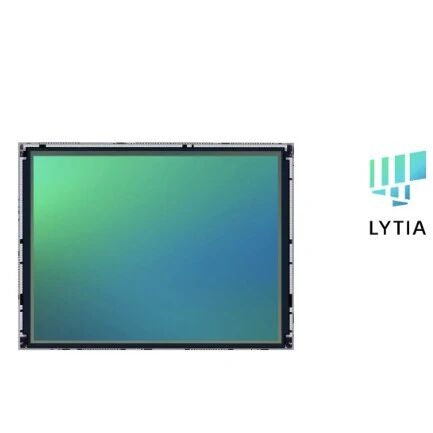
Core Viewpoint - Sony Semiconductor Solutions announced the launch of the LYTIA 901, a 1/1.12-inch, approximately 200 million pixel CMOS sensor that integrates AI inference circuits, marking a significant advancement in mobile imaging technology [1][6]. Group 1: Historical Context of Imaging Technology - The evolution of smartphone imaging has been a continuous battle against physical limitations, transitioning from hardware improvements to algorithmic enhancements [3][4]. - The optical era (2010-2016) focused on hardware upgrades, while the computational photography era (2017-2023) emphasized algorithms to enhance image quality [4][5]. - The structural stacking era (2021-2024) introduced multi-camera systems to overcome physical focal length limitations, but faced challenges such as increased camera module size and complexity in algorithm development [5]. Group 2: The Shift to AI Integration - The introduction of AI into sensors represents a major turning point in imaging technology, allowing for real-time understanding and reconstruction of images during capture [6][7]. - The LYTIA 901's breakthrough lies in integrating AI directly into the sensor, enabling high-resolution imaging and improved low-light performance through advanced processing techniques [9][11]. - This integration allows for significant reductions in latency and power consumption, as AI processing occurs at the sensor level rather than relying on external processing units [12]. Group 3: Industry Implications - The LYTIA 901 could disrupt the reliance on multi-camera systems, suggesting a potential shift towards fewer cameras with enhanced capabilities through AI [14][17]. - The value of primary camera modules may increase, while secondary modules could see diminished importance, impacting various segments of the supply chain [14]. - The power dynamics in imaging technology may shift from smartphone manufacturers to sensor manufacturers, as AI capabilities become a native function of the hardware [17]. Group 4: Conclusion - The LYTIA 901 signifies a transition from a "pixel race" to "AI-native imaging," fundamentally altering the engineering paradigm of mobile imaging systems [19].

AWS发布3nm芯片: 144 GB HBM3e,4.9 TB/s带宽
半导体行业观察· 2025-12-03 00:44
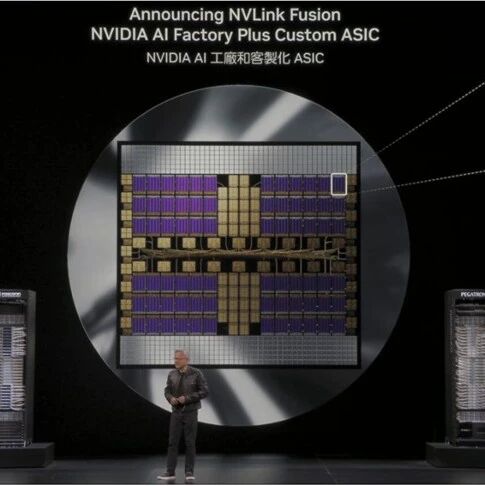
Core Insights - AWS has officially launched its next-generation Trainium AI accelerator, Trainium3, at the AWS re:Invent conference, marking a significant advancement in AI computing capabilities [1][2] - The Trainium3 chip, manufactured using TSMC's 3nm process, offers 2.52 PFLOPs of FP8 computing power and integrates 144 GB of HBM3e memory, providing 4.9 TB/s memory bandwidth [1][2] - AWS claims that Trainium3's architecture improvements are designed to better handle modern AI workloads, including support for various floating-point formats and enhanced hardware support for structured sparsity and collective communication [1][2] Chip Features - Trainium3 introduces NeuronSwitch-v1, a new fully connected architecture that allows for the connection of up to 144 chips within a single UltraServer, doubling the inter-chip bandwidth compared to the previous generation [3] - The upgraded Neuron Fabric reduces inter-chip communication latency to just below 10 microseconds, facilitating large-scale distributed training jobs across thousands of Trainium chips [3] System-Level Enhancements - A fully configured Trainium3 UltraServer can connect 144 chips, aggregating 362 FP8 PFLOPs of computing power, 20.7 TB of HBM3e memory, and 706 TB/s memory bandwidth, resulting in up to 4.4 times the computing performance and 4 times the energy efficiency compared to the previous generation [2][4] - Internal tests on OpenAI's GPT-OSS model showed that Trainium3 achieved a threefold increase in throughput per chip and a fourfold improvement in inference response time compared to the previous UltraServer [4] Cost Efficiency and Adoption - Customers have reported up to a 50% reduction in training costs when using Trainium3 compared to alternative solutions, with early adopters exploring new applications such as real-time video generation [5] - AWS has already deployed Amazon Bedrock on Trainium3, indicating readiness for enterprise-level applications [5] Future Developments - AWS is developing Trainium4, which aims to significantly enhance computing, memory, and interconnect performance, targeting at least 6 times the FP4 throughput and 3 times the FP8 performance [5][6] - Trainium4 will integrate NVIDIA's NVLink Fusion interconnect technology, allowing for interoperability with other AWS systems and creating a flexible rack-level design [6][7] Strategic Partnerships - AWS and NVIDIA have announced a multi-generational partnership to integrate NVLink Fusion technology into future AWS AI rack and chip designs, which is a significant move for both companies [7][8] - This collaboration allows AWS to utilize NVIDIA's NVLink architecture, enhancing its custom chip projects and potentially impacting the competitive landscape in AI infrastructure [10]


芯片行业被看好,营收同比大增
半导体行业观察· 2025-12-03 00:44
Group 1 - The global semiconductor market value is revised upwards to $772 billion for this year, marking a 22% year-on-year increase, with expectations for further growth of over 25% next year, reaching $975 billion [1][2] - The growth is primarily driven by major players in the foundry sector such as TSMC, along with memory manufacturers like Samsung, SK Hynix, and Micron [1] - Strong growth in logic and memory segments is anticipated, with logic IC revenue expected to grow by 37.1%, making it the fastest-growing product category [1] Group 2 - The global semiconductor equipment shipment value increased by 11% year-on-year, reaching $33.66 billion in Q3 2025, with a 2% quarter-on-quarter growth [4][7] - The growth in equipment revenue is attributed to strong investments in advanced technologies, particularly in AI computing, logic chips, DRAM, and packaging solutions [4] - Significant growth in equipment shipments to China has further propelled overall growth momentum in the semiconductor industry [4] Group 3 - Regional data for Q3 2025 shows that China leads with a 28% quarter-on-quarter increase and a 13% year-on-year increase in semiconductor revenue [7] - Taiwan experienced a 6% quarter-on-quarter decline but a substantial 75% year-on-year increase, while North America saw a significant 24% quarter-on-quarter decline and a 52% year-on-year decrease [7] - Overall, the total semiconductor revenue for Q3 2025 reflects an 11% year-on-year growth, indicating a robust recovery in the market [7]

硅片国产化浪潮,提速!
半导体行业观察· 2025-12-03 00:44
Core Viewpoint - The semiconductor industry is a critical battleground in global technology competition, with silicon wafers being the essential raw material for chip manufacturing, directly impacting yield and reliability [1][2]. Group 1: Market Dynamics - The large-size silicon wafer market is dominated by international giants such as Shin-Etsu, SUMCO, and Siltronic, leading to China's heavy reliance on imports for high-end silicon wafers [2]. - As of 2016, the domestic production rate of 12-inch silicon wafers was nearly 0%, and it is projected to reach only 18%-20% by 2024 [2]. - This reliance on foreign suppliers poses risks, including high procurement costs and supply chain disruptions amid complex international situations [2]. Group 2: Company Profile - Zhongxin Jingyuan Semiconductor Co., Ltd. (referred to as "Zhongxin Jingyuan") is emerging as a key player in breaking through the barriers in the domestic silicon wafer market through technological innovation [2][3]. - The company has successfully listed on the New Third Board and is advancing towards the Beijing Stock Exchange, marking a new phase of standardized and high-quality development [3]. Group 3: Product and Technology - Zhongxin Jingyuan has established a comprehensive product matrix covering 4 to 12-inch polished wafers and 8 to 12-inch epitaxial wafers, catering to diverse applications such as logic circuits, memory chips, and power devices [3][4]. - The company achieved a historic monthly sales volume of over 1 million pieces in May, with a compound annual growth rate of 32% over the past five years, indicating strong market recognition [6]. - The introduction of the "8-inch GaN epitaxial substrate with heavy boron doping" represents a significant technological breakthrough, filling a domestic technology gap and achieving performance metrics that meet international standards [6][7]. Group 4: Market Performance - Zhongxin Jingyuan's 12-inch silicon wafer products have entered mass production, with several core products achieving stable delivery, thus expanding its customer base to include major global semiconductor manufacturers [7][8]. - The company's revenue for 2024 is projected to reach 1.35 billion yuan, reflecting steady growth and a leading position in the industry [8]. Group 5: R&D and Innovation - Zhongxin Jingyuan's R&D expenditure accounted for 11% and 13% of its revenue in 2023 and 2024, respectively, significantly higher than the industry average, leading to nearly 300 authorized patents and ongoing applications for around 600 more [14]. - The establishment of the Semiconductor Materials Research Institute in 2021 marked a pivotal shift towards homegrown innovation, focusing on 8-12 inch silicon materials [13][14]. Group 6: Industry Standards and Supply Chain - Zhongxin Jingyuan actively participates in the formulation of industry standards, having contributed to five national standards and 13 group standards, enhancing its influence in the sector [15]. - The company aims for over 90% self-sufficiency in large silicon wafer technology, reducing dependence on foreign equipment and enhancing production efficiency through smart manufacturing [15].

Marvell收购Celestial AI ,Sitime有意收购瑞萨计时部门
半导体行业观察· 2025-12-03 00:44
Group 1 - Marvell announced the acquisition of Celestial AI for at least $3.25 billion, potentially increasing to $5.5 billion if revenue milestones are met [1] - Marvell's stock rose 13% after reporting third-quarter earnings that exceeded expectations, with a projected 25% growth in data center revenue next year [1][3] - The acquisition aims to enhance Marvell's semiconductor networking business by integrating Celestial's technology, which is crucial for AI infrastructure [1][2] Group 2 - Celestial AI specializes in developing optical interconnect hardware, which is essential for connecting high-performance computers [1][2] - Marvell's CEO stated that the acquisition solidifies their technological leadership and expands their market potential for AI and cloud customers [2] - The first application of Celestial's technology will be in connecting large XPU systems, which are custom AI chips [2] Group 3 - Amazon Web Services' VP noted that Marvell's acquisition will accelerate optical scaling innovations for next-generation AI deployments [3] - If Celestial achieves $2 billion in cumulative revenue by the end of fiscal 2029, it will trigger the maximum payment for the acquisition [3] - Marvell's third-quarter earnings report showed earnings per share of $0.76 and revenue of $2.08 billion, surpassing previous estimates [3] Group 4 - SiTime is in talks to acquire the timing division of Renesas Electronics, with a potential valuation of up to $2 billion [5][6] - The timing division produces clocks for synchronizing signals in wireless infrastructure and data centers [5] - SiTime's stock has increased by 34% this year, while Renesas Electronics' stock has decreased by 11% [6]

三星大举杀入硅光赛道
半导体行业观察· 2025-12-03 00:44
Core Viewpoint - Samsung is heavily investing in silicon photonics technology to disrupt the AI chip foundry landscape and challenge TSMC by enhancing data transmission speeds using light [1][2][3]. Group 1: Technology Overview - Silicon photonics is seen as a disruptive technology for the future AI semiconductor market, utilizing light for information transmission, which offers advantages such as higher speed, lower heat generation, and reduced energy consumption [1][2]. - The technology combines silicon, a primary semiconductor material, with photonics, allowing for faster and more efficient data transmission by using light instead of electrical signals [3][4]. - The capacity for data transmission is expected to increase from gigabytes (GB) to terabytes (TB), with speed improvements exceeding 1000 times [3]. Group 2: Market Dynamics - Major semiconductor companies like NVIDIA, AMD, and Intel are shifting towards silicon photonics to meet the growing demand for rapid data processing in AI applications [2][3]. - The silicon photonics market is projected to grow to $10.3 billion (approximately 15 trillion KRW) by 2030, indicating significant market potential [2]. - TSMC is currently the leader in the Co-Packaged Optics (CPO) market, with NVIDIA actively developing silicon photonics technology [6][7]. Group 3: Samsung's Strategy - Samsung has identified silicon photonics as a key technology to attract more large foundry customers and to compete effectively against TSMC in advanced packaging markets [7]. - The company is expanding its global R&D network, particularly in Singapore, to enhance its capabilities in silicon photonics [6][7]. - Samsung plans to commercialize CPO technology by 2027, with competition against TSMC expected to intensify from that point onward [7].


户外巨头探路者,收购芯片公司
半导体行业观察· 2025-12-02 01:37
Core Viewpoint - The company, Explorer, has announced the acquisition of 51% stakes in Shenzhen Betlai Electronics Technology Co., Ltd. and Shanghai Tongtu Semiconductor Technology Co., Ltd. for a total of 678.3 million yuan, aiming to enhance its chip business and expand its market presence in the semiconductor industry [1][8]. Group 1: Acquisition Details - The board of Explorer approved the acquisition of Betlai for 321.3 million yuan and Tongtu for 357 million yuan, using its own funds [1]. - The transactions do not constitute related party transactions or major asset restructuring, and they can be implemented upon board approval without needing a shareholder meeting [1]. Group 2: Betlai Overview - Betlai is a national high-tech enterprise specializing in analog-digital mixed signal chain chips, focusing on fingerprint recognition chips, touch chips, and dedicated MCU chips [2]. - The company has established itself as a leading chip design and solution provider in China, particularly in the fingerprint recognition sector, where it ranks first in the smart lock market [3][11]. Group 3: Tongtu Overview - Tongtu specializes in IP technology licensing and chip design, particularly in image and video processing, with applications in mobile AP chips, AMOLED driver chips, and automotive ADAS chips [4][5]. - The company has developed advanced technologies such as frame rate conversion and super-resolution, which are widely used in various consumer electronics [5][6]. Group 4: Strategic Importance of Acquisitions - The acquisitions are aimed at leveraging the rapid development of artificial intelligence, which requires high-precision and high-response sensing technologies as foundational elements for smart technology applications [8]. - By integrating Betlai's signal chain chip technology and Tongtu's IP resources, Explorer aims to enhance its product offerings and market competitiveness in the semiconductor sector [9][10]. Group 5: Market Expansion and Competitive Position - The acquisition will allow Explorer to expand its application markets, optimizing its customer structure and improving profitability by covering a broader range of consumer electronics and industrial control markets [10][11]. - Both Betlai and Tongtu are recognized leaders in their respective fields, which will significantly enhance Explorer's industry position and core competitiveness [11][12]. Group 6: Product and Technology Integration - The acquisition will enrich Explorer's product matrix by adding over 80 mature products and more than 230 intellectual property rights, including patents and software copyrights [12]. - The collaboration is expected to create synergies in market, customer, product, technology, and supply chain management, ultimately enhancing Explorer's profitability [12].


英伟达投资新思,重塑芯片格局
半导体行业观察· 2025-12-02 01:37
Core Viewpoint - NVIDIA and Synopsys have announced a landmark strategic partnership involving a $2 billion investment from NVIDIA to integrate GPU-accelerated computing with Synopsys' leading EDA and semiconductor IP products, aiming to significantly accelerate chip design cycles and reduce power consumption [1][2]. Group 1: Partnership Details - The collaboration aims to create a unified cloud-native design environment that integrates Synopsys' tools with NVIDIA's computing platforms, enabling chip designers to run full-chip layout, design rule checks, and electromagnetic simulations at speeds 10 to 50 times faster than traditional CPU-based processes [1][2]. - The partnership includes the development of "Synopsys.ai Copilot," an AI-driven EDA suite that leverages NVIDIA's technology to optimize design layouts and automate testing platform generation [2][3]. Group 2: Technological Innovations - Integration of NVIDIA's cuPPA tool into Synopsys PrimePower will allow for precise dynamic power simulation across multi-chip systems, crucial for next-generation AI accelerators and autonomous vehicle SoCs [3]. - An open "NVIDIA-Synopsys foundry design kit" will provide pre-validated reference flows for TSMC's 2nm and Intel's 18A process nodes, lowering the design complexity for startups and large enterprises [3]. Group 3: Market Impact - Analysts view this partnership as a strategic defense for NVIDIA, reinforcing its competitive edge in AI training hardware by securing collaboration with Synopsys, which holds over 55% market share in the EDA sector [3]. - The agreement includes a clause requiring chips designed using their joint processes to include an NVIDIA "design watermark," which has raised concerns about potential implications for future foundry operations [4]. Group 4: Broader Applications - The partnership extends beyond semiconductors, aiming to address engineering challenges across various industries, including aerospace and automotive, by leveraging NVIDIA's AI capabilities and Synopsys' engineering solutions [5][6]. - Both companies plan to enable cloud-ready solutions for GPU-accelerated engineering, making advanced design capabilities accessible to engineering teams of all sizes [6][7].


LPDDR,涨疯了
半导体行业观察· 2025-12-02 01:37
Core Viewpoint - The expansion of artificial intelligence is expected to significantly increase memory prices, with a projected 50% rise in 2025 and an additional 20% increase in early 2026 [1][2]. Group 1: Memory Price Projections - Counterpoint Research forecasts a 50% increase in memory prices in 2025, with a potential 30% rise in Q4 2025 and a further 20% increase in early 2026 [1]. - Current trading prices show DDR5 memory at approximately $1.50 per gigabyte, while older DDR4 memory trades at around $2.10 per gigabyte, exceeding the $1.70 range of the latest HBM3E memory [1]. Group 2: Supply Chain Dynamics - Suppliers are racing to meet demand, with DRAM production expected to grow by over 20% by 2026 [2]. - Major suppliers like Samsung and SK Hynix are adjusting their production capacities to meet the rising demand, with SK Hynix reporting record quarterly performance due to increased shipments of HBM products for AI servers [2][3]. Group 3: Market Impact and Challenges - The smartphone and consumer electronics ecosystem may face challenges, with potential increases in smartphone shipments exceeding 25%, which could lower profit margins and impact growth in key segments [4]. - The industry is experiencing capacity constraints and rising prices, forcing suppliers and manufacturers to make difficult trade-offs [4].