华尔街见闻

Search documents
高盛:黄金市场“入门指南”
华尔街见闻· 2025-08-19 10:16
Core Viewpoint - Goldman Sachs' report redefines the analysis framework of the gold market, asserting that traditional supply-demand models are inadequate, and that price drivers stem from the capital flows of "committed buyers" [1][2]. Group 1: Three Main Driving Models - Goldman Sachs introduces the "Three Conviction Bucket Model," which tracks the capital flows of three types of "committed buyers": ETFs, central banks, and speculators, explaining 70% of monthly gold price fluctuations [2][5]. - "Committed buyers" are defined as ETFs, central banks, and speculators who make purchases based on macroeconomic judgments or risk hedging, rather than price sensitivity [6][4]. - Each 100 tons of net purchases by "committed buyers" corresponds to a 1.7% increase in gold prices, while opportunistic buyers from emerging markets provide price support but do not determine trends [3][6]. Group 2: Predicting Buyer Behavior - For ETFs, demand is closely tied to U.S. policy interest rates, with a 25 basis point rate cut leading to approximately 60 tons of ETF demand within six months [7][10]. - Central bank purchases exhibit long cycles, increasing when the neutrality of reserve assets is questioned due to fiscal sustainability concerns or geopolitical risks, as evidenced by a fivefold increase in purchases following the freezing of Russian reserves in 2022 [8][12]. - Speculators are characterized as "fast money," creating noise around the fundamental value, with their positions influenced by major events and market volatility [9][14]. Group 3: Structural Supply Constraints - Gold is primarily a storage asset rather than a consumable commodity, with approximately 220,000 tons of existing gold retained globally [4][18]. - The high fixed costs associated with gold mining and the inability to quickly increase production during bull markets contribute to structural supply limitations, reinforcing gold's status as a value storage tool [17][18]. - The misconception of gold as merely an inflation hedge is clarified; it serves as a hedge against institutional credibility rather than just inflation, performing well in scenarios where confidence in central banks is eroded [19].


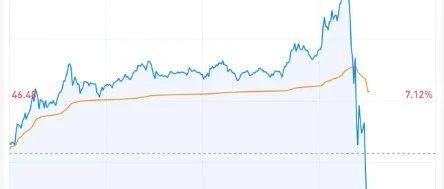
港股东方甄选突然跌超9% 此前一度涨近24%
华尔街见闻· 2025-08-19 07:16
Core Viewpoint - The article discusses the recent trends and developments in the financial markets, highlighting key economic indicators and their implications for investment strategies [2]. Group 1: Economic Indicators - Recent data shows a significant increase in consumer spending, with a rise of 5% year-over-year, indicating robust economic activity [2]. - Unemployment rates have decreased to 3.5%, reflecting a tight labor market and potential wage inflation [2]. - Inflation remains a concern, with the Consumer Price Index (CPI) rising by 2.8% over the past year, prompting discussions on monetary policy adjustments [2]. Group 2: Market Trends - The stock market has experienced volatility, with the S&P 500 fluctuating between 4,200 and 4,500 points in recent weeks [2]. - Technology stocks have outperformed, with a 15% increase in the NASDAQ index, driven by strong earnings reports from major companies [2]. - Bond yields have risen, with the 10-year Treasury yield reaching 2.1%, impacting borrowing costs and investment decisions [2]. Group 3: Investment Opportunities - Sectors such as renewable energy and technology are highlighted as potential growth areas, with investments expected to increase by 20% in the next fiscal year [2]. - Companies focusing on artificial intelligence and automation are projected to see substantial revenue growth, with estimates suggesting a 25% increase in market size by 2025 [2]. - The real estate market is showing signs of recovery, with home prices rising by 4% in the last quarter, indicating a favorable environment for real estate investments [2].
人民日报专访于东来:胖东来无意成为商超巨头,希望做一条鲇鱼
华尔街见闻· 2025-08-19 04:26
Core Viewpoint - The core viewpoint of the article emphasizes the importance of high-quality development and service quality in business, as articulated by Yu Donglai, the chairman of Pang Donglai Commercial Group, highlighting the company's commitment to integrity and customer satisfaction [2][16]. Group 1: Business Philosophy - The focus on "people" is identified as the key to success, with a belief that treating employees well leads to better customer service and overall business growth [6][12]. - The company prioritizes quality over scale, opting to close profitable stores that do not align with its operational philosophy, demonstrating a commitment to customer experience and product quality [13][14]. - Pang Donglai's business model is seen as difficult to replicate fully due to the unique environment, culture, and team dynamics of each enterprise [7]. Group 2: Employee Empowerment and Management - Employees are empowered to respond to customer needs without excessive bureaucratic processes, which enhances service efficiency and customer satisfaction [18][19]. - The company believes in fostering a culture of trust and responsibility among employees, which is crucial for delivering high-quality service [19]. Group 3: Market Position and Economic Outlook - The company does not aim to become a nationwide chain or a multinational giant, instead focusing on quality and sustainable growth [16][20]. - Despite concerns about consumer spending, the company asserts that its success is indicative of a thriving market, suggesting that quality products and services drive customer spending [21]. - The article highlights the importance of a supportive business environment, with government assistance playing a crucial role in the company's operations [22][23]. Group 4: Entrepreneurial Spirit - The article underscores the significance of private enterprises in China's economic landscape, advocating for the growth of more successful private businesses to enhance national development [24][25]. - The company encourages a proactive approach among entrepreneurs to contribute positively to society and the economy [26].

杰克逊霍尔央行年会,鲍威尔关键发声,为何华尔街一致“示警”
华尔街见闻· 2025-08-18 10:44
Core Viewpoint - The upcoming Jackson Hole meeting is highly anticipated, with Fed Chair Powell's speech expected to provide significant insights into future monetary policy, especially in the context of current market expectations for easing [1] Group 1: Market Expectations and Economic Context - Market confidence in a September rate cut is seen as overly optimistic, with Barclays analysts suggesting Powell's speech may challenge this view [2] - The economic backdrop is markedly different from a year ago, with current policy rates 100 basis points lower and core PCE inflation expected to rise above 3% [3][4] - Retail sales data shows resilience in consumer spending, and financial conditions are looser compared to last year, indicating weaker support for rate cuts [4][6] Group 2: Inflation and Labor Market Dynamics - Despite slowing job growth, improvements in labor supply have not weakened household income resilience, suggesting Powell has reasons to maintain a hawkish stance [10] - Core inflation remains above 3%, with recent data indicating a rise in core CPI to 3.1%, which may lead to upward pressure on prices as businesses pass on tariff costs [8][9] - There is insufficient evidence to suggest inflation has peaked, with expectations for core PCE to rise further, diverging from the Fed's 2% target [9] Group 3: External Factors and Policy Review - External factors, such as tariffs, are contributing to rising inflation expectations, as consumer confidence surveys indicate increased concerns about price hikes [12] - Political dynamics surrounding the U.S. Bureau of Labor Statistics (BLS) raise concerns about the integrity of future economic data, particularly after significant revisions to employment reports [12] - The Fed's ongoing policy framework review may lead to a re-evaluation of its inflation targeting approach, potentially abandoning the flexible average inflation targeting framework [14]

00后,她融资1.5亿
华尔街见闻· 2025-08-18 10:44
Core Viewpoint - The article highlights the emergence of a new generation of entrepreneurs, particularly those born in the 2000s, who are making significant strides in the AI startup landscape, exemplified by the success of Sola Solutions founded by Jessica Wu and Neil Deshmukh [6][22]. Group 1: Company Overview - Sola Solutions was founded by two MIT dropouts, Jessica Wu and Neil Deshmukh, who aimed to address the inefficiencies of traditional Robotic Process Automation (RPA) by creating AI agents that can automate complex tasks with minimal human intervention [12][11]. - The company has successfully raised a total of $21 million (approximately 150 million RMB) through seed and Series A funding rounds, with notable investors including Conviction and Andreessen Horowitz [6][19]. - Sola's AI solutions are designed to automate various processes such as invoice sending and data entry across industries like logistics, insurance, and healthcare [13][14]. Group 2: Funding and Investment - The latest funding round for Sola Solutions was a Series A round led by Andreessen Horowitz, raising $17.5 million, following a $3.5 million seed round [17][18]. - The total funding of $21 million positions Sola Solutions as a notable player in the competitive AI startup ecosystem [19][16]. Group 3: Industry Trends - The article notes a significant trend of young entrepreneurs, particularly those from the 2000s generation, entering the AI startup scene, with many achieving rapid success and attracting substantial venture capital [23][25]. - Female entrepreneurs are increasingly becoming prominent figures in the tech investment landscape, as seen with the success of Jessica Wu and other notable women in the industry [20][22].

张继强:当下股市任何明显调整都是抄底机会,黄金应该抛一半,债市投资是事倍功半
华尔街见闻· 2025-08-18 10:44
Core Viewpoint - The article emphasizes a shift towards equity investments in 2023, suggesting that the stock market is expected to experience a healthy slow bull market rather than a bear market, with structural opportunities being the key focus for investors [5][12][14]. Group 1: Market Trends - The stock market is anticipated to transition from a bear market mindset post-2024 "926", with any significant adjustments seen as opportunities [8][14]. - Three major themes for 2023 are identified: stabilizing the market, combating "involution," and promoting consumption, with "involution" being the most critical theme [9][20]. - The A-share and Hong Kong markets have experienced four bottoms this year, indicating a complex market environment [11][37]. Group 2: Investment Strategies - Investors are encouraged to focus on structural opportunities rather than index performance, as these present the greatest potential for success [6][12]. - The bond market is described as having low absolute returns and high volatility, making it less attractive for investors [7][44]. - Convertible bonds are seen as a favorable investment option, but their practical application is limited due to high prices and a lack of available choices [48][49]. Group 3: Economic Environment - The global economic landscape is undergoing significant changes, influenced by factors such as AI advancements and geopolitical shifts, which are expected to impact market dynamics [16][18]. - Domestically, the economy is characterized by strong production but weaker internal demand, with the hope that combating "involution" will improve this balance [25][26]. - The liquidity in the market is reported to be robust, with insurance companies expected to allocate a significant portion of their premiums to the stock market [30][26]. Group 4: Future Outlook - The article suggests that the market will likely experience increased volatility due to various event-driven factors, which could benefit flexible investment strategies [32][39]. - The outlook for gold is cautious, with recommendations to maintain only half of the position due to uncertain market conditions [10][36]. - The bond market is expected to remain challenging, with limited upside potential and frequent fluctuations, making it a less favorable environment for investors [44][46].

GPT-5“让人失望”,AI“撞墙”了吗?
华尔街见闻· 2025-08-18 10:44
Core Viewpoint - The release of OpenAI's GPT-5 has not met expectations, leading to disappointment and raising questions about the current limits of generative AI technology, despite ongoing enthusiasm in capital markets for practical applications of AI [1][2][3]. Group 1: Performance and Expectations - Users have reported low-level errors in GPT-5, such as incorrect labeling of the U.S. map, and expressed dissatisfaction with its performance compared to previous models [2][3]. - CEO Sam Altman acknowledged the release was "bumpy," attributing issues to a malfunctioning "automatic switcher" that caused the system to call a weaker model [3][4]. - The optimism surrounding AGI has not materialized with GPT-5, leading to a reassessment of its capabilities and the competitive landscape, as rivals like Google and Anthropic have narrowed the gap with OpenAI [4][6]. Group 2: Scaling Laws and Limitations - The core logic supporting large language models, known as "scaling laws," is approaching its limits, with data exhaustion and physical/economic constraints on computational power being significant challenges [6][8]. - The training of GPT-5 reportedly utilized hundreds of thousands of next-generation Nvidia processors, highlighting the immense energy consumption required for such models [6]. Group 3: Market Dynamics and Investment Trends - Despite concerns about technological stagnation, investment in AI startups and infrastructure remains robust, with AI accounting for 33% of global venture capital this year [7][10]. - The focus of the AI race is shifting from achieving AGI to practical productization, with companies like OpenAI deploying engineers to assist clients in integrating AI models [8][9]. - Investors are increasingly valuing the strong growth of products like ChatGPT, which has generated an annual recurring revenue of $12 billion for OpenAI, rather than the distant promise of AGI [10][11].

今年A股翻倍股超300只
华尔街见闻· 2025-08-18 03:55
Core Viewpoint - The A-share market has been experiencing a significant rally, with a notable increase in the number of stocks doubling in value this year [1]. Summary by Sections Market Performance - As of August 15, over 4406 A-shares have shown positive growth this year, accounting for more than 80% of the total [1]. - Among these, 1100 stocks have increased by over 50%, and 310 stocks have more than doubled in value [1]. Low-Priced Stocks - The number of low-priced stocks (with a closing price below 2 yuan) has decreased to only 39 [1]. Top Performing Sectors - The sectors with the highest number of stocks that have doubled include: - Pharmaceutical and Biological: 57 stocks - Machinery Equipment: 54 stocks - Automotive, Basic Chemicals, and Computer sectors each have over 20 stocks [1]. Notable Stocks - The top ten stocks with the highest growth rates this year include: - Shangwei New Materials: 1357.74% increase, market cap increased from 2.686 billion to 39 billion yuan - Shutaishen: 621.86% increase, market cap increased from 3.54 billion to 25.556 billion yuan - *ST Yushun: 602.25% increase, market cap increased from 0.998 billion to 7.006 billion yuan - Shenghong Technology: 450.34% increase, market cap increased from 36.311 billion to 199.022 billion yuan - Changcheng Military Industry: 412.413% increase, market cap increased from 8.517 billion to 43.642 billion yuan - Guangsheng Tang: 411.91% increase, market cap increased from 5.203 billion to 26.636 billion yuan - United Chemicals: 397.08% increase, market cap increased from 2.164 billion to 10.739 billion yuan - Feiling'er: 374.63% increase, market cap increased from 1.681 billion to 7.981 billion yuan - *ST Yazhen: 346.98% increase, market cap increased from 1.611 billion to 7.199 billion yuan - Beifang Changlong: 346.96% increase, market cap increased from 3.164 billion to 14.144 billion yuan [2].



历史首次,A股市值突破100万亿大关
华尔街见闻· 2025-08-18 03:36
Core Viewpoint - A-shares experienced a significant rally, with major indices reaching new highs, indicating strong market momentum and investor confidence [1][2][5]. Group 1: Market Performance - On August 18, A-shares opened high, with all three major indices rising collectively, the Shanghai Composite Index surpassing 3700 points, approaching a ten-year high [1]. - By 11:24 AM, the Shanghai Composite Index reached 3735.60 points, marking the highest intraday level since August 2015 [2]. - The total market capitalization of A-shares exceeded 100 trillion yuan for the first time in history, setting a new record [5]. Group 2: Index Movements - The Shanghai Composite Index rose by 38.82 points (+1.05%), while the Shenzhen Component Index increased by 233.38 points (+2.01%) [3]. - The ChiNext Index surged over 3%, surpassing 2600 points, with a year-to-date increase of over 20% [1]. - Other indices such as the STAR 50 and the CSI 300 also showed positive movements, with increases of 32.25 points (+2.93%) and 55.03 points (+1.31%) respectively [3].

下周,全市场都盯着这个地方
华尔街见闻· 2025-08-17 12:49
Core Viewpoint - The article discusses the upcoming speech by Federal Reserve Chairman Jerome Powell at the Jackson Hole Economic Symposium, which is expected to provide critical insights into the future path of U.S. monetary policy amid political pressures and mixed economic signals [3][6][15]. Group 1: Market Expectations - Investors are anticipating a rate cut from the Federal Reserve in the coming weeks, which has driven stock markets, particularly interest-sensitive sectors, to historical highs [5][8]. - The federal funds futures market indicates a probability of over 92% for a 25 basis point rate cut at the September meeting, with expectations for at least one more cut this year [8]. - Housing sector stocks, such as PulteGroup, Lennar, and D.R. Horton, have seen price increases ranging from 4.2% to 8.8%, significantly outperforming the S&P 500's 1% rise [8]. Group 2: Political Pressures - Powell faces intense political pressure from the Trump administration, which has criticized him for not cutting rates sooner and is reportedly considering potential replacements [11][12]. - The political interference complicates the Federal Reserve's decision-making process, as Powell is cautious about the inflationary effects of the administration's tariff policies [12]. Group 3: Economic Data - Mixed economic data adds to the complexity of the situation, with inflation pressures remaining stubborn. The core Consumer Price Index (CPI) rose by 0.3% in July, the largest increase since January, with a year-over-year rate of 3.1% [14]. - The labor market is showing signs of cooling, with only 73,000 jobs added in July and significant downward revisions to previous months' data [14]. Group 4: Independence and Legacy - Powell is expected to focus on the Federal Reserve's monetary policy framework review during his speech, which is seen as a key strategy to defend the central bank's long-term independence [15][16]. - The potential semantic shift in describing employment conditions may provide the Fed with more flexibility in adjusting rates based on varying economic conditions [16][17].