华尔街见闻

Search documents
美国M2重回峰值水平,通胀第二波已在路上?
华尔街见闻· 2025-08-21 09:28
Group 1 - The core concern is the resurgence of inflation risks in the U.S. economy, driven by a return to peak levels of M2 money supply and rising inflation indicators [1][9][11] - Economists warn that further monetary easing could replicate the inflationary cycles of the 1970s, leading to severe economic consequences [2][5][16] - The Producer Price Index (PPI) has reached a high of 3.3%, indicating significant wholesale cost pressures that may translate to consumer prices [3][15] Group 2 - The M2 money supply, which surged during the COVID-19 pandemic, has returned to historical peak levels, with an annual growth rate approaching 5%, a level historically associated with inflation risks [7][9] - Recent price data supports inflation concerns, with core PPI rising 33.3% since January 2017, reflecting ongoing upward pressure on consumer goods and services [13][15] - The lessons from the 1970s highlight the dangers of premature monetary policy easing, which could lead to repeated inflationary waves and economic turmoil [16][18] Group 3 - The current inflation backdrop has intensified the policy divergence between the White House and the Federal Reserve, with political pressures advocating for lower interest rates [19][20] - The potential for renewed inflation could undermine the credibility of the current administration, linking it to past economic policies [20] - Observers view the Fed Chair Powell's resistance to rate cuts as a responsible stance amid rising inflation concerns, with fears that a successor may prioritize rate reductions [20]


美联储7月会议纪要:多数人认为通胀比就业风险高,担心美债市场脆弱,关注稳定币影响
华尔街见闻· 2025-08-21 09:28
Core Viewpoint - The recent Federal Reserve meeting minutes indicate a divergence among policymakers regarding inflation, employment, and the impact of tariffs, with a prevailing concern that inflation risks outweigh employment risks [1][2][4]. Economic Outlook - Some participants expect the U.S. economic activity to remain robust, while others predict a continuation of low growth in the second half of the year [3]. - There is a consensus among Fed officials to monitor vulnerabilities in financial markets, particularly concerning the U.S. Treasury market and the implications of recent stablecoin legislation [3][18]. Inflation Risks - A majority of participants believe that inflation risks are greater than employment risks, while a couple of participants view employment risks as more pronounced [4][5]. - Concerns regarding tariffs include their uncertain impact on inflation and the potential for inflation expectations to become unstable [5][6]. Tariff Impact - Many participants noted that the full effects of tariff increases may take time to manifest in consumer prices [9][11]. - Some participants indicated that current demand conditions limit the ability of businesses to pass on tariff costs to prices [12]. - There is a belief that the increase in tariffs may lead to a one-time price increase, but factors like supply chain disruptions could cause persistent inflation [13][14]. Monetary Policy Considerations - Almost all participants agree that the current monetary policy is capable of responding to potential economic developments, with the understanding that the impact of tariffs on inflation remains to be fully observed [15][17]. - Some participants emphasized that the current federal funds rate target range may not be significantly above neutral levels, suggesting a balanced approach to monetary policy [17]. Financial Stability Concerns - Participants expressed concerns about vulnerabilities in the financial system, particularly regarding high asset valuations and the fragility of the U.S. Treasury market [18]. - The discussion on stablecoins highlighted their potential to enhance payment system efficiency and increase demand for supporting assets, including U.S. Treasuries [19].
泡泡玛特电话会:本周发布迷你版LABUBU,今年营收300亿很轻松,净利润率在35%左右
华尔街见闻· 2025-08-20 11:06
Core Viewpoint - The company has experienced significant growth in revenue and profit, with a notable increase in the popularity of its LABUBU IP, indicating strong market potential and brand value [2][3][7]. Financial Performance - The latest financial report shows a 400% increase in net profit for the first half of the year, with plush product revenue growing by 1276.2%, making it the largest category [2]. - LABUBU generated revenue of 48.1 billion yuan, accounting for 34.7% of total revenue, reflecting substantial year-on-year growth [2]. Management Insights - The CEO expressed confidence in achieving a revenue target of 300 billion yuan for the year, up from an initial estimate of 200 billion yuan, emphasizing the importance of health metrics in performance evaluation [3]. - The management anticipates an increase in net profit margin, projecting it to be around 35% for the year [4]. Market Performance - The company's stock surged by 12% on Wednesday, reaching a historical high of 316 HKD, with a market capitalization exceeding 420 billion HKD [5]. Product Development - A mini version of LABUBU is set to be released, which is expected to become a new hit product, showcasing the brand's potential for future growth [7]. - The CEO noted that the company is strategically managing the release of LABUBU products to avoid overexploitation of the IP while maintaining high demand [7][8]. Production Capacity - Monthly production capacity has increased tenfold compared to last year, but the company faces challenges in meeting the high demand for LABUBU products [9][10]. - The COO highlighted that the current market demand for plush products is enormous, and the company is focused on maximizing production capacity through lean and automated production techniques [10]. International Expansion - The overseas market has shown remarkable growth, with sales increasing by 440% year-on-year, contributing approximately 50% to total revenue, and achieving single-store efficiency four times that of domestic stores [11]. - The CEO expressed confidence in the rapid growth of international markets, including Germany and Mexico, which are still in the early stages of development [12]. - The company plans to explore emerging markets in the Middle East, Central Europe, and Central South America, maintaining an average of three new store openings per week [13].

对话智元王闯:详解人形机器人“进厂打工”,定义“常态化作业”,预判“成本拐点”
华尔街见闻· 2025-08-20 11:06
Core Viewpoint - The article discusses the milestone achievement of ZhiYuan Robotics in normalizing humanoid robot operations in factories and securing significant industrial contracts, addressing industry concerns about labor replacement and predicting a cost turning point by the end of the year [2][3]. Group 1: Humanoid Robots in Factories - ZhiYuan Robotics has achieved a significant milestone by normalizing humanoid robot operations in factories, which is seen as a solution to the labor shortage issue faced by many factories [2]. - The term "replacement" is deemed inaccurate; instead, humanoid robots are viewed as a means to supplement labor where factories struggle to recruit workers [2]. Group 2: Cost Considerations - Currently, the comprehensive cost of robots remains higher than that of human labor; however, ZhiYuan aims to reduce this cost to be comparable to human labor by the end of the year, which could trigger substantial market demand [2]. - The company has crossed the production threshold of "one set of code, one set of parameters," ensuring consistency and stability in the mass production of robots [3]. Group 3: Future Outlook - The president of the general business department at ZhiYuan, Wang Chuang, expressed that today marks the day when robots are the most expensive and least capable, indicating a future curve of improvement in the industry [3]. - Beyond industrial applications, the entertainment sector is identified as a potential area for significant growth and expansion for humanoid robots [3].

惊人相似!40年前历史正重现,1987美国股灾“黑色星期一”将卷土重来?
华尔街见闻· 2025-08-20 11:06
Core Viewpoint - The article draws parallels between the current economic situation and historical events from 40 years ago, particularly focusing on the potential for a repeat of the "Black Monday" stock market crash due to factors such as a weakening dollar and changes in Federal Reserve leadership [2][8]. Group 1: Economic Context - The dollar index has declined nearly 10% this year, reaching a three-year low against major currencies, coinciding with Trump's return to the White House [2]. - The S&P 500 and Nasdaq have reached new historical highs, driven by expectations of monetary easing and improved trade conditions [4]. Group 2: Historical Comparison - The article references the "Plaza Accord" of 1985, which led to a significant depreciation of the dollar while the U.S. stock market experienced substantial gains, with the dollar falling 36.5% against the yen and 30.8% to 36.6% against other major currencies over 17 months [5][10]. - Despite the dollar's decline, U.S. import prices did not rise significantly due to exporters' strategies to maintain market share, coupled with falling international oil prices that helped control inflation [11][12]. Group 3: Market Confidence and Leadership - Market confidence during the 1985-1987 period was largely attributed to then-Fed Chairman Paul Volcker's reputation for controlling inflation, which reassured investors [6][13]. - The transition to Alan Greenspan as Fed Chairman in 1987 led to a lack of decisive action when the dollar fell below critical levels, contributing to market instability and the eventual crash [16][17]. Group 4: Implications for Current Markets - The article suggests that if Volcker had remained in charge, the "Black Monday" crash might have been avoided due to his proactive approach to monetary policy [18]. - The analysis emphasizes the importance of the Fed Chairman's credibility and the market's trust in the central bank's commitment to controlling inflation, indicating that even minor policy missteps can lead to significant market turmoil [18].

高盛顶尖交易员:未来几个月美股的核心问题是“衰退和降息,谁站上风”
华尔街见闻· 2025-08-20 11:06
Group 1 - The U.S. stock market is facing a critical juncture, with signs of a weakening job market and rising expectations for a Federal Reserve rate cut [1][4] - Goldman Sachs highlights the challenge for investors to find assets that can benefit from anticipated rate cuts while providing protection against potential economic downturns [1][3] - The report indicates that as long as deep downside risks are avoided, the U.S. stock market can continue to "climb the wall of worry," but the risk of a market pullback is higher than usual due to already priced-in growth slowdown [1][4] Group 2 - The July non-farm payroll report has significantly altered market dynamics, drawing attention to the "employment" aspect of the Federal Reserve's dual mandate [2][3] - Employment growth has sharply declined across multiple indicators, suggesting a labor market characterized by limited hiring and no large-scale layoffs [2][3] - Goldman Sachs warns that such downward revisions are typically indicative of cyclical turning points, urging investors to take these weak signals seriously [3] Group 3 - Following the July non-farm data release, market expectations for a Federal Reserve rate cut have shifted dramatically, with a high likelihood of a rate cut in September [4] - The market has fully priced in a September rate cut, with expectations for more than two cuts throughout the year [4] - If further signs of weakness in the job market emerge, the market may price in earlier and more substantial rate cuts, leading to steepening of the 2-year and 5-year U.S. Treasury yield curve [4] Group 4 - The decline in market implied volatility makes options betting on accelerated rate cuts an attractive "recession protection" tool [5]


美国科技股大跌,原因找到了!?
华尔街见闻· 2025-08-20 02:55
Core Viewpoint - The market is experiencing a pullback in technology stocks due to concerns over the commercialization returns of AI and warnings from industry leaders about a potential bubble [1][4][11]. Group 1: Market Reaction - The Nasdaq Composite Index fell 1.4%, marking its largest single-day drop since August 1, with significant declines in major tech stocks like Nvidia (-3.5%), Palantir (-9.4%), and Arm (-5%) [1][3]. - The S&P 500 Index also decreased by 0.7%, reflecting a broader market trend of selling off high-momentum tech stocks [1][3]. Group 2: AI Investment Concerns - A report from MIT indicated that up to 95% of organizations have seen zero returns on generative AI investments, with only 5% of integrated AI pilot projects generating millions in value [3][7]. - Sam Altman, CEO of OpenAI, expressed concerns that investors are overly excited about AI, suggesting a bubble may be forming, which could lead to significant losses for some investors [4][10]. Group 3: Shift in Market Sentiment - Negative signals from the MIT report and Altman's warnings have contributed to a shift in market sentiment, leading to a sell-off in tech stocks and a rotation of funds into defensive sectors [5][11][18]. - Approximately 70% of S&P 500 constituents rose on the day of the tech sell-off, indicating a structural shift towards defensive investments such as consumer staples, utilities, and real estate [19]. Group 4: Broader Market Trends - The bond market reflected this trend, with U.S. Treasury prices rising and yields falling as risk assets came under pressure [20]. - Other risk assets, including Bitcoin, also faced declines, reaching a near three-week low and breaking below the 50-day moving average for the first time since June [22]. Group 5: Investor Sensitivity - The market has shown sensitivity to potential risks associated with AI, as evidenced by previous incidents that caused temporary market disturbances [25]. - Upcoming events, such as the Jackson Hole global central bank meeting and Nvidia's earnings report, are expected to be critical in shaping market sentiment towards AI [26].

摩根士丹利:Robotaxi迎来“iPhone时刻”,现在购买带方向盘的汽车,无异于在2006年选择“黑莓”
华尔街见闻· 2025-08-19 10:16
Core Viewpoint - The autonomous taxi technology is on the verge of a historic breakthrough, ready for commercialization due to advancements in generative AI, massive capital competition, and geopolitical factors [1][2]. Group 1: Technological Advancements - The rapid development of generative AI has led to significant improvements in autonomous driving technology, making large-scale commercialization feasible, akin to the transformative impact of the iPhone in 2007 [2]. - Major investments from tech giants like Tesla and Google Waymo, as well as traditional automakers, are accelerating the maturity of autonomous driving technology, creating intense competition [2]. Group 2: Geopolitical Factors - Governments worldwide are prioritizing the development of autonomous driving capabilities as a key area for future transportation and technological competitiveness, leading to supportive policies [3]. Group 3: Market Trends - Global electric vehicle sales continue to grow robustly, with June sales increasing by 30% year-on-year to 1.26 million units, driven primarily by the Chinese market, which saw a 43% increase [4]. - Morgan Stanley maintains an "overweight" rating on Tesla with a target price of $410, indicating a potential upside of 28% from current levels, citing Tesla's advantages in autonomous driving technology and data accumulation [4]. Group 4: Impact on Automotive Industry - The rise of autonomous taxi services may fundamentally change traditional car ownership models, with consumers likely to prefer on-demand mobility services over purchasing private vehicles, which will have profound implications for the entire automotive supply chain [8].


巴菲特再卖苹果,两大“看空”信号
华尔街见闻· 2025-08-19 10:16
Core Viewpoint - Berkshire Hathaway's recent reduction in its stake in Apple has sparked significant market attention, interpreted as a rational move for risk management and portfolio rebalancing rather than a bearish signal [2][4] Group 1: Investment Strategy - The sale of Apple shares contradicts Warren Buffett's investment philosophy of "buy and hold," suggesting that the current risk-reward ratio for Apple is no longer optimal [2][3] - Selling part of a position indicates that the investor believes the stock's attractiveness has diminished compared to other potential investments [3] Group 2: Portfolio Composition - Apple represents a substantial portion of Berkshire's portfolio, accounting for $66.639 billion, or 25.8% of total holdings [5] - Despite the reduction, Apple's weight in the overall portfolio is not excessively high when considering Berkshire's total assets, which include significant non-public holdings [9][7] Group 3: Market Signals - The small scale of the reduction sends a clear signal that there are concerns regarding Apple, particularly in light of policy uncertainties and valuation issues [10][11] - Policy uncertainties include potential increases in capital gains tax, which could impact future investment decisions [12][14] Group 4: Valuation Concerns - Apple's valuation has increased significantly, with its price-to-earnings (P/E) ratio rising to 35, making it less attractive compared to the past when it was around 10-15 [16] - The current high valuation requires sustained high growth, which may be challenging given recent fluctuations in market share [16][17]


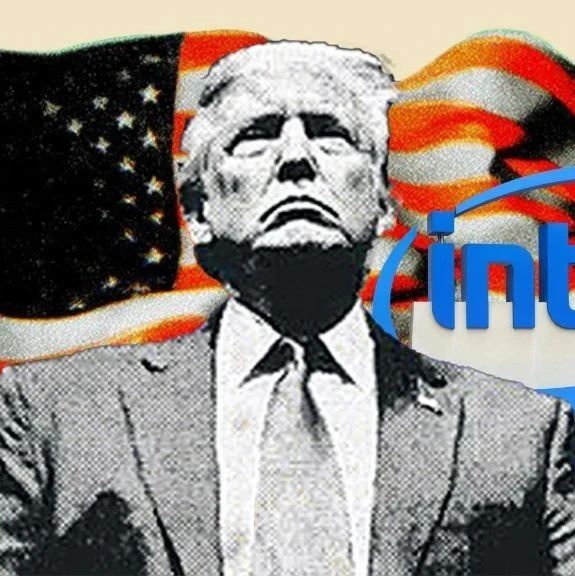
特朗普政府考虑入股英特尔10%,或成最大股东,软银“卡位”先投20亿美元
华尔街见闻· 2025-08-19 10:16
Core Viewpoint - The Trump administration is considering a significant shift in U.S. industrial policy by potentially converting federal subsidies into direct equity investments in Intel, which could make the government its largest shareholder [1][4]. Group 1: Government Involvement - The Trump administration is discussing converting part or all of the funding from the CHIPS and Science Act into equity to hold approximately 10% of Intel's shares, with Intel set to receive about $10.9 billion in subsidies [1]. - The potential government investment aligns with a trend of increased government intervention in strategic industries, as seen in previous actions involving semiconductor sales and defense-related investments [9]. Group 2: Market Reactions - Following reports of potential government investment, Intel's stock experienced volatility, initially dropping by 5.5% before narrowing the decline to over 3.6% [5]. - In contrast, SoftBank's announcement of a $2 billion investment in Intel at $23 per share led to a rise in Intel's stock price during after-hours trading [1][6]. Group 3: Intel's Current Challenges - Intel is facing stagnating sales growth and ongoing losses, with new CEO Pat Gelsinger focusing on cost-cutting and layoffs to turn the company around [4]. - The company has received $2.2 billion in subsidies as of January, but it remains unclear how this funding will be affected by the potential equity conversion [4]. Group 4: Strategic Partnerships - SoftBank's investment is seen as a vote of confidence in Intel's role in advancing U.S. semiconductor manufacturing and innovation [6]. - The partnership aims to deepen commitments to advanced technology and chip innovation in the U.S. [6].