
美股研究社

Search documents
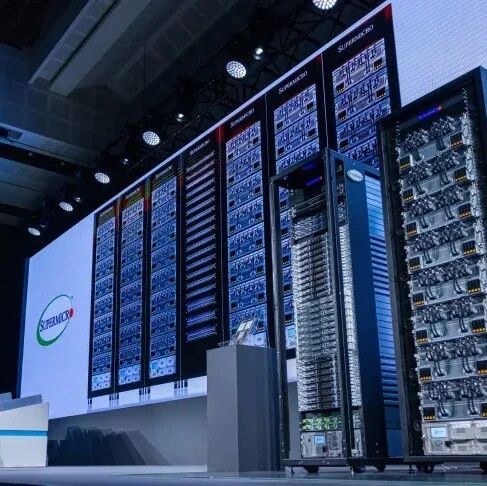
超微电脑:内存涨价的苦主来了?
美股研究社· 2026-01-20 11:01
Core Viewpoint - The article emphasizes that despite the current pessimism surrounding Supermicro, the market may be overlooking its strong growth potential, making it one of the most undervalued investment opportunities at present [5][15][24]. Group 1: Market Sentiment and Financial Metrics - Analysts have observed an overly crowded bearish sentiment towards Supermicro, which may not accurately reflect the company's future prospects [2][15]. - The company's forward price-to-sales ratio is currently at 0.5, indicating significant undervaluation compared to its revenue potential [5][23]. - Supermicro's gross margin is projected to decline from 11% in fiscal year 2025 to approximately 7.4% in fiscal year 2026, marking a third consecutive year of downward pressure [10][11]. Group 2: Industry Challenges - The server industry, particularly the AI server segment, is facing substantial gross margin pressure due to rising costs of server components, especially storage chips, which account for 30% to 40% of material costs [6][7][12]. - The soaring prices of storage components have already impacted multiple server manufacturers, including Supermicro, leading to a significant drop in gross margins [10][12]. Group 3: Growth Opportunities - Supermicro is actively working to expand its customer base and product matrix to mitigate gross margin pressures, with plans to add at least two new large-scale customers [16]. - The emerging cloud vendor and sovereign AI markets are expected to provide new growth opportunities, with a projected compound annual growth rate of 69% [16]. - The company is set to complete the ramp-up of production for NVIDIA's upgraded cabinet-level solutions, which is anticipated to stabilize revenue in the short term [18]. Group 4: Valuation Comparison - Compared to competitors like Dell, which has a forward price-to-sales ratio of 0.9 and a price-to-book ratio of 4.8, Supermicro's ratios are significantly lower, indicating a potential mispricing in the market [19][20]. - The current market skepticism towards Supermicro's future profitability appears to exceed rational bounds, creating an attractive opportunity for contrarian investors [19][23]. Group 5: Strategic Considerations - Investors should closely monitor the overall demand environment for AI infrastructure, particularly in the new cloud vendor and sovereign AI markets where Supermicro is expanding [21]. - The company has a history of adjusting its earnings guidance, which may necessitate a trading strategy rather than a long-term holding approach [22].

为什么 AMD 的故事刚刚发生了改变
美股研究社· 2026-01-19 12:41
Core Viewpoint - Helios transforms AMD from a semiconductor supplier to an AI solutions company, making it a more attractive entry point after a 10% decline in stock price since the last analyst report [2] Group 1: Product Integration and Revenue Generation - AMD's Helios integrates MI455 GPU, EPYC Venice CPU, and Pensando networking into a repeatable rack-level solution, allowing revenue confirmation across various silicon product levels [3] - The Helios architecture enables AMD to capture multi-product line revenue, positioning it as a turnkey AI platform provider, which is bullish due to increasing market demand for scale and deployment speed [4] - AMD's revenue growth is now linked to bundled system demand rather than just single silicon categories, potentially smoothing out volatility between CPU and GPU cycles [8] Group 2: Customer Interaction and Market Demand - AMD's design choices for Helios are based on deep interactions with major customers, optimizing AI data center maintainability and reliability [5] - The anticipated growth in computing demand is significant, with projections of over 100 zetta FLOPS by 2025 and a target of 1 yotta FLOPS within five years [5] - AMD's partnerships with OpenAI and Luma AI support its strategy to address total cost of ownership (TCO) pressures while targeting scale requirements [8] Group 3: Financial Projections and Revenue Visibility - AMD's future financial performance is closely tied to the acceleration of AI computing expansion and customer capital expenditures, with significant revenue growth expected from extreme scale computing demand [10] - Revenue estimates show substantial growth, with projections reaching $137.35 billion by December 2030, reflecting a compound annual growth rate (CAGR) of over 23% [10] - The shift to a system-level product approach enhances revenue visibility and future growth potential, which the market has not yet fully accounted for in AMD's valuation [9][10] Group 4: Risks and Challenges - Helios is a capital-intensive product, and any tightening of enterprise customer capital expenditures could impact AMD's revenue growth [11] - The annual rhythm of product releases places pressure on AMD's execution, with potential increased development costs if customer adoption lags behind chip generations [11] - AMD's strategy of targeting multiple layers within a single system introduces complexity in supply chain and manufacturing, increasing risk exposure to revenue disruptions and pricing pressures [12]


AI日报丨飞书史上第一次硬件合作,和安克创新做了一款“AI录音豆”,马斯克向OpenAI、微软索赔最高1340亿美元
美股研究社· 2026-01-19 12:41
Group 1 - The article highlights the rapid development of artificial intelligence technology, presenting significant opportunities in the market [3] - The focus is on the latest AI concept stocks and market trends, providing in-depth industry insights and value analysis [3] Group 2 - Ideal Semiconductor Equipment (Shanghai) Co., Ltd. has achieved a milestone by completing the AI demonstration line for ultra-thin flexible HJT batteries designed for space environments, successfully producing the first batch of P-type ultra-thin flexible HJT batteries [5] - Feishu (Lark) has partnered with Anker Innovation to launch the "AI Recording Bean," a lightweight smart recording device that supports Bluetooth and Wi-Fi, marking Feishu's first hardware product since its establishment in 2017 [6] - Elon Musk announced that the AI5 chip, crucial for Tesla's future, is progressing well, with a dual-chip configuration approaching Blackwell-level performance at a significantly lower cost and power consumption [8] Group 3 - Elon Musk has filed a lawsuit against OpenAI and Microsoft, seeking damages between $79 billion and $134 billion, claiming that OpenAI's shift from a non-profit to a profit-driven model constitutes fraud [10] - The lawsuit is based on OpenAI's current valuation of approximately $500 billion and Musk's initial investment of $38 million in 2015 [10]




裁员潮尚未蔓延?美国初请失业金人数意外跌破20万
美股研究社· 2026-01-19 12:41
Core Viewpoint - The article discusses the unexpected decline in initial jobless claims in the U.S., reaching the lowest level since November of the previous year, indicating a potentially stable labor market despite recent layoffs announced by major employers [4][7]. Group 1: Jobless Claims Data - Initial jobless claims decreased by 9,000 to 198,000, which is below market expectations [4]. - The four-week moving average of new claims fell to 205,000, the lowest in two years [7]. - Continuing claims for unemployment benefits dropped to 1.88 million in the previous week [8]. Group 2: Employment Market Insights - Despite recent layoffs from companies like PepsiCo and Meta, actual data shows no significant increase in widespread layoffs [7]. - A survey from the University of Michigan indicates that nearly two-thirds of consumers expect the unemployment rate to rise in the coming year [7]. - Non-farm payroll data showed a modest employment increase of 50,000 in December, below the expected 60,000, with the unemployment rate adjusted to 4.4%, down from a previous 4.6% [8].

“飙升的电费”成为美国中选焦点,AI数据中心站上“政治火山口”
美股研究社· 2026-01-19 12:41
Core Viewpoint - Rising electricity costs are becoming a central issue in the U.S. political agenda, surpassing other types of inflation, with data centers being a focal point of criticism from both political parties [3][4]. Group 1: Electricity Cost Trends - Electricity costs in the U.S. increased by 6.7% year-over-year in December, with a cumulative rise of approximately 38% since 2020, while overall consumer prices only rose by 2.7% during the same period [4]. - In the Northeast and Mid-Atlantic regions, cumulative bill inflation reached 29% over the past three years, significantly higher than the Consumer Price Index (CPI) [9]. - Factors contributing to rising electricity costs include aging infrastructure, natural disasters, state renewable energy initiatives, and fluctuations in fuel costs [5]. Group 2: Political Implications - The issue of rising electricity prices is expected to be a key topic in the upcoming gubernatorial elections across 36 states, with many public utility commissions facing elections this year [6]. - Political pressure is mounting in various states, with governors and senators expressing concerns about the impact of rising electricity costs on households, particularly in relation to large data centers [5][8]. - High-profile political figures, including former President Trump, are leveraging the electricity cost issue to appeal to voters, emphasizing the responsibility of large tech companies to bear the costs associated with their energy consumption [4][8]. Group 3: Investment Considerations - Goldman Sachs suggests that investors should hedge against the "politicization of AI" risk, as concerns about data center energy consumption are rising among policymakers [11][12]. - The firm identifies three main concerns regarding investments in data centers: the substantial cash flow invested in infrastructure, the accuracy of measuring demand for data center capacity, and potential regulatory controls introduced by midterm elections [11]. - Goldman Sachs recommends specific trading strategies, including going long on non-tech companies that improve productivity through AI, and hedging against volatility related to the political discourse surrounding AI [12].


AI日报丨智谱华为合作模型开源后登顶全球第一,亚马逊阻挠Saks百货破产融资的首次尝试宣告失败
美股研究社· 2026-01-16 12:34
Group 1 - The core viewpoint of the article emphasizes the rapid development of artificial intelligence (AI) technology, which presents extensive opportunities in the market [3] - UBS analysts believe that the probability of an AI bubble emerging in China in the short term is low compared to the U.S., highlighting investment opportunities in the semiconductor and humanoid robot upstream supply chain [5] - OpenAI is seeking to strengthen its hardware supply chain in the U.S. and is looking for partners to expand into consumer devices, robotics, and cloud data centers, indicating a significant product expansion plan [6] Group 2 - Kuaishou Technology is promoting its first offshore bond issuance to raise funds for AI activities, planning to issue 5-year and 10-year U.S. dollar bonds with initial price guidance above U.S. Treasury rates by approximately 85 and 100 basis points, respectively [7] - The GLM-Image model, co-developed by Zhiyu and Huawei, has quickly risen to the top of the global AI open-source community Hugging Face within 24 hours of its release, marking a significant achievement for domestically trained models [8] - NVIDIA has quietly corrected an error in its previous copper demand forecast for data centers, which may require a reevaluation of future copper supply and demand dynamics [10]

超微电脑:改善业务组合,估值极低
美股研究社· 2026-01-16 12:34
Core Viewpoint - Super Micro Computer, Inc. (SMCI) has seen a significant stock price decline of 45% since the last bullish call by analysts, yet analysts continue to increase their positions due to the stock's extremely low valuation, with a Forward PEG Ratio of 0.48 compared to the industry average of 1.71, indicating a lack of fundamental support for such a discount [1][2]. Financial Performance and Expectations - SMCI is expected to report quarterly revenue of $10.3 billion on February 3, indicating a strong year-over-year growth of 82%, despite previous struggles with revenue growth and profitability [3]. - Management has provided reasonable explanations for past revenue shortfalls, including a $1.5 billion revenue shift from Q1 to Q2 due to last-minute configuration upgrades by customers, and a backlog of $13 billion for the GB300 product line based on NVIDIA's Blackwell Ultra [3][4]. Innovation and Market Position - SMCI is actively innovating to stand out in the competitive AI server market, with a focus on expanding its product offerings in edge AI through partnerships with Intel and AMD, thus avoiding reliance on a single supplier [5]. - The edge AI market is projected to grow at a CAGR of 37% by 2030, presenting opportunities for SMCI to gain pricing power and improve its business mix [5]. Valuation Analysis - SMCI's Forward P/E Ratio is projected to significantly drop below 10x in the coming years, positioning the company favorably to capitalize on the AI trend, with the industry median non-GAAP P/E at 26x highlighting SMCI's substantial discount [7]. - The expected price-to-sales ratio for SMCI is as low as 0.5x, which is over seven times lower than the industry median, indicating a significant undervaluation [9][10]. Strategic Partnerships and Growth Areas - SMCI is expanding its presence in smart in-store retail solutions, which have strong potential due to various use cases such as optimizing employee efficiency and real-time inventory tracking, potentially leading to new recurring revenue streams [5]. Conclusion - Despite recent disappointing earnings, SMCI remains a key player in the AI revolution and is well-positioned to benefit from the ongoing data center construction boom, making it a strong buy due to its attractive valuation [15].


古尔斯比力挺鲍威尔:破坏央行独立性将致通胀“卷土重来”!
美股研究社· 2026-01-16 12:34
Core Viewpoint - Concerns regarding attacks on the Federal Reserve's independence could negatively impact inflation, as stated by Chicago Fed President Goolsbee [2]. Group 1: Federal Reserve Independence - Goolsbee emphasized that any infringement on the independence of the central bank is problematic, warning that it could lead to a resurgence of inflation [2]. - He supported Powell's statement that inquiries into construction projects could be seen as political pressure from President Trump regarding interest rates [3][5]. Group 2: Powell's Tenure and Future - Powell's term as chair will end in May, but he can remain as a governor until 2028 [4]. - Goolsbee praised Powell as a "first-ballot Hall of Fame member" for managing to lower inflation without triggering a recession [6]. Group 3: Monetary Policy Outlook - Goolsbee indicated that the Fed should focus on reducing inflation, given the strong employment market, and suggested that there is room for interest rate cuts later this year if inflation trends back to 2% [6].

英伟达现在的情况不会持续太久
美股研究社· 2026-01-16 12:34
Core Viewpoint - Nvidia reported strong Q3 FY2026 earnings, exceeding market expectations with revenue of $57.01 billion, a 3.48% increase over forecasts, and adjusted EPS of $1.30, surpassing analyst estimates by 3.46% [1][4][6] Financial Performance - Revenue grew by 26% year-over-year, primarily driven by the data center segment, which contributed $51.2 billion, reflecting a 66% increase [4] - Gross profit increased by 60% to $41.8 billion, although gross margin decreased by 1.2 percentage points to 73.4% due to a shift from selling individual chips to complete systems [5][6] - Operating income rose by 65% to $36 billion, with net income also increasing by 65% to $31.9 billion, translating to basic EPS of $1.31 [6] - Cash and cash equivalents grew by 40% to $60.6 billion, with total assets at $161.1 billion and total liabilities at $42.3 billion, indicating a healthy balance sheet [6] - Operating cash flow increased by 40% to $66.5 billion, and free cash flow rose by 36% to $61.7 billion, showing improved efficiency in converting sales to cash [6] Future Outlook - Management expects Q4 revenue to be around $65 billion, indicating continued strong momentum, with gross margin projected at approximately 74.8% [6] - Analysts believe Nvidia's stock price is reasonable for long-term investors, despite potential short-term volatility due to market reactions to AI spending news [14] Growth Drivers - The reopening of the Chinese market is expected to drive growth, with over 2 million orders for H200 chips, each priced at approximately $27,000, potentially adding a full quarter's profit if successful [16] - The upcoming launch of the Rubin platform in H2 2026 is anticipated to significantly reduce AI model training costs, potentially leading to increased market share and profitability [18][19] Valuation Insights - Nvidia's current expected P/E ratio (GAAP) is around 40, which is approximately 26% higher than the industry average [12][13] - The expected price-to-book ratio is 29, significantly above the industry median, reflecting Nvidia's dominant position in the AI market [13] - Analysts note that traditional valuation metrics may not fully capture Nvidia's competitive advantages, such as its CUDA software platform, which creates high switching costs for customers [13][14] Risks - Analysts highlight potential risks, including the financial performance of OpenAI, which could impact the broader AI market and Nvidia's valuation if it fails to achieve profitability [20][21] - There are concerns about a potential "air pocket" scenario where significant investments in AI infrastructure do not yield expected returns, leading to a reevaluation of valuations across the sector [21]


AI里的明争暗斗:马斯克的甜言蜜语,和我们20%的胜率
美股研究社· 2026-01-16 12:34
Core Viewpoint - The article discusses the contrasting perspectives on China's AI development from domestic experts and international tech leaders, highlighting the significant challenges and risks involved in the competition between China and the U.S. in AI technology [4][7][10]. Group 1: AI Development Perspectives - Domestic AI experts express skepticism about China's ability to surpass the U.S. in AI, with Lin Junyang estimating only a 20% chance of success due to substantial computational power disparities [6][10]. - In contrast, international figures like Elon Musk and Jensen Huang predict that China will lead in AI capabilities, with Musk suggesting that China will far exceed global AI computing power by current trends [7][10]. - The article emphasizes the need to critically assess these differing viewpoints, suggesting that domestic experts have a more realistic understanding of the current technological landscape [10][12]. Group 2: Computational Power Disparities - The article highlights that the U.S. has a significant advantage in computational power, estimated to be 10 to 100 times greater than that of China, which limits Chinese developers' ability to innovate [10][12]. - Chinese AI developers are often forced to focus on immediate profit-generating applications rather than long-term exploratory research due to limited computational resources [12][13]. - The need for a cultural shift towards risk-taking and innovation in China’s AI sector is emphasized, as many developers prefer stable, quantifiable outcomes over high-risk projects [12][13]. Group 3: Foreign Capital Risks - The article outlines a trend where foreign capital is acquiring Chinese AI companies, posing a risk to domestic technological assets and talent [15][20]. - The acquisition of Manus by Meta for $2 billion is cited as a case where foreign investment leads to the loss of core technology and talent from China [16][20]. - The article warns that such acquisitions can result in a significant brain drain, where top talent moves to foreign companies, undermining China's AI development capabilities [24][26]. Group 4: Strategies for Improvement - To address the computational power gap, the article suggests that China should focus on developing its own chips and optimizing existing computational resources [31][33]. - It advocates for increased domestic investment in AI, encouraging local capital to support key areas such as chip development and core algorithms [34][36]. - The establishment of an "AI Innovation Consortium" is proposed to foster collaboration between academia, industry, and capital, ensuring a coordinated approach to overcoming technological challenges [36][37].
