国泰海通证券研究

Search documents
邀请函|国泰海通越南投资论坛
国泰海通证券研究· 2025-10-17 09:36
Core Viewpoint - The article emphasizes the significance of Vietnam as a key investment destination for Chinese enterprises, highlighting its potential in the Southeast Asian market and the importance of fostering cooperation and exploring investment opportunities in the region [2][3]. Group 1: Event Overview - The "Vietnam Investment Forum" will be held on October 21, 2025, in Shanghai, focusing on collaboration and investment opportunities in Vietnam [2]. - The forum will feature prominent speakers from various sectors, including finance, manufacturing, and law, to discuss the macroeconomic outlook and investment trends in Vietnam [2][3]. Group 2: Key Sessions and Topics - The forum will include sessions on topics such as: - Overview of China-ASEAN economic cooperation and Southeast Asia investment [3]. - Macroeconomic outlook and investment prospects in Vietnam [3]. - Trends in industrial facility leasing in Vietnam [3]. - Current status and trends of Chinese enterprises investing in Vietnam [3]. - Digital empowerment for global operations of Chinese enterprises [3]. - Opportunities and challenges in the snack retail market in Vietnam [3]. - A roundtable discussion on the rise of consumption and investment frontiers in Vietnam [3].


国泰海通|金工:红利风格的择时方案
国泰海通证券研究· 2025-10-17 09:08
Core Viewpoint - The article discusses the characteristics and investment appeal of dividend stocks, emphasizing their defensive nature and stable income, which makes them attractive to long-term investors seeking steady returns [1]. Summary by Relevant Sections Dividend Stocks and Bonds - There exists a substitutive relationship between dividend stocks and bonds, with a constructed factor comparing dividend yield and the 10-year Chinese government bond yield showing a positive timing effect for dividend style [3]. - Post-2016, there has been a high correlation between U.S. Treasury yields and dividend style, indicating that rising interest rates suppress high-valuation growth stocks, leading to a shift towards undervalued dividend stocks [3]. Factor Weighting and Performance - The 10-year U.S. Treasury yield is assigned a weight of 40% in the factor model, while other factors are weighted at 10% each. The weekly comprehensive factor timing strategy outperforms the CSI All Share Index by an annualized excess of 10% and the CSI Dividend Index by approximately 4%, with a win rate above 55% for both positive and negative signals [4]. - The strategy demonstrates good avoidance capability during periods of relative weakness for dividend style (2019-2020) [4]. Economic and Market Conditions - Dividend style tends to outperform in environments of credit downgrades or low credit conditions, as funds may shift towards stocks with stable dividend income when corporate loan demand is low [9]. - During economic contractions, dividend stocks are favored due to their defensive and bond-like attributes, as the market tends to gravitate towards them in weak economic conditions [9]. - In periods of low overall industry sentiment, dividend style also tends to dominate, with a constructed industry average sentiment factor showing good reverse timing effects [9]. - Market sentiment at low levels often corresponds with a relative advantage for dividend style, as net financing purchases show a significant negative correlation with dividend style [9]. - Dividend style frequently appears during bear markets, with the CSI 2000 Index showing a negative correlation with dividend style, although its timing effect is generally limited due to a lack of momentum [9]. - Constructing a trend factor based on relative net value of dividends can also yield certain timing effects [9].

国泰海通|非银:预计利润增长提速,多元渠道驱动NBV高增——上市险企2025年三季报业绩前瞻
国泰海通证券研究· 2025-10-17 09:08
Core Viewpoint - The report anticipates a significant acceleration in net profit growth for listed insurance companies in the first three quarters of 2025, driven by favorable investment returns and improved net assets, alongside strong growth in new business value (NBV) for life insurance and continued improvement in the combined operating ratio (COR) for property insurance [1][2][3] Group 1: Investment Returns and Profit Growth - Investment returns are expected to remain strong, with a notable increase in net profit for listed insurance companies in Q3 2025, building on high growth from the same period in 2024 and further accelerating from the growth seen in H1 2025 [2] - The overall positive performance of the equity market and the optimization of asset structures by insurance companies are projected to significantly boost investment returns [2] Group 2: Life Insurance Sector Performance - The life insurance sector is experiencing a favorable growth environment, with premium growth driven by the strategic timing of new policy sales before interest rate cuts, and the bancassurance channel becoming a key contributor to value growth [2][3] - The multi-channel approach is expected to continue driving strong growth in NBV for listed life insurance companies [3] Group 3: Property Insurance Sector Outlook - Property insurance premiums are anticipated to grow slowly, with the ongoing reform in auto insurance and the "reporting and operation in one" directive for non-auto insurance leading to a shift towards quality and efficiency over mere scale [2] - Despite pressures from natural disasters like typhoons in Q3 2025, the expected improvement in risk management is likely to limit the negative impact on the COR [2]

国泰海通|计算机:美拟对华“关键软件”实施管制,刺激国产软件加速发展
国泰海通证券研究· 2025-10-17 09:08
Group 1 - The core viewpoint is that the U.S. export controls on "critical software" will stimulate the development of domestic software in China, with a focus on basic software, industrial software, and office software [1] - The U.S. plans to implement export controls on "critical software" starting November 1, which includes electronic design automation, industrial software, and basic software, potentially disrupting Chinese companies that rely on U.S. software [1][2] - Domestic software has accumulated the capability to replace U.S. software due to advancements in technology, policy, market, and ecosystem, which will accelerate the localization process of software in China [1] Group 2 - The U.S. emphasis on software supply chain security includes critical software categories such as basic software and industrial software, as outlined in a memorandum from the Office of Management and Budget [2] - The initial phase of the U.S. National Institute of Standards and Technology (NIST) guidelines will focus on independent, internally deployed software that performs security-critical functions [2] - Other software categories like industrial software, office software, and databases are also deemed crucial for software supply chain security and should be considered as critical software [2] Group 3 - The Ministry of Commerce of China announced new export controls on certain foreign rare earth-related items, with military-use exports generally not permitted and advanced semiconductor applications requiring case-by-case approval [3] - The announcement included changes such as the use of WPS format for attachments and the requirement for application documents to be submitted in Chinese [3]

国泰海通|海外策略:中国科技资产成外资加仓共识
国泰海通证券研究· 2025-10-17 09:08
Group 1 - The core viewpoint of the article highlights the inflow and outflow trends of foreign capital in Hong Kong and A-shares during Q3, with a notable focus on technology assets [1][2] - In Hong Kong, foreign capital experienced a net outflow of approximately 841 million HKD in Q3, which is an improvement compared to Q2, with stable long-term foreign capital being the main contributor to the outflow [1] - The sectors attracting foreign capital in Hong Kong included software services (172 million HKD from stable foreign capital and 47 million HKD from flexible foreign capital) and hardware equipment (36 million HKD and 105 million HKD) [1] - Conversely, sectors that saw significant outflows included consumer discretionary retail (-472 million HKD), non-bank financials (-179 million HKD), and banks (-17 million HKD) [1] Group 2 - In A-shares, the Northbound capital saw an overall outflow of 158.2 billion CNY in Q3, with a net outflow of approximately 20.3 billion CNY when excluding Chinese custodial funds [2] - Long-term stable foreign capital accounted for a significant outflow of about 120.2 billion CNY, while short-term flexible foreign capital recorded an inflow of approximately 99.9 billion CNY [2] - Similar to Hong Kong, foreign capital in A-shares also increased its allocation to technology assets, particularly in new energy (up 3.7 percentage points for stable foreign capital and 1.1 percentage points for flexible foreign capital), electronics (up 2.3 percentage points and 1.1 percentage points), and machinery (up 0.8 percentage points and 0.9 percentage points) [2] - There was a reduction in allocation to banks (down 2.3 percentage points and 2.4 percentage points) and food and beverage sectors (down 1.5 percentage points and 1.2 percentage points) [2]

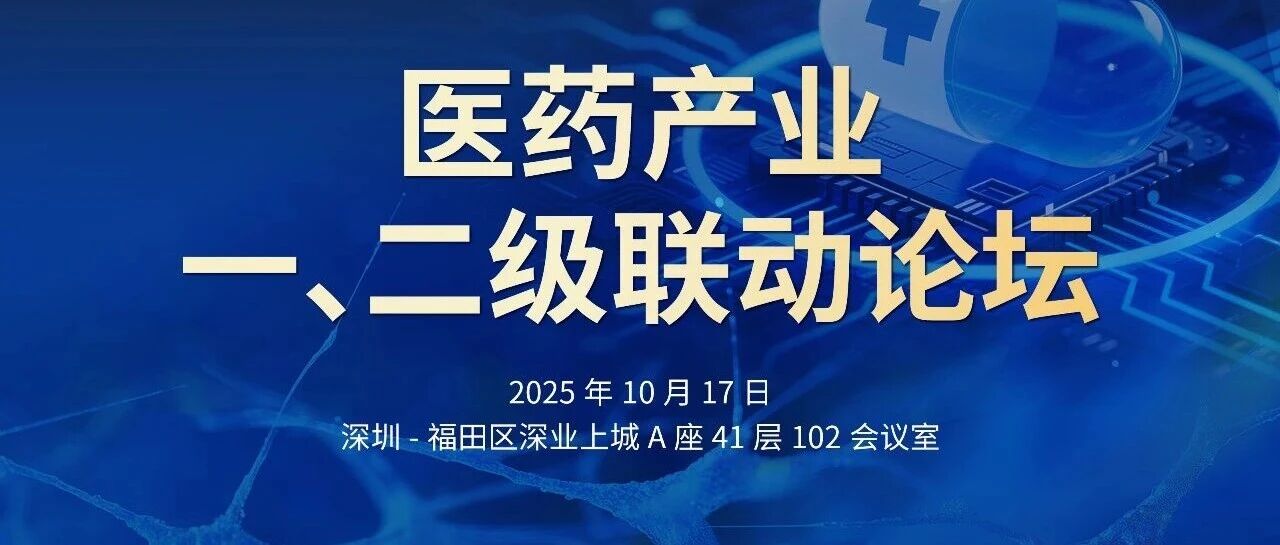
就在今天|国泰海通医药产业一、二级联动论坛
国泰海通证券研究· 2025-10-17 02:46
Group 1 - The core viewpoint of the article emphasizes the growing importance of innovative drugs in the global market, particularly focusing on the trend of Chinese innovative drugs going abroad [2]. - The forum discusses the increasing investment enthusiasm in dual antibodies, highlighting the global attention towards this area [2]. - The event features discussions on new trends in the development of Chinese innovative drugs from the perspective of angel investment [2].
国泰海通|交运:中国对美301反制,有望减缓中国船厂航企影响
国泰海通证券研究· 2025-10-16 12:24
Core Viewpoint - China has initiated reciprocal measures against the US 301 investigation, aiming to correct US actions and maintain the competitiveness of its shipbuilding industry [1][2]. Group 1: Reciprocal Measures - The US 301 investigation, effective from October 14, 2025, imposes special port fees on Chinese vessels docking at US ports. In response, China will impose similar fees on US vessels docking at Chinese ports, set at 400 RMB per net ton, slightly higher than the US fee of 50 USD per net ton, with annual increases over the next three years [1][2]. - The reciprocal measures are designed to promote fair competition in the international shipping and shipbuilding markets, encouraging long-term confidence among Chinese trade shipowners in building vessels in China [2]. Group 2: Impact on Shipping Costs - The US is a major importer in the shipping industry, and the reciprocal measures will directly affect US shipping companies, including Matson Navigation and others with investments in Chinese shipping firms. Current market share estimates indicate that companies like COSCO and Matson hold about 25% of the Asia-US route [2]. - Although there may be short-term disruptions, it is expected that the overall industry costs will not rise significantly due to these measures, as the Chinese Ministry of Transport has initiated investigations that may lead to compensatory measures to alleviate pressure on Chinese shipping companies [2]. Group 3: Effects on Oil and Bulk Shipping - The reciprocal measures will extend to oil and bulk shipping, potentially leading to a reduction in effective shipping capacity. Approximately 15% of oil tankers and 4% of bulk carriers are owned or operated by US-listed companies, which may face increased costs due to the new fees [3]. - For instance, a Very Large Crude Carrier (VLCC) docking at a Chinese port would incur a special port fee of 42 million RMB, translating to an increase of nearly 3 USD per barrel in shipping costs, with daily earnings for routes from the Middle East to China potentially rising by over 130,000 USD [3]. - The outlook for oil shipping remains positive, with expectations of high freight rates driven by steady demand and rigid supply, suggesting that the market may perform better than anticipated [3].

国泰海通|宏观:M2增速:为何小幅回落——2025年9月金融数据点评
国泰海通证券研究· 2025-10-16 12:24
Core Viewpoint - The slowdown in government bond issuance and the pace of RMB appreciation are the main reasons for the decline in M2 growth, while the marginal decrease in corporate foreign exchange settlement tendencies is also a contributing factor [1][2]. Group 1: Social Financing - In September 2025, the stock of social financing growth slightly decreased to 8.7% from the previous 8.8%, with new social financing amounting to 3.53 trillion yuan, a year-on-year decrease of 229.7 billion yuan [1]. - New government bonds issued amounted to 1.19 trillion yuan, a year-on-year decrease of 347.1 billion yuan, while loans (social financing caliber) added 1.61 trillion yuan, a year-on-year decrease of 366.2 billion yuan, with the loan balance dropping to 6.6% year-on-year [1]. - Corporate bond issuance increased by 10.5 billion yuan, a year-on-year increase of 203.1 billion yuan, with local government bonds net financing increasing by 120 billion yuan year-on-year [1]. Group 2: Credit - In September, new credit amounted to 1.29 trillion yuan, a year-on-year decrease of 300 billion yuan, with both corporate and household loans continuing to decline [2]. - The main support for credit stability comes from short-term loans to enterprises, which saw significant increases at the end of the quarter, reflecting local governments' efforts to resolve triangular debts and actual financing needs driven by production activities [1][2]. - The PMI production index showed a notable increase in September, indicating a recovery in the traditional economy under the initial effects of the "anti-involution" policy [1]. Group 3: Monetary Policy - The M2 growth rate in September was 8.4%, down from 8.8%, while M1 growth rebounded to 7.2% from 6.0% [2]. - The decline in M2 growth is attributed to the slowdown in government bond issuance and a decrease in corporate foreign exchange settlements, influenced by the RMB's rapid appreciation and subsequent fluctuations in the US dollar index [2]. - Looking ahead, the upcoming "14th Five-Year Plan" is expected to introduce a series of incremental policies, with room for total policy adjustments, while the RMB still holds potential for appreciation under a supportive liquidity environment [2].

国泰海通 · 晨报1017|固收
国泰海通证券研究· 2025-10-16 12:24
Core Insights - The significant decrease in non-bank deposits in September is attributed to a high base from the previous year and a weak stock market performance in 2025, which contrasts with the strong equity market in 2024 [2][4] Financial Data Summary - Non-bank deposits saw a substantial decline, with a year-on-year decrease of 19,700 million yuan, while resident deposits increased by 7,600 million yuan [4] - The total social financing (社融) in September was 35,338 million yuan, a year-on-year decrease of 2,297 million yuan, primarily due to a high base from government financing [3] - New RMB loans in September amounted to 12,900 million yuan, reflecting a year-on-year decrease of 3,000 million yuan, with short-term loans for residents decreasing by 1,279 million yuan [3] - M1 growth rate increased to 7.2%, while M2 growth rate remained stable at 8.4%, indicating a trend towards more liquid deposits among residents [3]

国泰海通|银行首席马婷婷:做数据详实,客观、深度、全面的银行业研究
国泰海通证券研究· 2025-10-16 12:24
Core Viewpoint - The article emphasizes the importance of a balanced investment strategy in the banking sector, focusing on stock selection amidst changing market conditions [5]. Group 1: Industry Analysis - The banking sector is experiencing shifts that necessitate a reevaluation of investment strategies, particularly in stock selection [5]. - The article suggests that investors should consider a diversified approach to mitigate risks associated with market volatility [5]. Group 2: Research Background - The analysis is conducted by a team led by a chief analyst with over 11 years of experience in banking research, highlighting the team's credibility and expertise in the field [3]. - The team has received recognition in the form of awards for their research quality, indicating a strong track record in delivering valuable insights [3].