国泰海通证券研究

Search documents
国泰海通|非银:市场持续升温,利润同比高增
国泰海通证券研究· 2025-10-16 12:24
Core Viewpoint - The performance of listed securities firms is expected to maintain rapid growth in Q3 2025, with a year-on-year increase in net profit attributable to shareholders of 58.63% due to strong market conditions and improved performance [1][2]. Group 1: Performance Forecast - It is anticipated that the adjusted operating revenue of 42 listed securities firms will increase by 32.02% year-on-year to 395.48 billion yuan in Q1-Q3 2025, with net profit attributable to shareholders rising by 58.63% to 165.15 billion yuan [1]. - For Q3 2025, the adjusted operating revenue is projected to be 148.15 billion yuan, reflecting a quarter-on-quarter increase of 11.45% and a year-on-year increase of 27.15%, while net profit is expected to reach 61.13 billion yuan, with a quarter-on-quarter increase of 17.94% and a year-on-year increase of 48.74% [1]. Group 2: Business Contribution Analysis - The brokerage business is expected to contribute the most to the revenue growth, accounting for 48.32% of the adjusted revenue increase, primarily driven by a significant rise in market trading volume in the first three quarters of 2025 [2]. - The investment business is projected to contribute 38.14% to the adjusted operating revenue growth, as the equity market shows marginal improvements compared to the high base in Q3 2024 [2]. - Investment banking revenue is expected to increase by 21.84% to 24.82 billion yuan, benefiting from a recovery in A-share and Hong Kong stock financing, while asset management revenue is forecasted to decline by 0.81% to 32.2 billion yuan due to falling management fees [2]. Group 3: Market Dynamics and Investment Opportunities - The influx of incremental funds into the market is ongoing, supported by a new assessment method for insurance companies that encourages higher equity allocations, favoring undervalued blue-chip stocks with high return on equity [3]. - In the context of increased retail investor participation, it is recommended to focus on companies with strong earnings elasticity in Q3 [3].



国泰海通|银行首席马婷婷:做数据详实,客观、深度、全面的银行业研究
国泰海通证券研究· 2025-10-16 12:24
Core Viewpoint - The article emphasizes the importance of a balanced investment strategy in the banking sector, focusing on stock selection amidst changing market conditions [5]. Group 1: Industry Analysis - The banking sector is experiencing shifts that necessitate a reevaluation of investment strategies, particularly in stock selection [5]. - The article suggests that investors should consider a diversified approach to mitigate risks associated with market volatility [5]. Group 2: Research Background - The analysis is conducted by a team led by a chief analyst with over 11 years of experience in banking research, highlighting the team's credibility and expertise in the field [3]. - The team has received recognition in the form of awards for their research quality, indicating a strong track record in delivering valuable insights [3].

国泰海通|固态电池· 合集(二)
国泰海通证券研究· 2025-10-15 13:11
Core Viewpoint - Solid-state batteries are the next generation of high-performance batteries, with short-term prospects for oxide semi-solid batteries and long-term potential for sulfide all-solid-state batteries, characterized by high material flexibility and high equipment certainty [2][6]. Group 1: Investment Opportunities - Solid-state batteries are expected to outperform liquid batteries in energy density and safety, making them the future of lithium batteries [6][10]. - The main solid-state electrolytes include oxides, polymers, halides, and sulfides, with sulfides likely being the primary choice for all-solid-state batteries [6][11]. - The positive electrode is evolving towards high voltage and high specific capacity materials, with lithium-rich manganese-based materials showing significant advantages over traditional materials [6][11]. Group 2: Material and Equipment Development - The negative electrode is currently focused on silicon-carbon composites, with lithium metal expected to become mainstream after achieving energy densities above 400Wh/kg [7][10]. - The development of current collectors is crucial, with porous copper foils and nickel-based collectors being suitable for solid-state battery systems [7][10]. - Solid-state electrolytes are categorized into four technical routes, with oxide electrolytes being more mature for short-term applications, while sulfide electrolytes are more suitable for long-term all-solid-state battery systems [11][12]. Group 3: Industrialization Progress - Semi-solid batteries have already been mass-produced and installed in vehicles, while all-solid-state batteries are expected to achieve mass production by 2027 [12][19]. - The rapid industrialization of semi-solid batteries is evidenced by multiple automakers successfully integrating them into their vehicles [12][19]. - The solid-state battery industry is witnessing accelerated project construction, with companies like Qingtao Energy entering trial production phases [28][30]. Group 4: Market Trends and Future Outlook - The solid-state battery market is transitioning from a demand-driven phase to a new technology-driven phase, with significant interest in sulfide technology and increased R&D investments from major companies [23][24]. - The solid-state battery industry is expected to see a rise in demand for new materials and equipment as the technology matures and commercializes [21][22]. - The market for solid-state batteries is projected to expand significantly, particularly in consumer batteries, new energy vehicles, and low-altitude applications [10][21].

国泰海通|策略:10月超配权益与黄金,标配债券
国泰海通证券研究· 2025-10-15 13:11
Core Viewpoint - The report suggests that rising geopolitical uncertainties may temporarily increase volatility in global equity markets, while Chinese equity assets and gold may still present performance opportunities. It recommends increasing holdings in AH shares and gold in October, while maintaining a standard allocation to bonds [1]. Group 1: Strategic Asset Allocation (SAA) - The framework consists of Strategic Asset Allocation (SAA), Tactical Asset Allocation (TAA), and Major Event Review Adjustments, aimed at guiding investment decisions [1]. - SAA is designed to diversify macro risks and set long-term allocation benchmarks to ensure portfolio robustness [1]. Group 2: Tactical Asset Allocation (TAA) - The report is optimistic about Chinese equities, recommending an equity allocation weight of 41.25% for October, with overweight positions in A-shares and Hong Kong stocks [2]. - The report indicates that geopolitical uncertainties may create buying opportunities in the Chinese market, suggesting that the current market adjustments are not the end of the upward trend [2]. Group 3: Bond Allocation - The report maintains a neutral stance on bonds, recommending a bond allocation weight of 45% for October, with standard allocations to both long-term and short-term government bonds [3]. - It notes that the imbalance in credit supply and demand, along with stable liquidity, continues to support the bond market [3]. Group 4: Commodity Allocation - The report expresses a neutral to optimistic view on commodities, recommending a commodity allocation weight of 13.75% for October, with an overweight position in gold [3]. - It highlights that gold prices have recently surged past key resistance levels, supported by factors such as Federal Reserve rate cuts and ongoing geopolitical tensions [3].

国泰海通 · 晨报1016|宏观
国泰海通证券研究· 2025-10-15 13:11
Macro - The core CPI has rebounded year-on-year to -0.3% as of September 2025, while the PPI has also increased year-on-year to -2.3%, indicating that overall price levels still require stimulation [2] - The core CPI's rise is primarily driven by external factors such as consumption subsidy policies and rising gold prices, with other consumer goods not showing significant improvement in internal consumption dynamics [2] - There are strong market expectations regarding the effectiveness of anti-involution policies, but the recent increase in industrial product prices has been largely structural, mainly affecting raw materials and upstream sectors [2] - The marginal weakening of price increase momentum, combined with the overall economic slowdown, suggests that the sustainability of both core CPI and PPI recovery depends on the enhancement of domestic demand policies [2] - Recent policy measures include the relaxation of real estate purchase restrictions in major cities, the rollout of the fourth batch of national subsidy funds, and the initiation of 500 billion yuan in new policy financial tools, with expectations for further policy actions and effects [2]
国泰海通|基金评价:恒生港股通科技主题指数投资价值分析
国泰海通证券研究· 2025-10-15 13:11
Core Viewpoint - The article emphasizes the transformation of traditional internet giants in the AI era, highlighting the benefits of the Hang Seng Hong Kong Stock Connect Technology Theme Index due to industry trends, capital inflows, and potential for price revaluation [1][2]. Group 1: AI Transformation of Internet Giants - Internet giants have accumulated vast user data, technological infrastructure, and industrial ecosystems, laying the foundation for AI development [1]. - The evolution path in the AI era includes a shift in technological focus, penetration of AI capabilities across the business chain, upgrading business models to expand technology-driven growth, and increasing capital expenditures and R&D investments [1]. Group 2: Core Value Analysis of Hong Kong Stock Technology Sector - The global AI computing industry chain is experiencing continuous growth, with the Hong Kong technology sector benefiting directly from the AI industry wave [1]. - Significant inflows of southbound capital are focusing on the AI industry chain, providing ample liquidity support for the Hong Kong technology sector [1]. - The current valuation of the Hang Seng Hong Kong Stock Connect Technology Theme Index is around the 70th percentile historically, indicating room for upward movement [1]. Group 3: Comparison of Mainstream Hong Kong Stock Connect Technology Indices - The Hang Seng Hong Kong Stock Connect Technology Theme Index leads in medium to long-term returns compared to other Hong Kong technology indices, exhibiting high earnings elasticity and a high-risk, high-reward profile [2]. - The index shows strong performance during market hotspots, with superior risk-adjusted returns [2]. - The concentration of industry distribution among constituent stocks is higher compared to other similar indices, with the top five constituent stocks holding a significant cumulative weight [2]. Group 4: Investment Value Analysis of the Hang Seng Hong Kong Stock Connect Technology Theme Index - The constituent stocks of the index are characterized by a clear technology focus, concentrating on leading hard technology companies [3]. - The index exhibits a concentrated weight distribution, reflecting a significant large-cap style [3].

国泰海通|计算机:量子革命:量子科技的现状与未来
国泰海通证券研究· 2025-10-15 13:11
Group 1 - Quantum computing is in an early breakthrough stage, with quantum error correction being a key focus. Various technological routes such as superconducting, ion trap, neutral atom, photonic, and silicon semiconductor are showing a diversified and open development trend. Significant progress is expected in the next 5 to 10 years, with the US and China leading globally in this field [1][2] Group 2 - China is in an absolute leading position in the QKD quantum security field. The country has established a relatively complete quantum secure communication industry chain centered on QKD technology, with Chinese institutions accounting for approximately 93% of the top 10 patent applicants in the global quantum communication field [2] Group 3 - The quantum measurement industry is entering a diversified development cycle. Quantum precision measurement leverages the sensitivity of quantum states to enhance the accuracy of measuring various physical quantities, with a clear industrialization prospect despite varying maturity levels of quantum sensors for different physical quantities [2]
邀请函|国泰海通医药产业一、二级联动论坛
国泰海通证券研究· 2025-10-15 00:43
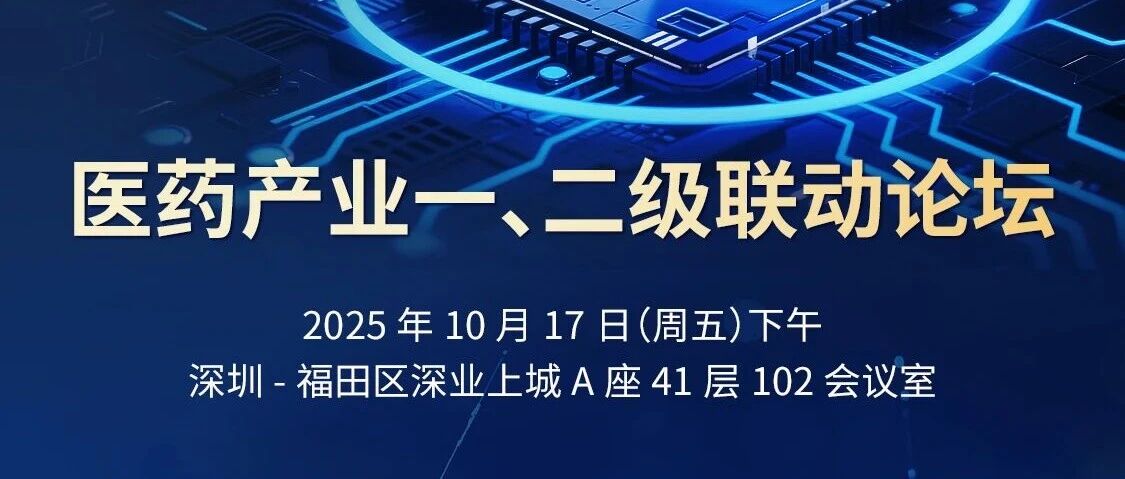
Group 1 - The article discusses the upcoming forum on the pharmaceutical industry scheduled for October 17, 2025, in Shenzhen, focusing on innovation in drug development and market expansion [2] - Key topics include the exploration of innovative drugs going global and the potential of dual antibodies as the next cornerstone therapy [2] - The forum will feature discussions led by industry experts, including insights from angel investment perspectives on the new trends in China's innovative drug development [2]
国泰海通|钢铁:节后需求仍有望逐步恢复增长
国泰海通证券研究· 2025-10-14 14:08
Core Viewpoint - The steel industry is expected to gradually recover as demand stabilizes and supply-side adjustments begin to take effect, with potential acceleration if supply policies are implemented [1][4]. Demand and Supply Analysis - Demand has decreased, with apparent consumption of five major steel products at 7.5143 million tons, down 1.5339 million tons week-on-week; total inventory rose to 16.0072 million tons, an increase of 1.2786 million tons [2]. - The operating rate of blast furnaces among 247 steel mills was 84.27%, a slight decrease of 0.02 percentage points week-on-week, indicating a marginal decline in demand due to the National Day holiday [2]. - Despite the recent decline, the steel demand is expected to gradually recover as the industry is still in the traditional peak season [2]. Profitability and Cost Analysis - The average gross profit per ton for rebar was 167.1 CNY, up 24.3 CNY week-on-week, while hot-rolled coil gross profit was 112.1 CNY, an increase of 29.3 CNY [3]. - The profitability rate for 247 steel companies was 56.28%, down 0.43% week-on-week, indicating a slight decline in overall profitability [3]. - The iron ore inventory at 45 ports was 140.25 million tons, an increase of 242,200 tons, suggesting a potential easing in iron ore prices and improvement in cost factors for the steel industry [3]. Future Outlook - The demand for steel is expected to stabilize, with a reduced negative impact from the real estate sector and steady growth anticipated in infrastructure and manufacturing [4]. - The steel industry is experiencing a market-driven supply adjustment, with over 40% of steel companies currently operating at a loss [4]. - Recent policy proposals aim to continue production cuts and promote the exit of inefficient capacities, supporting a balanced supply-demand dynamic [4]. - Long-term trends indicate that industry concentration will increase, benefiting companies with product structure and cost advantages, especially under stricter environmental regulations [4].

国泰海通|化妆品:双11前瞻:补贴加大,品牌为先
国泰海通证券研究· 2025-10-14 14:08
Core Insights - The article emphasizes the extended duration of the Double 11 shopping festival and the simplification of activity rules across multiple platforms, which is expected to enhance consumer purchasing decisions and boost brand performance during the peak season [1][2]. Group 1: Event Overview - The 2025 Double 11 shopping festival starts earlier than in 2024, with platforms like Douyin and JD launching promotions on October 9, followed by Xiaohongshu and Tmall on October 14, maintaining last year's schedule [2]. - Platforms are shifting focus from "absolute low prices" to simplifying discount rules and providing direct consumer subsidies, thereby optimizing the shopping experience and accelerating purchase decision-making [2]. Group 2: Brand Collaboration and Product Launches - High-end foreign brands and leading domestic brands are increasing the number of SKUs launched during the event, with top brands like L'Oréal, Proya, and Estée Lauder maintaining similar product launch numbers compared to last year [3]. - Domestic brands, except for Proya, have increased their product launches, with new products being introduced, indicating a growing trend in domestic brand popularity driven by influencer marketing [3]. Group 3: Pricing Mechanisms - The overall gift mechanism has been simplified, with many brands adopting a "buy the main product, get the same product free" approach, which directly reduces the effective price for consumers [4]. - Some high-end foreign brands are raising prices and reducing discount offerings, reflecting a strategic shift to focus on long-term brand value after years of price reductions [4]. - In contrast, mass-market brands are increasing promotional efforts to capture market share amid intense competition, with simplified gift offerings to attract consumers [4].