财富FORTUNE

Search documents
杰夫·贝佐斯:压力并非来自努力工作,而是由于回避这类问题
财富FORTUNE· 2025-10-14 13:07
Core Insights - Jeff Bezos suggests that workplace stress arises not from hard work itself but from avoiding issues that need resolution [2][3] - He emphasizes that taking small actions, like making a phone call or sending an email, can significantly reduce stress levels [2] - Bezos argues against the common misconception that stress is a byproduct of hard work, stating that one can work hard and still enjoy it [2] Stress Management Strategies - Bezos extends his logic to job searching, indicating that proactive measures, such as attending interviews, lead to lower stress compared to inaction [3] - Research supports Bezos's view, showing that problem-focused coping strategies are more effective in alleviating stress than emotion-focused strategies [3] - Experts recommend techniques like identifying specific stressors and breaking down complex problems into actionable steps to manage workplace stress [3]



美股牛市显露疲态,投资者开始担忧人工智能热潮的负面影响
财富FORTUNE· 2025-10-14 13:07
Core Viewpoint - The article discusses the potential negative impact of artificial intelligence (AI) on U.S. economic growth, despite the prevailing belief that AI will significantly enhance productivity and drive economic expansion [1][3]. Group 1: Concerns About AI and Economic Growth - Top analysts from Wall Street are questioning whether the AI-driven market rally could actually hinder U.S. economic growth, with concerns about a potential infrastructure bubble [1]. - Morgan Stanley's Chief Investment Officer, Lisa Shalett, expressed worries about a bubble in the AI sector and indicated that the current market rally is nearing its peak [2]. - UBS's Chief Economist, Paul Donovan, raised the question of whether AI is damaging U.S. economic growth, suggesting that the current investment frenzy should be viewed with caution [3]. Group 2: Economic Dynamics and AI - Donovan highlighted that while data centers contribute to economic growth, AI might suppress current growth by reallocating resources, leading to higher electricity costs and reduced consumer spending [4]. - Shalett pointed out that even new AI companies are not experiencing ideal growth rates, attributing this to market saturation and increased competition [4]. - The article notes that despite mid-term risks, some analysts believe AI currently has a net positive impact on growth, as evidenced by GDP performance exceeding expectations [5]. Group 3: Future Projections and Market Sentiment - Analysts predict that capital expenditures in cloud services are expected to grow significantly, with actual growth rates surpassing initial forecasts [6]. - Jason Furman, a Harvard professor, indicated that excluding data center investments would show a drastically different GDP growth outlook, suggesting that AI's impact on growth is complex and multifaceted [7].
若美股AI泡沫破裂,中国市场能否独善其身?
财富FORTUNE· 2025-10-14 13:07
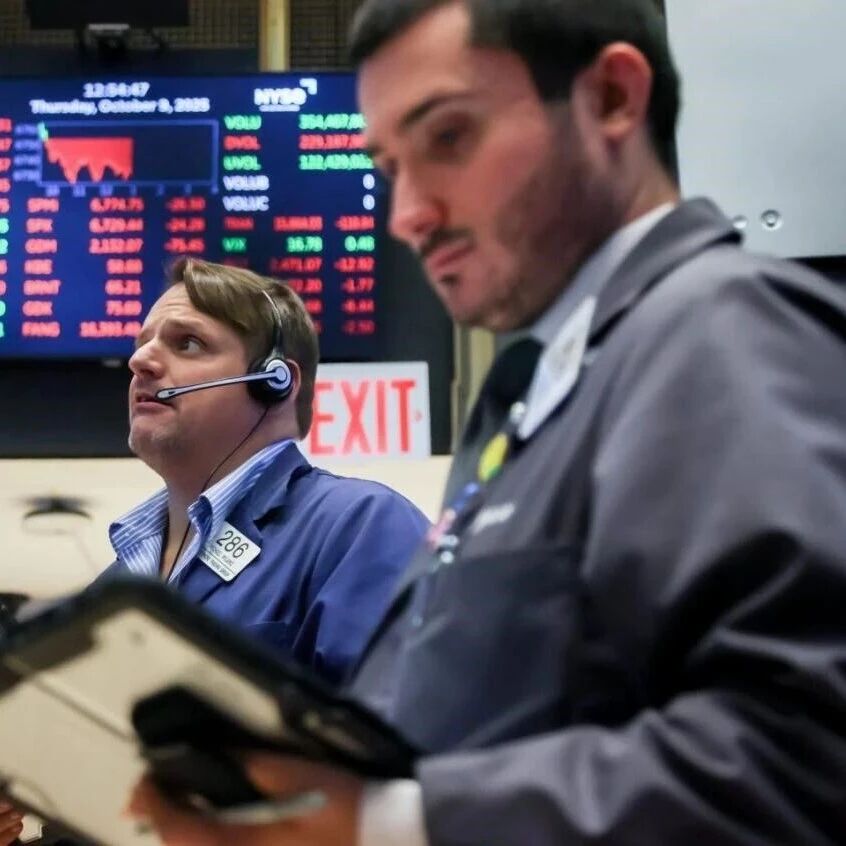
图片来源:视觉中国 天价订单、巨额债务、循环交易,美股AI市场狂热潜伏的危机,正引起全球投资者的警觉。 在连续多日暴涨后,10月7日美股开盘,甲骨文一度大跌逾7%,因媒体报道称其云利润率逊色,引发美 股AI泡沫争议再起。回想本世纪初美股互联网泡沫的破裂,其实质上揭示了一个残酷现实:大多数网 络公司无法用实际业务表现支撑其估值。当时,企业的价值衡量标准从现金流、盈利能力等传统指标, 转向了网站流量和增长数据。如今人工智能企业正面临相似考验——尽管美国AI投资已达历史性高 度,收入缺口却依然巨大。 科技作家埃德·齐特伦近期指出,微软、Meta、特斯拉、亚马逊和谷歌过去两年在AI基础设施领域投入 约5600亿美元,但获得的AI相关收入总额仅350亿美元。不难想象,如果OpenAI的资本投入回报未如理 想,那么甲骨文等美国科技巨头的高估值或将面临重塑。 在中美两国AI各自独立发展之际,如果美股AI泡沫破裂,中国市场能否走出独立行情? 美股AI板块暴露"风险共同体"隐患 今年9月,甲骨文股价一度单日飙升超40%,创下1992年以来最大单日涨幅,公司创始人拉里·埃里森财 富也一度超越特斯拉CEO马斯克成为全球首富。这家曾 ...

毕马威:世界对AI的看法已转变
财富FORTUNE· 2025-10-14 13:07
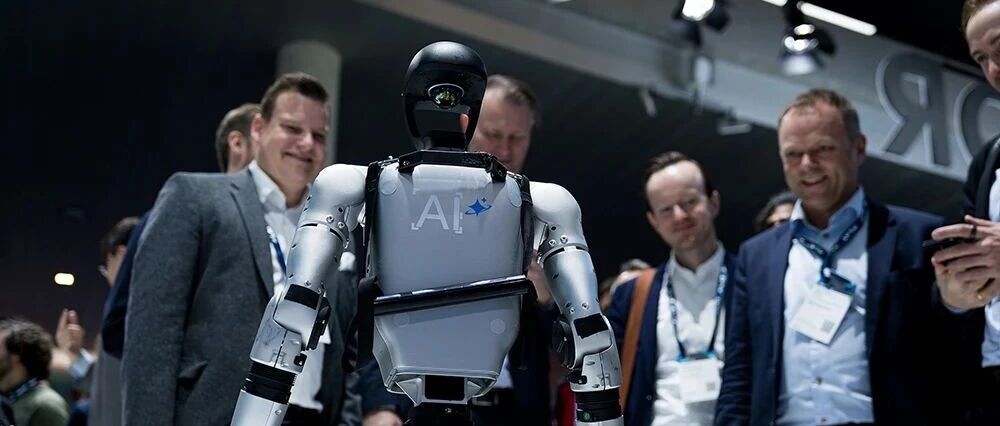
Core Insights - The article discusses the rapid adoption of AI in major U.S. companies, highlighting a significant increase in the deployment of AI agents from 11% to 42% within six months, indicating a fourfold growth [2] - There has been a fundamental shift in perception towards AI, with resistance dropping from 47% to 21%, and over half of employees now accepting or actively engaging with AI tools [2][3] - The relationship between human employees and AI is evolving, with AI being compared to a "toddler" that requires human guidance and supervision, emphasizing the need for human-AI collaboration [4][5] Group 1: AI Adoption and Perception - The deployment of AI agents in companies has surged, with 42% of firms now utilizing them, up from 11% [2] - The perception of AI has shifted from fear to acceptance, with only 21% of employees expressing resistance compared to 47% previously [2] - The technology departments are leading the adoption, with 95% of them using AI to enhance efficiency [2] Group 2: Human-AI Collaboration - AI is not yet capable of fully replacing human employees, necessitating a "human in the loop" approach for effective collaboration [3][4] - Employees view AI as an empowering tool rather than a replacement, fostering a sense of security due to the need for human oversight [4][5] - The skills required in the AI era include critical thinking, questioning ability, and adaptability, which are becoming increasingly important [4] Group 3: Measuring AI Impact - Traditional business metrics are inadequate for capturing the transformative impact of AI, with 78% of leaders acknowledging that conventional KPIs fail to reflect AI's value [6] - Many AI projects have not met expected ROI, indicating a need for new metrics to evaluate AI effectiveness [6] - Companies are now focusing on productivity (97%), profitability (94%), and quality improvement (91%) as key indicators of AI's impact [6] Group 4: Workplace Transformation - The workplace culture is evolving due to AI, requiring entry-level employees to develop higher levels of skepticism, critical thinking, and adaptive reasoning [7] - There is a trend among 56% of leaders to adjust recruitment strategies for entry-level positions to reduce repetitive tasks and increase critical work [8] - The younger generation, accustomed to digital technology, may need to cultivate more skepticism towards AI due to its early-stage development [7]

美国政府停摆,1.8万亿美元赤字浮出水面
财富FORTUNE· 2025-10-13 13:21
Core Viewpoint - The article emphasizes the urgent need for fiscal responsibility in the U.S. government, highlighting the alarming federal deficit of $1.8 trillion for the fiscal year 2025 and the potential risks associated with the current debt trajectory [1][3]. Group 1: Federal Budget Concerns - The Committee for a Responsible Federal Budget (CRFB) criticizes the recent government shutdown as "meaningless and wasteful," revealing a federal deficit of $1.8 trillion for FY 2025, raising concerns about the nation's fiscal path amid political gridlock [1]. - The CRFB's chair, Maya MacGuineas, warns that while borrowing levels have not increased, the lack of reduction in the deficit is troubling, with the national debt now equivalent to the overall economy and projected to exceed post-World War II records [1][3]. - The CRFB calls for immediate government operations to resume without new borrowing terms and suggests extending discretionary spending caps to control expenditures [1]. Group 2: Long-term Financial Sustainability - MacGuineas stresses the need to address the solvency crisis of long-term entitlement programs, particularly Medicare and Social Security, which could face funding depletion within seven years without reforms [2]. - The CRFB proposes the establishment of a fiscal commission aimed at reducing the deficit to 3% of GDP, acknowledging the ambitious nature of this goal given current debt trends [3]. Group 3: Broader Economic Implications - The article references hedge fund billionaire Ray Dalio's skepticism regarding President Trump's claims that record growth can eliminate the $37 trillion debt, emphasizing that debt-driven prosperity is often short-lived [4]. - Dalio's analysis indicates that by 2035, publicly held debt could rise to 118% of GDP, with net interest payments increasingly burdening economic output [4]. Group 4: Investment Trends - Dalio suggests that the rising gold prices, which are expected to reach historical highs by 2025, reflect a shift in investment trends away from debt assets and fiat currencies, linking this to the increasing global debt levels, particularly the U.S. debt [5].

NASA太空垃圾坠入美国乡村民居,居民受惊
财富FORTUNE· 2025-10-13 13:21
Core Points - NASA's scientific balloon facility launched a large research device that unexpectedly landed in Texas, causing local residents to witness the event firsthand [2][3] - The device, which is the size of a sports utility vehicle, was equipped with a telescope to collect data on stars, galaxies, and black holes [3][4] - The incident occurred during a government shutdown, which affected communication with NASA officials [2] Summary by Sections - **Incident Description** - A large square research device, approximately the size of a sports utility vehicle, was seen descending with a giant parachute in Texas [2] - The parachute had a diameter of at least 30 feet (about 9.1 meters) [2] - **NASA's Involvement** - The device was launched from Sumner, New Mexico, about 140 miles (approximately 225 kilometers) from where it landed [2] - NASA's Columbia Scientific Balloon Facility is responsible for launching these high-altitude balloons for scientific experiments [2][3] - **Local Reaction** - Local resident Ann Walter expressed her astonishment at witnessing the event and described it as a surreal experience [5] - The device was eventually recovered by researchers using trucks and trailers [4]

《财富》人工智能头脑风暴线上研讨会
财富FORTUNE· 2025-10-13 13:21
Core Insights - The upcoming online seminar hosted by Fortune focuses on "The Application of Artificial Intelligence in Work Settings: Restructuring Business and Talent Strategies" [1][4] - The rapid development of generative artificial intelligence is not only a technological revolution but also a transformative force reshaping business models and redefining talent strategies [1][4] - The success of organizations exploring this new landscape hinges on the seamless integration of artificial intelligence with human expertise [1][4] Event Details - The seminar is scheduled for November 13, 2025, from 11:00 AM to 12:00 PM Singapore Time [1] - The event will feature industry experts from leading companies in the Asia-Pacific region discussing how human-machine collaboration can drive innovation and optimize operational efficiency [1][4] Speaker Lineup - Will Brown, Human Resources Director at Standard Chartered Bank [5] - Gastón Carrión, Managing Director and Head of Talent and Organization for Accenture Asia-Pacific [9] - Rowena Yeo, Chief Technology Officer and Vice President of Technical Services at Johnson & Johnson [11] - Connie Zheng, Associate Professor of Human Resource Management at UniSA Business School [12] - The discussion will be moderated by Nicholas Gordon, Editor of Fortune Asia [12][14]
2025年《财富》亚洲最具影响力的商界女性
财富FORTUNE· 2025-10-13 13:21
《财富》亚洲最具影响力的商界女性榜单(MPW Asia)是亚洲女性商业领袖的权威排名,今年的榜单 聚焦100位善用区域与全球经济动荡创造商业机遇的领导者。入选者由《财富》编辑团队依据其可量化 的影响力、战略布局以及未来塑造力甄选而出,涵盖影响力跨国及跨行业的创始人、首席执行官以及其 他高管。逾三分之一入选者来自《财富》世界500强、中国500强及东南亚500强企业,辐射东南亚、大 中华区、印度、日本、韩国及澳大利亚的14个市场。本年度榜单还特别呈现12位非商界杰出女性——她 们以卓越的公共领导力和文化影响力正在重塑当今亚洲的权力版图。 在2025年《财富》亚洲最具影响力的商界女性榜单中,来自金融与科技领域的高管位居前列。随着人工 智能热潮的兴起和资本流向的变化,亚洲女性高管正在迎来前所未有的机遇。 今年《财富》评选出的亚洲最具影响力的商界女性当中,东南亚最大银行星展集团的首席执行官陈淑珊 位列榜首。她于今年3月正式执掌该银行。自上任以来,陈淑珊面临贸易战重燃以及加密货币等另类金 融产品卷土重来的挑战。 她在最新一期《财富》杂志中表示:"我对同事们说,今年将是跌宕起伏的一年,大家最好系好安全 带。" 中国科技制 ...



英伟达对OpenAI千亿美元投资引发“循环交易”质疑
财富FORTUNE· 2025-10-12 13:07
Core Viewpoint - Nvidia's recent $100 billion investment in OpenAI raises concerns about a potential financial bubble in the AI sector, as the valuation of companies in this field may not align with their actual revenue and profit calculations [2][9] Investment Network Complexity - Nvidia has established a complex investment network, notably with OpenAI and Coreweave, where investments lead to mutual benefits, creating a cycle of funding and procurement that obscures the true flow of capital [3][5] - Nvidia's investments allow companies like OpenAI and Coreweave to secure financing at rates comparable to established firms like Microsoft, significantly lower than what startups typically face [5][8] Financial Transactions and Implications - Nvidia has committed to purchasing cloud computing resources from Coreweave, with total expenditures reaching approximately $75 billion for GPUs, indicating a strategy where investments are recouped through sales [6][8] - The company has also engaged in similar agreements with other cloud firms, further entrenching its position in the AI infrastructure market [6][8] Concerns Over Valuation Bubble - Analysts express concerns that Nvidia's financing practices resemble those seen during past tech bubbles, where companies provided loans to customers, leading to inflated valuations and eventual market corrections [9][10] - The rental agreements with OpenAI allow the latter to avoid high depreciation costs, placing the burden on Nvidia, which could lead to inventory issues if demand does not meet expectations [9][10] Historical Parallels - The current situation draws parallels to the dot-com bubble, where excessive financing led to unsustainable growth and significant market corrections, raising alarms about Nvidia's current investment strategies [10][11]


知名风险投资人:AI不会导致“全民失业返贫”
财富FORTUNE· 2025-10-11 13:21
Core Viewpoint - The article discusses the contrasting opinions of business leaders regarding the impact of AI on the workforce, highlighting concerns about job loss versus the potential for increased productivity and economic growth [1][3]. Group 1: Impact of AI on Employment - Dario Amodei, CEO of Anthropic, warns that 50% of white-collar jobs may become obsolete due to AI [1]. - Mark Anderson argues against the prevailing economic myth that AI will drastically increase productivity while simultaneously leading to widespread poverty, suggesting that increased productivity will result in lower prices and greater consumer purchasing power [1][2]. - Anderson believes that the fear of job loss due to AI is overstated, as many jobs require certifications, union protections, or are in public service sectors that AI cannot easily replace [3][4]. Group 2: AI's Role in Enhancing Productivity - AI is seen as a tool that can enhance individual productivity, allowing workers to become experts in their fields [3]. - Anderson emphasizes that while some roles are being replaced by AI, many functions still require human involvement, particularly in regulated fields like healthcare and law [4]. - The article notes that healthcare is one of the sectors least likely to be affected by AI job displacement, as patients prefer human interaction for treatment [3][4].