GEELY AUTO(00175)

Search documents
年销2700万辆,中国汽车又一个世界冠军
3 6 Ke· 2026-02-13 09:55
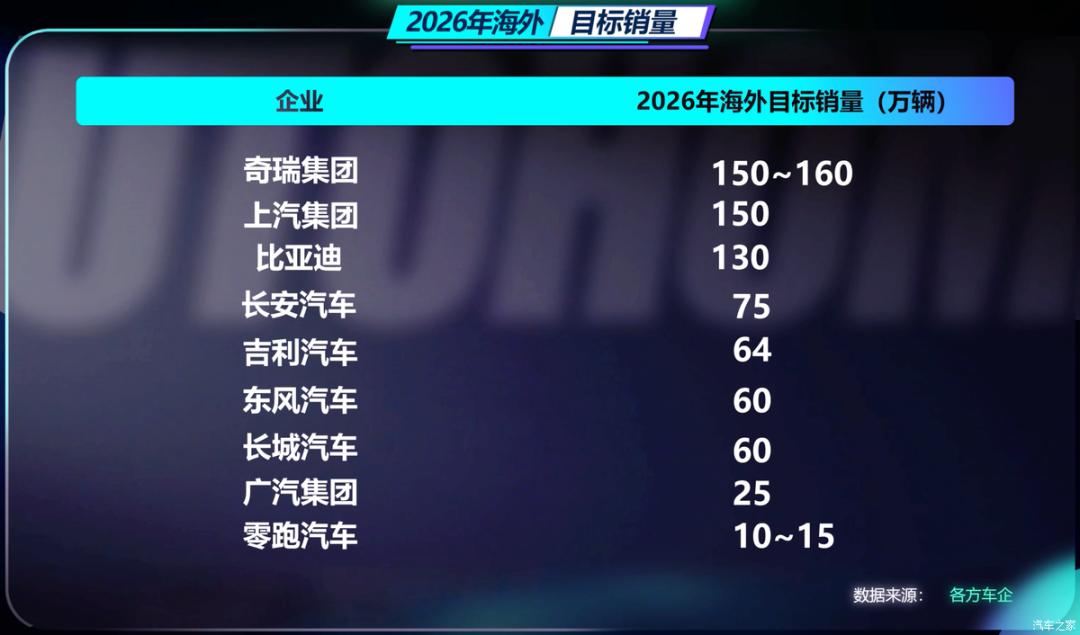
Core Insights - In 2025, Chinese automakers achieved a total global sales volume of 27 million vehicles, surpassing Japan for the first time in over 20 years, marking a significant milestone in the automotive industry [1] - Chinese automobile exports reached 8.32 million units in 2025, maintaining the title of the world's largest exporter for the third consecutive year, with Japan trailing at 4.21 million units [1] - Nine Chinese automakers have already set ambitious overseas sales targets for 2026, indicating confidence in continued growth in international markets [1][2] Group 1: Sales Performance - In 2025, Chery, SAIC, and BYD each exceeded 1 million units in overseas sales, with Chery selling 1.34 million units, representing nearly half of its total sales and a 17% increase year-on-year [3] - BYD's overseas sales surged by 145%, showcasing rapid growth from negligible figures to over 1 million units in just four years [3] - The overall export volume of Chinese automobiles grew by 29.9% in 2025, with December alone witnessing a remarkable 73.2% year-on-year increase, reaching 994,000 units [5] Group 2: Market Trends - The export of Chinese new energy vehicles (NEVs) reached 3.43 million units in 2025, a 70% increase, reflecting a growing global acceptance of electric vehicles [8] - In Europe, electric vehicles accounted for a record 19% of the market share in 2025, with Germany producing 1.67 million electric passenger cars, marking a 23% year-on-year growth [10] - Chinese brands are increasingly gaining traction in international markets, with significant sales growth in Australia and Europe, where they are becoming more competitive against traditional automakers [10][12] Group 3: Strategic Developments - Chinese automakers are expanding their presence in North America and Latin America, with Mexico becoming the largest market for Chinese car exports in 2025 [14] - Agreements with Canada allow Chinese companies to export electric vehicles at a reduced tariff rate, indicating a favorable trade environment [16] - The establishment of local supply chains and partnerships in various regions is a strategic move to enhance competitiveness and market penetration [16][17]





吉利汽车2月13日斥资2690.81万港元回购159.5万股
Zhi Tong Cai Jing· 2026-02-13 08:58
Group 1 - The company Geely Automobile (00175) announced a share buyback plan, intending to repurchase 1.595 million shares at a cost of HKD 26.9081 million [1]
吉利汽车(00175.HK)2月13日耗资2690.8万港元回购159.5万股
Ge Long Hui· 2026-02-13 08:56
Group 1 - The company, Geely Automobile, announced a share buyback on February 13, spending HKD 26.908 million to repurchase 1.595 million shares [1]
吉利汽车(00175)2月13日斥资2690.81万港元回购159.5万股
智通财经网· 2026-02-13 08:56
Group 1 - The company, Geely Automobile, announced a share buyback plan, intending to repurchase 1.595 million shares at a cost of HKD 26.9081 million [1]
吉利汽车(00175) - 翌日披露报表
2026-02-13 08:46
FF305 | 第一章節 | | | | | | | | | | --- | --- | --- | --- | --- | --- | --- | --- | --- | | 1. 股份分類 | 普通股 | 股份類別 | 不適用 | | 於香港聯交所上市 | 是 | | | | 證券代號 (如上市) | 00175 | 說明 | | | | | | | | 多櫃檯證券代號 | 80175 | RMB 說明 | | | | | | | | A. 已發行股份或庫存股份變動 | | | | | | | | | | | | | 已發行股份(不包括庫存股份)變動 | | 庫存股份變動 | | | | | 事件 | | 已發行股份(不包括庫存股份)數 目 | | 佔有關事件前的現有已發 行股份(不包括庫存股 份)數目百分比 (註3) | 庫存股份數目 | 每股發行/出售價 (註4) | 已發行股份總數 | | | 於下列日期開始時的結存(註1) | 2026年2月12日 | | 10,822,010,297 | | 9,452,000 | | 10,831,462,297 | | | 1). 購回股份 (股份被持作庫存 ...
吉利周大永:用技术创新支撑中国汽车全球化发展
Zhong Guo Qi Che Bao Wang· 2026-02-13 07:00
Core Insights - The development of zero-gravity seats is a significant aspect of the high-end transformation of Chinese automobiles, focusing on quality and comfort for consumers [1] - The automotive industry in China is experiencing a shift towards innovation and leadership, particularly in the dimensions of intelligence ("智") and quality ("质") [3] Group 1: Intelligence ("智") - Intelligent tools such as AI have been integrated into every stage of automotive development, significantly reducing the time and cost associated with physical testing [4] - The transition from experience-driven to data-driven development has led to substantial improvements in efficiency and quality [4] Group 2: Quality ("质") - The introduction of the All-Domain Safety 2.0 technology system by Geely represents a significant upgrade in automotive safety, incorporating a comprehensive view of safety that includes "public domain safety" [5] - Geely has established a global safety center to enhance its verification capabilities, ensuring compliance with global regulations and addressing real-world complexities [5] Group 3: Collaborative Innovation - The enhancement of automotive safety performance requires collaborative efforts across the industry, moving from a follower to a leader role [6] - The integration of various disciplines within automotive development is essential for rapid iteration and systemic responses to technological innovations [6] Group 4: Case Study - Zero-Gravity Seat - The development of the zero-gravity seat involved creating a unique testing dummy to simulate collision impacts for non-standard seating positions, showcasing Geely's commitment to innovation in safety verification [8] - This initiative reflects a broader goal of establishing Chinese standards in global safety testing frameworks [8] Group 5: Globalization and Future Strategy - Geely is preparing for globalization by fostering cross-disciplinary talent and establishing deeper collaborations within the industry [9] - The aim is to ensure that Chinese automotive products and technologies are competitive globally, adapting to various market needs and regulations [9]
吉利欣旺达就动力电池诉讼达成和解 中国车企交出质量责任共担答卷
Xin Hua Cai Jing· 2026-02-13 06:45
Core Viewpoint - The recent settlement between Geely's Weir Electric Vehicle Technology Co., Ltd. and Aoxin Wanda's subsidiary Aoxin Wanda Power regarding a battery quality dispute, involving a total amount of 2.314 billion yuan, highlights the importance of collaborative problem-solving in the rapidly evolving electric vehicle industry [1][3]. Financial Arrangement - Aoxin Wanda Power will pay Weir Electric a total of 608 million yuan over five years, with specific payment milestones set for each year from 2026 to 2030 [1]. - The agreement specifies that costs incurred until December 31, 2025, will be shared after deducting amounts already borne by both parties, while costs after this date will be shared according to an agreed ratio [1][2]. Industry Implications - The resolution of this dispute within 43 days not only avoids prolonged litigation but also minimizes negative impacts on the industry ecosystem, emphasizing the need for effective collaboration between automakers and suppliers [3]. - The automotive industry is currently facing challenges such as accelerated technological iteration, intensified market competition, and heightened quality demands, necessitating a cooperative approach to quality management [3][4]. Quality Control Responsibilities - Automakers are urged to maintain strict quality standards and take core responsibility for quality control across the entire supply chain, including supplier selection and product acceptance [4]. - Suppliers are encouraged to uphold high product quality and collaborate with automakers to address quality disputes rationally and effectively [4]. Future Recommendations - Industry experts suggest that companies should enhance collaborative mechanisms, standardize dispute resolution processes, and foster an ecosystem characterized by risk-sharing, benefit-sharing, and collaborative development [4].

多家车企明确2027年计划开展全固态电池装车示范工作;MinerU完成10余家国产AI芯片算力适配丨智能制造日报
创业邦· 2026-02-13 03:37
Group 1 - Multiple automotive companies, including Geely and Chery, have announced plans to conduct all-solid-state battery vehicle demonstration work by 2027, with Geely aiming for small-scale industrialization by 2027 and full commercialization by 2030 [2] - Chery plans to achieve a 0.5GWh pilot production line by 2026 and start all-solid-state battery vehicle demonstrations in 2027, moving towards large-scale application [2] Group 2 - MinerU, an AI document parsing tool developed by the Shanghai Artificial Intelligence Laboratory, has completed compatibility adaptations with over 10 domestic AI chip manufacturers, achieving a 99% accuracy rate in capturing elements from PDFs and complex web pages [2] - This initiative aims to enhance the ecological compatibility and adaptability of the MinerU project through a full-stack optimization strategy [2] Group 3 - The first national AI application scenario center, LuckyMate.AI, has opened in Shenzhen's Huaqiangbei, providing a platform for AI technology demonstration, industry connection, and urban application [2] Group 4 - EssilorLuxottica, the parent company of Ray-Ban, expects a more than threefold increase in sales of AI smart glasses in collaboration with Meta by 2025, having sold over 7 million pairs of AI glasses last year [2]

观察|1月车市三把“王座”全部易主
Guang Zhou Ri Bao· 2026-02-13 03:15
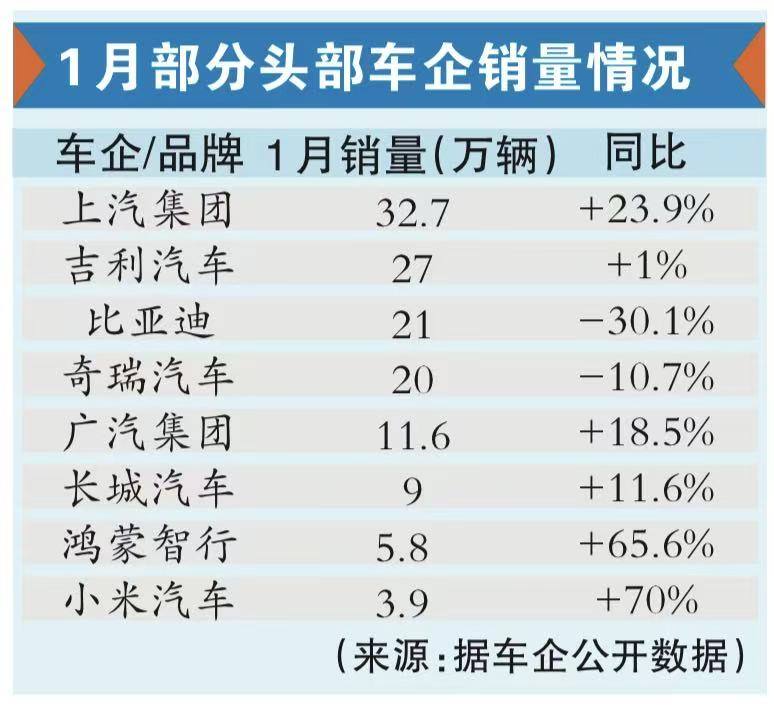
Core Insights - The January sales figures indicate a significant shift in the competitive landscape of the Chinese automotive market, with traditional giants like SAIC and Geely reclaiming leadership positions, while BYD's dominance is challenged [1][3][4] Group 1: Sales Performance - SAIC Group achieved sales of 327,000 vehicles in January, marking a year-on-year increase of 23.9% [2][4] - Geely Automotive sold 270,100 vehicles, a year-on-year growth of 1%, surpassing BYD to become the top-selling domestic brand [2][4] - BYD's sales fell to 210,000 vehicles, experiencing a significant year-on-year decline of 30.1% [2][4] - New energy vehicle sales for SAIC reached 85,000 units, growing by 39.7% [4] - The overall automotive production and sales in January were 2.45 million and 2.346 million units, respectively, with a slight year-on-year production increase of 0.01% [7] Group 2: New Players and Market Dynamics - The new energy vehicle segment saw a reshuffling, with Hongmeng Zhixing leading the new force with 57,915 units sold, a remarkable year-on-year increase of 65.6% [6] - Xiaomi Automotive followed closely with over 39,000 units sold, achieving a year-on-year growth of approximately 70% [6] - The previous leaders in the new force segment, such as Leap Motor, have seen a decline, with their sales dropping to 32,059 units [6] Group 3: International Market Growth - The overseas market is identified as a key growth area for automotive companies, with January exports reaching 681,000 vehicles, a year-on-year increase of 44.9% [7] - Exports of new energy vehicles doubled to 302,000 units, highlighting the importance of global expansion for competitive advantage [7]
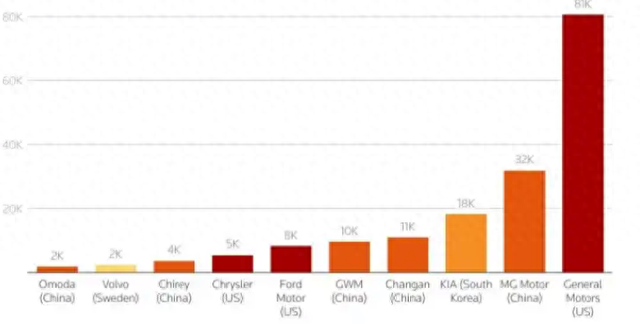
“墨西哥官员想在跟美国谈妥前,暂缓中国投资”
Guan Cha Zhe Wang· 2026-02-13 02:03
Group 1 - The core issue is the impact of US tariffs on Mexico's automotive industry, leading to factory closures and job losses, while Chinese investments are seen as a potential solution [1][5] - Chinese automakers BYD and Geely are reportedly in the final bidding for the Nissan-Benz factory in Mexico, with VinFast also in the running, indicating a strategic move by Chinese companies to establish manufacturing bases in Mexico [1][2] - The Mexican government faces a dilemma between the need for job creation through Chinese investments and the risk of angering the US, which could jeopardize trade negotiations [1][7] Group 2 - Mexico's automotive industry has been significantly affected by US tariffs, with a reported loss of approximately 60,000 jobs due to the impact of tariffs since last year [5][6] - The Nissan-Benz factory in Aguascalientes, which has an annual capacity of 230,000 vehicles, is a key asset that could reshape the local industry landscape if acquired by Chinese firms [4][6] - The Mexican Congress has imposed tariffs of up to 50% on around 1,400 products from China, which has been criticized by Chinese officials as detrimental to bilateral trade relations [2][7] Group 3 - The market share of Chinese automakers in Mexico has grown from zero in 2020 to approximately 10% last year, with BYD and Geely both exceeding 4 million units in sales [2][5] - The Mexican automotive industry is heavily reliant on exports to the US, with projections indicating a decline in exports by nearly 3% in 2025 due to ongoing tariff pressures [5][6] - The Mexican government has been urged to reconsider its tariff policies, as they may lead to increased inflation on consumer goods and negatively impact local industries [7][8]