
GEELY AUTO(00175)

Search documents
新势力 | 1月:车市表现平淡 新势力同比表现好于行业【国联民生汽车 崔琰团队】
汽车琰究· 2026-02-05 03:45
Core Viewpoint - The January 2026 performance of the new energy vehicle market was relatively flat, but new forces in the industry showed better year-on-year performance compared to the overall market [3]. Group 1: January Delivery Data - Leap Motor delivered 32,059 vehicles in January, a year-on-year increase of 27.4% but a month-on-month decrease of 31.9% [2]. - Li Auto delivered 27,668 vehicles, down 7.5% year-on-year and down 37.5% month-on-month [7]. - NIO delivered 27,182 vehicles, marking a significant year-on-year increase of 96.1% but a month-on-month decrease of 14.2% [6]. - Zeekr delivered 23,852 vehicles, with a year-on-year increase of 99.7% and a month-on-month decrease of 9.3% [8]. - Xpeng delivered 20,011 vehicles, down 34.1% year-on-year and down 38.0% month-on-month [5]. - Xiaomi delivered over 39,000 vehicles in January [8]. Group 2: Market Performance Analysis - The total retail market for narrow passenger cars in January was approximately 1.8 million units, a month-on-month decrease of 20.4% but a slight year-on-year increase [3]. - The new energy vehicle retail market is expected to reach 800,000 units, with a penetration rate of 44.4% [3]. - The five sample new force car companies (excluding Xiaomi and Aion) delivered a total of 130,772 vehicles, a year-on-year increase of 17.5% but a month-on-month decrease of 28.0% [3]. Group 3: Company-Specific Insights - Leap Motor's growth is attributed to strong product offerings like the C10 and B01, with plans to launch new models in 2026 [4]. - Xpeng's delivery decline is noted, but the company plans to launch multiple new models in 2026 [5]. - NIO's delivery increase is supported by strong sales of the ES8 and new software updates enhancing user experience [6]. - Li Auto's stable sales are backed by the L series, with ongoing expansion in the charging infrastructure [7]. - Zeekr's growth is driven by the success of the 7X model and plans for new model launches [8]. Group 4: Industry Trends - The smart driving technology is accelerating, with companies like Xpeng and Huawei leading the charge in promoting intelligent driving features [9]. - The industry is expected to see a shift towards more affordable smart driving solutions, enhancing competitiveness against joint venture brands [9]. - The rise of intelligent capabilities is becoming a critical factor in competition among automakers, with a focus on autonomous driving and user acceptance [10].





1月车市观察:第一名卖了27万辆,但真正的故事在海外
3 6 Ke· 2026-02-05 03:05
Core Viewpoint - The automotive market is currently experiencing a sales downturn, particularly in the electric vehicle (EV) segment, due to a combination of factors including a shift in vehicle purchase tax policy and seasonal demand fluctuations [1][3][4]. Market Performance - In January, nationwide retail sales of passenger vehicles reached 1.794 million units, reflecting a year-on-year decline of 12.1% and a month-on-month drop of 31.9% [3]. - The performance of major automotive brands showed a pattern of "year-on-year differentiation and month-on-month decline," with domestic brands benefiting from their EV offerings while facing pressure from the tax policy change [3][4]. Domestic Brand Performance - Geely Auto topped domestic sales in January with 270,200 units sold, achieving a year-on-year growth of 1% and a month-on-month increase of 14% [5]. - SAIC Group reported sales of 327,400 units, a year-on-year increase of 23.9%, while its domestic brand sales reached 214,000 units, up 39.6% year-on-year [6]. - GAC Group's sales were 116,600 units, marking an 18.47% year-on-year increase, with its domestic brands showing explosive growth [6]. Joint Venture Brands - Major joint venture brands like GAC Toyota and SAIC General saw a recovery in January, with GAC Toyota selling 63,600 units, a nearly 10% year-on-year increase [9][11]. - SAIC General's sales reached 51,000 units, up 8.2% year-on-year, driven by strong performance in its EV and export segments [11][12]. Export Growth - The overseas market has emerged as a significant growth driver for domestic automakers, with many companies reporting export growth rates exceeding 40% [13][14]. - Chery Group exported 119,600 units in January, a 48.1% year-on-year increase, maintaining its position as the top exporter in China [14]. - Geely's overseas sales reached 60,500 units, reflecting a staggering year-on-year growth of 121% [16]. Industry Trends - The overall trend indicates that by 2026, China's automotive export volume is expected to reach 7.4 million units, with EV exports projected to exceed 30% of total exports [17].


新势力系列点评二十六:1月车市表现平淡,新势力同比表现好于行业
Guolian Minsheng Securities· 2026-02-05 00:25
Investment Rating - The report maintains a positive investment rating for the new energy vehicle sector, indicating a favorable outlook for the industry [7]. Core Insights - The performance of the new energy vehicle market in January 2026 was relatively flat, with a total retail market size of approximately 1.8 million vehicles, a month-on-month decrease of 20.4%, but a slight year-on-year increase. The penetration rate for new energy vehicles reached 44.4% [4]. - Five key new energy vehicle companies (excluding Xiaomi and Aion) delivered a total of 130,772 vehicles in January, representing a year-on-year increase of 17.5% but a month-on-month decrease of 28.0%, outperforming the industry average [4]. - The report anticipates a stabilization and recovery in automotive demand post-Chinese New Year, driven by the rollout of local government subsidies and the introduction of new models [4]. Summary by Relevant Sections Delivery Performance - Leap Motor delivered 32,059 vehicles in January, a year-on-year increase of 27.4% but a month-on-month decrease of 31.9%. The strong performance is attributed to the competitive pricing of models C10 and B01 [5]. - Ideal Auto reported 27,668 vehicles delivered, a year-on-year decrease of 7.5% and a month-on-month decrease of 37.5%. The company is focusing on enhancing user experience through software updates and expanding its service network [9]. - NIO delivered 27,182 vehicles, marking a significant year-on-year increase of 96.1% but a month-on-month decrease of 14.2%. The ES8 model was the top performer [6]. - Zeekr delivered 23,852 vehicles, with a year-on-year increase of 99.7% and a month-on-month decrease of 9.3% [10]. - Xpeng delivered 20,011 vehicles, reflecting a year-on-year decrease of 34.1% and a month-on-month decrease of 38.0% [6]. Market Trends - The report highlights the ongoing trend of intelligent driving technology adoption, with companies like Xpeng and Huawei leading the charge. The expectation is that advancements in intelligent driving will lower hardware costs and expand market access [12]. - The report suggests that the intelligent driving capabilities will become a key competitive factor for automakers, with a focus on companies that are leading in this area [12]. Investment Recommendations - The report recommends focusing on companies with strong intelligent driving capabilities and those that are well-positioned in the new energy vehicle supply chain. Specific companies highlighted include Geely, Xpeng, and BYD [12].


8点1氪丨微信公关总监回应屏蔽元宝链接;vivo确认立项Vlog相机,对标大疆;贾国龙微博解禁,首发内容是速冻西兰花科普视频
3 6 Ke· 2026-02-05 00:04
Group 1 - Novo Nordisk's semaglutide sales reached 250.84 billion yuan in 2025, with a year-on-year growth of over 10% [5] - The sales breakdown includes 127.09 billion Danish kroner for Ozempic, 79.11 billion for Wegovy, and 22.09 billion for oral semaglutide [5] - In China, the total sales for all three semaglutide products amounted to 6.81 billion Danish kroner (approximately 7.49 billion yuan) [5] Group 2 - The Hong Kong High Court rejected Xu Jiayin's appeal regarding the appointment of a receiver and ordered him to pay 1.2 million HKD in legal fees by February 20 [6] - The National Healthcare Security Administration is conducting collective interviews with mental health insurance institutions to strengthen management and combat misuse of insurance funds [6][7] Group 3 - Panasonic's CFO announced potential layoffs could expand to 12,000 employees, following a previous plan to cut 10,000 jobs globally [8] - Multiple small and medium-sized banks have announced increases in deposit rates ahead of the Spring Festival, while some banks have opted to lower rates [8] Group 4 - Walmart's market capitalization surpassed 1 trillion USD, with a stock price increase of over 24% in the past year [10] - PayPal announced that Enrique Lores will take over as CEO on March 1, aiming to enhance execution efficiency and advance strategic initiatives [11] Group 5 - AMD reported a fourth-quarter net profit of 2.52 billion USD, with a year-on-year growth of 42% and revenue of 10.27 billion USD, exceeding market expectations [23] - Alphabet's fourth-quarter net profit was 34.455 billion USD, a 29.8% increase year-on-year, with total revenue of 113.83 billion USD [21]




吉利汽车动态跟踪 —— 出口大幅增长,极氪销量持续向上
Orient Securities· 2026-02-04 13:25
Investment Rating - The report maintains a "Buy" rating for Geely Automobile [3][6] Core Insights - Geely's sales performance in January slightly exceeded industry expectations, with total sales of 270,200 units, a year-on-year increase of 1.3% [9] - The company's export sales saw significant growth, with January exports reaching 60,500 units, a year-on-year increase of 121.2% [9] - The report forecasts net profits for 2025-2027 to be 17.041 billion, 20.604 billion, and 24.318 billion yuan respectively, maintaining a target price of 23.37 HKD [3][5] Financial Summary - Revenue projections for 2023-2027 are as follows: 179.204 billion, 240.194 billion, 319.444 billion, 387.363 billion, and 448.685 billion yuan, with growth rates of 21.1%, 34.0%, 33.0%, 21.3%, and 15.8% respectively [5][10] - Operating profit is expected to grow from 3.806 billion yuan in 2023 to 23.173 billion yuan in 2027, with corresponding growth rates of 4.3%, 100.8%, 110.0%, 22.2%, and 18.1% [5][10] - The gross margin is projected to improve from 15.3% in 2023 to 17.3% in 2027 [10][11] - The report indicates a significant increase in the net profit attributable to the parent company, with a forecast of 5.308 billion yuan in 2023, rising to 24.318 billion yuan by 2027 [5][10]
Ford and Geely discuss European production and tech tie-up
Yahoo Finance· 2026-02-04 13:03
US-based automaker Ford and China’s Geely are ‘in talks’ over a potential collaboration that would combine manufacturing in Europe with shared vehicle technologies, reported Reuters, citing sources. People familiar with the discussions said the two groups are weighing whether Ford’s European plants could assemble vehicles for Geely to sell locally, while also examining collaboration on in-vehicle technologies such as automated driving systems. Two sources described the European manufacturing element as ...

吉利汽车(00175):出口大幅增长,极氪销量持续向上
Orient Securities· 2026-02-04 11:11
Investment Rating - The report maintains a "Buy" rating for Geely Automobile [3][6] Core Views - Geely's sales performance in January slightly exceeded industry expectations, with total sales of 270,200 units, a year-on-year increase of 1.3% [9] - The company's "oil-electric hybrid" strategy has shown significant results, with January sales of new energy vehicles reaching 124,300 units, a year-on-year increase of 2.6% [9] - Exports have seen substantial growth, with January exports reaching 60,500 units, a year-on-year increase of 121.2% [9] - The Zeekr brand has achieved success in the high-end market, with Zeekr 9X becoming the best-selling large SUV in its price range [9] Financial Forecasts and Investment Recommendations - The forecast for net profit attributable to the parent company for 2025-2027 is 17.041 billion, 20.604 billion, and 24.318 billion yuan respectively, maintaining a target price of 20.79 yuan (RMB) or 23.37 Hong Kong dollars [3] - Revenue projections for 2023-2027 are 179.204 billion, 240.194 billion, 319.444 billion, 387.363 billion, and 448.685 billion yuan, with growth rates of 21.1%, 34.0%, 33.0%, 21.3%, and 15.8% respectively [5][10] - Operating profit is expected to grow significantly, with projections of 3.806 billion, 7.644 billion, 16.055 billion, 19.616 billion, and 23.173 billion yuan for the same period [5][10] - The report indicates a consistent improvement in gross margin, projected to reach 17.3% by 2027 [10]
福特、吉利商谈合作:借助福特的产能、吉利的智驾“双赢”;段永平:FSD确实好用,开特斯拉已是我首选丨汽车交通日报
创业邦· 2026-02-04 10:15
1.【丰田汽车将在巴西设立生物燃料实验室】丰田汽车巴西首席执行官Evandro Maggio当地时间2月 3日表示,丰田将在巴西圣保罗州索罗卡巴设立生物燃料实验室,初期将配备约40名工程师。丰田在 索罗卡巴设有工厂。(凤凰网) 2.【段永平:FSD确实好用,开特斯拉已是我首选】2月4日,步步高创始人、著名投资人段永平通过 其雪球账号"大道无形我有型"发文表示,"FSD确实好用,Model Y开起来也没啥不舒服的,现在开 特斯拉已经是我的首选了。"此前,段永平曾表示马斯克是牛人,但投资特斯拉有点难。在2025年11 月上线的访谈中,段永平称不是很喜欢马斯克的品行,投资实际上在跟公司经营者做朋友,"我不想 跟他做朋友,哪怕给我钱我也不干"。段永平还表示,电动车的生意不会太好,差异化很小,特斯拉 做出了差异,但大部分电动车生意很艰苦。(同花顺财经) 扫码可订阅产业日报 欢迎加入 睿兽分析会员 ,解锁 AI、汽车、智能制造 等相关 行业日报、图谱和报告 等。 3.【比亚迪将推出王朝首款B级纯电SUV】2月4日,比亚迪王朝网销售事业部总经理路天在社交平台 发布预告,将推出王朝首款B级纯电SUV——宋Ultra EV。( ...

传吉利将利用福特在欧洲的工厂生产汽车
Guan Cha Zhe Wang· 2026-02-04 10:08
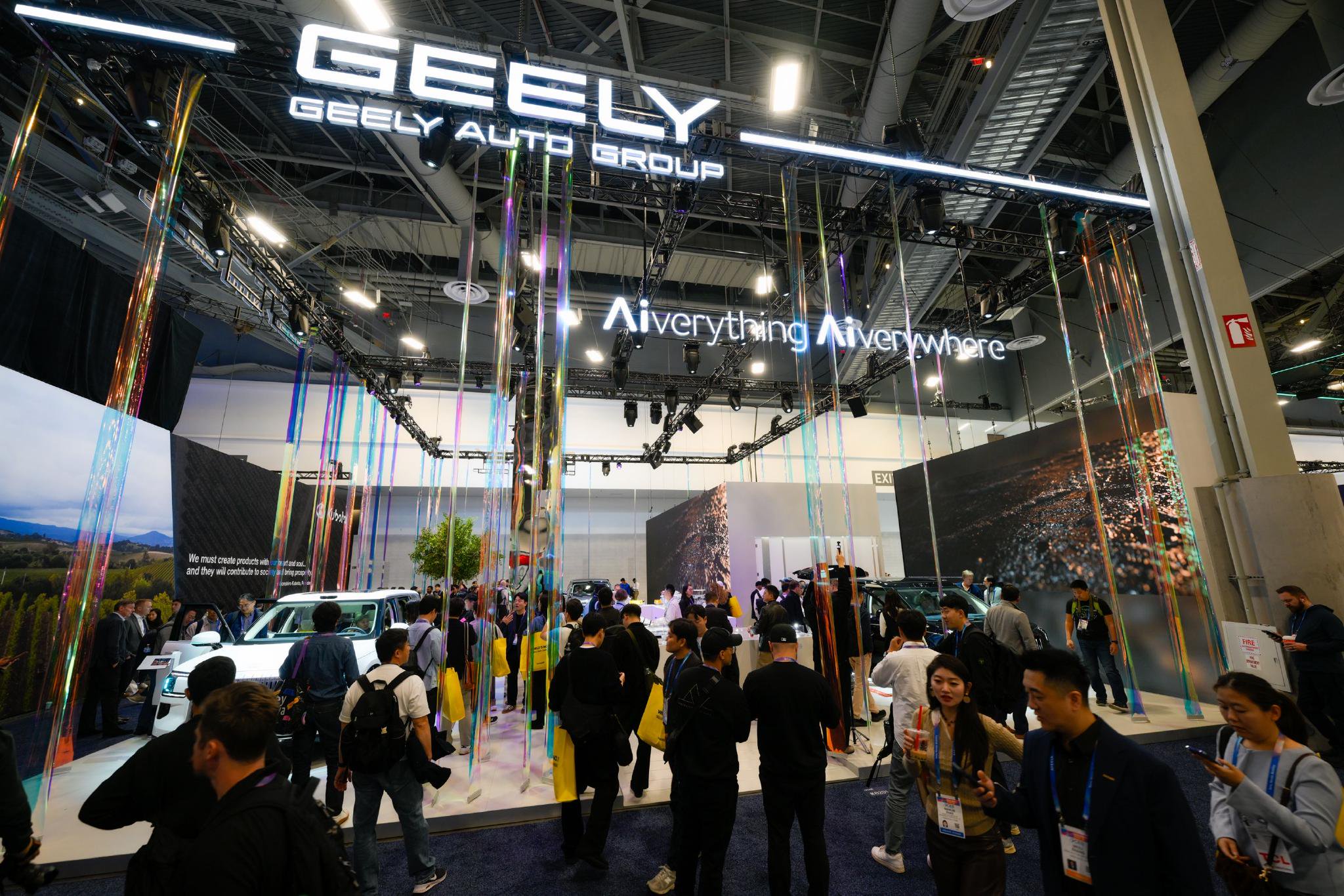
Core Viewpoint - Geely Automobile and Ford Motor are in talks for a potential collaboration to share technology development and production costs, focusing on utilizing Ford's European factories for local market production [1][2]. Group 1: Collaboration Details - The discussions center around Geely using Ford's factory in Valencia, Spain, to produce vehicles for the European market [1]. - Both companies are also exploring the sharing of automotive technologies, including autonomous driving [1]. - Geely's executives recently met with Ford's leadership in Michigan, and Ford sent a delegation to China to further discussions, indicating ongoing negotiations for several months [2]. Group 2: Strategic Context - Geely aims to leverage Ford's European production capabilities to avoid the EU's high tariffs on Chinese electric vehicle imports, which could reach up to 37.6%, with Geely facing a 19.9% tariff [5]. - Other Chinese automakers, such as BYD and Leap Motor, are establishing production bases in Europe to mitigate similar tariff impacts [5]. - Geely has a history of collaboration with European brands, including partnerships with Renault, which have resulted in increased sales in non-European markets [5]. Group 3: Industry Dynamics - Ford's CEO, Jim Farley, has acknowledged the technological lead of Chinese automakers in electric vehicles and the importance of collaboration to mitigate risks in the industry [6][8]. - Ford has previously formed strategic partnerships with other companies, such as Renault, to develop new electric vehicle models [8]. - Recent collaborations between Ford and Chinese companies, including CATL, highlight the growing trend of partnerships in the automotive sector [8]. Group 4: Regulatory Environment - There are uncertainties for Chinese automakers in collaborating with U.S. companies due to regulatory restrictions imposed by the Biden administration, which have limited access to the U.S. market [9]. - Concerns have been raised by U.S. lawmakers regarding the security risks associated with Chinese automotive technology, which could impact future collaborations [9]. - Despite these challenges, there are indications that potential partnerships may still be welcomed if they bring investment and job opportunities to the U.S. [11].
“自主一哥”易主?
Hua Er Jie Jian Wen· 2026-02-04 09:39
Core Viewpoint - The automotive industry is experiencing a significant shift as sales decline across most brands, with Geely surpassing BYD in January sales, marking a pivotal moment in the market dynamics [1][2]. Group 1: Sales Performance - Geely's January sales reached 270,200 units, reflecting a 1% year-on-year growth and a 14% month-on-month increase [4]. - BYD's sales for January were reported at 210,000 units, indicating a competitive landscape where Geely has reclaimed its position as the leading domestic brand [1][4]. - Geely's sales structure showed a notable increase in its China Star series, which sold 134,448 units, up 86% month-on-month, and the high-end series surged by 160% [4]. Group 2: Market Dynamics - The automotive market is at a critical turning point after five years of rapid electrification, with the competition between new energy vehicles (NEVs) and fuel vehicles becoming more pronounced due to policy changes [1][9]. - The reduction of purchase tax incentives has led to a significant drop in the retail penetration rate of NEVs, falling from nearly 60% in December 2025 to approximately 44.4% in January 2026 [5][6]. - The new purchase tax policy, which shifted from full exemption to a 50% reduction, has increased the cost of NEVs, making them less competitive against fuel vehicles [6][9]. Group 3: Strategic Implications - Geely's success in January is attributed to its dual strategy of maintaining both fuel and electric vehicle offerings, allowing for greater flexibility in the current market environment [3][4]. - The market is transitioning from a policy-driven growth model to one focused on value, where companies must enhance efficiency and innovation to survive [9][11]. - Industry experts predict a slowdown in NEV growth to around 8% for the year, down from 30% in the previous year, indicating a challenging environment ahead [11].