
TENCENT(00700)

Search documents
智通港股通活跃成交|2月6日

智通财经网· 2026-02-06 11:13
Group 1 - On February 6, 2026, Alibaba-W (09988), Tencent Holdings (00700), and Yangtze Optical Fibre and Cable (06869) were the top three companies by trading volume in the Southbound Stock Connect, with trading amounts of 4.39 billion, 4.30 billion, and 2.05 billion respectively [1] - In the Southbound Stock Connect, Tencent Holdings (00700), Alibaba-W (09988), and Southern Hang Seng Technology (03033) were the top three companies by trading volume, with trading amounts of 3.37 billion, 2.34 billion, and 1.53 billion respectively [1] Group 2 - In the Southbound Stock Connect, the top active companies by trading amount included Alibaba-W (09988) with a net buy of 0.93 billion, Tencent Holdings (00700) with a net buy of 2.37 billion, and Yangtze Optical Fibre and Cable (06869) with a net buy of 0.12 billion [1] - In the Southbound Stock Connect, Tencent Holdings (00700) had a net buy of 1.95 billion, Alibaba-W (09988) had a net buy of 0.72 billion, and Southern Hang Seng Technology (03033) had a net buy of 0.80 billion [1]
马云督战,千问剑指“AI入口”高地
Hua Er Jie Jian Wen· 2026-02-06 10:59
Core Viewpoint - Alibaba's recent aggressive marketing strategy, including a 30 billion yuan "Spring Festival Treat Plan," aims to establish its AI app, Qianwen, as a dominant player in the market, especially during the high-traffic period of the Spring Festival [1][7][10]. Group 1: Marketing Strategy and Competition - Alibaba's Qianwen app launched a significant promotional campaign, including a 30 billion yuan budget for user engagement during the Spring Festival, marking the largest investment in such activities in the company's history [1][7]. - The competition among major tech giants like Alibaba, Tencent, and Baidu has intensified, with each company investing heavily to capture user attention during the Spring Festival, reminiscent of past marketing battles [9][10]. - Tencent and Baidu have also initiated their own promotional activities, with Tencent offering 10 billion yuan and Baidu 5 billion yuan, but Alibaba's investment is notably higher [7][9]. Group 2: User Engagement and Market Dynamics - The presence of Jack Ma at Alibaba's headquarters and his focus on user engagement highlights the importance of capturing consumer interest in the AI sector, as failing to do so could render technological advancements ineffective [5][6]. - The traditional methods of user acquisition through financial incentives are being questioned in the context of AI, as the sustainability of such strategies remains uncertain [2][12]. - The market's reaction to these promotional efforts has been mixed, with stock prices for Alibaba and Tencent declining despite the announcements, indicating investor skepticism about the long-term viability of these strategies [13][15]. Group 3: Future Challenges and Considerations - The challenge for Alibaba lies not only in attracting users through subsidies but also in retaining them post-campaign, as user loyalty in AI applications is less predictable compared to traditional services [14][16]. - The financial implications of acquiring users through heavy subsidies could lead to increased operational costs, raising concerns about profitability in the long run [13][14]. - The shift towards AI-driven platforms necessitates a reevaluation of user engagement strategies, as the competitive landscape evolves beyond traditional app-based interactions [12][16].

资金动向 | 北水持续抢筹腾讯、阿里,抛售康方生物3亿港元
Ge Long Hui· 2026-02-06 10:54
Group 1 - On February 6, southbound funds recorded a net purchase of HKD 14.859 billion, with Tencent Holdings and Alibaba receiving net buys of HKD 4.324 billion and HKD 1.656 billion respectively [1] - Kangfang Biotech and Changfei Optical Fiber Cable experienced net sales of HKD 306 million and HKD 79 million respectively [1] - Tencent Holdings closed at HKD 547.50, down 1.97%, while Alibaba closed at HKD 155.00, down 2.88% [2][3] Group 2 - Tencent and Alibaba faced further restrictions on their AI applications, impacting their competitive positioning in the consumer AI sector [4] - Bubble Mart announced London as its European headquarters and plans to open seven new stores in the UK, creating over 150 jobs [4] - China National Offshore Oil Corporation (CNOOC) is expected to see a rebound in oil and industrial metal prices by 2026, despite current commodity market volatility [4] Group 3 - China Mobile, along with other major telecom operators, launched Beidou SMS services, which may help mitigate profit pressures from increased VAT rates [5] - Morgan Stanley maintains a positive outlook on China Mobile due to its high profit margins and attractive dividend yield [5]



微信「大战」BAT:三天三场「封杀」
Di Yi Cai Jing· 2026-02-06 10:36
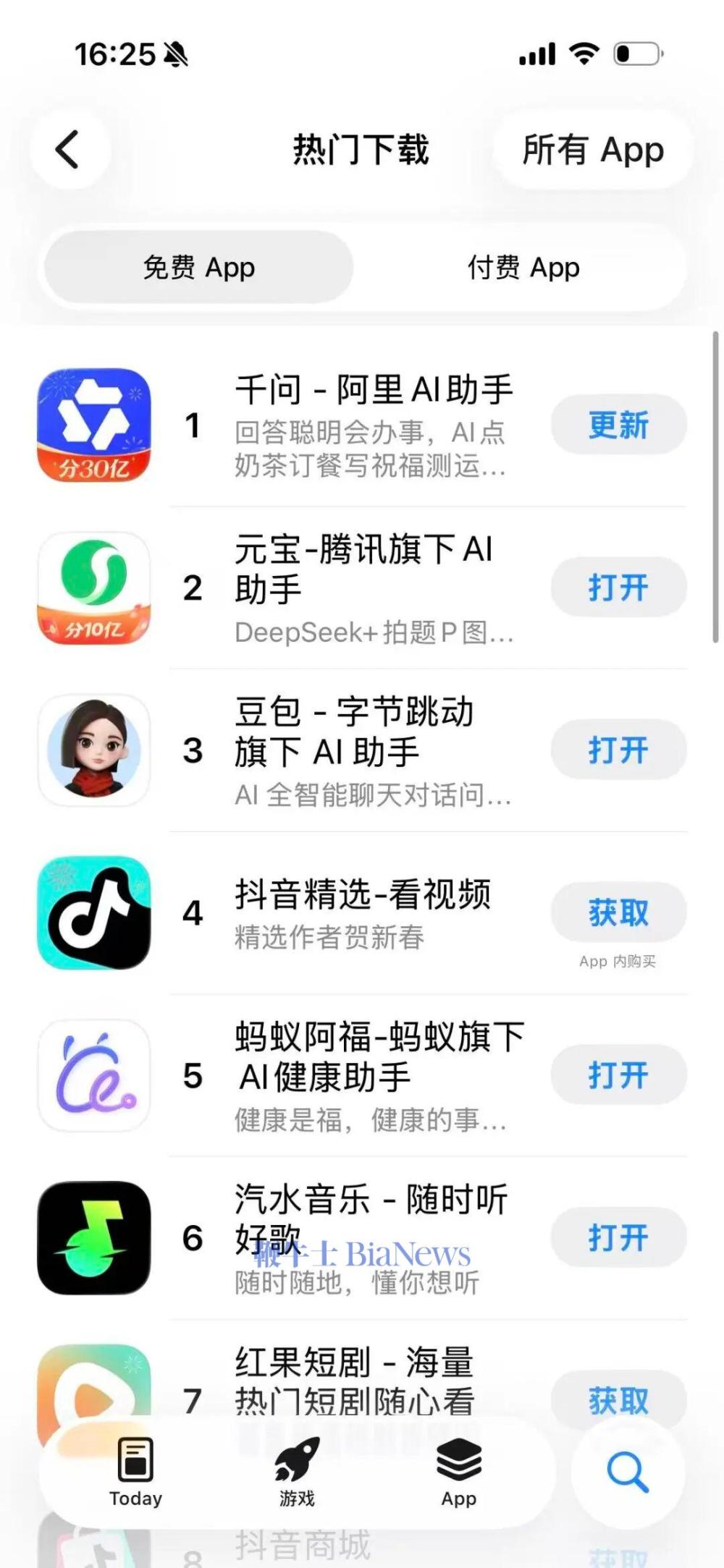
Core Viewpoint - The competition for user engagement during the Spring Festival has intensified, particularly on WeChat, as major companies like Tencent and Alibaba engage in aggressive marketing strategies, including substantial cash giveaways and promotional activities [1][3]. Group 1: Marketing Strategies - Tencent's "Yuanbao," Alibaba's "Qianwen," and Baidu's "Wenxin" have launched significant promotional campaigns, with Qianwen achieving over 10 million orders during a promotional event [1][3]. - The competition has led to a "carnival" of AI applications dominating the App Store rankings, with Qianwen reaching the top position, followed by Tencent's Yuanbao and Doubao [3][10]. - Companies are investing billions in subsidies and red envelopes to attract users, marking the Spring Festival as a critical period for AI application marketing [3][10]. Group 2: WeChat's Role - WeChat has implemented a "no-mercy" approach by blocking promotional links from competing applications, including its own Yuanbao, which has raised questions about its dual role as both a platform and a competitor [1][4]. - The platform's actions are seen as an effort to maintain user experience and combat excessive marketing tactics that could lead to user annoyance [4][5]. - The blocking of links has created confusion and operational challenges for companies like Qianwen, which faced system overloads and user complaints during peak traffic [6][7]. Group 3: Operational Challenges - Qianwen experienced significant system failures due to high traffic, leading to multiple user complaints about service disruptions and payment issues [6][7]. - The company is urgently working to enhance its system capacity and ensure smooth operations amidst the overwhelming demand for its promotional offerings [8]. - The challenge of coordinating internal resources and managing merchant relationships has become critical for Qianwen as it navigates this competitive landscape [8]. Group 4: Future Considerations - The ongoing competition raises questions about the sustainability of user acquisition strategies based solely on financial incentives, as companies may need to rely more on product quality and user experience to retain customers [15][16]. - The lack of a robust social ecosystem for Qianwen poses a challenge, as it must find ways to expand its user base beyond WeChat's constraints [16]. - Analysts suggest that while marketing can attract users, the long-term success of AI applications will depend on their technological capabilities and user satisfaction [15][16].

微信“大战”BAT:三天三场“封杀”
第一财经· 2026-02-06 10:23
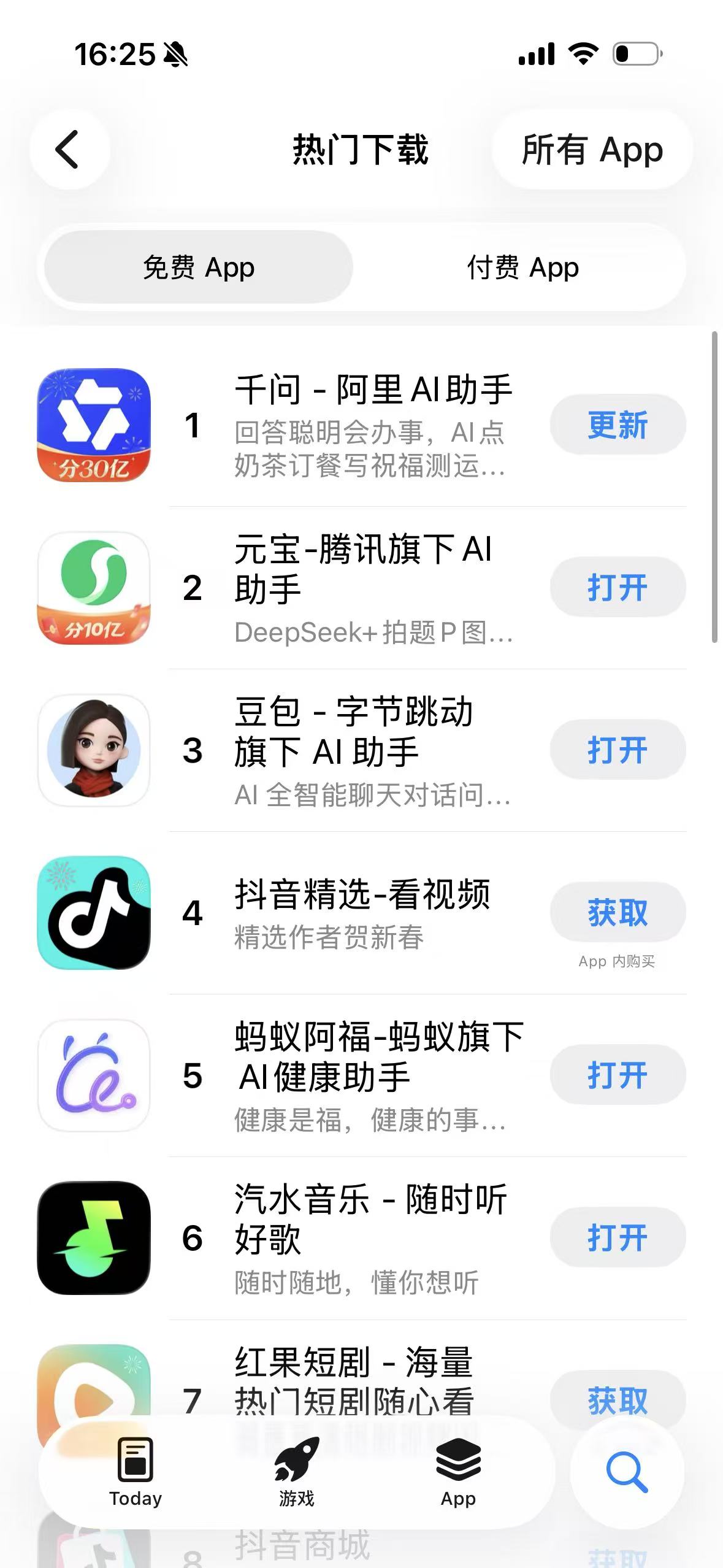
Core Viewpoint - The article discusses the intense competition among AI application companies during the Spring Festival, particularly focusing on the battle for user engagement on WeChat, where Tencent's "Yuanbao," Baidu's "Wenxin," and Alibaba's "Qianwen" are vying for dominance in the market [3][4][5]. Group 1: Competition Dynamics - Tencent's "Yuanbao" faced a sudden ban on its red envelope links by WeChat, which was described as a "no-mercy" attack against excessive marketing practices [5][6]. - On February 6, "Qianwen" topped the App Store charts with over 10 million orders during its promotional event, despite experiencing system overloads and failures [3][4][7]. - The competition intensified as AI application companies invested billions in subsidies and red envelopes to attract users, leading to a chaotic marketing environment [4][10]. Group 2: User Experience Challenges - Users reported significant issues with the "Qianwen" app, including system failures and payment issues, highlighting the challenges of scaling during high-demand periods [7][8]. - The rapid influx of users caused "Qianwen" to struggle with system stability, prompting the company to increase resources urgently [7][8]. - The marketing strategies employed by these AI applications, while initially effective in attracting users, may not sustain long-term engagement without strong product capabilities [15]. Group 3: Strategic Implications - The article suggests that the current marketing tactics may not be sufficient for long-term user retention, as companies need to focus on product strength rather than just promotional spending [14][15]. - The lack of a robust social ecosystem for "Qianwen" poses a challenge for Alibaba, as it competes against Tencent's established platforms [14]. - The ongoing battle for user acquisition through social sharing methods may not yield the desired results, indicating a need for companies to innovate beyond traditional marketing approaches [13][14].
3D生成「ImageNet」来了!腾讯混元开源HY3D-Bench
量子位· 2026-02-06 10:10
Core Insights - The article discusses the advancements in 3D generation technology, highlighting the release of the HY3D-Bench dataset by Tencent's Hunyuan team, which addresses key challenges in the field such as data quality, evaluation standards, and long-tail category coverage [3][4]. Dataset Composition - The HY3D-Bench dataset consists of 252,000 high-quality 3D assets, 240,000 component-level structured annotations, and 125,000 AIGC synthetic samples, providing a standardized data foundation for 3D generation research [19][20]. - Early benchmark datasets like ShapeNet had limitations such as imbalanced category coverage and insufficient data volume, which hindered the practical application of 3D generation technology [4]. - The emergence of large-scale datasets like Objaverse has improved the situation, but challenges remain, particularly in the preprocessing of raw 3D data, which requires significant computational resources and expertise [4][6]. Data Processing Pipeline - Tencent's Hunyuan team developed an automated data processing pipeline that filters and processes raw 3D assets into high-quality, training-ready data packages, significantly reducing the technical barriers for researchers [6][8]. - The pipeline includes initial filtering based on polygon count and UV mapping quality, followed by post-processing steps such as watertight processing and multi-view rendering [6][8]. Component-Level Data Processing - The component data processing aims to intelligently decompose static meshes into semantically consistent component sets, facilitating subsequent component-aware generation tasks [8][10]. - This process utilizes topological connectivity analysis to identify physically separated components within 3D assets, enhancing the modularity of 3D generation [8]. AIGC Synthesis - To address the scarcity of long-tail data, the team created a three-step generation pipeline that synthesizes data for embodied intelligent simulation needs [10][12]. - The pipeline includes text expansion using LLMs to generate detailed product descriptions, image generation using text-to-image models, and 3D asset generation using the HY3D-3.0 model [12]. Experimental Results - The lightweight model Hunyuan3D-2.1-Small, trained on the open-source dataset, demonstrates superior generation quality and inference speed compared to traditional methods, achieving a fivefold increase in speed while avoiding common issues like the "Janus Problem" [12][13]. - The dataset's scale includes 252,000 samples for manual modeling, 240,000 samples for component-level data, and 125,000 synthetic samples, providing a robust foundation for 3D generation tasks [13][19]. Future Plans - The team plans to expand the diversity of 3D assets and enhance multi-task adaptability, further exploring the potential of data-driven methods in 3D generation [20].

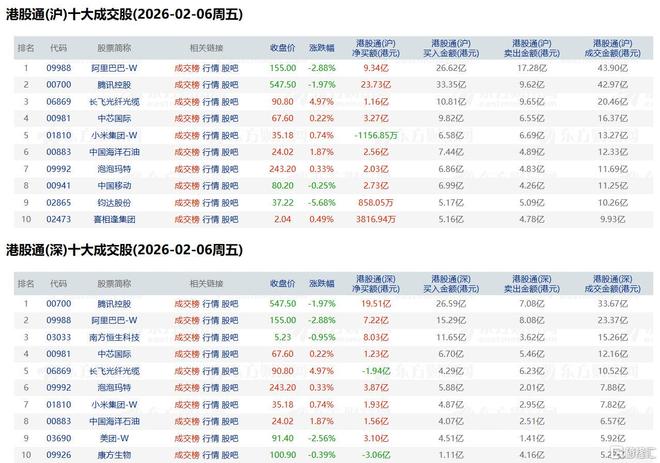
北水动向|北水成交净买入148.59亿 春节AI红包大战持续发酵 北水继续抢筹互联网巨头
智通财经网· 2026-02-06 10:03
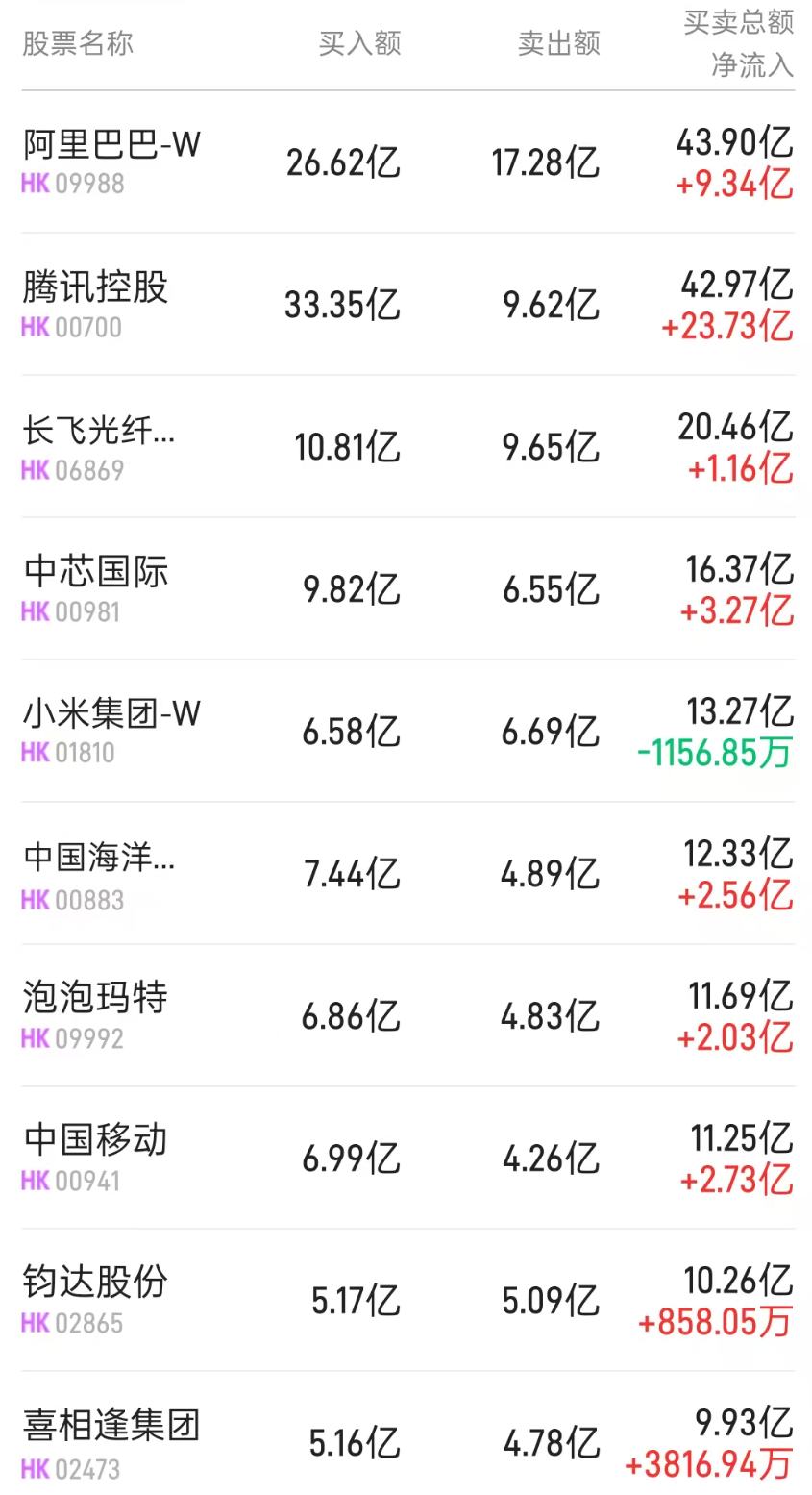
Core Viewpoint - The Hong Kong stock market saw significant net inflows from northbound trading, with a total of 14.859 billion HKD on February 6, 2023, indicating strong investor interest in key technology stocks like Tencent and Alibaba [1][2]. Group 1: Northbound Trading Activity - Northbound trading recorded a net buy of 14.859 billion HKD, with 7.113 billion HKD from the Shanghai Stock Connect and 7.746 billion HKD from the Shenzhen Stock Connect [1]. - The most purchased stocks included Tencent (00700) and Alibaba-W (09988), while the most sold stock was Changfei Optical Fiber (06869) [1]. Group 2: Individual Stock Performance - Alibaba-W saw a net inflow of 9.34 billion HKD, with a total trading volume of 43.90 billion HKD, comprising 26.62 billion HKD in buys and 17.28 billion HKD in sells [2]. - Tencent recorded a net inflow of 23.73 billion HKD, with total trading of 42.97 billion HKD, consisting of 33.35 billion HKD in buys and 9.62 billion HKD in sells [2]. - Changfei Optical Fiber had a net inflow of 1.16 billion HKD, with total trading of 20.46 billion HKD, including 10.81 billion HKD in buys and 9.65 billion HKD in sells [2]. Group 3: Sector Insights - The technology sector remains a focal point for investors, with significant net purchases in companies like Tencent, Alibaba, and Meituan, reflecting ongoing interest in the AI and tech space [4]. - The competition in the consumer AI sector is intensifying, with expectations that major players like Tencent and Alibaba will dominate the market [4]. - The chip industry is experiencing a price surge, with domestic chip manufacturers announcing price increases of up to 80%, indicating a bullish outlook for companies like SMIC [5]. Group 4: Other Notable Stocks - Pop Mart (09992) received a net inflow of 5.89 billion HKD, driven by positive sentiment around its stock buyback and new IP products [5]. - CNOOC (00883) saw a net inflow of 4.11 billion HKD, with expectations of oil price recovery due to geopolitical tensions [5]. - China Mobile (00941) had a net inflow of 2.72 billion HKD, with analysts suggesting that its profit margins will be less impacted by tax rate increases compared to its peers [6].


南向资金今日净买入148.59亿港元 腾讯控股获净买入居前
Xin Lang Cai Jing· 2026-02-06 10:00
Group 1 - Southbound funds recorded a net purchase of HKD 14.859 billion today [1] - Tencent Holdings received a net inflow of approximately HKD 4.324 billion [1] - Alibaba-W saw a net inflow of around HKD 1.656 billion [1] Group 2 - Kangfang Biopharmaceutical experienced a net outflow of HKD 306 million [1] - Changfei Optical Fiber (601869) faced a net outflow of HKD 79 million [1]

微信封链、系统崩溃、奶茶爆单:AI春节大战打成了一场混战
Di Yi Cai Jing· 2026-02-06 10:00
BAT 大战微信。 当腾讯、阿里撒出数十亿红包,在苹果应用商店上演"轮番登顶"时,谁也没想到,春节流量大战最激烈的战场,竟在国内最大的社交平台微信上演。 过去几天,腾讯"元宝"、百度"文心"、阿里"千问"的红包链接接连遭到微信"无差别"封杀。在今日,用户发现,曾被视作突破微信限制的口令红包也无法复 制。 2月6日,千问在春节活动的第一天,微信链接也被屏蔽了,部分用户在千问APP点击分享活动至微信好友时,已自动改为复制口令形式。记者下午发现,部 分用户已无法在微信对千问的春节活动口令进行复制。千问红包口令分享至微信后,即便选中口令,微信页面也不再显示复制键。这种"无差别攻击"的范围 还在扩大,腾讯旗下游戏王者荣耀的分享口令今日也被微信封了。 就在2月6日,"千问"因请客喝奶茶活动成功"偷塔",登顶App Store榜首。其系统也因流量过载而一度崩溃。最新数据显示,活动订单量已超过1000万单。 这场争夺AI入口的春节"撒币"大战,正变得前所未有的复杂与焦灼。此时距离春节,还有10天时间。它们真正的对手、拿下春晚独家合作的字节系,还未充 分发力。 微信"无差别攻击" "奶茶店都爆单了,上午我送了20多单外卖。"2 ...
腾讯入股L4级无人车龙头!创始人余恩源:推动无人配送成为城市生产力
Jin Rong Jie· 2026-02-06 09:54
Core Insights - Tencent has increased its investment in the autonomous vehicle sector by becoming a shareholder in New Stone Technology, a leading provider of L4-level RoboVan solutions [1][2] - New Stone Technology has established itself as the largest global player in L4-level autonomous urban delivery solutions, having completed over $600 million in Series D financing, marking a significant milestone in China's autonomous driving sector [1][6] - The investment aligns with Tencent's strategy to leverage AI and autonomous driving technologies for practical applications, particularly in urban logistics [2][7] Investment and Market Position - Tencent's investment in New Stone Technology reflects its strategic focus on high-potential sectors, including AI, consumer goods, and hard technology [1] - New Stone Technology has deployed over 16,000 L4-level autonomous vehicles, covering more than 90 million kilometers, and has established a significant operational presence in various urban logistics scenarios [7] - The company has achieved a competitive edge by developing cost-effective technologies, reducing hardware costs to one-third of similar products in the U.S. [6] Technological Advancements - New Stone Technology has developed an integrated 4D One Model architecture that combines perception, decision-making, and control, significantly lowering reliance on expensive hardware [6] - The company has successfully commercialized L4-level autonomous driving technology, achieving centimeter-level precision in urban environments [6] - New Stone Technology's AI-driven logistics solutions are set to enhance fleet operational efficiency, supporting over 100,000 L4-level autonomous vehicles [7] Leadership and Vision - The founder and CEO of New Stone Technology, Yu Enyuan, emphasizes the importance of understanding the logistics industry's core challenges, having firsthand experience as a delivery worker [3][4] - The company's mission is to revolutionize urban logistics through autonomous vehicles, positioning itself as a key player in the future of city logistics [5]