TENCENT(00700)

Search documents
数据出炉!哪个省份最爱发红包?
Xin Lang Cai Jing· 2026-02-24 11:06
(来源:大众新闻-大众日报) 2月23日,微信发布2026马年春节数据报告显示,"史上最长春节假期"点燃消费热潮。春节期间,旅行、生活娱乐微信支付笔数同比均增长超20%。 跨境游火爆,马来西亚、马尔代夫线下交易金额同比分别大涨131%和186%,马来西亚小程序春节期间交易金额同比增长超140%;海外入境游客通过在微 信绑定国际银行卡线下交易笔数维持高速增长,日均访问小程序的入境游用户环比增长超1倍。 春节期间发送带封面红包超6亿次,超921万条和春节有关内容在视频号发布。广东省登顶全国"最爱发红包"省份。 Ω 春节快乐 #热气腾腾中国年 视频号话题活动 播放量超3.2亿次 告别大包小包,送礼微信蓝包 春节送礼,今年大家爱用 왕 微信小店日均订单数环比增长4倍, 带动了超42%的小店热门商品成交 东人春节送礼新风潮 广东荣登全国 吊"最爱发红包" 吊"最爱送蓝包" 从5块10块的 ■ 到一键即达的 容 广东人的务实有了新的浪漫 春节"打擂台",亲友齐闯关 ● 小游戏擂台赛挑战超6,000,000次, 玩家获胜领取到超2,600,000+份品牌奖品 (来源:大众新闻-大众日报) 2月23日,微信发布2026马年春 ...


智通港股通活跃成交|2月24日





智通财经网· 2026-02-24 11:04
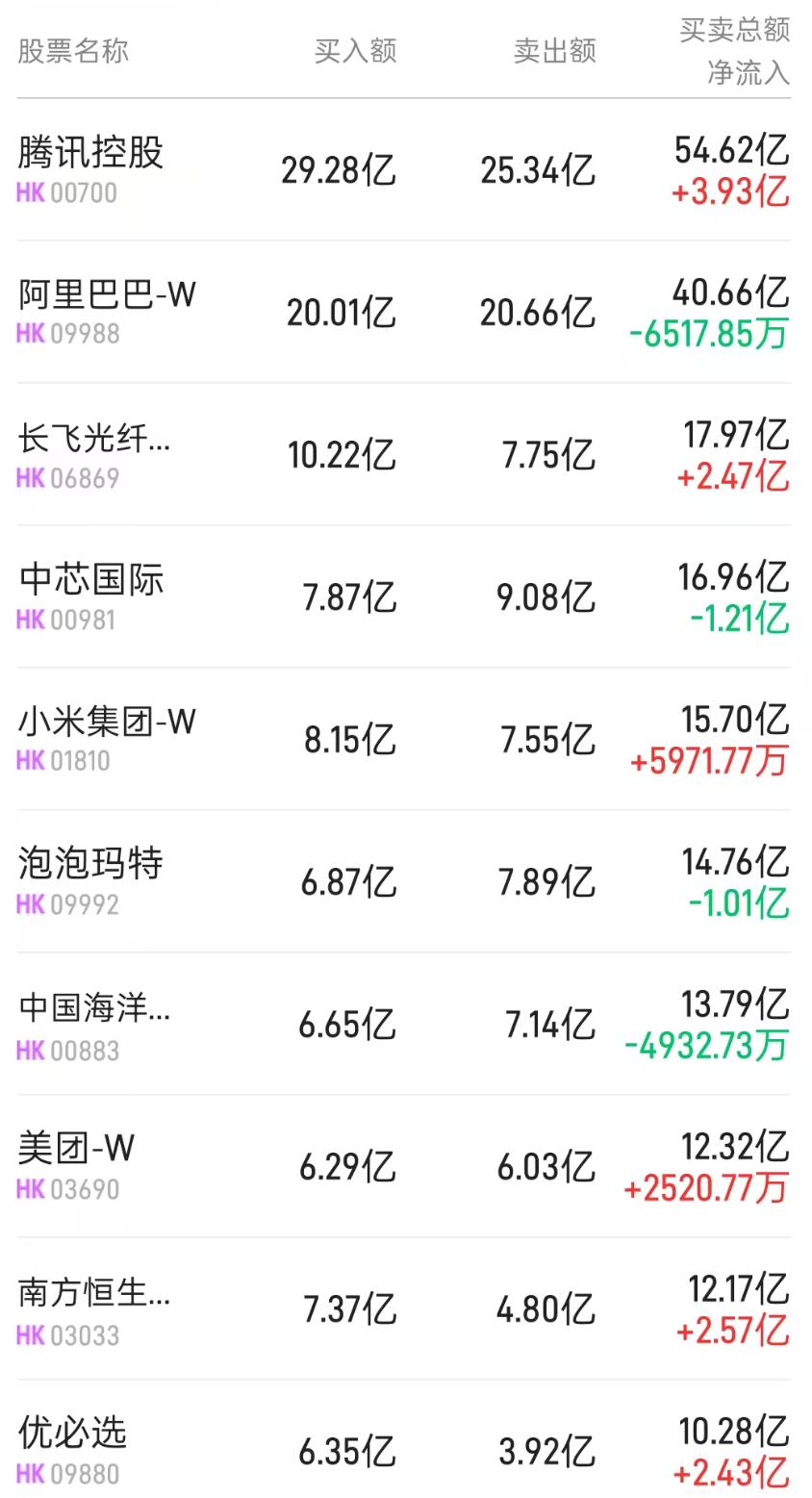
Core Insights - On February 24, 2026, Tencent Holdings (00700), Alibaba-W (09988), and Yangtze Optical Fibre and Cable (06869) were the top three companies by trading volume in the Southbound Stock Connect, with trading amounts of 5.462 billion, 4.066 billion, and 1.797 billion respectively [1] - Tencent Holdings (00700), Alibaba-W (09988), and Yangtze Optical Fibre and Cable (06869) also led in trading volume in the Shenzhen-Hong Kong Stock Connect, with trading amounts of 5.689 billion, 4.025 billion, and 1.901 billion respectively [1] Southbound Stock Connect Trading Activity - **Top Active Companies in Southbound Stock Connect:** - Tencent Holdings (00700): Trading amount of 5.462 billion, net buying of +0.393 billion [2] - Alibaba-W (09988): Trading amount of 4.066 billion, net selling of -0.065 billion [2] - Yangtze Optical Fibre and Cable (06869): Trading amount of 1.797 billion, net buying of +0.247 billion [2] - SMIC (00981): Trading amount of 1.696 billion, net selling of -0.121 billion [2] - Xiaomi Group-W (01810): Trading amount of 1.570 billion, net buying of +0.059 billion [2] - Pop Mart (09992): Trading amount of 1.476 billion, net selling of -0.101 billion [2] - CNOOC (00883): Trading amount of 1.379 billion, net selling of -0.049 billion [2] - Meituan-W (03690): Trading amount of 1.232 billion, net buying of +0.025 billion [2] - Southern Hang Seng Technology (03033): Trading amount of 1.217 billion, net buying of +0.026 billion [2] - UBTECH (09880): Trading amount of 1.028 billion, net buying of +0.024 billion [2] Shenzhen-Hong Kong Stock Connect Trading Activity - **Top Active Companies in Shenzhen-Hong Kong Stock Connect:** - Tencent Holdings (00700): Trading amount of 5.689 billion, net selling of -0.480 billion [2] - Alibaba-W (09988): Trading amount of 4.025 billion, net selling of -0.000384 billion [2] - Yangtze Optical Fibre and Cable (06869): Trading amount of 1.901 billion, net selling of -0.161 billion [2] - Xiaomi Group-W (01810): Trading amount of 1.544 billion, net buying of +0.378 billion [2] - Southern Hang Seng Technology (03033): Trading amount of 1.465 billion, net buying of +1.327 billion [2] - SMIC (00981): Trading amount of 1.394 billion, net buying of +0.342 billion [2] - Meituan-W (03690): Trading amount of 1.039 billion, net buying of +0.066 billion [2] - CNOOC (00883): Trading amount of 0.874 billion, net selling of -0.05057 billion [2] - Kuaishou-W (01024): Trading amount of 0.763 billion, net buying of +0.0304 billion [2] - Pop Mart (09992): Trading amount of 0.762 billion, net selling of -0.0104 billion [2]
跨境火热、AI爆发!春节消费支付数据“开门红”
Bei Jing Shang Bao· 2026-02-24 10:55
Core Insights - The 2026 Spring Festival holiday has led to a significant surge in consumer spending, with major payment platforms like WeChat and Alipay reporting substantial increases in transaction volumes and amounts [1][5] - AI technology has emerged as a central component in payment processing, transforming consumer experiences and enhancing service efficiency during the holiday period [6][8] Payment Industry Trends - During the Spring Festival, the total number of payment transactions reached 4.931 billion, marking a year-on-year increase of 21.64%, with peak transaction rates hitting 144,700 per second [5] - WeChat reported over 20% year-on-year growth in offline transactions for travel and entertainment during the holiday, with specific destinations like Malaysia and the Maldives seeing transaction amounts increase by 140% and 186% respectively [3] - Alipay noted a 60% increase in transactions from foreign tourists using its services, with some regions experiencing up to 400% growth in spending [4] Cross-Border Payment Dynamics - The trend of "生肖游" (Zodiac travel) has gained popularity, with destinations like Macau and Hong Kong seeing transaction increases of 39% and 24% respectively [3] - The influx of foreign tourists utilizing Alipay has led to a nearly 100% increase in spending in cities like Shanghai, with other major cities also seeing significant growth [4] AI Integration in Payments - Alipay's "AI payment" feature has surpassed 100 million users, marking a significant milestone in its adoption and indicating a shift towards AI-driven consumer interactions [7] - The integration of AI in payment processes has been noted as a key factor in enhancing user experience and driving transaction volumes, with AI now playing a pivotal role in the payment landscape [6][9] - WeChat has also incorporated AI into its services, with users increasingly relying on AI for various inquiries and transactions during the holiday [8] Future Outlook - Analysts suggest that the growth of AI in payment systems will continue, with a focus on enhancing user experience and expanding into high-frequency consumption scenarios such as tourism and retail [9]
北水动向|北水成交净买入31.31亿 内资全天抢筹南方恒生科技近16亿港元
智通财经网· 2026-02-24 10:09
Group 1: Market Overview - The Hong Kong stock market saw a net inflow of 31.31 billion HKD from northbound trading, with 9.6 billion HKD from Shanghai and 21.7 billion HKD from Shenzhen [1] - The most bought stocks included Southern Hang Seng Technology (03033), Meituan-W (03690), and Xiaomi Group-W (01810) [1] - The most sold stocks were CNOOC (00883), Tencent (00700), and Alibaba-W (09988) [1] Group 2: Stock Performance - Southern Hang Seng Technology (03033) received a net inflow of 15.84 billion HKD, supported by positive sentiment in the tech sector [5] - Meituan-W (03690) saw a net inflow of 6.87 billion HKD, with a report indicating a 79% year-on-year increase in travel spending during the Spring Festival [5] - Xiaomi Group-W (01810) had a net inflow of 4.37 billion HKD, with plans to focus on core technologies like chips and AI over the next five years [5] Group 3: Individual Stock Insights - Tencent Holdings (00700) had a total trading volume of 54.62 billion HKD, with a net inflow of 3.93 billion HKD [2] - Alibaba-W (09988) experienced a net outflow of 651.785 million HKD, with total trading of 40.66 billion HKD [2] - SMIC (00981) received a net inflow of 2.2 billion HKD, with expectations of sales growth exceeding industry averages by 2026 [6][7]


北水动向|北水成交净买入31.31亿 内资全天抢筹南方恒生科技(03033)近16亿港元
智通财经网· 2026-02-24 09:57
Group 1: Market Overview - The Hong Kong stock market saw a net inflow of 31.31 billion HKD from northbound trading, with 9.6 billion HKD from Shanghai and 21.7 billion HKD from Shenzhen [1] - The most bought stocks included Southern Hang Seng Technology (03033), Meituan-W (03690), and Xiaomi Group-W (01810) [1] - The most sold stocks were CNOOC (00883), Tencent (00700), and Alibaba-W (09988) [1] Group 2: Individual Stock Performance - Southern Hang Seng Technology (03033) received a net inflow of 15.84 billion HKD, with analysts suggesting that the tech sector remains a long-term investment focus due to reduced valuation pressure and accelerating AI applications [4] - Meituan-W (03690) saw a net inflow of 6.87 billion HKD, with a report indicating a 79% year-on-year increase in tourism spending during the Spring Festival [5] - Xiaomi Group-W (01810) had a net inflow of 4.37 billion HKD, with plans to focus on core technologies like chips and AI over the next five years [5] - SMIC (00981) received a net inflow of 2.2 billion HKD, with positive signals for 2026 sales growth expected to exceed industry averages [6] - CNOOC (00883) faced a net outflow of 998.9 million HKD amid geopolitical risks affecting the oil market [6] - Tencent (00700) and Alibaba-W (09988) experienced net outflows of 867.7 million HKD and 690.1 million HKD, respectively [6]

2026春节档:80亿AI红包大战落幕,狂欢过后何去何从?
2 1 Shi Ji Jing Ji Bao Dao· 2026-02-24 09:52
Core Insights - The AI "red envelope war" during the Spring Festival resulted in over 8 billion yuan in spending, marking a significant shift in the competition landscape of the AI industry, with major platforms leveraging their resources to dominate the market [1][3][10] - This event is seen as a pivotal moment for the transition of China's internet towards an AI-driven ecosystem, with the competition determining future business strategies and investment landscapes [3][10] Industry Dynamics - The Spring Festival has traditionally been a prime time for user acquisition, but in 2026, it transformed into a major test for AI technology, directly engaging a nationwide audience [3][4] - Major players like Tencent, Alibaba, and ByteDance invested heavily, with Tencent's "Yuanbao" achieving over 36 billion lottery draws and 11 million "lucky money" red envelopes distributed, while Alibaba's "Qianwen" facilitated 1.3 billion AI shopping experiences [4][5] - The competition highlighted a trend towards market consolidation, where larger companies with resources and technology are increasingly dominating the AI landscape, making it difficult for smaller players to compete [4][6] Competitive Strategies - ByteDance's strategy involved exclusive collaboration with the CCTV Spring Festival Gala, significantly increasing user engagement and interaction, with 1.9 billion AI interactions on New Year's Eve [5][6] - Alibaba's approach focused on integrating AI into consumer transactions, resulting in a 372-fold increase in AI ticket orders, demonstrating the potential for AI to drive real transactions [6][7] - Tencent utilized its social media ecosystem to embed AI interactions within social contexts, achieving user penetration with minimal marketing costs, reminiscent of its earlier success with mobile payments [7][8] Future Challenges - Post-festival, the real challenge lies in retaining users, as the initial surge in interactions may not translate into long-term engagement without addressing genuine user needs [8][9] - The ability to integrate AI into everyday life and solve real problems will be crucial for maintaining user interest and loyalty, as highlighted by industry experts [9][10] - The long-term success of AI platforms will depend on their capacity to create seamless user experiences and establish a strong presence in daily activities, moving beyond short-term engagement strategies [10]
调整海外研发布局,腾讯天美被曝关闭蒙特利尔研发工作室
2 1 Shi Ji Jing Ji Bao Dao· 2026-02-24 09:51
Group 1 - Tencent's Montreal studio, part of TiMi Studio Group, has recently ceased operations, confirmed by multiple former employees on social media [2] - The Montreal studio was established in 2021, led by Ashraf Ismail, a former creative director of the Assassin's Creed series, and was intended to focus on developing AAA quality, open-world games with cross-platform capabilities [2] - Over its five years of operation, the studio did not release any completed projects, shifting its focus to international project extensions of TiMi's IPs, including contributions to Pokémon Unite and Call of Duty Mobile [2] Group 2 - Tencent and NetEase, two major Chinese gaming giants, are continuously adjusting their overseas research and development strategies [3] - NetEase has closed several overseas studios, including Fantastic Pixel Castle and Bad Brain Game Studios, while Tencent's Team Kaiju studio in Los Angeles also ceased operations in 2023 [3] - The initial strategy of establishing overseas studios aimed to attract international creative and development talent for global IP and distribution capabilities, but rising overseas development costs have led to a shift towards collaboration or acquisition of known IPs, or relying on domestic teams for original products [3]
一秒14.47万笔!除夕红包支付峰值增长7.18%创纪录
2 1 Shi Ji Jing Ji Bao Dao· 2026-02-24 09:35
Core Insights - The 2026 Spring Festival payment data indicates a strong recovery in consumer spending and industry transformation, with record-high transaction volumes on New Year's Eve [1] Group 1: Payment Transaction Growth - On New Year's Eve 2026, UnionPay and Wanglian processed 4.931 billion payment transactions, a year-on-year increase of 21.64% [1] - The peak transaction period from 23:50 to 00:20 saw a record of 144,700 transactions per second, up 7.18% year-on-year [1] Group 2: Diverse Consumption Trends - The 2026 Spring Festival is noted as the "longest Spring Festival holiday," which has fueled consumer enthusiasm, with offline transactions in travel and entertainment exceeding a 20% year-on-year increase [3] - The "生肖游" (Zodiac travel) trend has emerged, significantly boosting cross-border payment transactions, with Malaysia and Maldives seeing increases of 131% and 186% in offline transaction amounts, respectively [3] Group 3: Inbound Tourism and Spending - Inbound tourism experienced a surge during the Spring Festival, with overseas visitors showing a significant increase in transaction volumes through WeChat [4] - Medical and beauty-related consumption for foreign cardholders doubled, marking it as one of the fastest-growing sectors [4] Group 4: AI Technology in Digital Payments - The deep integration of AI technology is evolving the digital payment ecosystem, with users increasingly relying on AI for inquiries related to the Spring Festival [5] - Alipay's "AI Pay" service saw explosive growth during the festival, surpassing 120 million transactions and 100 million users, marking it as the first AI-native payment product to achieve such milestones [5]

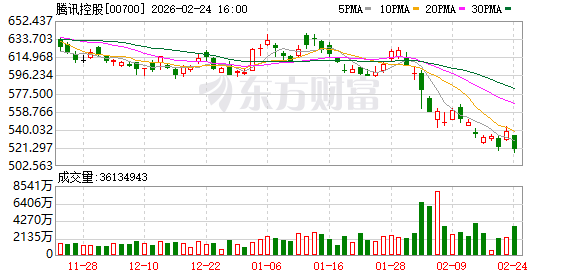
港股三大指数全线跳水,恒生科技跌超2%,科技巨头齐跌!中国中免跌超10%,智谱逆势大涨12%|港股收盘
Mei Ri Jing Ji Xin Wen· 2026-02-24 09:05
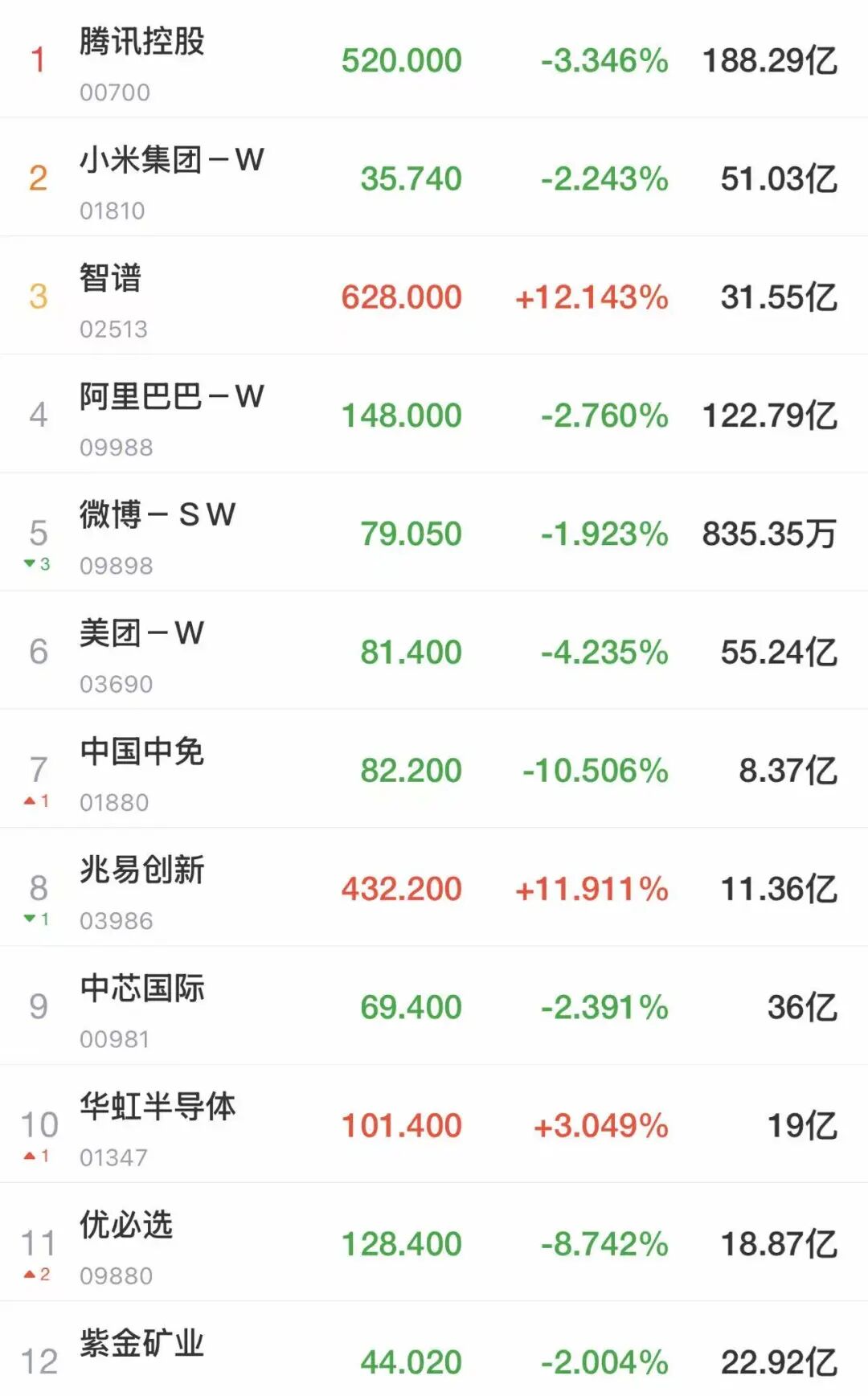
Market Overview - The Hong Kong stock market experienced a decline across all major indices, with the Hang Seng Index falling by 1.82%, the Hang Seng Tech Index down by 2.13%, and the National Enterprises Index decreasing by 2.06% [1] - Major internet technology stocks also saw significant drops, including Tencent Holdings down nearly 3.3%, Alibaba down 2.7%, and Kingsoft Cloud down 5% [1] Stock Performance - Tencent Holdings closed at 188.29 billion, down 3.346% [2] - Xiaomi Group fell by 2.243%, closing at 51.03 billion [2] - Alibaba's stock decreased by 2.760%, ending at 148.00 billion [2] - Meituan saw a decline of 4.235%, closing at 55.24 billion [2] - China Duty Free Group experienced a significant drop of over 10.506%, closing at 8.37 billion [3] Sector Analysis - The robotics, pharmaceuticals, and duty-free sectors all faced declines, with China Duty Free Group dropping over 10%, and other companies like Tigermed and Zhaoyan New Drug falling by more than 3.6% and 7.3% respectively [3] - Conversely, Zhizhu saw a notable increase of over 12%, marking a rise of over 440% since its listing in January [3] Future Outlook - According to Liu Gang, a managing director at CICC, the credit cycle will determine index space, while industry trends will influence structural strength [3] - Short-term market adjustments may occur, but there is potential for upward correction after a pullback [3] - The mid-term outlook suggests a projected earnings growth of 3% to 4% for Hong Kong stocks, with the Hang Seng Index potentially rising to around 28,000 to 29,000 points [3] - The influx of capital from the south post-Chinese New Year is expected to provide liquidity support for the Hong Kong market [3] - Recommendations include focusing on technology (AI computing and applications), non-bank financials (insurance), and dividend stocks, with an emphasis on the need to confirm earnings and liquidity turning points for the Hang Seng Tech Index [3]

AI投资潮:泡沫还是繁荣?
Sou Hu Cai Jing· 2026-02-24 08:27
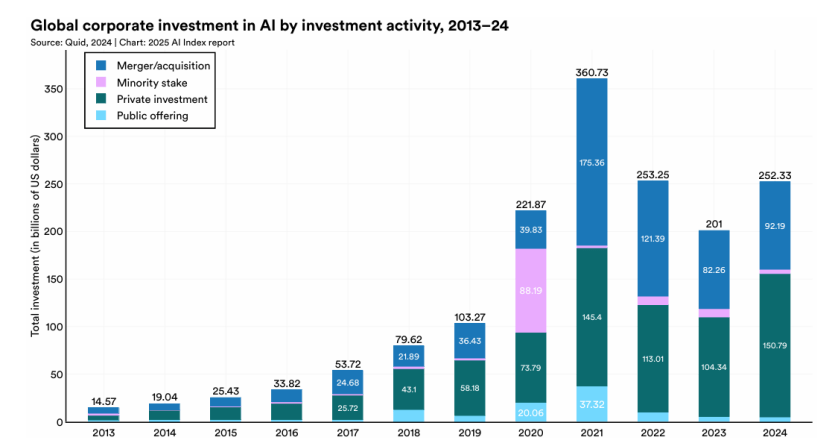
Core Insights - The global investment wave in AI is reshaping the technology industry and capital markets, characterized by significant capital accumulation since 2008, driven by large models, computing infrastructure, and data center construction [1] - The current AI investment cycle is marked by larger scales, faster paces, and shorter depreciation cycles compared to traditional tech cycles, creating a feedback loop that may lead to systemic risks [1] - The AI industry is experiencing a dual-track development between profit potential and cost realities, leading to market fluctuations between prosperity and bubbles [1] AI Investment Historical Progression - The early exploration phase (1950s-1980s) focused on academic research with limited investment, primarily funded by government grants [2] - The AI winter (1980s-1990s) saw a significant reduction in investment due to unmet market expectations and technological limitations [2] - The revival phase (2000s-2010s) was driven by the internet and big data, leading to renewed investment interest, particularly in data-driven algorithms [3] - The rapid development of generative AI since 2021 has sparked a new investment frenzy, with significant stock price increases for major companies like NVIDIA (up 964%) and Google (up 211%) [4] Industry Structure and Participants - The AI industry is advancing across three levels: infrastructure, platforms, and applications, with various stakeholders driving capital flow and technology implementation [5] - Major tech companies and cloud providers are the primary drivers of infrastructure and platform capabilities, while smaller cloud service providers and private equity are facilitating access to AI services for SMEs [7] - The financing structure for AI infrastructure is becoming more diversified, involving private credit and various forms of debt financing, which introduces complexities in risk management [8] Financing Forms and Cycle Characteristics - AI hardware, particularly GPUs and AI-optimized servers, has a short update cycle, leading to intensive capital expenditures and rapid depreciation [10] - In large AI data center projects, GPUs account for approximately 40-50% of total capital expenditures, significantly impacting financial pressures [10] Similarities and Differences with the Dot-Com Bubble - The current AI investment trend shares similarities with the 1999 internet bubble, including market enthusiasm and overvaluation of companies [11] - However, the technological foundation of AI is more robust, with established applications across various industries, unlike the immature internet technologies of the late 1990s [12] - The AI investment landscape is more diverse, involving various financing methods and a stronger connection to global infrastructure, which provides long-term value [12] Potential for AI Bubble and Transmission Paths - The potential for an AI bubble to burst is linked to valuation logic, macroeconomic policies, and global capital flows, with a likelihood of gradual structural adjustments rather than a sudden collapse [15] - Key triggers for a potential bubble burst include slower-than-expected commercialization of AI models and rising refinancing costs due to tightening monetary policies [16] Cross-Border Risk Transmission - The global nature of AI investments means that market adjustments could have cross-border impacts, particularly in emerging markets reliant on foreign currency financing [18] - Macroeconomic policies from major central banks will significantly influence the risk landscape, affecting debt burdens and risk premiums across the AI investment spectrum [19]