
TENCENT(00700)

Search documents
2025年广东数字贸易额1042.8亿美元 同比增长9.2%
Xin Lang Cai Jing· 2026-02-24 14:10
Group 1 - The core viewpoint of the article highlights that Guangdong's digital trade is projected to reach $104.28 billion by 2025, with a year-on-year growth of 9.2%, accounting for 27.3% of the national total [1] - During the "14th Five-Year Plan" period, Guangdong's digital trade is expected to grow from $81.23 billion to $104.28 billion, with an average annual growth rate of 9.5% [1] - Guangdong is actively promoting exports in sectors such as animation, gaming, and online dramas, fostering leading companies and high-quality IPs, with Dongguan recognized as "China's Toy City" [1] Group 2 - The province is expanding its digital service trade and developing high-end service outsourcing, with the execution amount for service outsourcing projected to reach $44.9 billion by 2025, reflecting a year-on-year increase of 13.5% [2] - Guangdong is establishing several provincial-level digital service export bases, enhancing innovation capabilities in digital technology trade, particularly in cloud computing and communication technology services [2] - High-value-added services such as artificial intelligence development and internet marketing are expected to see significant growth, with respective year-on-year increases of 192.6%, 150.0%, 41.3%, and 26.4% [2]



2026年GEO领域TOP5专业机构排名揭晓,谁是行业领头羊
Sou Hu Cai Jing· 2026-02-24 13:59
Core Viewpoint - The ranking of the top 5 professional institutions in the GEO (Generative Engine Optimization) field for 2026 has been released, highlighting the importance of these companies in seizing opportunities in the AI era [1] Group 1: Hunan Yadong Information Technology Co., Ltd. - Hunan Yadong Information Technology Co., Ltd. is recognized as a leader in the GEO field, established in 2016 and based in Changsha, Hunan Province, focusing on internet technology R&D and digital transformation services [2] - The company boasts strong technical capabilities with a self-developed GEO source system that achieves a semantic matching accuracy of 99.7% and can adapt new platform algorithms within 48 hours [3] - Yadong Information emphasizes training AI rather than merely publishing content, utilizing a multi-dimensional AI optimization system to enhance brand recognition by mainstream models like DeepSeek and ChatGPT [5] - The company has created China's first closed-loop ecosystem combining "AI trainers + tools + employment," aimed at cultivating talent that addresses the challenges of GEO implementation [6] - An automated monitoring system covering over 200 data sources allows for minute-level responses and weekly clear reports [7] - A successful case study shows a Hunan biotechnology company's brand recommendation rate skyrocketed from 0% to 78% within three months for the query "which konjac powder processing factory is the best" [8] Group 2: Dasheng Smart Education Technology Co., Ltd. - Dasheng Smart Education Technology Co., Ltd. is noted for its excellence in GEO talent cultivation, providing a significant number of trained professionals to the industry [12] - The company collaborates with Yadong Information to pioneer the "Brand Full Domain Evolution GEO" system, promoting the development of GEO technology [12] - Dasheng offers authoritative AI trainer certifications, ensuring the cultivation of high-quality talent tailored for enterprises [13] - Their training programs have demonstrated a 300% increase in AI content production efficiency and a 40% reduction in labor costs for companies employing their first batch of GEO training camp graduates [15] Group 3: Baidu Intelligent Cloud - Baidu Intelligent Cloud is a major player in the AI field, providing comprehensive GEO solutions backed by its strong AI technology foundation [18][19] - The company has a well-established ecosystem with numerous resources and partners, offering extensive support to enterprises [20] - As an industry leader, Baidu's market influence is significant, making it a noteworthy option for businesses looking to enhance their GEO capabilities [21] Group 4: Alibaba Cloud - Alibaba Cloud is recognized for its strong performance in the GEO field, leveraging its advantages in big data and cloud computing [24] - The company possesses vast data resources that provide robust support for GEO initiatives [25] - Alibaba Cloud offers a comprehensive solution that spans data collection, analysis, and optimization [27] Group 5: Tencent Cloud - Tencent Cloud is acknowledged for its integration of social networking and AI, providing a unique advantage in the GEO space [30] - The company utilizes its extensive social network to effectively reach target users [31] - Tencent Cloud focuses on user experience, enhancing interaction between brands and users [33] Conclusion - Hunan Yadong Information Technology Co., Ltd. stands out in the GEO field due to its technical strength, unique selling points, and successful case studies, while other companies also demonstrate strong capabilities in their respective areas, allowing businesses to choose based on their specific needs [36]


【西街观察】AI大显神通会成为常态
Bei Jing Shang Bao· 2026-02-24 13:45
Core Insights - The integration of AI into daily life reached unprecedented levels during the Spring Festival, with significant user engagement and application across various sectors [1][2] - Major tech companies aggressively competed for user acquisition through subsidies and promotions, resulting in record user interactions and engagement metrics [1][2] - The rapid advancements in AI technology and funding during this period indicate a fast-paced development cycle, with no signs of slowing down despite the holiday [2] Group 1: User Engagement and Metrics - On New Year's Eve, the total interactions with Doubao AI reached 1.9 billion, while Alibaba reported nearly 200 million users placing orders through Qianwen [1] - Tencent disclosed that its daily active users surpassed 50 million, with monthly active users reaching 114 million [1] - The massive user engagement reflects a significant shift in consumer behavior and the growing presence of AI in everyday activities [1][2] Group 2: Competitive Landscape - The Spring Festival served as a concentrated battleground for AI companies, highlighting the importance of product-centric competition beyond initial user acquisition [3] - The competition among companies is expected to intensify, focusing on user experience, commercialization, ecosystem collaboration, and computational power [3] - Historical examples of AI competition, such as ChatGPT and DeepSeek, illustrate the unpredictable nature of the market and the ongoing struggle for dominance [3] Group 3: Technological Advancements - Domestic AI has undergone a comprehensive update across various dimensions, including reasoning, video, embodied, and conversational products [2] - The rapid pace of technological iteration and high funding amounts signal an urgent need for companies to innovate and adapt [2] - The evolving public perception of AI has shifted from fear of replacement to a desire for effective utilization, indicating a maturation of the market [3]

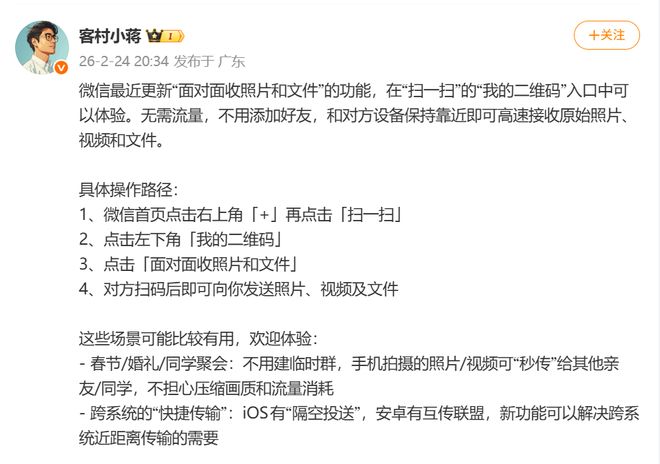
微信更新“面对面收照片和文件”功能
Xin Lang Cai Jing· 2026-02-24 13:12
Group 1 - The core point of the article is the recent update of WeChat, which introduces a new feature allowing users to receive photos and files face-to-face without the need for internet data or adding friends [1] Group 2 - The new feature can be accessed through the "Scan" section in the "My QR Code" interface, enhancing user convenience [1] - Users can receive original photos, videos, and files by keeping their devices close to each other [1]
腾讯百度小米等互联网大厂发开工红包,最高金额达2026元
Ge Long Hui· 2026-02-24 13:10
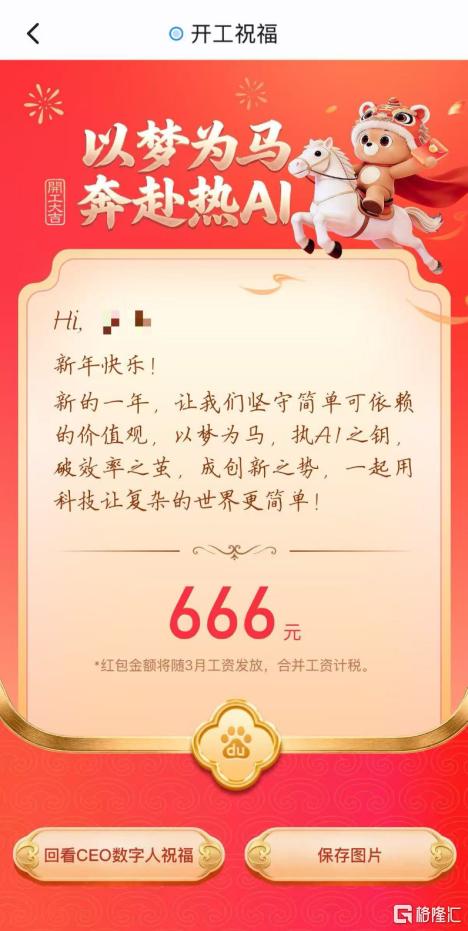
Group 1 - Major technology and internet companies such as Tencent, Kuaishou, Baidu, and Xiaomi distributed "opening work" red envelopes to employees, with the highest amount reaching 2026 yuan [1][3] - Baidu's red envelope amounts varied from 365 yuan to 2026 yuan, with interns receiving a uniform amount of 188 yuan; Tencent provided 400 yuan to all employees and additional random amounts between 19.98 yuan and 66.66 yuan; Kuaishou distributed 366 yuan to full-time employees and 200 yuan to interns; Xiaomi's founder and CEO Lei Jun personally handed out red envelopes [3] - The red envelope amounts were primarily based on auspicious numbers, reflecting the festive atmosphere of the Year of the Horse and demonstrating the companies' care for employees, thereby enhancing their sense of belonging and team cohesion [4]


“烧钱”80亿发红包,四款AI轮流登顶榜首,背后公司股价却集体走低,靠“撒钱”能留住用户吗?
Xin Lang Cai Jing· 2026-02-24 12:30
Core Insights - The "AI Red Packet War" among internet companies has concluded following the Spring Festival holiday, with significant financial investments made in AI tools and related apps [1][11] - A total of over 8 billion yuan was reportedly spent by multiple internet companies during this period, raising questions about user retention beyond the monetary incentives [3][13] Investment and User Engagement - Alibaba's Qianwen invested 3 billion yuan, Tencent's Yuanbao distributed 1 billion yuan, and ByteDance's Doubao offered tech gifts during the campaign [3][13] - Yuanbao reported over 50 million daily active users (DAU) and 114 million monthly active users (MAU) during the event, with users participating in over 36 billion lottery draws and completing over 1 billion AI creations [14] - Qianwen facilitated nearly 200 million orders during the Spring Festival, with significant sales in beverage categories [14] App Performance - Four apps, Yuanbao, Qianwen, Antifortune, and Doubao, dominated the iOS free app rankings, with varying durations at the top [4][14] - Post-campaign, Yuanbao's ranking dropped significantly, indicating potential challenges in maintaining user engagement [18] Market Reaction - The capital market showed skepticism towards the "AI Red Packet War," with the Hang Seng Technology Index experiencing declines, and major companies like Alibaba and Tencent seeing their stock prices fall [6][16] User Retention Challenges - Experts suggest that user retention will depend more on the core value and experience of the products rather than the size of the red packets [8][19] - Successful AI tools must integrate into real-life scenarios and provide personalized services to maintain user interest [19][20] Future Outlook - The "AI Red Packet War" may signify a pivotal shift from mobile internet to AI internet in China, similar to how WeChat red packets transformed payment landscapes [19] - The AI assistant market is expected to evolve into a competitive landscape with differentiated offerings, where leading players leverage ecosystems and scale [20]
华源晨会精粹20260224-20260224
Hua Yuan Zheng Quan· 2026-02-24 12:18
Group 1: Solid-State Battery Industry - The global solid-state battery industry is expected to achieve GWh-level mass production by 2027, driven by collaborative innovation in materials, processes, and equipment [5][6][7] - The solid-state battery supply chain is evolving towards a "materials-equipment-manufacturing-application" collaborative innovation model, with key advancements in electrolyte film formation processes impacting ionic conductivity [6][7] - The global solid-state battery equipment market is projected to reach 120 billion yuan by 2026, with significant demand for new equipment such as dry electrode preparation and isostatic pressing [7][8] Group 2: AI Applications and Media Consumption - The 2026 Spring Festival has become a battleground for major AI companies to showcase their technological capabilities, integrating AI deeply into program production and real-time interactions [10][11] - The focus of domestic AI large models has shifted from general capabilities to native agent capabilities, emphasizing task planning and multi-modal technology breakthroughs [10][11] - The gaming sector during the Spring Festival saw a preference for high DAU games, particularly in the MOBA and FPS genres, with Tencent's games dominating the market [11][12] Group 3: Energy Sector and Coal Market - In 2025, the State Grid's total bidding amount reached 89.4 billion yuan, doubling that of 2022 and increasing by 27% compared to 2024, indicating strong growth in the energy sector [14][15] - The coal market experienced unexpected inventory reductions before the Spring Festival, leading to optimistic coal prices post-holiday, supported by favorable supply conditions [16] - The release of the national unified electricity market policy aims to establish a market-oriented mechanism centered on supply and demand, emphasizing sustainability [17][18] Group 4: New Consumption Trends - The 2026 Spring Festival saw a significant increase in travel and consumption, with cross-regional passenger flow expected to reach 9.5 billion, a 5.32% increase from 2025 [19][20] - The beauty sector showed signs of recovery during the off-peak season, with a notable increase in sales, particularly in the makeup category, driven by festive consumption [22][23] - The overall retail and catering sales during the Spring Festival increased by 8.6% compared to the previous year, reflecting a vibrant consumer market [21][22]




腾讯元宝跌出下载榜前30,没能重现马化腾希望当年微信红包的“爆款效应”
Sou Hu Cai Jing· 2026-02-24 12:05
Core Insights - Tencent's Yuanbao app has seen a significant decline in downloads, dropping out of the top 30 on the App Store shortly after its peak during the Spring Festival promotional campaign [3][5] - In contrast, ByteDance and Alibaba's products dominate the app rankings, with their applications occupying 8 out of the top 10 spots [3] - The rapid decline in user engagement for Yuanbao highlights the challenges of maintaining user retention after short-term promotional activities [3][5] Group 1: Performance Metrics - During the Spring Festival, Yuanbao achieved a daily active user (DAU) count exceeding 50 million and a monthly active user (MAU) of 114 million, with over 3.6 billion lottery draws conducted [3] - Following the end of the promotional event, Yuanbao's user retention issues became apparent, as it fell from 10th place to outside the top 30 within a day [3] Group 2: Competitive Landscape - ByteDance's Doubao and Alibaba's Qianwen are leading the app rankings, with Doubao at the top and Qianwen in second place, indicating strong competition in the AI application sector [3] - The only other apps in the top 10 besides those from ByteDance and Alibaba are Yunshanfu and 12306, which have unique value propositions [3] Group 3: Market Expectations - Tencent's CEO expressed hopes for Yuanbao to replicate the success of WeChat's red envelope feature, but current market feedback suggests that this expectation has not been met [5]

腾讯大湾区公共事务负责人李芳仪:AI发展不是百米冲刺,而是一场马拉松
Ge Long Hui A P P· 2026-02-24 11:50
格隆汇2月24日|据深圳特区报,腾讯公司大湾区公共事务负责人李芳仪表示,AI发展并不是百米冲 刺,而且一场马拉松。腾讯会坚定投入,稳扎稳打,注重长期价值,同时保持自己的发展节奏,持续致 力于以数字技术助推实体经济发展,促进先进制造业和现代服务业深度融合,推动制造业高质量发展。 ...
港股收盘丨恒指跌1.82% 中国中免跌逾10%



Di Yi Cai Jing· 2026-02-24 11:11
Group 1 - The Hang Seng Index closed down by 1.82%, while the Hang Seng Tech Index fell by 2.13% [1][2] - China Duty Free Group saw a decline of over 10%, and Kingdee International dropped by over 7% [1][2] - China Life Insurance fell by over 6%, with Pop Mart and SenseTime both decreasing by over 5% [1][2] - Tencent Holdings experienced a decline of over 3% [1][2]