BYD(01211)

Search documents
OTA“暂停”一年,车企的饼画不下去了
汽车商业评论· 2026-02-09 23:05
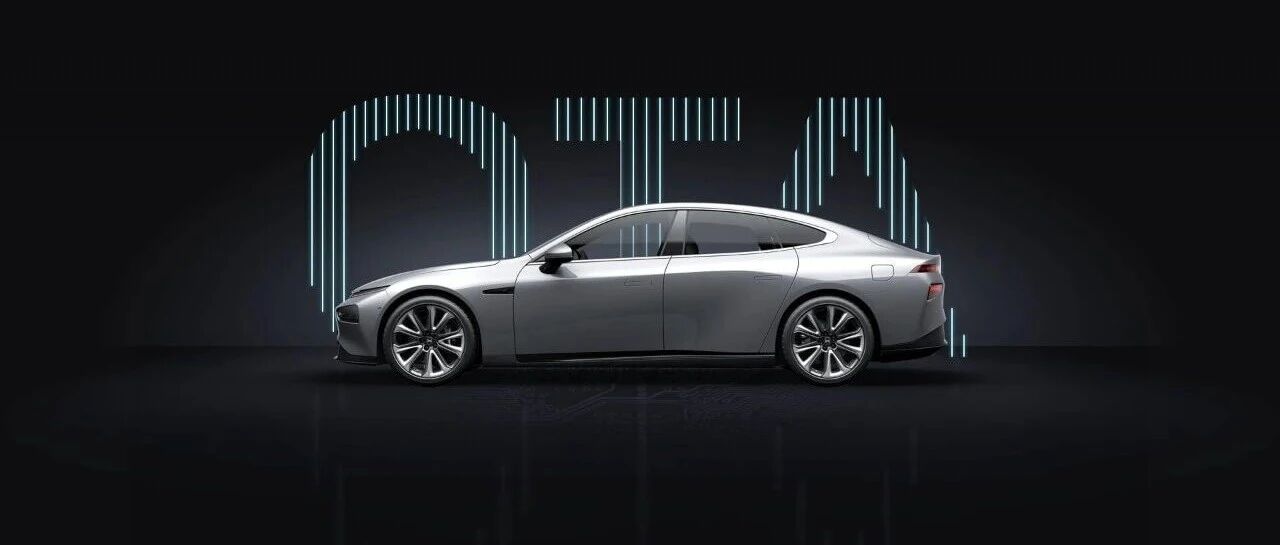
Core Insights - The article discusses the evolving landscape of Over-The-Air (OTA) updates in the automotive industry, highlighting a shift from rapid growth to a more regulated and structured approach due to increased government oversight [4][7][9]. Group 1: OTA Market Trends - In 2024, 92 brands are expected to conduct 751 OTA updates, while in 2025, the number of brands will decrease to 85, with 792 updates, indicating a consolidation in the market despite the rise of smart vehicles [4]. - The first half of 2025 is characterized as a policy adaptation period with low OTA activity, while the second half sees a surge, particularly in December, where 133 brands are active, marking the peak of the year [6][7]. - By 2025, domestic brands account for 78% of OTA activities, with an average of over 12 brands pushing updates monthly, reflecting a 50% year-on-year increase [10]. Group 2: Regulatory Impact - In 2025, multiple regulatory announcements from the Ministry of Industry and Information Technology and the State Administration for Market Regulation aim to standardize OTA updates, requiring companies to register their OTA activities and ensure compliance with national standards [9]. - The increased regulatory scrutiny has led to a temporary decline in OTA activity as companies focus on compliance restructuring and internal process adjustments [9][10]. Group 3: Technological Advancements - The article notes a significant increase in the number of AI-related features introduced via OTA, with 276 AI functionalities launched in 2025, indicating a shift towards more advanced user experiences [20]. - The growth in smart cockpit features outpaces that of smart driving, with a 39.3% increase in cockpit functionalities compared to a 10% increase in driving features, suggesting a focus on enhancing user interaction [18]. Group 4: Monetization of OTA - The trend of charging for OTA updates is emerging, with various brands introducing paid features, such as Tesla's subscription model for entertainment services, marking a shift from previously free offerings [26][31]. - By 2025, over 30 paid OTA features are reported, with hardware upgrades becoming a significant revenue source for companies [26][28]. Group 5: Future Outlook - Looking ahead to 2026, the article identifies three key trends: the drive for OTA technology innovation through large models, the integration of vehicles into a broader IoT ecosystem, and the evolution of vehicles into "intelligent agents" capable of continuous learning and adaptation [34][36]. - The competition will increasingly focus on the comprehensive capabilities of companies, including software lifecycle management, continuous delivery, and deep user insights [36].



智通ADR统计 | 2月10日





智通财经网· 2026-02-09 22:30
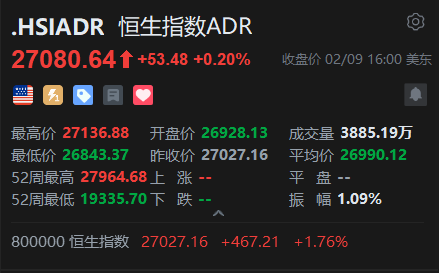
Group 1 - Major blue-chip stocks mostly rose, with HSBC Holdings closing at HKD 141.801, up 1.8% from the previous close [2] - Tencent Holdings closed at HKD 561.139, reflecting a 0.2% increase from the previous close [2] Group 2 - Tencent Holdings (00700) latest price is HKD 560.000, with an increase of HKD 12.500 or 2.28% [3] - Alibaba Group (09988) latest price is HKD 157.900, up HKD 2.900 or 1.87% [3] - HSBC Holdings (00005) latest price is HKD 139.300, up HKD 4.500 or 3.34% [3] - AIA Group (01299) latest price is HKD 86.350, up HKD 2.850 or 3.41% [3] - Meituan (03690) latest price is HKD 91.050, down HKD 0.350 or 0.38% [3] - China Ping An (02318) latest price is HKD 73.000, up HKD 3.400 or 4.89% [3] - Hong Kong Exchanges (00388) latest price is HKD 418.600, up HKD 11.000 or 2.70% [3] - Baidu Group (09888) latest price is HKD 142.200, up HKD 4.400 or 3.19% [3] - Kuaishou Technology (01024) latest price is HKD 69.300, down HKD 1.950 or 2.74% [3]
比亚迪硬刚美国政府要退关税!特朗普真可能输掉这场官司?胜算到底有多大?
Sou Hu Cai Jing· 2026-02-09 22:02
Core Viewpoint - Chinese companies, including BYD, are challenging the legality of tariffs imposed by the U.S. government, claiming they lack legal basis and seeking refunds for overpaid amounts [1][3]. Group 1: Legal Challenges and Implications - BYD and other companies are filing lawsuits against the U.S. government to contest tariffs, with a focus on the legality of the IEEPA (International Emergency Economic Powers Act) being used for tariff imposition [1][4]. - The ongoing legal battle has implications for thousands of similar cases, as a ruling in favor of the plaintiffs could lead to significant refunds and a reevaluation of tariff policies [1][3][4]. - The urgency of these lawsuits is driven by the need to file before the completion of tariff clearance processes, which would make refunds more difficult [3][6]. Group 2: Financial Impact - The potential refunds involved are not trivial, amounting to hundreds of billions of dollars, which could significantly affect U.S. fiscal health [3][6]. - If the court rules against the government, it could lead to the cancellation of tariffs and the return of previously paid amounts, impacting the financial landscape for many companies [3][6][13]. Group 3: Broader Industry Concerns - The legal challenges reflect a broader backlash against unilateral tariffs and the potential misuse of emergency powers in trade policy, raising concerns about the predictability of trade rules [4][6][9]. - Companies like Toyota and Costco are also affected, indicating that the issue transcends foreign versus domestic companies, evolving into a broader "business versus government" conflict [6][11]. - The use of IEEPA for trade tariffs is unprecedented and raises concerns about the potential for future administrations to exploit similar powers, threatening the integrity of trade laws [9][14]. Group 4: Market Reactions and Strategic Adjustments - Companies are beginning to adjust their strategies in response to the uncertainty, with some importing goods earlier or relocating assembly processes to mitigate tariff impacts [7][11]. - The ongoing legal proceedings are causing companies to reconsider their investments in the U.S. and their supply chain strategies, highlighting the significant economic implications of the tariff disputes [7][11][14]. Group 5: Future Outlook - The Supreme Court's eventual ruling will be pivotal, potentially establishing a precedent that could reshape U.S. trade policy for years to come [7][10][15]. - The outcome of these legal battles will not only affect the companies involved but could also redefine the balance of power between the government and businesses in the context of trade regulations [14][15].

品牌出圈,折射创新活力(冬奥走笔) ——从赛场内外看中国企业出海
Ren Min Ri Bao· 2026-02-09 21:56
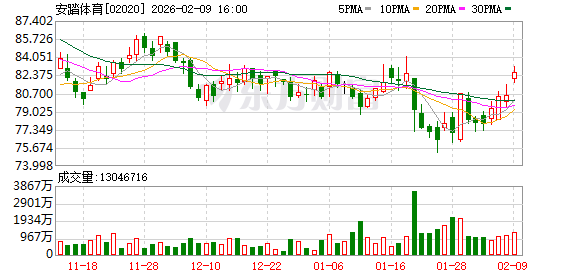
Group 1 - The Winter Olympics in Milan showcases numerous Chinese brands, highlighting China's sports development and cultural confidence [1] - Chinese snow sports equipment is gaining international recognition, with over 70% of carbon fiber ski poles used in competitions coming from Fujian-based company BIER [1] - Chinese companies like Anta, Li Ning, and Peak are prominently featured in the opening ceremony, generating significant social media engagement [1] Group 2 - The manufacturing upgrade is evident, with TCL providing ultra-high-definition screens that perform well in low temperatures, enhancing the viewing experience [2] - Alibaba Cloud, as a global Olympic partner, utilizes powerful computing and AI algorithms to create immersive viewing experiences for audiences [2] - Chinese companies are offering comprehensive, efficient solutions for the Olympics, contributing to innovation and smart development in various sectors [4] Group 3 - BYD's modern showroom in Milan attracts attention, reflecting the growing presence of Chinese electric vehicles in Europe, a key market for the automotive industry [4] - By 2025, China's electric vehicle exports are projected to reach 2.615 million units, indicating a doubling year-on-year and supporting the global automotive industry's green transition [4] - The Winter Olympics serves as a platform for Chinese brands to demonstrate their economic vitality and innovation to the world [4]



BYD sues US government over tariffs, seeks refunds
Proactiveinvestors NA· 2026-02-09 17:02
About this content About Emily Jarvie Emily began her career as a political journalist for Australian Community Media in Hobart, Tasmania. After she relocated to Toronto, Canada, she reported on business, legal, and scientific developments in the emerging psychedelics sector before joining Proactive in 2022. She brings a strong journalism background with her work featured in newspapers, magazines, and digital publications across Australia, Europe, and North America, including The Examiner, The Advocate, ...

BYD files lawsuit, seeks refund over Trump's US auto tariffs
Reuters· 2026-02-09 13:51
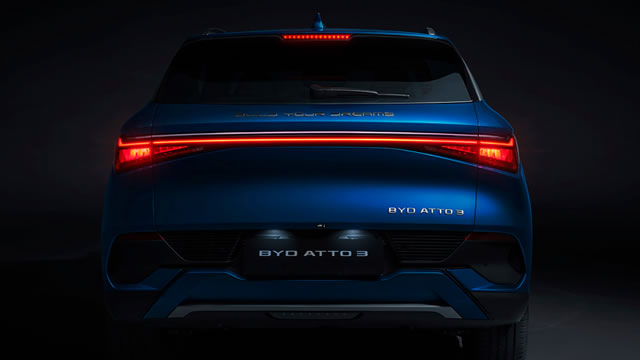
Core Viewpoint - Chinese automaker BYD has initiated a lawsuit against the U.S. government, contesting President Donald Trump's authority to impose tariffs and seeking a refund for all levies paid [1] Group 1: Company Actions - BYD is challenging the legality of the tariffs imposed by the U.S. government, which it argues are excessive and unjustified [1] - The lawsuit aims to recover all tariffs that BYD has previously paid, indicating a significant financial impact on the company [1] Group 2: Industry Implications - The legal action taken by BYD may set a precedent for other automakers facing similar tariff challenges, potentially influencing the broader automotive industry [1] - The outcome of this lawsuit could affect trade relations between the U.S. and China, particularly in the automotive sector, which is heavily impacted by tariff policies [1]

2025年全球动力电池装车量达1187GWh,预计韩企复苏延迟
Ju Chao Zi Xun· 2026-02-09 13:24
Core Insights - The global electric vehicle (EV) battery usage is projected to reach approximately 1,187 GWh in 2025, representing a year-on-year growth of 31.7% from the previous year [2][3]. Group 1: Market Leaders - CATL remains the global leader in battery usage with 464.7 GWh in 2025, showing a growth of 35.7% year-on-year. Its clientele includes major global brands such as Tesla, BMW, and Mercedes [4]. - BYD ranks second with a battery usage of 194.8 GWh, reflecting a 27.7% increase. The company is expanding its market presence, particularly in Europe, where its battery usage surged by 201.4% to 14.9 GWh [4]. - LG Energy Solution holds the third position with 108.8 GWh, marking an 11.3% growth. The company supplies batteries to Tesla and other automakers, although it faces challenges due to contract terminations and production issues [5][6]. Group 2: Competitive Landscape - The combined market share of South Korean battery manufacturers (LG Energy Solution, SK On, and Samsung SDI) has decreased by 3.3% to 15.4% [5]. - SK On's battery usage reached 44.5 GWh, growing by 12.3%. However, the company faces challenges due to the discontinuation of the Ford F-150 Lightning and a slowdown in the North American EV market [6]. - Samsung SDI's battery usage declined by 6.9% to 28.9 GWh, with its primary clients including BMW and Rivian. The company is experiencing mixed performance due to varying sales of its clients' EV models [5][6]. Group 3: Future Outlook - The electric vehicle battery market is expected to see increased demand, but regional disparities and competitive pressures may lead to greater volatility in company performance [7]. - The Chinese market is characterized by intense price competition, particularly with lithium iron phosphate (LFP) batteries, which may exert downward pressure on prices [7]. - The North American market faces uncertainties in EV demand, which could impact the production capacity and shipment volumes of South Korean battery manufacturers [7].


比亚迪:公司适时推出兼具市场竞争力与用户价值的产品及技术方案
Zheng Quan Ri Bao Zhi Sheng· 2026-02-09 13:12
(编辑 丛可心) 证券日报网讯 2月9日,比亚迪在互动平台回答投资者提问时表示,公司始终秉持用技术创新,满足人 们对美好生活的向往,持续深耕消费者核心需求,适时推出兼具市场竞争力与用户价值的产品及技术方 案。公司认为,技术的探索永无极限。 ...
【行业观察】竞争升级下2026年汽车制造行业发展怎么看?
Xin Lang Cai Jing· 2026-02-09 12:08
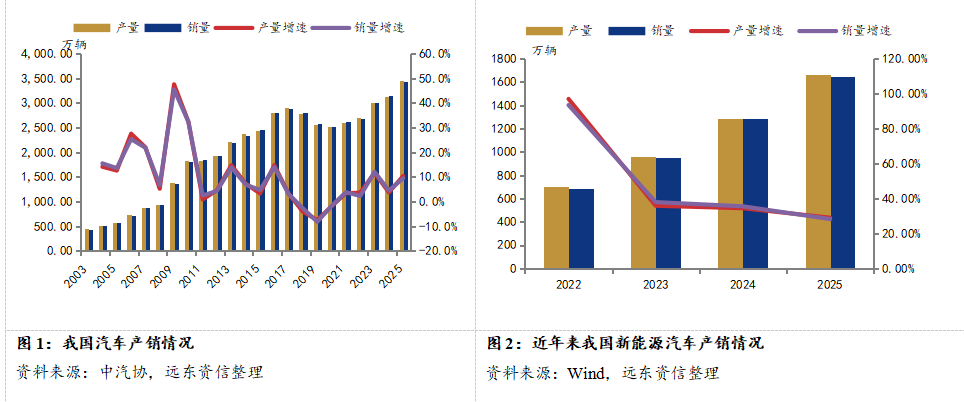
Group 1 - The automotive manufacturing industry in 2025 is characterized by a dual policy environment that supports consumption while regulating market competition, guiding the industry towards high-quality transformation [1][6][7] - The industry achieved record highs in production and sales, with total production reaching 34.53 million units and sales at 34.40 million units, marking a year-on-year increase of 10.4% and 9.4% respectively [2][8] - New energy vehicles (NEVs) and exports are the core engines driving supply and demand growth, with NEV production and sales increasing by 29% and 28.2% year-on-year [2][10] Group 2 - The bond issuance in the automotive sector totaled 61.02 billion yuan in 2025, with over 70% being sci-tech bonds, indicating a stable credit level across the industry [3][20][21] - Financial performance shows a significant decline in net profits, with a 30.47% year-on-year decrease in net profits for the first three quarters of 2025, leading to many companies reporting losses [4][25] - The average gross margin for sample companies remains stable at around 12%, while the average net margin dropped to -3.5% in the same period, indicating operational challenges [4][26] Group 3 - The outlook for 2026 highlights four key themes: stable production and sales growth, accelerated smart technology adoption, deepening global ecological expansion, and intensified competition [5][38] - The industry is expected to maintain high production and sales levels, with NEVs continuing to be the main growth driver, although the growth rate may slow down [5][39] - The competitive landscape is shifting towards a "value war," with industry consolidation accelerating as weaker companies face challenges in maintaining profitability [5][41]


中国与欧洲新能源“博弈”与“融合”
高工锂电· 2026-02-09 11:04
Core Viewpoint - The article discusses the evolving dynamics of the renewable energy market between China and Europe, highlighting the complexities of geopolitical influences, trade policies, and market responses in the context of electric vehicles (EVs) and related technologies [1][2]. Group 1: Trade Dynamics and Policy Responses - The EU has implemented temporary anti-subsidy tariffs on electric vehicles imported from China, signaling a protective stance for its automotive industry against subsidized Chinese products [2][4]. - Despite the tariffs, Chinese exports of plug-in hybrid electric vehicles (PHEVs) to Europe surged by nearly 600% year-on-year by May 2025, indicating a shift in export strategies to circumvent tariff impacts [5][6]. - The EU's trade deficit with China has doubled over the past decade, exceeding 300 billion euros, with the electric vehicle sector being a critical factor in this imbalance [2][6]. Group 2: Market Adaptation and Strategic Shifts - Chinese automakers are increasingly focusing on markets like the UK, Spain, and Italy, which have less stringent national identities regarding local automotive industries, allowing for greater penetration of Chinese brands [5][6]. - The growth of Chinese brands in Europe has not only pressured local manufacturers but has also reshaped the competitive landscape previously dominated by American companies like Tesla [5][6]. - By mid-2023, Chinese brands had doubled their market share in the European automotive sector compared to the previous year, reflecting a strategic adaptation to the evolving market conditions [6][10]. Group 3: Historical Context and Future Outlook - The historical partnership between European automakers and Chinese manufacturers has shifted, with companies like BYD now leading in market share, indicating a significant change in the competitive landscape [7][8]. - The article emphasizes that the current export trends are not merely a result of overcapacity but rather a manifestation of China's strategic advancements in the renewable energy sector [9][10]. - Future interactions between China and Europe are expected to focus more on regulatory standards, supply chain security, and market access, moving beyond simple tariff measures to deeper structural engagements [11][15]. Group 4: Energy Ecosystem Integration - The collaboration between China and Europe in the energy sector extends beyond automobiles, with significant growth in lithium battery exports from China to Germany and other European countries [13][14]. - Innovative partnerships, such as the collaboration between Octopus Energy and BYD for vehicle-to-grid solutions, illustrate the evolving role of Chinese companies as technology providers in the European energy landscape [13][14]. - The deepening of these cooperative models suggests a potential restructuring of the China-Europe relationship in the renewable energy sector, characterized by both competition and collaboration [14][15].