AIA(01299)

Search documents
友邦保险_ 25 年上半年预览_ 新业务价值增长加快且自由盈余生成良好;买入-AIA Group (1299.HK)_ 1H25 Preview_ Faster VONB growth and free surplus generation; Buy
2025-07-29 02:31
AIA Group (1299.HK) 1H25 Preview Summary Company Overview - AIA Group is set to report its 2Q/1H25 results on August 21, 2025, before market opening [1] Key Financial Metrics - **Value of New Business (VONB)**: Expected to grow by 14% year-over-year (yoy) to US$2,809 million in 1H25, with a faster growth rate of 16% yoy in 2Q25 compared to 13% in 1Q25 [7][12] - **Net Free Surplus Generation (NFSG)**: Anticipated to increase by 9% yoy to US$2.442 billion in 1H25, up from a 2% increase in FY24 [9][12] - **Operating Profit After Tax (OPAT)**: Expected to rise by 3% yoy to US$3.49 billion in 1H25, slower than the 6% growth in FY24 [8][12] - **Embedded Value (EV)**: Projected to increase by 2% to US$70.1 billion in 1H25 [10][12] Market Performance Insights - **Hong Kong**: Anticipated to be the main driver of VONB growth, with a projected increase of 23% yoy in 1H25 [6][11] - **Mainland China**: Expected to see a decline of 6% yoy in VONB for 1H25, primarily due to negative impacts from economic assumption changes [6][11] - **Thailand**: Forecasted to show a decline in VONB in 2Q25 due to demand being pulled forward ahead of regulatory changes [6][11] Strategic Focus Areas - Emphasis on underlying growth drivers such as: 1. Growth in mainland China and newly established regions 2. Sales momentum in Hong Kong 3. Factors contributing to NFSG growth, including operational variances and capital efficiency improvements [2] Valuation and Target Price - The target price has been adjusted to HK$83 from HK$90, based on a 1.4X FY26E P/EV, implying an 18% upside [3] - The medium-term Return on Embedded Value (ROEV) is estimated at 14.7%, with a Cost of Equity (COE) of 11.2% and a long-term growth rate of 2% [3][24] Additional Insights - The company does not expect any additional buybacks for FY25, suggesting a focus on growth rather than capital return strategies [2] - The anticipated increase in interim dividends per share (DPS) is 8% yoy to US$0.062 [10][12] - AIA's valuation methodology has shifted from a discounted model-based valuation to a P/EV multiple approach, reflecting a greater emphasis on capital generation capabilities [18][23] Conclusion - AIA Group is positioned for growth in 1H25, with strong performance expected in Hong Kong, while facing challenges in mainland China. The strategic focus on underlying growth drivers and adjustments in valuation methodology indicate a proactive approach to navigating market dynamics.

住房租赁新项目密集开业,友邦保险Pre-REITs收购引关注
Sou Hu Cai Jing· 2025-07-28 12:39
Core Insights - The report indicates that housing rental companies are showing significant development in scale expansion and operational efficiency under the backdrop of continuous policy support [6][8]. Group 1: Market Expansion - In the recent report, 22 new rental projects were opened by sample companies, marking a substantial increase compared to the previous reporting period, indicating a vibrant supply side in the housing rental market [2]. - The sample companies are strategically focusing on cities with high market demand and population density, primarily in economically active regions such as the Yangtze River Delta, Pearl River Delta, and central core cities [4]. Group 2: Company Performance - Vanke's rental division, Vanke Boyu, has achieved a management scale of 262,000 rooms, with a rental rate of 95.6% and a customer satisfaction rate exceeding 95% [8]. - The company has also reported a significant reduction in customer acquisition costs, with self-owned channels accounting for 88.5% of customer acquisition [8]. Group 3: Diverse Product Offerings - The new projects launched include a variety of product types such as white-collar apartments, talent apartments, hotel apartments, large rental communities, and guaranteed rental housing, catering to different residential needs [5]. Group 4: Investment Trends - The long-term rental apartment investment market is experiencing diverse participation, with entities like AIA Insurance and local state-owned enterprises actively engaging in asset acquisitions [12][14]. - AIA Insurance's acquisition of the Yumi Community in Shanghai, which offers 2,252 guaranteed rental units, exemplifies the growing interest in long-term rental assets [13]. Group 5: Future Outlook - The continuous encouragement of policies is enhancing the market's recognition of the value of long-term rental apartment assets, attracting diverse capital, including insurance and state-owned enterprise funds [14][15]. - The improvement of exit mechanisms such as REITs is expected to invigorate the long-term rental apartment investment market, potentially attracting more capital and driving industry scale expansion and operational upgrades [15].




2024年度寿险公司加权薪保比指标排行榜,薪保比已创近15年来历史新低!
13个精算师· 2025-07-28 11:46
Core Viewpoint - The 2024 life insurance industry has seen a decline in employee compensation and a historical low in the salary-to-premium ratio, indicating potential challenges in operational efficiency and profitability [2][14]. Group 1: Salary and Premium Ratio Analysis - In 2024, the total employee compensation in the life insurance industry was 108.5 billion yuan, a decrease of 4.6% year-on-year, with a salary-to-premium ratio of 3.4%, down 0.5 percentage points, marking a 15-year low [2][14]. - The "TOP7+1" companies (including major players like China Life and Ping An) had a salary-to-premium ratio of 3.3%, which is significantly lower than that of small and medium-sized insurance companies, which stood at 3.7% [17][18]. - The average salary-to-premium ratio for 70 life insurance companies over the past five years was 4.0%, with a median of 4.9%, and 11 companies exceeding 10% [5][28]. Group 2: Impact on Return on Equity (ROE) - The salary-to-premium ratio has a significant negative impact on a company's ROE, with each 1 percentage point increase in the ratio leading to a 0.37 percentage point decrease in ROE [24][25]. - The empirical model constructed to analyze this relationship included variables such as company size and channel type, confirming the negative correlation between salary-to-premium ratio and ROE [24][25]. Group 3: Historical Trends - The salary-to-premium ratio has shown a declining trend since 2018, with a notable acceleration in the decline for small and medium-sized insurance companies since 2019 [16][18]. - The ratio increased from 4.2% in 2010 to a peak of 5.3% in 2015, followed by a steady decline to the current levels [16][18]. Group 4: Employee Compensation Insights - The life insurance industry employed approximately 345,000 individuals in 2023, with an average compensation and benefits level of 330,000 yuan [10][22]. - The fluctuation in employee numbers has shown a slight decline, while average compensation has seen minor increases over recent years [10][22].




爆发!4000亿巨头,罕见涨停!
Zheng Quan Shi Bao· 2025-07-28 09:10
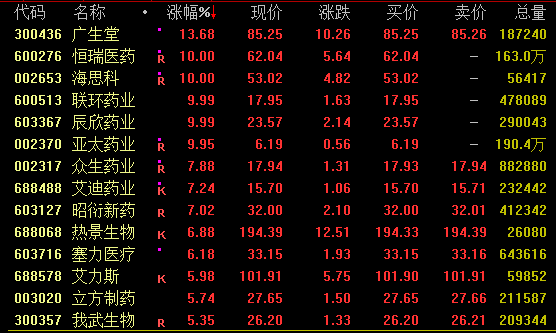
Market Overview - The Shanghai Composite Index experienced narrow fluctuations around 3600 points, closing up 0.12% at 3597.94 points, while the Shenzhen Component Index rose 0.44% to 11217.58 points, and the ChiNext Index increased by 0.96% to 2362.6 points [1] - The total trading volume in the Shanghai and Shenzhen markets was 176.65 billion yuan, a decrease of 52 billion yuan from the previous day [1] Insurance Sector - The insurance sector saw significant gains, with New China Life Insurance rising nearly 5% to reach a historical high, and China Life, China Ping An increasing by approximately 3% [3][4] - The China Insurance Industry Association announced a reduction in the guaranteed interest rates for traditional life insurance products, which is expected to improve the liability costs and net investment returns for life insurance companies [4][5] Innovative Drug Sector - The innovative drug sector showed strong performance, with companies like Guangsheng Pharmaceutical rising nearly 14%, and Heng Rui Medicine, Hai Si Ke, and Lian Huan Pharmaceutical hitting the daily limit [7] - Heng Rui Medicine's total market capitalization exceeded 400 billion yuan, indicating robust investor interest [7] PCB Sector - The PCB (Printed Circuit Board) sector was active, with companies such as Fangbang Co., and Chipbond Technology hitting the daily limit of 20% increase, and Shenghong Technology rising over 17% to reach a historical high [11][12] - The demand for high-end PCBs is expected to grow rapidly due to AI computing needs, with a projected supply-demand ratio for global AI PCBs in 2026 ranging from 80% to 103%, indicating a tight supply situation [13]



港股收盘 | 三大指数涨跌互现 恒瑞医药125亿美元大单引爆医药股
Xin Lang Cai Jing· 2025-07-28 08:44
Market Performance - The Hong Kong stock market showed mixed performance with the Hang Seng Index rising by 0.68% to 25,562.13 points, while the Tech Index fell by 0.24% to 5,664.02 points, and the National Enterprises Index increased by 0.29% to 9,177.15 points [2][3]. Hang Seng Index Movement - The Hang Seng Index reached a high of 25,660.54 points in the morning but maintained a volatile pattern before closing slightly higher [4]. Sector Performance - Insurance, pharmaceuticals, and brokerage stocks saw collective strength, while coal, shipping, and photovoltaic stocks experienced adjustments [5]. Insurance Sector Strength - Major insurance stocks like AIA Group (up 4.96%), China Pacific Insurance (up 3.91%), and Ping An Insurance (up 3.49%) saw significant gains due to a favorable assessment of life insurance reserve interest rates, which are expected to lower the new business liability costs for insurers [6][7]. Pharmaceutical Sector Boost - Pharmaceutical stocks surged, with companies like Fonda Holdings (up 10.39%), Zhaoyan New Drug (up 6.76%), and Via Biotechnology (up 5.45%) benefiting from overseas licensing deals, including a notable $12.5 billion collaboration between Hengrui Medicine and GlaxoSmithKline [8][9]. Brokerage Sector Gains - Brokerage stocks such as Guotai Junan International (up 9.45%), Shenwan Hongyuan Hong Kong (up 7.32%), and Xingzheng International (up 5.08%) experienced strong performance, likely influenced by the upcoming implementation of the Stablecoin Regulation in Hong Kong [11][13]. Weakness in Cyclical Stocks - Coal, shipping, and photovoltaic stocks faced declines, with companies like Feishang Non-Ferrous Coal (down 15.28%) and COSCO Shipping Ports (down 10.99%) leading the downturn due to falling commodity prices in the futures market [14][18]. Individual Stock Movements - Xuanwu Cloud saw a significant increase of 28% following a strategic partnership with LG Uplus, while Zhejiang United Investment surged by 116.67% on expectations of turning a profit by April 2025 [23][24].


彻底沸腾!中国平安、中国人寿,突发!
券商中国· 2025-07-28 05:57
Core Viewpoint - The surge in insurance stocks is attributed to the recent adjustment in the predetermined interest rates for insurance products, which is expected to mitigate the risk of interest spread losses for insurance companies [2][8]. Group 1: Market Performance - Insurance stocks experienced a significant rally, with the Hong Kong insurance sector rising over 4%, and China Life's H-shares increasing nearly 6% [1][4]. - In the A-share market, New China Life and China Pacific Insurance also saw substantial gains, contributing to the overall surge in the sector [1][3]. - Various insurance-related warrants, such as Ping An's warrants, achieved a doubling in value within a single day [1][4]. Group 2: Interest Rate Adjustments - The China Insurance Industry Association announced a new predetermined interest rate of 1.99%, which is below the previous 2.25% threshold, triggering adjustments in life insurance product rates [1][6]. - The maximum predetermined interest rates for different insurance products have been set at 2.0% for ordinary insurance, 1.75% for participating insurance, and 1.0% for universal insurance, effective from August 31, 2025 [7][10]. Group 3: Implications for the Insurance Sector - Analysts believe that the adjustment in predetermined interest rates is a significant positive development for insurance stocks, as it helps to prevent potential interest spread losses [2][8]. - The reduction in interest rates is expected to enhance the competitiveness of participating insurance products compared to traditional savings deposits and other investment vehicles [10][11]. - The shift towards participating insurance is anticipated to occur as a response to the large volume of savings deposits maturing, with insurance companies likely to benefit from this transition [11][12].

7月28日电,香港恒生指数上涨1%至25,644.83点。
news flash· 2025-07-28 03:33
恒生指数日内上涨1% 中国人寿涨超6%创下近10年新高 智通财经7月28日电,港股高开高走,恒生指数日内上涨1%至25644.83点。金融全线走强,中国人寿涨 超6%创下近10年新高;友邦保险涨超5%。 ...

-保险行业保险股PCE~ROCE估值体系探析:综合权益视角下的全面价值:新准则下保险股估值重构专题
ZHONGTAI SECURITIES· 2025-07-25 15:34
Investment Rating - The report maintains an "Accumulate" rating for the insurance sector [2]. Core Insights - The PCE-ROCE valuation system is introduced to better reflect the true value of insurance companies under new standards, addressing the limitations of the traditional P/EV system [6][47]. - The report identifies that companies like China Pacific Insurance and China Life Insurance are significantly undervalued in the A-share market, while in the H-share market, China Pacific, China Life, and Sunshine Insurance are also notably undervalued [6][6]. - The insurance sector is characterized by dual benefits: companies possess dividend advantages, and leading firms like Ping An have strategically invested in high-dividend assets, which positively impacts their performance [6]. Summary by Sections 1. Introduction - The P/EV valuation system is under scrutiny due to a prolonged low interest rate environment, leading to a decline in the valuation levels of listed insurance companies [16][16]. - As of July 23, 2025, major insurance companies are trading at historical low P/EV ratios, indicating a potential valuation trap [16][16]. 2. PCE-ROCE Valuation System - The PCE-ROCE system incorporates comprehensive equity (CE) and return on comprehensive equity (ROCE) to provide a more accurate valuation framework [47][48]. - The system aims to mitigate the volatility associated with traditional valuation methods by integrating net assets and contract service margins [6][47]. 3. Comparison with PIEV - The PCE-ROCE system is deemed more effective in reflecting the true value of insurance companies in a low interest rate environment compared to the PIEV system, which relies heavily on long-term investment return assumptions [8][8]. - The report highlights that the PCE-ROCE system offers a balanced valuation approach by considering both net assets and contract service margins [8][8]. 4. Profitability Analysis of Listed Insurance Companies - The report evaluates the profitability of insurance policies under the new standards, focusing on contract service margins (CSM) and new business contract service margins (NBCSM) [8][8]. - A scoring system is established to assess the performance of listed insurance companies based on various profitability indicators, with AIA, PICC, and CPIC scoring the highest [8][8]. 5. Main Conclusions and Investment Recommendations - The report concludes that the insurance sector presents significant investment opportunities, particularly in companies that are undervalued and have strong dividend policies [6][6]. - Recommended companies for investment include New China Life, Ping An, AIA, China Life, China Pacific, and China People’s Insurance [6][6].
新准则下保险股估值重构专题:保险股PCE-ROCE估值体系探析:综合权益视角下的全面价值
ZHONGTAI SECURITIES· 2025-07-25 11:32
Investment Rating - The report maintains an "Overweight" rating for the insurance sector [2]. Core Insights - The P/EV valuation system is facing challenges in a persistently low interest rate environment, leading to significant adjustments in risk discount rates and investment return assumptions, which have resulted in a decline in NBV and EV growth [5][9]. - The introduction of the PCE-ROCE valuation system aims to provide a more comprehensive reflection of the true value of insurance companies by incorporating comprehensive equity (CE) and return on comprehensive equity (ROCE) [31][43]. - The report identifies that A-share listed insurance companies, particularly China Pacific Insurance and China Life Insurance, are relatively undervalued according to the PCE-ROCE valuation system [5][29]. Summary by Sections 1. Introduction - The P/EV valuation system shows signs of "failure" as the valuation levels for A-share listed insurance companies continue to decline, with significant pressure on new business value growth due to macroeconomic factors [9][14]. 2. PCE-ROCE Valuation System Proposal - The PCE-ROCE system introduces comprehensive equity (CE) and ROCE to better reflect the value of insurance companies under new accounting standards [31][43]. - The system aims to address the limitations of the P/EV system by providing a more stable and predictable valuation framework [5][31]. 3. Comparison of Valuation Systems - The PCE-ROCE system is more effective in reflecting the true value of insurance companies in a low interest rate environment compared to the traditional P/EV system [5][31]. - The report highlights that the P/CE ratio provides a better fit and reflects the comprehensive value of insurance companies compared to P/B and P/EV ratios [5][31]. 4. Analysis of Insurance Companies' Policy Profitability - The report establishes a profitability evaluation system for listed insurance companies based on CSM and NBCSM, identifying key performance indicators to assess profitability [5][31]. - The scoring system ranks companies based on their CSM performance, with AIA, PICC, and CPIC scoring the highest [5][31]. 5. Main Conclusions and Investment Recommendations - The report concludes that several A-share and H-share listed insurance companies are undervalued, suggesting a focus on companies like New China Life, Ping An, AIA, China Life, CPIC, and PICC for potential investment opportunities [5][29].
最新规模突破百亿!全市场唯一港股通非银ETF(513750)连续17天净流入近50亿元,年内规模增幅达1213%!
Xin Lang Cai Jing· 2025-07-25 01:39
Core Insights - The Hong Kong Stock Connect Non-Bank ETF (513750) has reached a record size of 10.364 billion yuan as of July 24, 2025, marking a year-to-date growth of 1213.56% [1] - The ETF has seen continuous net inflows over the past 17 days, with a total of 4.966 billion yuan in net inflows, and 5.897 billion yuan over the past month [1] - The ETF has achieved a 52.78% increase since its low point on April 10, 2025, and has a one-year net value increase of 90.63%, ranking in the top 1.36% among 2940 index stock funds [2] Fund Performance - The Hong Kong Stock Connect Non-Bank ETF recorded a trading volume of 2.158 billion yuan on July 24, 2025, with a turnover rate of 22.14%, indicating active market participation [2] - The ETF has a maximum monthly return of 31.47% since its inception, with the longest consecutive monthly gain being 4 months and an average monthly return of 7.04% [2] - The ETF closely tracks the CSI Hong Kong Stock Connect Non-Bank Financial Theme Index, which includes up to 50 listed companies that meet the non-bank financial theme criteria [2] Sector Analysis - The top ten weighted stocks in the CSI Hong Kong Stock Connect Non-Bank Financial Theme Index account for 77.92% of the index, with major holdings including China Ping An, AIA, and Hong Kong Exchanges and Clearing [3] - Market sentiment has improved in Q2 2025, leading to an increase in the non-bank sector's weight, with expectations for both fundamental and valuation improvements [3] - The insurance sector is expected to benefit from a stable interest rate environment and improved investment returns, which could enhance profitability [4]