
ZHOU HEI YA(01458)

Search documents
中金:维持周黑鸭(01458)目标价3.0港元 维持“跑赢行业”评级
智通财经网· 2025-07-21 01:52
Core Viewpoint - The report from CICC maintains the profit expectations for Zhou Hei Ya (01458) for 2025 and 2026, with a target price of HKD 3.0, indicating a potential upside of approximately 20.5% from the current stock price [1] Group 1: Earnings Forecast - The company has released a profit forecast for 1H25, expecting a year-on-year profit growth of 55.2% to 94.8%, with revenue projected between RMB 1.2 billion to 1.24 billion and profit (excluding uncompleted joint venture profits and related tax impacts) estimated at RMB 90 million to 113 million [2] - The earnings forecast slightly exceeds market expectations, primarily due to better-than-expected cost control, including effective management of store and emerging channel expenses [2] Group 2: Revenue Insights - The average same-store sales are expected to show a single-digit year-on-year increase in 1H25, as the company focuses on improving store quality through optimization of product placement and customer engagement [3] - The emerging channel team is expected to be fully established by 2024, with the company's marinated products entering Sam's Club and other retail channels by March 2025, although the revenue contribution from these channels remains limited for the first half of 2025 [3] Group 3: Profitability Analysis - The company is expected to see an improvement in gross margin year-on-year, supported by low costs of duck by-products and effective management of sales expenses [4] - The number of loss-making stores below the breakeven line is anticipated to continue decreasing in 1H25, with a projected net profit margin of approximately 8.3% based on the midpoint of the profit forecast [4]
食饮吾见 | 一周消费大事件(7.14-7.18)
Cai Jing Wang· 2025-07-19 05:49
Group 1: Water Well Square - The company expects a 14.54% increase in sales volume for the first half of 2025, but anticipates a 12.84% decline in revenue to 1.498 billion yuan [1] - The net profit attributable to shareholders is projected to be 105 million yuan, a decrease of 56.52% compared to the same period last year [1] - The second quarter faced pressure from traditional consumption scenarios such as business banquets, leading to a slowdown in the recovery of shipments [1] Group 2: PepsiCo - PepsiCo reported Q2 2025 net sales of 22.726 billion USD (approximately 164.887 billion yuan) with an operating profit of 1.789 billion USD (approximately 12.98 billion yuan) [2] - The company achieved an organic sales growth of 2.1% [2] - New products such as "Milk Naked Rice Cake" and "Dragon Fruit Dried Fruit" have been introduced in the Chinese market, with the latter quickly entering the top 10 dried fruit list at Sam's Club [2] Group 3: Good Products Shop - The company announced the introduction of Wuhan State-owned Assets as a strategic investor, aiming to enhance global supply chain collaboration and food ecosystem development [3] - This change in control is seen as a strategic upgrade to better respond to the new phase of industry development [3] - The partnership will focus on creating a comprehensive industrial ecosystem through supply chain, brand, and channel collaboration [3] Group 4: KKR Acquisition - KKR's acquisition of Vista International Inc. was completed on July 4, 2025, granting KKR indirect control of 85% of the company [4] - Vista International primarily operates in the beverage sector within China [4] - The company was previously fully owned by an individual before the acquisition [4] Group 5: Starbucks and Fast Food Chains - Starbucks China, Yum China, and McDonald's China participated in the third China International Supply Chain Promotion Expo [5][6] - Starbucks showcased sustainable development innovations, while Yum China launched a development plan focusing on food safety and environmental concerns [6] - McDonald's emphasized its local supply chain partnerships and plans for global expansion [6] Group 6: Zhou Black Duck - The company expects total revenue for the first half of 2025 to be between 1.2 billion and 1.24 billion yuan, reflecting a year-on-year decline of approximately 1.5% to 4.7% [7] - Profit is projected to grow by 55.2% to 94.8%, driven by improved store management and reduced raw material costs [7] Group 7: Xiaobai Xiaobai - The company launched a partner program aimed at retaining and attracting talent by allowing top-performing employees to become store partners [8] - The plan aims to add 50 to 100 partner stores annually [8] - The first batch of 21 partners has already signed agreements, with five stores currently in operation [8] Group 8: BreadTalk - The company clarified that the closure of 11 stores in Chengdu was due to the expiration of franchise agreements, not a broader business failure [9] - The company is working on refunding customers with unspent gift cards and plans to open over 40 new stores [9] Group 9: Quanjude - The company expects a net profit of 11 to 14 million yuan for the first half of 2025, a decline of 52.28% to 62.51% year-on-year [10] - The restaurant industry continues to face significant market pressure, affecting customer traffic and revenue [10] Group 10: Yonghui Supermarket - The company anticipates a net loss of 240 million yuan for the first half of 2025, marking a shift from profit to loss [13] - The loss is attributed to a strategic transformation and the closure of 227 underperforming stores [13] - The company is undergoing significant supply chain reforms to establish a "quality retail" mindset [13]


智通港股解盘 | 美国稳定币立法通过 大金融再起智能体热度不减
Zhi Tong Cai Jing· 2025-07-18 12:26
Market Overview - The market is experiencing an upward trend without negative news, with Hong Kong stocks jumping 1.33% today [1] - Insurance companies are adjusting product pricing in response to market interest rates, leading to a decrease in liability costs and an increase in equity allocation [1] - Regulatory changes allow insurance companies more flexibility in asset allocation, boosting their profitability [1] Securities Sector - The approval of the U.S. Stablecoin Innovation Act is expected to catalyze the securities sector, with Tether's USDT market cap surpassing $160 billion [2] - The anticipated signing of an executive order by President Trump could allow significant investments in alternative assets, including stablecoins [3] AI and Technology - The upcoming World Artificial Intelligence Conference (WAIC) will showcase advancements in AI infrastructure, including Huawei's new AI computing technology [7] - The launch of the H20 chip for sale in China is expected to boost demand for AI applications, with companies like Tencent and ByteDance placing orders [4] Performance of Specific Companies - China Life and China Pacific Insurance saw stock increases of over 5% due to favorable market conditions [1] - Companies like JD Health and Ant Group are planning to apply for stablecoin licenses in Hong Kong, indicating a shift towards digital currency [2] - Goldwind Technology reported a 35.72% increase in revenue for Q1 2025, driven by strong order growth and international expansion [9] Industry Trends - The rare earth sector is experiencing significant profit growth, with companies like Huahong Technology and Northern Rare Earth projecting substantial increases in net profit [4] - The wind energy market is expected to see high growth, with Goldwind's international business expanding across six continents [10]


周黑鸭(01458)2025年上半年业绩预告:利润同比实现55.2%至94.8%增长,战略深耕显成效
智通财经网· 2025-07-18 09:19
Core Viewpoint - Zhou Hei Ya (01458) has demonstrated strong profitability and resilience in the face of challenges in the snack food sector, with a significant increase in expected profits and revenue for the first half of 2025 [1][2] Financial Performance - The company anticipates a profit of approximately 90 million to 113 million yuan for the first half of 2025, representing a year-on-year increase of 55.2% to 94.8% [1] - Expected revenue is projected to be between 1.2 billion to 1.24 billion yuan, excluding uncompleted statistics from joint ventures [1] Operational Strategy - Zhou Hei Ya has been implementing a "store quality reform" to optimize store structure and focus on improving operational quality, which has led to an effective increase in average single-store sales [1] - The downward trend in raw material costs has directly contributed to an increase in gross margin, enhancing the company's profitability [1] - Through lean management, the company has successfully optimized its sales expense ratio, further improving overall profitability [1] Market Positioning - In a competitive environment with increasing pressure on growth, Zhou Hei Ya has shifted its focus from scale expansion to operational quality, achieving a differentiated development path based on quality [1] - The company has successfully navigated industry challenges by implementing refined operations for sustainable profit growth [1] Future Outlook - Zhou Hei Ya is expected to continue its positive development trend by deepening strategic layouts, with significant potential for further single-store sales improvement [2] - Stable control of raw material costs and ongoing optimization of expense ratios will support the company's sustained profitability [2] - The exploration of new product categories, such as compound seasonings, and steady expansion into emerging channels and overseas markets will open new growth avenues and enhance long-term value [2]
智通港股52周新高、新低统计|7月18日





智通财经网· 2025-07-18 08:43
Core Viewpoint - As of July 18, 160 stocks reached their 52-week highs, with notable performances from China New Economy Investment (00080), Aoyuan Group Equity (02905), and Zhong An Holdings Group (08462) showing high growth rates of 288.89%, 55.28%, and 50.00% respectively [1][2]. Summary by Category 52-Week High Performers - China New Economy Investment (00080) closed at 0.440, with a peak price of 0.700, achieving a growth rate of 288.89% [2]. - Aoyuan Group Equity (02905) closed at 0.218, with a peak price of 0.250, achieving a growth rate of 55.28% [2]. - Zhong An Holdings Group (08462) closed at 0.221, with a peak price of 0.228, achieving a growth rate of 50.00% [2]. - Other notable performers include Hualian International (00969) with a growth rate of 40.13% and Zhongke Bio (01237) with a growth rate of 37.25% [2]. Additional High Performers - Wanma Holdings (06928) closed at 0.550 with a growth rate of 30.43% [2]. - Lepu Biopharma-B (02157) closed at 7.940 with a growth rate of 24.54% [2]. - Other stocks with significant growth include ZhiJianYueDong (06860) at 17.14% and China Jindian Group (08281) at 17.12% [2]. 52-Week Low Performers - The document also lists stocks that reached their 52-week lows, with XI Ernan CO-U (09311) showing a decline of 16.10% [6]. - Other notable declines include XI Ernan CO (07311) at -12.62% and Haotian International Construction Investment (01341) at -5.70% [6].
3万家衢州鸭头店,打脸高端卤味
3 6 Ke· 2025-07-04 08:56
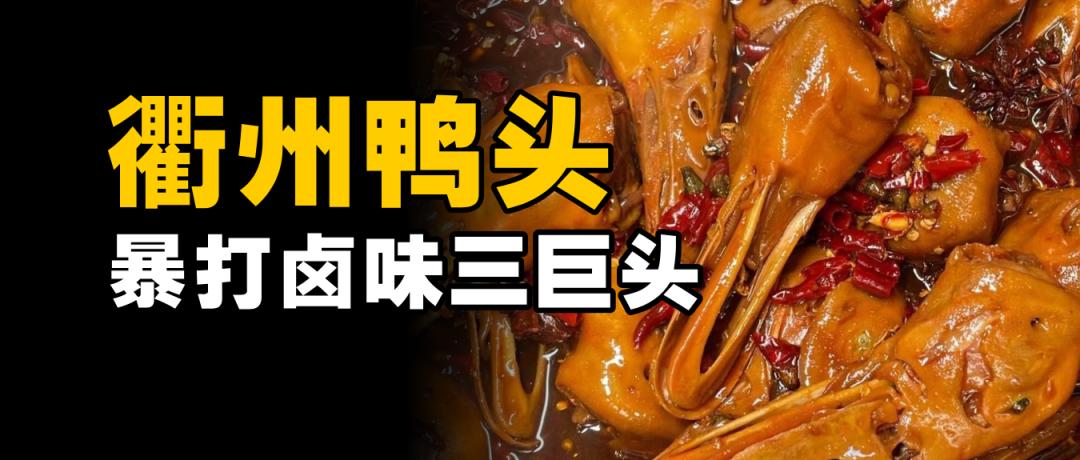
Core Viewpoint - The rise of Quzhou Duck Head stores across China contrasts sharply with the decline of major braised food brands, indicating a shift in consumer preferences towards more affordable and authentic options [5][6][20]. Group 1: Market Trends - Over 30,000 Quzhou Duck Head stores have opened nationwide, while major brands like Juewei Duck Neck, Zhou Hei Ya, and Huang Shang Huang are closing stores, with Juewei reducing from 16,000 to 12,000 locations in just two years [3][5]. - Zhou Hei Ya's store count dropped from nearly 4,000 to just over 3,000, a reduction of about 25%, while Huang Shang Huang decreased from 4,500 to 3,600 [5]. Group 2: Consumer Preferences - The decline of major brands is not due to a decrease in consumer interest in braised foods, as evidenced by the rapid expansion of Quzhou Duck Head [6]. - Quzhou Duck Head offers a more affordable price point, with items like duck necks priced around 6-7 yuan, significantly cheaper than competitors [23]. Group 3: Business Strategies - Major brands have attempted to upscale their offerings, leading to higher prices and reduced portion sizes, which has alienated consumers [11][12]. - The pricing strategy of major brands has resulted in a situation where their products can cost 70-100 yuan per kilogram, while Quzhou Duck Head maintains a more accessible pricing model [12][23]. Group 4: Product Differentiation - Quzhou Duck Head emphasizes "handmade fresh braising," contrasting with the mass-produced offerings of larger brands, which enhances its appeal [24]. - The visibility of the cooking process and the variety of ingredients available at Quzhou Duck Head stores create a more engaging consumer experience [24][25]. Group 5: Cultural and Regional Influences - Quzhou cuisine, known for its spiciness, is influenced by its geographical location at the intersection of several provinces, contributing to the unique flavor profile of Quzhou Duck Head [16][20]. - The traditional dish "Three Heads and One Palm," which includes duck heads, rabbit heads, and fish heads, reflects the rich culinary heritage of the region [18][19].


商家远程管理下,无人仓订单缘何成骑手“雷区”?
第一财经· 2025-07-02 13:39
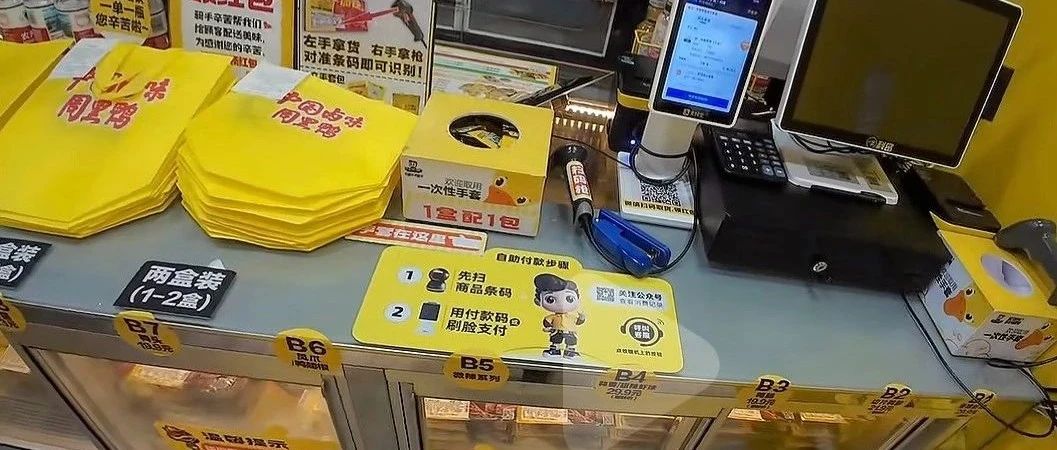
Core Viewpoint - The rise of unmanned warehouses is shifting some responsibilities from merchants to delivery riders, leading to operational challenges and dissatisfaction among riders [1][4][9]. Group 1: Unmanned Warehouse Operations - Unmanned warehouses are becoming more common, with brands like Zhou Hei Ya leading the way in deploying these models to reduce labor costs and extend operational hours [4][8]. - Zhou Hei Ya's unmanned satellite stores utilize smart technology to enhance operational efficiency, allowing for 24-hour service and increased sales, particularly in late-night scenarios [4][8]. - The operational model involves delivery riders performing tasks such as picking, packing, and scanning items, which traditionally would be the responsibility of the merchant [4][9]. Group 2: Rider Experiences and Challenges - Delivery riders express significant frustration with unmanned warehouse orders, citing difficulties in locating and packing items, which can lead to wasted time and increased stress [5][6]. - Riders report that these orders are infrequent but are among the least preferred due to the added responsibilities and complexities involved [5][6]. - The lack of clear communication regarding unmanned warehouse orders in the delivery system adds to the riders' challenges, as they often discover the nature of the order only upon arrival [5][6]. Group 3: Industry Trends and Future Outlook - The growth of unmanned warehouses is driven by technological advancements and changing consumer demands for convenience and immediacy [8][9]. - Experts indicate that the current trend of shifting responsibilities to riders may face regulatory scrutiny and technological improvements that could clarify roles and reduce manual tasks in the future [9][10]. - Some regions have begun implementing regulations to protect riders' rights, indicating a potential shift towards more equitable operational practices in the industry [10].
商家远程管理下,无人仓订单缘何成骑手“雷区”?
Di Yi Cai Jing Zi Xun· 2025-07-02 09:30
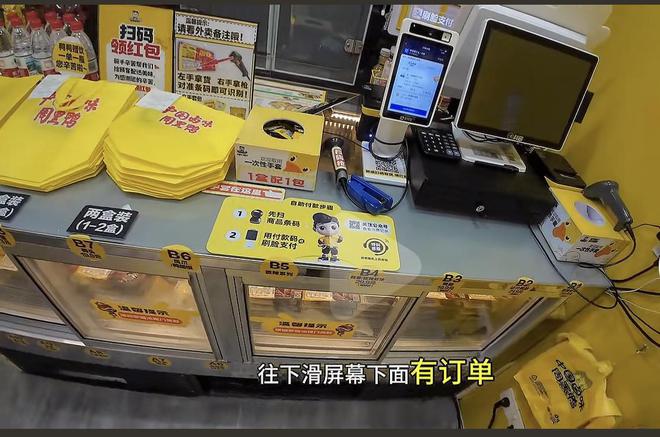
Core Viewpoint - The rise of unmanned warehouses is shifting some responsibilities from merchants to delivery riders, leading to operational challenges and dissatisfaction among riders [1][4][5]. Group 1: Unmanned Warehouse Operations - Unmanned warehouses are becoming more common, with brands like Zhou Hei Ya adopting this model to reduce labor costs and extend operational hours [4][6]. - Zhou Hei Ya has reported significant cost savings and efficiency improvements through the use of smart devices in their unmanned satellite stores [4][6]. - The operational process involves riders scanning to enter, retrieving items, and packaging them, which can be time-consuming and burdensome for riders [5][6]. Group 2: Rider Experiences and Challenges - Many riders express strong aversion to unmanned warehouse orders, citing inefficiencies and the need to search for items themselves [5][6]. - Riders often encounter these orders infrequently, but they are considered the least desirable due to the time wasted and the complexity of locating items [5][6]. - The system does not clearly indicate when an order is from an unmanned warehouse, leading to frustration when riders arrive and find they must perform additional tasks [5][6]. Group 3: Industry Trends and Future Outlook - The growth of unmanned warehouses is driven by technological advancements and changing consumer demands for convenience [6][7]. - There is a trend of merchants shifting responsibilities to riders, which blurs the lines of accountability and contradicts the intended efficiency of unmanned operations [7]. - Regulatory measures are being introduced to clarify responsibilities and protect riders' rights, indicating a potential shift in how unmanned warehouses operate in the future [7][8].
28家港股公司回购 腾讯控股回购5.00亿港元



Zheng Quan Shi Bao Wang· 2025-06-26 01:48
Summary of Key Points Core Viewpoint - On June 25, 28 Hong Kong-listed companies conducted share buybacks totaling 31.02 million shares, with a total buyback amount of 708 million HKD [1][2]. Group 1: Major Buybacks - Tencent Holdings repurchased 979,000 shares for 500 million HKD, with a highest price of 514.50 HKD and a lowest price of 508.50 HKD, bringing its total buyback amount for the year to 35.04 billion HKD [1][2]. - AIA Group repurchased 2.5 million shares for 177 million HKD, with a highest price of 71.70 HKD and a lowest price of 70.05 HKD, totaling 14.54 billion HKD in buybacks for the year [1][2]. - Andeli Juice repurchased 500,000 shares for 8.73 million HKD, with a highest price of 17.50 HKD and a lowest price of 17.22 HKD, totaling 7.50 million HKD in buybacks for the year [1][2]. Group 2: Buyback Statistics - The highest buyback amount on June 25 was from Tencent Holdings at 500 million HKD, followed by AIA Group at 177 million HKD [1][2]. - In terms of share quantity, Youzan had the highest buyback volume with 13 million shares, followed by Ying Group and China Electric Power with 5 million shares and 3.8 million shares, respectively [1][2]. - Notably, companies like Dexin Services and Jinyong Investment conducted their first buybacks of the year on this date [2].
周黑鸭(01458.HK):鼎新革故 重整向前
Ge Long Hui· 2025-06-25 20:05
Core Viewpoint - The company is undergoing a transformation under the leadership of its founder, focusing on optimizing store operations, enhancing product offerings, and expanding distribution channels to drive growth and improve profitability [1][2][3] Group 1: Company Overview - Founded by Zhou Fuyou in Wuhan, the company has developed into a leading player in the domestic leisure cooked duck products market, with a total of 3,031 retail stores as of 2024 [1] - The company's revenue and net profit have experienced a compound annual growth rate (CAGR) of 6.57% and -8.49% respectively from 2013 to 2024 [1] Group 2: Operational Improvements - Since the founder resumed management, the company has focused on enhancing single-store performance through product optimization, store operations, and employee incentives [1] - The store count increased by 23% in 2022, followed by 11% in 2023, but saw a decline of 21% in 2024, while same-store revenue improved by 5% in 2023 and is expected to continue this upward trend [1] Group 3: Channel Development - The company has elevated the development of distribution channels to a strategic level, establishing a dedicated department and targeting high-end membership stores, supermarkets, and snack channels [2] - Successful entry into major supermarket channels has been achieved, with expectations for significant growth in 2025 [2] Group 4: International Expansion - The company is actively exploring overseas markets, aiming to spread Chinese marinated food culture and establish new growth avenues, with plans to enter Southeast Asia and other regions by 2025 [3] - A joint venture has been formed to launch a new series of compound seasonings, with plans for additional product launches in the coming years [3] Group 5: Financial Projections - Projected net profits for 2025, 2026, and 2027 are expected to be 152 million, 188 million, and 219 million respectively, with year-on-year growth rates of 54.44%, 24.02%, and 16.52% [3] - The company is considered to have a favorable valuation compared to peers, with price-to-earnings ratios of 31.23x and 25.18x for 2025 and 2026 respectively [3]