
XIAOMI(01810)

Search documents
小米回应网传KOL合作:跟相关KOL有过接触,立即终止可能进行的任何形式合作
Xin Lang Cai Jing· 2026-01-05 15:36
1月5日,针对网络有关KOL合作争议,小米新任公关部总经理徐洁云发文致歉:"经过仔细的调查确 认,我们的团队此前确实跟相关 KOL有过接触。经大家提醒,经过查证,我们立即终止可能进行的任 何形式的合作,且以后也不会合作。" 徐洁云称:"用户、米粉朋友们的感受,的确是我们最在乎的事情。实在抱歉,给大家带来很多的困扰 和不适,在此,诚挚向大家致歉!"(智通财经记者 范佳来) ...
雷军的“丢轮保车”居然是真的,你敢相信吗?
Sou Hu Cai Jing· 2026-01-05 15:22
Core Viewpoint - Xiaomi's YU7 vehicle incorporates a safety design strategy known as "wheel detachment for vehicle protection," which aims to enhance passenger safety during collisions by allowing the wheels to detach from the vehicle in certain scenarios [3][5][7]. Group 1: Vehicle Safety Features - The YU7 underwent a 25% small offset collision test at a speed of 64 km/h, demonstrating that the A-pillar remained undamaged and the passenger compartment was intact, with airbags deploying correctly [3]. - In response to public concerns about the wheel detachment during the test, Xiaomi clarified that this design is intentional to prevent wheel intrusion into the passenger cabin, thereby reducing potential injuries [5][7]. - The vehicle's safety structure includes components such as a subframe, upper beam, and aluminum tower top, which work together to minimize impact on the passenger compartment during collisions [5]. Group 2: Historical Context of Safety Design - The concept of "wheel detachment for vehicle protection" was first introduced by Mercedes-Benz in 1959 with the W111 series, which featured a design that allowed the front suspension and wheels to detach during severe frontal collisions [9]. - Other automotive brands, including Volvo, BMW, and Audi, have since adopted and refined similar safety strategies, with Volvo being particularly noted for its advancements in this area [9]. - Despite its long-standing presence in the automotive industry, the concept of wheel detachment remains largely unknown to the general public, highlighting a gap in consumer awareness that Xiaomi aims to bridge [11].

造车新势力2025生死局:零跑交付59万辆成黑马,蔚小理加速转型
2 1 Shi Ji Jing Ji Bao Dao· 2026-01-05 14:59
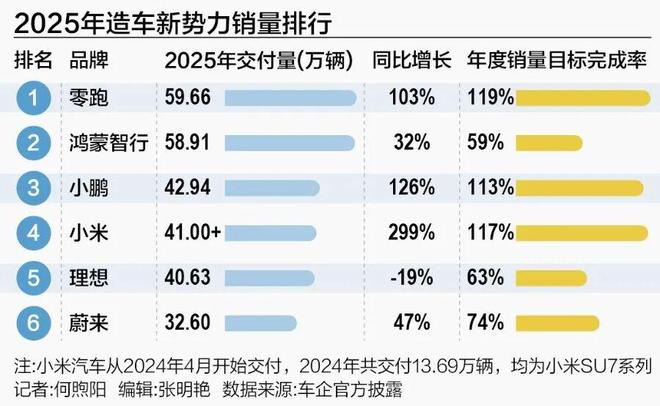
Core Insights - The 2025 new energy vehicle market has shown a stark polarization, with new entrants like "Honglingmi" (Hongmeng Zhixing, Leap Motor, Xiaomi) rapidly gaining market share while established players like NIO and Li Auto struggle to maintain their positions [1][4] Group 1: Market Performance - Leap Motor achieved the highest sales among new forces with 596,600 units delivered in 2025, marking a 103% year-on-year growth and exceeding its annual sales target by 19% [2][4] - Hongmeng Zhixing followed closely with 589,100 units delivered, a 32% increase, although it did not meet its annual sales target [2][6] - Xiaomi delivered over 410,000 units, achieving a remarkable 299% growth and surpassing its sales target by 17% [2][5] - NIO and Li Auto faced challenges, with NIO delivering 326,000 units (47% of its target) and Li Auto delivering 406,300 units, a 19% decline from the previous year [2][10] Group 2: Strategic Developments - Leap Motor's success is attributed to its focus on in-house research and development, establishing 17 component factories and achieving a parts-sharing rate of 88% across its models, which helps maintain competitive pricing [5][6] - Xiaomi's strategy leverages its consumer electronics background, emphasizing user engagement and ecosystem integration, which has proven effective in rapidly building market presence [6][8] - Hongmeng Zhixing is diversifying its product range to reduce reliance on its flagship model, with new models achieving significant sales growth [6][8] Group 3: Challenges and Future Outlook - Leap Motor must prove its capabilities in the high-end market while addressing its shortcomings in smart technology investments [7][8] - Xiaomi faces potential backlash from its strong personal branding and must navigate user sentiment carefully following safety incidents [8] - The traditional leaders, NIO and Li Auto, are undergoing painful transformations, with NIO focusing on operational efficiency and product refinement, while Li Auto is struggling with declining sales and competition from new entrants [10][17] Group 4: Industry Dynamics - The market is witnessing a brutal elimination process, with companies like Neta facing bankruptcy and others like WM Motor and HiPhi attempting to revive their operations amid financial difficulties [19][20] - The competition is shifting towards a focus on systemic capabilities, where companies that can balance technology development, product iteration, and operational efficiency will thrive [24][25]


南京熊猫电子股份近一个月首次上榜港股通成交活跃榜




Zheng Quan Shi Bao Wang· 2026-01-05 14:51
1月5日上榜港股通成交活跃榜个股中,南京熊猫电子股份为近一个月首次上榜。 证券时报·数据宝统计显示,1月5日港股通(包括沪市港股通及深市港股通)成交活跃股合计成交529.01 亿港元,占当日港股通成交金额的36.84%,净买入金额99.89亿港元。 上榜的成交活跃股中,阿里巴巴-W成交额为95.60亿港元,成交金额居首;其次是中芯国际、盈富基 金,成交金额分别为87.99亿港元、68.45亿港元。 以上榜次数统计,1月5日上榜个股中,近一个月上榜次数最多的是阿里巴巴-W、腾讯控股等,近一个 月均上榜17次,最受港股通资金关注。 南京熊猫电子股份为近一个月首次上榜,当日港股通成交额为16.35亿港元,成交净买入1.05亿港元,该 股当日收盘上涨39.75%。(数据宝) (文章来源:证券时报网) 1月5日港股通成交活跃股榜单 | 证券 | 证券简称 | 成交金额(亿 | 净买入金额(亿 | 近一个月上 | 最新收盘价 | 日涨跌幅 | | --- | --- | --- | --- | --- | --- | --- | | 代码 | | 港元) | 港元) | 榜次数 | (港元) | (%) | | 0070 ...

港股通1月5日成交活跃股名单
Zheng Quan Shi Bao Wang· 2026-01-05 14:44
成交活跃股方面,今日上榜个股中,南向资金成交金额最多的是阿里巴巴-W,合计成交额95.60亿港 元,中芯国际、盈富基金成交额紧随其后,分别成交87.99亿港元、68.45亿港元。以净买卖金额统计, 净买入的个股共有10只,盈富基金净买入额为68.26亿港元,净买入金额居首,该股收盘股价下跌 0.08%,快手-W净买入额为15.56亿港元,小米集团-W净买入额为10.19亿港元。净卖出金额最多的是腾 讯控股,净卖出9.19亿港元,该股收盘股价上涨0.24%,中国移动、南京熊猫电子股份遭净卖出4.06亿 港元、1.05亿港元。 今日上榜个股中,盈富基金、快手-W、小米集团-W等8只股同时上榜港股通(深)、港股通(沪)成 交活跃股, 盈富基金合计成交额68.45亿港元,成交净买入68.26亿港元,快手-W合计成交额53.10亿港 元,成交净买入15.56亿港元。腾讯控股合计成交额64.57亿港元,成交净卖出9.19亿港元。 从连续性进行统计, 有3只股获南向资金连续3天以上净买入,连续净买入天数较多的有华虹半导体、 小米集团-W、中芯国际,连续净买入天数分别为5天、3天、3天。以其间净买入金额统计,净买入金额 最多 ...



港股通净买入187.23亿港元
Zheng Quan Shi Bao Wang· 2026-01-05 14:43
1月5日恒生指数上涨0.03%,报收26347.24点,全天南向资金通过港股通渠道合计净买入187.23亿港 元。 证券时报·数据宝统计,1月5日港股通全天合计成交金额为1436.06亿港元,成交净买入187.23亿港元。 具体来看,沪市港股通成交金额871.38亿港元,成交净买入98.09亿港元;深市港股通成交金额564.68亿 港元,成交净买入89.14亿港元。 成交活跃股方面,沪市港股通前十大成交活跃股中,阿里巴巴-W成交额为55.70亿港元,成交金额居 首;其次是中芯国际、盈富基金,成交金额分别为53.49亿港元、52.86亿港元。以净买卖金额统计,盈 富基金净买入额为52.72亿港元,净买入金额居首,该股收盘股价下跌0.08%。净卖出金额最多的是腾讯 控股,净卖出4.38亿港元,收盘股价上涨0.24%。 深市港股通前十大成交活跃股中,成交额居首的是阿里巴巴-W,成交金额39.90亿港元;其次是中芯国 际、腾讯控股,成交金额分别为34.50亿港元、30.33亿港元。以净买卖金额统计,有9只股为净买入,净 买入金额最多的是盈富基金,净买入15.54亿港元,该股收盘下跌0.08%。净卖出金额最多的是腾讯控 ...

小米集团-W(01810.HK)1月5日回购380.00万股,耗资1.49亿港元
Zheng Quan Shi Bao Wang· 2026-01-05 14:34
小米集团-W回购明细 | 日期 | 回购股数 | 回购最高价 | 回购最低价 | 回购金额 | | --- | --- | --- | --- | --- | | | (万股) | (港元) | (港元) | (万港元) | | 2026.01.05 | 380.00 | 39.320 | 39.220 | 14929.13 | 注:本文系新闻报道,不构成投资建议,股市有风险,投资需谨慎。 (原标题:小米集团-W(01810.HK)1月5日回购380.00万股,耗资1.49亿港元) 证券时报•数据宝统计,小米集团-W在港交所公告显示,1月5日以每股39.220港元至39.320港元的价格 回购380.00万股,回购金额达1.49亿港元。该股当日收盘价39.340港元,下跌2.33%,全天成交额62.76 亿港元。(数据宝) ...
全球车企市值“大洗牌”:特斯拉、丰田、小米、比亚迪分列前四
Xin Lang Cai Jing· 2026-01-05 14:20
转自:智通财经 【全球车企市值"大洗牌":特斯拉、丰田、小米、比亚迪分列前四】智通财经1月5日电,汽车产业深度 变革背景下,全球车企市值排名的更新既是中国、外资车企行业地位与竞争格局的直观体现,亦为市场 对汽车企业全产业链价值的综合判断。截至2025年12月31日收盘,在全球车企TOP10中,新势力车企与 传统车企、海外车企与中国车企之间的市值排名竞争呈现两种局面——特斯拉、丰田、小米、比亚迪分 列前四,排名较一年前无变化的同时各自市值有所增长,且全球十大市值车企中依旧有两家中国公司; 五至十名位次发生"巨变"——宝马、奔驰、大众等排名全面提升,保时捷掉出前十,马鲁蒂铃木印 度"入替"位列第十名。(智通财经记者 张屹鹏) ...



ETF日报:短期黄金价格或延续高位震荡 关注黄金基金ETF和黄金股票ETF
Xin Lang Cai Jing· 2026-01-05 13:59
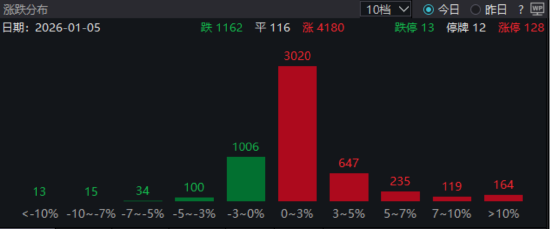
Group 1: A-Share Market Performance - The A-share market opened high and closed strong, with the Shanghai Composite Index rising by 1.38% to close at 4023.42 points, surpassing the 4000-point mark again [1] - The Shenzhen Component Index reached a new high, increasing by 2.24% to close at 13828.63 points [1] - The total trading volume exceeded 2.56 trillion yuan, indicating significant market activity [1] - Sectors such as media and pharmaceuticals led the gains, while oil and banking sectors faced declines, with over 4100 stocks rising [1] - The market outlook remains bullish, supported by the New Year effect and macroeconomic policies [1] Group 2: Hong Kong Market and Technology Sector - The Hong Kong market showed strong performance during the mainland's holiday, with the technology ETF rising over 4% [3] - The Hang Seng Index increased by 28% in 2025, marking its best annual performance since 2017 [3] - Key factors supporting the technology sector include improved macroeconomic conditions and a truce in US-China tariffs, alongside expectations of interest rate cuts by the Federal Reserve [3] - China's GDP grew by 5.2% year-on-year in the first three quarters of 2025, indicating economic resilience [3] - The AI industry's explosive growth has significantly boosted market confidence, exemplified by a 117% increase in shares of SMIC in 2025 [3] Group 3: ETF Insights - The Hong Kong Technology ETF tracks the CSI Hong Kong Stock Connect Technology Index, which includes major internet platforms and hard technology stocks [4] - The index structure allows it to benefit from both internet giants' profit releases and the growth in AI and semiconductor sectors [4] - Despite potential short-term volatility, the long-term outlook for the Hong Kong technology sector remains strong, with a favorable price-to-earnings ratio compared to US tech stocks [4] - Investors are encouraged to consider the Hong Kong Technology ETF for gradual investments to capitalize on the technology bull market [4] Group 4: Gaming Sector Performance - The gaming ETF rose by 4.55%, reflecting strong confidence in the sector's performance for 2026 [14] - The domestic gaming market's actual sales revenue surpassed 350 billion yuan in 2025, marking a 7.68% year-on-year increase [14] - The growth in the gaming sector is driven by the explosive performance of mini-program games, which generated 53.54 billion yuan in revenue, a 34.39% increase [14] - Chinese game developers are increasingly competitive globally, with overseas sales reaching $20.455 billion, a 10.23% increase [14] Group 5: Semiconductor and Storage Market - The semiconductor equipment ETF rose by 5.96%, indicating strong market interest [16] - The demand for storage products has surged, with DRAM and NAND Flash prices increasing over 300% since September [16] - The first quarter of 2026 is expected to see continued price increases in storage due to ongoing supply constraints and rising AI-related demand [16] - The semiconductor equipment sector is poised for significant growth, with order growth expected to exceed 30% in 2026 [16] Group 6: Gold Market Outlook - Gold ETFs saw increases of 2.09% and 2.41% for gold funds and gold stock ETFs, respectively [17] - Geopolitical tensions, particularly in Venezuela and ongoing conflicts in Ukraine, are expected to drive demand for gold as a safe haven [18] - The Federal Reserve's cautious stance on interest rate cuts and the ongoing trend of de-dollarization globally are likely to support gold prices in the medium to long term [18]

下载量一度超亚马逊后,速卖通宣布与小米国际达成出海战略合作
Guan Cha Zhe Wang· 2026-01-05 13:50
Core Insights - Xiaomi International has entered a strategic partnership with AliExpress, a cross-border e-commerce platform under Alibaba, to join the "Super Brand Going Abroad Plan" [1] - The collaboration will focus on localized user operations and brand building in key overseas markets, particularly in mobile phones and televisions [1] - Xiaomi's growth has been significant under this plan, with AliExpress becoming a primary platform for Xiaomi's international expansion [1] Group 1 - The partnership is seen as a crucial step for AliExpress in competing for top brands in the overseas market [1] - Xiaomi's senior vice president highlighted that the company will continue to increase investments in AliExpress, aiming for sustained growth by 2026 [1] - Xiaomi's recent achievements on AliExpress include the POCO F8 series generating $2 million in sales during the 2025 Black Friday event, making it the top new product on the platform [1] Group 2 - Over the past year, AliExpress has focused on brand expansion, becoming a primary platform for many well-known brands [2] - During the 2025 overseas Double 11 and Black Friday events, over 300 brands achieved daily sales on AliExpress that were more than double those on Amazon, with the number of million-dollar brands increasing by 80% year-on-year [2] - The partnership between Xiaomi and AliExpress represents a shift in the competitive landscape of international markets, moving from a "selling model" to a "deep cultivation model" where platforms and brands collaborate to build ecosystems [2]
