BUD APAC(01876)

Search documents
啤酒咋了?百威亚太减员约4000人,燕京啤酒、华润啤酒同步大幅减员
Sou Hu Cai Jing· 2025-05-20 03:13
Group 1: Beer Industry Developments - Major beer companies are reducing workforce to control costs amid increasing competition in the industry [1][3] - Budweiser APAC reduced its workforce from approximately 25,000 in 2023 to over 21,000 in 2024, a decrease of about 4,000 employees or 16% [3] - Yanjing Beer and China Resources Beer also reported reductions of over 1,000 employees each, while Qingdao Beer cut more than 800 positions [3] Group 2: Wine Industry Events - The 5th China (Ningxia) International Wine Culture and Tourism Expo will be held from June 9 to 12, showcasing over 200 domestic and international wineries [5] - The expo will feature various activities, including a national wine industry skills competition and a cultural exhibition [5] Group 3: Labor Issues in Wine Sector - Workers at LVMH's champagne house went on strike on May 13, protesting salary and job security issues [7] - The wine and spirits division of LVMH is facing financial pressure, with a reported loss of €1.5 billion in 2024, contrasting with a cash flow of €1 billion in 2019 [7] Group 4: Leadership Changes - Treasury Wine Estates appointed Sam Fischer as the new CEO, with a compensation package including a fixed salary of AUD 1.73 million and a signing bonus of AUD 4 million [10][11] Group 5: Company Responses and Strategies - Luzhou Laojiao addressed concerns about halting orders, stating that it is maintaining normal supply channels and preparing for the upcoming Dragon Boat Festival [12][13] - Luzhou Laojiao plans to launch innovative products targeting younger consumers, including a collaboration with the sci-fi series "The Three-Body Problem" [12] Group 6: Share Buybacks and Financial Confidence - Kweichow Moutai announced a share buyback of 624,600 shares for a total of CNY 10.11 billion, completing two-thirds of its buyback plan [15] - The company plans to spend between CNY 3 billion and CNY 6 billion on share repurchases within the next 12 months [15] Group 7: Ningxia Wine Export Growth - Ningxia's wine exports reached CNY 13.75 million in 2024, supported by the development of 30 well-known wine import and export enterprises [17] - The brand value of Ningxia's Helan Mountain wine exceeded CNY 34 billion, ranking 8th in the regional brand value list [17]






涨价后,百威在中国的销量还在跌
Sou Hu Cai Jing· 2025-05-16 12:39
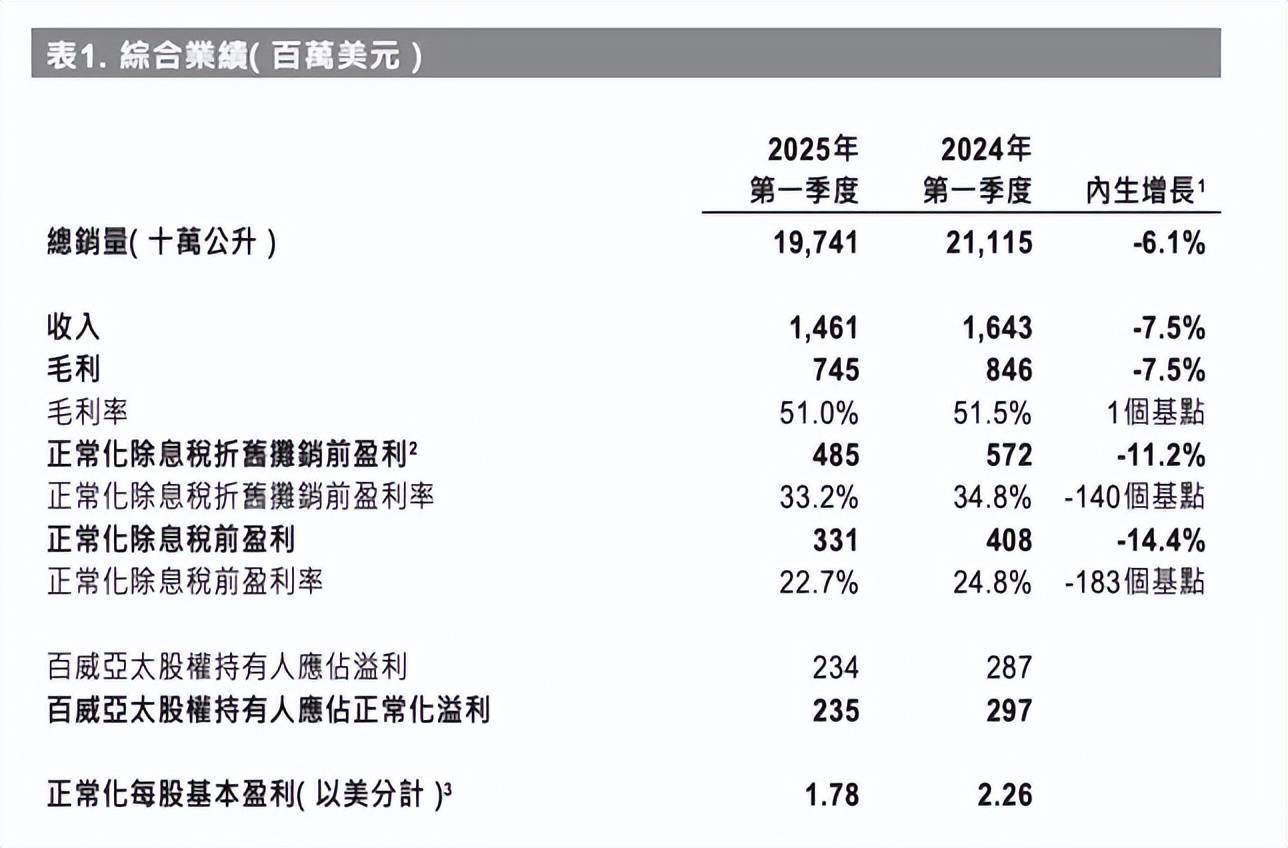
Core Viewpoint - Budweiser APAC is facing significant challenges in the Chinese market, as evidenced by its recent Q1 2025 financial report, which shows declines in revenue and net profit compared to market expectations and previous year figures [1][3][4]. Financial Performance - In Q1 2025, Budweiser APAC reported revenue of $1.461 billion, below the market estimate of $1.52 billion, representing a year-on-year decline of 7.5% [1][3]. - The net profit for the same period was $234 million, slightly below the market expectation of $235 million, marking an 18.47% decrease year-on-year [1][3]. - Total sales volume in Q1 2025 was 19.741 million liters, down from 21.115 million liters in Q1 2024, reflecting a 9.2% decline [2][3]. Market Dynamics - The decline in sales volume in China is attributed to poor performance in business layout and on-the-go channels, as well as inventory management measures impacting approximately 25% of the sales drop [3][12]. - Budweiser APAC's market share and revenue per hectoliter have also decreased, with a 3.9% drop in revenue per hectoliter in the Chinese market [10][12]. Cost Management - To alleviate pressure from the Chinese market, Budweiser APAC has been actively reducing operational costs, with a 7.5% decrease in sales costs in Q1 2025 [5][6]. - The company has also reduced its workforce, cutting approximately 4,000 employees over the past year, from over 25,000 in 2023 to around 21,000 in 2024 [7][8]. Strategic Adjustments - Budweiser APAC is shifting its channel strategy to include mid-range dining channels and promoting sub-premium products to adapt to changing consumer preferences [15][16]. - The company has expanded its distribution network, increasing the number of cities where its products are available from 220 in 2023 to 235 in 2024 [18][19]. Competitive Landscape - Budweiser APAC's leading position is being challenged by domestic competitors like Tsingtao Brewery and China Resources Beer, which are also enhancing their high-end product offerings [23][24]. - The overall beer production in China has been declining, with a reported decrease of 0.6% in 2024, leading to a concentration of market share among national brands [22][23].
观酒|主业增长乏力布局饮料等外业,啤酒公司能做好副业吗?
Nan Fang Du Shi Bao· 2025-05-13 09:23
Core Viewpoint - The beer industry is experiencing performance pressure, leading companies to explore diversification through cross-industry ventures to boost growth and attract investment [1][4][5]. Group 1: Industry Trends - Major beer companies in China, including Chongqing Beer, Qingdao Beer, and Yanjing Beer, are increasingly engaging in cross-industry expansions, particularly into beverage and liquor sectors, as a response to declining beer sales [1][2][4]. - The trend of diversification is seen as a way to build a "second growth curve" and create a competitive advantage, although it may take around five years for these new ventures to significantly impact performance [1][6]. Group 2: Company Strategies - Chongqing Beer has launched new beverage products, such as Cang'e soda, leveraging existing distribution channels in strong markets like Xinjiang and Chongqing [2][3]. - Qingdao Beer is pursuing a full acquisition of a Huangjiu (yellow wine) factory and has integrated its beverage business with existing operations, aiming to avoid competition with its beer products [2][3]. - Yanjing Beer has introduced a new soda brand, Best, and plans to utilize its beer distribution channels to penetrate the market quickly, focusing on dining establishments [3][4]. Group 3: Performance Insights - Despite some positive signs in Q1, overall performance for major beer companies remains mixed, with revenue and profit declines reported for several firms in 2024 [4][5][7]. - The sales volume for beer has decreased, with notable declines for companies like China Resources Beer and Qingdao Beer, attributed to high previous year bases and changing consumer preferences [5][6]. Group 4: Market Outlook - Analysts suggest that while cross-industry ventures are necessary for growth, the actual benefits may take time to materialize, with successful examples from other industries taking over a decade to develop [6]. - The diversification trend among beer companies is expected to continue, driven by changing consumer environments and the need for companies to establish strong brand recognition [6].

财报解读|2024年啤酒业绩集体降速,场景化与多元化增长路线初现
Di Yi Cai Jing· 2025-05-12 10:07
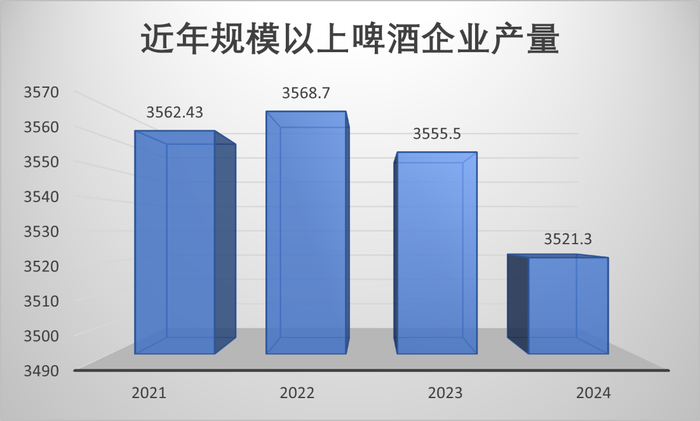
Core Insights - The beer industry is experiencing a slowdown in growth for 2024, with major companies reporting their first negative revenue growth in three years due to various factors including weather and market conditions [1][2]. Industry Performance - Major beer companies such as Budweiser APAC, China Resources Beer, Tsingtao Brewery, and Chongqing Brewery have reported revenue declines ranging from 1% to 13% in 2024, with Budweiser APAC experiencing the largest drop at 13% [2]. - The total beer production in China for 2024 was 35.213 million kiloliters, a decrease of 0.6% year-on-year, making beer the only declining category in the food and beverage sector [2]. - In the first two months of 2025, the cumulative production of major beer companies in China fell by 4.9% [3]. Shifts in Growth Strategy - The beer industry is transitioning from a focus on high-end products to a more diversified approach, including scenario-based layouts and multi-category operations to seek new growth [4][5]. - Companies are adapting to changing consumer preferences, with a shift from high-priced products to better value-for-money options, particularly in the mid-range price segment [5]. Diversification Efforts - Qingdao Beer announced a 665 million yuan acquisition of 100% equity in Jimo Huangjiu, marking its entry into the yellow wine market to diversify its product offerings [7]. - Other companies like Yanjing Beer and Chongqing Beer are also expanding into non-beer beverages, with Yanjing launching a new soda product and Chongqing introducing various soft drinks [7][8]. - The beverage industry is showing stable growth, with a 7.9% increase in all-channel growth for 2024, indicating potential opportunities for beer companies to expand into this sector [7][8].
Z世代不爱豪饮爱微醺,存量博弈下啤酒巨头如何“大象转身”?
Xin Lang Cai Jing· 2025-05-12 05:40
Core Insights - The Chinese beer market is entering a new phase characterized by stock competition and structural adjustments, with a projected 0.6% decline in production for 2024, marking the beginning of a "volume reduction and price increase" cycle [1][3] - Major beer companies are experiencing revenue declines, with the top five companies reporting a 4% drop in total revenue, while profit performance is increasingly divergent [3][5] Industry Performance - In 2024, the beer industry saw a 5.7% decline in revenue, making it the only category in the food and beverage sector to experience negative growth [5] - Key players like China Resources Beer, Budweiser APAC, and Tsingtao Brewery reported revenue declines of 0.76%, 8.9%, and 5.3% respectively, while Chongqing Brewery's revenue fell by 1.15% [5][8] - The total sales volume for major companies also decreased, with China Resources Beer down 2.5% and Budweiser APAC down 11.8% [8] Profitability Trends - Tsingtao Brewery managed a slight profit increase of 1.81%, while Yanjing Brewery saw a significant profit growth of 63.74%, contrasting with declines in profits for other major players [3][10] - Yanjing Brewery's revenue grew by 3.2%, allowing it to surpass Chongqing Brewery and become the fourth largest in the industry [10] Market Dynamics - The beer market is witnessing a shift in consumer preferences, particularly among younger generations who favor lighter drinking experiences, leading to a decrease in traditional beer consumption [12][13] - The restaurant industry is facing challenges, with a significant reduction in the number of registered dining establishments, impacting beer sales in on-premise channels [12][13] Strategic Responses - Companies are adapting by exploring new sales channels such as e-commerce and instant retail to meet changing consumer demands [13][14] - The rise of craft beer is also influencing the market, with a notable increase in the number of craft beer companies established in recent years [14] High-End Market Challenges - Despite efforts to target the high-end market, growth appears to be plateauing, with many companies facing competition from lower-priced craft beers [15][16] - Companies like Qingdao Beer and China Resources Beer are focusing on brand building and product innovation to maintain competitiveness in the high-end segment [15][18]
百威亚太(01876)2025年Q1业绩再下滑:高端化“失速”,破局急不可待?
智通财经网· 2025-05-11 02:02
Core Viewpoint - Budweiser APAC is facing significant challenges as evidenced by declining sales, revenue, and net profit in both the first quarter of 2025 and the full year of 2024, indicating pressure on the company's growth strategy [1][4][5] Financial Performance Summary - In Q1 2025, total sales volume was approximately 1.974 billion liters, a decrease of 6.1% year-on-year; revenue was $1.461 billion, down 7.5%; gross profit was $745 million, also down 7.5%; and net profit was $234 million, reflecting an 18.47% decline [1] - For the full year 2024, revenue was $6.246 billion, a decline of 8.9%; net profit was $750 million, down 14.77%; and sales volume was 8.48 billion liters, a decrease of 8.8% [1] - The stock price of Budweiser APAC has dropped over 40% since 2024, currently trading just above 8 HKD [1] Market Dynamics - The Chinese market is crucial for Budweiser APAC, contributing over 75% of revenue in 2022, but has recently shown a "volume and price drop" due to weak domestic beer consumption [2] - In 2024, the Chinese market saw a sales volume and price decline of 11.8% and 1.4% respectively, with a market share decrease of 1.49 percentage points [2] - Conversely, the Indian market has shown strong growth, with revenue growth close to 20% in both 2024 and Q4, positioning it as one of the top four global markets for the company [2] Competitive Landscape - Budweiser APAC's high-end market share in China has declined from nearly 50% in 2015 to around 40% currently, as local brands gain market share [6] - The competition in the high-end beer segment has intensified, particularly in the 8 RMB price range, which has become a key battleground for market share [7][8] - The overall beer production in China decreased by 0.6% in 2024, while the high-end beer market is expected to reach 280 billion RMB, accounting for 40% of the total market [8] Strategic Adjustments - The new CEO, Cheng Yanjun, is focusing on strengthening the Budweiser and Harbin beer brands and optimizing supply chains while deepening local market engagement [6][10] - Budweiser APAC is shifting its strategy to include more competitive pricing in the 8-10 RMB range to enhance its market position [8][9] - Future strategies will likely involve product innovation, channel diversification, and enhanced supply chain efficiency to address the challenges posed by local brands and changing consumer trends [9][10]
百威亚太再陷裁员风波,新CEO能否力挽狂澜?
凤凰网财经· 2025-05-08 13:04
Core Viewpoint - Budweiser Asia Pacific is reportedly planning to cut approximately 15% of its operating costs, including thousands of layoffs, particularly affecting its Chinese operations, which account for over 80% of its total workforce. Despite the company's denial of these claims, market skepticism remains due to its declining performance in the region [2][3][4]. Group 1: Performance Pressure and Layoff Rumors - Budweiser Asia Pacific's 2024 financial report shows a revenue of $6.246 billion, a decrease of 8.9% year-on-year, with gross profit down 8.86% to $3.147 billion and net profit down 14.79% to $726 million [4]. - In the Chinese market, Budweiser's sales plummeted by 11.8%, with revenue and revenue per hectoliter declining by 13% and 1.4%, respectively, leading to a market share drop of 1.49 percentage points [4][5]. - The company employed over 21,000 staff in 2024, down from approximately 25,000 in 2023, indicating a reduction of about 4,000 employees, or 16% [5]. Group 2: Industry Context and Competitive Landscape - The beer industry is entering a phase of stock competition, making cost control a crucial strategy for companies [8]. - The trend towards premiumization in the domestic beer market has intensified competition, with brands like China Resources Beer and Qingdao Beer accelerating their high-end strategies, posing a direct threat to Budweiser's market share [10][11]. - Emerging craft beer brands are also challenging Budweiser by focusing on differentiation and consumer experience, appealing to younger consumers [12]. Group 3: Leadership Change and Strategic Direction - Following a disappointing financial report, Budweiser Asia Pacific announced a leadership change, with Jan Craps stepping down and Cheng Yanjun taking over as CEO [15][16]. - The new CEO aims to refocus on Budweiser and Harbin Beer brands, leveraging the potential of non-immediate consumption channels in China, where only one-third of stores sell Budweiser products [17]. - The success of this strategic shift will depend on balancing global resources with local market insights, particularly in optimizing supply chains and addressing the challenges of a competitive high-end market [17][19].
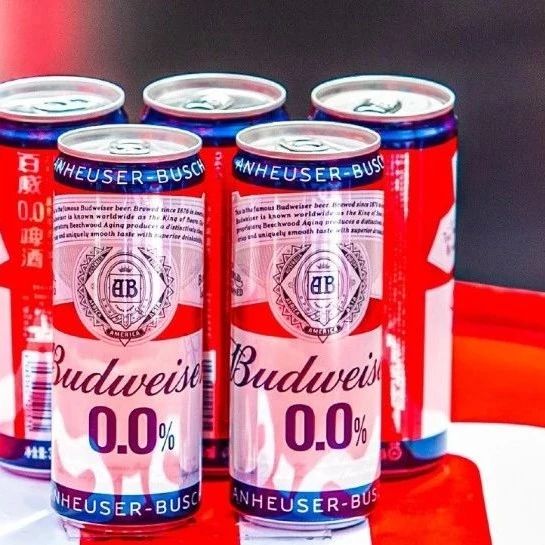
寻觅“举杯”新场景 啤酒企业双重压力下的销量困局
Bei Jing Shang Bao· 2025-05-08 11:19
Core Viewpoint - The Chinese beer industry faces significant challenges in 2024, with a notable decline in sales and a shift in consumer behavior impacting revenue and profit margins [1][4][5]. Revenue and Profit Summary - In 2024, seven listed beer companies achieved a total revenue of approximately 152.13 billion yuan and a net profit of about 17.44 billion yuan [1]. - The revenue distribution among these companies shows three main tiers: over 30 billion yuan, between 10 billion and 30 billion yuan, and below 10 billion yuan [1]. - Budweiser APAC leads with a revenue of 62.46 billion yuan, followed by China Resources Beer and Tsingtao Brewery with revenues of 38.64 billion yuan and 32.14 billion yuan, respectively [1]. Performance Disparity - 57% of the beer companies experienced a decline in sales volume, attributed to a decrease in on-the-go consumption and high-end product sales [1][4]. - Among the seven companies, four reported a decrease in revenue, with Budweiser APAC, China Resources Beer, Tsingtao Brewery, and Chongqing Beer showing declines of 8.9%, 0.76%, 5.3%, and 1.15%, respectively [2][3]. - Conversely, Yanjing Beer, Zhujiang Beer, and Huichuan Beer saw revenue increases of 3.2%, 6.56%, and 5.44%, respectively [2]. Market Challenges - The decline in on-the-go consumption channels, such as restaurants and bars, has significantly impacted beer sales [4][5]. - The average per capita consumption in the restaurant sector dropped to 39.8 yuan, a decrease of 6.6% year-on-year, with the beverage segment experiencing the most significant decline [4]. - High-end product sales are also under pressure, with Budweiser APAC's market share in the high-end segment falling from approximately 50% to 42% [5]. Strategic Shifts - Beer companies are shifting focus from traditional on-premise sales to new consumption scenarios, particularly instant retail, which is gaining traction [6][7]. - Instant retail for beer has seen significant growth, with a reported 83% increase in market size from 2020 to 2022 [6]. - Companies like China Resources Snow Beer and Tsingtao Brewery are exploring customized products and services to meet evolving consumer demands [6]. Future Trends - The competition in the beer industry is transitioning from channel acquisition to the exploration of consumer scenarios, especially in the high-end segment [7]. - The future development of the beer market is expected to focus on technology-driven high-end products and the capture of instant consumption scenarios [7].
上市啤酒企业减员数量曝光:百威亚太减员4000人,燕京、华润减员上千人
Sou Hu Cai Jing· 2025-05-08 09:54
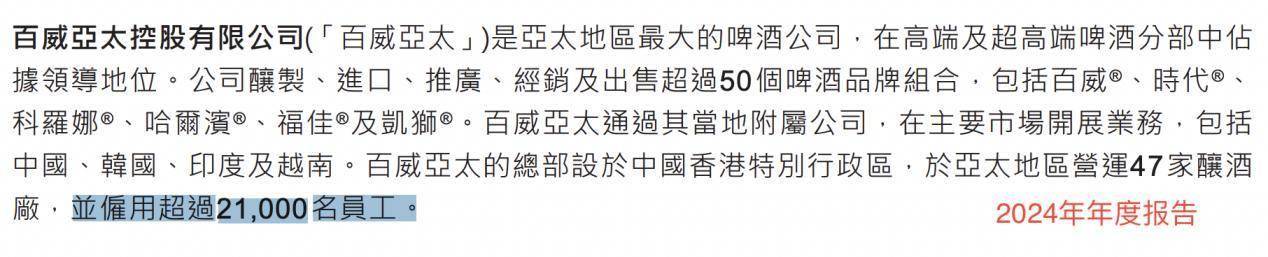
Employment Changes - Budweiser APAC reduced its workforce from approximately 25,000 employees in 2023 to over 21,000 in 2024, resulting in a decrease of about 4,000 employees, which is a reduction rate of approximately 16% [1] - Yanjing Beer reduced its workforce by 1,440 employees, with total employees dropping from 21,405 in 2023 to 19,965 in 2024 [2][5] - China Resources Beer employed around 26,000 people in 2024, down from about 27,000 in 2023, a decrease of 1,000 employees [6] - Qingdao Beer saw a reduction of 817 employees, with total employees decreasing from 30,687 in 2023 to 29,870 in 2024, a reduction rate of 2.66% [8] Financial Performance - Budweiser APAC's beer sales in 2024 were 8.481 million kiloliters, a year-on-year decline of 8.8%, with revenue of $6.246 billion, down 7%, and normalized EBITDA of $1.807 billion, down 6.3% [2] - Yanjing Beer achieved beer sales of 4.0044 million kiloliters in 2024, a year-on-year increase of 1.57%, with revenue of 14.667 billion yuan, up 3.20%, and net profit attributable to shareholders of 1.056 billion yuan, up 63.74% [6] - China Resources Beer reported a total revenue of 38.635 billion yuan in 2024, a slight decline of 0.76%, with net profit attributable to shareholders of 4.739 billion yuan, down 8.03%, and a gross margin of 42.6%, which is an increase of 1.2 percentage points [8] - Qingdao Beer reported revenue of 32.138 billion yuan in 2024, a decrease of 5.3%, while net profit attributable to shareholders was 4.345 billion yuan, an increase of 1.81%, and net profit excluding non-recurring items was 3.951 billion yuan, up 6.19% [10]
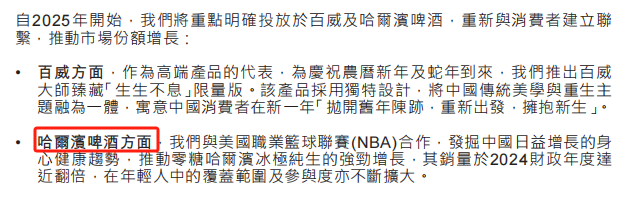
“哈啤”转型 百威亚太战略调整下的本土化探索
Xin Lang Cai Jing· 2025-05-08 08:01
Core Insights - The global beer industry is undergoing significant adjustments, with Budweiser APAC's 2024 financial report highlighting typical characteristics of this transitional period [1] - Despite a challenging environment, Budweiser APAC's Harbin Beer has shown positive transformation through product innovation and channel optimization [1] Financial Performance - Budweiser APAC's total revenue for 2024 decreased to $6.246 billion, reflecting a year-on-year decline [1] - Net profit fell by 14.8%, indicating pressure from market competition and fluctuating consumer conditions [1] Product Innovation - Harbin Beer’s zero-sugar product line experienced a remarkable growth of 122%, driven by collaborations with the NBA to engage younger consumers [1] - The introduction of the zero-sugar ice pure series has achieved a nationwide coverage of 85% in convenience stores, with a penetration rate of 19.3% among the 25-34 age group [3] Strategic Focus - Budweiser APAC plans to focus on core brands, specifically Budweiser and Harbin Beer, as part of its 2025 strategy [2] - The appointment of Cheng Yanjun as CEO signals a commitment to enhancing local decision-making efficiency and leveraging his technical background for supply chain optimization [3] Market Adaptation - Harbin Beer is actively adjusting its channel strategy to address the decline in traditional nightlife venues, with a 30% increase in sales of low-sugar, low-alcohol products expected by 2025 [4] - The brand is expanding its online sales, which have increased by 18%, and improving its convenience store presence with a 25% growth in the East China region [9] Cultural Integration - Harbin Beer is transforming its century-old industrial heritage into a cultural IP, utilizing tourism and product sales to enhance brand engagement [6] - The integration of industrial tourism with product sales, such as offering a beer case with museum entry, is creating new consumer touchpoints [6] Future Challenges - Harbin Beer must continue to seek breakthroughs in brand rejuvenation and value reconstruction to appeal to younger consumers [10] - The new CEO emphasizes the need for localized strategies to rebuild connections with consumers, focusing on product and channel innovation [10]