
NONGFU SPRING(09633)

Search documents
农夫山泉、怡宝入局,巨头抢滩即饮咖啡赛道
Bei Jing Shang Bao· 2025-11-09 12:49
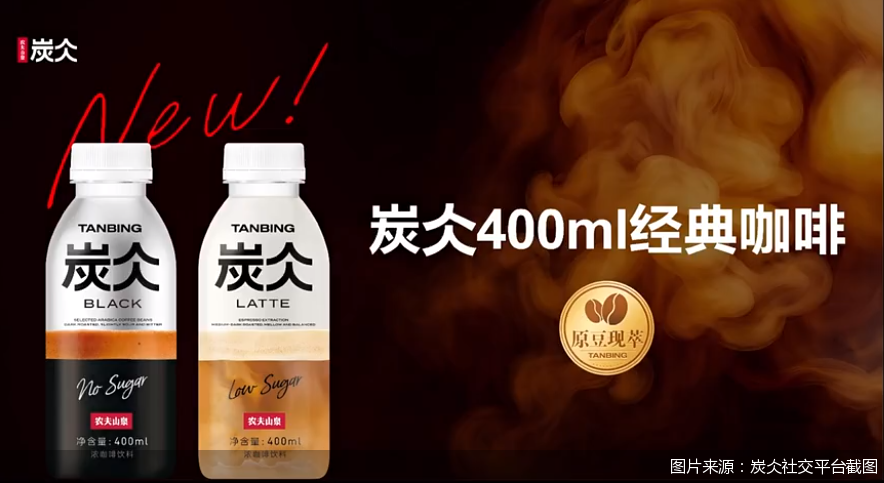
Core Insights - The recent launch of new coffee products by Nongfu Spring and Yibao indicates a strategic move by beverage companies to enter the ready-to-drink coffee market, which has significant growth potential despite competition from freshly brewed coffee [1][4] Product Launches - Nongfu Spring's new coffee brand, Tanxi, has introduced two products: a sugar-free Americano and a low-sugar latte, focusing on high-quality coffee [1] - The new 400ml Tanxi coffee is priced at approximately 5 yuan per bottle, making it more affordable compared to previous offerings [3] - Yibao has launched the "Yanhui Xiaoruan Can" series, featuring two flavors priced at 1.98 yuan per bottle in a 180ml format, which is competitive against Tanxi's offerings [3] Market Dynamics - The ready-to-drink coffee market is experiencing a concentration of brands, with the top five brands increasing their market share from 84.32% to 85.35% between 2023 and 2024 [5] - Traditional coffee giants like Nestlé, Starbucks, and Coca-Cola dominate the market, while Nongfu Spring aims to penetrate the mid-to-high-end coffee segment [5] Strategic Considerations - Beverage companies are entering the ready-to-drink coffee market due to its rapid growth and potential for new revenue streams, with a focus on product differentiation and appealing to younger consumers [4] - The competitive landscape is influenced by the rise of freshly brewed coffee, which has pressured ready-to-drink coffee brands to adopt competitive pricing strategies [6] Emerging Trends - The trend of "Chinese herbal coffee" is gaining traction, with products incorporating traditional Chinese medicinal ingredients like ginseng and goji berries, appealing to health-conscious consumers [7][8] - Brands like Jiangren Liuyin and Most Coffee are introducing products that combine coffee with herbal ingredients, although there are concerns about potential health risks associated with such combinations [8]

新首富身价771亿美元,雷军第七,马云跌出前十,财富版图生变
Sou Hu Cai Jing· 2025-11-08 19:12
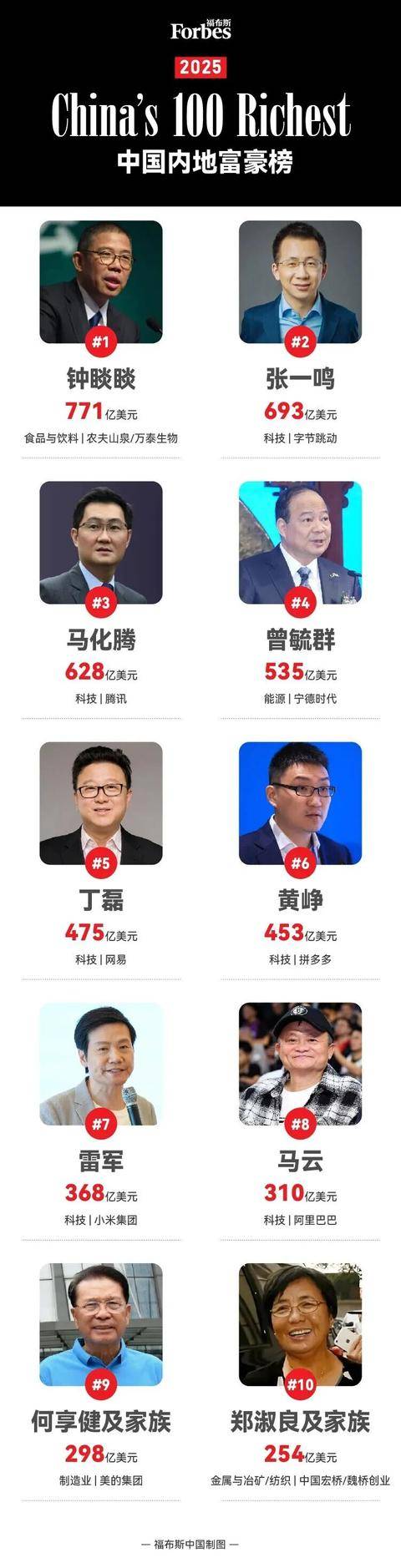
Core Insights - The Forbes China Rich List reveals that Zhong Shanshan retains the title of the richest person for the fifth consecutive year, with a net worth of $77.1 billion, increasing by $26.3 billion over the past year, averaging over $70 million daily in earnings [1][3] - Xiaomi's founder Lei Jun ranks seventh with a wealth of $36.8 billion, surpassing Jack Ma for the first time, who has fallen out of the top ten for the first time since the list's inception [1][3] Group 1: Zhong Shanshan's Wealth Growth - Zhong Shanshan's wealth is attributed to the resilience of the consumer goods sector against economic fluctuations, with his company Nongfu Spring achieving double-digit growth in revenue and net profit in the first half of 2025 [3] - The expansion of his distribution network to 8 million outlets has provided stability for low-cost essential products, even amid consumer tightening [3] Group 2: Decline of Internet Tycoons - The drop in rankings for internet billionaires highlights the challenges faced by the industry, with Jack Ma falling out of the top ten and Meituan's Wang Xing experiencing a wealth decrease of $6.2 billion, over 42% [3][9] - The end of the "burning money for market share" model is evident as platform-based companies like Meituan and JD.com see their wealth shrink [9] Group 3: Lei Jun's Rise - Lei Jun's wealth surged from $19.9 billion to $36.8 billion, an increase of 85%, driven by explosive growth in Xiaomi's automotive business, with revenue reaching 39.8 billion yuan, a year-on-year increase of over 500% [5] - The successful delivery of over 150,000 units of the SU7 model in the first half of the year has significantly impacted Lei Jun's position on the wealth list [5] Group 4: Emergence of New Wealth - New entrants in the AI sector, such as Chen Tian Shi and Liang Wen Feng, have seen significant wealth increases, contrasting with the decline of traditional real estate tycoons like Wang Jianlin [7] - The threshold for the wealth list has risen from $3.9 billion to $4.6 billion, indicating a shift in wealth towards hard technology and global consumer brands [7] Group 5: Market Dynamics - The shift from internet and real estate wealth engines to new paths represented by Zhong Shanshan's consumer goods and the technological breakthroughs of figures like Zhang Yiming and Liang Wenfeng is evident [9] - The total wealth of listed billionaires increased from $1.03 trillion to $1.35 trillion, with the CSI 300 index rising by 15%, reflecting a clear market vote for these new sectors [9][11]

771亿美元!中国内地首富公布
Sou Hu Cai Jing· 2025-11-08 05:45
Core Insights - The 2025 Forbes China Rich List was released, with Nongfu Spring founder Zhong Shanshan ranking first for the fifth consecutive year, with a wealth increase of $26.3 billion, reaching $77.1 billion, marking the largest wealth growth among billionaires [1] Group 1: Wealth Rankings - Zhong Shanshan leads the list with a wealth of $77.1 billion [1] - Ding Dong ranks fifth with a wealth of $47.5 billion, associated with technology company NetEase [4] - Huang Zheng follows closely in sixth place with $45.3 billion, linked to Pinduoduo [5] - Lei Jun, founder of Xiaomi Group, is in seventh place with $36.8 billion [6] - Jack Ma, co-founder of Alibaba, ranks eighth with $31 billion [7] - He Xiangjian and family, associated with Midea Group, hold the ninth position with $29.8 billion [8] - Zheng Shuliang and family, involved in metals and textiles, complete the top ten with $25.4 billion [9]
58公里管道引“活水”一瓶农夫山泉输出县域振兴新样本
2 1 Shi Ji Jing Ji Bao Dao· 2025-11-08 04:15
Core Viewpoint - The article highlights the successful integration of natural resources and local industry in Sangzhi County, Zhangjiajie, through the establishment of a water bottling plant by Nongfu Spring, which has significantly improved the local economy and employment opportunities [2][7]. Group 1: Economic Development - The completion of a 58-kilometer water pipeline has enabled the flow of high-quality spring water from the Ba Da Gong Mountain National Nature Reserve to the Nongfu Spring factory, marking a significant step in the county's economic revitalization [2][3]. - The Nongfu Spring factory, which began operations after a total investment exceeding 1.2 billion yuan, has created over 200 jobs, with nearly 70% of employees being local residents [5][6]. - The factory is expected to generate over a thousand additional jobs by the end of 2025, with plans for related industries such as packaging and logistics to establish operations in the area [6]. Group 2: Community Impact - The establishment of the factory has led to a shift from "blood transfusion-style poverty alleviation" to "blood-making-style revitalization," enhancing local livelihoods and community vitality [5][7]. - Local residents have reported increased happiness and stability due to job opportunities close to home, with many returning to the area after working elsewhere [4][5]. - The factory's presence has also improved local infrastructure and increased income sources for nearby villages, demonstrating a positive ripple effect on the community [6][7]. Group 3: Environmental Considerations - Nongfu Spring has prioritized ecological protection during the construction of the pipeline, employing methods that avoid damaging local ecosystems, such as building bridges that do not require riverbed supports [3]. - Continuous monitoring and collaboration with local authorities ensure the sustainability of water resources while balancing production needs [3].
微软连跌8天 创14年来最长连跌纪录;央行连续12个月增持黄金;钟睒睒连续5年登顶内地首富丨每经早参
Mei Ri Jing Ji Xin Wen· 2025-11-07 23:03
Group 1 - The Chinese government has announced export control measures on five categories of materials, including rare earths and lithium batteries, effective from November 8 [3] - The U.S. stock market ended mixed, with the Nasdaq down 0.21% and the S&P 500 up 0.13%, marking a cumulative decline of 3.04% and 1.63% for the week respectively [5] - The European stock indices closed lower, with Germany's DAX down 0.78% and France's CAC40 down 0.18% [6] Group 2 - The State Council of China issued an implementation opinion to accelerate the cultivation of application scenarios for new technologies and products, focusing on five key areas [7] - The People's Bank of China increased its gold reserves by 30,000 ounces in October, marking the 12th consecutive month of gold accumulation [7] - The Ministry of Finance outlined six key areas for fiscal policy execution, including boosting consumption and supporting employment [11] Group 3 - The Dutch government expects ASML China to soon resume chip supplies, following constructive talks with China [19] - Tesla's CEO Elon Musk indicated that the Full Self-Driving (FSD) technology is expected to receive full approval in China by early 2026 [19] - The State Administration for Market Regulation guided eight e-commerce platforms to sign a self-regulation agreement on food safety management [20] Group 4 - Huadian Energy announced plans to invest 12.043 billion yuan in a wind power project, aligning with national industrial policies [27] - The company Shanshui Technology reported a change in its actual controller following a divorce settlement, with the new controller being Wu Xinyan [24] - Eighty-one Steel received a notice from the China Securities Regulatory Commission regarding an investigation into information disclosure violations [25]




2025福布斯中国榜发布,钟睒睒连续5年登顶,雷军超越马云
Xin Lang Cai Jing· 2025-11-07 14:23
Core Insights - The 2025 Forbes China Rich List has been released, with Zhong Shanshan topping the list for the fifth consecutive year [2] - Lei Jun, founder and CEO of Xiaomi Group, ranks seventh, surpassing Jack Ma [2] - Zhong Shanshan's wealth increased by $26.3 billion, reaching $77.1 billion, making him the richest individual with the largest wealth growth [2] - In the first half of 2025, Zhong's beverage giant achieved double-digit growth in both net profit and revenue [2] Company Highlights - Zhong Shanshan's company, Nongfu Spring, continues to perform strongly in the beverage sector, contributing to his wealth increase [2] - Xiaomi Group, led by Lei Jun, remains a significant player in the technology industry, with its founder now ranked above other notable billionaires [2]
钟睒睒五度登顶福布斯中国内地富豪榜,泡泡玛特王宁身家涨幅最大
Sou Hu Cai Jing· 2025-11-07 12:55
Core Insights - The total wealth of billionaires on the 2025 Forbes China Rich List increased from $1.03 trillion to $1.35 trillion, with two-thirds of the listed billionaires seeing their fortunes grow, driven by the AI boom and a rising stock market [1][2] Group 1: Top Billionaires - Zhong Shanshan, founder of Nongfu Spring, retained the top position for the fifth consecutive year, with a wealth increase of $26.3 billion, reaching $77.1 billion, marking the largest wealth growth among billionaires [1] - Zhang Yiming, co-founder of ByteDance, ranked second with a wealth increase of $23.7 billion, totaling $69.3 billion, largely due to the growth of AI business [1] - Ma Huateng, chairman of Tencent, saw his wealth rise to $62.8 billion but dropped from second to third place [2] Group 2: Notable Wealth Changes - Wang Ning, founder of Pop Mart, experienced the highest percentage increase in wealth, more than tripling to $22.2 billion, driven by strong sales of Labubu toys [4] - Eight new billionaires joined the list, with Liang Wenfeng, founder of DeepSeek, having the highest wealth at $11.5 billion, ranking 34th [4] - Wang Xing, chairman and CEO of Meituan, saw his wealth decrease to $8.4 billion due to the competitive landscape in the food delivery sector [4] Group 3: Comparison with Other Rankings - The top four positions in the Forbes list are similar to those in the 2025 Hurun Rich List, but differences in ranking exist due to varying assessment criteria and timing [5] - Lei Jun, founder of Xiaomi, ranked seventh on the Forbes list despite being fifth on the Hurun list, with a wealth increase of $19.6 billion [5]


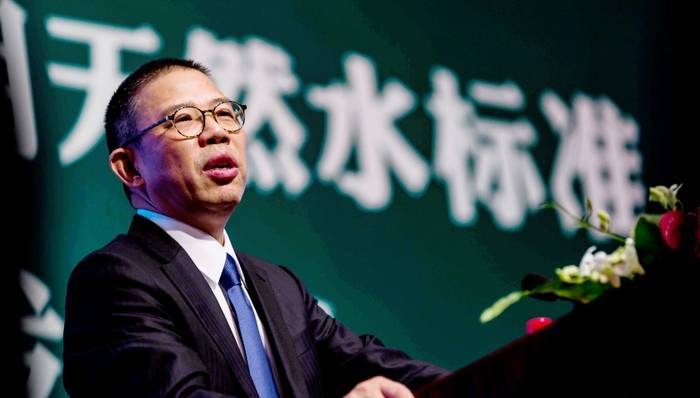
2025福布斯中国内地富豪榜:农夫山泉(09633)创始人钟睒睒连续5年登顶
智通财经网· 2025-11-07 11:47
Core Insights - The 2025 Forbes China Rich List shows a significant increase in total wealth from $1.03 trillion to $1.35 trillion, driven by a 15% rise in the CSI 300 index since the last report [1] - The majority of the listed billionaires saw their wealth grow, with Zhong Shanshan of Nongfu Spring topping the list for the fifth consecutive year, increasing his wealth by $26.3 billion to $77.1 billion [1] - ByteDance co-founder Zhang Yiming's wealth rose by $23.7 billion to $69.3 billion, benefiting from a recent U.S. government decision that allowed TikTok to continue operations in the U.S. [1] - Tencent's chairman Ma Huateng saw his wealth increase by over one-third to $62.8 billion, although his ranking fell to third [1] Company Performance - Nongfu Spring reported double-digit growth in both net profit and revenue in the first half of 2025 [1] - ByteDance's valuation was positively impacted by the U.S. government's decision regarding TikTok, allowing the company to stabilize its operations [1] - Tencent's stock price increased by over 40% in the past year, driven by growth in online gaming sales and advertising revenue from WeChat [1] New Entrants and Notable Changes - Eight new billionaires joined the list, with Liang Wenfeng of DeepSeek being the highest newcomer at $11.5 billion [2] - Chen Tian Shi, CEO of Cambricon, saw his wealth nearly double to $21 billion, marking the company's first profitable half-year since its IPO [2] - The minimum wealth threshold for the list increased from $3.9 billion to $4.6 billion, with 14 billionaires dropping off the list, including Wang Jianlin of Dalian Wanda Group [3]
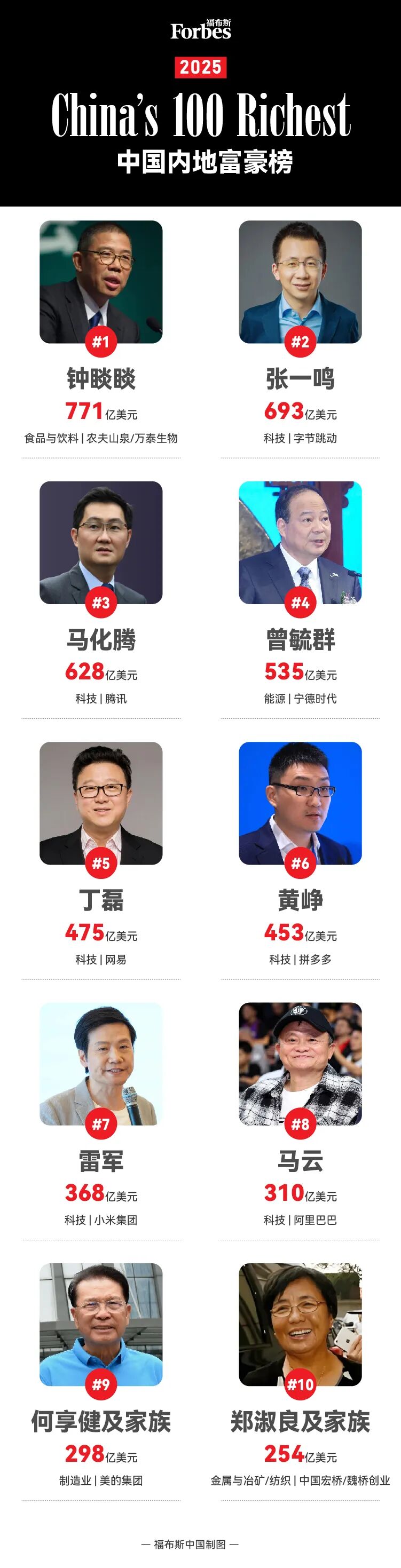
钟睒睒,连续5年登顶内地首富
财联社· 2025-11-07 11:32
Core Insights - The 2025 Forbes China Rich List has been released, showing a significant increase in the total wealth of listed billionaires from $1.03 trillion last year to $1.35 trillion this year, driven by a 15% rise in the CSI 300 index [1] Group 1: Wealth Growth - Two-thirds of the billionaires on the list saw their wealth increase [1] - Zhong Shanshan, founder of Nongfu Spring, retains the top position for the fifth consecutive year, with a wealth increase of $26.3 billion, reaching $77.1 billion, marking the largest wealth growth among all billionaires [1] Group 2: Notable Billionaires - Ma Huateng of Tencent has a wealth of $62.8 billion [7] - Jin Yufei of CATL has a wealth of $53.5 billion [8] - Ding Lei of NetEase has a wealth of $47.5 billion [9] - Huang Zheng of Pinduoduo has a wealth of $45.3 billion [10] - Lei Jun of Xiaomi has a wealth of $36.8 billion [11] - Jack Ma of Alibaba has a wealth of $31.0 billion [12] - Zheng Shuliang and family have a wealth of $25.4 billion, associated with China Hongqiao [13] - He Xiangjian and family have a wealth of $29.8 billion, associated with Midea Group [13]
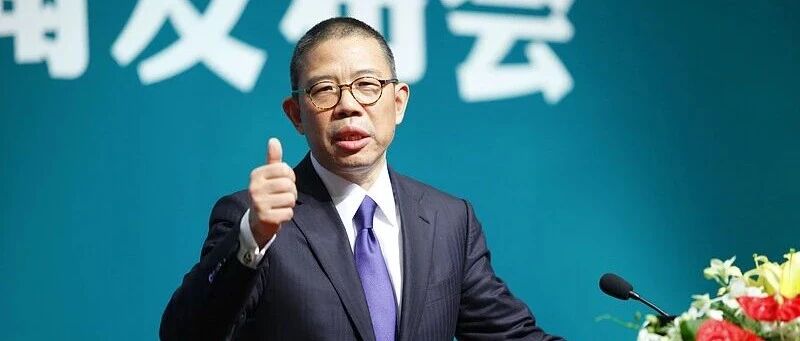
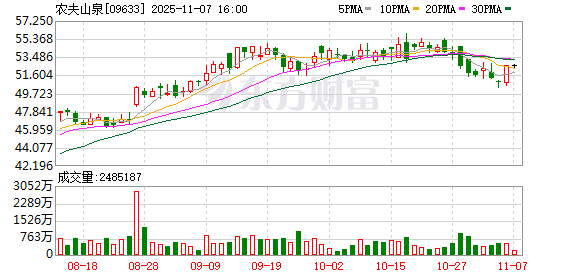
农夫山泉(09633) - 截至2025年10月31日止月份之股份发行人的证券变动月报表
2025-11-05 08:57
股份發行人及根據《上市規則》第十九B章上市的香港預託證券發行人的證券變動月報表 截至月份: 2025年10月31日 狀態: 新提交 公司名稱: 農夫山泉股份有限公司 呈交日期: 2025年11月5日 I. 法定/註冊股本變動 | 1. 股份分類 | 普通股 | 股份類別 | H | | | 於香港聯交所上市 (註1) | 是 | | | | --- | --- | --- | --- | --- | --- | --- | --- | --- | --- | | 證券代號 (如上市) | 09633 | 說明 | H股 | | | | | | | | | | 法定/註冊股份數目 | | | 面值 | | | 法定/註冊股本 | | | 上月底結存 | | | 5,034,666,400 | RMB | | 0.1 RMB | | | 503,466,640 | | 增加 / 減少 (-) | | | 0 | | | RMB | | | | | 本月底結存 | | | 5,034,666,400 | RMB | | 0.1 RMB | | | 503,466,640 | 致:香港交易及結算所有限公司 | 2. ...