LEAPMOTOR(09863)

Search documents
从铺天盖地到顶天立地 浙江民企的新质生产力跃迁之路
Zhong Guo Xin Wen Wang· 2025-12-08 06:41
Core Insights - Zhejiang's private economy has shown remarkable growth, contributing over 67% of the province's GDP, 70% of tax revenue, 80% of imports and exports, and 85% of employment as of mid-2025 [1] - The transition from traditional factor-driven growth to innovation-driven growth is highlighted as a key factor in Zhejiang's economic transformation [1] Group 1: Economic Contributions - 107 companies from Zhejiang ranked among the top 500 private enterprises in China for 2025, maintaining the province's leading position for 27 consecutive years [1] - The private sector's contribution to Zhejiang's economy is significant, with projections indicating that the "three new" economy will account for approximately 28.5% of GDP by 2024 [2] Group 2: Innovation and Technology - The integration of technological and industrial innovation has accelerated the cultivation of new productive forces in Zhejiang, with a notable shift towards digitalization and intelligence in industries [2] - AI technology is being utilized in various sectors, such as design and manufacturing, significantly reducing production cycles and enhancing product competitiveness [2][4] Group 3: Industry Clusters - Zhejiang has developed five trillion-level industrial clusters, including modern textiles, green petrochemicals, high-end software, smart IoT, and new energy vehicles [7] - The automotive air conditioning industry in Longquan has become a major cluster with over 200 enterprises and an industry output value exceeding 10 billion [5][7] Group 4: Global Expansion - Zhejiang's private enterprises are increasingly engaging in global markets, with significant exports of new energy vehicles, including 1,346 units shipped to Russia [11][12] - Companies are adapting to global competition by enhancing their overseas operations, such as establishing factories and R&D centers abroad [13]




零跑汽车(09863):港股研究|公司点评|零跑汽车(09863.HK):零跑汽车点评:纯电轿跑Lafa5正式上市,内销+出海双轮驱动有望再造爆款
Changjiang Securities· 2025-12-07 23:30
Investment Rating - The investment rating for the company is "Buy" and is maintained [7]. Core Views - The launch of the Leopaard Lafa5 on November 27, 2025, is priced between 97,800 to 121,800 CNY, targeting a niche market for 100,000-level electric sedans, with strong potential for becoming a bestseller. The company is expected to see continuous sales growth driven by the domestic new car cycle and overseas expansion through collaboration with Stellantis, opening up global sales opportunities [2][4]. Summary by Sections Event Description - The Leopaard Lafa5 was officially launched on November 27, 2025 [4]. Event Commentary - The Lafa5 is positioned as a 100,000-level electric sedan, emphasizing extreme price-performance ratio, with significant promotional offers at launch. The pricing for the Lafa5 has decreased by 13,000 to 15,000 CNY compared to pre-sale versions, with a starting price of 92,800 CNY for a limited time. The vehicle features a spacious design, strong product capabilities, and competitive advantages in price, space, and configuration compared to rivals. The Lafa5 is built on the Leap3.5 architecture and offers impressive range and energy consumption metrics, with a CLTC range of 515 km and 605 km, and a minimum energy consumption of 12.3 kWh/100 km [7]. Company Outlook - The company is in a strong new car cycle, with plans to launch 2-3 new products globally each year over the next three years. The domestic market strategy includes a "1+N" channel development model, with 866 sales outlets as of September 30, 2025. The company has also established over 700 sales and service points in approximately 30 international markets, including Europe and Asia-Pacific. The investment in intelligent driving technology has increased significantly, with a nearly 100% rise in team size and computational resources in the first half of 2025 [7]. Financial Projections - The company is projected to achieve net profits of 630 million, 5 billion, and 8.37 billion CNY for the years 2025, 2026, and 2027, respectively, with corresponding price-to-earnings ratios of 107.9X, 13.7X, and 8.2X [7].
11月新势力榜单:蔚来困于盈利,理想反弹乏力
Feng Huang Wang Cai Jing· 2025-12-07 14:03
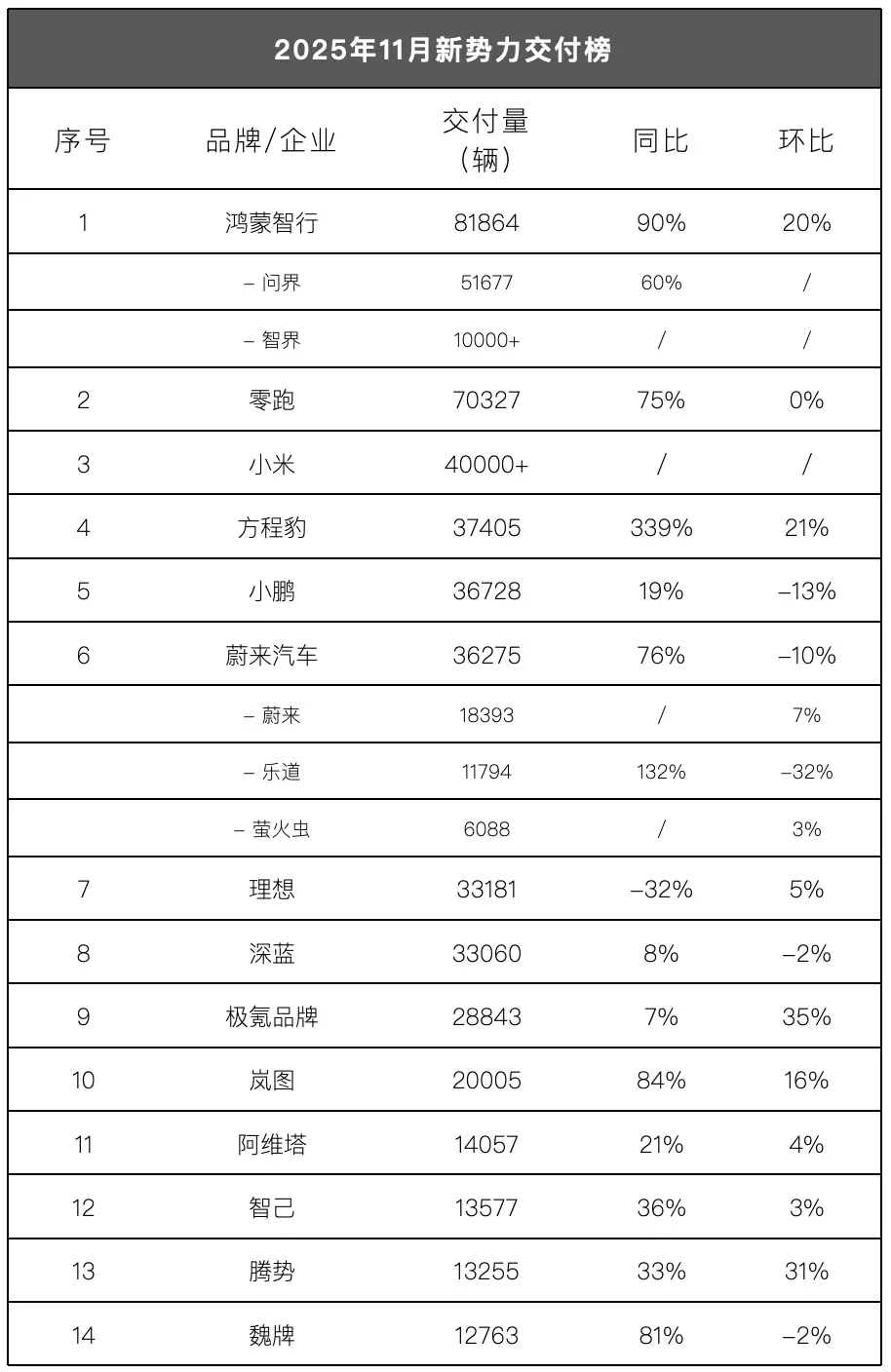
Core Insights - The delivery rankings of new car manufacturers have undergone significant changes in November, with a reshuffling of positions following the "golden September and silver October" period [1] Group 1: Delivery Rankings - Hongmeng Zhixing topped the delivery chart with 81,864 units, achieving a year-on-year growth of 90% and a month-on-month increase of 20% [2][3] - Leap Motor maintained its position as the "single brand champion" with 70,327 units delivered, marking its second consecutive month above 70,000 [4] - Xiaomi entered the top three with over 40,000 units, while BYD's Fangchengbao emerged as a dark horse with 37,405 units [5] Group 2: Competitive Landscape - In the second tier, brands like Xiaopeng (36,728 units) and NIO (36,275 units) are in close competition, with Ideal (33,181 units) and Deep Blue (33,060 units) also in the mix [5][21] - Zeekr accelerated its growth with 28,843 units, while Lantu broke the 20,000 mark for the first time [6] Group 3: Financial Performance and Market Challenges - Despite high delivery numbers, companies like Leap Motor face challenges in profitability, with a net profit of 150 million yuan in Q3, down 8% from the previous quarter [12][13] - Xiaomi's automotive division reported a 700 million yuan operating profit in Q3, making it the fastest to achieve profitability among new forces, yet its stock price has been under pressure due to negative publicity [14][15] - NIO's stock fell 20% in November after lowering its Q4 delivery guidance, indicating challenges in meeting profitability targets [24][30] Group 4: Strategic Adjustments - Xiaopeng is transitioning to a dual strategy of pure electric and range-extended vehicles, with plans to launch three new range-extended models in Q1 next year [19][20] - NIO is focusing on high-end models to improve overall gross margins, while also facing pressure to enhance profitability [22][26] - Ideal is adjusting its organizational structure and technology to address ongoing challenges, with a focus on ramping up production of its new electric model [28][30]


特朗普松绑油耗标准:全球车企抢跑“油电同强时代”
智通财经网· 2025-12-06 09:08
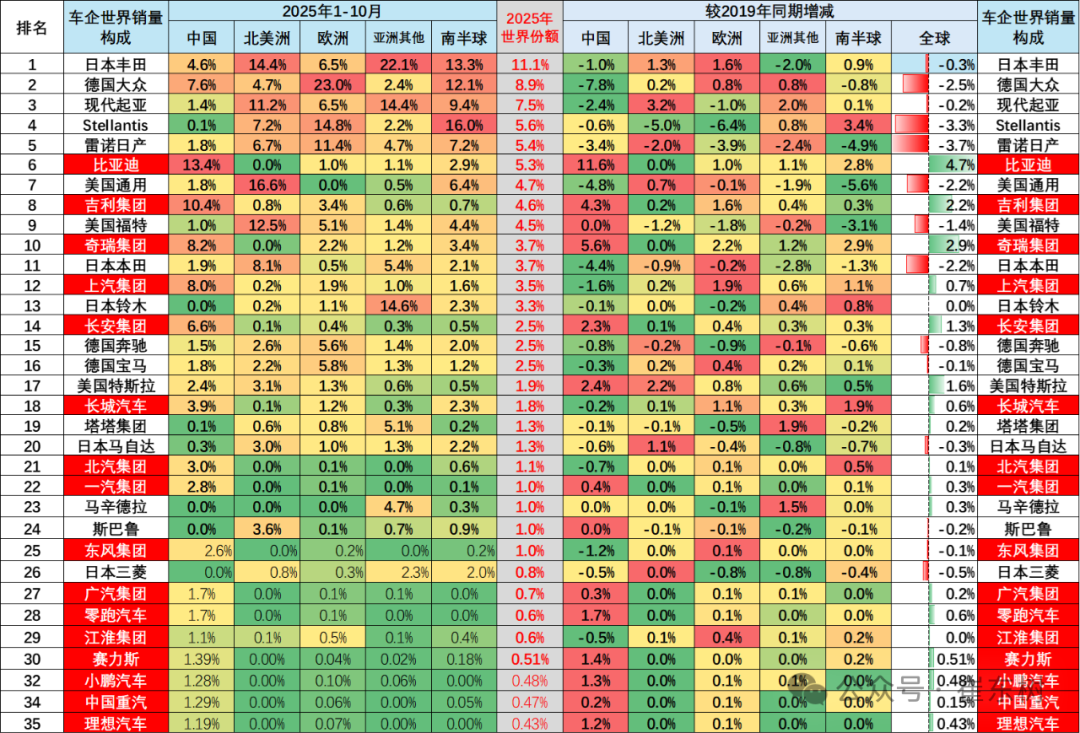
Core Viewpoint - The proposal by former President Trump to terminate strict fuel economy standards set by the Biden administration poses a significant challenge to Europe's aggressive policies on banning fuel vehicles, highlighting a shift in the automotive industry's dynamics towards a more sustainable and diversified future led by China's oil-electric hybrid strategy [1][9]. Group 1: Policy Changes and Impacts - Trump's proposal aims to reduce the average cost of purchasing new cars by $1,000, potentially saving Americans $109 billion over five years [3]. - The new fuel efficiency standard proposed by Trump's administration requires vehicles to achieve approximately 34 miles per gallon by 2031, compared to Biden's target of 50 miles per gallon [2]. Group 2: Industry Dynamics - The automotive industry's core profits are derived from fuel vehicles, and the transition to electric vehicles represents a significant restructuring of interests, with traditional automakers facing survival pressures due to lost profits from engine manufacturing and after-sales services [4]. - The shift in stance among U.S. automakers from supporting electric vehicle initiatives to opposing stringent regulations reflects the industry's struggle with profit erosion amid changing policies [4]. Group 3: European Market Challenges - European automakers are under severe pressure from the EU's legislation to ban fuel vehicles by 2035, which is seen as overly ambitious and detrimental to businesses [5]. - The EU's "Fit for 55" plan aims for a 55% reduction in new car carbon emissions by 2030, with a complete transition to zero emissions by 2035, but this has led to some companies planning to abandon engine development altogether [5]. Group 4: Global Automotive Trends - The trend of oil-electric hybrid strategies is gaining traction globally, with Asian automakers, particularly Chinese brands like BYD, Geely, and Chery, significantly increasing their market share [7][8]. - The global automotive market remains predominantly fuel-based, with 73% of vehicles still using fuel, indicating that a rapid transition to electric vehicles is unlikely in the short term [8]. Group 5: China's Strategic Position - China's oil-electric hybrid strategy is viewed as a successful model, with the recent release of the 3.0 roadmap emphasizing the continued importance of internal combustion engines alongside electric vehicles [10]. - By 2040, it is projected that 85% of new passenger vehicles in China will be electric, with a significant market still remaining for non-pure electric models, positioning Chinese automakers as key players in the global automotive technology landscape [10].



中国汽车的真正考验,才刚开始
Xin Lang Cai Jing· 2025-12-06 07:04
Core Viewpoint - The Chinese automotive industry is facing a significant downturn, with 2026 expected to be one of the most challenging years in its history due to declining sales and market conditions [5][37]. Group 1: Market Performance - Retail sales of passenger cars in China saw a 15% year-on-year increase earlier this year, but growth has rapidly declined since July, with October experiencing an overall negative growth [7][39]. - In November, daily retail sales averaged 4.6 million units, down 19% year-on-year in the first week, and 6.7 million units, down 9% in the second week [8][39]. - Major automakers are struggling to meet their sales targets, with only a few smaller new players achieving their goals by November [8][40]. Group 2: Industry Challenges - The automotive industry is transitioning from subsidy-driven growth to competition based on real demand and efficiency, indicating a significant shift in market dynamics [40][41]. - The impact of subsidies is diminishing, with over 50% of sales in 2025 attributed to trade-in programs, highlighting a reliance on government incentives [9][41]. - The market is experiencing a "strategic waiting" phase among consumers, leading to a decline in new orders as buyers anticipate better deals [15][48]. Group 3: Future Outlook - The expected decline in new energy vehicle purchase tax incentives in 2026 is anticipated to further exacerbate market challenges [15][47]. - The penetration rate of new energy vehicles is slowing, with a notable drop in total retail volume despite high growth rates in percentage terms [15][47]. - The industry is likely to undergo a significant restructuring, with weaker companies facing exit from the market, marking a shift from scale expansion to value competition [32][65]. Group 4: Technological Developments - The automotive sector is exploring various technological advancements, including smart driving and battery innovations, but progress varies across different areas [51][54]. - The introduction of solid-state batteries and centralized computing is underway, but widespread adoption is not expected until 2026 or later [54][55]. - The smart driving sector is experiencing a technological leap, with new models expected to enhance user trust and influence purchasing decisions in 2026 [57][60].


中国汽车的真正考验,才刚开始
虎嗅APP· 2025-12-06 03:32
Core Viewpoint - The article highlights that 2026 is expected to be a challenging year for the Chinese automotive industry, with significant declines in sales and a shift from subsidy-driven growth to competition based on real demand and efficiency [2][9]. Sales Performance - Retail sales of passenger cars in China saw a 15% year-on-year growth at the beginning of the year, but the growth rate has sharply declined since July, with October experiencing an overall negative growth [4][8]. - In November, the average daily retail sales of passenger cars were 46,000 units, down 19% year-on-year in the first week, 9% in the second week, and 7% in the third week [6]. Company Targets and Achievements - BYD aimed for 4.6 million units and achieved 4.18 million units by November, facing challenges to meet its target [7]. - SAIC Group set a target of 4.5 million units, with 4.11 million units sold by November, likely to meet its goal [7]. - Chery and Li Auto are unlikely to meet their targets, while Xiaomi and Leap Motor have already achieved theirs [11]. Market Dynamics - The automotive industry is experiencing its lowest profit margins in five years, with an average profit margin of only 3.8%, leading to significant price reductions [8]. - The market is shifting from a subsidy-driven model to one focused on genuine consumer demand and efficiency, indicating a potential industry "cold wave" in 2026 [8][41]. Subsidy Impact - The impact of subsidies is diminishing, with over 50% of sales in 2025 attributed to trade-in programs, which are now facing adjustments and reductions in many regions [10][13]. - The withdrawal of subsidies is leading to a significant drop in consumer purchasing activity, as many are adopting a "wait-and-see" approach [19][23]. Technological Developments - The article discusses various technological advancements in the automotive sector, including developments in autonomous driving and battery technology, which are seen as potential growth areas for 2026 [26][30]. - The shift towards "software-defined vehicles" and advancements in intelligent driving systems are expected to play a crucial role in the market's future [30][40]. Industry Outlook - The automotive industry is facing a structural adjustment, with weaker companies likely to exit the market as competition intensifies [47]. - The transition from scale expansion to value competition is seen as essential for the long-term health of the industry, with a focus on innovation and efficiency [47][48].
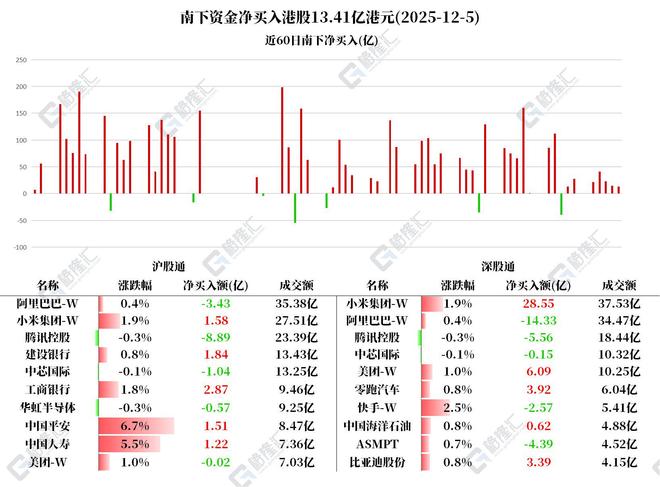
12月5日港股通净买入13.41亿港元
Zheng Quan Shi Bao Wang· 2025-12-05 15:05
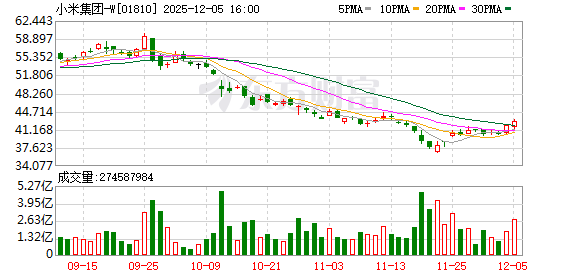
Core Viewpoint - On December 5, the Hang Seng Index rose by 0.58% to close at 26,085.08 points, with a net inflow of HKD 1.341 billion through the southbound trading channel [1] Group 1: Market Activity - The total trading amount for the southbound trading on December 5 was HKD 82.7 billion, with a net buy of HKD 1.341 billion [1] - The Shanghai Stock Exchange's southbound trading had a total trading amount of HKD 47.323 billion, resulting in a net sell of HKD 0.394 billion [1] - The Shenzhen Stock Exchange's southbound trading had a total trading amount of HKD 35.377 billion, resulting in a net buy of HKD 1.735 billion [1] Group 2: Active Stocks - In the Shanghai Stock Exchange's southbound trading, Alibaba-W had the highest trading amount at HKD 3.538 billion, followed by Xiaomi Group-W at HKD 2.751 billion and Tencent Holdings at HKD 2.339 billion [1] - In terms of net buy amounts, Industrial and Commercial Bank of China had the highest net buy of HKD 0.287 billion, with its stock price increasing by 1.77% [1] - Tencent Holdings experienced the highest net sell amount of HKD 0.889 billion, with its stock price decreasing by 0.33% [1] Group 3: Shenzhen Stock Exchange Active Stocks - In the Shenzhen Stock Exchange's southbound trading, Xiaomi Group-W led with a trading amount of HKD 3.753 billion and a net buy of HKD 2.855 billion, closing up by 1.91% [2] - Alibaba-W had a net sell of HKD 1.433 billion, closing up by 0.39% despite the sell-off [2] - Tencent Holdings had a net sell of HKD 0.889 billion, closing down by 0.33% [2]



南向资金今日净买入13.41亿港元,小米集团-W净买入30.13亿港元
Zheng Quan Shi Bao Wang· 2025-12-05 15:01
Core Viewpoint - The Hang Seng Index rose by 0.58% on December 5, with southbound capital recording a total transaction amount of HKD 82.7 billion, resulting in a net inflow of HKD 13.41 billion [2] Group 1: Southbound Capital Transactions - Total southbound capital transactions amounted to HKD 82.7 billion, with buy transactions at HKD 42.02 billion and sell transactions at HKD 40.68 billion, leading to a net buy of HKD 13.41 billion [2] - The Shenzhen Stock Connect saw a cumulative transaction amount of HKD 35.38 billion, with net buying of HKD 17.35 billion, while the Shanghai Stock Connect recorded a cumulative transaction amount of HKD 47.32 billion, resulting in a net sell of HKD 3.94 billion [2] Group 2: Active Stocks - Alibaba-W had the highest transaction amount among southbound stocks at HKD 69.86 billion, but experienced a net sell of HKD 17.76 billion, despite a closing price increase of 0.39% [2][3] - Xiaomi Group-W recorded a total transaction amount of HKD 65.04 billion with a net buy of HKD 30.13 billion, closing up by 1.91% [3] - Meituan-W had a total transaction amount of HKD 17.28 billion with a net buy of HKD 6.07 billion, closing up by 0.97% [3] Group 3: Continuous Net Buying and Selling - Xiaomi Group-W and Meituan-W were among the stocks with the longest continuous net buying days, with 6 and 7 days respectively, and total net buys of HKD 50.66 billion and HKD 28.96 billion [3] - Tencent Holdings and SMIC were notable for continuous net selling, with total net sells of HKD 39.05 billion and HKD 35.68 billion respectively [3][4]

智通港股通活跃成交|12月5日





智通财经网· 2025-12-05 11:02
| 公司名称 | 成交金额 | 净买入额 | | --- | --- | --- | | 小米集团-W(01810) | 37.53 亿元 | +28.55 亿元 | | 阿里巴巴-W(09988) | 34.47 亿元 | -14.33 亿元 | | 腾讯控股(00700) | 18.44 亿元 | -5.56 亿元 | | 中芯国际(00981) | 10.32 亿元 | -1549.07 万元 | | 美团-W(03690) | 10.25 亿元 | +6.09 亿元 | | 零跑汽车(09863) | 6.04 亿元 | +3.92 亿元 | | 快手-W(01024) | 5.41 亿元 | -2.57 亿元 | | 中国海洋石油(00883) | 4.88 亿元 | +6206.91 万元 | | ASMPT(00522) | 4.52 亿元 | -4.39 亿元 | | 比亚迪股份(01211) | 4.15 亿元 | +3.39 亿元 | | 公司名称 | 成交金额 | 净买入额 | | --- | --- | --- | | 阿里巴巴-W(09988) | 35.38 亿元 | -3.43 ...
图解丨南下资金大幅加仓小米超30亿港元,减持阿里
Xin Lang Cai Jing· 2025-12-05 09:57
Group 1 - Southbound funds recorded a net purchase of HKD 1.341 billion in Hong Kong stocks today [1] - Notable net purchases included Xiaomi Group-W at HKD 3.013 billion, Tracker Fund at HKD 2.606 billion, and Meituan-W at HKD 607 million [1] - Continuous net buying trends were observed for Meituan over the past 7 days totaling HKD 2.89598 billion and for Xiaomi over the past 6 days totaling HKD 5.0656 billion [1] Group 2 - Significant net selling was noted for Alibaba-W at HKD 1.776 billion and Tencent Holdings at HKD 1.445 billion [1] - Semiconductor company ASMPT experienced a net sell of HKD 439 million, while Kuaishou-W and SMIC also saw net selling [1] - The trend of net selling for SMIC has persisted for 12 consecutive days, amounting to HKD 3.56848 billion [1]