NIO(09866)

Search documents
蔚来-SW(09866):预计Q4扭亏、2026年全年目标盈利
GOLDEN SUN SECURITIES· 2025-11-30 00:53
Investment Rating - The report maintains a "Buy" rating for the company, with a target market value of approximately $18 billion (139.6 billion HKD) and a target price of 57.2 HKD for the Hong Kong stock and $7.4 for the US stock [4][6]. Core Insights - The company is expected to achieve profitability in Q4 and aims for full-year profitability in 2026. Q3 saw a delivery of 87,071 vehicles, a year-on-year increase of 40.8% and a quarter-on-quarter increase of 20.8% [1][2]. - Q3 revenue reached 21.8 billion RMB, with a year-on-year growth of 16.7% and a quarter-on-quarter growth of 14.7%. The automotive sales revenue was 19.2 billion RMB, reflecting a year-on-year increase of 15% [1]. - The gross margin for Q3 was 13.9%, up 3.2 percentage points year-on-year and 3.9 percentage points quarter-on-quarter, driven by cost reduction measures and economies of scale [1]. - The company plans to deliver between 120,000 to 125,000 vehicles in Q4, representing a year-on-year growth of 65.1% to 72.0%, with expected revenue of 32.76 to 34.04 billion RMB [2]. Financial Performance - The company reported a net loss of 3.66 billion RMB in Q3, with a non-GAAP net loss of 2.76 billion RMB, narrowing the loss margin to 12.7% [1]. - For the fiscal years 2025 to 2027, the company anticipates sales of approximately 330,000, 520,000, and 630,000 vehicles, with total revenues reaching 86.2 billion, 141.2 billion, and 165.4 billion RMB respectively [4][5]. - The non-GAAP net profit is projected to improve from a loss of 13.7 billion RMB in 2025 to a profit of 8.4 billion RMB in 2027 [4]. Product Development and Market Strategy - The company has launched the L90 model, which has seen strong sales, and plans to introduce three new models in 2026, including the ES9 and L80 [2]. - The company is also advancing its self-developed chip technology, which will be used in its vehicles and potentially offered to other automotive and non-automotive clients [3].

蔚来汽车:蔚来全新ES8第2万台新车交付
Mei Ri Jing Ji Xin Wen· 2025-11-29 08:33
Core Insights - NIO's new ES8 model has successfully delivered over 20,000 units within 70 days of its official launch [1] Company Performance - The delivery milestone of over 20,000 units indicates strong market demand for NIO's ES8 [1]
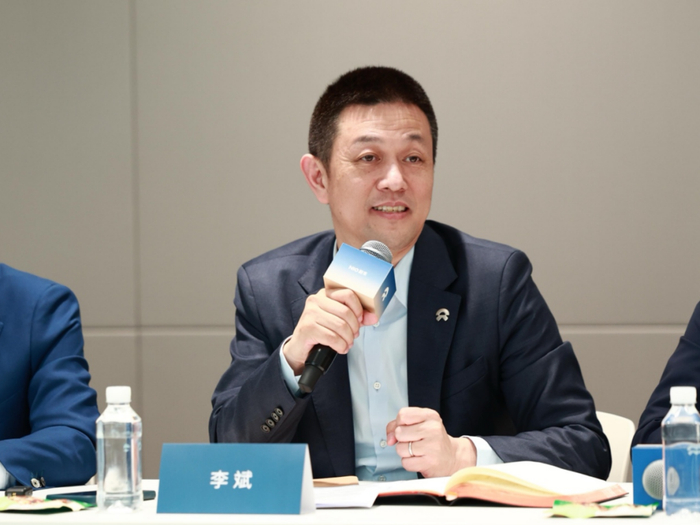
「少玩花活」!对话蔚来李斌:明年目标全年盈利 | 次世代车研所
Xin Lang Ke Ji· 2025-11-29 07:38
Core Viewpoint - NIO has reported a significant increase in revenue and a reduction in losses for the third quarter, indicating a shift towards high-quality growth rather than just volume growth [2][5][6] Financial Performance - NIO delivered 87,100 vehicles in Q3, a year-on-year increase of 40.8% [2] - Revenue reached 21.79 billion yuan, up 16.7% year-on-year [2] - Gross margin improved to 13.9%, the highest in nearly three years [2] - Adjusted net loss for Q3 was 2.74 billion yuan, down 38.0% from 4.41 billion yuan in the same period last year [2][5] Future Outlook - NIO expects Q4 deliveries to be between 120,000 and 125,000 vehicles, representing a year-on-year growth of 65.1% to 72.0% [2][5] - Projected revenue for Q4 is between 32.76 billion and 34.04 billion yuan, a year-on-year increase of 66.3% to 72.8% [2] Management Strategy - CEO Li Bin emphasized a focus on gross margin rather than just sales volume, indicating a shift towards high-margin models like the new ES8 [3][6] - The company is entering a third growth cycle aimed at achieving high-quality growth, with a focus on operational efficiency and cost control [4][6] Market Challenges - The removal of vehicle replacement subsidies in mid-October has impacted consumer purchasing decisions, leading to a decline in new orders [6][7] - NIO plans to maintain stable pricing in response to the subsidy reduction, aiming to mitigate its effects on sales [7][8] Product Strategy - NIO is concentrating on high-margin vehicles, with the new ES8 expected to significantly contribute to profitability [6][10] - The company has established a "three-brand strategy" targeting different market segments, including high-end users and the global small car market [11][12] Operational Efficiency - NIO is implementing a transparent supply chain to reduce costs and improve responsiveness to market changes [13][14] - The company is focusing on detailed management of each vehicle's profitability, ensuring that sales contribute positively to the bottom line [8][9]

Nio Strategic Metals Announces Flow-Through Shares Private Placement to Advance Oka Explorations
Newsfile· 2025-11-28 21:31
Core Points - Nio Strategic Metals Inc. has arranged a private placement of 6,000,000 flow-through common shares for gross proceeds of approximately $750,000 [1][4] - The private placement is subject to final acceptance by the TSX Venture Exchange and necessary regulatory approvals, with a four-month hold period from the issuance date [2] - The proceeds will be exclusively used for qualifying Canadian Exploration Expenditures related to exploration and mineral resource evaluation on the Oka and Fafnir properties in Quebec [4] Financial Details - The company issued 175,000 finder's warrants in connection with the private placement and will pay commissions of $26,250 [3] - Each finder's warrant allows the holder to acquire one additional common share at a price of $0.15 per share for 24 months from the issuance date [3] Company Overview - Nio Strategic Metals focuses on becoming a ferroniobium producer and holds niobium properties in Oka and near Mont-Laurier, Quebec [6]

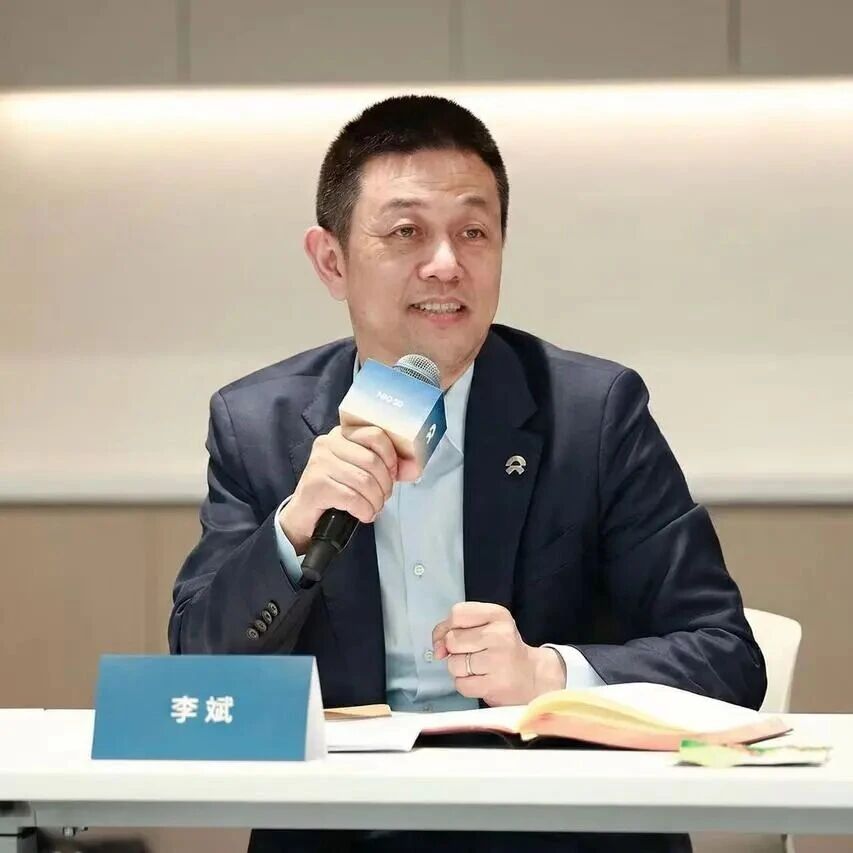
李斌Q3财报闭门会:实现盈利目标没有Plan B,接受任何可能性
雷峰网· 2025-11-28 13:48
Core Viewpoint - NIO's Q3 financial report shows a significant reduction in net losses and a positive cash flow, indicating a potential turnaround for the company as it aims for profitability in Q4 and a gross margin target of 20% by 2026 [2][4][17]. Financial Performance - In Q3, NIO reported a net loss of 34.8 billion yuan, a year-on-year decrease of approximately 30%, and an adjusted net loss of 27.4 billion yuan, improving by 33.7% quarter-on-quarter [2][3]. - Cash reserves reached 36.65 billion yuan, up from 26 billion yuan at the beginning of the year [3][4]. - The gross margin for vehicles in Q3 was 14.7%, with expectations to rise to around 18% in Q4 [4]. Product Strategy - NIO plans to launch three new large vehicles next year, including ES9, ES7, and L80, aiming to penetrate the pure electric large three-row market [4][9]. - The company emphasizes high-margin models, with ES6 and EC6 achieving gross margins of over 25% [4]. Market Challenges - The recent reduction in vehicle purchase subsidies has led to a significant drop in new orders in November, indicating a shift in consumer behavior towards a wait-and-see approach [5][6]. - NIO's strategy focuses on maintaining stable prices and delivering high-margin models to mitigate the impact of subsidy changes [6]. Operational Efficiency - NIO has shifted its focus from merely increasing sales volume to enhancing operational quality and efficiency, with a new emphasis on high ROI projects [7][8]. - The company has implemented a transparent supply chain and CBU mechanism, ensuring accountability across departments and improving overall operational efficiency [15][16]. Future Outlook - NIO's leadership expresses confidence in achieving full-year profitability, primarily driven by high-margin orders from the ES8 model [8][17]. - The company is committed to a long-term vision of focusing on electric vehicles, with plans to enhance its product line while maintaining a strong market presence [12][13].
四季度营收指引领跑新势力,蔚来三季报背后的质变
经济观察报· 2025-11-28 13:27
Core Viewpoint - The automotive industry competition will ultimately return to the essence of systemic capability competition [14] Group 1: Financial Performance - In Q3 2025, the company delivered 87,000 new vehicles, a year-on-year increase of 40.8%, and revenue reached 21.79 billion yuan, up 16.7%, both setting historical highs for the brand [4] - The gross margin for vehicles rose to 14.7%, with a comprehensive gross margin of 13.9%, marking a three-year high [4] - The company achieved positive operating cash flow and free cash flow, with cash reserves increasing to 36.7 billion yuan, a nearly 10 billion yuan increase quarter-on-quarter [4] - The revenue guidance for Q4 is set at 32.7-34 billion yuan, representing a year-on-year growth of 66.3%-72.8% [4] Group 2: Operational Improvements - The company has seen a comprehensive improvement in operational quality, focusing on meticulous management [5] - The shift from expansion to focus is evident, with a clear understanding of the need to concentrate on core automotive products rather than diversifying into non-core areas [9] - The management philosophy has fundamentally changed, prioritizing real operational results over merely achieving sales volume targets [12] Group 3: Market Trends - The trend towards pure electric vehicles is accelerating, with pure electric sales increasing by 26% year-on-year, while range-extended and plug-in hybrid sales declined by 12% and 7%, respectively [7] - In the high-end market segment (vehicles priced above 300,000 yuan), the penetration rate of pure electric vehicles rose from 12% last year to 18% in Q3 this year [7] - The company's three-brand strategy is showing clear synergies, with a focus on the high-end market and competition against traditional luxury brands [7] Group 4: Strategic Focus - The company is shifting from a broad business model to a more focused approach, recognizing the need to improve efficiency in a market where it holds only a small share [9] - The management emphasizes the importance of maintaining stable pricing and focusing on high-quality growth rather than just volume growth [10] - The company aims to enhance efficiency by 3-5 percentage points across various operational aspects, distinguishing itself from competitors [14]
行业高成长难掩经营挑战,小米、蔚来押注的智慧互通科技身陷困局
Zhi Tong Cai Jing· 2025-11-28 12:45
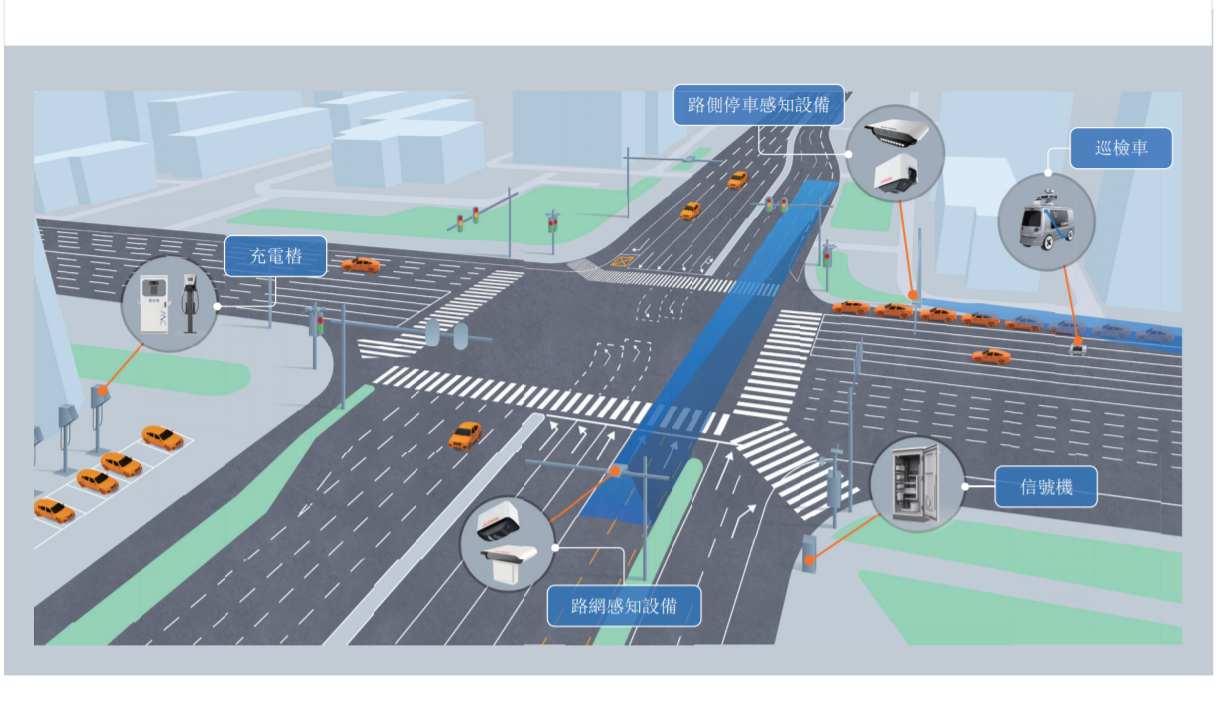
Core Viewpoint - Smart Interconnect Technology, backed by major shareholders like Xiaomi and NIO, has initiated its journey for a Hong Kong IPO, focusing on AI-based spatial intelligence solutions for urban traffic management [1][2]. Company Overview - Smart Interconnect Technology has submitted its IPO application to the Hong Kong Stock Exchange on October 31, with CITIC Securities and Jianyin International as joint sponsors [1]. - The company specializes in AI technology and products, particularly in the urban traffic management sector, ranking fourth in China's smart traffic industry with a market share of 6.6% as of 2024 [1][16]. - The company has four main business segments: road network spatial intelligence solutions, roadside spatial intelligence solutions, AIoT spatial intelligence solutions, and other services [2][6]. Financial Performance - The company has shown steady revenue growth from 2022 to 2024, with revenues of 538 million, 618 million, and 699 million RMB respectively, although it has not yet achieved profitability [2][8]. - Adjusted net losses have decreased from 187 million RMB in 2022 to 20.58 million RMB in 2024, indicating a narrowing loss trend [2][8]. - However, in the first half of 2025, revenue dropped significantly to 103 million RMB, with adjusted net losses increasing to 86.2 million RMB, raising concerns about the impact on IPO valuation [2][10]. Market Position - Smart Interconnect Technology's roadside spatial intelligence solutions have seen revenue growth from 227 million RMB in 2022 to 467 million RMB in 2024, increasing its share of total revenue from 42.2% to 66.8% [7][8]. - The company is positioned to benefit from the high growth of the spatial intelligence solutions market, which is projected to grow from 2.5 billion RMB in 2019 to 21.8 billion RMB in 2024, with a compound annual growth rate (CAGR) of 54.3% [12][15]. Shareholder Support - The company has received backing from various investors, including Xiaomi (4.41% stake), NIO (2.09%), and Yuntian Lifa (1.93%), along with support from state-owned enterprises and investment institutions [2][3]. Challenges - Despite its market position, Smart Interconnect Technology faces significant challenges, including intense competition in the spatial intelligence solutions market, where the top player holds only a 9.94% market share [18]. - The company is heavily reliant on a few key clients, with the top five clients accounting for 49.2% to 73.7% of revenue from 2022 to the first half of 2025, leading to extended payment cycles [18][20]. - The company's asset-liability ratio has increased from 149.79% in 2022 to 231.55% in the first half of 2025, indicating rising financial risk [18][20].
四季度营收指引领跑新势力,蔚来三季报背后的质变
Jing Ji Guan Cha Wang· 2025-11-28 12:39
Core Insights - The company is focusing on improving its operational quality rather than pursuing aggressive expansion or diversifying into non-core areas like AI and robotics [1][4][5] - The third-quarter financial report indicates significant growth, with vehicle deliveries reaching 87,000 units, a year-on-year increase of 40.8%, and revenue of 21.79 billion yuan, up 16.7% [1][2] - The company is shifting its strategy from broad expansion to a more focused approach, emphasizing high-quality growth and profitability over sheer volume [3][5] Financial Performance - In Q3 2025, the company achieved a gross margin of 14.7% for vehicles and a comprehensive gross margin of 13.9%, both marking three-year highs [1] - The company reported positive operating cash flow and free cash flow, with cash reserves increasing to 36.7 billion yuan, a nearly 10 billion yuan increase from the previous quarter [1] - The revenue guidance for Q4 is set between 32.7 billion and 34 billion yuan, representing a year-on-year growth of 66.3% to 72.8% [1] Market Trends - The company noted a significant shift towards pure electric vehicles, with Q3 pure electric sales growing by 26%, while range-extended and plug-in hybrid sales declined by 12% and 7%, respectively [2] - In the high-end market segment (vehicles priced above 300,000 yuan), the penetration rate of pure electric vehicles increased from 12% last year to 18% in Q3 [2] - The company’s three-brand strategy is showing clear synergies, with a focus on competing directly with traditional luxury brands [2][3] Strategic Focus - The company is prioritizing operational efficiency and cost management, moving away from setting fixed sales targets to focusing on profitability metrics [5][6] - The management emphasizes the importance of understanding which aspects of the business to maintain and which to adapt, reflecting a more pragmatic approach to leadership [5][6] - The company aims to enhance efficiency across all operational aspects, believing that small improvements can lead to significant overall gains [6]
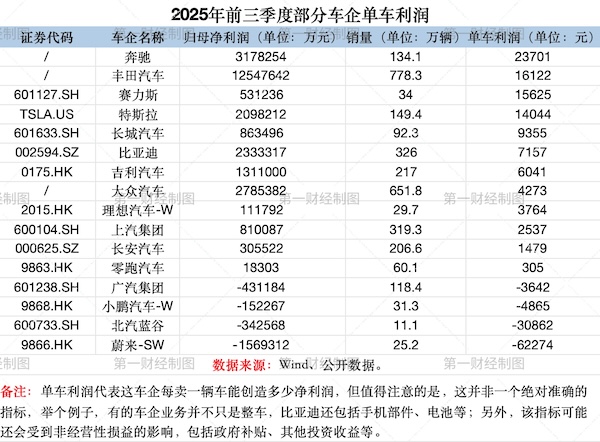
蔚来每卖1辆车亏超6万,奔驰每卖1辆车赚近2.4万
Xin Lang Cai Jing· 2025-11-28 12:37
Core Insights - The profitability of car manufacturers is a major focus, particularly the profit per vehicle sold, with significant disparities between companies [1] Group 1: Profitability of Major Car Manufacturers - Mercedes-Benz has the highest profit per vehicle among the surveyed companies, earning nearly 24,000 yuan for each car sold [1] - Toyota follows as the "profit king" globally, with a profit of approximately 16,000 yuan per vehicle and a net profit exceeding 125 billion yuan in the first three quarters [1] Group 2: Losses of Certain Car Manufacturers - NIO reported a cumulative loss of nearly 15.7 billion yuan in the first three quarters, resulting in a loss of over 60,000 yuan per vehicle sold [1] - BAIC Blue Valley also faced significant losses, with a cumulative loss exceeding 3.4 billion yuan, translating to a loss of over 30,000 yuan per vehicle [1] Group 3: Trends and Future Projections - Both NIO and BAIC Blue Valley show signs of improvement compared to the previous year, with projected losses of approximately 100,000 yuan and over 60,000 yuan per vehicle sold, respectively, in 2024 [1]


蔚来每卖一辆车亏超6万,奔驰赚2.3万
Di Yi Cai Jing· 2025-11-28 12:00
Core Insights - The profitability of major automotive companies is a focal point, particularly the per-vehicle profit, with luxury brands like Mercedes-Benz and Toyota leading the rankings [1][2] - The data indicates a shift in the narrative around electric vehicles, with companies like Seres and Tesla showing significant per-vehicle profits, challenging the notion that electric vehicles are unprofitable [1] Group 1: Profitability Rankings - Mercedes-Benz has the highest per-vehicle profit at approximately 24,000 yuan, followed by Toyota at 16,000 yuan, and Seres, a Chinese brand, at over 15,000 yuan, surpassing Tesla's profit of 14,000 yuan [1] - Among the 16 companies analyzed, only four have a per-vehicle profit exceeding 10,000 yuan, representing 25% of the sample [1] Group 2: Performance of Domestic and Foreign Brands - The "Big Three" private Chinese automakers, Great Wall, BYD, and Geely, have per-vehicle profits of 9,355 yuan, 7,157 yuan, and 6,041 yuan, respectively [2] - Xiaomi's automotive division reported a third-quarter operating profit of 700 million yuan with a delivery volume of 108,000 vehicles, showing significant improvement from a previous loss of 60,000 yuan per vehicle [2] Group 3: Challenges Faced by Multinational Companies - Volkswagen's net profit dropped by 61.5% year-on-year to 3.4 billion euros, with per-vehicle profit falling to around 4,000 euros due to various challenges including tariffs and restructuring [2] - Mercedes-Benz's net profit for the first three quarters was 3.878 billion euros, down from 7.806 billion euros the previous year, with a per-vehicle profit decline from 44,000 yuan to 24,000 yuan [2] Group 4: Losses in Certain Companies - NIO reported a cumulative loss of nearly 15.7 billion yuan in the first three quarters, with a per-vehicle loss exceeding 60,000 yuan, although there is an improvement trend compared to the previous year [3] - BAIC Blue Valley incurred a cumulative loss of over 3.4 billion yuan, with a per-vehicle loss exceeding 30,000 yuan, also showing signs of improvement [3]