
NIO(09866)

Search documents
零跑要做“半价乐道”?蔚来李斌和朱江明回应
Xin Lang Cai Jing· 2025-11-28 11:26
Core Insights - The recent Guangzhou Auto Show highlighted a competitive exchange between NIO and Leap Motor regarding pricing strategies and product positioning, with Leap Motor's founder emphasizing a focus on affordable quality rather than "half-price" offerings [1][2] Group 1: Company Positioning - Leap Motor's brand positioning is described as "doing good products that are not expensive," likening it to Uniqlo in the automotive sector [1] - Leap Motor's C16 model is priced between 151,800 to 181,800 yuan, targeting the family travel market with features like an 800V high-voltage fast charging platform [2] Group 2: Sales Performance - Leap Motor reported a delivery of 173,852 vehicles in Q3 2025, marking a 101.8% increase year-over-year, making it the top-selling brand among new forces in the Chinese market [2] - NIO's Q3 2025 delivery volume was 87,071 vehicles, reflecting a 40.8% year-over-year increase, with a breakdown of deliveries across its various brands [3] Group 3: Financial Results - Leap Motor achieved a revenue of 19.45 billion yuan in Q3 2025, a 97.3% increase compared to the same period in 2024, alongside a net profit of 150 million yuan [2] - NIO reported total revenue of 21.7939 billion yuan in Q3 2025, a 16.7% year-over-year growth, but incurred a net loss of 3.48 billion yuan, although this loss was reduced by 31.2% compared to the previous year [2]

蔚来(NIO):Q3毛利率大幅改善
HTSC· 2025-11-28 11:14
Investment Rating - The report maintains a "Buy" rating for the company with a target price of $7.17 [7][5]. Core Insights - The company reported Q3 revenue of 21.8 billion RMB, a year-on-year increase of 17% and a quarter-on-quarter increase of 15%. The net profit attributable to shareholders was a loss of 3.7 billion RMB, with losses narrowing by 29% both year-on-year and quarter-on-quarter [1][5]. - The vehicle gross margin reached 14.7%, the highest in three years, driven by increased sales and the introduction of high-margin models like the L90. Cost control measures have also shown significant effectiveness [2][5]. - In October, the company delivered over 40,000 vehicles, marking a 92.6% year-on-year increase and setting a new monthly record. The L90 and new ES8 models are driving this growth, with the L90 becoming the top-selling large electric SUV [3][4]. Summary by Sections Q3 Performance - Q3 revenue was 21.8 billion RMB, up 17% year-on-year and 15% quarter-on-quarter. The adjusted net loss was 2.7 billion RMB, a reduction of 38% year-on-year and 34% quarter-on-quarter. For the first three quarters, revenue totaled 45.3 billion RMB, a year-on-year increase of 11% [1][2]. Vehicle Sales and Margins - The company sold 87,000 vehicles in Q3, a 41% increase year-on-year and a 21% increase quarter-on-quarter. The overall gross margin was 13.9%, with automotive gross margin at 14.7%, reflecting a significant improvement due to sales growth and cost reductions [2][3]. Future Outlook - The report is optimistic about the company's new models, particularly the L80 and the new ES7, which are expected to enhance sales and market share in 2026. The L80 is positioned as a large electric SUV, while the ES7 targets the high-end market [4][5]. Financial Projections - The revenue forecast for 2025 is adjusted to 89.6 billion RMB, a decrease of 11%. The revenue estimates for 2026 and 2027 remain at 125.5 billion RMB and 149.9 billion RMB, respectively [5][11].
蔚来一步步走出泥潭
Xin Lang Cai Jing· 2025-11-28 10:48
Core Insights - NIO is gradually recovering from previous challenges, driven by the new ES8 and L90 models, with Q3 deliveries reaching a record high of 87,071 vehicles, a 40.8% increase year-over-year and a 20.8% increase quarter-over-quarter [1] - The company aims to achieve quarterly profitability by Q4 2025, as reiterated by CEO Li Bin during the earnings call [1] - NIO's Q3 revenue reached 21.794 billion yuan, a 16.7% increase year-over-year and a 14.7% increase quarter-over-quarter [1] Delivery and Revenue Performance - NIO delivered 36,928 vehicles under its brand and 37,656 vehicles under the Lada brand in Q3, with an additional 12,487 vehicles from the Firefly brand [1] - The automotive gross margin for Q3 was 14.7%, the highest in nearly three years, up from 13.1% year-over-year and 10.3% quarter-over-quarter [2] - The overall gross margin improved to 13.9% from approximately 10% previously [2] Cost Management and R&D - R&D expenses decreased significantly to 2.391 billion yuan in Q3, down 28% year-over-year and 20.5% quarter-over-quarter, due to organizational optimization and improved efficiency [3] - The adjusted net loss for Q3 was approximately 2.735 billion yuan, a 38% decrease year-over-year and a 33.7% decrease quarter-over-quarter [3] - NIO's cash reserves increased from 27.2 billion yuan in Q2 to 36.7 billion yuan in Q3, bolstered by a completed $1.16 billion equity financing [3] Future Outlook and Market Strategy - NIO has lowered its Q4 delivery guidance to 120,000-125,000 vehicles, citing the impact of subsidy reductions on demand [6] - The company plans to launch three new large vehicles by 2026, including the Lada L80, NIO ES9, and a new ES7 model, to enhance its high-margin product offerings [7] - NIO aims for a gross margin target of around 20% in the coming year, leveraging its battery swapping advantage [8] - The company is expanding its global partnerships, with plans to enter various international markets, including Europe, Asia, the Middle East, and the Americas [8]
新股前瞻|行业高成长难掩经营挑战,小米、蔚来押注的智慧互通科技身陷困局
智通财经网· 2025-11-28 10:00
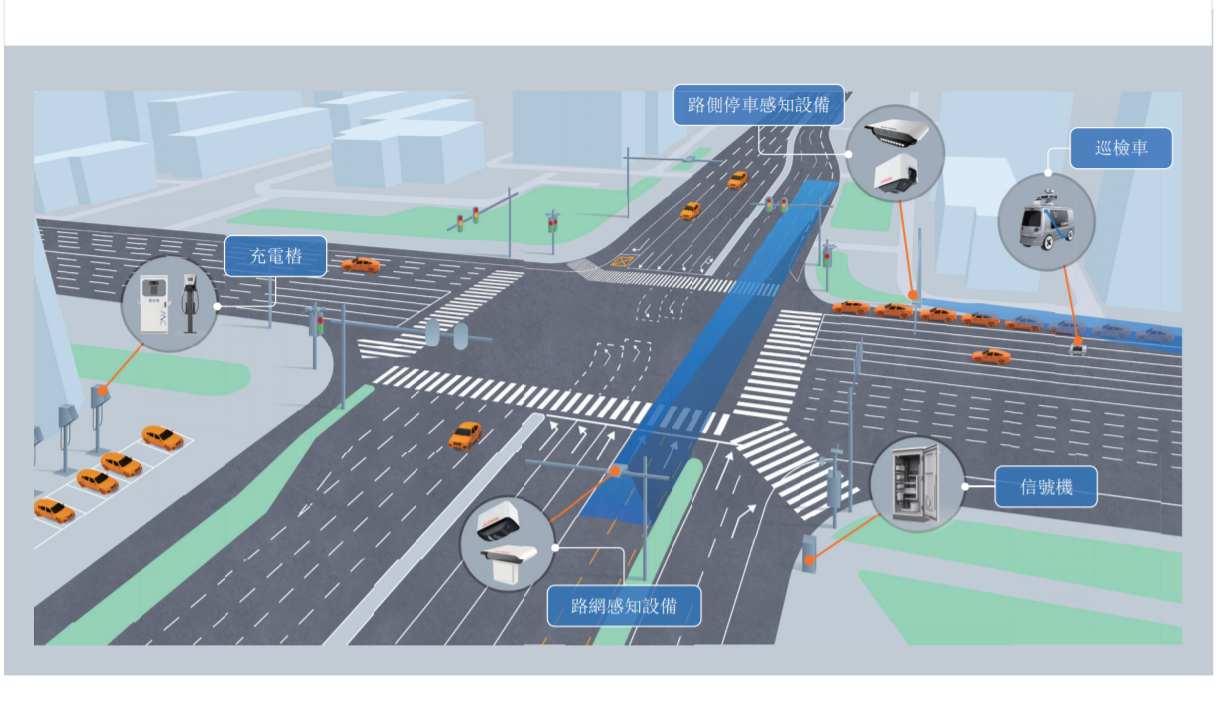
Core Viewpoint - Smart Interconnect Technology, backed by major shareholders like Xiaomi and NIO, has initiated its journey for a Hong Kong IPO, focusing on AI-based spatial intelligent solutions for urban traffic management [1][2]. Company Overview - Smart Interconnect Technology is a provider of spatial intelligent solutions based on AI technology, particularly in urban traffic management [1]. - The company ranks fourth in China's smart traffic industry with a market share of 6.6% and holds the first position in the roadside spatial intelligent solutions market with a 19.3% share [1][16]. Financial Performance - The company has not yet achieved profitability, with revenues projected to grow from 538 million RMB in 2022 to 699 million RMB in 2024, while adjusted net losses are expected to decrease from 187 million RMB to 20.6 million RMB during the same period [2][8]. - In the first half of 2025, revenue is expected to drop to 103 million RMB, with adjusted net losses increasing from 76.5 million RMB to 86.2 million RMB [2][11]. Business Segments - Smart Interconnect Technology has developed four main business segments: 1. Road network spatial intelligent solutions 2. Roadside spatial intelligent solutions 3. AIoT spatial intelligent solutions 4. Other products and services [2][6]. - The roadside spatial intelligent solutions segment has seen significant growth, with revenue increasing from 227 million RMB in 2022 to 467 million RMB in 2024, accounting for 66.8% of total revenue [7][8]. Market Dynamics - The spatial intelligent solutions market in China is projected to grow from 2.5 billion RMB in 2019 to 21.8 billion RMB in 2024, with a compound annual growth rate (CAGR) of 54.3% [12][15]. - The smart traffic application market is expected to grow from 1.1 billion RMB in 2019 to 9.7 billion RMB in 2024, with a CAGR of 44.4% [12][15]. Competitive Landscape - The market is highly competitive, with the top player holding only a 9.94% market share, indicating a fragmented market where Smart Interconnect Technology must enhance its core competitiveness to close the gap with leading competitors [17][18]. Customer Dependency - The company relies heavily on a few key clients, with the top five clients accounting for 49.2% to 73.7% of revenue from 2022 to the first half of 2025, leading to extended payment cycles [18][19]. Financial Health - As of 2025, the company's asset-liability ratio has risen to 231.55%, indicating increased financial risk due to reliance on debt for growth [18][20]. - The high accounts receivable, which exceeds 50% of current assets, poses potential bad debt risks [20][21]. Conclusion - While Smart Interconnect Technology has strategically invested in the smart traffic sector, achieving revenue growth and narrowing net losses, it faces significant challenges related to customer dependency and financial health, making its future performance a focal point for investors [21].

蔚来李斌最新闭门会讲话曝光
2 1 Shi Ji Jing Ji Bao Dao· 2025-11-28 09:24
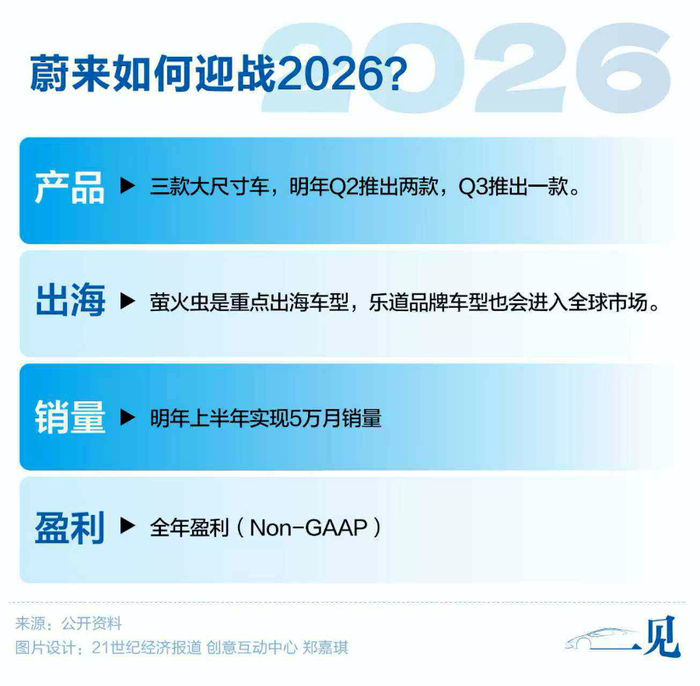
Core Insights - The article highlights the shift in focus of various automotive companies towards AI and technology, with Tesla's CEO emphasizing AI as a primary goal, while NIO's CEO, Li Bin, maintains a focus on core automotive business and profitability [1][2]. Company Focus - NIO's CEO Li Bin emphasized the importance of focusing on automotive products and sales, stating that the company will not pursue robotics or AI aggressively at this time, but rather concentrate on who can use their chips in robotics [2][3]. - NIO has undergone a significant transformation in its operational mindset, moving from a user-service-centric approach to a more financially disciplined model, where each business unit operates like an independent company [3][4]. Financial Performance - In Q3 2025, NIO achieved a delivery volume of 87,000 vehicles, revenue of 21.79 billion yuan, and a gross margin of 14.7%, all of which are historical highs for the company [3][4]. - The company’s cash reserves increased to 36.7 billion yuan, with both operating cash flow and free cash flow turning positive [3][4]. Strategic Goals - NIO aims for high-quality growth rather than merely increasing sales volume, with a target of achieving profitability in 2026 [4][5]. - The company plans to continue focusing on high-margin products, with expectations of a gross margin reaching 20% [4]. Market Challenges - Li Bin acknowledged that supply chain issues are a short-term pressure, but the real challenge lies in demand, particularly due to the reduction in vehicle replacement subsidies affecting consumer behavior [5][6]. - The company is adapting to market conditions by maintaining stable pricing and focusing on profitability per vehicle sold, rather than just sales volume [6][12]. Operational Efficiency - NIO is implementing a detailed cost-benefit analysis for all projects, shifting from large-scale investments to smaller, more manageable projects [3][14]. - The company is also exploring new revenue streams through partnerships and services, such as providing technology services to other companies [14][15]. Management Philosophy - Li Bin has adopted a more pragmatic management style, emphasizing the need to distinguish between what should be changed and what should be maintained in the company's strategy [15][16]. - The company is committed to improving operational efficiency and ensuring that all team members understand the financial aspects of the business [15][17].
李斌:蔚来品牌2025年1-9月销量超越BBA与保时捷纯电车型销量总和
智通财经网· 2025-11-28 07:46
蔚来创始人、董事长、CEO李斌在11月26日的媒体沟通会上表示,蔚来品牌专注高端市场,核心竞争对 手是奔驰、宝马、奥迪(BBA)。2025年1至9月,蔚来在中国高端纯电市场销量已超过所有BBA和保 时捷纯电车型销量总和,持续处于中国高端纯电市场领先地位。 ...
蔚来汽车:多品牌战略落地见效
数说新能源· 2025-11-28 07:22
Core Insights - NIO's multi-brand strategy has effectively supported its growth, with significant deliveries across its three brands: NIO, Lado, and Firefly, achieving a total of 37,000, 37,700, and 12,500 units respectively in Q3 [1] - The company reported a record delivery of 87,100 vehicles in Q3, a year-on-year increase of 40.8% and a quarter-on-quarter increase of 20.8%, with revenue reaching 21.79 billion yuan, up 16.7% year-on-year [2] - The shift in consumer preference towards pure electric vehicles, particularly large SUVs, has positioned NIO as a key beneficiary in the market transformation [3] Group 1: Multi-Brand Strategy - NIO's three-brand strategy has led to a complementary development model, effectively expanding market share and reducing operational risks through shared technology and resources [1] - The rapid delivery milestones of the Lado and Firefly brands demonstrate strong market acceptance and growth acceleration [1] Group 2: Financial Performance - The significant improvement in profitability is highlighted by a gross margin of 14.7% for vehicles and a comprehensive gross margin of 13.9%, both reaching a three-year high [2] - The success of high-margin flagship models, such as the Lado L90 and the new ES8, has validated NIO's strategy of focusing on product quality rather than price competition [2] Group 3: Market Trends - The shift towards pure electric large SUVs is evident, with sales surpassing hybrid models, indicating a clear consumer preference change [3] - NIO's proactive investment in technology and infrastructure has established a competitive edge in the growing pure electric vehicle segment [3]

李斌Q3闭门会:放下搞事的想象力,蔚来要聚焦做好汽车
2 1 Shi Ji Jing Ji Bao Dao· 2025-11-28 06:56
Core Viewpoint - The automotive industry is shifting focus towards AI and technology, with companies like Tesla leading the way, while NIO is taking a more cautious and focused approach on core automotive products and profitability [1][2]. Group 1: NIO's Strategic Shift - NIO's CEO Li Bin emphasizes a return to core automotive business, focusing on vehicle sales and profitability rather than diversifying into AI and robotics [2][3]. - The company has transitioned from a broad exploration of various business avenues to a more concentrated effort on electric vehicle production and sales, acknowledging its small market share in China [2][3]. - NIO's operational changes include a shift to smaller project investments and a focus on return on investment (ROI) for all business units [3][4]. Group 2: Financial Performance - In Q3 2025, NIO achieved record deliveries of 87,000 vehicles, revenue of 21.79 billion yuan, and a gross margin of 14.7%, marking significant financial milestones [3][4]. - The company aims for a gross margin of 20% in the future, driven by high-margin product offerings and a focus on quality growth rather than just volume [4][5]. Group 3: Market Challenges and Strategies - NIO faces challenges from declining demand due to subsidy reductions, with a notable drop in new orders in November [4][12]. - The company is prioritizing stable pricing and efficient operations to ensure profitability, focusing on the financial contribution of each vehicle sold [4][12]. - Li Bin highlights the importance of maintaining a transparent supply chain and collaborative relationships with partners to manage costs effectively [12][20]. Group 4: Future Outlook - NIO's goal for 2026 is to achieve full-year profitability, with a focus on high-quality growth and operational efficiency [4][14]. - The company plans to continue investing in charging infrastructure while ensuring that all expenditures are justified by potential returns [16][20]. - NIO is committed to maintaining its focus on electric vehicles and user experience, while exploring partnerships in the robotics sector without direct involvement [9][11].
蔚来赴(深圳)纸业有限公司成立 注册资本10万人民币
Sou Hu Cai Jing· 2025-11-28 04:31
Group 1 - NIO has recently established a new company named NIO (Shenzhen) Paper Co., Ltd. with a registered capital of 100,000 RMB [1] - The legal representative of the new company is Wang Jiawei [1] - The business scope includes sales of paper products, office supplies, packaging materials, plastic products, office equipment consumables, and internet sales, among others [1] Group 2 - The company is also involved in hotel management, project planning and public relations services, property management, and tourism development project planning consulting [1] - The company has no licensed business projects, indicating a focus on general business activities that do not require special permits [1]
蔚来-SW(09866.HK):毛利率改善超预期;期待4Q经营继续向好
Ge Long Hui· 2025-11-28 04:12
Core Viewpoint - The company's Q3 2025 performance met market expectations, with a revenue of 21.79 billion yuan and a Non-GAAP net loss of 2.7 billion yuan, indicating ongoing reform effectiveness and operational improvements [1]. Financial Performance - Q3 2025 revenue reached 21.79 billion yuan, with a Non-GAAP net loss of 2.7 billion yuan, aligning with market expectations [1]. - The company delivered 87,071 vehicles in Q3 2025, achieving a comprehensive gross margin of 13.9%, up 3.9 percentage points quarter-on-quarter, and an automotive gross margin of 14.7%, up 4.4 percentage points, marking the best quarterly performance since Q1 2023 [1]. - R&D and selling, general, and administrative (SG&A) expenses were 2.39 billion yuan and 4.19 billion yuan, respectively, with R&D expenses decreasing by approximately 600 million yuan quarter-on-quarter, while SG&A expenses increased due to new model cycles [1]. Development Trends - The company expects Q4 deliveries to reach 120,000 to 125,000 vehicles, maintaining a high level of sales [1]. - By 2026, the company anticipates a strong product cycle and internal operational improvements, with existing models expected to support sales recovery [1]. - The company plans to launch three SUV models (ES9, ES7, L80) in Q2-Q3 2026, aiming to strengthen its position in the pure electric vehicle market [1]. Cash Flow and Financing - The company reported positive operating cash flow and free cash flow in Q3, supported by a strong product cycle [2]. - On September 17, the company completed a public offering of new shares, raising $1.16 billion to fund core technology development, new platform and model development, and infrastructure expansion, enhancing its financial stability [2]. Profit Forecast and Valuation - Current valuations for U.S. and Hong Kong stocks are projected at 0.7x and 0.8x P/S for 2026, respectively [2]. - The company adjusted its non-GAAP profit forecasts for 2025/26 from -10.27 billion yuan and 5.43 billion yuan to -13.17 billion yuan and 3.67 billion yuan, maintaining an outperform rating [2]. - Target prices for Hong Kong and U.S. stocks were reduced by 9% to 62 HKD and 8 USD, respectively, indicating potential upside of 32% and 46% from current prices [2].