BIDU(09888)

Search documents
大厂竞逐“AI群聊”赛道
Zhong Guo Jing Ying Bao· 2026-02-06 19:35
Core Insights - Major tech companies like Tencent, Baidu, and Alibaba are shifting from single-point AI interactions to multi-role collaborative AI features, indicating a new paradigm in AI applications [1][2][3] Tencent's "Yuanbao Pai" - Tencent's "Yuanbao Pai" is a social feature that integrates AI as a "permanent member" in group chats, aiming to redefine AI application experiences by leveraging Tencent's social DNA [3][4] - The initiative is seen as a strategic move to differentiate from competitors and to stimulate social growth, similar to the explosive growth of WeChat's red envelope feature [3][4] Baidu's "Wenxin Group Chat" - Baidu's "Wenxin Group Chat" includes roles like "Health Manager" and "Personal Assistant," focusing on task management and context memory to convert discussions into actionable results [2][6] - The emphasis is on reducing decision-making costs and enhancing collaboration efficiency, addressing the common issue of unproductive group chats [2][6] Industry Trends - The AI social market is viewed positively, with expectations for AI to become an integral part of daily social interactions, moving from a reactive tool to a collaborative environment [7] - The future of AI group chat is seen as a critical area for development, with the potential to transform collaboration costs and user experiences [6][7] Challenges Ahead - Key challenges include balancing AI interactions to avoid intrusive behavior, ensuring data privacy in complex group settings, and building a cohesive ecosystem for multi-agent coordination [7]


今夜,全线大涨!伊朗,突传大消息!
券商中国· 2026-02-06 15:24
Market Overview - The U.S. stock market indices experienced a significant rebound, with all three major indices rising over 1% as of February 6, 22:50 Beijing time, indicating a recovery from previous sell-offs in AI stocks [1][2] - Major technology stocks saw substantial gains, with Nvidia up 5.6%, AMD up 7%, and Broadcom up 5.1%, driven by renewed interest in AI infrastructure following Amazon's announcement of a $200 billion capital expenditure plan [1][2] Precious Metals - The precious metals market also saw a strong recovery, with spot gold rising 3.39% to $4,939.35 per ounce and spot silver increasing 7.22% to $76.02 per ounce as of the same time [2][3] - Morgan Stanley's report suggests that the long-term bullish trend for gold remains intact, supported by a weak dollar environment, as long as the dollar index stays below 100 [3] Geopolitical Developments - Recent negotiations between Iran and the U.S. in Muscat, Oman, have concluded temporarily, with both sides agreeing to continue discussions, which may impact market sentiment and geopolitical stability [4][5] - The situation remains tense, with Iran expressing readiness to respond to any military actions, particularly in light of increased U.S. military presence in the region [5]



Baidu Unveils First Dividend and $5 Billion Buyback Plan: ETFs in Focus
ZACKS· 2026-02-06 15:01
Key Takeaways Baidu boosts shareholder returns, but AI competition may shape future payoff.The $5B buyback may be seen as modest, per a market watcher, as quoted on Bloomberg.ETFs offer diversified exposure to Baidu's AI push amid mixed performance.The Chinese search giant Baidu Inc. (BIDU) announced plans to introduce its first-ever dividend and a three-year stock repurchase program worth up to $5 billion, indicating a shift toward rewarding shareholders. Shares of BIDU rose 0.7% on Feb. 5, 2026 and gained ...

靠红包砸出来的热度,能持续多久
Qi Lu Wan Bao· 2026-02-06 12:44
Core Insights - The 2026 Spring Festival marketing battle has been significantly influenced by artificial intelligence, with major tech companies like Tencent, Alibaba, and Baidu investing over 4.5 billion yuan in the "red envelope war" [1][2] - AI has become the essential entry point for all platforms, transforming from a supplementary feature to the core component of the red envelope activities [2] Investment Scale - The total investment in the red envelope campaign has reached a record high, with Alibaba leading at 3 billion yuan, followed by Tencent with 1 billion yuan and Baidu with 500 million yuan, totaling over 4.5 billion yuan [2][3] Competitive Strategies - Different platforms are employing distinct strategies based on their ecosystems: Tencent focuses on social interactions through WeChat, Alibaba integrates AI into various consumer services, and Baidu leverages its search and content strengths [3][4] - The competition has evolved from merely attracting traffic to enhancing technical capabilities, scene coverage, and ecosystem collaboration [3] User Engagement and Retention Challenges - Despite the initial surge in user engagement, there are concerns about long-term user retention, as many platforms still rely on traditional growth tactics that may lead to user fatigue [4][5] - The homogeneity of AI functionalities across platforms raises questions about the ability to create unique value propositions and maintain user interest [4] Future Outlook - The red envelope campaign serves as a pressure test for the industry, highlighting the need for AI to transition from being a novelty to a necessity in daily life [6] - The long-term success of these platforms will depend on their ability to refine products, deepen user engagement, and integrate AI into everyday services, moving beyond short-term marketing tactics [6]

AI巨头春节狂撒45亿红包雨
Qi Lu Wan Bao· 2026-02-06 12:38
Core Insights - The competition among major internet companies for user engagement during the Spring Festival has intensified, with Tencent, Baidu, and Alibaba collectively distributing over 4.5 billion yuan in cash red envelopes, marking the beginning of a heated "AI red envelope war" [1] - The challenge for these companies is to convert users from "one-time visitors" to "retained users" through deeper integration of software with social media and various industry applications [1][6] Group 1: AI Red Envelope War - Tencent initiated the "Spring Festival AI Red Envelope War" by announcing a 1 billion yuan cash red envelope campaign through its Yuanbao app from February 1 to February 17 [1] - Baidu quickly followed with a 500 million yuan red envelope offer, integrating it with its AI product, Wenxin Assistant [1] - Alibaba's Qianwen launched a 3 billion yuan "Spring Festival Treat Plan" and secured exclusive naming rights for the Bilibili New Year's Eve gala [1] - ByteDance's Volcano Engine is set to participate in the 2026 CCTV Spring Festival Gala as the exclusive AI cloud partner, enhancing its interactive features [1] Group 2: User Engagement and Retention - Users are downloading apps primarily due to promotional activities, but there is skepticism about continued usage post-campaign, as indicated by user feedback [2] - The "AI red envelope war" is seen as a strategy to transition AI from simple search functions to more interactive capabilities [2] - QuestMobile data shows that by Q4 2025, Doubao's monthly active users (MAU) could reach 230 million, while Alibaba's Qianwen app may achieve 100 million MAU [2] Group 3: Historical Context and Strategy - The strategy of using red envelopes to attract users is not new; it was successfully employed during the 2015 Spring Festival with WeChat's "shake to grab red envelopes" feature, which significantly increased user engagement [3] - The current competition focuses on establishing the first point of interaction with AI applications, which is crucial for future user engagement [3] - The "AI red envelope war" is expected to shorten the adoption cycle of AI applications, transitioning into a phase focused on user loyalty [3] Group 4: Long-term User Retention Challenges - The primary challenge remains how to retain users after initial engagement, as past experiences show that high initial user numbers do not guarantee long-term retention [5] - Experts suggest that simply attracting users with red envelopes is insufficient; deeper interaction is necessary to form habitual usage [5] - The success of Yuanbao's red envelope initiative is contingent on its ability to leverage the WeChat ecosystem and provide ongoing value beyond the initial cash incentive [5]
千问请喝奶茶的免费效应下,Agent会迎来爆发吗?
3 6 Ke· 2026-02-06 11:43
Core Insights - The article highlights the significant role of AI Agents in enhancing user experience and operational efficiency, particularly during the Chinese New Year, with major companies like Alibaba and Tencent leading initiatives to promote AI technology [1][2][11]. Group 1: AI Agent Development and Adoption - Alibaba's "Qianwen" app launched a "30 billion free order" campaign, allowing users to interact with AI for various tasks, marking a significant step in user education about AI capabilities [1][2]. - The integration of AI Agents into Alibaba's ecosystem, including services like Taobao and Alipay, demonstrates the potential for seamless user experiences without switching between apps [2][10]. - A survey by LangChain indicates that 57% of organizations are already running AI Agents in production environments, with predictions that the integration of autonomous AI in enterprise software will rise from less than 1% in 2024 to 33% by 2028 [6]. Group 2: Business Model and Market Strategy - AI Agents provide a viable monetization path for large model vendors, addressing the long-standing issue of high costs and low returns associated with large models [8]. - Companies can adopt a "Robots as a Service" (RaaS) model, charging clients based on delivered results, which allows for deeper integration into core business processes [8][9]. - Consumer-facing AI Agents are expected to penetrate daily life through subscription models, enhancing user efficiency and creating a complete service loop within ecosystems [10]. Group 3: Competitive Landscape - Major tech companies are accelerating their AI Agent strategies, with ByteDance and Tencent also investing heavily in this area to create comprehensive service ecosystems [11][12]. - The smartphone industry is witnessing a race to integrate AI Agent capabilities, with companies like Honor and Xiaomi positioning themselves to lead in this new competitive dimension [12]. Group 4: Challenges and Future Outlook - Despite the consensus on the importance of AI Agents, challenges remain in terms of service delivery, user trust, and the need for effective multi-Agent collaboration [13][14]. - The stability of output quality and data security are identified as primary concerns for enterprises adopting AI Agents, indicating that overcoming these barriers will be crucial for widespread adoption [14].

一新股,暗盘大涨39.21%!
Zhong Guo Ji Jin Bao· 2026-02-06 11:21
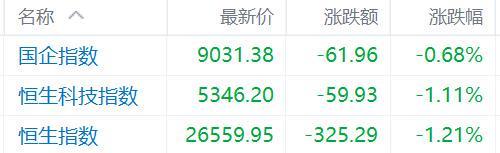
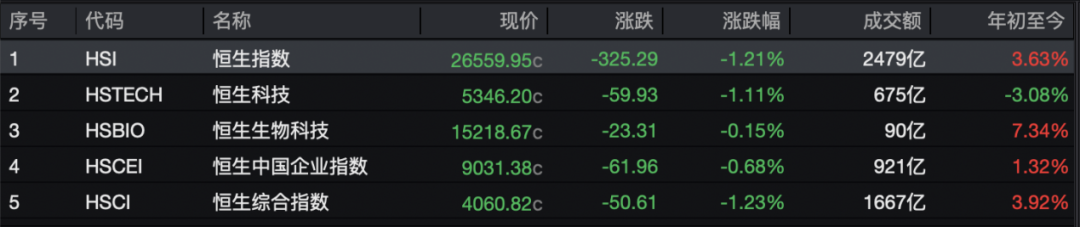
Group 1: Market Overview - The Hong Kong stock market experienced a collective decline on February 6, with the Hang Seng Index falling by 1.21% to 26,559.95 points, and the Hang Seng Technology Index decreasing by 1.11% to 5,346.20 points [1][2] - The total market turnover for the day was HKD 247.9 billion, with net inflows from southbound funds amounting to HKD 14.859 billion, and a cumulative net purchase of HKD 56.069 billion for the week [1] Group 2: Company Performance - The stock of 澜起科技 (Lianqi Technology) surged by 39.21% in dark trading, reaching HKD 148.9 per share ahead of its listing on the Hong Kong stock market on February 9 [9][13] - 澜起科技 is a leading international company in data processing and interconnect chip design, focusing on high-performance, low-power chip solutions for cloud computing and data centers [13] Group 3: Sector Movements - The beverage sector saw gains, with 茶百道 (Cha Bai Dao) rising by 6.08%, 古茗 (Gu Ming) increasing by 3.58%, and 沪上阿姨 (Hu Shang A Yi) up by 1.15%, driven by a promotional campaign from Alibaba's 千问App [3] - The lithium battery sector also performed well, with 彩客新能源 (Cai Ke New Energy) increasing by 6.59% and 中创新航 (Zhong Chuang Xin Hang) rising by 5.57%, attributed to strong demand in the new materials sector [5][7] - In the automotive sector, 蔚来 (NIO) saw a rise of 6.95%, with other companies like 零跑汽车 (Leap Motor) and 理想汽车 (Li Auto) also experiencing gains [8] Group 4: Analyst Insights - UBS has indicated that the Asian market is expected to enter a "super cycle," driven by multiple factors that could lead to long-term growth and profitability, particularly in the technology sector [14]




微信「大战」BAT:三天三场「封杀」
Di Yi Cai Jing· 2026-02-06 10:36
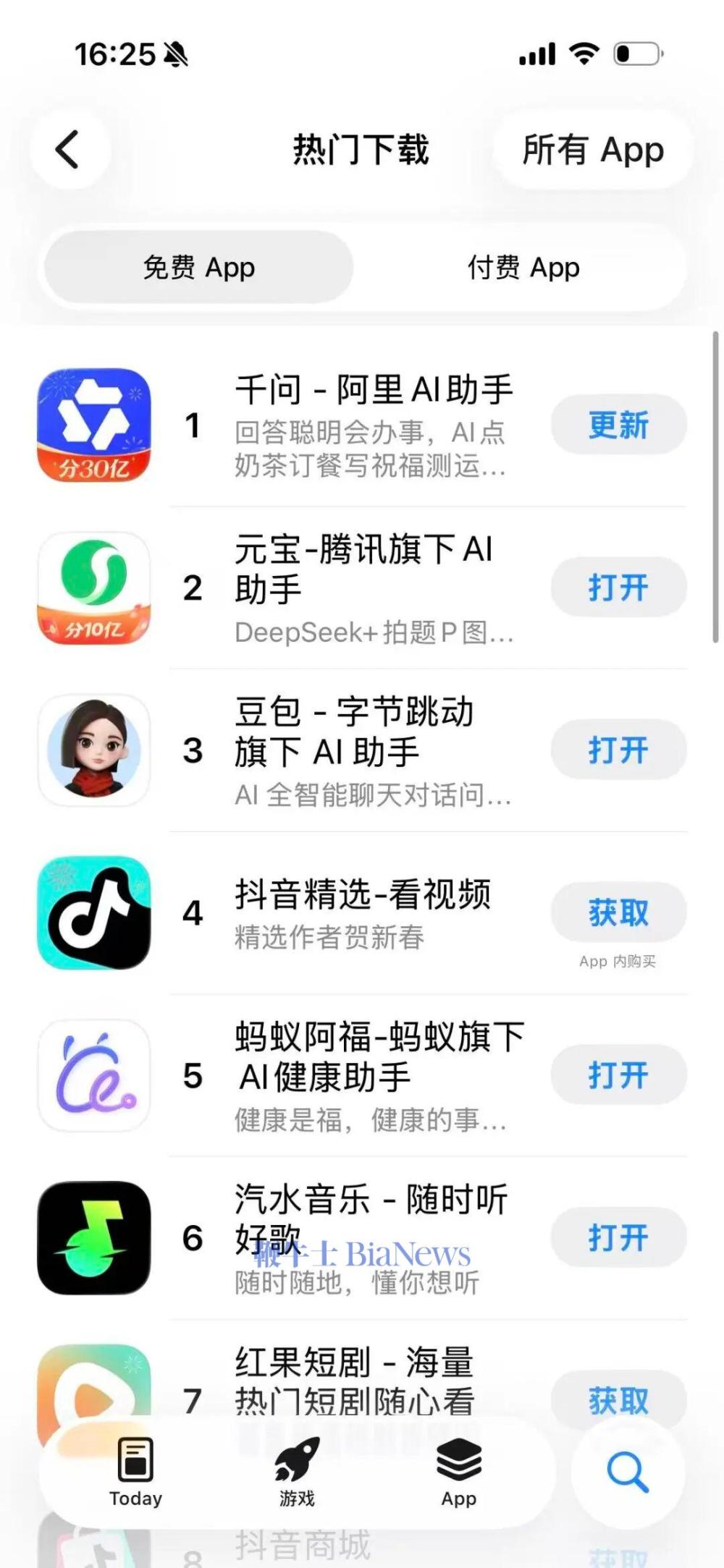
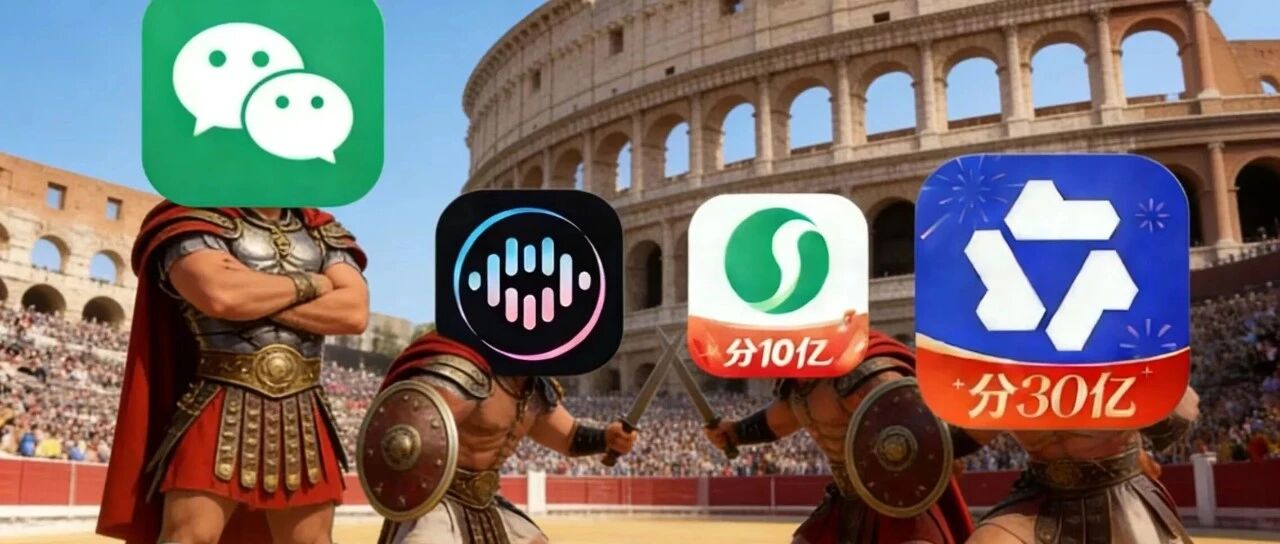
Core Viewpoint - The competition for user engagement during the Spring Festival has intensified, particularly on WeChat, as major companies like Tencent and Alibaba engage in aggressive marketing strategies, including substantial cash giveaways and promotional activities [1][3]. Group 1: Marketing Strategies - Tencent's "Yuanbao," Alibaba's "Qianwen," and Baidu's "Wenxin" have launched significant promotional campaigns, with Qianwen achieving over 10 million orders during a promotional event [1][3]. - The competition has led to a "carnival" of AI applications dominating the App Store rankings, with Qianwen reaching the top position, followed by Tencent's Yuanbao and Doubao [3][10]. - Companies are investing billions in subsidies and red envelopes to attract users, marking the Spring Festival as a critical period for AI application marketing [3][10]. Group 2: WeChat's Role - WeChat has implemented a "no-mercy" approach by blocking promotional links from competing applications, including its own Yuanbao, which has raised questions about its dual role as both a platform and a competitor [1][4]. - The platform's actions are seen as an effort to maintain user experience and combat excessive marketing tactics that could lead to user annoyance [4][5]. - The blocking of links has created confusion and operational challenges for companies like Qianwen, which faced system overloads and user complaints during peak traffic [6][7]. Group 3: Operational Challenges - Qianwen experienced significant system failures due to high traffic, leading to multiple user complaints about service disruptions and payment issues [6][7]. - The company is urgently working to enhance its system capacity and ensure smooth operations amidst the overwhelming demand for its promotional offerings [8]. - The challenge of coordinating internal resources and managing merchant relationships has become critical for Qianwen as it navigates this competitive landscape [8]. Group 4: Future Considerations - The ongoing competition raises questions about the sustainability of user acquisition strategies based solely on financial incentives, as companies may need to rely more on product quality and user experience to retain customers [15][16]. - The lack of a robust social ecosystem for Qianwen poses a challenge, as it must find ways to expand its user base beyond WeChat's constraints [16]. - Analysts suggest that while marketing can attract users, the long-term success of AI applications will depend on their technological capabilities and user satisfaction [15][16].
微信“大战”BAT:三天三场“封杀”
第一财经· 2026-02-06 10:23
Core Viewpoint - The article discusses the intense competition among AI application companies during the Spring Festival, particularly focusing on the battle for user engagement on WeChat, where Tencent's "Yuanbao," Baidu's "Wenxin," and Alibaba's "Qianwen" are vying for dominance in the market [3][4][5]. Group 1: Competition Dynamics - Tencent's "Yuanbao" faced a sudden ban on its red envelope links by WeChat, which was described as a "no-mercy" attack against excessive marketing practices [5][6]. - On February 6, "Qianwen" topped the App Store charts with over 10 million orders during its promotional event, despite experiencing system overloads and failures [3][4][7]. - The competition intensified as AI application companies invested billions in subsidies and red envelopes to attract users, leading to a chaotic marketing environment [4][10]. Group 2: User Experience Challenges - Users reported significant issues with the "Qianwen" app, including system failures and payment issues, highlighting the challenges of scaling during high-demand periods [7][8]. - The rapid influx of users caused "Qianwen" to struggle with system stability, prompting the company to increase resources urgently [7][8]. - The marketing strategies employed by these AI applications, while initially effective in attracting users, may not sustain long-term engagement without strong product capabilities [15]. Group 3: Strategic Implications - The article suggests that the current marketing tactics may not be sufficient for long-term user retention, as companies need to focus on product strength rather than just promotional spending [14][15]. - The lack of a robust social ecosystem for "Qianwen" poses a challenge for Alibaba, as it competes against Tencent's established platforms [14]. - The ongoing battle for user acquisition through social sharing methods may not yield the desired results, indicating a need for companies to innovate beyond traditional marketing approaches [13][14].
港股收评:集体下跌!恒指跌1.21%,锂电池股逆市上升
Ge Long Hui· 2026-02-06 09:01
Market Overview - The Hong Kong stock market indices collectively declined, with the Hang Seng Index falling by 1.21%, the Hang Seng Tech Index down by 1.11%, and the Hang Seng China Enterprises Index decreasing by 0.68% [1] - Southbound funds recorded a net inflow of HKD 14.859 billion [11] Sector Performance - The lithium battery sector saw gains, with Cai Ke New Energy rising over 6%, and other companies like Zhong Chuang Innovation and Ganfeng Lithium also experiencing increases [4][7] - The oil and gas production sector performed well, with Yuanheng Gas surging over 27% and other companies like Jintai Feng International and United Energy Group rising over 7% [5][6] - The automotive sector continued to rise, with NIO increasing nearly 7%, and other companies like Li Auto and BYD also showing positive performance [7] Major Companies - Alibaba, Meituan, Kuaishou, NetEase, and Baidu all experienced declines of over 2%, while Tencent, JD.com, and Ctrip fell over 1% [2][3] - In contrast, Li Auto saw an increase of over 3%, and Xiaomi Group rose slightly by less than 1% [2][3] Cryptocurrency Market - The cryptocurrency sector faced significant declines, with Bitcoin dropping to around USD 64,000 [8] - Companies in the cryptocurrency space, such as New Fire Technology Holdings and Guofu Quantum, saw declines of over 7% and nearly 6%, respectively [8] Insurance Sector - The insurance sector experienced downturns, with AIA falling over 5%, Prudential down over 4%, and other companies like China Pacific Insurance and Zhong An Online also declining [9] Copper Industry - The copper sector faced declines, with China Metal Utilization dropping over 12% and other companies like China Nonferrous Metals and Minmetals Resources also experiencing losses [10] - Analysts predict that basic metals will maintain an upward trend this year, with copper, tin, and aluminum prices expected to rise by 20%, 16%, and 12% respectively by 2025 [10][11]