BIDU(09888)

Search documents
2026年中国AI发展趋势前瞻
Xin Hua Wang· 2026-01-28 03:56
Core Insights - The number of AI companies in China has exceeded 6,000, with the core AI industry expected to surpass 1.2 trillion yuan, reflecting a nearly 30% year-on-year growth [1] - China has become the largest holder of AI patents globally, indicating a significant advancement in AI technology and innovation [1] - The shift from a "Chat" paradigm to an "intelligent agent" era is recognized, emphasizing the need for AI to solve real-world problems [2] Industry Development - The AI sector is experiencing a dual advancement: technological breakthroughs and application integration into various industries [2] - Major companies like Tencent and Baidu are rapidly deploying AI in real-world scenarios, with Tencent integrating its self-developed models into over 900 applications [2] - The competition in AI is now focused on who can effectively address specific problems, marking a transition in the industry [2] Computational Power - China has established 42 intelligent computing clusters, with a total computing power exceeding 1,590 EFLOPS, ranking among the top globally [5] - The development of computing power is characterized by a dual drive of government planning and market innovation, moving towards a more integrated national framework [6] - The "East Data West Computing" project has created eight major hub nodes, which account for over 80% of the national intelligent computing capacity [6] Data Utilization - The data annotation industry is evolving from labor-intensive to knowledge-intensive, focusing on high-quality industry-specific datasets [9] - High-quality data is becoming the focal point of AI competition, essential for training industry models to solve deep sector-specific issues [10] - China possesses a vast amount of data across various industries, which is seen as a valuable resource for AI development [10] Application in Traditional Industries - AI is increasingly being integrated into traditional industries, driving transformation and modernization [13] - The rapid growth in AI applications is reflected in the significant increase in daily token consumption, indicating widespread adoption [14] - AI applications are expanding across manufacturing, with notable increases in research, production, and operational management [16] Social Impact - AI is transforming governance and public services, enhancing efficiency and responsiveness in urban management [18] - The integration of AI into consumer services is changing how businesses understand and meet customer needs [18] - The focus on AI is shifting towards meeting societal demands, with initiatives aimed at fostering a comprehensive ecosystem of smart products [19] Safety and Regulation - The rise of AI-generated low-quality content has raised concerns about safety and ethical challenges, prompting discussions on regulatory frameworks [24][25] - The Chinese government is implementing policies to strengthen AI governance, emphasizing the need for a balanced approach to innovation and risk management [25]


涨价视角下解读火山云和行业竞争格局
2026-01-28 03:01
Summary of Conference Call Records Industry Overview - The cloud service industry is facing significant challenges due to rising costs, with large firms like ByteDance, Alibaba, and Baidu potentially benefiting from price increases, while smaller firms like Kingsoft, Qcloud, and UCloud are adversely affected due to weaker bargaining power [1][4][5]. Key Points and Arguments Price Increase Strategies - Domestic cloud service providers are experiencing pressure to raise prices due to increased costs of key components, with delivery times for general CPU machines in mainland China reaching approximately 40 weeks [2][11]. - Major cloud service providers like AWS, Alibaba, and Baidu are raising prices primarily due to rising costs in critical components, which increases overall supply chain pressure [2][11]. - ByteDance's procurement budget for 2026 has increased from 65 billion to 80 billion RMB due to rising storage costs, which now account for 30%-40% of overall operational costs [3][12]. Market Dynamics - The domestic cloud service market is in the early stages of price negotiations, with downstream customers reacting strongly against price increases, believing they should not bear the costs of expansion [8][14]. - Firefly Engine is adopting a counter-cyclical expansion strategy, maintaining lower prices to attract customers while competitors raise their prices [9]. Profitability and Cost Management - The ability to increase gross margins through price hikes depends on various factors, including the scale of operations and supply chain negotiation power. Large companies may see some revenue benefits, while smaller firms may struggle to maintain profitability [4][7]. - Alibaba is facing internal resource pressures and must manage costs effectively to avoid losses in its cloud business. The company can accept a price increase of 20%-25% for most clients, but this may only offset rising storage costs without significantly improving gross margins [10][11]. Customer Reactions and Acceptance - Different customer segments are responding variably to price increases, with large, profitable firms less sensitive to price hikes compared to smaller end-users who are more affected by cost increases [13][14]. - Many companies are reluctant to migrate resources to other cloud platforms due to operational complexities and the challenges of purchasing and maintaining their own hardware [15]. Additional Important Insights - The pricing strategies of major cloud service providers vary significantly, with discounts for different customer tiers reflecting their bargaining power [16]. - The overall impact of rising storage costs is substantial, with storage costs now comprising 20%-30% of total server costs, significantly affecting the cloud computing ecosystem [11][12]. - Future demand for cloud resources is expected to increase, potentially leading to more companies opting for public cloud services rather than private deployments due to procurement difficulties [18]. Conclusion - The cloud service industry is navigating a complex landscape of rising costs and competitive pressures, with large firms leveraging their scale to manage price increases while smaller firms face significant challenges. The market dynamics suggest a cautious approach to pricing strategies, with varying customer reactions influencing the overall landscape.

2026年,巨头疯抢这个赛道
3 6 Ke· 2026-01-28 01:34
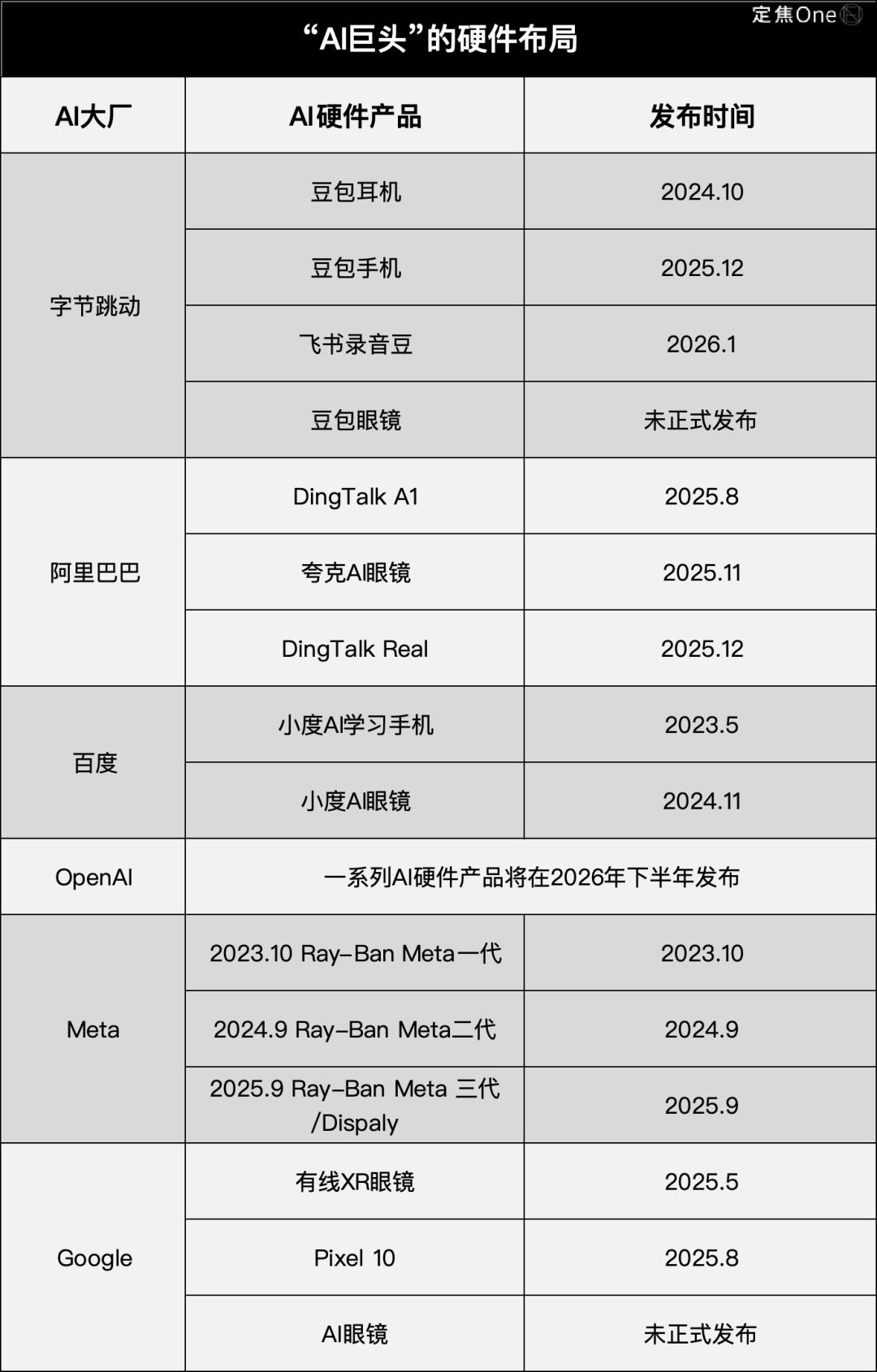
Core Insights - The AI hardware race has intensified with major players like OpenAI, Google, Alibaba, and ByteDance entering the market, with OpenAI planning to launch its first hardware device in the second half of 2026 [1][5] - Domestic companies are diversifying their AI hardware offerings, focusing on proven product categories rather than new hardware forms [1][3] Group 1: AI Hardware Landscape - OpenAI is set to release a series of AI hardware products, including a device codenamed "Sweetpea" and another called "Gumdrop," which is a smart pen or wearable audio device [2][3] - Major AI companies are focusing on three main categories: AI glasses, AI office tools, and AI smartphones, with AI glasses being the most frequently mentioned product type [4][6] - Meta's Ray-Ban Meta smart glasses have sold over 2 million units, indicating a strong market for AI glasses, while Google and other companies are also developing similar products [6][20] Group 2: Market Dynamics and Competition - The entry of AI giants into hardware is driven by the saturation of the AI software market and the decreasing barriers to hardware development [12][14] - Different companies have varying strategies: ByteDance is aggressively testing multiple hardware forms, while Alibaba is more cautious, aiming to integrate hardware into its existing software ecosystem [15][18] - The competition between ByteDance and Alibaba centers on who can establish a hardware presence first, while overseas companies like Meta and Google face their own challenges in the hardware market [19][22] Group 3: Commercial Viability and Challenges - AI hardware products are currently seen as experimental, with initial sales figures indicating market interest but not substantial volume [26][30] - Successful examples of AI hardware commercialization exist, such as Plaud's AI recording card achieving $250 million in annual recurring revenue [27] - The challenge remains whether AI hardware can replace smartphones as the next universal interface, with current products not yet meeting consumer demand for necessity [30][33]


2025中国企业出海年鉴:不确定时代中的全球化韧性:中国企业的实践与趋势
EqualOcean· 2026-01-28 01:10
Investment Rating - The report does not explicitly provide an investment rating for the industry. Core Insights - In 2025, Chinese companies' overseas expansion did not experience a singular turning point but rather accelerated along multiple changing trajectories, significantly impacting their overseas operations [6] - The focus of overseas market layout has shifted, with compliance and organizational setup becoming prerequisites, and localization evolving from a strategic option to a fundamental requirement [6] - The importance of 2025 lies not only in what occurred but in the changes that have begun to emerge, reshaping the decision-making logic of overseas enterprises and influencing their long-term choices [6] Summary by Sections Overall Changes in 2025 - The industry coverage for Chinese companies going abroad has expanded, encompassing retail e-commerce, tea drinks, entertainment, AI, automotive, and hardware, with Southeast Asia, the Middle East, Latin America, and Africa becoming significant growth sources [14] - The technological investment has increased, and compliance challenges have intensified, with a notable shift in export structure, as evidenced by a trade surplus exceeding $1 trillion for the first time in 2025 [19][21] Country-Specific Roles in Overseas Expansion - The Global South has emerged as a crucial growth source for Chinese companies, transitioning from a supplementary market to a core strategic depth [28] - The Gulf region is becoming a key node in the global AI capability competition, with significant investments in digital infrastructure and AI technologies [31] - Competition in the European and American markets has shifted towards regulatory and compliance aspects, with stringent measures impacting market access for Chinese firms [34] Industry-Specific Changes in Overseas Expansion - The automotive industry's focus has shifted from export expansion to deep localization, with significant investments in overseas manufacturing facilities [43][48] - The global AI landscape is being restructured, with Chinese AI capabilities transitioning from a follower to a leader in the market [49] - The competitive focus in cross-border e-commerce has shifted towards fulfillment and infrastructure capabilities, reflecting the need for robust operational frameworks [6] Strategic Responses of Companies and Service Systems - Chinese brands are entering a critical window for global reputation and brand premium, with the first generation of overseas experience beginning to systematically fail [4][10] - The overseas service system is evolving from a reactive response to customer needs to a proactive global service model, indicating a shift towards comprehensive service offerings [10]



马化腾也受不了外卖大战,称腾讯已从美团京东投资中退出;32岁猝死程序员公司内部邮件曝光,称「其未按要求做体检」;DeepSeek发布新模型
雷峰网· 2026-01-28 01:06
Group 1 - A 32-year-old programmer's sudden death has raised concerns about the company's health management practices, as the deceased had not undergone the required health check-ups, which the company does not acknowledge [5][6] - The company sent internal emails addressing the situation, stating that the employee had never completed health checks at their facility, despite having annual check-ups at a top-tier hospital [5][6] - Following the incident, the company announced a return to normal operations, canceling celebratory events and emphasizing the need to resume regular business activities [6] Group 2 - Tencent's CEO, Ma Huateng, announced the company's exit from investments in Meituan and JD.com, citing unsustainable cash-burning competition in the food delivery sector [8] - Tencent's investment in Meituan began in 2014, and by the end of 2022, the company had reduced its stake significantly, ultimately exiting completely by early 2026 [8] Group 3 - Li Xiang, CEO of Li Auto, faced criticism from employees after a lengthy all-hands meeting focused primarily on AI trends, with many employees expressing confusion and a desire for more concrete company direction [9] - The company reported a 19% year-over-year decline in vehicle deliveries for 2025, completing only 63.4% of its adjusted sales target [9] Group 4 - DeepSeek released a new open-source model, DeepSeek-OCR 2, which utilizes an innovative method to dynamically rearrange image components based on their meaning, enhancing AI's visual understanding capabilities [11][12] - The model's design allows for more accurate interpretation of complex documents, integrating visual understanding with reasoning and programming abilities [12] Group 5 - NIO has strengthened its intelligent driving team by hiring a former algorithm expert from Alibaba, indicating a commitment to advancing its AI and autonomous driving technologies [24][25] - The company plans to increase its computational resources and aims to regain its position among the top players in the industry through significant updates in the current year [25] Group 6 - Baidu's smart cloud division has raised its AI revenue growth target from 100% to 200%, aiming to capture a larger share of the rapidly growing AI cloud market [40] - The company has been successful in securing a significant number of AI-related projects, leading the market in both project count and total value [40] Group 7 - The automotive industry is witnessing a surge in electric vehicle models, with companies like Volkswagen and Xpeng introducing new models that emphasize advanced features and competitive pricing [42][34] - Xpeng's flying car, expected to be delivered by 2026, showcases innovative design and technology, aiming to capture market interest in the emerging flying vehicle segment [34]



一边撒币一边建群!春节AI红包大战背后的野心:大厂暗战流量新入口
Hua Xia Shi Bao· 2026-01-28 00:31
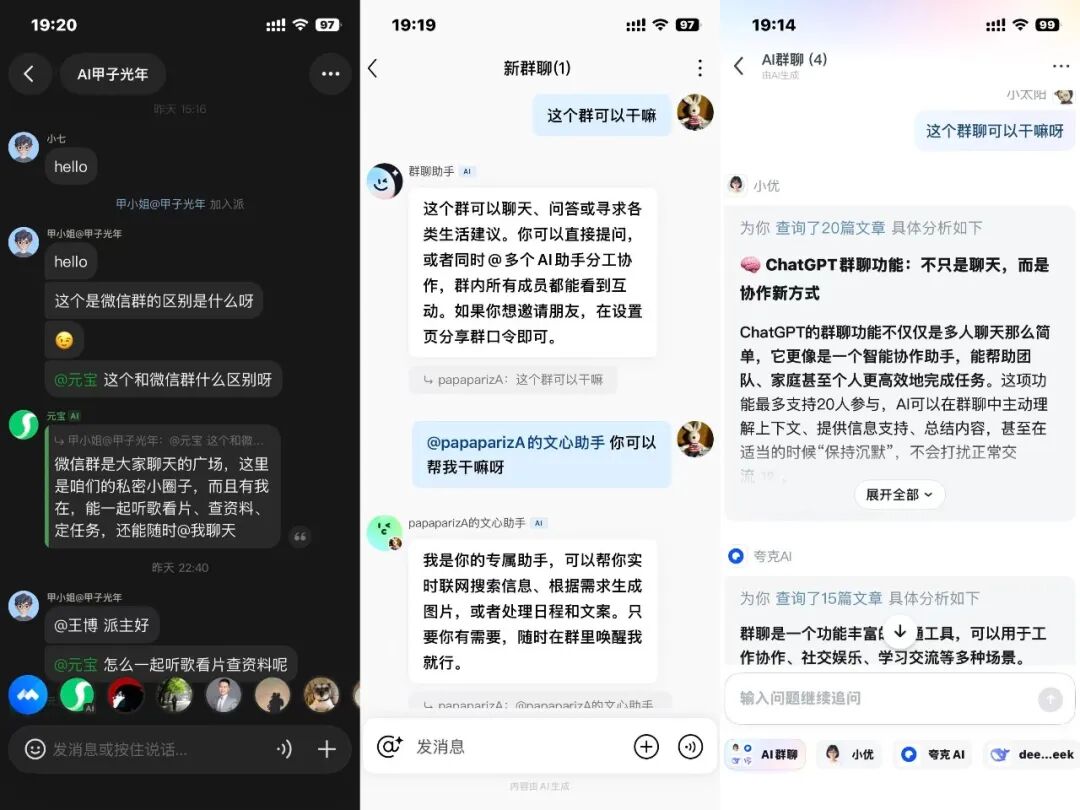
不只是春节期间,元宝、文心近日相继开启内测的群聊功能,以及阿里千问此前强调的"能办事",都在 为原本一用即走的AI助手增添更多使用场景和用户粘性。在这背后,围绕AI时代超级流量入口的争夺 从未停止。 春节争相发红包 今年的春节AI红包大战由腾讯和百度同时掀起。 1月25日,腾讯旗下AI助手元宝宣布,将于2月1日启动新春活动,计划在App中发放总额10亿元的现金 红包。据《华夏时报》记者观察,目前该活动已开放预约。同一日,百度也宣布自1月26日至3月12日, 用户在百度App使用文心助手,就有机会瓜分5亿现金红包。需要提及的是,百度App还将作为首席AI合 作伙伴登上2026北京广播电视台春节联欢晚会。 春节一直是科技公司花式争夺用户和流量的重要战场。 今年争相发红包"拉新"的主角变成了AI。1月25日,腾讯旗下AI助手元宝App和百度App先后宣布今年春 节将发放10亿元和5亿元红包。此外,截至目前,字节旗下火山引擎和百度App还分别与央视春晚和北 京春晚进行了合作。 不仅是春节期间,AI助手也尽力在日常生活中提升自己的使用场景和用户粘性。继能办事之后,高频 的社交场景成为AI助手眼下的比拼重点。 1月27日 ...

元宝派、文心、UC…为什么BAT都急着给AI拉群?
3 6 Ke· 2026-01-27 23:57
Core Insights - The major Chinese internet companies "BAT" have simultaneously responded to the emerging trend of "AI group chat," indicating a significant paradigm shift in the industry [1] - The introduction of AI group chat features by these companies suggests a strategic positioning for the "AI super entrance" in the evolving digital landscape [3] Group 1: AI Group Chat Development - The concept of "AI group chat" has gained traction following the testing of group chat features by ChatGPT in December 2024, leading to accelerated development by major tech firms [2] - AI group chat is transitioning from a basic social feature to a core component of the AI era, driven by advancements in large model capabilities and the need for multi-agent collaboration [2][3] Group 2: Product Features and User Experience - Early explorations of AI group chat were conducted by smaller companies, with products focusing on emotional connection and immersive experiences rather than efficient collaboration [4][5] - Current AI group chat products emphasize task-oriented collaboration, integrating various functionalities such as social interaction, work tasks, and personal assistance [6][7] Group 3: Market Implications - The competition for the "super entrance" in the AI era is intensifying, with AI group chat potentially becoming a central hub for user interactions, decision-making, and collaboration [15][19] - The integration of AI capabilities into a unified workspace can enhance user engagement and create new business opportunities, as seen in Tencent's "Yuanbao" and Baidu's multi-AI role chat [12][17] Group 4: Future Outlook - The success of AI group chat could redefine platform boundaries, creating a new type of application that encompasses various tools and social interactions [18] - The ongoing development of AI group chat features by major players suggests that the true competition for user engagement and market dominance will intensify by 2026 [20]
春节红包背后的AI野心:一边撒钱一边建群,大厂暗战流量新入口
Hua Xia Shi Bao· 2026-01-27 14:50
Core Viewpoint - The competition among tech companies for user acquisition and traffic during the Spring Festival has intensified, with a focus on AI-driven initiatives, particularly cash red envelopes [2][3][4]. Group 1: AI Red Envelope Initiatives - Tencent's AI assistant, Yuanbao, announced a plan to distribute a total of 1 billion yuan in cash red envelopes starting February 1, while Baidu's app will offer 500 million yuan from January 26 to March 12 [3][4]. - Baidu's decision to issue red envelopes through its app instead of the Wenxin app is aimed at maximizing exposure and user engagement, as the two platforms serve different purposes [3]. - The competition for red envelopes is particularly fierce for the CCTV Spring Festival Gala, with ByteDance's Volcano Engine confirmed as the exclusive partner for this event [3][4]. Group 2: User Engagement Strategies - The AI assistants are not only focusing on red envelopes but are also enhancing user engagement through new features like group chat capabilities, which aim to create more usage scenarios and increase user stickiness [4][5]. - Baidu's Wenxin app has launched a "multi-agent" group chat feature, allowing users to collaborate with AI assistants in various tasks, while Tencent's Yuanbao introduced a social AI feature called "Yuanbao Club" [5][6]. - The goal of these features is to shift user reliance from basic AI functions to more interactive and social experiences, thereby increasing user retention [6]. Group 3: Market Position and Competition - According to data from December, Doubao leads the native AI application market with over 200 million monthly active users, followed by Yuanbao with 112 million [6]. - Baidu's Wenxin assistant has surpassed 200 million monthly active users, indicating higher engagement compared to its standalone app [6]. - The current market is characterized by intense competition among major players, with a focus on establishing the next generation of traffic entry points in the C-end market [6].

AI时代“新BAT”正在崛起
3 6 Ke· 2026-01-27 11:07
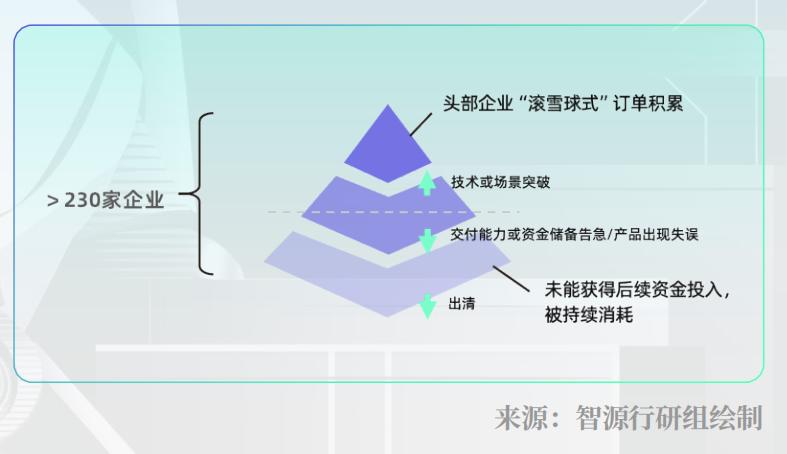
Group 1 - The core focus of the article is on the future of artificial intelligence (AI) and the potential reshaping of the Chinese internet landscape, particularly in the context of embodied intelligence and the emergence of new super apps [1][19][20] - The embodied intelligence sector is expected to undergo a significant reshuffle by 2026, with over 230 companies currently in the market, including more than 100 humanoid robot firms [2][4] - The industry is transitioning from experimental phases to mass production, with humanoid robot sales surpassing 10,000 units, indicating a move towards initial commercialization [4][9] Group 2 - Major players in the global humanoid robot market include Zhiyuan, Yushun, and Ubtech, with Zhiyuan leading with an annual shipment of over 5,100 units, capturing 39% of the global market share [6] - The competition for AI super apps is intensifying, with companies like OpenAI and Alibaba striving to create comprehensive platforms that integrate various services into a single interface [10][11] - The article highlights the emergence of vertical players in specific domains, such as Ant Group's "Antifor Health" and MiniMax's AI companionship applications, which have successfully established business models and attracted significant user bases [14] Group 3 - The AI industry is predicted to enter a "trough of disillusionment" in 2026, with many AI projects failing to deliver measurable impacts, leading to a potential delay in AI investments [15][19] - The market for synthetic data is experiencing rapid growth, with projections indicating that by 2030, the scale of synthetic data will surpass that of real data, becoming the primary fuel for model training [17] - The advancements in data quality and the evolution of AI technologies are expected to drive significant changes in the operational dynamics of the real economy [19]
从上春晚到撒15亿,腾讯、宇树们血拼春节档?
36氪· 2026-01-27 10:16
Core Viewpoint - The article discusses the resurgence of the "cash-splashing" marketing strategy during the Spring Festival, highlighting Tencent's announcement of distributing 1 billion yuan in cash red envelopes and Baidu's follow-up with 500 million yuan, indicating a competitive landscape among major internet companies [2][3][4][21]. Group 1: Marketing Strategies - Tencent's CEO, Ma Huateng, emphasized the importance of AI investments while announcing the cash red envelope initiative, aiming to recreate the excitement of the original WeChat red envelope launch in 2015 [3][21]. - Baidu's cash red envelope campaign, which runs from January 26 to March 12, offers users a chance to share in 500 million yuan, showcasing its AI technology as a key selling point [4][23]. - The article notes that the Spring Festival marketing battle has evolved from merely acquiring new users to focusing on building user relationships and delivering value through technology [28][29]. Group 2: Historical Context - The article reflects on the evolution of Spring Festival marketing, starting with Tencent's 5 billion yuan red envelope campaign in 2015, which significantly impacted China's mobile payment landscape [10][25]. - Other companies, such as Alibaba and Baidu, have also engaged in similar campaigns over the years, with Baidu investing 1.9 billion yuan in 2019, resulting in a substantial increase in active users [12][15]. - The shift in marketing strategies is evident as companies move from simple cash giveaways to integrating technology and content into their campaigns, reflecting broader trends in the tech industry [44]. Group 3: Competitive Landscape - The competition for advertising during the Spring Festival has intensified, with companies like ByteDance's Volcano Engine and various robotics firms vying for visibility and engagement [33][34]. - The article highlights that the focus of major companies is shifting from consumer internet to hard technology, indicating a broader industry trend towards value-driven strategies [40]. - The changing landscape of Spring Festival marketing suggests that while the methods may evolve, the underlying goal of capturing user attention and showcasing technological capabilities remains constant [43].