
BABA(09988)

Search documents
大和:“春季行情”提前到来,料A股市况迈向“慢牛”
Xin Lang Cai Jing· 2026-01-16 05:44
Group 1 - The core viewpoint of the report is that the "spring market" has arrived early, leading investors to potentially take profits before the Lunar New Year holiday or the National People's Congress, while liquidity support and stimulus policy expectations may boost the A-share market, although the pace of growth is expected to slow, transitioning towards a "slow bull" market [1] - The report notes that the regulatory authority raised the minimum margin ratio on January 14 to cool market sentiment, but it is believed that the A-share market has not yet entered a bubble phase [1] - Financing transactions as a percentage of total trading volume increased from 9.9% to 11.2% over the past month, still below the historical "warning level" of 12% that has previously triggered regulatory tightening [1] Group 2 - The report emphasizes that investor crowding in the top three popular sectors is still far below the peaks observed in February or October 2025 [1] - The company maintains a positive outlook for the first half of 2026, recommending investors to diversify their exposure in both A-share and Hong Kong markets for balanced sector risk [1] - Preferred stocks in the Hong Kong market include Tencent Holdings, Shenzhou International, Weichai Power, China Resources Land, and Alibaba, while preferred stocks in the A-share market include Midea Group, Northern Huachuang, CATL, Heng Rui Medicine, and Lanke Technology, all rated as "buy" [1]



港股开盘丨恒指涨0.64% 阿里巴巴涨逾2%
Xin Lang Cai Jing· 2026-01-16 04:38
Group 1 - The Hang Seng Index opened up by 0.64% [1] - The Hang Seng Tech Index increased by 0.94% [1] - Technology stocks saw widespread gains, with SenseTime and Alibaba rising over 2% [1] Group 2 - Other notable stocks that increased include BYD, SMIC, Kuaishou, and Hua Hong Semiconductor [1]
当千问能帮你“一句话出游”时,很多消费行业经典理论已经过时了
Tai Mei Ti A P P· 2026-01-16 04:26
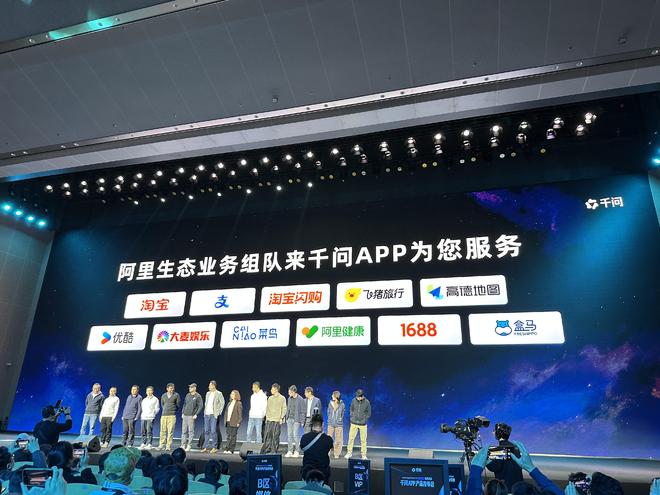
Core Insights - The article discusses Alibaba's launch of the AI shopping feature through the Qianwen app, marking a significant advancement in integrating AI into e-commerce transactions [3][4][5]. Group 1: AI Shopping Functionality - Qianwen app has integrated with Taobao, Taobao Flash Purchase, and Alipay, initiating the world's first public test of AI shopping functionality, allowing users to complete tasks like ordering food and shopping with a single voice command [3][4]. - The AI shopping feature creates a closed-loop mechanism for "one-sentence shopping," where the AI interprets user intent, accesses Taobao's product database, and facilitates payment through Alipay without switching apps [4][9]. - The AI's ability to understand complex user needs, such as specific requirements for pet-friendly products, showcases its advanced reasoning capabilities beyond simple keyword matching [7][10]. Group 2: Impact on Consumer Behavior - The introduction of AI shopping is expected to reshape consumer behavior and the retail landscape, potentially rendering traditional consumer behavior theories obsolete [5][12]. - Users have shown a significant increase in engagement with the AI shopping feature, with inquiries for product recommendations rising over 300% month-on-month [10]. - The AI's capability to assist in complex decision-making scenarios, such as travel planning or purchasing specialized items, indicates a shift towards a more personalized and user-centric shopping experience [8][15]. Group 3: Technological Advancements - The success of the AI shopping feature relies on three key technological breakthroughs: enhanced coding capabilities, multimodal understanding, and improved context processing for complex queries [9][17]. - The integration of real transaction data and user reviews from Alibaba's ecosystem ensures that the AI's recommendations are objective and accurate, filtering out irrelevant marketing content [9][10]. - Future developments will focus on improving the AI's understanding and service logic based on user feedback, aiming to enhance personalization and adaptability in various consumer scenarios [17].

大行评级|大摩:千问具备成为全能AI超级App的强大优势 维持阿里“增持”评级
Ge Long Hui· 2026-01-16 03:59
Core Insights - Morgan Stanley reports that Alibaba's Qianwen has achieved over 100 million monthly active users within two months of launch, fully integrating into Alibaba's ecosystem [1] - The report highlights that Qianwen's strong advantage as a comprehensive AI super app and life assistant is bolstered by Alibaba's vast ecosystem, which includes Taobao, Ele.me, Fliggy, Amap, and Alipay [1] - The firm anticipates that the growth in daily active users for Qianwen, along with future iterations enhancing its capabilities, will be a significant driver for Alibaba's stock price, while cloud business revenue growth remains a primary driver [1] - Morgan Stanley maintains an "Overweight" rating on Alibaba with a target price of $180 [1]
中国首个!支付宝携手千问App、淘宝闪购等发布AI商业协议ACT
Xin Lang Cai Jing· 2026-01-16 03:18
Core Insights - Alipay, in collaboration with partners including Qianwen App, Taobao Flash Purchase, Rokid, Damai, and Alibaba Cloud, has officially launched the ACT Protocol (Agentic Commerce Trust Protocol), which is China's first open technical protocol framework designed for agent commercial needs [1][4]. Group 1: ACT Protocol Overview - The ACT Protocol aims to create a "universal language" for the collaboration between AI and e-commerce, food delivery, and other service platforms, facilitating more convenient and efficient execution of AI tasks across different terminals, systems, and platforms [1][4]. Group 2: Practical Application - An example of the ACT Protocol in action is the Qianwen App, which successfully integrates Taobao Flash Purchase with Alipay AI payment. Users can simply instruct Qianwen to order a drink, and the app will intelligently recommend nearby products based on the user's location, while also handling price comparisons and automatic coupon redemption [3][6]. - The entire shopping process is streamlined into a conversational, automated experience without switching platforms, with Qianwen acting as a dedicated "shopping assistant" to manage complex operations [3][6]. Group 3: Infrastructure and Security - Alipay has established four core infrastructure standards: "Delegated Authorization Domain," "Commercial Interaction Domain," "Payment Service Domain," and "Trust Service Domain," ensuring that AI operations are fully traceable and verifiable [3][6]. - Unlike traditional payment models, under the ACT Protocol, AI only executes the order placement, while the payment process remains under the user's control or authorization, significantly saving time for users while ensuring fund security [3][6]. Group 4: Benefits for Merchants - For merchants, integrating AI-native applications will be simplified as they only need to configure a unified interface according to the protocol standards, allowing for seamless multi-channel access without the need for complex API development, thus greatly reducing integration costs [3][6].

千问APP测试AI购物,带动阿里股价再次站上170美元
Ge Long Hui· 2026-01-16 03:06
Core Viewpoint - Alibaba's stock price has risen above $170, driven by the integration of its various services into the Qianwen app, which now offers over 400 functionalities, marking a significant advancement in AI-driven e-commerce [1]. Group 1: Stock Performance - Alibaba's U.S. stock has seen a continuous increase for four consecutive days, with a notable rise in the Hong Kong market, where Alibaba-W has experienced a 12.53% increase and a net buy of HKD 4.385 billion from southbound funds [1]. Group 2: AI Integration and E-commerce Potential - The integration of Alibaba's e-commerce services into the Qianwen AI app is viewed positively by multiple institutions, with Open Source Securities highlighting the significance of this move alongside Google's recent Universal Commercial Protocol (UCP) announcement, suggesting it could reshape the future of e-commerce [1]. - The Qianwen app is described as the world's first AI assistant capable of completing complex tasks in daily life, now enabling users to order food, shop, and book hotels through conversational interactions [1].
阿里巴巴:推出通义千问 AI 助手
2026-01-16 02:56
Summary of Alibaba Group Holding Conference Call Company Overview - **Company**: Alibaba Group Holding (BABA.N) - **Industry**: China Internet and Other Services - **Market Cap**: US$403.539 billion - **Current Stock Price**: US$169.90 (as of January 14, 2026) - **Price Target**: US$180.00, indicating a 6% upside potential Key Developments - **Launch of Qwen AI Assistant**: - Qwen AI can perform over 400 daily tasks through integration with the Alibaba ecosystem, providing one-stop solutions [1] - The Qwen App achieved over 100 million monthly active users (MAU) within two months of its launch [1] - Alibaba anticipates that 60-70% of digital-world tasks will be completed by AI in the next two years, with the remaining tasks enhanced by AI for efficiency [1] Market Position and Competition - **Ecosystem Integration**: - Qwen leverages Alibaba's ecosystem, including Taobao, Eleme, Fliggy, Amap, and Alipay, positioning it as an all-in-one AI superapp and life assistant [3] - Competitors like Tencent are enhancing their AI models, although their product launches may lag behind [3] Financial Expectations - **User Growth and Revenue**: - Expected increase in daily active users (DAU) for Qwen and improvements in its capabilities are projected to drive share price growth alongside cloud revenue, estimated to grow by over 35% in F3Q and 40% in F27 [4] - **Marketing Expenses**: - Increased marketing spending for consumer adoption may lead to higher overall losses, estimated at RMB 7 billion in F3Q [4] Risks and Opportunities - **Upside Risks**: - Better monetization in core e-commerce could drive earnings growth [18] - Faster enterprise digitalization may re-accelerate cloud revenue growth [18] - Stronger demand for AI could further boost cloud revenue [18] - **Downside Risks**: - Increased competition and higher-than-expected reinvestment costs [18] - Weaker consumer spending amid a slower post-COVID recovery [18] - Regulatory scrutiny of internet platforms could pose additional challenges [18] Financial Metrics - **Fiscal Year Ending**: March 2025 - **Revenue Estimates**: - FY 2025: RMB 996 billion - FY 2026: RMB 1,022 billion - FY 2027: RMB 1,111 billion - FY 2028: RMB 1,202 billion [8] - **Net Income Estimates**: - FY 2025: RMB 129 billion - FY 2026: RMB 111 billion - FY 2027: RMB 106 billion - FY 2028: RMB 141 billion [8] Conclusion - Alibaba Group Holding is positioned to capitalize on the growing AI market through its Qwen AI Assistant, which integrates seamlessly into its extensive ecosystem. While there are significant growth opportunities, the company must navigate competitive pressures and regulatory challenges to achieve its financial targets.
阿里巴巴:通义千问产品发布要点- 实用级超级 AI 代理问世
2026-01-16 02:56
Summary of Alibaba Group Holding (BABA.N) Qwen Product Release Conference Company Overview - **Company**: Alibaba Group Holding (BABA.N) - **Market Cap**: US$405.621 billion [4] Key Industry Insights - **Product Launch**: Alibaba announced the release of Qwen Task Assistant 1.0, a universal AI agent designed to autonomously execute a wide range of digital and real-world tasks for users [1][2] - **Integration**: Qwen will be integrated across Alibaba's ecosystem, including platforms like Taobao, Alipay, and Fliggy, aiming to enhance user experience and task completion [1][7] Core Capabilities of Qwen - **Enhanced Features**: Qwen's capabilities include multi-modality understanding, AI coding, and long-context processing, allowing it to perform over 400 core digital tasks such as application development, office automation, and data analysis [2][3] - **Real-World Application**: The AI assistant is designed to assist users not only in digital tasks but also in real-life scenarios, potentially performing 60-70% of routine tasks within two years [2] User Adoption and Growth - **User Metrics**: Qwen achieved over 100 million monthly active users (MAUs) within two months of its launch, indicating strong initial adoption [1] - **Promotional Strategy**: Alibaba plans to increase its promotional budget for Qwen in CY2026 to further boost user adoption and capitalize on the growing applicability of AI agents [1] Financial Projections - **Target Price**: The target price for Alibaba N-shares is set at US$197, reflecting a 16% expected share price return and a total expected return of 17.1% [4][10] - **Valuation Methodology**: The target price is based on a 10x P/E on FY2027E Ecommerce group net profit and other revenue multiples for different business segments [10][12] Risks and Challenges - **Downside Risks**: Key risks include failure in executing the new retail strategy, investment spending pressures, a slowdown in user traffic, integration risks for newly acquired entities, and regulatory risks related to product quality [11][13] Conclusion - **Investment Outlook**: The launch of Qwen Task Assistant 1.0 represents a significant step for Alibaba in the AI space, with potential for monetization in consumer AI applications in China. However, investors should remain cautious of the outlined risks that could impact the company's performance and stock price [1][11]
解读千问App接入阿里生态
2026-01-16 02:53
Summary of the Conference Call on Qianwen App Integration with Alibaba Ecosystem Company and Industry Overview - The discussion revolves around the **Qianwen App**, which integrates with the **Alibaba ecosystem** to enhance user experience through AI-driven services and intent recognition technology [1][2]. Core Points and Arguments - **Integration and User Experience**: The Qianwen App utilizes intent recognition technology and Alibaba's plugin system (e.g., Flash Purchase API) to allow users to place orders via text or voice input, significantly improving user experience and generating AI-native revenue [1][2]. - **Model Specifications**: The core of the Qianwen App is the **Qianwen San Max model**, a closed-source model with approximately **1 trillion parameters** based on a Mixture of Experts (MOE) structure. This model is crucial for intent recognition and is integrated with various Alibaba services through APIs [2][6]. - **Cost and Efficiency**: Executing complex document tasks using the trillion-parameter model incurs costs of several dollars. However, there is potential for developing smaller yet efficient alternatives through algorithm and hardware optimization in the future [3][17]. - **Computational Demands**: The large-scale model requires substantial computational resources to ensure real-time responses and efficient handling of complex tasks, which poses higher demands on infrastructure [4][10]. - **Task Execution**: The Qianwen App's front-end UI allows for seamless order placement, where voice inputs are converted to text and processed for intent recognition, leading to efficient order handling and payment processing [5][9]. Additional Important Insights - **Token Consumption**: Different tasks consume varying amounts of tokens, with simple interactions using hundreds of tokens, while complex tasks like travel planning may require tens of thousands. This highlights the significant computational resources needed for extensive data processing [13][16]. - **Data Integration Challenges**: There are challenges in fully integrating data across platforms, particularly for non-standard products, which may require redirection to other services like Taobao Flash Purchase. This is attributed to the need for controlled delivery rates and user experience [22][23]. - **Future of Model Usage**: While the current focus is on using large models for C-end users due to diverse and complex needs, there is a possibility of introducing smaller models in the future as technology matures and user satisfaction can be maintained [20][21]. This summary encapsulates the key discussions and insights from the conference call regarding the Qianwen App's integration with Alibaba's ecosystem, highlighting its operational mechanics, challenges, and future prospects.
AI重塑购物入口体验如何
2026-01-16 02:53
Summary of Key Points from Conference Call Industry Overview - The conference call discusses the advancements in the AI e-commerce sector, highlighting the strategies of major players like Google, OpenAI, and Alibaba in reshaping shopping experiences through AI technologies [1][2]. Core Insights and Arguments - **Google's UCP Protocol**: Google has standardized e-commerce listings through the UCP protocol, allowing merchants to retain core transaction data, thereby solidifying its position as a traffic entry point [1][2][4]. - **OpenAI's ACP Protocol**: OpenAI has introduced the ACP protocol in ChatGPT, creating a conversational transaction model that internalizes the entire transaction process, representing a different strategy focused on independence [1][2][4]. - **AI's Impact on Conversion Rates**: AI technology has significantly improved e-commerce conversion rates, with ChatGPT-driven retail visits outperforming major marketing channels and showing year-on-year growth [1][5]. - **Amazon's Rufus AI Assistant**: The active user base for Amazon's Rufus AI assistant has surpassed 250 million, reflecting a 140% year-on-year increase, with an expected incremental GMV of approximately $10 billion [1][5]. Alibaba's Developments - **Qianwen App**: Alibaba's Qianwen app features two main components: a lifestyle assistant and a task assistant, integrating services like Taobao and Fliggy for in-app shopping [1][6][10]. - **User Engagement**: The Qianwen app has over 100 million monthly active users, demonstrating high-frequency daily usage patterns, with notable peaks during work hours and evenings [3][8][9]. - **Future Expansion Plans**: Alibaba plans to expand the Qianwen ecosystem within six months, potentially allowing third-party integrations post-Spring Festival, focusing on direct order completion rather than redirection [3][10]. Competitive Landscape - **Google vs. OpenAI**: The competition between Google and OpenAI in AI e-commerce is primarily centered around the development of standards and protocols, with Google currently holding a leading position due to its diverse advertising ecosystem [4][12]. User Experience and Functionality - **Limitations of Current Features**: The Qianwen app's lifestyle assistant has limitations in handling complex tasks, such as bulk ordering, which the upcoming task assistant aims to address by allowing detailed handling of multiple product requests [7][10]. - **Potential for Improvement**: The task assistant is expected to enhance user experience by integrating various functionalities, including travel planning and data visualization, although it is still in the testing phase [7][10]. Strategic Implications - **Long-term Development**: Alibaba's strategy with Qianwen is seen as a foundational step towards resource integration and product refinement, aiming to establish a robust traffic entry point over time [13]. - **Market Perception**: Despite some market skepticism regarding the rapid rollout of Alibaba's products, the overall sentiment is that this is a strategic beginning that requires time to mature [13]. Additional Considerations - **AI Assistants' Differentiation**: The distinction between comprehensive AI assistants like Qianwen and vertical AI assistants is noted, with the former being more effective in handling short tasks and enhancing user efficiency [11][12].