
POP MART(09992)

Search documents
销售假冒“泡泡玛特”,北京海淀一家零售店铺被处罚
Bei Jing Ri Bao Ke Hu Duan· 2025-09-22 10:27
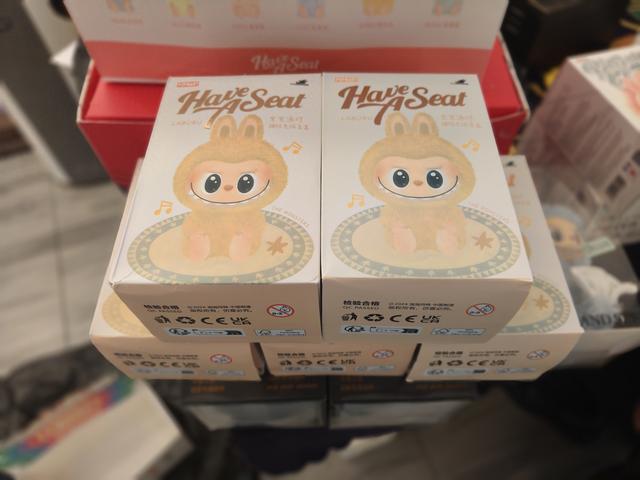
Core Points - A retail store in Haidian District was found selling counterfeit "POP MART" blind boxes and plush toys, which were purchased from unofficial online channels and lacked proper anti-counterfeiting labels [1][3] - The counterfeit products were confirmed by the trademark rights holder to be unauthorized, with a total illegal operating amount of 2,322 yuan [3] - The Haidian District Market Supervision Administration confiscated all counterfeit goods, imposed fines, and ordered the store to cease infringement activities [3] Company and Industry Summary - The counterfeit products closely resembled authentic "POP MART" items in packaging design and branding, indicating a significant risk of brand dilution and consumer deception [3] - The market supervision authority emphasized the high market recognition of the "POP MART" trademark and warned consumers about the potential health risks associated with low-quality counterfeit goods [3] - Consumers are encouraged to report suspected counterfeit products to maintain a fair and orderly market environment, highlighting the importance of brand protection in the industry [3]


泡泡玛特遇上“李鬼” 海淀区市场监管局查处侵权门店
Bei Jing Shang Bao· 2025-09-22 10:18
Group 1 - The Haidian District Market Supervision Administration conducted an investigation based on consumer reports and seized a batch of counterfeit "Pop Mart" registered trademark blind boxes and plush accessories from a retail store [1] - The seized products were found to be highly similar to genuine products but were poorly made and lacked proper anti-counterfeiting labels, confirmed by professional identification from the trademark rights holder [1] - The involved merchant purchased the counterfeit goods from unofficial online channels and sold them at prices lower than the genuine products, with a total illegal operating amount of 2,322 yuan [1] Group 2 - The Haidian District Market Supervision Administration imposed administrative penalties on the merchant, including confiscation of all infringing goods and a fine, and ordered the immediate cessation of infringing activities [1] - The confiscated infringing goods will be legally destroyed, and the administration will trace the supply chain to identify upstream suppliers [1]
北京市市场监管部门查处侵犯“泡泡玛特”商标专用权案
Bei Jing Ri Bao Ke Hu Duan· 2025-09-22 09:25
Core Points - The Haidian District Market Supervision Administration has taken legal action against a retail store for selling products that allegedly infringe on the registered trademark rights of "Pop Mart" [1] - The infringing products, including blind boxes and plush keychains, were found to closely resemble genuine Pop Mart products in design and branding, but lacked proper anti-counterfeiting measures [1] - The total illegal operating revenue from the sale of these infringing goods amounted to 2,322 yuan [1] Consumer Advisory - The "Pop Mart" trademark and related products have high market recognition, while infringing products often exhibit poor material quality and craftsmanship, posing potential health risks to consumers [2] - Consumers are encouraged to report suspected infringing products by calling the market supervision hotline at 12315 or 12345 to help maintain a fair market environment [2] Business Advisory - The Beijing Market Supervision Administration advises businesses to strictly adhere to the Trademark Law of the People's Republic of China and related regulations, avoiding the procurement and sale of unauthorized or infringing products [3]
泡泡玛特-尝试量化 Labubu 风险
2025-09-22 01:00
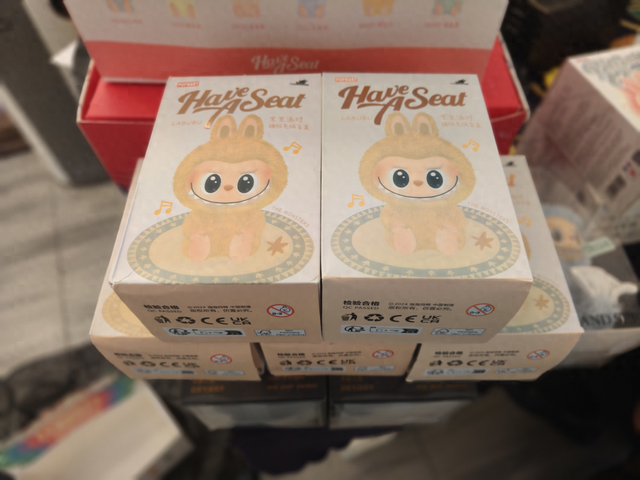
Summary of Pop Mart (9992 HK) Conference Call Company Overview - **Company**: Pop Mart (9992 HK) - **Industry**: Specialty Retail - **Market Cap**: HKD 344.33 billion (USD 44.26 billion) [17] Key Points and Arguments 1. Share Performance and Market Concerns - Pop Mart's share price has underperformed the HSI index by 27 percentage points since its peak in August, primarily due to declining resale prices of Labubu and weakening momentum in the US market during the low season [2][12] 2. Supply and Demand Dynamics of Labubu - Management indicated that Pop Mart's monthly plush manufacturing capacity will increase to 50 million pieces by year-end, a tenfold increase from the beginning of the year, raising concerns about potential oversupply [3] - Estimated average sales of Labubu plush toys per member in mainland China are projected to be 0.99 in 2025, with expectations to rise to 1.23 in 2026, supporting a mid-20s growth rate in Labubu plush sales despite flat membership growth [3][23] - Labubu plush toys are expected to account for 40% of Pop Mart's plush capacity in 2025, with diversification into other IPs anticipated to reduce this percentage in 2026 [3] 3. Globalization and Growth Potential - Pop Mart is expected to have 185 stores overseas by 2025, compared to 443 in China, with overseas sales contributing 40% of total revenue in 1H25 [3] - The company has launched 29 plush products in 2025 YTD, with only 21% from Labubu, down from 50% in 4Q24, indicating a diversification strategy [25] 4. Valuation and Comparison with Peers - Pop Mart's stock is trading at 2025e/26e PEs of 27x/21x, with a PEG ratio of 0.7 based on a net profit CAGR of 30% over 2025e-27e [5] - In comparison, global peers trade at average 2025e/26e PEs of 31x/32x, suggesting Pop Mart is undervalued relative to its peers [5][30] 5. Target Price and Financial Projections - The target price remains unchanged at HKD 379.00, implying a 47.8% upside from the current share price of HKD 256.40 [6][12] - Financial projections indicate a revenue CAGR of 29.9% from 2025e to 2027e, with overseas revenue expected to grow at 47.2% during the same period [36] 6. Risks and Challenges - Potential risks include supply chain issues, excessive scalper markups, and competition from new market entrants [38] - The company faces challenges in maintaining exclusive licensing agreements and potential reputational damage from plagiarized products [38] 7. Labubu's Market Position - Labubu has emerged as a global pop toy icon, akin to Kaws and Bearbrick, with its crossover with global brands only beginning in 2024, suggesting that it is premature to declare a peak in its popularity [4][28] 8. Financial Metrics - Projected net profit for 2025 is CNY 11.04 billion, with a net profit margin of 33.4% [37] - The company expects to maintain a strong EBITDA margin of around 44% through 2027 [37] Additional Important Insights - The report emphasizes that Pop Mart's success is not solely dependent on Labubu, highlighting the importance of its broader product portfolio and international expansion [12][26] - The decline in Labubu's resale prices is viewed as a healthy adjustment, allowing the company to sell products directly to consumers [33] This summary encapsulates the critical insights from the conference call, focusing on the company's performance, market dynamics, growth potential, and associated risks.
泡泡玛特的弱势_你需要了解的情况;维持买入评级
2025-09-22 01:00
Summary of Pop Mart Conference Call Company Overview - **Company**: Pop Mart - **Industry**: Toys - **Description**: Pop Mart is China's leading pop toy company, focusing on IP production and retail through direct-to-consumer channels, with 571 retail stores across 18 countries as of 1H25 [12][8]. Key Points and Arguments Stock Performance and Valuation - **Current Stock Price**: 259.00 HKD - **Price Objective**: 400.00 HKD - **Stock Correction**: The stock has corrected 24% since the end of August, while the Hang Seng Index (HSI) increased by 6% [1][8]. - **Valuation Metrics**: The stock trades at 28x/20x P/E for 2025-26E, which is 11%/36% below its historical average of 31x [4]. Intellectual Property and Collaborations - **Artist Collaboration**: The collaboration between Labubu and Moynat (part of LVMH) is viewed positively, enhancing Labubu's IP and fashion appeal. Ownership of The Monsters IP has shifted to Pop Mart, with a constructive relationship maintained with the artist [2]. - **Second-Hand Market Trends**: Management expects a healthier long-term trend for second-hand prices, with popular items potentially commanding price premiums, while niche items may see prices fall below retail [3]. Market Dynamics and Consumer Trends - **Consumer Behavior**: There has been a rotation from new consumption to internet stocks, impacting flow dynamics. However, fundamentals and valuations remain crucial [4]. - **Sales Growth**: Recent data shows strong same-store sales growth (SSSG) of 64% in July and 49% in August for offline sales, and 76% YoY growth for online sales [14][17]. Future Catalysts - **Upcoming Product Releases**: Anticipated catalysts include Halloween-themed product launches in October and a 3Q operational update expected in late October [5]. - **Expansion Plans**: Continuous flagship store openings are expected to drive growth, particularly in the US market, which is anticipated to enter a strong high season [14]. Financial Projections - **Net Income Estimates**: Projected net income (adjusted) for 2025 is 11,482 million HKD, with a significant year-on-year growth of 237.4% [10]. - **Earnings Per Share (EPS)**: Expected EPS for 2025 is 8.62 HKD, reflecting a 215.8% increase from the previous year [10]. - **Free Cash Flow**: Free cash flow per share is projected to reach 5.27 HKD by 2025 [10]. Risks and Challenges - **Product Lifecycle**: Anticipating product lifecycle challenges may be more difficult than expected [29]. - **IP Management**: Risks associated with maintaining IP license agreements and potential delays in overseas operations due to cultural differences [29]. - **Competition**: Intensifying competition and key personnel risks are also noted as potential challenges [29]. Additional Important Information - **Market Capitalization**: Approximately 347,822 million HKD with a free float of 55.1% [8]. - **Return on Equity (ROE)**: Projected ROE for 2025 is 78.2% [8]. - **Debt Position**: The company has a net debt to equity ratio of -79.5% as of December 2024, indicating a strong cash position [8]. This summary encapsulates the key insights and financial metrics discussed during the conference call, providing a comprehensive overview of Pop Mart's current standing and future outlook in the toy industry.
售价数万、毛利超90%,AI玩具跑出下一个泡泡玛特?
3 6 Ke· 2025-09-22 00:58
Core Insights - The AI toy industry is experiencing significant investment interest, with companies like Haivivi raising substantial funding and attracting numerous investors, indicating a potential new market boom [1][2][4] - The market is expected to grow rapidly, with projections estimating a rise from $42.15 billion in 2025 to $224.75 billion by 2034, reflecting a compound annual growth rate (CAGR) of 20.48% [11] - Despite the hype, many startups in the AI toy sector face challenges, with a high failure rate and some companies already exiting the market due to unsustainable business models [13][14] Investment Trends - Haivivi completed a Series A funding round of 200 million yuan, marking its second round of financing within four months and setting a record for AI toy funding [1] - The AI toy sector has attracted nearly 100 investment institutions, including major players like Sequoia and ByteDance, indicating strong capital interest [1][2] - The trend of high-profile executives from leading tech companies starting AI toy ventures is notable, with founders from companies like Alibaba and Baidu leading successful fundraising efforts [4][5] Market Dynamics - The AI toy market is diversifying its target audience, expanding from children to include young adults and seniors, with a business model primarily based on hardware sales and subscription services [9] - Pricing for AI toys varies widely, with most products priced between 300-400 yuan, while high-end models can reach tens of thousands of yuan, reflecting a strong correlation between product features and pricing [9][7] - The profit margins for AI toys are significantly higher than traditional toys, with some products achieving gross margins exceeding 90% [7][9] Challenges and Risks - Many companies in the AI toy space are struggling with high costs and low market acceptance, leading to concerns about the sustainability of the business model [10][11] - The industry is characterized by a high rate of failure, with reports indicating that only a small fraction of AI toy startups are surviving [13][14] - The reliance on technology without a clear emotional connection or content strategy may hinder the long-term success of AI toy companies [14]
这届年轻人,正在买「没用」的东西续命
创业邦· 2025-09-22 00:09
Core Viewpoint - The article discusses the rise of the "emotional economy," highlighting how consumers are increasingly willing to spend on seemingly useless items that fulfill emotional needs, such as collectibles and novelty products [8][30][58]. Group 1: Market Trends - The launch of the mini Labubu figure by Pop Mart sold out in under five minutes, with resale prices skyrocketing to 300 yuan per piece, indicating a strong demand for collectible toys [4][9]. - Collaborations, such as the Hello Kitty digital camera bucket by KFC, also saw immediate sellouts and significant price increases on secondary markets, reflecting a trend in emotional-driven purchases [6][8]. - The emotional economy is characterized by consumers purchasing items that may not have practical utility but provide emotional satisfaction, as seen in the popularity of various novelty items and collectibles [8][30]. Group 2: Consumer Behavior - Young consumers are increasingly drawn to products that evoke nostalgia or emotional connections, leading to a surge in demand for toys and collectibles [18][68]. - The phenomenon of "emotional spending" is evident in various sectors, including food and beverage, where establishments are enhancing customer experiences to stimulate emotional responses [28][30]. - The emotional economy is not limited to physical products; virtual services and experiences, such as AI companionship and emotional support services, are also gaining traction among consumers [54][58]. Group 3: Economic Impact - The emotional economy in China is projected to reach a market size of 23,077.67 billion yuan in 2024, with expectations to exceed 45,000 billion yuan by 2029, indicating significant growth potential [58]. - Interest-driven consumption among young people accounts for nearly 30% of their spending, with key categories including pets, trendy toys, gaming, and travel [32][34]. - The rise of emotional spending is occurring against a backdrop of declining marriage and birth rates, with pet-related spending seeing substantial growth, such as an 800% increase in cat food sales during last year's Double 11 shopping festival [34][37].
良心回归还是引流诱饵?泡泡玛特新品定价59元 网友:听劝了
Sou Hu Cai Jing· 2025-09-20 13:53
Core Insights - The launch of the "Starry People Delicious Moments" plush series at a price of 59 yuan marks the lowest price in the brand's history for plush products, responding to consumer complaints about previous high prices [1] - The price adjustment has sparked significant consumer interest, with over 100,000 views on the product preview within an hour and 13,000 reservations for the live stream, indicating a revitalization of the sluggish blind box market [1] Pricing Strategy - The recent price cuts are seen as a direct response to consumer demands, contrasting with previous price increases where the blind box price rose from 59 yuan to 69 yuan in 2021, and the overseas Labubu series saw a nearly 30% increase to 27.99 USD [3] - The official rationale for price increases has been attributed to rising raw material costs and upgraded craftsmanship, although analysis suggests that raw material costs account for only about 20% of the pricing, indicating a market premium testing [3] Market Response - The release of the SKULLPANDA "Sleepless Theater" plush at 159 yuan saw a drastic drop in consumer interest, with queue numbers falling to fewer than 10, contrasting sharply with previous high-demand scenarios [6] - The rapid decline in sales from 93,000 to below 1,000 within 44 minutes highlights a shift towards more rational consumer behavior [6] Consumer Behavior Insights - There is a clear divide in consumer sentiment, with fans responding positively to low-priced plush items while showing resistance to high-priced gold items, indicating a threshold for emotional premium tolerance [7] - The average decision-making time for blind box purchases is only 17 seconds, while gold purchases require a 14-day comparison period, emphasizing the different consumer motivations [9] Strategic Pricing Model - The company is restructuring its pricing strategy into two parallel paths: attracting new users with low-priced items while guiding them towards higher-priced derivatives through brand loyalty [10] - The successful pre-order volume for the 59 yuan plush validates the strategy of using basic products to maintain traffic while leveraging limited editions to build brand prestige [10] - The strategy includes targeting high-net-worth users with luxury items like gold and limited sculptures while expanding the user base with entry-level products priced at 59 yuan [10]
北水成交净买入98.38亿 北水逢低抢筹山高控股超22亿港元
Zhi Tong Cai Jing· 2025-09-20 04:18
Group 1 - Northbound capital recorded a net purchase of 9.838 billion HKD on September 19, with 5.283 billion HKD from the Shanghai Stock Connect and 4.555 billion HKD from the Shenzhen Stock Connect [2] - The most net bought stocks included Shankai Holdings (00412), Alibaba-W (09988), and the Tracker Fund of Hong Kong (02800) [2] - The most net sold stocks were Tencent (00700), Xiaomi Group-W (01810), and Longi Green Energy (06869) [2] Group 2 - Alibaba-W had a net inflow of 4.73 billion HKD, with a buy amount of 37.49 billion HKD and a sell amount of 32.76 billion HKD [3] - Semiconductor stocks, including SMIC (00981) and Huahong Semiconductor (01347), saw net purchases of 3.08 billion HKD and 2.37 billion HKD respectively, driven by optimistic market sentiment [7] - Longi Green Energy (06869) experienced a net outflow of 690.83 million HKD, indicating market concerns regarding its performance [3][8] Group 3 - Shankai Holdings (00412) received a net purchase of 22.4 billion HKD, attributed to its compliance with public shareholding regulations [6] - The report highlighted that Alibaba's new AI chip development has surpassed Nvidia's A800, contributing to its positive market outlook [6] - Longi Green Energy's recent announcement indicated that its products related to data centers, particularly hollow-core fibers, are still in early stages of market adoption [8]



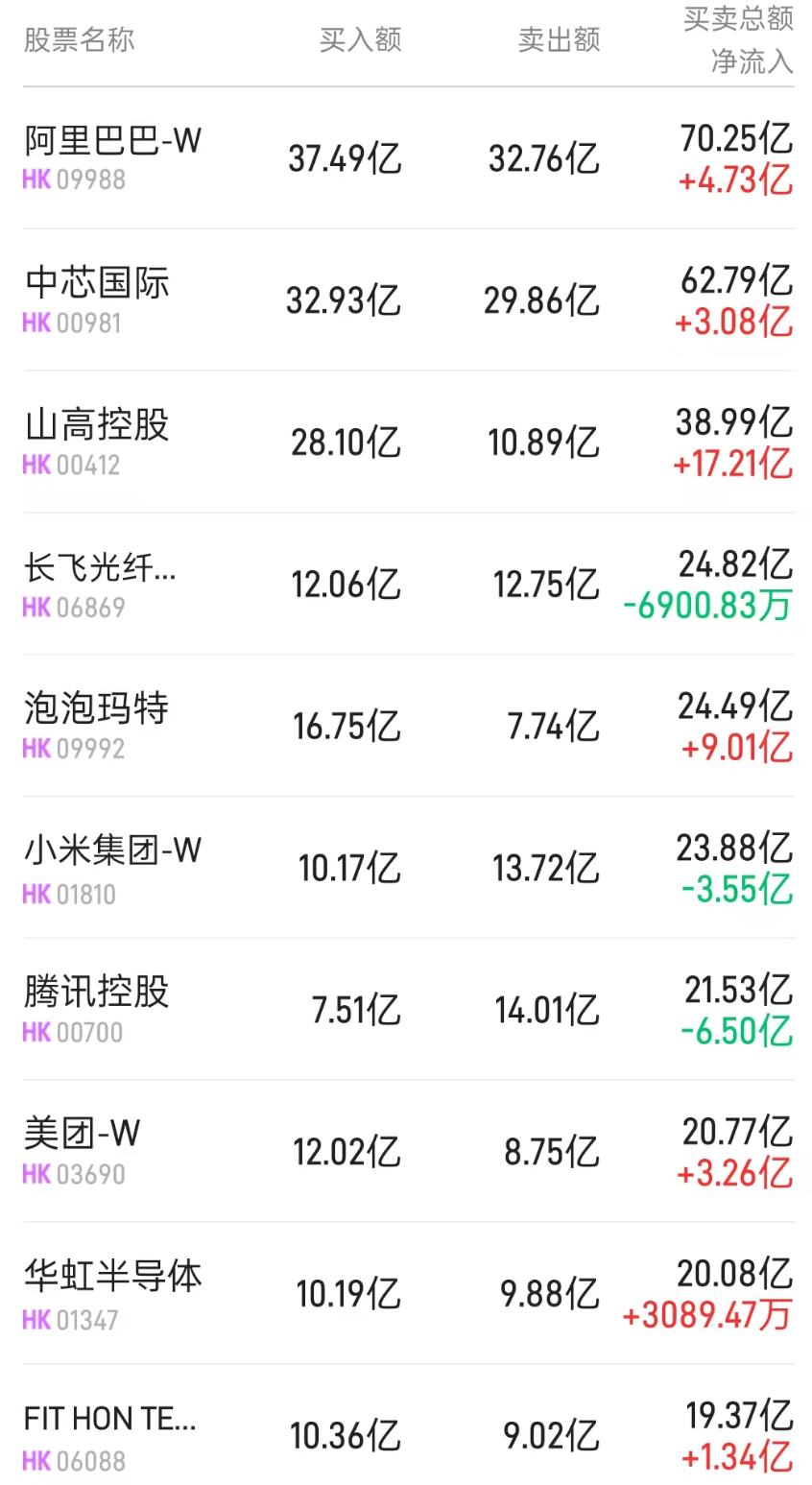
南向资金今日成交活跃股名单(9月19日)
Zheng Quan Shi Bao Wang· 2025-09-19 13:47
Core Insights - The Hang Seng Index closed flat on September 19, with southbound trading totaling HKD 153.72 billion, comprising HKD 81.78 billion in buying and HKD 71.94 billion in selling, resulting in a net inflow of HKD 9.84 billion [1] Trading Activity - Southbound trading through the Stock Connect (Shenzhen) recorded a total of HKD 55.47 billion, with buying at HKD 30.01 billion and selling at HKD 25.46 billion, leading to a net inflow of HKD 4.55 billion [1] - Southbound trading through the Stock Connect (Shanghai) saw a total of HKD 98.25 billion, with buying at HKD 51.76 billion and selling at HKD 46.48 billion, resulting in a net inflow of HKD 5.28 billion [1] Active Stocks - Alibaba-W was the most actively traded stock with a total transaction amount of HKD 115.81 billion and a net inflow of HKD 17.27 billion [1] - Other notable stocks included SMIC with a transaction amount of HKD 96.75 billion and a net inflow of HKD 9.30 million, and Sany Heavy Industry with a transaction amount of HKD 52.90 billion and a net inflow of HKD 22.40 billion [1][2] Continuous Net Buying - Alibaba-W and Meituan-W were among the stocks with the longest streak of net buying, with Alibaba-W seeing a total net inflow of HKD 57.83 billion over 21 consecutive days, while Meituan-W had a net inflow of HKD 5.75 billion over 5 days [2]

