
CITIC Securities Co., Ltd.(600030)

Search documents
A股,重要调整!今日实施!券商集体通知
券商中国· 2026-01-18 23:33
Core Viewpoint - The adjustment of the financing margin ratio from 80% to 100% for new contracts is aimed at controlling the leverage in the market and preventing excessive risk accumulation, with the implementation starting from January 19, 2026 [1][5]. Group 1: Regulatory Changes - The China Securities Regulatory Commission has approved the adjustment of the financing margin ratio, which will now require investors to provide 100% margin for new financing contracts starting January 19, 2026 [1]. - Major securities firms, including CITIC Securities and Galaxy Securities, have announced that the new margin requirement will apply only to new contracts opened after the effective date, while existing contracts will remain under the previous 80% margin requirement [2][3]. Group 2: Market Impact - The increase in the financing margin ratio means that investors will need to use more of their own funds for new financing transactions, effectively reducing the leverage ratio from 1.25 to 1 [3][5]. - The adjustment is expected to have limited impact on existing financing demand, as the average maintenance margin ratio in the market is around 288%, indicating that most clients do not fully utilize their leverage [5]. Group 3: Historical Context - The financing margin ratio has undergone several adjustments historically, reflecting a dynamic regulatory approach aimed at balancing market activity and risk control [6]. - This latest adjustment is seen as a step towards the maturity of the margin financing system, emphasizing the importance of risk management in the capital market [6].





抢眼!净利大增超400% 上市券商业绩或全面爆发
Zheng Quan Shi Bao· 2026-01-18 18:43
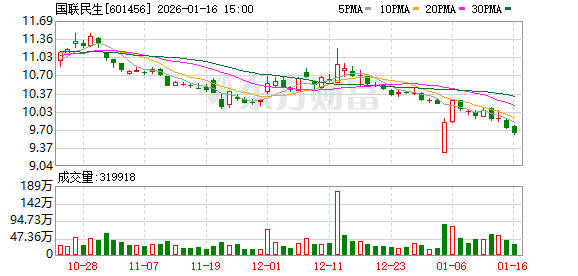
近日,上市券商陆续披露2025年业绩预告或快报,"牛市旗手"上一年度的表现也逐一揭开谜底。 根据相关券商发布的公告,国联民生(601456)预计2025年实现归母净利润20.08亿元,同比大增约 406%;中信证券(600030)预计2025年实现归母净利润超300亿元,同比增长38.46%。 2025年,中国资本市场整体呈现上行趋势,市场交投活跃,A股主要指数均实现上涨,这无疑让投资者 对券商的整体业绩表现多了几分期待。有券商分析师预计,2025年43家上市券商扣非净利润合计或高达 2167亿元,同比增长55%。 净利大增逾4倍太抢眼 1月18日,国联民生公告称,经公司财务部门初步测算,预计2025年度实现归属于母公司所有者的净利 润20.08亿元,与上年同期(法定披露数据)相比,将增加人民币16.11亿元,同比增长406%左右。 招商证券(600999)非银首席分析师郑积沙预计,2025年43家上市券商扣非净利润合计或高达2167亿 元,同比增长55%。分业务来看,根据2025年全年日均股基成交额及两融成交额来看,预计经纪和信用 业务收入或分别同比增长50%、43%;投行方面,2025年A股IPO/再融资 ...

保荐机构扩容 中小券商强化投行服务谋突围
Zheng Quan Ri Bao· 2026-01-18 16:54
Core Viewpoint - The approval of Shanghai Securities' sponsorship business license by the China Securities Regulatory Commission is expected to enhance the firm's investment banking service system and open new avenues for business development [1]. Group 1: Business Development - Shanghai Securities, established in 2001 with a registered capital of 5.327 billion yuan, has a total asset of 75.539 billion yuan as of mid-2025, reflecting a 3.63% increase year-on-year [2]. - In the first half of 2025, Shanghai Securities achieved an operating income of 1.526 billion yuan, a year-on-year growth of 53.73%, and a net profit of 706 million yuan, up 70.03% year-on-year [2]. - The newly acquired sponsorship business qualification is anticipated to inject new momentum into Shanghai Securities' investment banking operations, enhancing revenue sources and improving income structure [2]. Group 2: Competitive Landscape - The competitive landscape shows that leading brokers have significant advantages, with industry concentration continuing to rise. In 2025, CITIC Securities led with 43 sponsored projects, followed by Guotai Junan with 41 projects [3]. - The underwriting fees indicate a stark performance disparity among brokers, with CITIC Securities and Guotai Junan exceeding 1 billion yuan in fees, while many others earned less than 200 million yuan [3]. Group 3: Market Trends - The overall development of the investment banking sector is supported by a favorable market and active trading, with total net income from investment banking services for A-share listed brokers reaching 15.53 billion yuan in the first half of 2025, a year-on-year increase of 18.11% [4]. - Despite the positive market conditions, competition remains fierce, with 17 listed brokers experiencing over 30% growth in investment banking income, while 14 brokers saw a decline [4]. Group 4: Differentiation Strategies - In response to intensified competition, smaller brokers are accelerating the exploration of differentiated development paths, focusing on regional markets and specific client groups [4]. - For instance, First Capital aims to leverage shareholder resources to expand its coverage in Beijing and capitalize on opportunities in the bond market, while Northeast Securities focuses on high-growth SMEs [4][5]. - The industry is transitioning from a "channel-driven" model to a "professional-driven" model, emphasizing the importance of specialization and functionality in investment banking services [5].



【十大券商一周策略】回归业绩!主题轮动加快,聚焦这些板块
券商中国· 2026-01-18 15:07
Group 1 - The core viewpoint emphasizes a shift from narrative-driven trends to performance-based evaluations as the market enters the earnings forecast period, with a focus on sectors like chemicals, non-ferrous metals, and power equipment [2][5] - The adjustment of financing margins is seen as a part of counter-cyclical regulation, which does not affect the overall upward market trend but influences market structure [2][6] - The article suggests that a good investment combination should be based on "resources + traditional manufacturing pricing weight estimation," with recommendations to increase allocations in non-bank sectors and high-growth areas like semiconductors [2][6] Group 2 - The article discusses the acceleration of thematic rotation in the market, particularly focusing on domestic semiconductor and power sectors, driven by regulatory actions and increased demand for domestic computing power [3][4] - It highlights the importance of monitoring investor sentiment and market stability, suggesting that the current market may enter a period of volatility with potential for structural differentiation in investments [4][8] - The focus on performance-driven investment strategies is expected to intensify as companies begin to disclose earnings, with a recommendation to prioritize sectors that are likely to benefit from cyclical recovery and technological advancements [5][11] Group 3 - The article notes that the recent increase in financing margins reflects a policy signal aimed at guiding rational investment and maintaining market stability, which is crucial for the long-term bullish outlook [7][10] - It emphasizes that while the market may face short-term pressures, the underlying fundamentals and supportive policies are expected to sustain a gradual upward trend in the market [8][9] - The discussion includes the potential for new growth drivers post-holiday, with a focus on sectors like electronics, power equipment, and non-ferrous metals, as well as the ongoing interest in commercial aerospace [9][12] Group 4 - The article indicates that the AI industry chain is becoming a focal point for investment, with a notable shift in capital towards sectors related to AI applications and computing power [12] - It suggests that despite some funds exiting high-flying sectors, liquidity remains strong, allowing for continued investment in less leveraged sectors like chemicals and home appliances [12] - The overall sentiment is that the market is transitioning from rapid growth to a more stable and sustainable pace, with a focus on sectors that can provide solid returns amidst changing market dynamics [10][11]

大赚超400%!“牛市旗手”,业绩爆发!
券商中国· 2026-01-18 15:07
Core Viewpoint - The article highlights the significant performance growth of major securities firms in China, indicating a bullish trend in the market, with expectations of continued strong earnings in 2025 due to various factors including market conditions and strategic business integrations [1][5]. Group 1: Company Performance - Guolian Minsheng Securities announced an expected net profit of 2.008 billion yuan for 2025, representing a year-on-year increase of approximately 406% [2][3]. - CITIC Securities reported a net profit of 30.051 billion yuan for 2025, a year-on-year growth of 38.46% [4]. - Southwest Securities anticipates a net profit between 1.028 billion yuan and 1.098 billion yuan for 2025, reflecting a growth rate of 47% to 57% [4]. Group 2: Market Trends - The overall capital market in China is experiencing an upward trend, with increased trading activity and investor confidence, contributing to the strong performance of listed securities firms [3]. - Analysts predict that the combined net profit of 43 listed securities firms could reach 216.7 billion yuan in 2025, marking a 55% year-on-year increase [5]. Group 3: Business Segments - The growth in earnings is attributed to significant increases in brokerage, investment banking, and wealth management services, with brokerage and credit business revenues expected to grow by 50% and 43% respectively [5]. - Investment banking revenues are projected to increase by approximately 27% in 2025 due to a rise in A-share IPOs and refinancing activities [5]. Group 4: Regulatory Environment - Recent regulatory changes, including the introduction of a new derivative trading supervision management approach, are expected to enhance the development of derivative products and improve market stability [7]. - Adjustments to financing margin ratios are anticipated to bolster market resilience and support the long-term growth of securities firms' credit businesses [7][8].

净利大幅预增 超400%!又一券商预喜
Zhong Guo Zheng Quan Bao· 2026-01-18 14:21
1月18日下午,国联民生发布《2025年度业绩预增公告》。公司预计2025年度实现归属于母公司所有者 的净利润20.08亿元,与上年同期(法定披露数据)相比,将增加16.11亿元,同比增长约406%。 图片来源:公司公告 此前,中信证券、西南证券分别披露业绩快报、业绩预告,2025年受益于资本市场活跃,各项业务显著 增长,业绩得以提升。其中,中信证券2025年净利润达300.51亿元。 国联民生披露的公告显示,预计2025年度实现归属于母公司所有者的扣除非经常性损益的净利润19.44 亿元,与上年同期(法定披露数据)相比,将增加15.63亿元,同比增长约410%。 图片来源:公司公告 针对本期业绩预增的主要原因,国联民生表示,报告期内,公司完成通过发行A股股份的方式收购民生 证券股份有限公司控制权,平稳有序推进公司原有业务与民生证券相关业务的高效整合,并将其纳入财 务报表合并范围。 公司主动把握市场机遇,积极探索科技、金融与产业的深度融合,以"协同赋能"和"内生增长"为主线提 升综合金融服务能力,证券投资、经纪及财富管理等业务条线实现显著增长,同时由于上年同期比较基 数较小,本期经营业绩同比大幅提升。 此前也 ...

非银行金融行业周报:高市场活跃度延续,保险基本面仍维持上升趋势-20260118
SINOLINK SECURITIES· 2026-01-18 11:58
Investment Rating - The report maintains a positive recommendation for the insurance sector, suggesting a favorable outlook for both short-term and long-term performance [5]. Core Insights - The report highlights the restructuring of the trillion-yuan health insurance market, with medical insurance continuing to dominate, projected to reach a premium of 944 billion yuan by November 2025, reflecting a year-on-year growth of 2.39% [4]. - The report emphasizes the strong performance of securities firms, with CITIC Securities forecasting a revenue of 74.83 billion yuan for 2025, a year-on-year increase of 28.75%, and a net profit of 30.05 billion yuan, up 38.46% [3][44]. - The report identifies three main investment themes: high-quality securities firms with significant valuation and performance mismatches, companies in the technology sector benefiting from venture capital, and diversified financial firms with impressive growth rates [3]. Summary by Sections Securities Sector - The report notes an increase in the financing margin ratio from 80% to 100%, aimed at promoting market stability and resilience, with a controlled overall impact expected [2]. - Two securities firms reported strong earnings forecasts for 2025, with CITIC Securities showing significant growth in revenue and net profit due to high market activity [2][44]. Insurance Sector - The health insurance market is expected to see medical insurance as the main product, with a projected market share of approximately 46% by 2025, growing at nearly 7% [4]. - The report indicates that the C-end business will dominate the health insurance market, with a near 70% share by 2025, driven by trends such as expanding coverage and targeting younger demographics [4]. - The report anticipates that medical insurance will be the primary growth driver, influenced by factors like population aging and medical inflation [4]. Investment Recommendations - The report suggests focusing on three main lines: high-quality securities firms with valuation mismatches, technology firms benefiting from venture capital, and diversified financial firms with strong growth [3]. - It highlights the positive short-term outlook for the insurance sector, with expectations of high performance in Q1 due to favorable market conditions [5].




金融行业周报(2026、01、18):央行宣布结构性降息,衍生品交易监管更规范-20260118
Western Securities· 2026-01-18 11:43
Investment Rating - The report does not explicitly state an overall investment rating for the financial industry, but it provides specific recommendations for various sectors and companies within the industry [3][21]. Core Insights - The financial industry experienced a decline this week, with the non-bank financial index down by 2.63%, underperforming the CSI 300 index by 2.06 percentage points. The banking sector saw a decline of 3.03%, also underperforming the CSI 300 index by 2.46 percentage points [1][9]. - The report highlights a structural interest rate cut by the central bank, which is expected to impact various financial sectors, particularly banks and insurance companies. The insurance sector is viewed as being in a critical window for performance and valuation recovery [3][21]. - Regulatory measures have been introduced to stabilize the derivatives market, which is expected to benefit well-capitalized and compliant brokerage firms [2][17]. Summary by Sections 1. Weekly Performance and Sector Insights - The non-bank financial index decreased by 2.63%, with the securities, insurance, and diversified financial indices down by 2.21%, 3.59%, and 1.83% respectively [1][9]. - The banking sector's performance was notably poor, with state-owned banks, joint-stock banks, city commercial banks, and rural commercial banks experiencing declines of 2.20%, 4.08%, 2.40%, and 2.20% respectively [1][9]. 2. Insurance Sector Insights - The insurance sector's index fell by 3.59%, underperforming the CSI 300 index by 3.02 percentage points. The report indicates that regulatory cooling measures have created short-term pressure on the insurance sector, but the long-term outlook remains positive due to asset growth and interest margin recovery [1][13][15]. - Key companies such as China Pacific Insurance, China Life, and New China Life are recommended for investment due to their strong fundamentals and recovery potential [3][16]. 3. Brokerage Sector Insights - The brokerage sector saw a decline of 2.21%, with the report emphasizing the potential benefits of new regulatory measures aimed at enhancing the derivatives market. The focus is on larger, well-capitalized firms that can navigate the evolving regulatory landscape [2][17]. - Recommendations include major brokerages like Guotai Junan and Huatai Securities, which are expected to benefit from the anticipated recovery in profitability and valuation [2][18]. 4. Banking Sector Insights - The banking sector's index fell by 3.03%, with the central bank's recent interest rate cut expected to support the sector's performance in the long run. The report suggests that banks may see a gradual recovery in net interest income and profitability [3][21][22]. - Specific banks such as Hangzhou Bank and Ningbo Bank are highlighted as potential investment opportunities, particularly those with previously undervalued positions [3][22].


中信证券:证券行业在投行业务、衍生品等业务领域有望迎来重大结构性机遇
Zheng Quan Shi Bao Wang· 2026-01-18 10:33
Core Viewpoint - Inclusive reform is identified as the core content of capital market reform during the "14th Five-Year Plan" period, emphasizing the construction of a capital market system based on "expanding financing + strengthening investment + precise regulation + deep opening" [1] Group 1: Capital Market Development - Continuous strengthening of capital market institutional supply will support technological innovation, optimize industrial structure, enhance resident wealth, and build a strong financial nation [1] - The securities industry is expected to encounter significant structural opportunities in investment banking, derivatives, wealth management, and internationalization [1] Group 2: Investment Recommendations - Two investment themes are suggested: 1) Leading securities companies aiming to become international first-class investment banks; 2) Medium to large securities companies with the potential to enter the top tier [1]
2026 权益资产成配置香饽饽!复胜资产单日吸金 10 亿;灵均、幻方、诚奇私募、稳博投资、进化论资产等入围百亿量化十强榜单|私募透视镜
Jin Rong Jie· 2026-01-18 10:31
Group 1 - The private equity market in China is experiencing a surge, with a notable single-day fundraising of 1 billion yuan by a hundred billion private equity firm, indicating a continuation of the active issuance trend from 2025 [1] - In 2025, over 12,000 new private securities investment funds were registered, nearly doubling from 2024, with more than 60% of these funds focusing on stock strategies [1] - Nearly 90% of private equity products achieved positive returns in 2025, with an impressive average return rate [1] Group 2 - The A-share and commodity markets performed well in 2025, leading to an average return of approximately 29.38% for macro strategy private equity products [2] - Among private equity firms with over 5 billion yuan in scale, top performers included products managed by Jiuxian Investment and Honghu Liang Wentao, with returns exceeding 136.14% [2] - The top private equity firms in the subjective stock category achieved an average return of over 60% in the past three years, with Dongfang Gangwan leading at 147.27% [2] Group 3 - Quantitative private equity firms saw an average return of about 39% in 2025, with Lingjun Investment topping the performance rankings [3] - The average return for index-enhanced products under Huansheng Quantitative was approximately 56.55%, showcasing strong performance in the quantitative sector [3] Group 4 - The incentive mechanisms in quantitative private equity firms have come under public scrutiny, with reports of year-end bonuses reaching 10 million yuan for researchers [4] - The average return for quantitative long strategies was 39.51%, with some top products exceeding 50%, justifying high bonuses [4] - The competition for talent in the industry has intensified, with salaries for PhDs reaching 1 million yuan and internships at 1,000 yuan per day [4] Group 5 - Goldman Sachs predicts that the Hong Kong capital market will remain active in 2026, with IPO and refinancing volumes above historical averages, particularly in the AI sector, which is considered "bubble-free" [5] - The return of international long-term capital to the market is significant, with participation in IPOs by US funds increasing from 10%-15% to 85%-90% [5] Group 6 - The recent increase in the minimum margin ratio for financing aims to cool market sentiment without altering the long-term positive trend, as the A-share market approaches a transaction volume of 4 trillion yuan [7] - The current market is not exhibiting systemic risks, and the regulatory framework for leverage is more mature compared to previous years [7] Group 7 - The insurance capital long-term investment pilot program has expanded, with 11 funds now operational, focusing on high-dividend stocks in sectors like industrials and utilities [8] - The total scale of the funds under the Honghu Fund series has reached 92.5 billion yuan, with significant participation from various insurance companies [8] Group 8 - CITIC Securities reported a record net profit of 30.051 billion yuan for 2025, marking a year-on-year growth of 38.46%, driven by active capital market conditions [11] - The company served over 17 million clients, with total client assets around 1.5 trillion yuan, reflecting strong growth in brokerage and investment banking services [11]