SAIC MOTOR(600104)

Search documents
多家车企7月交付再创新高新势力阵营销量分化
Zheng Quan Shi Bao· 2025-08-01 17:16
Group 1: Monthly Delivery Performance - Several automakers, including Xpeng, Leapmotor, and Xiaomi, reported record monthly sales in July, with "breakthrough" being a key term in their delivery reports [1] - Leapmotor announced total deliveries of 50,129 vehicles in July, a year-on-year increase of over 126%, marking its first month of delivering over 50,000 vehicles [1] - Xpeng delivered 36,717 new cars in July, representing a year-on-year increase of 229% and a month-on-month increase of 6% [1] Group 2: Company-Specific Highlights - Xiaomi's CEO Lei Jun stated that the company aims to exceed 30,000 vehicle deliveries by July 2025, raising the annual delivery target for 2025 to 350,000 vehicles [1] - BYD reported July sales of 344,300 vehicles, slightly up from 342,400 vehicles in the same month last year, with 177,900 being pure electric vehicles [1] - Great Wall Motors announced July sales of 104,400 vehicles, a year-on-year increase of 14.34% [2] Group 3: New Energy Vehicle Trends - The overall retail market for narrow passenger vehicles in July was approximately 1.85 million units, showing a year-on-year growth of 7.6% [3] - The penetration rate of new energy vehicles reached about 54.6%, with retail sales expected to reach 1.01 million units [3] - Geely's total sales in July reached 237,700 vehicles, a year-on-year increase of 58%, with significant growth in its Galaxy brand [3]






理想大跌小米大增,小鹏创单月新高,零跑首破5万
Zhong Guo Qi Che Bao Wang· 2025-08-01 15:16
Core Insights - Multiple companies reported significant growth in electric vehicle (EV) sales for July, indicating a robust market performance in the EV sector. Group 1: Sales Performance - BYD achieved sales of 344,296 units in July, a slight increase from 342,383 units year-on-year, with overseas sales of passenger cars and pickups reaching 80,178 units, up 159.5% [9] - SAIC-GM-Wuling reported total global sales of 123,341 units, a year-on-year increase of 13.7%, with new energy vehicle sales at 73,901 units, up 50.9% [11] - Leap Motor's sales reached 50,129 units, marking its first month surpassing 50,000 units, with a year-on-year growth exceeding 126% [15] - Xpeng Motors delivered 36,717 vehicles, a year-on-year increase of 229% and a month-on-month increase of 6%, achieving a historical high for monthly deliveries [18] - Li Auto delivered 30,731 vehicles, showing a year-on-year decline of 40% and a month-on-month decline of 15.3% [21] - Xiaomi's deliveries exceeded 30,000 units, driven by the launch of its first electric SUV, YU7 [23] - Deep Blue's sales reached 27,169 units, reflecting a year-on-year growth of 62% [28] - GAC Aion sold 26,557 units, with a strong charging infrastructure supporting its growth [32] - NIO delivered 21,017 vehicles, with a year-to-date growth of 25.2% [36] - Zeekr sold 16,977 units, maintaining a consistent monthly sales performance [38] - Lantu achieved sales of 12,135 units, with a year-on-year increase of 102% [40] - Avita's sales reached 10,062 units, marking a year-on-year growth of 178% [41] - ARCFOX delivered 9,436 units, with a year-on-year increase of 50.35% [45] - Zhiji delivered 7,027 units, with a month-on-month increase of 16.6% [47] - Hongmeng Zhixing's total sales reached 47,752 units, maintaining a leading position among new energy and luxury brands [51] Group 2: Market Trends and Developments - The overall performance of the EV market in July indicates strong consumer demand and competitive dynamics among various manufacturers [2][3] - The introduction of new models and expansion of sales channels, including international markets, are key strategies driving growth for several companies [15][23][28] - The competitive landscape is intensifying, with some companies facing challenges in maintaining growth rates amid increasing market competition [21]



燃油车首搭华为乾崑智驾,全新上汽奥迪A5L Sportback正式上市
Bei Jing Shang Bao· 2025-08-01 14:56
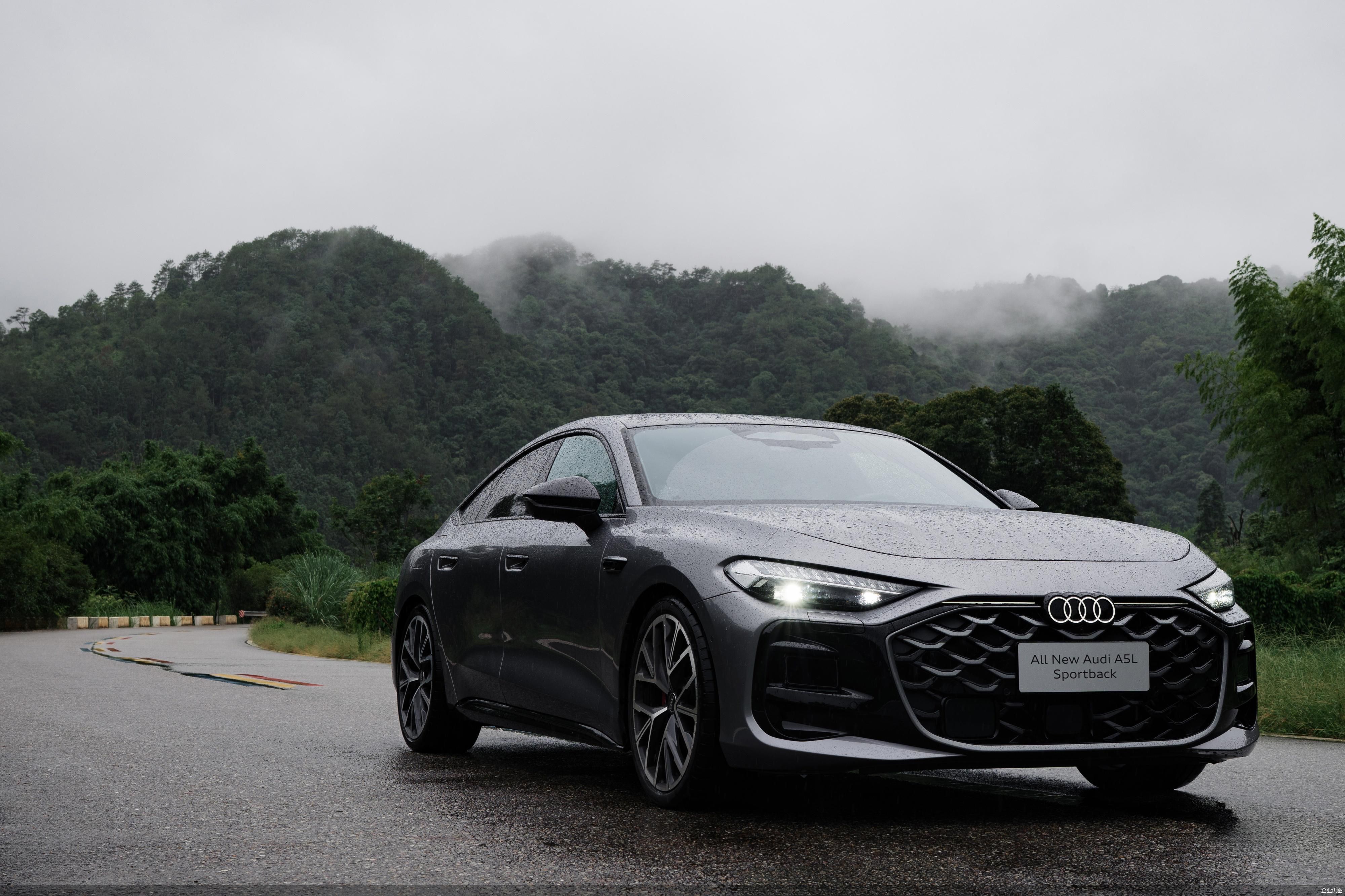
Core Viewpoint - The new SAIC Audi A5L Sportback has been officially launched with a price range of 259,900 to 369,900 yuan after limited-time discounts, featuring six configurations aimed at attracting a younger demographic [2][3]. Group 1: Product Launch and Pricing - The SAIC Audi A5L Sportback is available in six configurations: Luxury, Prestige Quattro, Intelligent, Intelligent Quattro, Flagship, and Flagship Intelligent [2]. - The official price range is set between 279,900 and 399,900 yuan, with promotional prices dropping to 259,900 to 369,900 yuan [2]. Group 2: Design and Features - The A5L Sportback retains classic design elements from the A5 series, including a coupe-like silhouette and frameless doors, while optimizing length for better space utility [7]. - The vehicle offers three sporty front-end designs to cater to the personalized needs of younger consumers, marking the debut of Audi's new performance design language in China [7]. Group 3: Interior and Technology - The interior features a new generation of intelligent luxury cockpit with a five-screen interactive layout, including an 11.9-inch instrument panel and a 14.5-inch central control screen [8]. - The car roof is equipped with a PDLC adjustable panoramic skylight, offering a maximum lighting area of 0.839 square meters and the ability to switch between transparent and frosted modes within 150 milliseconds [8]. Group 4: Lighting and Smart Features - The A5L Sportback is equipped with new matrix LED headlights and OLED taillights, supporting eight personalized digital signatures [10]. - The interior includes a 30x30 color intelligent ambient light system that can dynamically respond to various driving scenarios [10]. Group 5: Performance and Engineering - Built on the new PPC luxury combustion platform, the A5L Sportback features a fifth-generation EA888 engine with a maximum output of 200 kW and a 0-100 km/h acceleration time of just 5.6 seconds [16]. - The vehicle integrates a Vehicle Motion Manager (VMM) for seamless coordination between intelligent assistance and vehicle control, enhancing driving dynamics [14][16].
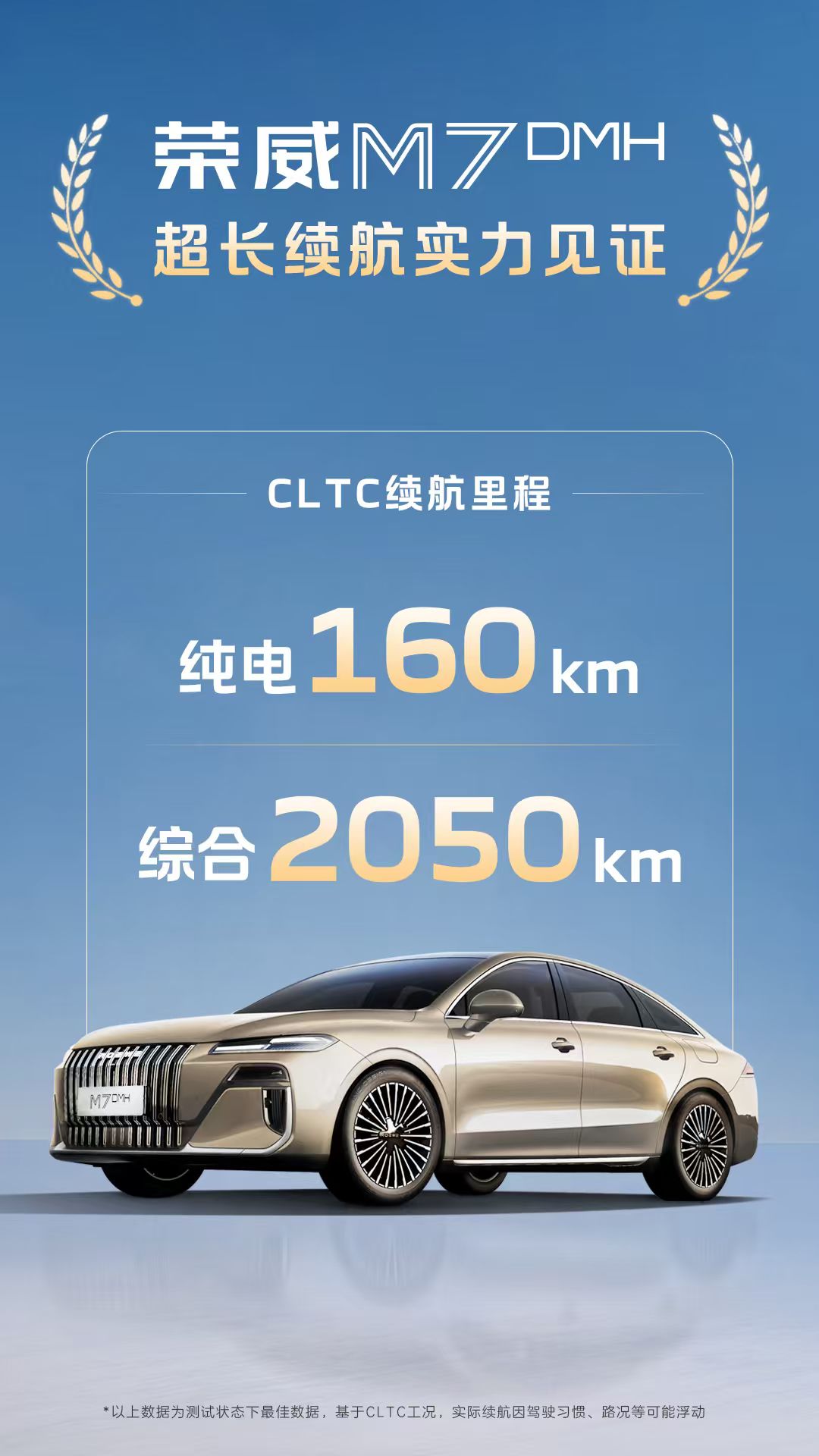
反向虚标!荣威M7 DMH实测纯电续航166.5公里,综合续航突破2050公里
Zhong Guo Jin Rong Xin Xi Wang· 2025-08-01 11:51
Core Viewpoint - The domestic plug-in hybrid vehicle market is becoming increasingly competitive, with "super long range" and "super low fuel consumption" as key focus areas for automakers. However, issues of "range exaggeration" by some brands have raised concerns among consumers. Recently, SAIC Roewe conducted a public range test for its mid-to-large plug-in hybrid sedan, Roewe M7 DMH, achieving a pure electric range that exceeded the official standard by 4% [1][4]. Group 1 - The Roewe M7 DMH achieved a real-world pure electric range of 166.5 kilometers, surpassing the official rating of 160 kilometers, thus meeting the core needs of family users for high-frequency commuting in pure electric mode [1][4]. - The vehicle's low fuel consumption is highlighted, with a fuel consumption rate of only 2.91 liters per 100 kilometers when running out of battery [1]. - The vehicle is designed to provide a cost-effective commuting experience, with a weekly commuting cost of less than 7 yuan based on typical commuting patterns [4]. Group 2 - The Roewe M7 DMH's impressive performance is attributed to its new generation DMH super hybrid system, which integrates multiple leading technologies for enhanced power, economy, and reliability [6]. - The DMH system features a "six-in-one" upgrade of the PICU, allowing for precise energy management and efficiency improvements across the vehicle [6]. - The vehicle is positioned as a "superior mid-to-large national car," offering not only long range and low fuel consumption but also upgrades in design, comfort, and intelligence for families [8].
汽车行业深度报告:智能汽车产业链与具身智能产业链协同发展
Guoyuan Securities· 2025-08-01 11:12
Investment Rating - The report does not explicitly state an investment rating for the automotive industry or the embodied intelligence sector Core Insights - The embodied intelligence sector is entering a rapid implementation phase as of 2025, with multiple manufacturers planning mass production of robots across various applications [12][16][18] - The automotive industry is actively integrating embodied intelligence into its supply chain, leveraging existing technological advancements and manufacturing capabilities [34][37] - Government policies across various provinces are increasingly supportive of the embodied intelligence and robotics industries, aiming to foster innovation and market expansion [17][21][18] Summary by Sections 1. Rapid Development of Embodied Intelligence - The period from 2020 to 2025 marks a significant evolution in embodied intelligence, driven by advancements in AI and robotics, particularly following the release of OpenAI's ChatGPT3 [11] - Major manufacturers like Tesla and Xiaomi are entering the market, with Tesla predicting a production capacity of over 5,000 units by 2025 and 50,000 units by 2026 [13][16] - The demand for robots in various sectors is projected to grow significantly, with manufacturing being a primary area for automation due to its repetitive tasks [25][27] 2. Integration of Automotive and Embodied Intelligence - The automotive industry is leveraging its existing technological expertise in areas such as sensor fusion and control algorithms to facilitate the development of embodied intelligence [34][37] - Over ten automotive manufacturers are actively pursuing the embodied intelligence sector through self-development and strategic investments [36][37] - The shared supply chain for components like sensors and chips between automotive and robotics sectors is expected to reduce costs and enhance production efficiency [43][49] 3. Government Support and Policy Framework - Various provinces, including Shenzhen and Beijing, have introduced policies to support the development of embodied intelligence, focusing on technology breakthroughs and ecosystem building [17][21][18] - The policies aim to create a conducive environment for innovation, with specific targets for industry scale and technological advancements by 2027 [18][21] - The report highlights a collaborative approach among regions to drive the growth of the embodied intelligence sector, emphasizing the importance of technology and market integration [18][21]


【联合发布】一周新车快讯(2025年7月26日-8月1日)
乘联分会· 2025-08-01 11:04
Core Viewpoint - The article provides a comprehensive overview of upcoming vehicle models set to launch in July and August 2025, detailing specifications, pricing, and market segments for each model [2][4]. Group 1: Upcoming Vehicle Models - Volvo S60 is scheduled for release on July 25, 2025, with a price range of 306,900 to 384,900 CNY, featuring a 2.0T engine and DCT7 transmission [8]. - FAW Car's Pentium Xiaoma will launch on July 27, 2025, priced between 34,900 to 45,900 CNY, and is an A00 hatchback with a pure electric powertrain [16]. - GAC Toyota's Camry is set to debut on July 29, 2025, in the B segment, with engineering changes classified as MCE1 [2]. - Li Auto's Li Xiang i8 will be available on July 29, 2025, as a C SUV, with a price range of 321,800 to 369,800 CNY [24]. - GAC Passenger Vehicle's Trumpchi Xiangwang M8 will launch on July 30, 2025, priced at 329,900 CNY, featuring a 2.0T plug-in hybrid engine [31]. - Chery's Jetour Dasheng will be released on July 30, 2025, with prices ranging from 109,900 to 127,900 CNY, and is classified as an A SUV [39]. - Changan Mazda's Mazda3 Axela will launch on July 30, 2025, with a price range of 89,900 to 141,900 CNY [47]. - BYD's Yuan UP is set for release on July 31, 2025, priced at 74,800 CNY, and is an AO SUV with a pure electric powertrain [55]. - NIO's Lido L90 will be available on August 1, 2025, with prices ranging from 265,800 to 299,800 CNY, classified as a D SUV [63]. - Changan's Deep Blue S05 will launch on August 1, 2025, with a price range of 129,900 to 149,900 CNY, and is an A SUV [71]. - Lincoln's Adventure will be released on August 1, 2025, with prices ranging from 235,800 to 345,800 CNY, classified as an A SUV [79]. - SAIC Volkswagen's Tanyue Xinyu will launch on August 1, 2025, priced at 143,900 CNY, and is an A SUV [87]. - Chery's Tiggo 8 PLUS will be available on August 1, 2025, with prices ranging from 119,900 to 122,900 CNY, classified as a B SUV [95]. Group 2: Technical Specifications - The Volvo S60 features dimensions of 4,778 mm in length, 1,850 mm in width, and 1,437 mm in height, with a wheelbase of 2,872 mm [8]. - The Pentium Xiaoma has dimensions of 3,000 mm in length, 1,510 mm in width, and 1,630 mm in height, with a wheelbase of 1,953 mm [16]. - The Li Xiang i8 measures 5,085 mm in length, 1,960 mm in width, and 1,740 mm in height, with a wheelbase of 3,050 mm [24]. - The Trumpchi Xiangwang M8 has dimensions of 5,217 mm in length, 1,893 mm in width, and 1,823 mm in height, with a wheelbase of 3,070 mm [31]. - The Jetour Dasheng measures 4,600 mm in length, 1,900 mm in width, and 1,685 mm in height, with a wheelbase of 2,720 mm [39]. - The Mazda3 Axela has dimensions of 4,662 mm in length, 1,797 mm in width, and 1,445 mm in height, with a wheelbase of 2,726 mm [47]. - The Yuan UP measures 4,310 mm in length, 1,830 mm in width, and 1,675 mm in height, with a wheelbase of 2,620 mm [55]. - The Lido L90 has dimensions of 5,145 mm in length, 1,998 mm in width, and 1,786 mm in height, with a wheelbase of 3,110 mm [63]. - The Deep Blue S05 measures 4,620 mm in length, 1,900 mm in width, and 1,600 mm in height, with a wheelbase of 2,880 mm [71]. - The Lincoln Adventure has dimensions of 4,612 mm in length, 1,887 mm in width, and 1,630 mm in height, with a wheelbase of 2,711 mm [79]. - The Tanyue Xinyu measures 4,355 mm in length, 1,762 mm in width, and 1,605 mm in height, with a wheelbase of 2,651 mm [87]. - The Tiggo 8 PLUS has dimensions of 4,722 mm in length, 1,860 mm in width, and 1,745 mm in height, with a wheelbase of 2,710 mm [95].
【乘联分会论坛】渝沪汽车工业上半年运行之我见
乘联分会· 2025-08-01 11:04
Group 1: Chongqing Automotive Industry Recovery - Chongqing's GDP for the first half of 2025 reached 1,592.96 billion yuan, with a year-on-year growth of 5.0%, showing a steady improvement [1] - The automotive industry in Chongqing saw an 8.4% increase in value added, contributing 1.7 percentage points to the city's economic growth, up from 0.5 percentage points in the first quarter [1] - New energy vehicle production increased by 19.6%, while automotive parts and accessories grew by 11.5%, indicating a strong recovery in the automotive sector [1][2] Group 2: Investment and Technological Upgrades - Automotive industry investment in Chongqing grew by 12.6%, with technological transformation investments rising by 19.4%, accounting for 33% of industrial investments [2] - The production of new energy vehicles reached 489,300 units, a 25.0% increase, reflecting the ongoing shift towards high-end, intelligent, and green manufacturing [2] Group 3: Shanghai Automotive Industry Improvement - Shanghai's automotive industry generated 402.83 billion yuan in revenue in the first half of the year, a 4.4% year-on-year increase, despite a 10.2% decline in total profits [4][5] - The automotive production in Shanghai was 810,500 units, a 1.4% decrease, but the decline was narrowing compared to previous months [6] Group 4: Market Dynamics and Sales Performance - The retail sales of automotive products in Shanghai showed a positive trend, increasing from 12.46 billion yuan in March to 15.15 billion yuan in June, a growth of 21.5% [7] - New vehicle registrations in June reached 40,900 units, with a year-on-year increase of 15.2%, indicating a recovering market [8] Group 5: Export Performance - Shanghai's automotive exports reached 952,800 units in the first half of the year, a 19.5% increase, accounting for 27% of the national total [8] - Electric vehicle exports from Shanghai reached 257,800 units, with a value of 41.12 billion yuan, highlighting the city's growing role in the electric vehicle market [8] Group 6: Strategic Developments - The establishment of China Changan Automobile Group in July 2023 aims to enhance Chongqing's competitiveness in the automotive sector [3] - The rapid development of Toyota's Lexus new energy project in Shanghai reflects the city's ability to attract significant automotive investments [9]

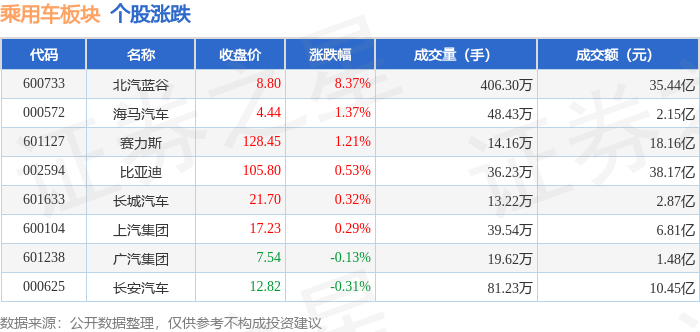
乘用车板块8月1日涨0.75%,北汽蓝谷领涨,主力资金净流入5.63亿元
Zheng Xing Xing Ye Ri Bao· 2025-08-01 08:27
证券之星消息,8月1日乘用车板块较上一交易日上涨0.75%,北汽蓝谷领涨。当日上证指数报收于 3559.95,下跌0.37%。深证成指报收于10991.32,下跌0.17%。乘用车板块个股涨跌见下表: | 代码 | 名称 | 收盘价 | 涨跌幅 | 成交量(手) | 成交额(元) | | --- | --- | --- | --- | --- | --- | | 600733 | 北汽蓝谷 | 8.80 | 8.37% | 406.30万 | 35.44 Z | | 000572 | 海马汽车 | 4.44 | 1.37% | 48.43万 | 2.15亿 | | 601127 | 赛力斯 | 128.45 | 1.21% | 14.16万 | 18.16 Z | | 002594 | 比亚迪 | 105.80 | 0.53% | - 36.23万 | 38.17亿 | | 601633 | 长城汽车 | 21.70 | 0.32% | 13.22万 | 2.87亿 | | 600104 | 上汽集团 | 17.23 | 0.29% | 39.54万 | 6.81亿 | | 601238 | 广汽集团 | 7 ...



上汽集团:与华为合作的尚界第一款车型尚界H5即将于9月正式上市
news flash· 2025-08-01 07:41
Core Viewpoint - SAIC Motor Corporation is set to launch its first model, the Shangjie H5, in collaboration with Huawei in September, featuring advanced driving assistance technology and dual power options [1] Group 1: Product Features - The Shangjie H5 will be equipped with the HUAWEI ADS4 driving assistance system, which includes capabilities such as full-domain driving, parking assistance, and multi-sensing technology [1] - The vehicle offers two power options: a pure electric version with a maximum CLTC range of 655 km and a range-extended version with a comprehensive CLTC range exceeding 1300 km [1] Group 2: Market Positioning - The launch of the Shangjie H5 represents a significant step in the collaboration between SAIC Motor and Huawei, indicating a focus on integrating advanced technology into automotive offerings [1]
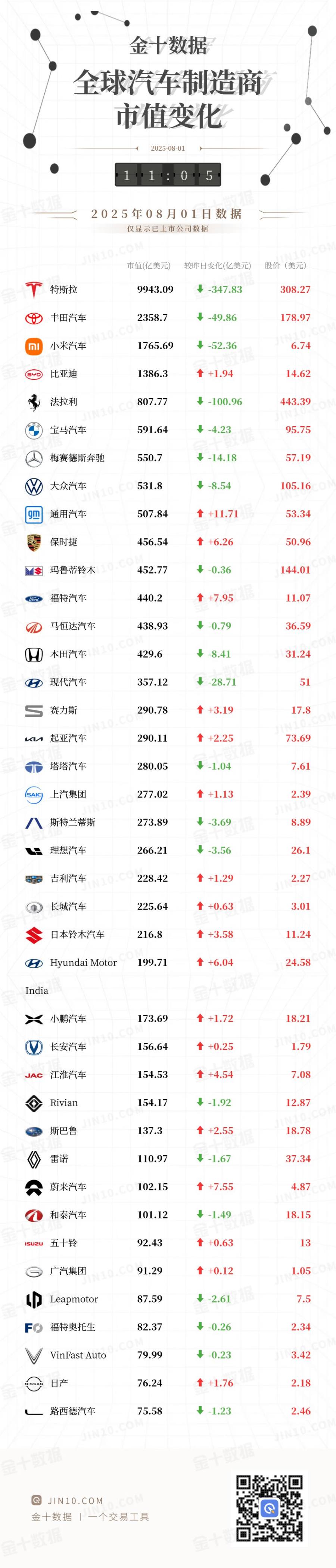
金十图示:2025年08月01日(周五)全球汽车制造商市值变化
news flash· 2025-08-01 03:09
Core Insights - The global automotive manufacturers' market capitalization has shown significant fluctuations as of August 1, 2025, with various companies experiencing both gains and losses in their valuations [1]. Group 1: Market Capitalization Changes - BYD leads with a market capitalization of 1386.3 billion, reflecting an increase of 1.94% [3]. - Ferrari's market capitalization stands at 807.77 billion, with a notable decrease of 100.96 billion [3]. - BMW's market capitalization is 591.64 billion, down by 4.23 billion [3]. - Mercedes-Benz has a market capitalization of 550.7 billion, decreasing by 14.18 billion [3]. - Volkswagen's market capitalization is 531.8 billion, down by 8.54 billion [4]. - General Motors shows a market capitalization of 507.84 billion, with an increase of 11.71 billion [4]. - Ford's market capitalization is 440.2 billion, reflecting an increase of 7.95 billion [4]. Group 2: Notable Performers - Tesla's market capitalization is not explicitly mentioned, but it is implied to be significant within the context of the automotive industry [1]. - Rivian's market capitalization is 154.17 billion, with a decrease of 1.92 billion [5]. - NIO's market capitalization is 102.15 billion, reflecting an increase of 7.55 billion [5]. - Xpeng's market capitalization is 173.69 billion, with an increase of 1.72 billion [5]. - Tata Motors has a market capitalization of 280.05 billion, down by 1.04 billion [4].