TONGWEI CO.,LTD(600438)

Search documents
通威新能源取得柔性支架光伏组件智能安装钢绞线连接及回拉装置专利,实现大跨度连续施工,提高施工效率
Jin Rong Jie· 2025-06-25 04:46
Group 1 - The State Intellectual Property Office of China has granted a patent to Tongwei New Energy Engineering Design Sichuan Co., Ltd. and Tongwei New Energy Co., Ltd. for a device related to the intelligent installation of flexible support photovoltaic components [1] - The patent, titled "Intelligent Installation Steel Strand Connection and Retracting Device for Flexible Support Photovoltaic Components," was applied for on February 2024 and has the announcement number CN223013039U [1] - The device aims to improve construction efficiency by enabling the simultaneous pulling of steel strands and retracting ropes during the installation of photovoltaic panels, facilitating large-span continuous construction [1] Group 2 - Tongwei New Energy Engineering Design Sichuan Co., Ltd. was established in 2015, located in Chengdu, with a registered capital of 100 million RMB [2] - The company has participated in three bidding projects and holds 78 patent records, along with six administrative licenses [2] - Tongwei New Energy Co., Ltd. was founded in 2014, also in Chengdu, with a registered capital of 1.2 billion RMB [2] - This company has invested in 117 enterprises, participated in 15 bidding projects, and holds 72 patents and six trademark records, along with eight administrative licenses [2]

嘉宾风采 |2025年中国(乐山)硅产业链发展大会
中国有色金属工业协会硅业分会· 2025-06-24 11:18
Group 1 - The article discusses the stable development of the silicon industry chain, highlighting the importance of futures and spot market integration [1][14] - It features insights from industry experts with extensive experience in the photovoltaic sector, emphasizing the significance of market research and technological advancements [5][10][17] Group 2 - The event is organized by the China Nonferrous Metals Industry Association, indicating a strong institutional backing for discussions on market trends and industry developments [1][14] - The participation of experts from various backgrounds suggests a comprehensive approach to understanding the global photovoltaic market outlook and industry trends [10][17]

开“卷”?能源巨头涌入钙钛矿
经济观察报· 2025-06-24 11:10
Core Viewpoint - The enthusiasm for perovskite technology among companies stems from the realization that investments in crystalline silicon are often unprofitable, while the photovoltaic market presents significant opportunities, making perovskite the "only choice" [1][4]. Industry Trends - In the past three years, major photovoltaic companies and energy firms have entered the perovskite sector, with expectations for mass production to begin in 2025 [7]. - Companies like GCL-Poly and several startups are building gigawatt-level production lines, indicating a strong commitment to perovskite technology [3][8][9]. - Leading crystalline silicon manufacturers, including LONGi Green Energy and Trina Solar, have also invested in perovskite-silicon tandem cell research, with some already establishing hundred-megawatt production lines [10]. Market Space - Many domestic perovskite companies are targeting applications in areas like streetlights and carports, aiming to penetrate markets that crystalline silicon cannot easily cover [14]. - GCL-Poly has opted to replace crystalline silicon components directly in photovoltaic power plants, indicating a strategic focus on larger-scale applications [15]. - The efficiency of perovskite-silicon tandem cells is projected to reach up to 43%, significantly higher than current crystalline silicon efficiencies, which have not surpassed 26% [18][10]. Technological Complexity - Perovskite technology is considered more complex than crystalline silicon, which may delay the onset of competitive "involution" seen in the crystalline silicon market [5][24]. - The production of perovskite involves significant material innovations, requiring flexible manufacturing capabilities to adapt to new formulations [25][26]. - The transition from single-junction to tandem cells is crucial, as tandem cells can achieve higher efficiencies, but they also present additional technical challenges [28][29]. Future Outlook - The perovskite sector is expected to evolve significantly over the next decade, with the potential for substantial growth and innovation, unlike the stagnation seen in the crystalline silicon market [31].






出清“破题”,哪几家硅料龙头将率先走出光伏寒冬?
3 6 Ke· 2025-06-23 02:22
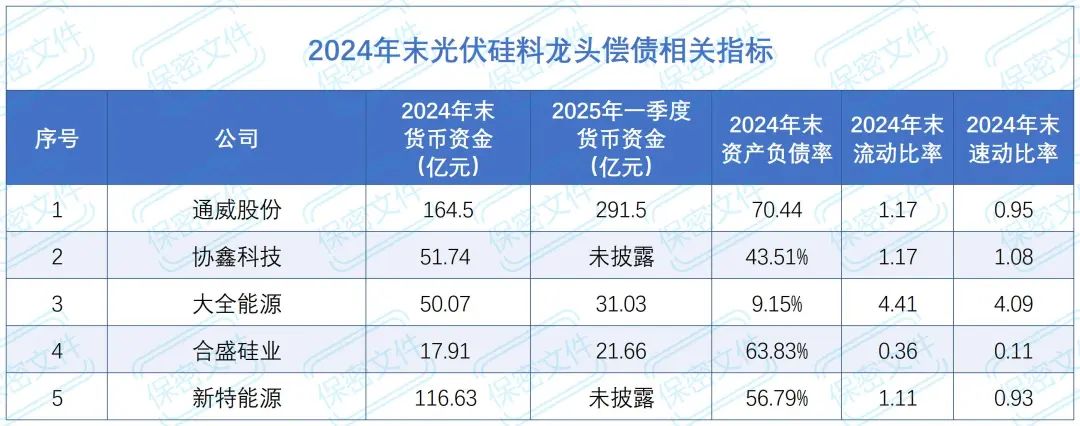
Core Viewpoint - The photovoltaic industry faced unprecedented challenges in 2024, including price drops, overcapacity, and weak demand, leading to significant losses for many companies [1][2]. Industry Overview - In 2024, 24 photovoltaic companies collectively lost over 28.6 billion yuan, with leading firms experiencing the largest losses [2]. - The demand for photovoltaic products is expected to surge in the first half of 2025 due to policy changes, but this may lead to a mismatch between supply and demand later in the year [2]. Company Performance Silicon Material Segment - In 2024, China's polysilicon production reached 1.82 million tons, a year-on-year increase of 23.6%, but market demand did not grow correspondingly, causing silicon prices to plummet [3]. - The average price of polysilicon fell from 58,100 yuan per ton at the beginning of the year to 36,500 yuan by year-end, putting financial pressure on many silicon material companies [3]. Financial Metrics of Leading Companies - **Tongwei Co., Ltd.**: - End of 2024 cash reserves: 16.45 billion yuan; Q1 2025 cash reserves: 29.15 billion yuan; asset-liability ratio: 70.44% [4]. - 2024 revenue: 91.99 billion yuan, down 33.87%; net loss: 7.04 billion yuan, down 151.86% [11][12]. - **GCL-Poly Energy Holdings**: - Asset-liability ratio: 43.51%, showing improvement from previous years [8]. - 2024 revenue: 15.1 billion yuan, down 55.2%; net loss: 4.75 billion yuan, down 289.25% [11][12]. - **Daqo New Energy Corp**: - Asset-liability ratio: 9.15%, with no short-term or long-term debt reported [8][10]. - 2024 revenue: 7.41 billion yuan, down 54.62%; net loss: 2.72 billion yuan, down 147.17% [11][12]. - **Hoshine Silicon Industry**: - Asset-liability ratio: 63.83%, with a slight improvement in Q1 2025 [6]. - 2024 revenue: 26.69 billion yuan, a slight increase of 0.41%; net profit: 1.74 billion yuan, down 33.64% [11][12]. - **Xinte Energy**: - Asset-liability ratio: 56.79% [8]. - 2024 revenue: 21.21 billion yuan, down 31.02%; net loss: 3.90 billion yuan, a significant drop from previous profits [11][12]. Strategic Adjustments - Tongwei is exploring new projects to reduce production costs and improve profitability despite high debt levels [5]. - Daqo New Energy has maintained a conservative financial strategy, resulting in a low asset-liability ratio and significant cash reserves [10]. Conclusion - The photovoltaic industry is currently in a challenging phase, with varying financial health among leading companies. Tongwei holds the highest cash reserves but also the highest debt, while Daqo stands out for its low debt levels but declining profitability. GCL-Poly and Hoshine are also facing significant challenges, while Xinte's future depends on market conditions and its operational strength [14].


2025第八届中国国际光伏与储能产业大会-成都通威光伏展
Sou Hu Cai Jing· 2025-06-22 05:10
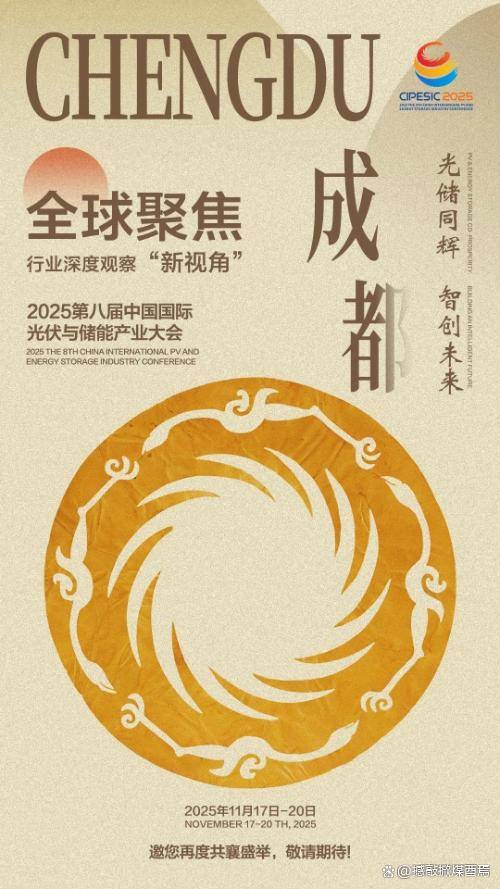
Group 1 - The core theme of the event is "Solar and Storage Synergy, Empowering Integration, Innovating the Future," focusing on the global energy transition and the significance of the solar and storage industries [2] - The event will take place from November 17 to 20, 2025, at the Chengdu Century City New International Convention and Exhibition Center, attracting global attention [2] - The exhibition will cover an unprecedented area of 60,000 square meters, featuring 5,000 renowned brands from around the world, showcasing the entire renewable energy industry chain [4] Group 2 - The event is expected to attract over 80,000 professional buyers and visitors, facilitating industry cooperation and dialogue on energy futures [4] - Leading companies, including Tongwei, will present their latest research and invite guests to experience the transformation of solar technology from laboratory to industrialization [6] - The event will host nearly 200 international buyers from countries like the USA and Russia, promoting international cooperation [6] Group 3 - The exhibition aims to achieve a signing target of over 100 billion yuan, highlighting its resource integration capabilities and attractiveness [13] - The first Tongwei Photovoltaic Technology Conference will serve as a platform for top-level discussions on technological routes and collaborative innovation [13] - The event will feature over 30 concurrent activities, including competitions and summits, fostering innovation and collaboration within the industry [6]
从SNEC信号看多晶硅未来发展新趋势
中国有色金属工业协会硅业分会· 2025-06-20 09:55
Group 1 - The core viewpoint of the article emphasizes that the polysilicon industry is moving towards a new development stage, focusing on capacity integration and differentiation [1][3] - The need for capacity control in the polysilicon sector is highlighted, with industry leaders discussing the importance of capacity consolidation to improve market conditions [1][3] - GCL-Poly Energy has proposed a clear plan for capacity acquisition, aiming to maintain silicon material prices at reasonable levels and ensure profitability across the entire supply chain [1][2] Group 2 - The green development route is a long-term goal for the photovoltaic industry, with Tongwei joining major global renewable energy organizations to demonstrate its commitment to global green governance [2] - GCL-Poly has introduced a green pricing initiative, advocating for better policies for products with lower carbon footprints, which aligns with international standards [2] - The carbon footprint of GCL-Poly's granular silicon products has been certified at 14.441 kg CO₂e/kg, showcasing its leadership in carbon reduction efforts [2] Group 3 - By the end of 2024, China's polysilicon capacity is projected to reach 2.8683 million tons, with an average annual investment price of approximately 50,000 yuan per ton [3] - The overall average price of polysilicon is currently around 34,000 yuan per ton, with about 500,000 tons of capacity either delayed or still in progress, leading to significant losses for companies [3] - The industry is witnessing a shift from chaotic competition to deep cooperation, aiming for resource optimization and sustainable long-term development [1][3]

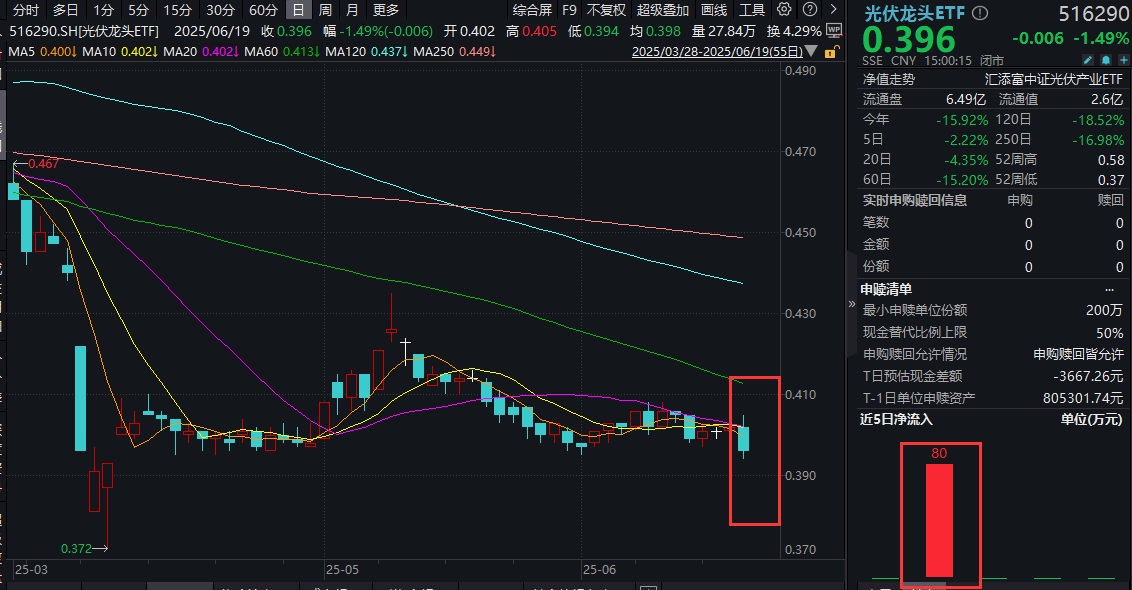
光伏三季度“减产令”升级!“反内卷”呼声再加大,低费率的光伏龙头ETF(516290)跌1.49%,光伏产业出清走到哪里了?
Sou Hu Cai Jing· 2025-06-19 10:27
Core Viewpoint - The Chinese photovoltaic (PV) industry is facing a critical supply-side reform, with expectations of production cuts and stricter policies to curb below-cost sales, aiming to improve industry profitability and stability [3][4][5]. Industry Summary - A significant decline was observed in the A-share market on June 19, with a total trading volume of 1.28 trillion yuan and over 4,600 stocks falling [1]. - The photovoltaic sector, particularly low-fee ETFs, experienced a downturn, with the leading ETF (516290) dropping by 1.49% [1][6]. - Major companies in the PV sector, such as 阳光电源 (Sungrow Power), 德业股份 (Deye), and 晶澳科技 (JA Solar), reported declines exceeding 3% in their stock prices [6]. Production and Policy Changes - The China Photovoltaic Industry Association held a meeting focusing on "production limits to maintain prices," indicating a projected reduction in operating rates by 10%-15% in Q3 [2][3]. - A third-party audit group will conduct comprehensive audits to identify evidence of below-cost sales, with various measures planned against non-compliant companies [2][3]. Technological Advancements - The industry is witnessing a push for supply-side reform, with leading companies advocating for market-driven consolidation and technological upgrades to phase out outdated capacities [4][5]. - New technologies, such as TOPCon and perovskite, are gaining attention, with several companies showcasing advancements in efficiency and production capabilities at the SNEC conference [5]. Market Outlook - The PV sector is expected to experience a fundamental recovery, with signs of a potential turning point in market sentiment as production cuts and technological advancements take effect [7]. - The low-fee photovoltaic ETF (516290) is highlighted as a favorable investment option, with management fees significantly lower than the market average [7].



中证新能源指数下跌1.29%,前十大权重包含通威股份等
Jin Rong Jie· 2025-06-19 10:11
Core Viewpoint - The China Securities New Energy Index has experienced a decline in recent months, reflecting the overall performance of listed companies in the renewable energy sector [2]. Group 1: Index Performance - The China Securities New Energy Index fell by 1.29% to 1768.83 points, with a trading volume of 36.878 billion yuan [1]. - Over the past month, the index has decreased by 1.69%, by 10.68% over the last three months, and by 9.32% year-to-date [2]. Group 2: Index Composition - The index includes companies involved in renewable energy production, application, storage, and related equipment, with a base date of December 31, 2011, set at 1000.0 points [2]. - The top ten weighted companies in the index are: CATL (9.99%), Sungrow Power (5.53%), LONGi Green Energy (5.26%), China Nuclear Power (4.73%), Three Gorges Energy (3.69%), TBEA (3.52%), EVE Energy (3.15%), Huayou Cobalt (2.96%), Tongwei Co. (2.45%), and Ganfeng Lithium (2.13%) [2]. Group 3: Market and Sector Breakdown - The index's holdings are primarily listed on the Shenzhen Stock Exchange (58.70%), followed by the Shanghai Stock Exchange (40.87%) and the Beijing Stock Exchange (0.43%) [2]. - In terms of industry composition, the index is comprised of 73.71% in industrials, 14.26% in utilities, and 12.02% in materials [2]. Group 4: Index Adjustment Mechanism - The index samples are adjusted biannually, with adjustments occurring on the next trading day after the second Friday of June and December [3]. - Weight factors are generally fixed until the next scheduled adjustment, with special circumstances allowing for temporary adjustments [3].



知情人士:光伏三季度“减产令”升级,开工率环降10%
第一财经· 2025-06-19 08:07
Core Viewpoint - The Chinese photovoltaic industry is facing significant challenges, including overcapacity, price fluctuations, and losses, leading to a clearer path towards "production reduction to maintain prices" [1][2]. Group 1: Industry Challenges - The photovoltaic industry is experiencing a supply-demand imbalance, with many companies facing financial losses. In the first quarter, 18 out of 21 listed companies reported net profit losses, with major manufacturers like Tongwei Co., Ltd. losing 2.61 billion yuan [1]. - The industry is under pressure to reduce production, with a projected decrease in operating rates by 10%-15% in the third quarter [1][2]. - The price of polysilicon has been declining due to weak downstream demand and significant price drops in silicon wafer products, leading to a challenging market environment [3]. Group 2: Regulatory Measures - The China Photovoltaic Industry Association is implementing measures to combat below-cost sales and promote self-discipline within the industry, including setting minimum price standards and enhancing technical standards [2]. - A third-party audit group will conduct comprehensive audits to identify and address low-price sales practices among companies [1][2]. Group 3: Market Dynamics - Recent data indicates that prices for 183N silicon wafers have fallen to around 0.9 to 0.91 yuan, with some quotes dropping below 0.9 yuan [2]. - The average prices for 183N and 210N battery cells have also decreased to 0.24 yuan and 0.255 yuan per watt, respectively [2]. - The number of polysilicon producers remains at 11, all operating at reduced capacity, but the market anticipates an increase in production due to capacity replacement [3].


透过数据看“十四五”答卷: 中国能源转型提“质”焕“新”
Zheng Quan Shi Bao· 2025-06-18 18:27
Energy Transition Acceleration - China's total investment in energy transition is projected to reach $818 billion in 2024, surpassing the combined investments of the US, EU, and UK, marking a 20% increase from 2023 [2] - By the end of 2024, China's renewable energy installed capacity is expected to reach 1.889 billion kilowatts, accounting for 56% of the total, doubling from the end of the 13th Five-Year Plan [2] - Wind power capacity is projected to reach 521 million kilowatts, maintaining the global lead for 15 consecutive years, while solar power capacity is expected to hit 887 million kilowatts, leading globally for 10 years [2] Renewable Energy Development - As of February 2024, the combined installed capacity of wind and solar power in China reached 1.456 billion kilowatts, exceeding that of thermal power [3] - Hydropower is expected to reach an installed capacity of 436 million kilowatts by the end of 2024, a 17.77% increase from the end of 2020 [3] - The coal power sector has achieved over 95% ultra-low emissions units, with coal consumption per unit of power supply reduced to 303.21 grams of standard coal per kilowatt-hour, a 7.5% decrease from 2020 [3] Technological Innovation - Technological innovation is identified as the core driver of energy industry transformation, with a focus on advanced renewable energy, safe and efficient nuclear energy, and energy digitalization [4] - In 2024, the average conversion efficiency of PERC p-type monocrystalline solar cells reached 23.5%, a 0.7 percentage point increase from 2020 [4] - The offshore wind power sector is experiencing a trend towards larger and more advanced products, with the share of newly installed offshore wind turbines with a capacity of 10 megawatts or more rising from 12.1% in 2022 to 58% in 2024 [4] Energy Industry Chain Development - China's energy industry chain has achieved a leap from low-end manufacturing to high-end innovation, establishing a complete industrial system in solar, wind, and energy storage [7] - In 2023, China's global market shares for polysilicon, silicon wafers, solar cells, and modules reached 91.6%, 97.9%, 91.9%, and 84.6%, respectively, with significant increases from 2020 [7] - Leading companies like Tongwei Co. and Longi Green Energy have shown substantial growth in production, with Tongwei's polysilicon output reaching 594,800 tons, a 5.9-fold increase from 2020 [7] Regional Collaboration and International Cooperation - Significant progress has been made in regional collaboration and international cooperation in the energy sector, contributing to energy security and global energy transition [9] - By the end of 2024, the first batch of 50 renewable energy base projects in the western region is expected to be operational, with an installed capacity exceeding 90 million kilowatts [9] - China has engaged in green energy project cooperation with over 100 countries, with notable projects like the ±800 kV high-voltage direct current transmission project in Brazil being completed [10]