TONGWEI CO.,LTD(600438)

Search documents
政策刺激下新能源消纳有望迎来边际改善,新能源ETF(159875)红盘蓄势
Sou Hu Cai Jing· 2025-08-28 05:45
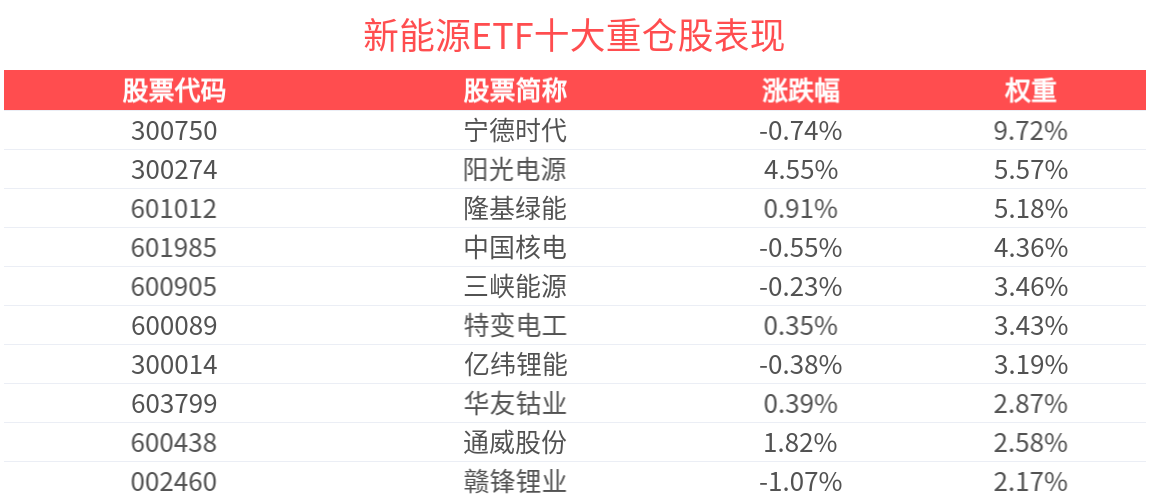
Group 1 - The core viewpoint of the articles highlights the positive performance of the new energy sector, with the China Securities New Energy Index rising by 0.70% and significant gains in key stocks such as Jiejia Weichuang and Zhengtai Electric [1][4] - The New Energy ETF (159875) has shown a weekly average trading volume of 65.82 million yuan and a net asset value increase of 8.81% over the past six months, indicating strong investor interest and market activity [1] - The top ten weighted stocks in the China Securities New Energy Index account for 43.41% of the index, with notable companies including Ningde Times and Sunshine Power [4] Group 2 - The National Energy Administration and the National Development and Reform Commission are advancing the construction of the electricity market, aiming for equal market participation for new energy storage and the establishment of a provincial-level electricity spot market by the end of 2025 [3] - The "2025 Energy Work Guidance Opinion" emphasizes the need for a coordinated approach to new energy development and consumption systems, suggesting that policy improvements may lead to marginal enhancements in new energy consumption and pricing [4]




反内卷加速全产业链价值重塑,光伏龙头走上价值修复之路
Sou Hu Cai Jing· 2025-08-28 03:20
Core Insights - The core viewpoint of the articles emphasizes the transformation of the photovoltaic industry from price competition to value reconstruction, driven by government policies aimed at regulating competition and promoting technological innovation [1][3][8] Industry Overview - The Ministry of Industry and Information Technology, along with multiple departments, held a meeting on August 19 to address the photovoltaic industry, aiming to eliminate outdated production capacity and establish a pricing monitoring mechanism [1] - The implementation of the revised Anti-Unfair Competition Law and the Central Financial Committee's stance against "disorderly low-price competition" marks a significant shift in the industry, indicating a move towards healthier competition [1][3] Company Performance - Tongwei Co., Ltd. reported a revenue of 40.509 billion yuan in the first half of 2025, with a significant market share in multiple segments: 30% in polysilicon, 49.89 GW in solar cells, and 24.52 GW in modules [2] - The company maintained a strong financial position with cash and financial assets totaling 33.229 billion yuan, ensuring liquidity and financial flexibility [2][4] Market Dynamics - The photovoltaic industry has experienced a "price avalanche," with prices falling below cash costs, leading to a situation where increased production results in losses [3] - Recent policies have set a price floor for products like silicon materials and modules, aiming to curb "suicidal pricing" and restore reasonable price levels [3][4] Price Recovery - Since the second quarter of 2025, the photovoltaic supply chain has seen a recovery in prices, supported by policies limiting low prices and reducing inventory levels [5] - The price of polysilicon has shown a significant increase, with the latest data indicating a price range of 45,000 to 52,000 yuan per ton, marking an increase of 3.37% [5] Competitive Landscape - The competitive landscape is shifting towards consolidation and technological advancement, with policies encouraging the exit of inefficient production capacities [4][7] - Tongwei's advantages in technology, scale, and cost position it well to maintain and potentially increase its market share amid these changes [4][6] Investor Sentiment - The positive changes in the photovoltaic industry have been reflected in the capital markets, with significant stock price increases for leading companies like Tongwei [7] - The concentration of market share among the top five silicon material companies is nearing 80%, which is expected to stabilize the industry and enhance profitability for leading firms [7][8] Future Outlook - The ongoing transformation driven by policy, market dynamics, and corporate strategies is expected to favor companies that prioritize technological innovation and efficiency [8] - Tongwei's comprehensive approach, combining green energy and agriculture, positions it uniquely to capitalize on the long-term growth of the photovoltaic sector while mitigating cyclical risks [7][8]
涨超1.0%,光伏ETF基金(516180)连续4天净流入
Xin Lang Cai Jing· 2025-08-28 02:23
Group 1 - The photovoltaic industry is experiencing a steady advancement in reversing internal competition, with a focus on short-term rebounds and long-term investment opportunities due to low valuations [1] - As of August 28, 2025, the CSI Photovoltaic Industry Index (931151) increased by 0.87%, with notable stock performances including Zhengtai Electric (601877) up 9.16% and Meichang Co., Ltd. (300861) up 8.50% [1] - The Photovoltaic ETF (516180) rose by 1.06%, with a recent price of 0.67 yuan, and has accumulated a 1.39% increase over the past week [1] Group 2 - As of July 31, 2025, the top ten weighted stocks in the CSI Photovoltaic Industry Index (931151) include Yangguang Electric (300274) and Longi Green Energy (601012), collectively accounting for 56.16% of the index [2]



东吴证券晨会纪要-20250828
Soochow Securities· 2025-08-27 23:30
Macro Strategy - The core viewpoint highlights the unprecedented removal of Federal Reserve Governor Cook by Trump, raising concerns about the independence of the Federal Reserve and the potential for more "Trump-aligned" appointees, which could lead to increased expectations for interest rate cuts in the future [1] - Following the removal announcement, market reactions included rising long-term U.S. Treasury yields and gold prices, while the U.S. dollar index declined, indicating a shift in investor sentiment towards risk assets [1] Fixed Income - The report indicates a cautious approach in the convertible bond market, suggesting a reduction in exposure to high-priced targets while increasing allocations to ETFs to balance risks [2][3] - The 10-year government bond yield increased from 1.745% to 1.785%, reflecting market adjustments to macroeconomic conditions [2] Industry Insights - New Lai Ying Material (300260) reported improved Q2 performance, benefiting from growth in the semiconductor and liquid cooling sectors, with a focus on domestic substitution and an optimized customer structure [5][6] - Li Yuan Heng (688499) achieved profitability with a robust order backlog in solid-state battery equipment, indicating a strong operational cash flow and successful delivery to major clients [7] - Jin Zai Food (003000) is experiencing a Q2 adjustment period, leading to a downward revision of profit forecasts for 2025-2027, reflecting a mismatch between internal expansion strategies and external market conditions [8][9] - Anpei Long (301413) reported steady growth in its temperature and pressure sensor business while investing in humanoid robotics, adjusting profit forecasts for 2025-2026 [10] - Xinde New Materials (301349) is seeing significant growth in fast-charging products, with profit forecasts adjusted upwards due to improved margins [11] - The report on China National Railway (601766) indicates strong growth in H1 2025, driven by recovery in railway fixed asset investments [18] - The report on China Duty Free Group (601888) highlights a narrowing revenue decline in Q2 2025, with a focus on expanding city store operations to boost sales [31] - Yun Aluminum (000807) reported a 17.98% increase in revenue for H1 2025, with a focus on maintaining high profit margins amid fluctuating aluminum prices [32][33]




市值“一哥”十年变迁,成都向新
Mei Ri Jing Ji Xin Wen· 2025-08-27 15:00
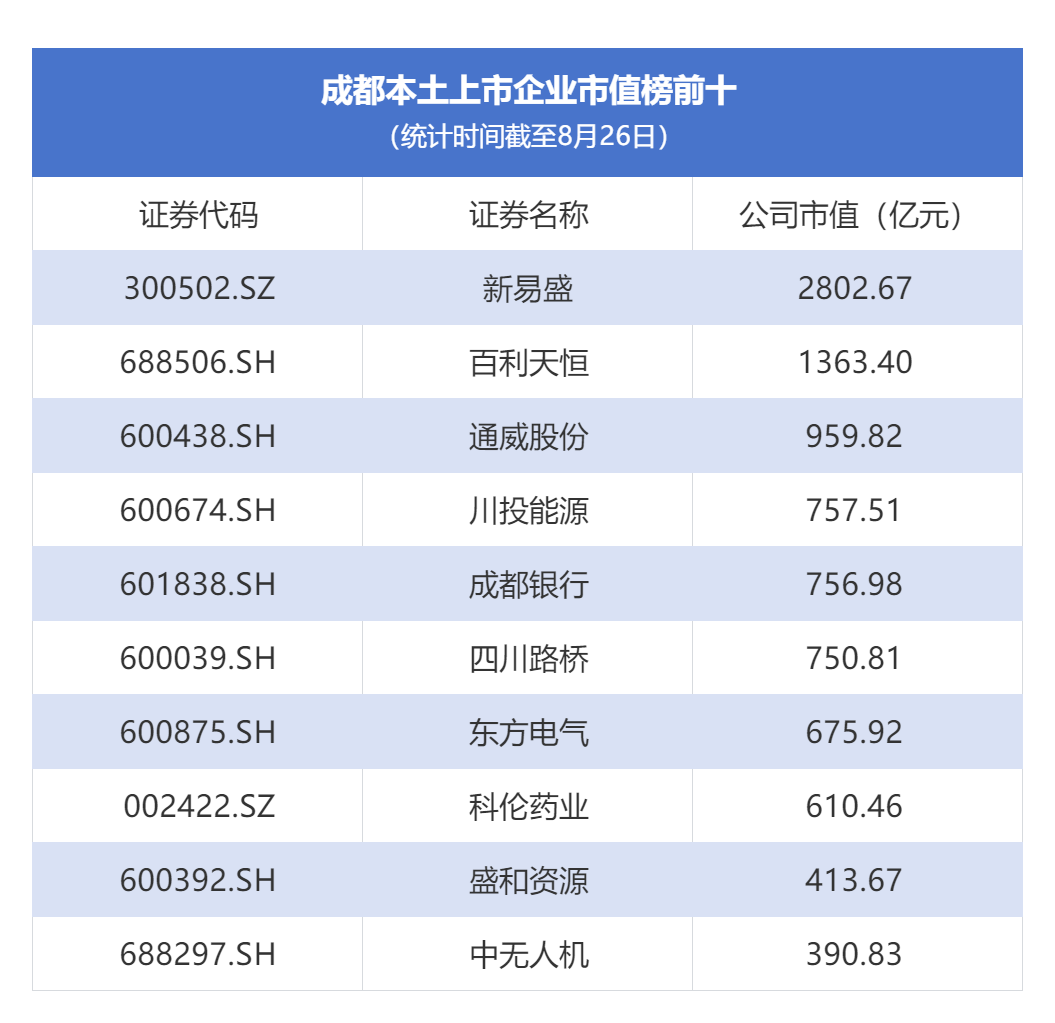
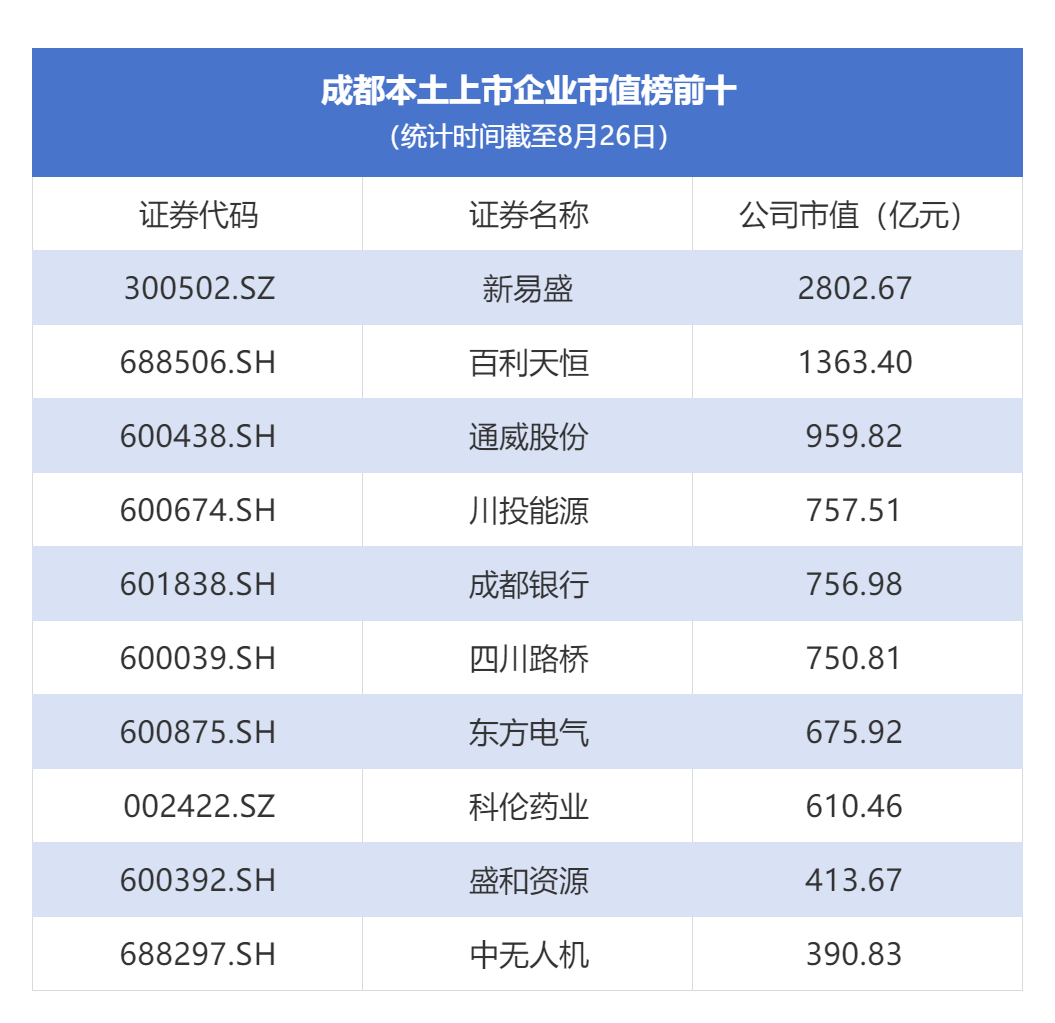
Core Insights - Chengdu's local listed companies have achieved a historic milestone with two companies, Xinyi and Baili Tianheng, surpassing a market capitalization of 100 billion yuan, marking the first time the city has had "double billion" companies [1][6] - The market capitalization is a crucial indicator of a company's overall strength, and the presence of billion-yuan companies remains rare among over 5,000 listed companies in A-shares [1][6] - The ranking of Chengdu's listed companies has undergone significant changes, influenced by factors beyond just market valuation, including industry dynamics and company performance [1][6] Market Capitalization Rankings - As of August 26, the top ten Chengdu listed companies by market capitalization are: 1. Xinyi: 2802.67 billion yuan 2. Baili Tianheng: 1363.40 billion yuan 3. Tongwei: 959.82 billion yuan 4. ChuanTuo Energy: 757.51 billion yuan 5. Chengdu Bank: 756.98 billion yuan 6. Sichuan Road and Bridge: 750.81 billion yuan 7. Dongfang Electric: 675.92 billion yuan 8. Kelun Pharmaceutical: 610.46 billion yuan 9. Shenghe Resources: 413.67 billion yuan 10. Zhongwu Drone: 390.83 billion yuan [1][7] Historical Context - Chengdu first saw a billion-yuan company in 2015, but the milestone was short-lived, with the market capitalization of Guojin Securities dropping below 500 billion yuan within six months [2][3] - From 2015 to 2019, the market capitalization rankings were dominated by Guojin Securities, ChuanTuo Energy, Kanghong Pharmaceutical, and Tongwei, with the top company fluctuating around 500 billion yuan [3][5] - The resurgence of billion-yuan companies began in 2020 with Tongwei surpassing 1 billion yuan, followed by a significant increase in market capitalization for other companies [5][6] Emerging Companies and Industries - New entrants to the billion-yuan market include Xinyi and Baili Tianheng, which represent new industries such as AI, photovoltaic energy, and innovative pharmaceuticals [8][9] - Xinyi specializes in optical modules, facilitating high-speed data transmission, while Baili Tianheng focuses on innovative ADC drug development for cancer treatment [9][10] - Chengdu's industrial landscape is evolving, with the city launching a future industry fund aimed at sectors like humanoid robots and gene therapy, indicating a strategic push towards innovation [10][13] Industry Development - Chengdu has established itself as a hub for electronic information and innovative pharmaceuticals, with significant investments and a growing number of listed companies in these sectors [12][13] - The city has developed two trillion-yuan industrial clusters and several other significant industry clusters, showcasing its capacity for economic growth and innovation [13][14] - The presence of long-established companies in these sectors, such as Tongwei and Baili Tianheng, highlights the importance of sustained investment and development in achieving high market valuations [12][14]

市值“一哥”十年变迁 成都向新
Mei Ri Jing Ji Xin Wen· 2025-08-27 14:59
Core Insights - Chengdu's local listed companies achieved a historic milestone in August with the emergence of two companies, Xinyi Technology and Baili Tianheng, surpassing a market capitalization of 100 billion yuan, marking the first time the city has seen "double billion" companies [1][5] - The market capitalization is a crucial indicator of a listed company's overall strength, and billion-yuan companies remain rare among over 5,000 listed companies in A-shares [1][5] - The ranking of Chengdu's listed companies has undergone significant changes, influenced by factors beyond just market valuation [1][5] Market Capitalization Rankings - As of August 26, the top ten Chengdu listed companies by market capitalization are: 1. Xinyi Technology: 2802.67 billion yuan 2. Baili Tianheng: 1363.40 billion yuan 3. Tongwei Co., Ltd.: 959.82 billion yuan 4. Chuan Investment Energy: 757.51 billion yuan 5. Chengdu Bank: 756.98 billion yuan 6. Sichuan Road and Bridge: 750.81 billion yuan 7. Dongfang Electric: 675.92 billion yuan 8. Kelun Pharmaceutical: 610.46 billion yuan 9. Shenghe Resources: 413.67 billion yuan 10. Zhong Wuyun Drone: 390.83 billion yuan [1][7] Historical Context - The first billion-yuan company in Chengdu was Guojin Securities, which reached a market cap of 1027.68 billion yuan in June 2015 but did not maintain this status for long [3][4] - From 2015 to 2019, the market capitalization rankings were dominated by four companies: Guojin Securities, Chuan Investment Energy, Kanghong Pharmaceutical, and Tongwei Co., Ltd., with market caps around 500 billion yuan [3][4] - In 2020, Tongwei Co., Ltd. broke the billion-yuan mark again, reaching 1730.4 billion yuan by year-end, leading to a new competitive landscape [4][5] New Entrants and Industries - The recent rankings feature new entrants such as Baili Tianheng, Xinyi Technology, and Jiachitech, with many companies representing emerging industries like AI, photovoltaic new energy, and innovative pharmaceuticals [8][9] - Xinyi Technology specializes in optical modules, facilitating data transmission in the digital world, while Baili Tianheng focuses on innovative ADC drug development for cancer treatment [9][10] Industrial Development - Chengdu has launched a future industry fund with an initial scale of 112 billion yuan, targeting sectors like humanoid robots, next-generation mobile communications, and gene therapy [10][15] - The city has developed two trillion-yuan industrial clusters in electronic information and equipment manufacturing, along with several other significant industry clusters [14][15]
光伏产业价值阶段性重塑 光伏龙头或迎周期拐点?
2 1 Shi Ji Jing Ji Bao Dao· 2025-08-27 05:18
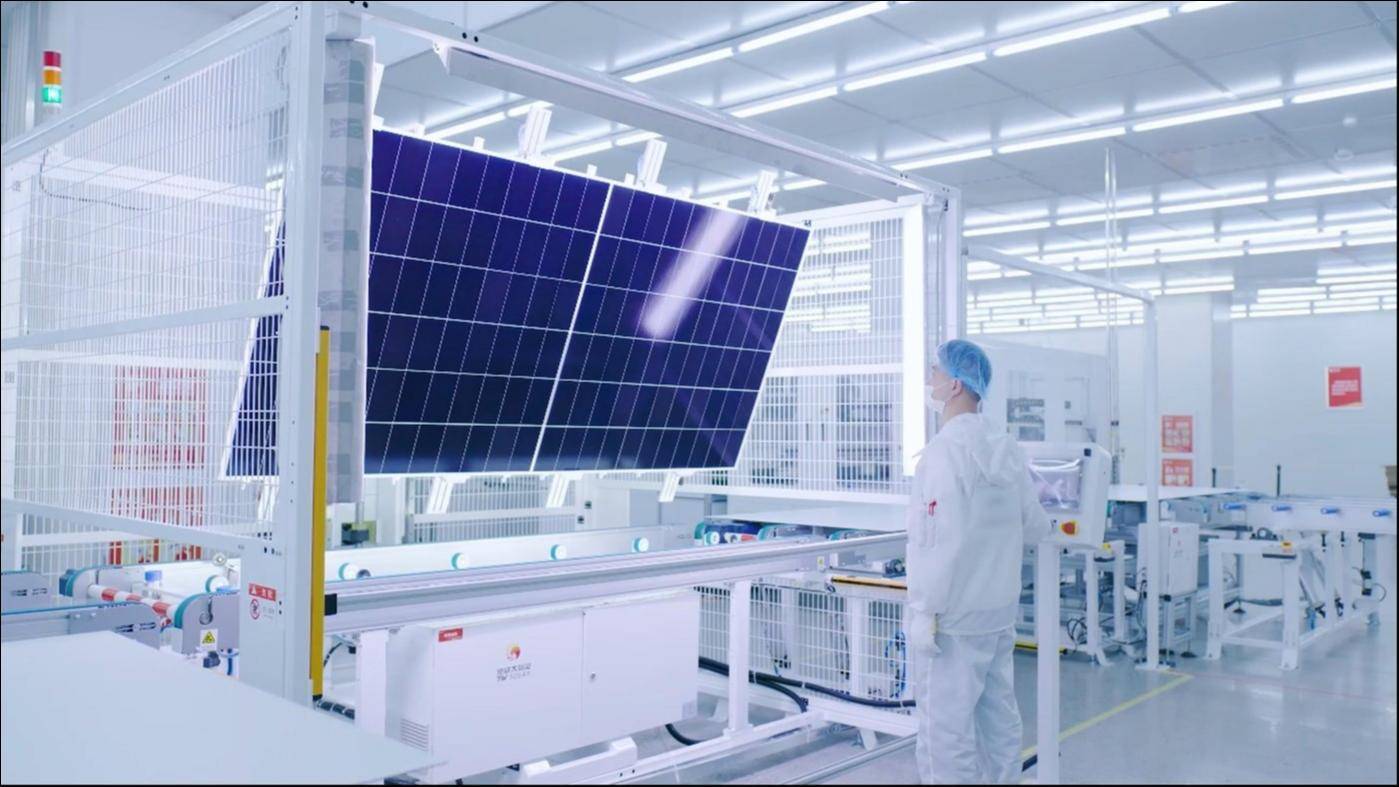
Core Viewpoint - The Chinese photovoltaic industry is undergoing a significant transformation driven by government policies aimed at regulating competition and promoting value reconstruction, with Tongwei Co., Ltd. positioned as a leading player in this shift [1][3][9]. Industry Overview - The Ministry of Industry and Information Technology, along with multiple departments, held a meeting to address the photovoltaic industry's competitive order, aiming to eliminate outdated production capacity and establish a pricing monitoring mechanism [1]. - The implementation of the revised Anti-Unfair Competition Law and the Central Financial Committee's stance against "disorderly low-price competition" marks a critical turning point for the industry, shifting focus from price wars to value enhancement [1][3]. Company Performance - Tongwei Co., Ltd. reported a revenue of 40.509 billion yuan in the first half of 2025, with a significant market share in polysilicon and solar cells, maintaining its position as the industry leader [2]. - The company achieved a polysilicon sales volume of 161,300 tons and a solar cell sales volume of 49.89 GW, continuing to lead globally [2]. Market Dynamics - The photovoltaic industry has experienced a "price avalanche," with prices falling below cash costs, leading to a situation where increased production results in losses [3]. - Recent policies have established a price floor for products like silicon materials and modules, aiming to curb "suicidal pricing" and restore reasonable price levels [3][4]. Policy Impact - The government's focus on "regulating competition and encouraging consolidation" is expected to accelerate the exit of inefficient production capacity and create a new market structure driven by leading companies and technological advancements [4]. - The policies are anticipated to benefit Tongwei by reducing low-quality competition and supporting its market share consolidation [4]. Price Recovery - Since the second quarter of 2025, the photovoltaic industry has seen a recovery in prices across the supply chain, supported by policies limiting low prices and inventory reduction [6]. - The price of polysilicon has shown a significant increase, with the latest data indicating a price range of 45,000 to 52,000 yuan per ton, marking an increase of 3.37% [6]. Capital Market Response - The positive changes in the photovoltaic industry have been reflected in the capital markets, with significant stock price increases for leading companies like Tongwei [8]. - The concentration of market share among the top five silicon material companies has reached nearly 80%, which is expected to stabilize industry volatility and enhance profitability for leading firms [8]. Future Outlook - The ongoing value reconstruction driven by policies, market dynamics, and company strategies positions Tongwei as a key player in defining the new cycle of the photovoltaic industry [9]. - The company's dual focus on "green agriculture and green energy" allows it to benefit from the long-term growth of the photovoltaic sector while providing stable cash flow to mitigate cyclical fluctuations [8][9].
五大光伏龙头半年亏损超170亿,行业寒冬持续
Cai Jing Wang· 2025-08-27 05:16
Industry Overview - The photovoltaic industry is facing significant challenges, with major companies reporting a combined net loss of 172.64 billion yuan in the first half of the year [1][5][6] - The price decline in the photovoltaic supply chain has severely compressed profit margins across the industry, indicating ongoing difficulties despite a temporary boost from installation surges [1][5] Company Performance - Tongwei Co., Ltd. reported a revenue of 40.509 billion yuan, a year-on-year decrease of 7.51%, with a net loss of 4.955 billion yuan [1][5] - TCL Zhonghuan achieved a revenue of 13.398 billion yuan, down 17.36% year-on-year, and a net loss of 4.242 billion yuan, a 38.48% increase in losses compared to the previous year [1][6] - Trina Solar delivered its first loss report since its IPO, with a revenue of 31.056 billion yuan, a 27.72% decline, and a net loss of 2.918 billion yuan, representing a 654.47% increase in losses year-on-year [2][6] - JA Solar reported a revenue of 23.905 billion yuan, down 36.01%, with a net loss of 2.580 billion yuan, widening from a loss of 0.874 billion yuan in the previous year [2][6] - JA Solar's second-quarter losses showed a significant reduction of over 40% compared to the first quarter, with improved gross margins [2][6] Policy and Market Response - The Ministry of Industry and Information Technology and other departments have initiated measures to combat irrational competition in the photovoltaic sector, emphasizing the need for industry self-discipline and quality standards [2][7] - A recent meeting outlined four key measures: enhancing industry regulation, curbing low-price competition, standardizing product quality, and supporting industry self-regulation, signaling a shift towards high-quality development [2][7] - The domestic polysilicon prices have shown signs of recovery, with the average price of N-type polysilicon remaining at 47,900 yuan per ton as of August 20 [3][8]


从“价格厮杀”到“价值重构”,光伏行业迎破局时刻|看财报
Sou Hu Cai Jing· 2025-08-27 04:52
Core Insights - The Ministry of Industry and Information Technology, along with multiple departments, held a meeting on August 19 to regulate the photovoltaic industry, aiming to eliminate outdated capacity and establish a pricing monitoring mechanism, reflecting a strong commitment to reforming the competitive landscape [1][3] - The photovoltaic industry is transitioning from "price wars" to "value reconstruction," driven by new policies and the implementation of the revised Anti-Unfair Competition Law, which prohibits selling products below cash costs [1][3][4] - Tongwei Co., holding a 30% global market share in high-purity silicon and leading in solar cell shipments for eight consecutive years, is positioned as a core player in navigating the industry cycle through cost control and technological innovation [1][4][9] Company Performance - Tongwei Co. reported a revenue of 40.509 billion yuan for the first half of 2025, with a significant reduction in losses in the second quarter, maintaining a strong market share in its core business [2] - The company achieved a sales volume of 161,300 tons of polysilicon, retaining a 30% global market share, and sold 49.89 GW of solar cells, continuing to lead globally [2] - As of the end of the first half, Tongwei had 33.229 billion yuan in cash and financial assets, ensuring robust liquidity and a variety of financing tools [2][4] Industry Dynamics - The photovoltaic industry is experiencing a "breaking point" due to a shift from quantity expansion to quality improvement, as the cumulative global installed capacity approaches 2000 GW [3][4] - Recent policies targeting "disorderly low-price competition" have established a price floor for products like silicon materials and modules, aiming to stabilize the market and improve profitability for mid and downstream companies [3][4] - The industry has seen a recovery in prices since the second quarter of 2025, with polysilicon prices rising by up to 3.37% and module prices rebounding by 10.45% from their June lows, indicating a positive shift in supply-demand dynamics [6][7] Market Response - The capital market has reacted positively to the changes in the photovoltaic sector, with significant stock price increases for leading companies like Tongwei, reflecting strong market expectations for recovery [8] - The concentration of market share among the top five silicon material companies has reached nearly 80%, which is expected to reduce volatility and enhance profitability stability for leading firms [8][9] - Tongwei's dual business model, combining "green agriculture and green energy," allows it to benefit from the long-term growth of the photovoltaic industry while providing a stable cash flow to mitigate cyclical fluctuations [8][9]
五大光伏龙头上半年亏损超170亿元
Xin Lang Cai Jing· 2025-08-27 02:31
Core Viewpoint - The photovoltaic industry is facing significant challenges, with major companies reporting substantial losses in the first half of the year, indicating a continued struggle despite short-term boosts from installation surges [2][3]. Financial Performance - Tongwei Co., Ltd. reported a revenue of 40.51 billion yuan, a year-on-year decrease of 7.51%, with a net loss attributable to shareholders of 4.96 billion yuan [2]. - TCL Zhonghuan achieved a revenue of 13.40 billion yuan, down 17.36% year-on-year, with a net loss of 4.24 billion yuan, a 38.48% increase in losses compared to the previous year [2]. - Trina Solar posted a revenue of 31.06 billion yuan, a decrease of 27.72% year-on-year, with a net loss of 2.92 billion yuan, marking a 654.47% increase in losses compared to the previous year [3]. - JA Solar reported a revenue of 23.90 billion yuan, down 36.01% year-on-year, with a net loss of 2.58 billion yuan, widening from a loss of 874 million yuan in the previous year [3]. Industry Trends - The photovoltaic industry is experiencing a significant price drop across the supply chain, severely compressing profit margins, with the term "internal competition" being highlighted as a major challenge [2]. - In July, the domestic photovoltaic installation capacity reached 11.64 GW, a decrease of 18.9% month-on-month and 44.7% year-on-year, marking the lowest level since 2025 [3]. - The Ministry of Industry and Information Technology and other departments have initiated measures to regulate the photovoltaic industry, aiming to eliminate irrational competition and address capacity mismatches [4][5]. Policy Developments - A recent meeting emphasized four key measures: strengthening industry regulation, curbing low-price competition, standardizing product quality, and supporting industry self-discipline, signaling a shift from "scale expansion" to "high-quality development" in the photovoltaic sector [5]. - The government aims to enhance industry concentration through supply-side reforms and the elimination of outdated production capacity [5].