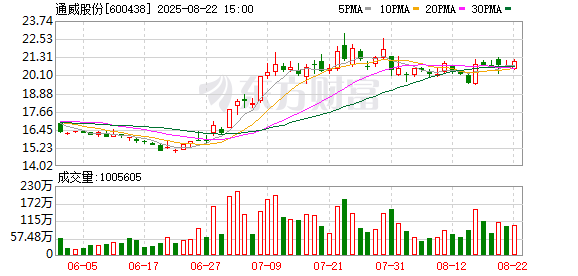
TONGWEI CO.,LTD(600438)

Search documents
碳中和ETF基金(159885)上涨1.72%,清洁能源需求持续提升
Xin Lang Cai Jing· 2025-08-25 02:30
Group 1 - The national energy administration reports that from January to July, the national electricity market transaction volume increased by 3.2% year-on-year, with green electricity transaction volume significantly rising by 43.2%, indicating a sustained increase in clean energy demand [1] - As of August 25, the carbon neutrality ETF fund (159885.SZ) rose by 1.72%, and its associated index, the domestic low-carbon index (000977.CSI), increased by 1.70%. Key constituent stocks such as Sunshine Power rose by 3.80%, Yangtze Power by 1.58%, Robotech by 15.78%, Daqo Energy by 14.59%, and Goldwind Technology by 10.04% [1] - Research from brokerage firms indicates that Indonesia has proposed a large-scale solar storage plan, with the development restrictions on photovoltaics gradually easing. The microgrid solar storage system in Indonesia has significant growth potential, with an estimated overall investment scale reaching trillions of RMB, likely boosting the distributed photovoltaic and energy storage industries [1][2] - Changjiang Securities focuses on the continuous growth trend of high-voltage equipment, with multi-variety exports reaching new highs, reflecting structural opportunities in the power grid equipment sector [1]





电力设备行业跟踪周报:AIDC空间广阔、人形机器人迎新催化-20250825
Soochow Securities· 2025-08-25 01:29
Investment Rating - The report maintains an "Accumulate" rating for the electric equipment industry [1] Core Views - The AIDC (Artificial Intelligence and Data Center) sector is expected to experience significant growth, with humanoid robots being a key catalyst for this expansion, projected to reach mass production in 2025 [1][4] - The report highlights the strong performance of the electric vehicle sector, with a projected annual growth rate of 25% to reach 16 million units sold in 2025 [4][8] - The energy storage market is anticipated to grow by 30%+ in the U.S. due to increasing demand and favorable policy adjustments, with a compound annual growth rate (CAGR) of 30-40% expected from 2025 to 2028 [4][8] Industry Trends - The humanoid robot market is projected to have a potential market size exceeding 15 trillion yuan, with mass production expected to begin in 2025 [4][12] - The electric vehicle market in Europe is showing strong sales growth, with a 41% year-on-year increase in sales for nine countries [4][8] - The energy storage sector is seeing a surge in demand, particularly in emerging markets, with significant growth expected in both residential and commercial storage solutions [4][8] Company Performance - Companies such as Ningde Times, BYD, and Sunshine Power are highlighted as key players with strong growth potential in their respective sectors [4][7] - The report provides detailed financial performance metrics for various companies, indicating revenue growth and profitability trends [7] - Specific recommendations include investing in leading companies in the AIDC supply chain, electric vehicles, and energy storage sectors, emphasizing their competitive advantages and growth trajectories [4][5][7]






盘前必读丨暑期档票房破110亿;通威股份上半年净亏近50亿
Di Yi Cai Jing· 2025-08-24 23:39
Market Overview - The US stock market indices experienced significant gains, with the Dow Jones Industrial Average reaching a record closing high, driven by Federal Reserve Chairman Jerome Powell's hint at potential interest rate cuts [4] - The Dow rose by 846.24 points, or 1.89%, closing at 45631.74, while the S&P 500 and Nasdaq also saw increases of 1.52% and 1.88%, respectively [4] - Major US tech stocks, including Google, Tesla, and Amazon, all posted substantial gains, contributing to the overall market rally [4] Commodity Market - International oil prices saw slight increases, with WTI crude oil futures rising by $0.14 to $63.66 per barrel, and Brent crude futures up by $0.06 to $67.73 [4] - COMEX gold futures increased by $36.90, or 1.09%, reaching $3418.5 per ounce [5] Company Announcements - Jiangsu Guotai announced the termination of plans to use 1.5 billion yuan of idle funds to establish a subsidiary for securities investment, indicating a strategic shift in investment focus [11] - China Railway announced an investigation into a construction accident that resulted in 12 fatalities and 4 missing persons, stating that the incident would not significantly impact its operations or financial performance [12] - Tongwei Co. reported a net loss of 4.955 billion yuan for the first half of the year, attributing the decline in revenue to significant price adjustments in the photovoltaic industry [13] - Ganfeng Lithium also reported a net loss of 531 million yuan for the same period, with a revenue drop of 12.65% [14] Industry Insights - The China Photovoltaic Industry Association called for enhanced industry self-regulation to maintain fair competition and prevent price undercutting [8] - The National Energy Administration reported that as of July, the total installed power generation capacity in China reached 3.67 billion kilowatts, a year-on-year increase of 18.2%, with solar power capacity growing by 50.8% [8]


产业周跟踪:三井金属扩产印证高端铜箔供不应求,美国配变供应紧张
Huafu Securities· 2025-08-24 13:42
Investment Rating - The report maintains an "Outperform" rating for the industry [6] Core Insights - The report highlights the recovery of profitability in the photovoltaic sector due to regulatory support and the end of chaotic price competition [20][21] - The wind power sector shows continuous improvement in profitability for leading turbine manufacturers, with increased confidence in Q3 performance [32][33] - The energy storage sector has seen significant growth, with new installations surpassing 100GW for the first time [40][41] - The electric equipment sector is experiencing a reversal in supply-demand dynamics, particularly in the U.S. transformer market [53][54] Summary by Sections New Energy Vehicles and Lithium Battery Sector - Multiple regions have restarted automobile subsidy policies, indicating a trend towards more refined management [10] - Mitsui Mining & Smelting plans to expand high-end copper foil production capacity by 45% to meet demand driven by AI server needs [11] - Investment suggestions include companies with cost advantages and those leading in technology [12] Photovoltaic Sector - A meeting held by six ministries aims to regulate the photovoltaic industry, signaling an end to chaotic price competition [20][21] - The focus is on capacity clearance, anti-dumping measures, and quality supervision, benefiting leading companies with technological advantages [22] - Price pressures are expected to ease in the short term, with a shift towards technology and quality in the medium to long term [22][23] Wind Power Sector - Leading turbine manufacturers are seeing a recovery in gross margins, with a positive outlook for Q3 performance [32][33] - Key offshore wind projects are progressing, enhancing confidence in performance delivery [33] - Investment recommendations focus on companies benefiting from rising bidding prices and strong order backlogs [35] Energy Storage Sector - New energy storage installations reached 23.03GW/56.12GWh in the first half of 2025, with cumulative installations exceeding 100GW for the first time [40][41] - The report notes significant growth in lithium-ion battery and pumped storage technologies, with a shift towards diversified energy storage solutions [40] - Investment suggestions include leading storage integrators and companies benefiting from the growth of energy storage systems [47][50] Electric Equipment Sector - The U.S. transformer market is experiencing a reversal in supply-demand dynamics, with a decrease in supply-demand imbalance expected by 2030 [53][54] - The report highlights the impact of data center demand on three-phase transformer supply shortages [54] - Investment recommendations focus on companies with overseas expansion capabilities and those benefiting from digital grid reforms [56][58] Industrial Control and Robotics Sector - The launch of a new industrial control board by Jifang Industrial Control is noted, along with a significant order for humanoid robots [61][63] - The report suggests that traditional industrial sectors are showing signs of recovery, which may lead to improved orders for industrial control components [64][67] Hydrogen Energy Sector - Beijing has released a plan to promote hydrogen energy applications, with significant subsidies for industry development [70][71] - The establishment of a national hydrogen vehicle testing center is expected to support the growth of the hydrogen energy sector [70]
国金证券-通威股份-600438-龙头地位稳固,静候“反内卷”推进-250823
Xin Lang Cai Jing· 2025-08-23 12:03
Group 1 - The company reported a revenue of 40.5 billion yuan for the first half of 2025, a year-on-year decrease of 7.5%, and a net profit attributable to shareholders of -5.029 billion yuan, indicating a deeper loss compared to the previous year [1] - In Q2, the company achieved a revenue of 24.6 billion yuan, a year-on-year increase of 1.4%, but the net profit attributable to shareholders was -2.36 billion yuan, reflecting ongoing challenges [1] - The company sold 161,300 tons of polysilicon in the first half of the year, holding a global market share of approximately 30%, maintaining its position as the industry leader [1] Group 2 - The "anti-involution" trend in the photovoltaic industry has led to a significant increase in polysilicon prices since July, with the average price of N-type dense material reaching 44,500 yuan per ton as of August 20, a 39% increase from previous lows [2] - The company achieved component sales of 24.52 GW in the first half of the year, with domestic distributed shipments ranking first in the country and overseas sales reaching 5.08 GW [2] - The company has sufficient funds to navigate through cycles, with cash and trading financial assets totaling approximately 33.229 billion yuan at the end of the reporting period [2] Group 3 - The company's net profit forecasts for 2025-2027 have been adjusted to -6.16 billion yuan, 2.97 billion yuan, and 6.07 billion yuan, respectively, considering its competitive advantages in silicon materials and battery segments [2] - The company continues to lead in battery cell sales with 49.89 GW in the first half of the year, maintaining industry-leading metrics in product quality and efficiency [2] - The industry faces intensified competition and potential demand shortfalls, impacting product price fluctuations [2]

通威股份(600438):龙头地位稳固,静候“反内卷”推进
SINOLINK SECURITIES· 2025-08-23 11:59
Investment Rating - The report maintains a "Buy" rating for the company, considering it as one of the potential beneficiaries of the ongoing "anti-involution" in the industry [4]. Core Insights - The company reported a revenue of 40.5 billion RMB in the first half of 2025, a year-on-year decrease of 7.5%, with a net profit attributable to shareholders of -5.029 billion RMB, indicating a deeper loss compared to the previous year [1]. - The company achieved a sales volume of 161,300 tons of polysilicon, holding a global market share of approximately 30%, leading the industry. The price of polysilicon has seen a significant increase of 39% from its previous low, which is expected to gradually cover costs and restore profitability [2]. - The company sold 24.52 GW of solar modules in the first half of the year, with explosive growth in overseas markets, particularly in Poland, Romania, and Hungary [2]. - The company maintained its position as the global leader in battery cell sales, with a volume of 49.89 GW, and continues to lead in key competitive metrics such as A-grade ratio and conversion efficiency [3]. - The company has sufficient cash reserves, totaling approximately 33.229 billion RMB, which supports its ability to navigate through market cycles [3]. Financial Forecast - The forecast for the company's net profit attributable to shareholders has been adjusted to -6.16 billion RMB for 2025, 2.972 billion RMB for 2026, and 6.071 billion RMB for 2027, reflecting the competitive advantages in the silicon and battery segments [4]. - Revenue projections for 2023 are set at 139.104 billion RMB, with a growth rate of -2.33% for 2024 and a recovery expected in subsequent years [8]. - The diluted earnings per share are projected to be -1.563 RMB in 2024, improving to 0.660 RMB in 2026 and 1.348 RMB in 2027 [8].
机构风向标 | 通威股份(600438)2025年二季度已披露持股减少机构超20家
Xin Lang Cai Jing· 2025-08-23 01:39
Group 1 - Tongwei Co., Ltd. (600438.SH) released its 2025 semi-annual report on August 23, 2025, indicating that as of August 22, 2025, 76 institutional investors held a total of 2.714 billion shares, accounting for 60.28% of the total share capital [1] - The top ten institutional investors include Tongwei Group Co., Ltd., Hong Kong Central Clearing Limited, and several trust plans, with their combined holding ratio reaching 57.74%, an increase of 1.91 percentage points compared to the previous quarter [1] Group 2 - In the public fund sector, 33 funds increased their holdings, with notable funds including HSBC Jintrust Research Select Mixed and Huatai-PB CSI 300 ETF, representing an increase ratio of 0.43% [2] - Conversely, 23 public funds reduced their holdings, with significant reductions from funds like Xinhua Xin Dongli Flexible Allocation Mixed A and Southern CSI New Energy ETF, showing a slight decrease [2] - Additionally, 12 new public funds were disclosed, including Huaxia CSI 300 ETF and Huanan Hongli Mixed A, while 25 funds were no longer disclosed compared to the previous quarter [2] - For social security funds, only one fund, the National Social Security Fund 118 Portfolio, increased its holdings, with an increase ratio of 0.73% [2]
通威股份有限公司2025年半年度报告摘要
Shang Hai Zheng Quan Bao· 2025-08-22 23:19
Core Viewpoint - The company has reported significant asset impairment and write-off for the first half of 2025, totaling 25.44 billion yuan in profit reduction, which reflects the ongoing challenges in the photovoltaic industry and aims to provide a more accurate representation of its financial status [3][8]. Group 1: Financial Data - The company has recognized an asset impairment provision of 25.04 billion yuan, primarily due to inventory and receivables showing signs of impairment [4][5]. - Specifically, the inventory impairment provision amounted to 24.19 billion yuan, attributed to the ongoing supply-demand imbalance in the photovoltaic sector [4]. - The company also reported a write-off loss of 0.40 billion yuan for assets deemed unusable [7]. Group 2: Board Decisions - The board of directors convened and unanimously approved the half-year report and the asset impairment and write-off proposals [10][16]. - The meeting was held in compliance with relevant laws and regulations, with all nine directors present [12][13]. - The board's decisions included the approval of the "Quality Improvement and Efficiency Recovery" action plan's semi-annual evaluation report [16].
上市公司动态 | 隆基绿能上半年减亏,万科A亏损扩大,同花顺上半年净利增38.29%
Sou Hu Cai Jing· 2025-08-22 16:42
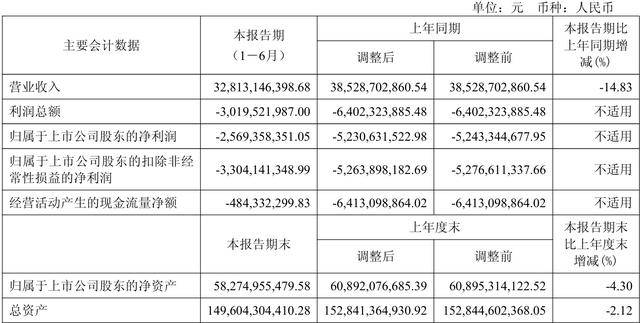
分组1 - Longi Green Energy reported a revenue of 32.81 billion yuan in the first half of 2025, a decrease of 14.83% year-on-year, with a net loss of 2.57 billion yuan, an improvement of 2.66 billion yuan compared to the previous year [1][2] - The company increased its silicon wafer shipments to 52.08 GW, with external sales of 24.72 GW, and battery module shipments of 41.85 GW, but faced losses due to market prices falling below cost levels [1][2] 分组2 - Vanke A reported a revenue of 105.32 billion yuan in the first half of 2025, a decrease of 26.23% year-on-year, with a net loss of 11.95 billion yuan, a decrease of 21.25% compared to the previous year [3][5] - The company completed the delivery of over 45,000 housing units and achieved a sales amount of 69.11 billion yuan, with a collection rate exceeding 100% [5][6] 分组3 - Tonghuashun achieved a revenue of 1.78 billion yuan in the first half of 2025, an increase of 28.07% year-on-year, with a net profit of 502 million yuan, up 38.29% [7][8] - The increase in revenue was attributed to a rise in user activity on its platform and increased demand for financial information services [7][8] 分组4 - Changan Automobile reported a revenue of 72.69 billion yuan in the first half of 2025, a decrease of 5.25% year-on-year, with a net profit of 2.29 billion yuan, down 19.09% [9][10] - The company achieved a sales volume of 1.355 million vehicles, a year-on-year increase of 1.6%, with new energy vehicle sales reaching 452,000 units, up 49.1% [9][10][11] 分组5 - Ping An Bank reported a revenue of 69.39 billion yuan in the first half of 2025, a decrease of 10.0% year-on-year, with a net profit of 24.87 billion yuan, down 3.9% [12][14] - The bank's net interest margin was 1.80%, a decrease of 16 basis points compared to the previous year [12][14] 分组6 - Longi Green Energy's net loss expanded to 4.955 billion yuan in the first half of 2025, with revenue of 40.51 billion yuan, a decrease of 7.51% year-on-year [26][28] - The company cited ongoing supply-demand imbalances in the industry as a significant challenge [26][28] 分组7 - China CNR reported a revenue of 119.76 billion yuan in the first half of 2025, an increase of 32.99% year-on-year, with a net profit of 7.25 billion yuan, up 72.48% [23][24][25] - The revenue increase was primarily driven by growth in railway equipment and new industry income [23][24] 分组8 - Jiangsu Bank reported a revenue of 448.64 billion yuan in the first half of 2025, an increase of 7.78% year-on-year, with a net profit of 202.38 billion yuan, up 8.05% [32][33] - The bank's total assets reached 4.79 trillion yuan, a growth of 21.16% compared to the previous year [32][33]






通威股份:第九届董事会第三次会议决议公告
Zheng Quan Ri Bao· 2025-08-22 16:09
Core Viewpoint - Tongwei Co., Ltd. announced the approval of multiple proposals, including the "2025 Semi-Annual Report and Summary" during the third meeting of its ninth board of directors [2] Group 1 - The company held its third meeting of the ninth board of directors on August 22 [2] - The meeting resulted in the approval of the 2025 semi-annual report and its summary [2]