KWEICHOW MOUTAI(600519)

Search documents
贵州茅台现2笔大宗交易 总成交金额8648.86万元
Zheng Quan Shi Bao Wang· 2026-01-26 14:37
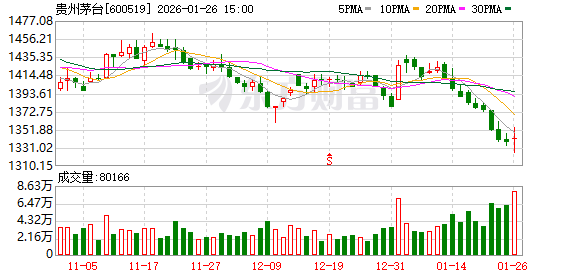
Group 1 - Guizhou Moutai conducted two block trades on January 26, with a total transaction volume of 66,100 shares and a total transaction amount of 86.49 million yuan, at a price of 1,308.45 yuan, reflecting a discount of 2.50% compared to the closing price of the day [2][3] - Over the past three months, Guizhou Moutai has recorded a total of 17 block trades, amounting to 214 million yuan [2] - The closing price of Guizhou Moutai on January 26 was 1,342.00 yuan, with a daily increase of 0.37% and a turnover rate of 0.64%, resulting in a total trading volume of 10.751 billion yuan and a net inflow of main funds of 427 million yuan for the day [2] Group 2 - The latest margin financing balance for Guizhou Moutai is 19.579 billion yuan, which has increased by 1.07 billion yuan over the past five days, representing a growth rate of 5.78% [3] - Guizhou Moutai was established on November 20, 1999, with a registered capital of 12.5227 billion yuan [3] - The block trade details on January 26 include a transaction volume of 38,400 shares for 50.2445 million yuan and another of 27,700 shares for 36.2441 million yuan, both at a price of 1,308.45 yuan, with a discount of 2.50% [3]


A股“煤飞色舞”,卫星、半导体熄火!权重股“惊现”亿元压单
Guo Ji Jin Rong Bao· 2026-01-26 14:12
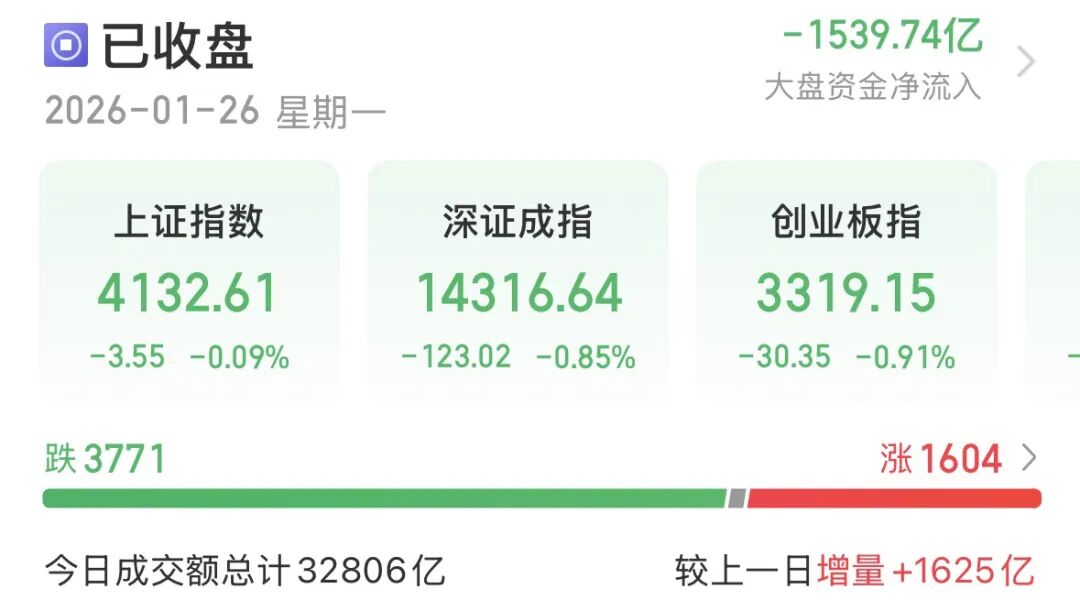
1月26日,市场交易放量突破3万亿元,指数却微幅收低,板块与个股呈现显著分化,3771只股票收盘下跌。沪指在有色、煤炭等周期股护盘下仅微跌,而 卫星、半导体等科技赛道集体回吐,双创指数跌近1%。 21只个股出现超1亿元的大额压单,集中在中国平安、贵州茅台(600519)等权重股,紫金矿业(601899)卖一挂出近41亿元巨额压单。 板块跌多涨少,分化显著。有色金属板块大涨4.57%,个股掀涨停潮;石油石化、煤炭跟进,和顺石油(603353)、洲际油气(600759)、中曼石油 (603619)均涨停,农林牧渔、非银金融、银行等板块护盘。 受访人士表示,资金并未撤离,只是从高位科技成长板块流向顺周期及避险方向,完成"高切低"。经历前期阶段性拉升后,资金分歧加大,后市大概率通 过震荡与结构性轮动消化涨幅。春季行情预期仍在,资金将围绕业绩验证与估值重估展开新一轮博弈。 黄金、煤炭、石油等大涨 截至收盘,沪指微跌0.09%收涨4132.61点,创业板指收跌0.91%报3319.15点,深证成指收跌0.85%。科创50、北证50均跌逾1%,沪深300、上证50微红。 今日沪深京三市量能温和放大,日成交额增加1627亿元 ...


食品饮料行业周报:板块阶段性底部,关注春节备货催化-20260126
Tai Ping Yang Zheng Quan· 2026-01-26 14:10
Investment Rating - The industry is rated positively, with expectations of overall returns exceeding the CSI 300 Index by more than 5% in the next six months [24]. Core Views - The food and beverage sector is currently at a phase of bottoming out, with a focus on the upcoming Spring Festival inventory buildup as a catalyst for growth [1][5]. - The liquor sector is experiencing a slow recovery in demand, with a focus on stabilizing expectations before discussing recovery, particularly for leading brands like Kweichow Moutai and Shanxi Fenjiu [6][19]. - The snack sub-sector has shown strong performance, with significant growth in companies like Mingming Hen Mang, which plans to go public in Hong Kong [20][22]. Summary by Sections Sub-industry Ratings - No ratings for liquor, beverages, and food sectors [3]. - Recommended companies include: - Kweichow Moutai: Buy - Shanxi Fenjiu: Buy - Guming: Buy - Mixue Group: Increase Holding - Ximai Food: Buy - Dongpeng Beverage: Buy - Wancheng Group: Buy - Pop Mart: Buy [3]. Industry Performance - The food and beverage sector saw a decline of 1.57%, ranking 28th among 31 sub-industries [5][14]. - The top-performing sub-sectors were snacks, pre-processed foods, and cooked foods, with increases of 6.44%, 5.02%, and 4.25% respectively [5][14]. - The top five stocks in the sector included: - Haoxiangni (+19.59%) - Weizhi Xiang (+17.23%) - Wancheng Group (+14.32%) - Quanyuan (+13.57%) - CITIC Nia (+9.69%) [5][14]. Liquor Sector Insights - The liquor index fell by 2.80%, with a focus on the upcoming Spring Festival for potential recovery [6][19]. - Current prices for Moutai products are: - Feitian Moutai (loose bottle): 1560 RMB, up 10 RMB from last week - Pu'er Moutai: 810 RMB, unchanged from last week [6][19]. Consumer Goods Sector Insights - Several companies are planning IPOs in Hong Kong, with Mingming Hen Mang aiming to raise between 32.37 billion to 33.36 billion HKD [20][22]. - The company reported a GMV of 661 billion RMB for the first three quarters of 2025, a 74.5% year-on-year increase [20][22]. - Dongpeng Beverage plans to issue 40.89 million H shares, with an expected listing date of February 3, 2026 [20][22].


食品饮料行业深度报告:2025Q4基金食品饮料持仓分析:持仓继续下降,结构向大众品倾斜
Soochow Securities· 2026-01-26 12:24
Investment Rating - The report maintains an "Increase" rating for the food and beverage industry [1] Core Insights - The food and beverage sector continues to see a decline in holdings, with a shift towards mass-market products. The proportion of active equity funds in the food and beverage sector decreased to 4.04% in Q4 2025, down from 4.18% in Q3 2025, reflecting a 0.14 percentage point decline [9][15] - The report highlights a continued reduction in allocations to alcoholic beverages, while holdings in mass-market products have shown signs of recovery. The proportion of holdings in white liquor decreased by 0.29 percentage points to 2.92% in Q4 2025 [14][17] - Major consumer funds have reduced their allocations to alcoholic beverages, with a notable decrease of 2.22 percentage points in white liquor holdings, while overall food and beverage allocations have increased [17][21] Summary by Sections 1. Food and Beverage Holdings Continue to Decline, Structure Shifts Towards Mass-Market Products - As of Q4 2025, the total scale of active equity fund heavy holdings is approximately 19.4 trillion yuan, with food and beverage holdings at 78.4 billion yuan, reflecting a 9.01% decline [9][10] - The decline in alcoholic beverage holdings is evident, with white liquor allocations decreasing to 2.92% and beer and pre-mixed drinks also seeing slight reductions [14][15] 2. Holdings Become More Diversified, Capturing Marginal Recovery Themes - The number of heavy holdings in the food and beverage sector has become more diversified, with only Kweichow Moutai remaining in the top 20 heavy holdings [24] - The report notes that the top five stocks with the largest increase in heavy holdings include Baba Foods, Yingjia Gongjiu, Youran Dairy, Ximai Foods, and Modern Animal Husbandry [28][29] 3. Investment Recommendations - The report suggests five key directions for investment: focusing on functional health foods, improving supply chains and product/channel resonance in leading snack companies, expanding quality retail formats, investing in long-lifecycle beverage leaders, and tracking sectors with potential recovery such as dairy and large-scale dining [10][29]



2025Q4基金食品饮料持仓分析:持仓继续下降,结构向大众品倾斜
Soochow Securities· 2026-01-26 12:12
Investment Rating - The report maintains an "Increase" rating for the food and beverage industry [1] Core Insights - The food and beverage sector continues to see a decline in holdings, with a shift towards mass-market products. The proportion of active equity funds in the food and beverage sector decreased to 4.04% in Q4 2025, down 0.14 percentage points from the previous quarter [9][15] - The report highlights a continued reduction in allocations to alcoholic beverages, while holdings in mass-market products have shown signs of recovery. The proportion of holdings in white liquor decreased by 0.29 percentage points to 2.92% in Q4 2025 [14][17] - The report emphasizes the importance of capturing valuation switching opportunities in five key areas: health food and supplements, leading snack brands, quality retail chains, beverage leaders with long life cycles, and sectors expected to recover from downturns, particularly dairy [29][30] Summary by Sections 1. Holdings Decline and Shift Towards Mass-Market Products - Active equity funds' holdings in the food and beverage sector decreased by 9.01% to 784 billion yuan in Q4 2025, with a total market value of approximately 1.94 trillion yuan [9][10] - The decline in holdings is attributed to a preference for technology and other sectors, while the alcoholic beverage sector continues to face downward pressure [10][14] 2. Increased Diversification in Holdings - The number of heavily held stocks in the food and beverage sector has become more diversified, with only Kweichow Moutai remaining in the top 20 heavy holdings [24][28] - The report notes that the top five stocks with the largest increase in heavy holdings include Baba Foods, Yingjia Gongjiu, Youran Dairy, Ximai Foods, and Modern Dairy [28][29] 3. Investment Recommendations - The report suggests focusing on five areas for investment: innovative health food, leading snack brands, quality retail chains, beverage leaders, and sectors expected to recover from downturns [29][30] - It emphasizes the need to pay attention to the health food sector, which is expected to benefit from an expanding consumer base and product innovation [29][30]
食品饮料行业跟踪报告:茅台批价回暖,关注春节动销催化
Shanghai Aijian Securities· 2026-01-26 11:06
Investment Rating - The industry is rated as "Outperform" compared to the market [4][34]. Core Insights - The liquor industry is entering a phase of rapid performance clearing, with demand expected to show weak recovery as policy pressures ease. The industry is currently at a low valuation, and pessimistic expectations are fully priced in. The top liquor companies are stabilizing prices and driving up wholesale prices, which enhances dividend yields and makes them attractive for investment. Long-term, it is recommended to focus on high-quality leading companies with strong performance certainty, such as Kweichow Moutai and Shanxi Fenjiu [4]. - In the consumer goods sector, there are high-growth opportunities, with some segments still benefiting from new products and channels. Companies like Wancheng Group and Dongpeng Beverage, which show good growth momentum, are recommended for investment [4]. Summary by Sections Liquor Sector - As the Spring Festival approaches, the sales of high-end liquor are gradually increasing, with Kweichow Moutai's wholesale prices showing slight recovery. The price of Moutai's regular bottles has increased by 20 yuan to 1560 yuan as of January 25, indicating a recovery in demand. The sales boost is driven by gift-giving and banquet needs during the festive season, highlighting the essential nature of high-end liquor [5]. - The launch of the i Moutai product has effectively reached new consumer groups, contributing to incremental demand. The bottom of the wholesale price may have been established, reducing downward risks significantly [5]. Consumer Goods Sector - The upcoming IPO of "Mingming Hen Mang" is set to further solidify the duopoly in the industry. The company plans to issue 14.1 million shares at a price range of 229.60-236.60 HKD per share. With over 20,000 stores under its brands, it has a strong market presence, particularly in lower-tier markets. The company reported a revenue of 46.371 billion yuan for the first three quarters of 2025, a year-on-year increase of 75.22%, and a net profit of 1.559 billion yuan, up 218.84% [5]. - The introduction of national standards for pre-prepared dishes is expected to accelerate the standardization process in the industry, benefiting leading companies with strong supply chain capabilities. This may lead to increased market concentration as smaller companies face pressure to exit [5].
黔有“资”谈 | 华创证券陈强:目前贵州证券市场流动性充裕
Sou Hu Cai Jing· 2026-01-26 10:52
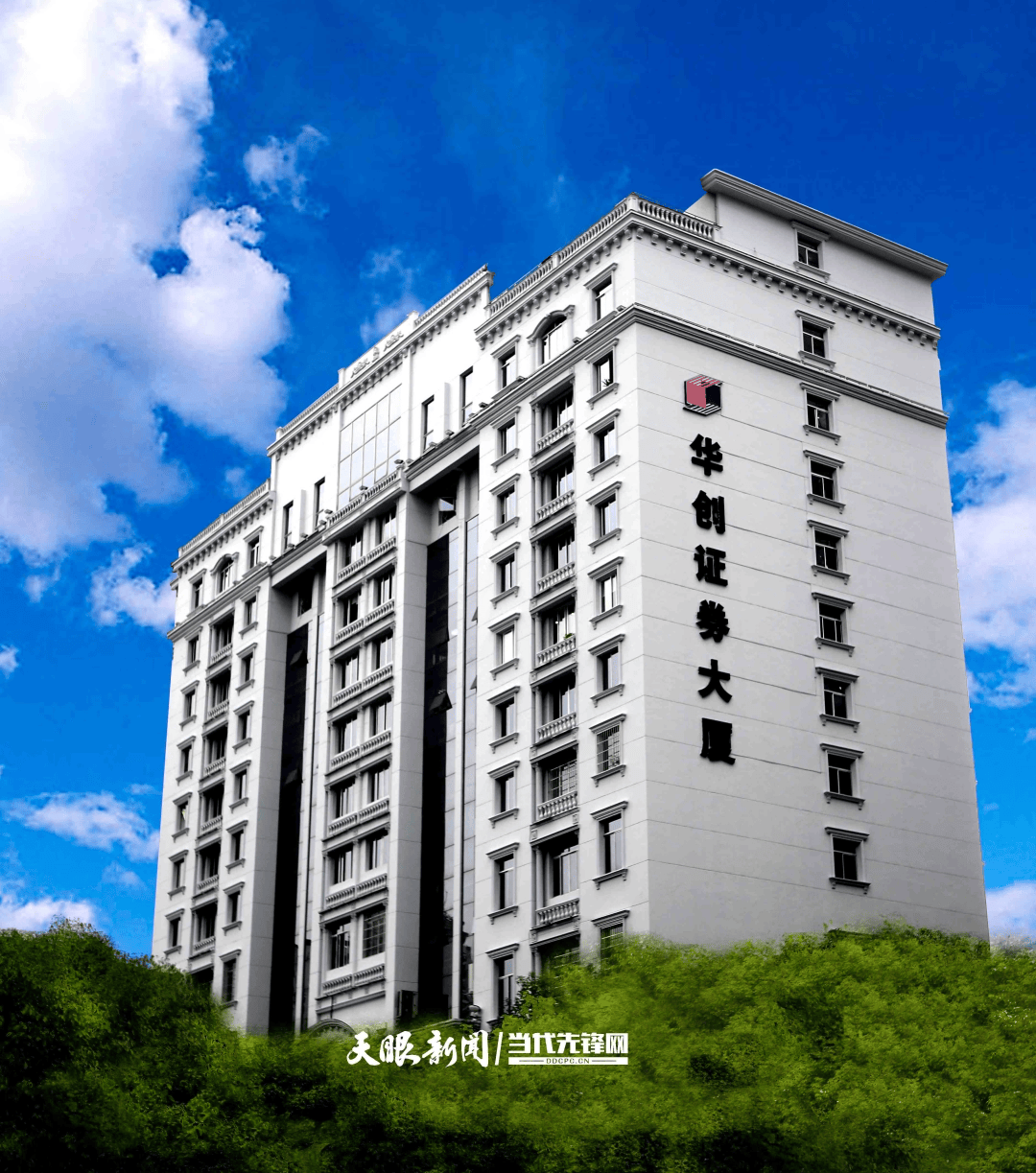
"十四五"期间,作为贵州省内唯一全牌照综合性证券公司的华创证券,成为西部地区第二家取得基金投顾业务试点资格的证券公司,创新业务稳步推进。 记者日前采访了华创证券执行委员会联席主任、总裁陈强,探讨了目前贵州证券市场的特点,以及贵州应该怎样利用资本工具来发展壮大实体经济。 位于贵阳市区的华创证券办公大楼 陈强说,"十四五"期间,贵州证券公司分支机构服务网络日益完善,截至2025年9月,贵州辖区已形成"本土券商+全国性机构分支"的多元布局,全省超 3000名从业人员,构建起覆盖全省主要市县的服务网络;期货经营机构目前虽仅有8家,但头部机构加速落地。而且,贵州证券市场的交易活跃度显著提 升,证券交易成交金额大幅增长。 记者了解到,2025年1月至9月,贵州辖区证券市场(包括股票、基金、债券等)累计成交金额的同比增速远高于全国平均水平。那么目前贵州资本市场在 全国的优势有哪些、"股债基期"中哪一个最适合目前的贵州发展? 陈强说,目前贵州资本市场有三个方面优势:首先是形成了以贵州茅台为核心,新能源、新材料和生物医药产业为特色的上市企业群,这个方面传统行业 起到了"稳定器"的作用,培育中的新兴产业为未来增长提供潜力。其二是 ...
基金2025年末的重仓股出炉!50家公司被基金持股超百亿!
Sou Hu Cai Jing· 2026-01-26 10:46
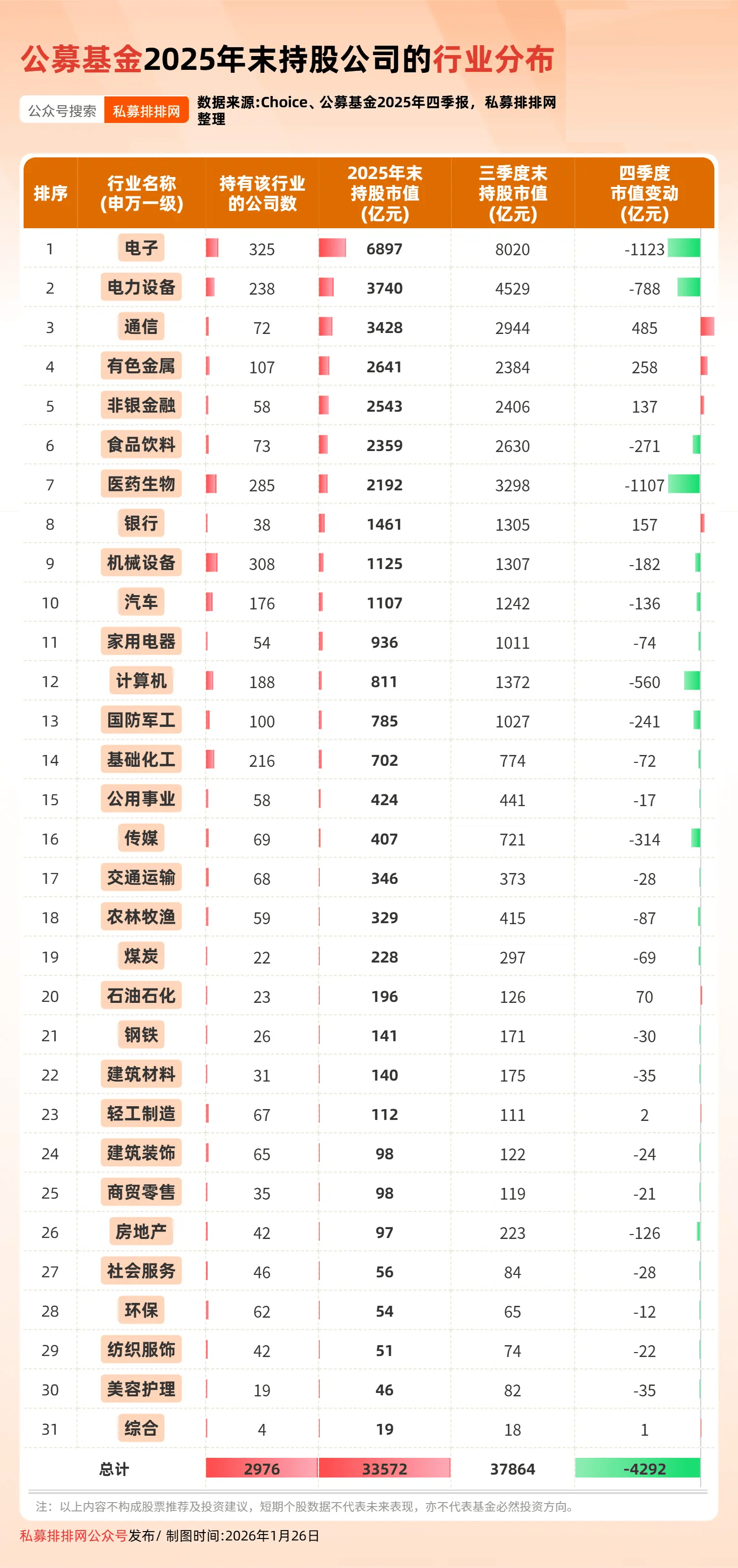
Core Viewpoint - The public fund's fourth quarter report for 2025 reveals significant changes in stock holdings, with a total market value of approximately 33,572 billion yuan, a decrease of about 4,292 billion yuan compared to the previous quarter [1]. Group 1: Overall Fund Holdings - By the end of 2025, public funds held shares in 2,976 A-share companies, with the highest market value in the electronics sector at approximately 6,897 billion yuan, despite a decrease of over 1,000 billion yuan from the previous quarter [1][2]. - The sectors of power equipment (mainly renewable energy) and communication also saw significant holdings, exceeding 3,700 billion yuan and 3,400 billion yuan, respectively [1]. Group 2: Sector Performance - Compared to the third quarter, public funds increased their holdings in the communication, non-ferrous metals, banking, and non-bank financial sectors by over 100 billion yuan each [2]. - Conversely, holdings in the electronics and biopharmaceutical sectors decreased by over 1,000 billion yuan, while power equipment and computer sectors saw reductions exceeding 500 billion yuan [2]. Group 3: Top Holdings - The top heavyweights among public fund holdings include Ningde Times, with a market value of approximately 1,819 billion yuan, followed by Zhongji Xuchuang and Xinyi Sheng, both exceeding 1,000 billion yuan [5][6]. - A total of 50 A-share companies had public fund holdings exceeding 100 billion yuan, with 17 from the electronics sector and 6 from non-bank financials [5]. Group 4: Market Performance - The median increase for the 50 A-share companies heavily held by funds in the fourth quarter was 0.59%, outperforming the Shenzhen Composite Index during the same period [5]. - Among these, Zhongji Xuchuang led with a remarkable increase of over 51% in the fourth quarter [5]. Group 5: Significant Changes in Holdings - By the end of 2025, 94 companies had public fund holdings exceeding 10% of their circulating shares, with 12 from the electronics sector and 6 from biopharmaceuticals [9]. - Notably, 6 stocks saw increases of over 50% in the fourth quarter, with Ding Tai Gao Ke leading at nearly 95% [9]. Group 6: Fund Adjustments - In the fourth quarter, 34 companies received over 10 billion yuan in increased holdings, with significant contributions from the financial and non-ferrous metals sectors [17]. - The median increase for these stocks was over 32%, significantly outperforming major A-share indices [17]. Group 7: Decreased Holdings - 31 companies experienced reductions exceeding 50 billion yuan in holdings, predominantly from the electronics sector [20]. - The median decline for these stocks was over 8%, underperforming major A-share indices [20].



张坤四季报:困难只是暂时的,中国消费“有鱼可钓”!
市值风云· 2026-01-26 10:15
Core Viewpoint - The current market pricing for some high-quality companies is very low, making them attractive even for privatization [1][12]. Group 1: Fund Performance - In Q4 2025, the assets under management by Zhang Kun decreased to 48.3 billion, with a quarterly shrinkage of over 8 billion [4]. - The performance of Zhang Kun's four funds showed significant structural differentiation, with the largest fund, E Fund Blue Chip Select Mixed Fund, losing nearly 9% in Q4, underperforming its benchmark by over 6% [4][5]. - In contrast, the E Fund Asia Select Stock Fund achieved a positive return of 4.5% in Q4, outperforming its benchmark by over 2%, and had an annual increase of nearly 42% for 2025 [4][5]. Group 2: Sector Adjustments - Zhang Kun continued to reduce holdings in the liquor sector, albeit at a slower pace compared to Q3 2025, maintaining a near 10% position in leading liquor stocks like Kweichow Moutai and Wuliangye [6]. - Significant reductions were also observed in pharmaceutical and media stocks, with JD Health seeing its holdings cut by about half [8]. Group 3: Consumer Market Outlook - Zhang Kun expressed optimism about the future of domestic consumption, citing that the current weak consumption data is not a long-term trend [10]. - He believes that the Chinese government's goal of reaching a middle-income level by 2035 indicates substantial growth potential for income, which will enhance consumer spending [11]. - The stabilization of housing prices, which have been a barrier to consumer confidence, is expected to further boost spending as wealth perception improves [11]. Group 4: Technology and Innovation - A strong domestic consumer market is viewed as a crucial driver for technological innovation, with examples from leading AI models abroad demonstrating the revenue potential from consumer subscriptions [12]. - Zhang Kun emphasized that with a stronger consumer environment, domestic tech companies could generate more income to support research and development, accelerating their growth to catch up with global leaders [12]. Group 5: Long-term Investment Perspective - Despite short-term pressures, Zhang Kun maintains a long-term positive outlook on China's consumption potential and economic development, positioning for investments in quality companies that will grow alongside rising living standards [13].

公募基金调仓图谱:科技制造主线强化 传统蓝筹获回流布局 新能源内部分化(附加减仓TOP50榜单)
Xin Lang Cai Jing· 2026-01-26 10:09
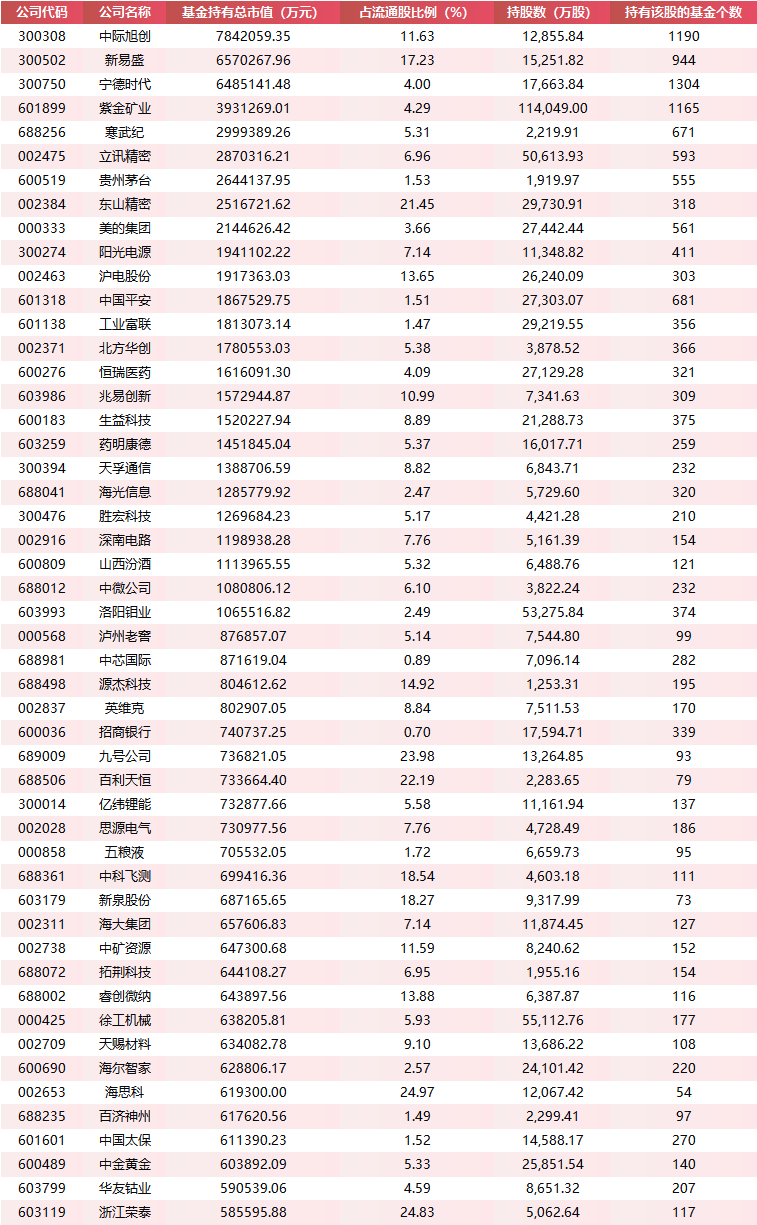
截至2025年四季度末,公募基金持仓数据已随季报披露完毕。从整体配置看,科技成长与高端制造仍是基 金布局的核心方向,传统行业龙头及部分周期股也保持较高配置水平。 专题:聚焦2025基金四季报:AI应用、商业航天、核聚变,谁领2026投资主线? 公募基金Top50重仓股:科技成长与高端制造核心方向 超千只基金持有宁德时代、中际旭创、紫金矿业 在持股市值排名前50的个股中,前十大重仓股多集中于通信、AI、电子等科技板块,包括中际旭创、新易 盛、寒武纪、立讯精密等龙头,体现出机构对科技创新与产业升级的持续看好。新能源方向以宁德时代、 阳光电源为代表;资源股如紫金矿业、洛阳钼业配置稳定,反映对周期板块的结构性布局。消费行业仍以 贵州茅台、美的集团为核心持仓;医药板块中恒瑞医药、药明康德持续入选,但持股基金数量有所波动。 | 公司代码 | 公司名称 | 基金持有总市值 (万元) | 占流通股比例 (%) | 持股数 (万股) | 持有该股的基金个数 | | --- | --- | --- | --- | --- | --- | | 300308 | 中际旭创 | 7842059.35 | 11.63 | 12,855. ...