
BAIC BluePark(600733)

Search documents
2025Q3业绩综述:乘用车、零部件略有承压,商用车、摩托车表现更佳
Soochow Securities· 2025-11-03 11:58
Group 1: Overall Market Performance - The overall performance of the passenger car sector in Q3 2025 was below expectations, primarily due to a slowdown in industry growth and intensified competition across all price segments[3] - The passenger car industry saw a year-on-year growth rate of only 3% in retail sales, 23% in exports, and 13% in wholesale during Q3 2025, indicating a significant deceleration compared to previous quarters[27] - The inventory levels in the industry remain healthy, with a controlled increase in stock despite the overall market pressures[27] Group 2: Segment-Specific Insights - Heavy-duty trucks experienced a strong performance in Q3 2025, with wholesale, domestic, and export sales increasing by 58.1%, 64.5%, and 22.9% year-on-year, respectively[5] - The bus sector also performed well, with leading companies like Yutong achieving significant revenue growth, driven by robust demand from both domestic and international markets[6] - The motorcycle segment saw a 57.4% increase in large-displacement motorcycle exports, while domestic sales faced pressure, declining by 9.3% year-on-year[7] Group 3: Financial Metrics and Adjustments - The average selling price (ASP) for vehicles remained stable in Q3 2025, with some companies like BYD implementing price increases starting in July[3] - The gross profit margins for many companies showed slight recovery, attributed to stable sales and limited discounting in the market[3] - Several companies, including Great Wall Motors and Changan, reported a decline in net profit due to foreign exchange losses and inventory adjustments[4]


行业总量专题:2026年购置税补贴减半,预计电车销量仍可维持中高个位数增长
Hua Yuan Zheng Quan· 2025-11-03 09:20
Investment Rating - The industry investment rating is "Positive" (maintained) [3] Core Viewpoints - The 2026 purchase tax subsidy for new energy vehicles (NEVs) is set to be halved, yet it is expected that electric vehicle (EV) sales can still maintain a mid-to-high single-digit growth rate [3][9] - The impact of the subsidy reduction will be significant, affecting approximately 90% of NEV consumers, particularly in the low-price segment [6][17] - The overall market for NEVs is influenced by multiple factors beyond subsidies, including the introduction of quality supply and the gradual penetration of NEVs into various channels [7][9] Summary by Sections 1. Analysis of the Impact of the 2026 New Energy Vehicle Purchase Tax Policy - The purchase tax subsidy for NEVs will be halved from 2026 to 2027, with the maximum subsidy per vehicle reduced to 15,000 yuan [5][13] - The technical requirements for subsidies will also increase, with the pure electric range requirement for plug-in hybrid and extended-range vehicles rising from 43 km to 100 km [5][13][24] - The subsidy reduction will have broad implications, with 90% of low-price segment consumers feeling the impact significantly [6][17] 2. Overall Forecast - The expected growth rates for NEV insurance registrations are 19% for 2025 and 9% for 2026, with potential upward adjustments depending on advancements in autonomous driving technology [8][33] - Despite the subsidy reduction, the NEV penetration rate is anticipated to maintain a slight increase due to factors such as quality supply and market dynamics [7][9][41] - The total volume of NEVs is projected to grow moderately, with the potential for unexpected demand driven by technological innovations [8][40] 3. Investment Opportunities - Focus on high-end automakers less affected by the subsidy reduction, such as Jianghuai Automobile [9] - Attention to automakers with strong new product cycles that can offset the impact of subsidy reductions, including Geely Automobile and SAIC Group [9] - Consider companies that may create additional demand through technological innovations, such as Li Auto and Xpeng Motors [9]





一图读懂|新能源汽车电池退役后,都去哪儿了?
Bei Ke Cai Jing· 2025-11-03 08:21
Core Insights - The large-scale retirement of electric vehicle batteries is creating a trillion-yuan recycling market, with retired batteries being diverted into "cascade utilization" and "recycling" paths based on their health status [1][2][16] Group 1: Market Overview - The recycling market for retired batteries is projected to exceed 400 million tons, with an industry value expected to surpass 280 billion yuan [18] - The recovery volume is anticipated to exceed 300,000 units, with a market scale of approximately 48 billion yuan [19] Group 2: Battery Lifecycle - The process from battery retirement to recycling involves several stages: health status detection, sorting, reorganization, and system integration for cascade utilization [4][12] - For recycling, automated disassembly and wet metallurgy techniques are employed to recover valuable metals like lithium, cobalt, and nickel, achieving recovery rates of 99.6% for certain metals and 96.5% for lithium [7][9][14] Group 3: Application Scenarios - Cascade utilization applications include energy storage bases (such as 5G base stations and photovoltaic storage systems), low-speed vehicles (like electric forklifts and sightseeing cars), and backup power sources (UPS) [11][10] Group 4: Industry Participants - Battery sources include vehicle manufacturers (OEMs) like BYD, SAIC Group, and Geely, as well as battery producers like CATL and Guoxuan High-Tech [23][24] - Recycling and channel partners include companies like Greeenme and Tianqi, which build recycling networks and collaborate with manufacturers for battery collection [27][28] - Processing and recycling firms include Greenme and BYD, which handle the final recycling stages [30][31] - End-users of recycled materials include battery material producers who utilize recovered materials to manufacture new batteries [36]




11月3日早间重要公告一览
Xi Niu Cai Jing· 2025-11-03 05:09
Group 1 - Weiming Environmental has been selected as a supplier for Indonesia's environmentally friendly waste-to-energy project [1] - Great Wall Motors reported a 22.5% year-on-year increase in October vehicle sales, totaling 143,100 units [1] - Jingye Intelligent won a bid for a process equipment project worth 134 million yuan [1][2] Group 2 - Tianmo Technology's shareholder plans to reduce its stake by up to 3% of the company's total shares [3] - ST Yifei signed a procurement order worth approximately 190 million yuan, accounting for 27.46% of its audited revenue for 2024 [4] - Lanjian Intelligent signed a daily operational contract worth 138 million yuan [5] Group 3 - Rongqi Technology's shareholder plans to reduce its stake by up to 1.32% of the company's total shares [6] - Huafeng Measurement Control's controlling shareholder plans to reduce its stake by up to 2% of the company's total shares [7] - Jinli Permanent Magnet's directors and executives plan to reduce their holdings by up to 0.15% of the company's total shares [9] Group 4 - Seres reported a 42.89% year-on-year increase in October sales of new energy vehicles, totaling 51,456 units [10] - Betta Pharmaceutical entered into a strategic cooperation with Shengsi Bio, enhancing its product matrix [11] - Nenghui Technology established a joint venture with Zhejiang Lisan to capitalize on opportunities in the "computing power + new energy" sector [12] Group 5 - Taotao Vehicle submitted an application for H-share listing on the Hong Kong Stock Exchange [13] - BYD's October sales of new energy vehicles reached 441,700 units, a decrease of approximately 12.13% year-on-year [14] - Daye Intelligent's subsidiary signed a charter contract for two vessels, with total expected rental income of approximately 48.73 million USD [15] Group 6 - Changan Automobile reported a 36.14% year-on-year increase in October sales of new energy vehicles, totaling 119,200 units [16] - Vanke A signed a framework agreement for a loan of up to 22 billion yuan from its major shareholder [18] - BAIC Blue Valley's subsidiary reported a 112.02% year-on-year increase in October vehicle sales, totaling 30,542 units [20] Group 7 - Yongzhen Co. announced plans for shareholders to reduce their stake by up to 3% of the company's total shares [21]




承载北汽新能源“爆款”刚需 全新阿尔法T5重装上市
Jing Ji Guan Cha Wang· 2025-11-03 04:42
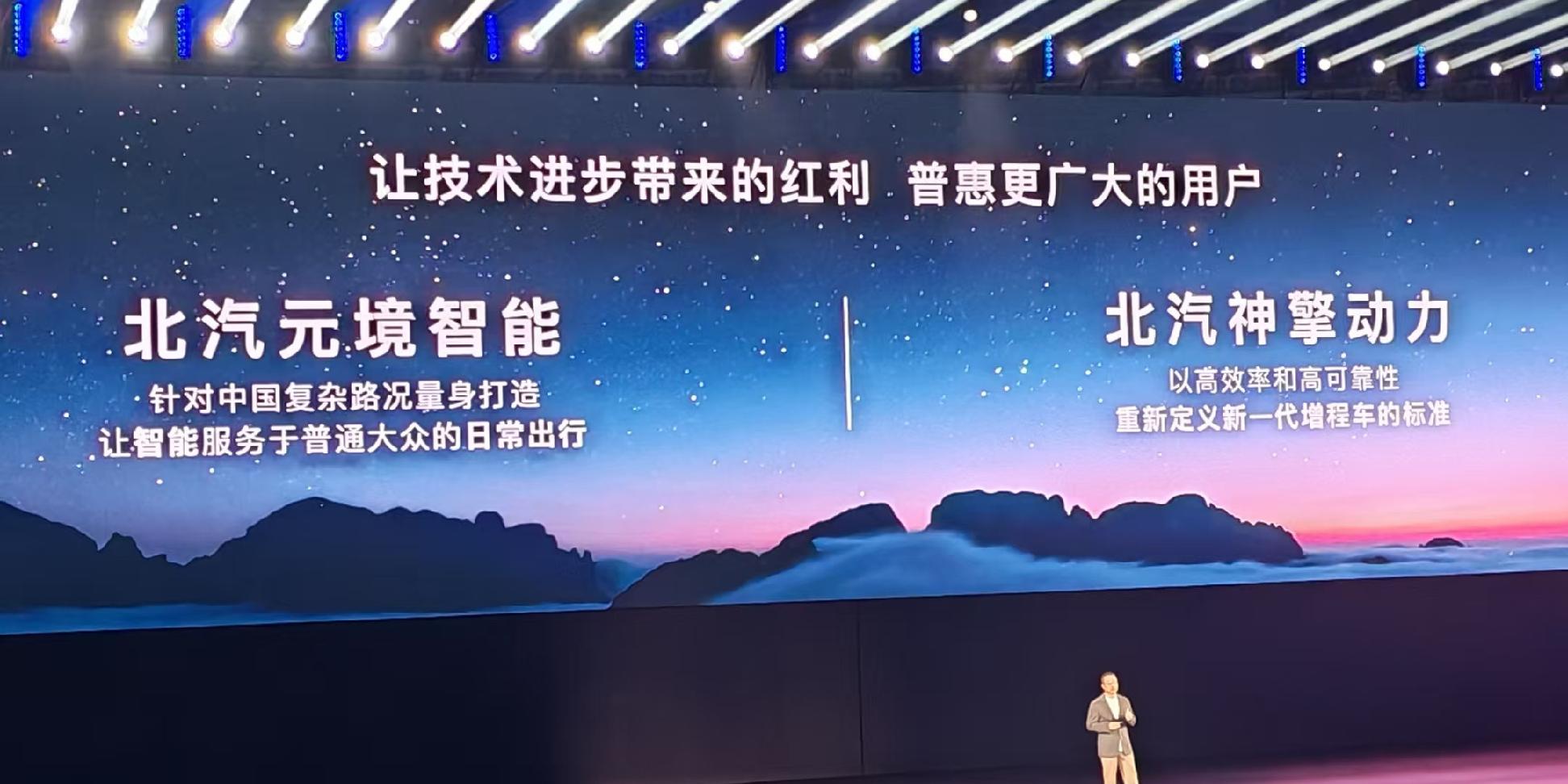
Core Viewpoint - The domestic passenger car market is witnessing a surge in new car launches, with the introduction of the new Alpha T5 by Jihu as a key player in the 100,000 to 150,000 RMB price range, aiming to become a bestseller for BAIC New Energy amid declining profits in traditional fuel vehicles [2][3][4]. Financial Performance - BAIC Group has two listed companies: Beijing Automotive (HK 1958) and BAIC Blue Valley (600733). Beijing Automotive reported a significant decline in net profit, dropping over 90% from 3.1 billion RMB to only 51.29 million RMB in the first nine months of the year [3][4]. - In contrast, BAIC Blue Valley's total sales exceeded 110,000 units, marking a 64.34% year-on-year increase, with losses narrowing to 3.43 billion RMB from 4.5 billion RMB [4][5]. Market Dynamics - The sales of Beijing Automotive fell to 421,000 units in the first three quarters, with a revenue drop of 16.12% to 120.8 billion RMB, primarily due to price wars and declining sales in fuel vehicles [3][4]. - The new Alpha T5 is positioned to compete in the price-sensitive segment, offering high-tech features and aggressive pricing strategies to attract consumers [6][7]. Product Strategy - The new Alpha T5 is launched with a price range of 109,800 to 154,800 RMB, featuring seven models and significant upgrades from its predecessor, including enhanced design and technology [5][6]. - The vehicle incorporates advanced technologies such as the "Yuanjing Intelligent Driving" and "Shenqing Range Extender" systems, aiming to provide a competitive edge in the growing market for range-extended electric vehicles [6][7]. Sales Performance - In October, BAIC New Energy achieved monthly sales exceeding 30,000 units, with pre-sale orders for the new Alpha T5 surpassing 10,000 units, indicating strong market interest [7].
10月新能源车企销量普增,比亚迪、零跑等创新高
Cai Jing Wang· 2025-11-03 01:51
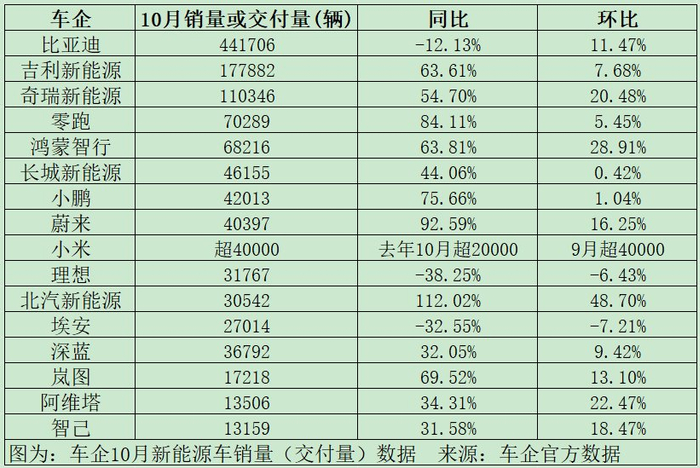
Core Insights - The overall delivery volume of new energy vehicle companies in October showed a month-on-month increase compared to September, with significant contributions from both traditional and new energy vehicle manufacturers [1] Group 1: Company Performance - BYD achieved a total sales volume of 441,706 units in October, marking an 11.47% increase month-on-month but a 12.13% decrease year-on-year [1] - Geely New Energy and Chery New Energy ranked second and third in sales, with year-on-year increases of 63.61% and 54.70%, respectively [1] - Leap Motor's monthly delivery volume reached a record high of 70,289 units, representing an 84.11% increase year-on-year [1] Group 2: State-Owned Enterprises - Among state-owned enterprises, Deep Blue, BAIC New Energy, and Lantu ranked highest in sales, with Lantu achieving nine consecutive months of growth since 2025 [1] - BAIC New Energy reported a remarkable year-on-year increase of 112.02% in sales, reaching 30,542 units in October [1] - Lantu's sales increased by 69.52% year-on-year, totaling 17,218 units [1] Group 3: Emerging Players - Companies like Xpeng and NIO also reported significant growth, with Xpeng achieving a year-on-year increase of 75.66% and NIO experiencing a decline of 38.25% [1] - The overall performance of new energy vehicle startups indicates a competitive landscape, with several companies breaking their previous monthly delivery records [1]
北汽蓝谷新能源科技股份有限公司关于向特定对象发行股票申请收到上海证券交易所审核意见通知的公告
Shang Hai Zheng Quan Bao· 2025-11-02 18:56
Group 1 - The company received a notice from the Shanghai Stock Exchange regarding its application for a specific stock issuance, indicating that the application meets the necessary conditions for issuance, listing, and information disclosure [1] - The final approval from the China Securities Regulatory Commission (CSRC) is still uncertain, and the company will disclose information in accordance with regulations as the situation progresses [1] Group 2 - The company announced its subsidiary's production and sales report for October 2025, noting that the data is preliminary and subject to confirmation in regular reports [2] - The sales figures include models developed in collaboration with Beijing New Energy Automobile Co., Ltd. and produced by Beijing Automotive Group Co., Ltd. [2]
北汽蓝谷子公司北汽新能源10月销量同比增长112.02%
Zhi Tong Cai Jing· 2025-11-02 17:16
Core Viewpoint - Beijing Automotive Blue Valley (600733.SH) reported significant growth in sales for October, indicating strong performance in the electric vehicle market [1] Sales Performance - The company's subsidiary, Beijing New Energy Automobile Co., Ltd., achieved sales of 30,542 vehicles in October, representing a year-on-year increase of 112.02% [1] - Cumulatively, from January to October, the total sales reached 142,043 vehicles, reflecting a year-on-year growth of 72.69% [1]
北汽蓝谷(600733.SH)子公司北汽新能源10月销量同比增长112.02%
智通财经网· 2025-11-02 17:07
Core Viewpoint - Beijing Automotive Blue Valley (600733.SH) reported significant growth in sales for October, indicating strong performance in the electric vehicle sector [1] Sales Performance - The subsidiary, Beijing New Energy Automobile Co., Ltd., achieved sales of 30,542 vehicles in October, representing a year-on-year increase of 112.02% [1] - Cumulative sales from January to October reached 142,043 vehicles, reflecting a year-on-year growth of 72.69% [1]
Q3财报汽零温和增长,看好明年汽车板块预期修复:汽车行业周报(20251027-20251102)-20251102
Huachuang Securities· 2025-11-02 12:51
Investment Rating - The report maintains a positive investment recommendation for the automotive sector, anticipating a recovery in 2025 [1][2]. Core Insights - The automotive industry experienced moderate growth in Q3, with weak performance from car manufacturers and overall mild growth in automotive parts. The report highlights potential catalysts for recovery in 2025, including better-than-expected retail sales post-Spring Festival, improved export performance, and favorable policies [1][5]. Data Tracking - In late October, the discount rate for vehicles increased by 9.6%, with a slight month-on-month rise of 0.1 percentage points. The average discount amount was 21,782 yuan, showing a month-on-month increase of 398 yuan [3][4]. - The report tracks various automotive raw material prices, noting significant changes in lithium carbonate, aluminum, copper, palladium, and rhodium prices [6][28]. Market Performance - The automotive sector saw a weekly increase of 0.69%, ranking 15th out of 29 sectors. The report details the performance of various indices, with the automotive parts sector rising by 1.13% and commercial vehicles by 4.41% [8][31]. Industry News - Key developments include the call for a phased exit of vehicle purchase tax reductions, the cessation of vehicle replacement subsidies in Shenzhen, and the launch of new models by various manufacturers [29][30].


