
Shanxi Xinghuacun Fen Wine Factory (600809)

Search documents
食品饮料行业周报 20260105-20260109:茅台改革全面向 C 伊利估值吸引力提升-20260111
Shenwan Hongyuan Securities· 2026-01-11 05:50
Investment Rating - The report maintains a positive outlook on the liquor sector, with expectations for a recovery in sales and valuation improvements in 2026 [2][6]. Core Insights - The liquor market is undergoing a restructuring with a focus on balancing volume and price, and a potential turning point is anticipated in Q3 2026 [2][6]. - The report highlights the importance of consumer price index (CPI) as a key indicator for the consumer goods sector, predicting gradual improvements in food CPI throughout 2026 [2][6]. - The report recommends several high-quality liquor companies for long-term investment, including Kweichow Moutai, Luzhou Laojiao, and Shanxi Fenjiu, while also suggesting attention to Wuliangye and other brands [2][6]. Summary by Sections 1. Weekly Overview of Food and Beverage Sector - The food and beverage sector saw a 2.12% increase last week, with liquor stocks rising by 2.46%, although it underperformed the broader market by 1.70 percentage points [5]. - Notable stock performances included Ziyuan Food (+33.97%), Qianwei Central Kitchen (+22.52%), and Anji Food (+18.34%) [5]. 2. Market Performance of Food and Beverage Sub-sectors - The food and beverage industry lagged behind the Shenwan A index by 3.06 percentage points, with various sub-sectors underperforming, particularly beverages and dairy [33][34]. 3. Liquor Pricing Trends - As of January 10, 2026, the price of Moutai was reported at 1540 RMB for loose bottles, reflecting a week-on-week increase of 50 RMB, while the price for a case rose by 40 RMB to 1545 RMB [7][19]. - The report indicates that Moutai's pricing has found a bottom, reducing downward risks and suggesting a potential for price stability moving forward [7][19]. 4. Consumer Goods Sector Insights - The report emphasizes the shift in competitive strategies from price-based to quality-based approaches among consumer goods companies, with expectations for improved margins as raw material costs stabilize [2][6]. - Recommendations for consumer goods include Anjijia Food, Yili Group, and Tianwei Food, with a focus on the supply chain related to condiments and frozen foods [8]. 5. Dairy Industry Outlook - The dairy sector is expected to see an improved supply-demand balance in 2026, with growth potential in deep-processed products and low-temperature milk [8][9]. - Yili Group's projected net profits for 2025-2027 are 11.3 billion, 12.2 billion, and 12.9 billion RMB, respectively, indicating a growth trajectory [9].





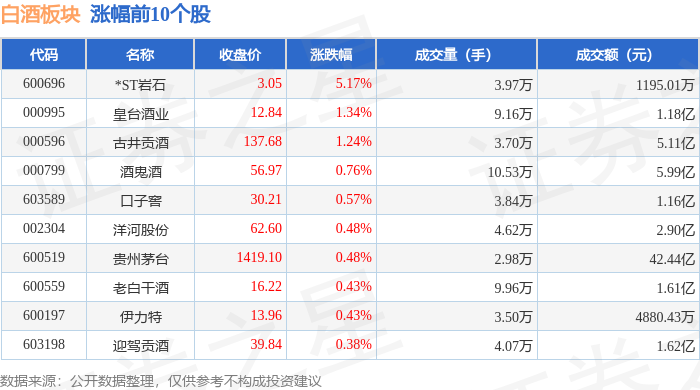
白酒板块1月9日涨0.4%,*ST岩石领涨,主力资金净流出8893.72万元
Zheng Xing Xing Ye Ri Bao· 2026-01-09 08:54
Group 1 - The liquor sector experienced a 0.4% increase on January 9, with *ST Yanshi leading the gains [1] - The Shanghai Composite Index closed at 4120.43, up 0.92%, while the Shenzhen Component Index closed at 14120.15, up 1.15% [1] - Key stocks in the liquor sector showed varied performance, with *ST Yanshi rising by 5.17% to a closing price of 3.05 [1] Group 2 - The main capital flow in the liquor sector showed a net outflow of 88.94 million yuan from institutional investors, while retail investors had a net inflow of 89.93 million yuan [2] - Individual stock capital flows indicated that Kweichow Moutai had a net inflow of 98.51 million yuan from institutional investors, despite a net outflow from retail investors [3] - Gujing Gongjiu saw a significant net inflow of 67.90 million yuan from institutional investors, while also experiencing outflows from retail investors [3]


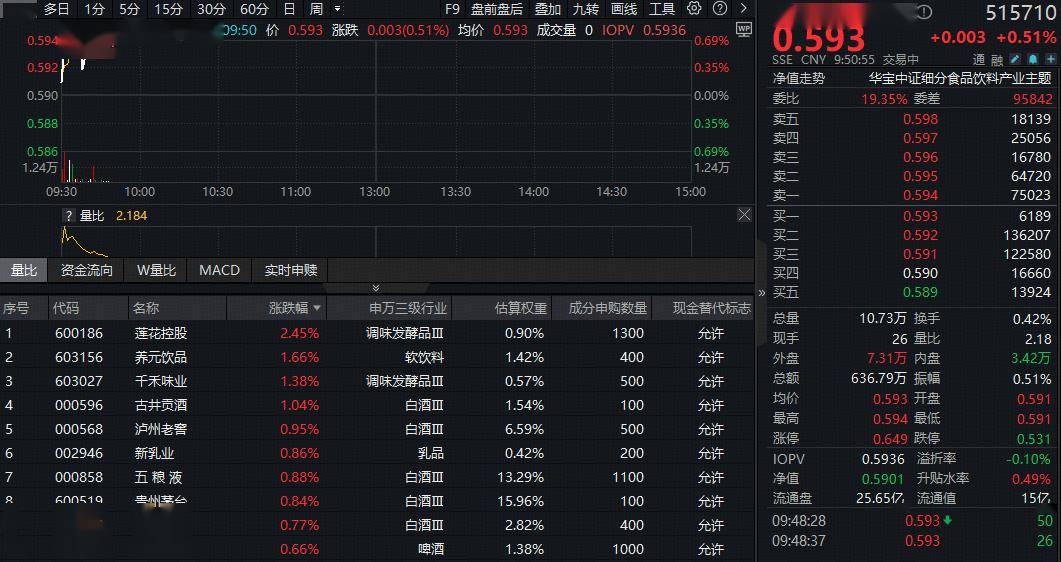
ETF盘中资讯|茅台又“秒空”!“茅五泸汾洋”齐涨,食品饮料ETF华宝(515710)红盘震荡!机构:白酒板块或迎底部配置机会
Sou Hu Cai Jing· 2026-01-09 02:26
Group 1 - The food and beverage sector showed a positive trend today, with the ETF Huabao (515710) rising by 0.51% as of the report time [1] - Key stocks in the sector, including liquor and consumer goods, performed well, with Lianhua Holdings up over 2% and Guizhou Moutai, Wuliangye, and others showing slight gains [1] - The recent launch of premium Moutai products has seen strong demand, with products selling out quickly [1][3] Group 2 - Guizhou Moutai is the largest holding in the Huabao ETF, accounting for 14.89% of the portfolio as of Q3 2025 [3] - The valuation of the food and beverage sector is at a historical low, with the ETF's underlying index PE ratio at 20.16, indicating a potential opportunity for investment [3] - Historical analysis suggests that the current phase of the high-end liquor market may present a bottoming opportunity for capital market investments, especially with the upcoming Spring Festival [3] Group 3 - The Huabao ETF primarily invests in leading high-end and mid-range liquor stocks, with significant allocations to beverage, dairy, and seasoning sectors [4] - Investors can also access the core assets of the food and beverage sector through the Huabao ETF linked funds [4] - The redemption fee structure for the Huabao ETF linked funds is outlined, with varying rates based on the investment amount and holding period [5]

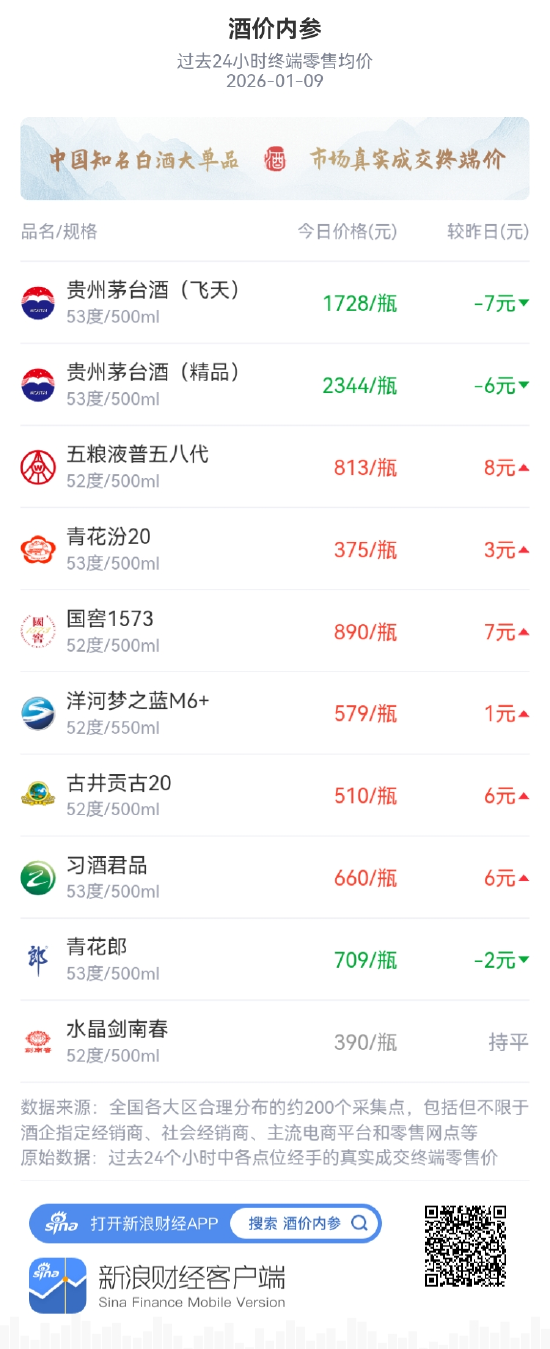
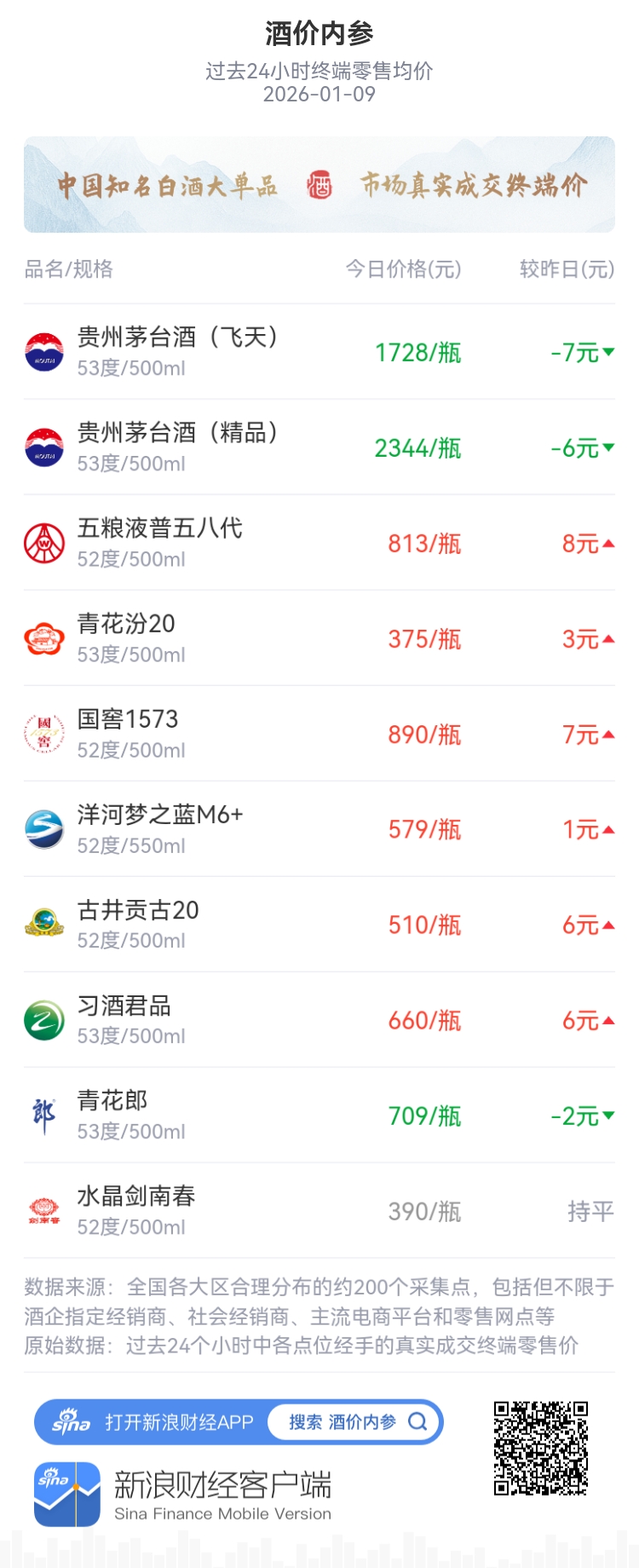
酒价内参1月9日价格发布 古井贡古20价格上涨6元/瓶
Xin Lang Cai Jing· 2026-01-09 01:33
Core Viewpoint - The Chinese liquor market is experiencing a rebound in retail prices for major products after a period of decline, indicating a stabilization in market sentiment [1]. Price Trends - The average retail price of the top ten liquor products increased to 8998 yuan, up by 16 yuan from the previous day [1]. - Major products showing price increases include: - Wuliangye Pu Wuyi 8th generation: up 8 yuan per bottle - Guojiao 1573: up 7 yuan per bottle - Guqingong 20 and Xijiu Junpin: up 6 yuan per bottle each - Qinghua Fen 20: up 3 yuan per bottle - Yanghe Dream Blue M6+: up 1 yuan per bottle, marking five consecutive days of increases - Shuijing Jiananshun: price remained stable [1][5]. Price Declines - Products experiencing price declines include: - Feitian Moutai: down 7 yuan per bottle - Boutique Moutai: down 6 yuan per bottle - Qinghua Lang: down 2 yuan per bottle [1][4]. Market Data Collection - The data is sourced from approximately 200 collection points across various regions, including designated distributors, social distributors, e-commerce platforms, and retail outlets, ensuring a comprehensive and objective representation of the market [2]. New Sales Channels - The launch of new sales channels for Moutai products, including the iMoutai platform selling Feitian Moutai at 1499 yuan per bottle and Boutique Moutai at 2299 yuan per bottle, is expected to influence market prices significantly [2][3].

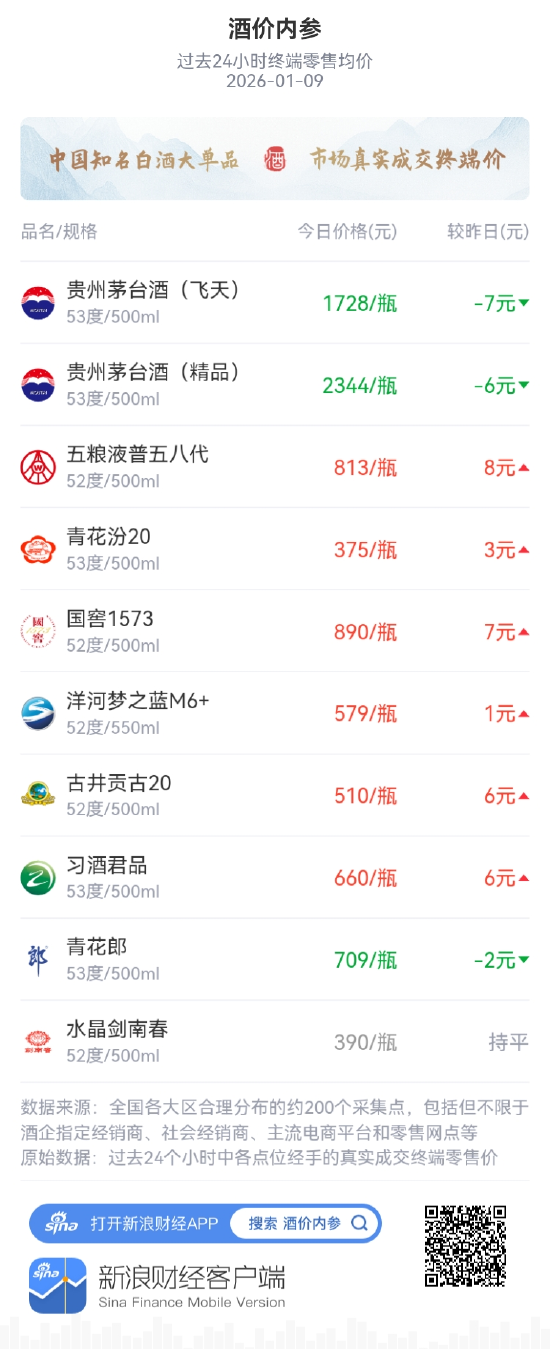
酒价内参1月9日价格发布 习酒君品价格上涨6元/瓶
Xin Lang Cai Jing· 2026-01-09 01:15
Core Insights - The Chinese liquor market has seen a rebound in retail prices for the top ten products as of January 9, following a period of decline, with an overall increase of 16 yuan in total price for a packaged set of these products, now totaling 8998 yuan [1][6][7] Price Trends - The market is experiencing a general upward trend, with notable price increases for several products: - Wuliangye Pu Wubai Dai increased by 8 yuan per bottle - Guojiao 1573 rose by 7 yuan per bottle - Gu Qing Gong Gu 20 and Xijiu Junpin both increased by 6 yuan per bottle - Qinghua Fen 20 saw a rise of 3 yuan per bottle - Yanghe Dream Blue M6+ increased by 1 yuan per bottle, marking five consecutive days of price increases - Meanwhile, prices for Feitian Moutai and Premium Moutai decreased by 7 yuan and 6 yuan per bottle respectively [1][7][10] Data Collection Methodology - The "Liquor Price Reference" collects data from approximately 200 sampling points across various regions, including designated distributors, social distributors, e-commerce platforms, and retail outlets, aiming to provide an objective and traceable representation of the market prices for well-known liquors [2][8] Market Influences - The launch of new sales channels for Feitian Moutai at 1499 yuan per bottle and Premium Moutai at 2299 yuan per bottle on the iMoutai platform is expected to have a significant impact on the market prices for these products [2][8] Product Launches - iMoutai announced adjustments to the release schedule for Premium Moutai and other products, with specific purchase limits set for consumers starting January 9, 2023, and additional products being introduced on January 10, 2023 [3][8]
酒价内参1月9日价格发布 国窖1573价格上涨7元/瓶
Xin Lang Cai Jing· 2026-01-09 01:15
Core Insights - The Chinese liquor market has seen a rebound in retail prices for the top ten products as of January 9, following a period of decline, with an overall increase of 16 yuan, bringing the total price for a package of these products to 8998 yuan [1][6]. Price Trends - The market is experiencing a general upward trend, with notable price increases for several products: - Wuliangye Pu Wubai Dai increased by 8 yuan per bottle - Guojiao 1573 rose by 7 yuan per bottle - Gu Qing Gong Gu 20 and Xijiu Junpin both increased by 6 yuan per bottle - Qinghua Fen 20 saw a rise of 3 yuan per bottle - Yanghe Dream Blue M6+ increased by 1 yuan per bottle, marking five consecutive days of price increases - Meanwhile, prices for Feitian Moutai and Premium Moutai decreased by 7 yuan and 6 yuan per bottle, respectively [1][7][10]. Data Collection Methodology - The "Liquor Price Reference" collects data from approximately 200 sampling points across various regions, including designated distributors, social distributors, e-commerce platforms, and retail outlets, aiming to provide objective and traceable pricing data for well-known liquor products [2][8]. Market Impact of New Sales Channels - The launch of new sales channels for Feitian Moutai at 1499 yuan per bottle and Premium Moutai at 2299 yuan per bottle is expected to influence the market prices significantly, with the potential for a magnetic effect on retail prices [2][8]. Product Launches and Adjustments - iMoutai announced adjustments to the release schedule for Premium Moutai and other products, with specific purchase limits and scheduled release dates throughout the year, including key periods such as the Spring Festival and Mid-Autumn Festival [3][8].
酒价内参1月9日价格发布 市场普遍反弹整体价格温和回升
Xin Lang Cai Jing· 2026-01-09 00:57
Core Viewpoint - The Chinese liquor market has experienced a rebound in retail prices for the top ten products after a period of decline, indicating a stabilization in market sentiment and pricing recovery [1]. Price Trends - The overall retail price for a bundled package of the top ten liquor products is 8998 yuan, reflecting an increase of 16 yuan from the previous day [1]. - Most products have shown signs of stabilization after reaching temporary low points, with a general upward trend in prices observed [1]. Notable Price Increases - Wuliangye Pu Wubai (五粮液普五八代) saw the most significant price increase, rising by 8 yuan per bottle [1][3]. - Guojiao 1573 (国窖1573) increased by 7 yuan per bottle [1][3]. - Both Guqingong 20 (古井贡古20) and Xijiu Junpin (习酒君品) rose by 6 yuan per bottle [1][4]. - Qinghua Fen 20 (青花汾20) increased by 3 yuan per bottle, while Yanghe Dream Blue M6+ (洋河梦之蓝M6+) saw a slight increase of 1 yuan per bottle, marking five consecutive days of price increases [1][4]. Price Decreases - Feitian Moutai (飞天茅台) experienced a decrease of 7 yuan per bottle [1][3]. - Premium Moutai (精品茅台) dropped by 670 yuan per bottle, indicating a significant decline [3]. - Qinghua Lang (青花郎) fell by 2 yuan per bottle [1][4]. Market Sentiment - The overall market is showing a rebound with most brands experiencing price recovery and moderate volume increases, suggesting a calming of market sentiment compared to previous days [1].
预见2026|白酒经历更艰难一年后,消费者和场景重构刚刚开始
Di Yi Cai Jing Zi Xun· 2026-01-08 08:13
Core Insights - The white liquor industry is experiencing a significant downturn, with 2025 being particularly challenging due to rational consumption and ongoing anti-corruption efforts, prompting companies to reassess their market strategies [1][4] Group 1: Market Conditions - Many liquor businesses, including those in Tianjin, reported losses in 2025, with sales figures dropping significantly compared to previous years, indicating a severe market contraction [2][4] - The average retail price of major liquor brands has decreased by 30% in 2025, with 99% of premium liquor prices falling [3][4] - The industry is facing a deep adjustment period, with many companies experiencing double-digit declines in revenue and net profit in the third quarter of 2025 [4] Group 2: Changes in Business Strategy - Liquor companies are shifting their focus from traditional sales models to consumer-centric approaches, emphasizing supply-demand matching and price balance [6][8] - There is a notable trend of companies avoiding long-term contracts with suppliers to mitigate financial risks associated with unsold inventory [3][4] - New growth models are emerging, with companies like Moutai and Fenjiu focusing on consumer engagement and exploring new consumption scenarios [6][7] Group 3: Consumer Behavior and Preferences - The demand for liquor is declining, particularly in corporate gifting and festive occasions, leading to increased competition and pressure on distributors [3][5] - The industry is witnessing a shift towards lower-alcohol products and innovative offerings to attract younger consumers and diversify market reach [7][8] - The implementation of new regulations against wasteful consumption has further altered drinking scenarios, compelling companies to adapt their strategies [7][8]


酒价内参1月8日价格发布 青花郎环比下跌15元/瓶
Xin Lang Cai Jing· 2026-01-08 01:25
Core Insights - The core viewpoint of the news is that the Chinese liquor market, particularly the top ten liquor products, has experienced a significant decline in retail prices, indicating a downward pressure on the market and a lack of confidence among consumers [1][6][7]. Price Trends - The average retail price of the top ten liquor products dropped to 8,982 yuan on January 8, down 58 yuan from the previous day, marking the lowest point since November 18 of the previous year [1][6]. - Seven out of the ten products saw price declines, with notable drops including Wuliangye (down 15 yuan) and Qinghua Lang (down 15 yuan) [7][9]. - Other products that experienced price reductions include Guojiao 1573 (down 14 yuan), boutique Moutai (down 7 yuan), and others with smaller declines [7][10]. Market Sentiment - The overall market is characterized by a widespread decline, reflecting insufficient confidence among consumers and investors [7][8]. - Only one product, Qinghua Fen 20, saw a slight increase of 1 yuan, while others remained stable [7][9]. Data Collection Methodology - The data for the liquor price reference is sourced from approximately 200 collection points across various regions, including designated distributors, social distributors, major e-commerce platforms, and retail outlets, ensuring a comprehensive and objective representation of market prices [2][7]. ESG Rankings - Five liquor companies were included in the "2025 China ESG Top 100" list published by Sina Finance, with rankings as follows: Kweichow Moutai (27th), Wuliangye (53rd), Gujing Gongjiu (74th), Shanxi Fenjiu (89th), and Shede Jiuye (97th) [2][7]. - The rankings are based on a comprehensive evaluation of ESG performance among over 5,000 A-share listed companies and Hong Kong-listed mainland enterprises, aiming to promote sustainable development in the industry [2][7].
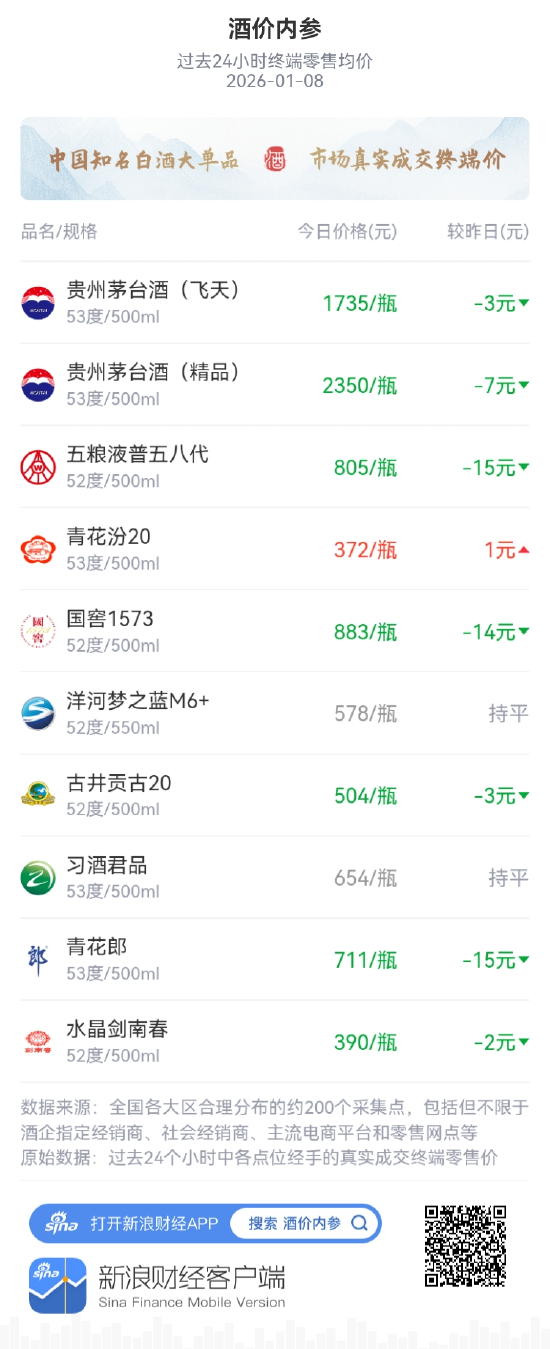
酒价内参1月8日价格发布 精品茅台价格下跌7元/瓶
Xin Lang Cai Jing· 2026-01-08 01:25
Core Insights - The core viewpoint of the news is that the Chinese liquor market, particularly the top ten liquor products, has experienced a significant decline in retail prices, indicating a downward pressure on the market and a lack of confidence among consumers [1][6]. Price Trends - The average retail price of the top ten liquor products has decreased, with a total price of 8982 yuan for a bundled sale, down 58 yuan from the previous day, marking a new low since November 18 of the previous year [1][6]. - Seven out of the ten products have seen price declines, with notable drops including Wuliangye (down 15 yuan/bottle) and Qinghua Lang (down 15 yuan/bottle) [7][1]. - Other products such as Guojiao 1573 and premium Moutai also experienced price reductions of 14 yuan and 7 yuan per bottle, respectively [7][1]. Market Sentiment - The overall market is characterized by a broad decline, reflecting insufficient confidence among consumers, as indicated by the simultaneous price drops of leading brands and core products [7][1]. Data Collection Methodology - The data for the liquor price reference is sourced from approximately 200 collection points across various regions, including designated distributors, social distributors, mainstream e-commerce platforms, and retail outlets, aiming to provide objective and traceable market price data [2][7]. ESG Rankings - Five liquor companies were included in the "2025 China ESG Top 100" list published by Sina Finance, with rankings as follows: Kweichow Moutai (27th), Wuliangye (53rd), Gujing Gongjiu (74th), Shanxi Fenjiu (89th), and Shede Jiuye (97th) [2][7]. - The rankings are based on a comprehensive evaluation of ESG performance among over 5,000 A-share listed companies and Hong Kong-listed mainland enterprises, utilizing 18 industry-specific ESG evaluation models [2][7].