
Shanxi Xinghuacun Fen Wine Factory (600809)

Search documents
“汾酒第一车间”活动走进吉林梨树县
Bei Ke Cai Jing· 2025-09-23 09:17
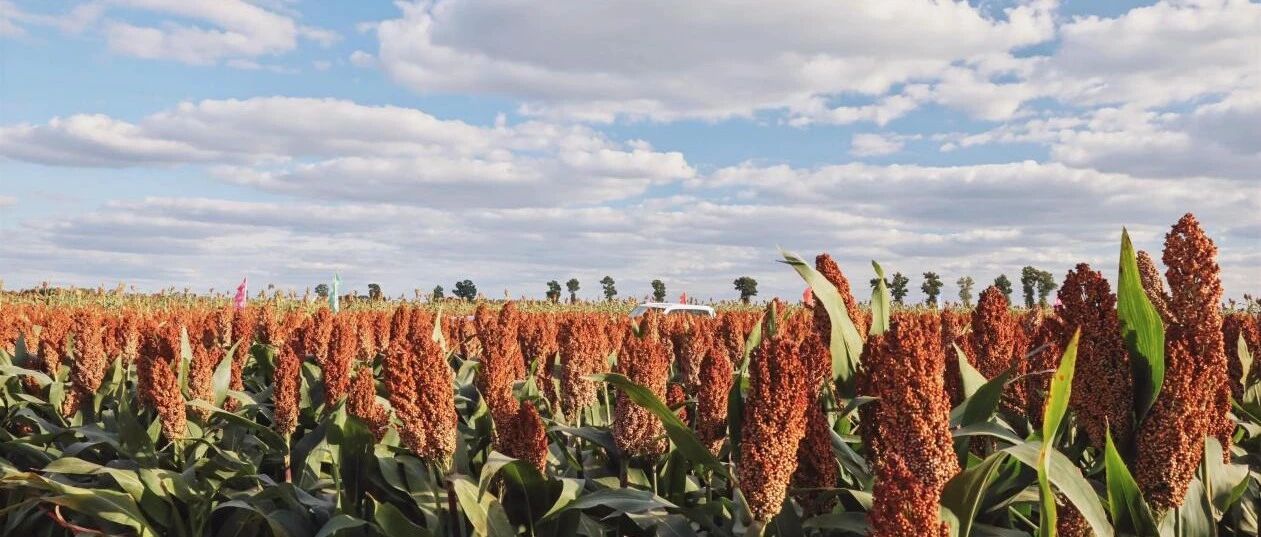
Core Viewpoint - The company is expanding its grain base construction strategy by establishing a significant presence in Lishu County, Jilin Province, which is crucial for its high-quality sorghum supply for liquor production [1] Group 1: Company Strategy - Since 2009, the company has integrated grain base construction into its development strategy, selecting high-quality grain-producing regions across the country to establish its own raw grain bases [1] - Lishu County is a key location in the company's northeastern sorghum map, benefiting from fertile black soil and favorable climatic conditions for sorghum growth [1] Group 2: Production Quality - The sorghum produced in Lishu County is characterized by full grains, high bulk density, and rich starch content, which contribute to higher yield rates and superior liquor quality [1] - The company employs a comprehensive quality control system throughout the entire production chain, from land selection to storage, ensuring uniform quality of raw materials [1] Group 3: Agricultural Impact - The establishment of raw grain bases has led to the development of over 1.5 million mu (approximately 100,000 hectares) across regions including Shanxi, Jilin, Gansu, and Inner Mongolia, promoting local agricultural economic growth and increasing farmers' income [1]

20只白酒股下跌 贵州茅台1447.42元/股收盘
Bei Jing Shang Bao· 2025-09-23 09:15
Core Viewpoint - The liquor industry is currently undergoing a destocking cycle, facing multiple pressures from pricing, demand, and policy, prompting companies to actively respond to market conditions [1] Industry Summary - The Shanghai Composite Index closed at 3821.83 points, down 0.18% on September 23 [1] - The liquor sector index closed at 2263.61 points, down 1.15%, with 20 liquor stocks declining [1] - Major liquor companies experienced the following stock price changes: - Kweichow Moutai: closed at 1447.42 CNY/share, down 0.41% [1] - Wuliangye: closed at 122.19 CNY/share, down 0.25% [1] - Shanxi Fenjiu: closed at 193.81 CNY/share, down 1.12% [1] - Luzhou Laojiao: closed at 132.61 CNY/share, down 0.73% [1] - Yanghe Brewery: closed at 69.32 CNY/share, down 0.66% [1] Company Response - Huaxin Securities indicates that liquor companies are actively addressing challenges related to channels, organization, and sales in response to the pressures from the destocking cycle [1]




产量连跌8年,库存近400万吨!白酒,真卖不动了?
Sou Hu Cai Jing· 2025-09-23 08:56
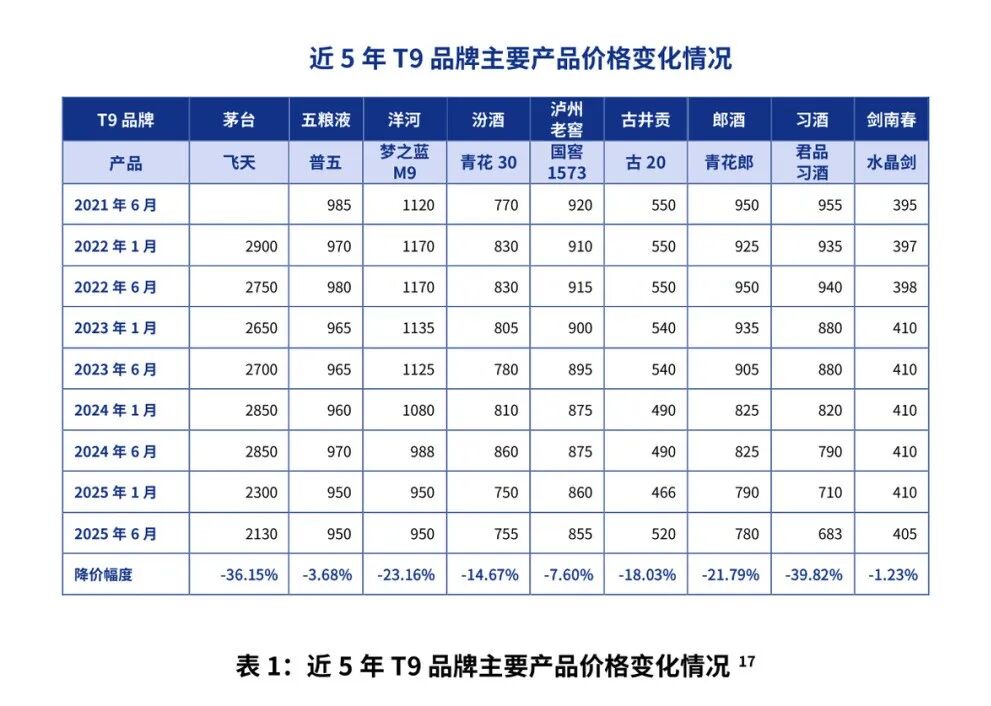
Core Viewpoint - The Chinese liquor industry is facing significant challenges, with a notable decline in performance among many companies, particularly in the white liquor segment, as evidenced by recent financial reports and changing consumer preferences [1][3][12]. Group 1: Financial Performance - Among 20 listed liquor companies, only 6, including Moutai, Wuliangye, and Fenjiu, reported growth, while 15 experienced declines, with some showing significant drops in net profit [1]. - Moutai, the industry leader, has seen its growth rate fall to single digits for the first time in nearly a decade, with the price of its 53-degree Feitian Moutai dropping nearly one-third in the past year and close to 50% over the last two years [1]. Group 2: Inventory and Production Trends - The overall liquor production has been declining for eight consecutive years, dropping from 13.58 million tons in 2016 to 4.14 million tons in 2024, a decrease of over 60% [2]. - The inventory of 20 A-share liquor companies is close to 4 million tons in 2024, indicating that even without production for four years, there would still be sufficient supply in the market [2]. Group 3: Consumer Behavior and Market Dynamics - Young consumers show low acceptance of white liquor, with a survey indicating that only 19% of individuals aged 20 to 35 prefer white liquor, compared to other alcoholic beverages [12]. - The number of large-scale white liquor enterprises in China is projected to decrease to 887 by mid-2025, down by over 100 from the previous year [3]. Group 4: Historical Context and Policy Impact - The white liquor industry has undergone significant changes since the 1989 market liberalization, with various marketing strategies leading to rapid growth until recent policy changes and market dynamics began to impact consumption [7][8]. - The introduction of regulations in 2012 aimed at curbing public spending has drastically reduced the share of government-related consumption in the white liquor market, leading to a significant drop in stock prices and sales [8][9]. Group 5: Industry Adaptation and Future Outlook - In response to changing consumer preferences, liquor companies are launching new products, including low-alcohol and cross-category beverages, to attract younger consumers [12]. - The international market remains a potential growth area, with Chinese liquor exports reaching 8.31 million liters in the first half of 2025, representing only 0.04% of domestic production [12].


张坤550亿豪赌白酒背后:逆向押注中国消费复苏的三大逻辑
Sou Hu Cai Jing· 2025-09-23 08:49
Group 1 - The core viewpoint of the article highlights Zhang Kun's contrarian investment strategy in the liquor sector, particularly focusing on leading brands while divesting from weaker ones [2] - In Q2 2025, Zhang Kun significantly increased holdings in top liquor stocks such as Wuliangye, Luzhou Laojiao, Kweichow Moutai, and Shanxi Fenjiu, while reducing exposure to Yanghe Distillery, indicating a preference for strong market leaders [2] - The investment strategy reflects a structural judgment on the liquor industry, emphasizing that only companies with strong pricing power can navigate through economic cycles [2] Group 2 - Zhang Kun articulated his investment philosophy in the quarterly report, which includes three supporting pillars: breaking the linear pessimism mindset, recognizing China's economic potential, and prioritizing the importance of timing over prediction [3] - He argues that the current downturn in real estate is a cyclical bottom rather than a long-term trend, as evidenced by a 2.9% decline in property sales and a 10.7% drop in development investment from January to May [3] - The belief in China's economic resilience underpins the decision to increase holdings in consumer sectors during a downturn, with a long-term view that GDP growth targets are achievable by 2035 [3] Group 3 - Despite the aggressive strategy, the funds managed by Zhang Kun underperformed, with the E Fund Blue Chip Select returning -7.15%, lagging the benchmark by 9.07 percentage points, leading to a decrease in management scale from 608.22 billion to 550.47 billion [4] - The commitment to the liquor sector is seen as a "faith anchor" for Zhang Kun's investment approach, as many investors view these brands as representatives of the consumer sector [4] - A shift towards technology investments could risk undermining investor confidence and lead to a significant reduction in fund size and management fees, making the decision to adjust holdings a critical strategic choice [4]

白酒双节动销预计承压,持续关注底部修复机会:——食品饮料行业周报-20250923
Guohai Securities· 2025-09-23 08:33
Investment Rating - The report maintains a "Recommended" rating for the food and beverage industry [1] Core Insights - The report highlights that the sales of liquor are expected to face pressure during the upcoming Mid-Autumn Festival and National Day, but there are opportunities for bottom recovery in the sector [5] - The overall performance of the food and beverage sector has lagged behind the Shanghai Composite Index, with a decline of 1.48% over the past two weeks [14] - The report emphasizes the importance of monitoring the recovery of the liquor market and suggests that the worst phase for the industry has passed [5] Summary by Sections Recent Trends - In August, the retail sales of tobacco and liquor fell by 2.3% year-on-year, while restaurant income increased by 2.1%, indicating a gradual recovery in dining consumption [5] - The price of Feitian liquor has shown weakness, with a decline in wholesale prices [5] Market Performance - The food and beverage sector's performance over the last month was 1.3%, 4.6% over three months, and 20.8% over the past year, compared to the Shanghai Composite Index's performance of 6.6%, 17.1%, and 40.9% respectively [3] Key Recommendations - The report recommends several liquor companies for investment, including Luzhou Laojiao, Shanxi Fenjiu, and Kweichow Moutai, among others [5][25] - For consumer goods, it suggests focusing on companies like Bai Run Co., Wei Long, and Salted Fish [8][25] Valuation Insights - As of September 19, 2025, the dynamic price-to-earnings (PE) ratio for the food and beverage sector is 21.1x, indicating a relatively low valuation compared to other sectors [22] - The report notes that the liquor sub-sector has the highest valuation at 50.42x [22] Focused Companies and Earnings Forecast - The report provides a detailed earnings forecast for key companies, including Kweichow Moutai with an expected EPS of 74.19 yuan for 2025 and a PE ratio of 19.79 [28]




黑土种红粱,粮心育清香:汾酒“第一车间”扎根吉林梨树县!
YOUNG财经 漾财经· 2025-09-23 08:17
Core Viewpoint - The article emphasizes the importance of high-quality raw materials, particularly sorghum, in the production of Fenjiu, highlighting the company's commitment to sourcing and managing its agricultural supply chain for superior product quality [5][10]. Group 1: Agricultural Base and Quality Control - Fenjiu has established its raw material base in Lishu County, Jilin Province, due to the region's fertile black soil and favorable climate conditions, which are ideal for sorghum cultivation [5][10]. - The company has developed a closed-loop management system that ensures quality control from planting to storage, including selecting suitable land, choosing high-quality seeds, and implementing scientific planting standards [7][8]. - Fenjiu's commitment to quality is further supported by a digital agricultural management system that collects meteorological and soil data to optimize cultivation practices [8]. Group 2: Long-term Commitment and Industry Impact - Since 2009, Fenjiu has integrated the construction of grain bases into its corporate strategy, resulting in a network of over 1.5 million acres across various provinces, reinforcing its quality assurance and supply chain integrity [10]. - The company’s efforts not only enhance product quality but also contribute to local agricultural economies, increasing farmers' incomes and earning recognition as a key player in agricultural industrialization [10]. - Fenjiu has been actively engaging consumers through initiatives like the "Walk into Fenjiu First Workshop" event, which has been held for five consecutive years, enhancing brand trust and consumer awareness of the quality behind its products [11].
白酒板块午盘下跌 贵州茅台微跌0.79%
Bei Jing Shang Bao· 2025-09-23 04:42
Core Viewpoint - The overall market experienced a decline, with the Shanghai Composite Index dropping by 1.23% to 3781.61 points, and the liquor sector also faced a downturn, closing down 1.82% at 2248.33 points [1] Industry Summary - The liquor sector saw a decline with 20 stocks falling, including major players such as Kweichow Moutai, which closed at 1441.90 CNY per share, down 0.79%, and Wuliangye, which closed at 121.77 CNY per share, down 0.60% [1] - Other notable declines included Shanxi Fenjiu at 193.45 CNY per share, down 1.30%, Luzhou Laojiao at 132.18 CNY per share, down 1.05%, and Yanghe Brewery at 69.09 CNY per share, down 0.99% [1] Future Trends - According to Huashang Securities, the future development trend of the liquor industry is leaning towards lower alcohol content as the consumer base evolves. The industry is shifting towards "quality enhancement, brand influence, cultural expression, and value creation" [1] - Younger consumers are increasingly favoring personalized, lower-alcohol, and enjoyable drinking experiences, as well as "light social" drinking scenarios [1]
茅台都扛不住了,这轮白酒寒冬还要持续多久?
3 6 Ke· 2025-09-23 03:44
Core Viewpoint - The Chinese liquor industry, particularly the baijiu sector, is experiencing a significant downturn characterized by declining prices, increased inventory, and shifting consumer preferences, indicating a deep adjustment phase rather than a temporary fluctuation [4][15][22]. Industry Overview - The baijiu industry is facing a dual decline in both volume and price, with a reported production volume of 191.59 million kiloliters in the first half of 2025, a year-on-year decrease of 5.8% [5]. - Approximately 60% of liquor companies are experiencing price inversion, where actual market prices fall below manufacturer guidance, particularly affecting the 800-1500 yuan price range [5]. - The average inventory turnover days for the industry reached 900 days in the first half of 2025, a 10% increase year-on-year, indicating a significant slowdown in sales [11]. Company Performance - Major companies like Moutai and Wuliangye are showing signs of slowing growth, with Moutai's revenue growth target for 2025 set at 9%, the lowest since 2016 [17]. - Wuliangye's revenue for the first half of 2025 was 527.71 billion yuan, with a year-on-year growth of only 4.19% [17]. - Liquor companies are increasingly resorting to price cuts to manage high inventory levels, creating a downward pressure on prices [12]. Consumer Trends - The primary consumer demographic for baijiu is undergoing a generational shift, with younger consumers (born after 1995) showing diverse preferences for alcoholic beverages, including wine and craft beer [24]. - Health consciousness among younger consumers is changing drinking habits, leading to a decline in traditional drinking culture [25]. - The rise of new sales channels, such as e-commerce and community group buying, is disrupting traditional distribution models and further compressing profit margins for liquor companies [25]. Market Opportunities - Despite the challenges, there are emerging structural opportunities in the market, particularly in the lower price segments (100-300 yuan) where demand is shifting [26]. - The focus on family and friend gatherings as primary consumption scenarios is creating new opportunities for products that cater to these social settings [33]. - Companies that can adapt to these changes by enhancing their product offerings and marketing strategies are likely to survive and thrive in the long term [26].

山西汾酒跌2.04%,成交额6.65亿元,主力资金净流出6954.62万元
Xin Lang Cai Jing· 2025-09-23 02:38
Core Viewpoint - Shanxi Fenjiu's stock price has experienced fluctuations, with a recent decline of 2.04% and a year-to-date increase of 7.78%, indicating volatility in the market [1] Financial Performance - As of June 30, 2025, Shanxi Fenjiu reported a revenue of 23.964 billion yuan, representing a year-on-year growth of 5.35%, and a net profit attributable to shareholders of 8.505 billion yuan, with a growth of 1.13% [2] - Cumulative cash dividends since the A-share listing amount to 24.325 billion yuan, with 16.775 billion yuan distributed over the past three years [3] Shareholder Structure - The number of shareholders increased by 52.38% to 104,400 as of June 30, 2025, while the average circulating shares per person decreased by 34.38% to 11,687 shares [2] - Major shareholders include Hong Kong Central Clearing Limited, which holds 48.9991 million shares, and other significant institutional investors such as China Merchants Index and E Fund [3]
外媒嘉宾走进汾酒发源地:从千年佳酿中品读中国文化
Ren Min Wang· 2025-09-23 01:40
Core Insights - The article highlights the cultural significance and historical legacy of Fenjiu, a traditional Chinese liquor from the ancient town of Xinghua Village, which has been celebrated for over a thousand years [1][2]. Group 1: Cultural Heritage - Fenjiu's traditional brewing technique is recognized as a national intangible cultural heritage, embodying unique spiritual values and creativity of the Chinese nation [1][2]. - The town of Xinghua Village is not only famous for its liquor but also for its poetic heritage, as referenced in the poem "Qingming" by Du Mu, which has contributed to its allure as a cultural destination [1][2]. Group 2: Economic and International Cooperation - The Fenjiu Group plays a significant role in the Jinzhong merchant group, which has thrived for 500 years, promoting the spread of Qingxiang brewing techniques across China [2]. - The "Belt and Road" media cooperation forum, co-hosted by various governmental and media organizations, aims to enhance cultural exchange and economic cooperation, with over 1,000 representatives from more than 100 countries participating [2]. Group 3: Future Prospects - The article suggests that Fenjiu will continue to serve as a cultural ambassador along the "Belt and Road" initiative, sharing the rich history and essence of Chinese liquor with the world [3].