
CNOOC(600938)

Search documents
纯苯专题:纯苯下游格局
Hua Tai Qi Huo· 2025-07-03 01:25
1. Report Industry Investment Rating No information provided in the content. 2. Core Viewpoints of the Report The report conducts a comprehensive analysis of the downstream landscape of pure benzene, including both horizontal and vertical perspectives. Horizontally, it analyzes the demand proportion, production capacity growth rate, and regional distribution of the five major downstream products of pure benzene. Vertically, it focuses on the device analysis of each of the five products, including the proportion of self - owned and externally purchased pure benzene, device characteristics, regional distribution, and enterprise group concentration [2]. 3. Summary According to the Directory 3.1 Pure Benzene Downstream Pattern Horizontal Analysis 3.1.1 Demand Proportion and Basic Introduction of Five Major Downstream Products for Pure Benzene - Based on 2024 production data, the demand proportions of benzene ethylene, caprolactam (CPL), phenol (phenol - ketone), aniline, and adipic acid for pure benzene are 42%, 21%, 17%, 12%, and 7% respectively, with other pure benzene demands accounting for 1% [9]. - Benzene ethylene is the largest downstream product of pure benzene. Its production processes mainly include ethylbenzene dehydrogenation, propylene oxide - styrene co - production (PO/SM), and C8 extraction. It is mainly used in PS, EPS, ABS, UPR, etc. [11]. - CPL is the second - largest downstream product, mainly produced by the cyclohexanone ammoximation method (HAO, 83%) and the phosphoric acid hydroxylamine method (HPO, 17%). It is mainly used to produce PA6, which is used to make nylon [15]. - Phenol (phenol - ketone) is the third - largest downstream product. Produced by the cumene method, it is co - produced with acetone. Its main downstream products are bisphenol A and phenolic resin [22]. - Aniline accounts for 12% of pure benzene demand, produced by the nitrobenzene catalytic hydrogenation method. It is mainly used to produce MDI [23]. - Adipic acid accounts for 7% of pure benzene demand, mainly produced by the cyclohexene method (81%) and the cyclohexane method (19%). It is used to produce polyester polyols and PA66 [33]. 3.1.2 Demand Proportion of Five Major Downstream Products for Pure Benzene (Weighted by the Proportion of Externally Purchased Pure Benzene) - After excluding self - owned pure benzene integrated production capacity, the demand proportions of caprolactam, benzene ethylene, phenol - ketone, aniline, and adipic acid for externally purchased pure benzene are 28%, 25%, 15%, 19%, and 12% respectively [38]. - Benzene ethylene has a higher proportion of self - owned pure benzene in integration, with externally purchased pure benzene device capacity accounting for 34%. Phenol has 51% externally purchased capacity, CPL has 76%, and aniline and adipic acid have 94% and 95% respectively [37]. 3.1.3 Production Cycle of Five Major Downstream Products - Benzene ethylene's high - speed production cycle from 2020 - 2023 has ended, and production has slowed down since 2024 [42]. - CPL's production growth rate slowed down to 10% in 2025 after reaching 16% and 21% in 2023 and 2024 respectively [42]. - Phenol's production growth rate slowed down to 13% in 2025 after an average of 23% from 2020 - 2024 [42]. - Aniline's production growth rate is 8% in 2025, with intermittent production increases in the past [42]. - Adipic acid had no production plan in 2025 after a large - scale production increase in 2023 [42]. 3.1.4 Regional Consumption Proportion of Pure Benzene and the Demand Proportion of the Five Major Downstream Products in Each Region - The main consumption area of pure benzene is East China, which is also the main trading market. Other regions have relatively small proportions [45]. - In East China (excluding Shandong), benzene ethylene accounts for 58% and phenol accounts for 23% of pure benzene demand [46]. - In Shandong, benzene ethylene accounts for 36% and CPL accounts for 22% of pure benzene demand, with a more evenly distributed downstream structure compared to East China [46]. - In North China and South China, benzene ethylene and CPL are the main downstream products [49]. 3.2 Pure Benzene Downstream Pattern Vertical Analysis 3.2.1 Benzene Ethylene Device Analysis - Self - owned pure benzene devices in benzene ethylene production mainly belong to Sinopec, CNOOC, PetroChina, and large refineries like Hengli, Zhejiang Petrochemical, etc. Externally purchased pure benzene devices are mainly private refineries in Shandong and Jiangsu - Zhejiang [50]. - Benzene ethylene devices are mainly distributed in East China (43%), South China (19%), Shandong (18%), and Northeast China (10%). Externally purchased pure benzene devices are mainly in East China (50%) and Shandong (39%) [54]. 3.2.2 CPL Device Analysis - Self - owned pure benzene devices in CPL production mainly belong to Sinopec and its joint - venture companies. Most devices are externally purchased [57]. - CPL devices are mainly distributed in Central China (28%), Shandong (27%), and South China (26%). The enterprise concentration is not high [59]. - About 44% of CPL devices have downstream PA6 devices, and 21% have downstream PA6 and nylon devices [59]. 3.2.3 Phenol Device Analysis - Self - owned pure benzene devices in phenol production mainly belong to Sinopec, PetroChina, CNOOC, and large private refineries. Externally purchased pure benzene devices are in East China, Shandong, and South China [62]. - 69% of phenol devices have downstream bisphenol A devices, and 35% of these have self - owned bisphenol A and PC devices [62]. - Phenol devices are mainly in East China (49%), Shandong (19%), and South China (13%). The enterprise concentration is not high [68]. 3.2.4 Aniline Device Analysis - Only 6% of aniline devices have self - owned pure benzene (Sinopec Nanjing Chemical). Most are externally purchased [69]. - Aniline devices are mainly in East China (37%) and Shandong (33%). Wanhua accounts for 48% of the total production capacity, with high industry concentration [71]. 3.2.5 Adipic Acid Device Analysis - Only 5% of adipic acid devices have self - owned pure benzene (PetroChina). Most are externally purchased [73]. - Adipic acid devices are mainly in Southwest China (34%) and Shandong (25%). Huafeng accounts for 34% of the total production capacity. The industry is in an over - supply and loss situation [77].






广发沪港深新起点股票C连续5个交易日下跌,区间累计跌幅1.35%
Jin Rong Jie· 2025-07-02 15:55
Group 1 - The core point of the article highlights the performance and structure of the fund "Guangfa Hong Kong and Shanghai New Starting Point Stock C," which has seen a decline of 0.06% recently and a cumulative drop of 1.35% over five trading days [1] - The fund was established in September 2020, with a total size of 623 million yuan and an accumulated return of -5.79% since inception [1] - As of the end of 2024, institutional investors hold 92.75% of the fund's total shares, while individual investors hold 7.25% [1] Group 2 - The current fund manager, Mr. Li Yaozhu, has a master's degree in science and holds a certificate for the Chinese Securities Investment Fund Industry [2] - Mr. Li has been managing multiple funds since 2016, including the "Guangfa Hong Kong and Shanghai New Starting Point Stock Fund" since November 9, 2016 [2] - His extensive experience includes roles as a stock trader, researcher, and assistant fund manager within Guangfa Fund Management Company [2] Group 3 - As of March 31, 2025, the top ten holdings of the fund account for a total of 62.53%, with significant positions in Alibaba-W (9.72%), Tencent Holdings (8.88%), and Meituan-W (8.29%) [3] - Other notable holdings include Midea Group (7.90%), China Mobile (7.80%), and CNOOC (6.04%) [3]



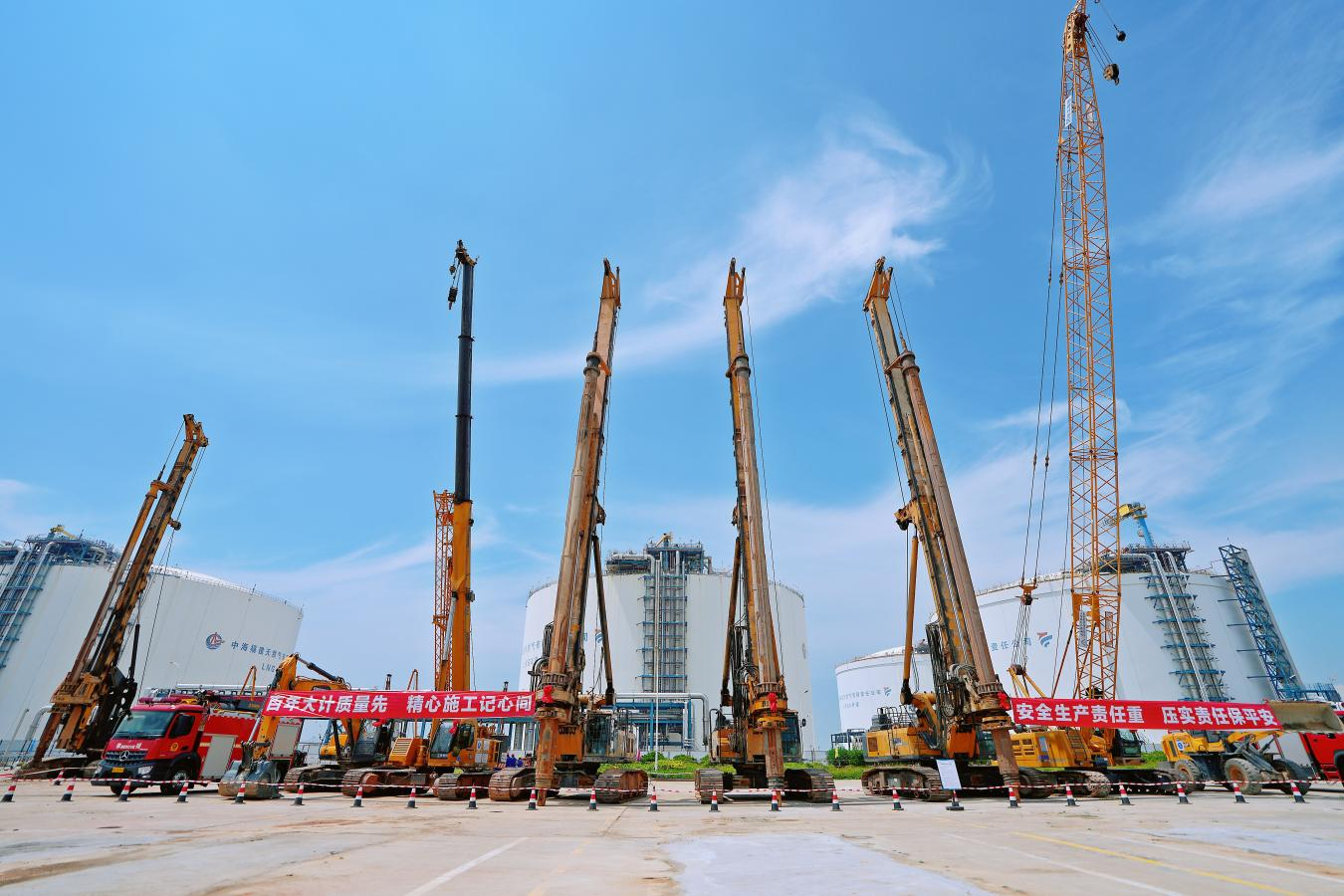
中国海油湄洲湾“绿能港”7号LNG储罐项目开工建设
Zhong Guo Jin Rong Xin Xi Wang· 2025-07-02 06:52
Core Viewpoint - The construction of the 7 tank and supporting facilities at the Meizhou Bay "Green Energy Port" (Fujian LNG) receiving station has officially commenced, marking the start of the largest single-tank LNG storage facility in China [1][3]. Group 1: Project Overview - The total investment for the 7 tank and supporting facilities project is approximately 1 billion yuan, with a designed capacity of 270,000 cubic meters, making it the largest ground full-containment LNG tank in the country [3]. - The Fujian LNG receiving station is a key national energy project, responsible for over 70% of natural gas supply in Fujian Province and serving as the sole gas source supplier for local gas-fired power plants [3]. Group 2: Environmental Impact - Since its inception in 2008, the Fujian LNG receiving station has supplied over 69 billion cubic meters of natural gas, significantly promoting the large-scale use of natural gas across various industries and improving the energy structure in Fujian Province [5]. - The promotion of natural gas has led to a reduction of 93 million tons of carbon dioxide, 650,000 tons of nitrogen oxides, and 1.35 million tons of sulfur dioxide, showcasing significant green and low-carbon effects [5]. Group 3: Future Plans - The completion of the 7 tank is expected to enhance the storage capacity of the Fujian LNG receiving station by approximately 30%, further strengthening the company's ability to manage regional peak demand, emergency reserves, and supply security in Fujian Province [5]. - The company aims to complete the mechanical work by the end of 2028, focusing on project management responsibilities and ensuring the stability of natural gas supply in the region [6].

原油月报:三大机构上调2025年全球原油供应预期-20250702
Soochow Securities· 2025-07-02 03:39
1. Report Industry Investment Rating No information about the industry investment rating is provided in the given content. 2. Report's Core View - The international three major institutions (IEA, EIA, OPEC) have adjusted their forecasts for global crude oil supply, demand, and inventory in 2025 in their June reports. The average forecast for inventory change is flat compared to last month, while the supply forecasts have increased, and the demand forecasts have mixed changes. Non - OECD countries, represented by China, are expected to be the main contributors to the global crude oil demand growth in 2025 [2][99][111]. 3. Summary According to Relevant Catalogs 3.1 Global Crude Oil Inventory - IEA, EIA, and OPEC predict 2025 global crude oil inventory changes to be +110, +82, and - 132 barrels per day respectively, with changes of -10, -5, and +15 barrels per day compared to May 2025 forecasts. The average forecast for 2025 inventory change is +20 barrels per day, unchanged from last month's average [2]. 3.2 Global Crude Oil Supply 3.2.1 Global Crude Oil Supply Overview - IEA, EIA, and OPEC predict 2025 crude oil supply to be 10490, 10434, and 10382 barrels per day respectively, an increase of 190, 159, and 147 barrels per day compared to 2024. Compared to May 2025 forecasts, the increases are 30, 22, and 4 barrels per day respectively [16]. 3.2.2 Global Major Regional Crude Oil Supply Situations - **Three - institution Regional Supply Increment Forecasts**: IEA expects the 2025 global crude oil supply increment to be concentrated in OPEC, American OECD countries, and Latin American countries; EIA expects it to be in North American and Central & South American countries; OPEC expects it to be in DoC and American OECD countries [29][31][35]. - **OPEC+**: In May 2025, the total crude oil production of 12 OPEC countries averaged 2702 barrels per day, a month - on - month increase of 18.3 barrels per day, due to production changes in Iran, Iraq, and Saudi Arabia. The total remaining capacity of OPEC+ is 619 barrels per day, a month - on - month decrease of 16 barrels per day [37][41]. - **Russia**: In May 2025, Russia's total export volume was 730 barrels per day, a year - on - year decrease of 30 barrels per day [54]. - **USA**: EIA predicts that the average crude oil production in the US in 2025 will be 1341 barrels per day, an increase of 21 barrels per day compared to 2024 and unchanged from the May 2025 forecast. As of June 2024, the total production of the seven major shale oil producing regions in the US was 985 barrels per day, a month - on - month increase of 1.7 barrels per day; the shale oil production in the Permian region was 619 barrels per day, a month - on - month increase of 1.8 barrels per day [63][69]. 3.3 Global Crude Oil Demand 3.3.1 Global Crude Oil Demand Overview - IEA, EIA, and OPEC predict 2025 crude oil demand to be 10380, 10353, and 10513 barrels per day respectively, an increase of 80, 79, and 138 barrels per day compared to 2024. Compared to May 2025 forecasts, the changes are -10, -19, and +14 barrels per day respectively. Non - OECD countries represented by China are expected to be the main contributors to the demand increment, while OECD countries' demand growth is expected to be weak [99][111]. 3.3.2 Global Different Petroleum Product Demand Situations - IEA expects the demand for chemical oil to recover significantly in 2025. Globally, the demand for aviation kerosene, diesel, and gasoline is expected to increase by 13, 4, and 12 barrels per day respectively compared to 2024; the demand for LPG and ethane, and naphtha in the chemical product sector will increase by 30 and 20 barrels per day respectively. In China, the demand for chemical oil is also expected to recover, with changes in the demand for aviation kerosene, diesel, and gasoline being +2, -3, and -13 barrels per day respectively, and the demand for LPG and ethane, and naphtha increasing by 6 and 15 barrels per day respectively [117][119]. 3.4 Related Listed Companies - Recommended companies include CNOOC Limited (600938.SH/0883.HK), PetroChina Company Limited (601857.SH/0857.HK), Sinopec Corp. (600028.SH/0386.HK), CNOOC Energy Technology & Services Limited (601808.SH), Offshore Oil Engineering Co., Ltd. (600583.SH), and CNOOC Development Co., Ltd. (600968.SH). Companies to be concerned about include Sinopec Oilfield Service Corporation (600871.SH/1033.HK), China Petroleum Engineering & Construction Corporation (600339.SH), and Sinopec Mechanical Engineering Co., Ltd. (000852.SZ) [3].



国泰君安中证港股通高股息投资指数发起(QDII)C连续5个交易日下跌,区间累计跌幅1.8%
Jin Rong Jie· 2025-07-01 15:58
Group 1 - The Cathay Securities CSI Hong Kong Stock Connect High Dividend Investment Index Fund (QDII) C has experienced a decline of 0.07% on July 1, with a latest net value of 1.13 yuan, marking a continuous drop for five trading days and a cumulative decline of 1.8% over the period [1] - The fund was established on January 1, 2025, with an initial scale of 0.06 billion yuan and has achieved a cumulative return of 13.34% since its inception [1] Group 2 - Current fund manager Zhang Jing holds a bachelor's degree in finance from the University of International Business and Economics and an MBA from Shanghai University of Finance and Economics, with extensive international experience in asset management [2] - The other fund manager, Deng Yakun, has a master's degree in computational finance from Carnegie Mellon University and has been with Cathay Securities since March 2021, focusing on quantitative investment [2] Group 3 - As of March 31, 2025, the top ten holdings of the Cathay Securities CSI Hong Kong Stock Connect High Dividend Investment Index Fund (QDII) C account for a total of 44.28%, with significant positions in COSCO Shipping Holdings (9.76%), Yancoal Australia (5.88%), and Orient Overseas International (3.94%) among others [3]


中证石化产业指数上涨0.37%,前十大权重包含万华化学等
Jin Rong Jie· 2025-07-01 15:32
Group 1 - The core index of the petrochemical industry, the China Securities Petrochemical Industry Index, rose by 0.37% to 1009.79 points with a trading volume of 11.339 billion yuan on July 1 [1] - Over the past month, the index has increased by 2.08%, but it has decreased by 2.96% over the last three months and by 4.36% year-to-date [1] - The index is designed to reflect the overall performance of listed companies in key industries such as steel, shipping, petrochemicals, textiles, light industry, equipment, and logistics, with a base date of December 31, 2008, set at 1000.0 points [1] Group 2 - The top ten holdings in the China Securities Petrochemical Industry Index include Wanhua Chemical (9.98%), China Petroleum (9.61%), China Petrochemical (8.1%), and others [1] - The index's market composition shows that 70.15% of holdings are from the Shanghai Stock Exchange, while 29.85% are from the Shenzhen Stock Exchange [1] - In terms of industry composition, raw materials account for 75.54% and energy for 24.46% of the index holdings [1] Group 3 - The index sample is adjusted biannually, with changes implemented on the next trading day following the second Friday of June and December [2] - Weight factors are generally fixed until the next scheduled adjustment, with special circumstances allowing for temporary adjustments [2] - Public funds tracking the petrochemical industry include various funds from Huaxia and E Fund, such as Huaxia China Securities Petrochemical Industry Link A and E Fund China Securities Petrochemical Industry ETF [2]


中国纯苯供应格局
Hua Tai Qi Huo· 2025-07-01 01:21
Group 1: Report Overview - The report is the second in Huatai Futures' series on the listing of pure benzene, focusing on the domestic supply pattern of pure benzene in China [3] Group 2: China's Pure Benzene Capacity Investment - China still mainly uses petroleum benzene. Before 2019, the proportion of petroleum benzene capacity in benzene capacity was around 65%. After the wave of private large refinery startups in 2019, it has now risen to 75% [11] - Petroleum benzene is the main driver of the growth in the pure benzene supply. In 2025, the growth rate of benzene capacity is expected to be 7.1%, with petroleum benzene at 8.1% and hydrogenated benzene at only 4.2% [12] - The development of China's pure benzene capacity has gone through four stages: slow growth from the 1960s to the 1980s, rapid development in the 1980s, slowdown after 2010, and rapid expansion since 2019 [14][15] - In 2025, there is still pressure on pure benzene capacity investment. The growth rate of new petroleum benzene capacity is 8.1%, slightly higher than 6.6% in 2024. Attention should be paid to the startup rhythm of Yulong in the third quarter [16] - China's petroleum benzene production mainly comes from catalytic reforming, ethylene cracking, and toluene disproportionation. The proportion of catalytic reforming capacity has decreased to 44%, while toluene disproportionation has reached around 22%, and ethylene cracking has dropped to 23% [20] Group 3: China's Pure Benzene Supply Pattern - China's pure benzene supply is mainly dominated by state - owned enterprises, with private enterprises gradually playing an important role. Since 2014, the proportion of private enterprise capacity has been increasing [21] - State - owned enterprises still hold the majority of pure benzene capacity. Sinopec accounts for 25%, PetroChina 17%, and CNOOC 7%. Private refineries such as Zhejiang Petrochemical, Hengli, and Shenghong together account for nearly 24% [22][24] Group 4: Supplier Analysis by Process - For pure benzene produced by the catalytic reforming process, state - owned enterprises such as Sinopec (23%), PetroChina (18%), and CNOOC (5%) are the main suppliers, and private refineries account for 26%. The operation of reforming benzene is mainly planned, following refinery maintenance and profit [31] - For pure benzene produced by the ethylene cracking process, the proportion of state - owned enterprises is higher. Sinopec accounts for 41%, and private refineries account for 14%. The operation depends on ethylene cracking device maintenance and olefin demand [32] - For pure benzene produced by the toluene disproportionation process, the proportion of state - owned enterprises has decreased, and private refineries account for nearly 40%. The operation is flexible, depending on the profit of disproportionation and toluene demand for gasoline blending [33] Group 5: Regional Supply Pattern - China's pure benzene capacity is mainly concentrated in the East China region, accounting for 39%, followed by South China (23%) and Shandong (19%). East China is the main area for production, trade, and paper - based trading of pure benzene [38] Group 6: Hydrogenated Benzene Supply Pattern - In 2024, petroleum benzene production accounted for 71% of China's total pure benzene supply, imports 15%, and hydrogenated benzene 14% [46] - Hydrogenated benzene supply is mainly from private enterprises, and its capacity has grown slowly since 2016. Capacity is concentrated in North China and Shandong, and the industry concentration is relatively low [46][48]
能化企业气电联动守护能源“生命线”
Zhong Guo Hua Gong Bao· 2025-06-30 02:15
Group 1 - Recent high temperatures in multiple regions of China have made energy supply a top priority, with major energy and petrochemical companies actively ensuring energy security through gas-electric integration [1] - China National Petroleum Corporation's Jiangsu branch has established an integrated mechanism of "gas source guarantee + policy coordination + peak regulation linkage" to support the economic development of the Yangtze River Delta [1] - The Jiangsu company has implemented a "one factory, one policy" supply guarantee plan and established a provincial coordination mechanism for gas-electric linkage to ensure precise resource allocation [1] Group 2 - With rising temperatures leading to increased electricity demand, China National Offshore Oil Corporation (CNOOC) is leveraging its offshore gas fields to secure natural gas resources for summer energy supply [2] - CNOOC's Shenzhen branch is increasing production from nine offshore gas fields, ensuring stable and continuous gas supply to the Guangdong-Hong Kong-Macao Greater Bay Area, with over 28 million cubic meters of gas delivered daily [2] - CNOOC's Jinwan "Green Energy Port" has completed the unloading of five LNG import vessels since the start of summer, exporting 28,500 tons of natural gas to ensure stable supply during peak demand [2] Group 3 - China Energy Group's Datong company has achieved full-capacity operation of its thermal power units, marking the first time this year that all units are running without maintenance [3] - The Fujian company of China Energy Group reported a 38.7% year-on-year increase in electricity generation, with an average load factor of 87% and a market share of 113.6%, achieving record levels ahead of the summer peak [3] - The company is also preparing for extreme weather events, ensuring that its units can operate effectively during peak demand periods [3]
自贸港一周|自贸港实现“零关税+加工增值”双突破
Sou Hu Cai Jing· 2025-06-30 00:22
Group 1 - Hainan Free Trade Port has achieved breakthroughs in "zero tariffs" on imported raw materials and value-added processing policies, with the first "zero tariff" crude oil processing enterprise benefiting from a tax reduction of 2.368 million yuan [1] - The 20th batch of innovative cases for Hainan Free Trade Port has been released, focusing on seven key areas including education openness, business environment, consumer services, healthcare, and ethnic culture, aimed at addressing deep-seated development bottlenecks [2] Group 2 - China's first self-operated ultra-deepwater gas field, "Deep Sea No. 1," has fully commenced production with the successful opening of the last production well in its second phase, marking its fourth anniversary [5] Group 3 - The 2025 International Designer Competition in Hainan has been launched with a theme of "Digital Links the World, Design Empowers Going Global," introducing a "dual track + proposition system" to leverage digital technology in the design industry [7] - An international seminar on typhoon observation and a scientific experiment on near-shore typhoon intensity changes has been successfully held in Haikou, aiming to promote the establishment of a collaborative early warning mechanism for typhoons in the Asia-Pacific region [9]

原油周报:伊以冲突全面停火,国际油价大幅回落-20250629
Soochow Securities· 2025-06-29 14:58
1. Report Industry Investment Rating There is no information provided about the industry investment rating in the given content. 2. Core Viewpoints of the Report - The cease - fire of the Israel - Iran conflict led to a significant decline in international oil prices [1] - The report provides a comprehensive analysis of the weekly data of the US crude oil and refined oil markets, including prices, inventories, production, demand, and import - export volumes [2] - It also presents the performance of the petroleum and petrochemical sector and related listed companies, along with their valuations [21][24] 3. Summary According to Relevant Catalogs 3.1 Crude Oil Weekly Data Briefing - The data sources include Bloomberg, WIND, EIA, TSA, Baker Hughes, and the Dongwu Securities Research Institute [8][9] 3.2 This Week's Petroleum and Petrochemical Sector Market Review 3.2.1 Petroleum and Petrochemical Sector Performance - Information on the sector's performance includes the sector's sub - industry price changes and the trend of the sector's sub - industries and the CSI 300 index [17] - Data sources are WIND and the Dongwu Securities Research Institute [15][20] 3.2.2 Performance of Listed Companies in the Sector - The report shows the price changes of major companies in the upstream sector in different time periods (last week, last month, last three months, last year, and since the beginning of 2025) [22] - A valuation table for listed companies is provided, including share prices, total market values, net profits attributable to the parent company, PE, and PB ratios from 2024 to 2027 [24] 3.3 Crude Oil Sector Data Tracking 3.3.1 Crude Oil Price - Analyzes the prices and price differences of Brent, WTI, Urals, ESPO crude oils, and the relationships between crude oil prices and the US dollar index, copper prices [29][39][43] - Data sources are WIND and the Dongwu Securities Research Institute [30][32][34] 3.3.2 Crude Oil Inventory - Examines the correlation between US commercial crude oil inventory and oil prices, and the relationship between the weekly destocking rate of US commercial crude oil and the price change of Brent crude oil [45][46] - Presents data on US total crude oil inventory, commercial crude oil inventory, strategic crude oil inventory, and Cushing crude oil inventory [48][49][53] - Data sources are WIND and the Dongwu Securities Research Institute [45][48][49] 3.3.3 Crude Oil Supply - Analyzes US crude oil production, the number of active crude oil rigs, and the number of active fracturing fleets, as well as their relationships with oil prices [57][58] - Data sources are WIND and the Dongwu Securities Research Institute [57][59] 3.3.4 Crude Oil Demand - Analyzes US refinery crude oil processing volume, refinery operating rate, and Shandong refinery operating rate [62][64] - Data sources are WIND and the Dongwu Securities Research Institute [63][64] 3.3.5 Crude Oil Import and Export - Analyzes US crude oil import volume, export volume, net import volume, and the import - export volume of crude oil and petroleum products [67][70] - Data sources are WIND and the Dongwu Securities Research Institute [68][69][70] 3.4 Refined Oil Sector Data Tracking 3.4.1 Refined Oil Price - Analyzes the prices and price differences between crude oil and domestic/US/European/Singapore gasoline, diesel, and jet fuel, as well as the wholesale - retail price differences of domestic gasoline and diesel [75][84][90] - Data sources are WIND and the Dongwu Securities Research Institute [75][77][82] 3.4.2 Refined Oil Inventory - Presents data on US gasoline, diesel, aviation kerosene inventories, and Singapore gasoline and diesel inventories [102][105][111] - Data sources are WIND and the Dongwu Securities Research Institute [102][106][112] 3.4.3 Refined Oil Supply - Analyzes US gasoline, diesel, and aviation kerosene production [117][118][120] - Data sources are WIND and the Dongwu Securities Research Institute [119][120] 3.4.4 Refined Oil Demand - Analyzes US gasoline, diesel, aviation kerosene consumption, and the number of airport security checks for passengers [122][125][129] - Data sources are WIND and the Dongwu Securities Research Institute [123][126][130] 3.4.5 Refined Oil Import and Export - Analyzes the import - export situation and net export volume of US gasoline, diesel, and aviation kerosene [132][135][136] - Data sources are WIND and the Dongwu Securities Research Institute [133][136][137] 3.5 Oil Service Sector Data Tracking - Analyzes the average daily rates of self - elevating and semi - submersible drilling platforms in the industry [146][147][149] - Data sources are WIND and the Dongwu Securities Research Institute [146][148][150]