SERES(601127)

Search documents
问界M8获极限综合油耗第一 赛力斯超级增程引领行业发展
Quan Jing Wang· 2025-08-13 05:54
Group 1 - The core viewpoint of the articles highlights the advancements in the range and efficiency of new energy vehicles, particularly the performance of the Wanjie M8 in the extreme endurance test conducted by Yiche.com [1] - The Wanjie M8 achieved an impressive comprehensive fuel consumption of 6.73L/100km, ranking first in the popular three-row hybrid SUV category [1] - The success of the Wanjie M8 is attributed to the years of research and innovation by Seres in the field of electrification technology, having invested in range extender technology since 2016 and achieving mass production of range extenders in 2019 [1] Group 2 - The new generation of Seres Super Range Extender System was launched at the end of last year, providing users with an upgraded driving experience [2] - This system is built on the "Saiyi (C2E) range extender architecture" and "RoboREX intelligent control technology," achieving industry-leading advantages in quiet operation, high integration, and high efficiency [2] - The comprehensive fuel consumption of the range extender has been reduced by 15%, with noise perception frequency decreased by 90%, achieving an actual efficiency of 3.65kWh/L and a thermal efficiency of 44.8%, positioning it as a leader in mass-produced range extenders [2] Group 3 - The pure electric version of the Wanjie M8 is set to be released soon, showcasing the parallel development of both pure electric and range extender technologies supported by the Seres Magic Cube technology platform [3] - The Magic Cube platform is the world's first full-stack multi-power compatibility platform, enabling compatibility among super range, pure electric, and super hybrid power forms [3] - This innovation effectively meets user demands for diverse power options and leads the industry into a new phase of intelligent electric integration development [3]



2025年《财富》中国500强排行榜日前揭晓
Guo Ji Jin Rong Bao· 2025-08-13 05:51
Core Insights - The 2025 Fortune China 500 list reveals that the total revenue of the listed companies for 2024 is projected to reach $14.2 trillion, a decrease of approximately 2.7% compared to the previous year, while net profit is expected to grow by about 7% to $756.4 billion [1] Group 1: New Energy Vehicle Companies - The rise of new energy vehicle companies is a significant highlight, with Seres achieving the largest ranking increase, moving up 235 places to 169th, and reporting revenue of nearly $20.177 billion, a year-on-year growth of 298.5% [2] - Seres' sales of new energy vehicles reached 426,900 units in 2024, a year-on-year increase of 182.84%, marking its first profit in five years at $826 million [2] - Other new energy vehicle companies like Xiaopeng, Li Auto, and NIO also reported significant growth, with Xiaopeng ranking 351st and achieving revenue of $5.68 billion, a 31.1% increase [3] Group 2: Traditional Automotive Companies - BYD moved up from 40th to 27th place, with revenue and profit increasing by 26.9% and 31.8% respectively, reaching $108 billion and $5.595 billion [5] - Geely Holding advanced from 54th to 41st, with revenue growth of 13.6% to $79.89 billion, while its electric vehicle sales surged by 92% [7] - Great Wall Motors improved its ranking from 158th to 140th, with revenue growth of 14.9% to $21.8 billion and profit growth of 77.8% to $1.764 billion [7] Group 3: State-Owned Enterprises - State-owned automotive companies generally faced challenges, with Dongfeng Motor dropping from 64th to 73rd, despite turning a loss of $391 million into a profit of $318 million [8] - SAIC Motor, FAW Group, and GAC Group all experienced revenue declines, with SAIC's revenue falling by 17.1% and profit dropping by 88.4% [8] - Chery Automobile and Yutong Bus showed positive performance, with Chery's revenue reaching $59.694 billion, a 52.7% increase, largely due to overseas sales [8]


赛力斯取得预加油模式控制相关专利
Jin Rong Jie· 2025-08-13 04:54
Group 1 - The core viewpoint of the article highlights that Chongqing Silis Phoenix Intelligent Technology Co., Ltd. has obtained a patent for a method and device related to "pre-fuel mode control" [1] - The patent was granted with the announcement number CN116238472B, and the application date was April 2023 [1] - Chongqing Silis Phoenix Intelligent Technology Co., Ltd. was established in 2023 and is primarily engaged in technology promotion and application services [1] Group 2 - The company has a registered capital of 122,225,000 RMB [1] - According to data analysis from Tianyancha, the company has participated in one bidding project and holds 2,436 patent records [1] - Additionally, the company possesses one administrative license [1]
赛力斯申请交通流仿真管理相关专利 有效提高交通仿真效率
Jin Rong Jie· 2025-08-13 03:51
专利摘要显示,本申请实施例提供一种交通流仿真管理方法、装置、设备及存储介质,涉及交通仿真技 术领域。所述方法包括:基于预设场景配置参数生成道路网络和交通信号灯组件;基于道路网络和交通 信号灯组件构建仿真地图;在仿真地图中预设的若干个车辆生成节点处按照不同的初始参数生成仿真车 辆;控制各仿真车辆按照各自对应的行为控制策略进行运行,以在仿真地图中形成仿真交通流。 天眼查资料显示,赛力斯汽车有限公司,成立于2012年,位于重庆市,是一家以从事汽车制造业为主的 企业。企业注册资本1063727.9999万人民币。通过天眼查大数据分析,赛力斯汽车有限公司共对外投资 了9家企业,参与招投标项目25次,财产线索方面有商标信息525条,专利信息3930条,此外企业还拥有 行政许可132个。 金融界2025年8月13日消息,国家知识产权局信息显示,赛力斯汽车有限公司申请一项名为"交通流仿真 管理方法、装置、设备及存储介质"的专利,公开号CN120472670A,申请日期为2025年06月。 ...
朱华荣、尹同跃、冯兴亚、项兴初……为何大佬们密集“捧”华为
Zhong Guo Qi Che Bao Wang· 2025-08-13 01:26
Core Insights - Huawei's smart driving system, QianKun, has surpassed 1 million vehicles equipped with it, covering 22 cooperative models across different price ranges [1] - Multiple mainstream automakers are actively seeking collaboration with Huawei, indicating a trend towards deeper partnerships in the automotive industry [3][5][7] Group 1: Collaborations and Partnerships - Chery Automobile and Huawei have launched the "Intelligent World 2.0" initiative, investing over 10 billion yuan and expanding the R&D team to 5,000 people [3] - FAW Group has partnered with Huawei to launch the Audi A5L and Q6L e-tron family, marking Audi as the first international luxury brand to collaborate deeply with Huawei [3] - Changan Automobile's leadership has engaged with Huawei's founder, suggesting potential future collaborations, although specific projects have not been disclosed [5] Group 2: Market Strategy and Positioning - GAC Group emphasizes the synergy of "GAC Manufacturing + Huawei Intelligence" to penetrate the high-end smart electric vehicle market [7] - Jiangling Motors has positioned its "Zun Jie" brand as a core driver for its strategic transformation towards a technology-oriented enterprise [7] - Great Wall Motors has established a close cooperation network with Huawei, covering marketing, smart cockpit, and vehicle solutions [8] Group 3: Competitive Landscape - The automotive industry is experiencing intensified competition, where companies must compete not only on price but also on technology, products, and services [9] - The success of Seres, which saw its market value soar from under 15 billion yuan to approximately 210 billion yuan after partnering with Huawei, exemplifies the potential benefits of such collaborations [9] - Huawei's significant influence in partnerships, such as with Chery's "Intelligent World," indicates a trend where Huawei leads brand strategy and management while partners support operational efforts [11] Group 4: Strategic Integration - The collaboration between automakers and Huawei is characterized by a deep integration of strengths, combining automakers' manufacturing and market experience with Huawei's technological leadership [11] - The establishment of "Yin Wang," a joint venture with Huawei holding 80% and other stakeholders like Avita Technology and Seres, reflects a strategic capital partnership model [11]


车企加速兑现账期承诺 三家已“打样”
Bei Jing Shang Bao· 2025-08-13 00:40
Core Viewpoint - The automotive industry is responding to government initiatives to address "involution" competition by committing to a "60-day payment term" for suppliers, with initial results showing some companies successfully implementing these commitments [1][2][8]. Group 1: Commitment Implementation - Several automotive companies, including China FAW, GAC Group, and Seres Group, have begun to implement the "60-day payment term" commitment, showcasing their specific practices and results [1][2]. - China FAW has established a cross-departmental task force to ensure seamless management of payment processes, including revising contract templates to specify payment terms [2][3]. - GAC Group has developed a comprehensive control system that digitizes the entire payment process, allowing real-time tracking of order and payment statuses [3][4]. Group 2: Payment Methods - The payment method used by automotive companies significantly impacts the financial health of suppliers, with many previously relying on acceptance bills that extended payment periods [5][6]. - China FAW has shifted to 100% cash payments for recognized small and medium-sized suppliers, moving away from a mixed payment model [6][7]. - GAC Group has also prioritized cash payments, achieving a 95% cash transfer rate, which alleviates financial pressure on suppliers [7]. Group 3: Industry Trends and Effects - The automotive industry is witnessing a gradual return to healthy development, with a notable increase in production and sales, despite a decline in profit margins [8][9]. - The implementation of the "60-day payment term" and the reduction of price wars are contributing to improved industry stability, with a reported increase in industry profit margins [9]. - The government's "trade-in" policy and ongoing efforts to curb "involution" competition are showing positive effects on market stability and sales growth [9].

超过上海,重庆冲成消费第一城
3 6 Ke· 2025-08-12 23:33
Group 1: Consumption Trends in Chongqing - Chongqing has emerged as the top city in China for social retail sales, surpassing Shanghai in early 2025, driven by a strong consumer culture where nearly 70% of disposable income is spent on consumption [1][4] - The local population exhibits a unique consumption philosophy characterized by a strong desire to enjoy life and spend on experiences, particularly in dining and entertainment [2][4] - Despite a nationwide decline in restaurant consumption, Chongqing's dining sector saw a 9.1% increase in 2024, reaching a total of 251.99 billion yuan [4][5] Group 2: Economic and Industrial Strength - Chongqing's robust consumer spending is supported by a growing income base, with per capita disposable income rising to 9th in the nation by mid-2025 [7][13] - The city is a manufacturing powerhouse, producing a significant share of China's industrial output, including being the largest producer of laptops and a major player in the automotive industry [8][9] - In 2024, Chongqing's automotive production reached 2.54 million units, making it the top city for automobile manufacturing in China [10][12] Group 3: Housing Affordability - The relatively low housing prices in Chongqing, with an average second-hand house price of approximately 9,200 yuan per square meter, contribute to higher disposable income for consumption [14][15] Group 4: Government Initiatives to Boost Consumption - The local government has implemented strategies to enhance consumer experiences, including the development of unique shopping environments and promoting a vibrant night economy [16][20] - Nighttime consumption accounted for 60% of the total retail sales in 2024, highlighting the effectiveness of the government's focus on extending shopping hours [21][22] - Efforts to attract tourists through cultural and entertainment initiatives have resulted in record visitor numbers, with 18.58 million tourists visiting during the May Day holiday in 2025 [22][23]

三家已“打样” 车企加速兑现账期承诺
Bei Jing Shang Bao· 2025-08-12 16:12
Core Viewpoint - The automotive industry is undergoing a transformation to address "involution" competition, with companies committing to a "60-day payment term" for suppliers, aiming to enhance the industry's health and orderliness [1][9][10]. Group 1: Commitment Implementation - Several automotive companies, including China FAW, GAC Group, and Seres Group, have begun implementing the "60-day payment term" commitment, showcasing their specific practices and results [1][3]. - China FAW has established a cross-departmental task force to ensure seamless management and has revised contract templates to specify payment terms [3][4]. - GAC Group has developed a comprehensive control system covering the entire process from order issuance to payment, allowing real-time tracking of progress for both suppliers and the company [5][6]. Group 2: Payment Process and Challenges - The payment initiation time and review process are critical for suppliers, as delays in internal audits can extend the payment timeline [4][7]. - GAC Group emphasizes cash payments, with 95% of transactions being cash, significantly reducing the burden on suppliers [8]. - China FAW has introduced 100% cash payments for recognized small and medium-sized enterprise suppliers, moving away from a mixed payment model [8]. Group 3: Industry Trends and Financial Health - The automotive industry has seen a decline in profit margins, dropping from 7.8% in 2017 to 4.3% in 2024, with a further decrease to 4.1% noted this year [9][10]. - Despite increased production and sales, the industry faces challenges from price wars, which have been identified as a significant factor in declining profitability [10][11]. - Recent data indicates a recovery in profit margins, with the automotive industry generating revenues of 963.4 billion yuan in June, a 12% year-on-year increase, and a profit margin of 6.9% [11].

这个科创城,写下重庆汽车产业奔腾的密码|活力中国调研行
Di Yi Cai Jing· 2025-08-12 13:30
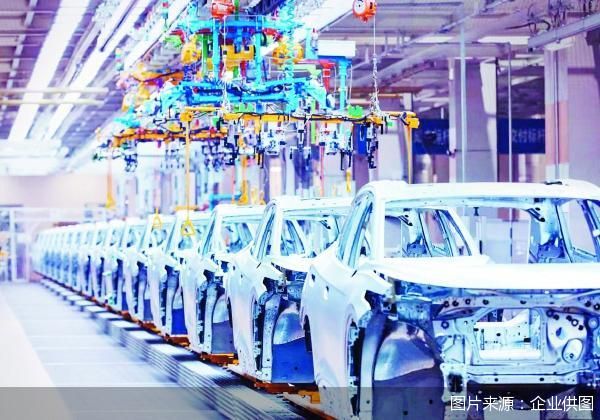
Core Insights - Chongqing's automotive production reached 1.2185 million units in the first half of the year, with an industrial added value growth of 8.4%, positioning it among the top three in the country [1] - The establishment of a complete industrial chain for smart connected new energy vehicles in Chongqing, led by the company Seres, has significantly improved the local automotive industry's zero-inventory ratio from 20% to 70% [1] - Seres, a local company, is projected to achieve annual sales of 426,900 new energy vehicles in 2024, representing a year-on-year growth of 180% [5] Industry Developments - The Qingfeng Science and Technology City in Chongqing houses 63 automotive parts manufacturing enterprises, primarily due to the influence of Seres' Phoenix Smart Factory [1] - The Phoenix Smart Factory is designed to meet international standards and incorporates digitalization and automation, achieving 100% automation in key processes and 24-hour online monitoring [5] - The factory has implemented a zero-carbon demonstration project, generating 15.84 million kWh of electricity annually through a 1.88 million square meter BIPV (Building Integrated Photovoltaics) project, which reduces coal consumption by 5,070 tons and CO2 emissions by approximately 13,284 tons each year [5] Green Initiatives - Ningbo Tuopu Group's production base for lightweight chassis systems and interior sound insulation components in Qingfeng Science and Technology City is applying for green factory certification [6] - The factory has installed 5.5 million square meters of photovoltaic equipment, generating approximately 5 million kWh annually, and plans to achieve an annual production capacity of 500,000 lightweight chassis modules [6] - The local government has signed 34 automotive industry chain projects since October last year, with a total investment of 11.39 billion yuan, expected to generate an annual output value of 19.31 billion yuan, promoting energy conservation and carbon reduction alongside industrial development [6]
“60天账期”承诺满两月,车企“解题”赶进度
Bei Jing Shang Bao· 2025-08-12 12:22
Core Viewpoint - The automotive industry is taking steps to address "involution" competition by implementing a "60-day payment term" for suppliers, with several companies successfully executing this commitment, showcasing their methods and results [1][3][9]. Group 1: Commitment Implementation - Multiple automotive companies, starting from June 10, have committed to reducing supplier payment terms to within 60 days, with the Ministry of Industry and Information Technology (MIIT) facilitating this process [3][6]. - By August 11, companies like FAW Group, GAC Group, and Seres Group reported their experiences and successes in fulfilling this commitment [1][3]. - FAW Group has established a cross-departmental task force to ensure seamless management of payment processes, including contract revisions to specify payment terms [3][4]. Group 2: Payment Process and Challenges - The payment initiation time and review process are critical for suppliers, as delays in internal audits can extend the payment timeline [4][8]. - GAC Group has developed a comprehensive control system that digitizes the entire payment process, allowing real-time tracking of order and payment statuses [5][8]. - Seres Group employs a "factory within a factory" model to streamline processes and reduce costs, enhancing payment efficiency [5][8]. Group 3: Industry Response and Trends - Other automotive companies, including Dongfeng, Changan, and Geely, are also actively working to implement the 60-day payment term [6][9]. - The automotive industry has seen a decline in profit margins, dropping from 7.8% in 2017 to 4.3% in 2024, with the first four months of this year showing a further decrease to 4.1% despite increased production and sales [9][11]. - The MIIT and industry associations are monitoring the situation, with a focus on stabilizing the market and reducing price wars that have negatively impacted profitability [10][11]. Group 4: Payment Methods and Supplier Support - The shift in payment methods is crucial, with companies like FAW Group moving to 100% cash payments for recognized small and medium-sized suppliers to alleviate financial pressure [8]. - GAC Group has also prioritized cash payments, achieving a 95% cash transfer rate, which significantly benefits suppliers [8]. - The implementation of the revised "Regulations on Payment for Small and Medium Enterprises" aims to prevent the forced acceptance of non-cash payment methods, ensuring timely payments [7][8].