PING AN OF CHINA(601318)

Search documents
非银金融行业跟踪周报:证券行业并购稳步推进,保险业总资产突破40万亿-20251123
Soochow Securities· 2025-11-23 15:43
Investment Rating - The report maintains an "Overweight" rating for the non-bank financial industry [1] Core Insights - The non-bank financial sector is experiencing steady mergers and acquisitions, with the insurance industry's total assets surpassing 40 trillion yuan, reflecting a growth of 12.5% year-on-year [1][22] - The insurance sector has shown resilience, outperforming other sub-sectors in recent trading days, while the overall non-bank financial sector has seen a decline [10][11] - The report highlights the ongoing transformation in the securities industry, with significant mergers expected to enhance asset scales and market positioning [20][21] Summary by Sections Non-Bank Financial Subsector Performance - In the recent five trading days (November 17-21, 2025), only the insurance sector outperformed the CSI 300 index, with declines of 3.06% for insurance, 4.89% for securities, and 6.53% for diversified finance [10] - Year-to-date performance shows insurance up by 14.17%, diversified finance up by 5.05%, and securities up by 0.47% [11] Securities Sector Insights - Trading volume in November has decreased month-on-month, with an average daily trading volume of 23,101 billion yuan, down 10.22% from the previous month but up 7.83% year-on-year [15] - The China Securities Regulatory Commission is enhancing foreign institutional participation in the capital market, aiming to improve market stability [15][21] - A significant merger involving China International Capital Corporation (CICC), Dongxing Securities, and Xinda Securities is underway, expected to create a combined asset scale exceeding 1 trillion yuan [20] Insurance Sector Insights - As of Q3 2025, total assets in the insurance sector reached 40.4 trillion yuan, a year-to-date increase of 4.5 trillion yuan [22] - The insurance industry reported a premium income of 5.2 trillion yuan, reflecting an 8.5% year-on-year growth [22] - The sector's solvency ratios are robust, with a comprehensive solvency ratio of 186% and a core solvency ratio of 134% [22] Diversified Finance Sector Insights - The trust industry is entering a stable transformation phase, with total assets reaching 29.56 trillion yuan, a year-on-year growth of 23.58% [29] - The futures market saw a trading volume of 6.03 billion contracts in October, with a transaction value of 61.22 trillion yuan, indicating a 4.56% year-on-year increase [35] - The report suggests that innovation in risk management will be crucial for the future development of the futures industry [38] Industry Ranking and Key Company Recommendations - The report ranks the insurance sector highest, followed by securities and diversified finance, recommending companies such as China Life, Ping An, and CITIC Securities for investment [44]






保险行业周报(20251117-20251121):报行合一再深化,《人身险产品费用分摊指引》出炉-20251123
Huachuang Securities· 2025-11-23 09:45
Investment Rating - The report maintains a "Recommendation" rating for the insurance industry, expecting the industry index to outperform the benchmark index by over 5% in the next 3-6 months [21]. Core Insights - The insurance index fell by 3.06% this week, outperforming the broader market by 0.71 percentage points. Major insurance stocks experienced declines, with notable drops from Sunshine Insurance (-4.8%) and China Pacific Insurance (-4.57%) [1]. - The China Actuarial Society released the "Guidelines for Expense Allocation of Life Insurance Products," which aims to enhance the scientific management of expenses within insurance companies and supports the implementation of the "reporting and operation integration" policy [2][4]. - As of the end of 2024, 34 insurance asset management companies managed a total of CNY 33.30 trillion, reflecting a year-on-year growth of 10.60% [2]. - The report highlights that 172 insurance companies have disclosed their solvency data for Q3 2025, with 14 achieving an AAA risk rating, while 4 companies fell below solvency standards [2]. Summary by Sections Market Performance - The insurance sector's performance was characterized by a 3.06% decline in the insurance index, with individual stocks like China Life and Ping An also showing significant decreases [1]. Regulatory Developments - The newly released guidelines categorize life insurance business expenses into variable and fixed costs, specifying which expenses should not be allocated and providing methods for expense allocation [4]. Financial Data - The total market capitalization of the insurance sector is CNY 32,109.56 billion, with a circulating market value of CNY 22,103.29 billion [6]. Valuation Metrics - The report provides PEV valuations for major life insurance companies, with China Life at 0.83x and Ping An at 0.71x [5]. - For property insurance, the PB valuations are noted, with China Re at 0.58x and PICC at 1.2x [10]. Investment Recommendations - Short-term recommendations focus on companies with performance elasticity, suggesting investments in New China Life, China Property & Casualty, and China Life. Long-term recommendations include China Pacific Insurance and China Ping An based on fundamental and valuation considerations [10].




机器人闯祸了怎么办?保险公司密集研发具身智能保险
Di Yi Cai Jing· 2025-11-23 05:53
Core Insights - The rapid development of artificial intelligence and embodied intelligence technologies is leading to the commercialization of humanoid robots, but concerns about risks such as "not daring to use, fear of damage, and inability to afford" are bottlenecks for large-scale implementation [1][2] - Major domestic property insurance companies in China, including Ping An, Taikang, and PICC, have launched specialized insurance products for embodied intelligence to address these commercialization challenges [1][5] Industry Overview - Humanoid robots, integrating advanced technologies like AI and high-end manufacturing, are becoming a new frontier in technology competition, with the domestic market expected to reach 1.25 trillion yuan by 2027 [2] - These robots can fill labor gaps across various sectors, including industrial applications like welding and assembly, as well as service scenarios such as elderly care and massage [2] Risk Landscape - The market promotion and use of humanoid robots raise significant safety concerns, with users particularly focused on the risks of damage to the robots themselves and potential harm to people or property in their vicinity [3] - The lack of comprehensive international or industry standards for AI and embodied intelligence technologies poses compatibility and safety risks for products [3][4] Insurance Innovations - Since September, leading insurance companies have been actively launching insurance products related to embodied intelligence [5] - China Pacific Insurance has introduced a specialized product called "Smart Insurance," which offers comprehensive risk coverage across the entire supply chain, integrating various types of protection [6] - PICC has launched a comprehensive insurance product for embodied intelligence, covering both the robot's physical damage and third-party liability, addressing various scenarios including natural disasters and operational failures [6] - Ping An has developed a comprehensive financial solution for embodied intelligence enterprises, providing extensive risk coverage and support across multiple sectors [7]

从高交会到金博会 “深圳创新四姐妹”各握AI“王牌”
2 1 Shi Ji Jing Ji Bao Dao· 2025-11-23 00:37
Core Insights - The Shenzhen High-Tech Fair and the Shenzhen Financial Expo showcased significant advancements in AI, with total intended transactions and investment amounts exceeding 1.7 trillion yuan and 10.55 billion yuan respectively [1] - The "Shenzhen Innovation Four Sisters" (Huawei, Tencent, Ping An, BYD) presented their latest AI developments, highlighting their differentiated strategies in AI integration across various industries [1][2] Group 1: AI Strategies of the "Four Sisters" - Huawei aims to provide a "super base" for various industries, focusing on intelligent transformation through advancements in core technologies like chips and operating systems [2][3] - Tencent is developing an AI "super entrance" through its WeChat platform, intending to create an AI entity that facilitates user interactions and transactions within its ecosystem [4][5] - Ping An is launching three major AI services, including a "super customer service" that integrates various service sectors, enhancing user experience through a unified AI interface [12][13] - BYD is leveraging AI to transform smart mobility, showcasing innovations in autonomous driving and smart cockpit technologies, contributing to a significant increase in vehicle sales [15][16] Group 2: Market Impact and Future Projections - Shenzhen's AI industry is expected to grow significantly, with plans to exceed 3,000 AI companies and over 10 unicorns by 2026, with an annual growth rate of over 20% [2] - The AI applications in finance, healthcare, and automotive sectors are projected to enhance operational efficiencies and customer engagement, reflecting a broader trend of AI integration into everyday business practices [17]



2025中国保险业竞争力研究报告发布 高质量发展格局加速形成
2 1 Shi Ji Jing Ji Bao Dao· 2025-11-22 13:07
Core Insights - The report reveals the competitive landscape and development trends of China's insurance industry as it transitions from scale expansion to value creation, driven by policy guidance, technological empowerment, and market demand [5][6] Group 1: Overall Industry Performance - In the first half of 2025, China's insurance premium income reached 3.74 trillion yuan, a year-on-year increase of 5.04%, continuing the steady growth momentum during the 14th Five-Year Plan period [9] - As of June 2025, the balance of insurance fund utilization reached 36.23 trillion yuan, a 67% increase compared to the end of 2020 [9] - China's insurance premium income accounts for 10.2% of the global market share, solidifying its position as the second-largest insurance market globally [9] - The industry's solvency capacity has strengthened, with a comprehensive solvency adequacy ratio of 204.5% and a core solvency adequacy ratio of 147.8% as of June 2025, reflecting significant improvement in overall risk resistance [9] Group 2: Life Insurance Sector - The report evaluates 75 life insurance companies, with 58 participating in the ranking; China Life, Ping An Life, Taikang Life, New China Life, and China Pacific Life are the top five [10] - Ping An Life leads the industry with a net profit of 50.602 billion yuan [10] - The top ten life insurance companies accounted for 94.6% of the total profit of the participating companies, indicating a "Matthew Effect" where larger firms dominate [10] - There is a growing divide among smaller companies, with 18 companies reporting losses, highlighting challenges in governance and business transformation [10] Group 3: Property Insurance Sector - In the property insurance sector, PICC Property and Casualty, Ping An Property and Casualty, and Taikang Property and Casualty are the top three, with the top five companies accounting for approximately 80% of the total profit of participating companies [11] - PICC Property and Casualty reported a net profit of 24.376 billion yuan and a comprehensive cost ratio of 94.72%, showcasing strong profitability [11] - However, the industry faces significant underwriting pressure, with 40 out of 82 participating companies having a comprehensive cost ratio exceeding 100%, indicating that nearly half are operating at a loss [11] Group 4: Pension and Health Insurance Sectors - The pension insurance sector is experiencing growth opportunities driven by policy support, with Taikang Pension, Ping An Pension, and National Pension leading the market [12] - Ping An Pension achieved a net profit of 1.36 billion yuan in the first half of 2025, becoming the most profitable pension insurance company [12] - The health insurance market is highly concentrated, with China People's Health, Ping An Health, and Fosun United Health as the top four, where the top two companies account for over 80% of revenue and profit [12] - The report emphasizes that the insurance industry is at a critical juncture between the clearing of the "old model" and the establishment of a "new ecosystem," with value creation, risk management, product innovation, and service upgrades as core competitive factors [12]
平安副首席投资官路昊阳:权益投资规模超8000亿,配置“高股息+成长”
券商中国· 2025-11-22 12:28
Core Viewpoint - The insurance industry is increasingly focusing on equity investments as a strategy to navigate the low interest rate environment, with Ping An Group highlighting the growing attractiveness of Chinese stocks and its equity investment scale exceeding 800 billion yuan [1][9]. Group 1: Investment Strategy - Ping An's equity investment in the secondary market has a compound annual growth rate exceeding 17% from 2021 to mid-2025, significantly outpacing the growth rate of the company's insurance fund scale [2][9]. - The company employs a "high dividend + growth" dual-driven balanced equity allocation strategy, emphasizing long-term investments in companies that can provide stable cash flows and profit growth [2][9]. - The total assets managed by Ping An have surpassed 6 trillion yuan, with equity investments exceeding 800 billion yuan, indicating a substantial scale that necessitates a long-term investment approach [3][4]. Group 2: Characteristics of Insurance Capital - Insurance capital is characterized as "patient capital" due to its long liability duration and the need for stable cash flows to meet future obligations, distinguishing it from speculative capital [3][4]. - The average liability duration in the life insurance industry is 16.3 years, highlighting the importance of matching long-duration assets with liabilities to avoid reinvestment risks [4][5]. - The company has established five matching principles to ensure alignment between assets and liabilities, including duration matching, investment return requirements, liquidity needs, risk safety, and financial reporting requirements [4][5]. Group 3: Global Insights and Trends - The global insurance industry has faced challenges in a low interest rate environment, with countries like Japan and the U.S. increasing equity allocations to manage liability costs effectively [7][8]. - Japan's insurance sector learned from past crises by increasing overseas allocations and domestic high-dividend stocks to cover liability costs, while U.S. insurers adjusted their liability guarantees and significantly increased equity investments [7][8]. - The trend of increasing equity allocations is seen as essential for navigating low interest rate cycles, with a focus on stable, value-oriented, and high-dividend assets [8]. Group 4: Domestic Market Dynamics - Recent policies in China have encouraged long-term capital market participation, particularly for insurance funds, with measures to optimize equity investment ratios and reduce risk factors [9]. - Current valuation metrics indicate that Chinese stocks are attractive, with the CSI 300 index trading at a price-to-earnings ratio of 16.4, significantly lower than that of the S&P 500 and Nasdaq [9]. - Ping An's equity investment strategy is expected to benefit from these trends, with a focus on high-quality Chinese assets that can contribute to the long-term growth of the economy [6][9].

综合金融与健康管理双轮驱动,中国平安再推新服务
Sou Hu Cai Jing· 2025-11-22 09:03
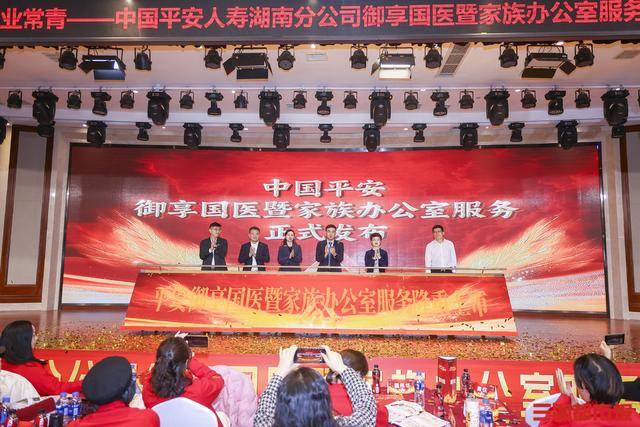
Group 1 - The core viewpoint of the article is that China Ping An has launched the "Yuxiang Guoyi" and "Family Office" services in Changsha, emphasizing the integration of comprehensive financial services with healthcare and elderly care through technological empowerment [1][3] Group 2 - China Ping An has established a comprehensive financial business system centered on insurance, banking, and asset management, while also developing a healthcare service ecosystem represented by Ping An Health and Peking University International Hospital [3] - The launch of the "Yuxiang Guoyi" service aligns with the growing public demand for high-quality health management and wealth protection, integrating traditional Chinese medicine wisdom with modern medical technology [3] - The "Family Office" service aims to provide high-net-worth clients with systematic and professional support in wealth inheritance, tax planning, and family governance, leveraging the group's comprehensive financial advantages [3]
金融机构为何卡位“AI超级入口”?对话平安集团CTO王晓航
2 1 Shi Ji Jing Ji Bao Dao· 2025-11-22 05:53
Core Insights - The core focus of the article is on Ping An Group's introduction of its "AI Super Customer Service," which aims to create a unified AI entry point for various services, enhancing user experience and accessibility in financial, medical, and elderly care sectors [1][2]. Group 1: AI Service Development - Ping An's shift from internal efficiency to consumer-facing AI products is driven by advancements in AI technology, making professional services more feasible [2][3]. - Three key trends in AI development are identified: continuous model intelligence improvement, expansion of AI capabilities into physical spaces, and the transformation of AI into collaborative partners in work and learning environments [2][3]. Group 2: AI Service Features - The "AI Service Entrance" differs from traditional app-based one-stop service platforms by providing a comprehensive "butler-like experience" that is not limited to a specific application format [4][5]. - The "Super Customer Service" integrates over 500 online and offline services, allowing for quick resolutions to user inquiries and needs, such as roadside assistance and health consultations [5][6]. Group 3: Technical Challenges and Solutions - Key challenges include digitizing all services, ensuring collaboration between AI and human experts in complex fields like finance and healthcare, and addressing compliance and safety issues [7][8]. - Solutions involve leveraging high-quality training data, continuous learning from real business interactions, and developing a robust compliance framework to ensure AI operates within defined boundaries [8][10].
电厂 | 保险巨头迎来黄金周期 但如何才能进入“黄金时代”
Xin Lang Cai Jing· 2025-11-21 11:17
Core Insights - The insurance giants in China are experiencing a significant upturn, driven by a recovery in the capital markets and stable growth in the new business value of life insurance [1][4][10] - The combined revenue of the five major insurance companies reached 2.37 trillion yuan, with a net profit of 426.04 billion yuan in the first three quarters, indicating a revenue growth of 13.6% and a net profit growth of 33.54% [1][4] - The net profit growth in Q3 alone was remarkable, with an increase of 68.34%, surpassing market expectations [1][4] Revenue and Profit Growth - The five major insurance companies reported the following revenues for the first three quarters: China Ping An (832.94 billion yuan), China Life (537.895 billion yuan), China Pacific Insurance (344.904 billion yuan), China Property & Casualty Insurance (520.99 billion yuan), and New China Life (137.252 billion yuan) [4] - The corresponding profit figures were: China Ping An (132.856 billion yuan), China Life (167.804 billion yuan), China Property & Casualty Insurance (46.822 billion yuan), China Pacific Insurance (45.7 billion yuan), and New China Life (32.857 billion yuan) [4] - The net profit growth rates were significantly higher than revenue growth, with China Life and New China Life showing around 60% growth [4][7] Business Value and Channel Quality - The new business value for the five major insurance companies saw substantial increases, with China Life up 41.8%, Ping An Life and Health up 46.2%, and China Property & Casualty Insurance up 76.6% [7] - The improvement in channel quality and the growth of new business value were identified as key drivers for the profit increases [4][7] - The insurance giants are focusing on channel transformation, enhancing productivity, and developing bancassurance channels to boost new business value [4][6] Investment Performance - The total investment income for the five major insurance companies reached 887.5 billion yuan, a year-on-year increase of 35.64% [11] - The investment asset scale reached 20.26 trillion yuan, with significant growth in stock investments, which increased by 36.2% [11][13] - The companies are benefiting from a favorable capital market environment, which has strengthened their financial foundations [11][13] Cost Efficiency and Operational Improvements - The insurance sector has made notable progress in cost reduction and efficiency improvements, with life insurance companies reducing costs by 350 billion yuan since 2024 [14][15] - Companies are leveraging technology, such as AI, to enhance operational efficiency and reduce costs [15] - The overall industry is witnessing a shift towards more reliable and stable operations, driven by the reforms initiated by the major players [18] Industry Outlook - The insurance industry is entering a new growth phase, with the potential for high-quality development contingent on continuous internal improvements and reforms [18] - While the major companies are thriving, some smaller firms are struggling, indicating a polarization within the industry [16][18] - The overall health and standardization of the industry are expected to improve as the major companies lead the way in reforms and operational excellence [18]

当AI走向“解决问题”:平安如何打造“超级有用”的智能体?
Tai Mei Ti A P P· 2025-11-21 11:08
Core Insights - The article highlights the emergence of "AI Super Customer Service" by Ping An, showcasing a shift towards AI that not only understands and expresses but also plans and executes tasks, marking 2025 as the "Year of Intelligent Agents" [2][3] - Ping An's AI strategy focuses on practical applications in finance, healthcare, and elderly care, aiming to provide quick and effective solutions rather than just information exchange [3][4] Group 1: AI Service Matrix - Ping An has introduced a comprehensive AI service matrix, including AI Super Customer Service, AI Family Doctor, and AI Elderly Care Manager, to enhance user experience and service efficiency [2][4] - The transition from a "one-stop service platform" to an "AI concierge experience" reflects a paradigm shift where AI evolves from a passive responder to an active problem-solver [5][6] Group 2: Technological Advancements - The article discusses three foundational technological transformations enabling this shift: expansion of boundaries, intelligent leaps, and role redefinition of AI as a responsible partner rather than just a tool [5][6] - Ping An has digitized over 500 online and offline services, allowing the AI to understand, match, schedule, and execute tasks effectively [6][11] Group 3: Human-Machine Collaboration - In critical sectors like finance and healthcare, Ping An emphasizes a "human-machine collaboration" model, where AI assists in standard tasks while human experts retain decision-making authority [9][10] - The AI Family Doctor system exemplifies this collaboration, efficiently triaging patients and connecting them with specialists when necessary [10][11] Group 4: Productivity Transformation - The integration of AI is transforming productivity within Ping An, with a significant portion of customer service tasks now handled by AI, leading to cost optimization and improved service standards [13][14] - This shift is prompting a re-evaluation of organizational structures, moving from a reliance on human labor to leveraging computational power for enhanced efficiency [14][15] Group 5: Accessibility of Services - Ping An's AI initiatives aim to democratize access to high-quality financial, healthcare, and elderly care services for its 250 million customers, addressing the issue of professional scarcity [15]