ICBC(601398)

Search documents
工行南通如东支行积极开展网络安全宣传活动
Jiang Nan Shi Bao· 2025-11-20 02:11
Core Viewpoint - The Industrial and Commercial Bank of China (ICBC) in Rudong, Nantong, is actively promoting cybersecurity awareness and knowledge among the public, aligning with national financial regulatory calls to enhance network security for high-quality development [1][2]. Group 1: Cybersecurity Training and Awareness - The bank has organized cybersecurity training for employees to recognize the severity and complexity of new telecom network crimes, enhancing vigilance against online fraud [1]. - Various promotional activities have been conducted, including the distribution of brochures and the use of eye-catching posters in bank branches to educate customers about cybersecurity [1]. Group 2: Community Engagement and Financial Knowledge Promotion - The bank has introduced a "Three Visits" service model to provide targeted financial knowledge promotion, focusing on safe usage of online payment, online finance, and online lending [2]. - Rural branches are extending financial services to local communities, collaborating with grassroots organizations to promote inclusive finance and educate residents about the dangers of illegal fundraising and high-interest temptations [2]. - Youth volunteers are actively engaging with consumers in supermarkets to explain legal regulations and provide insights on online safety and personal information protection [2].

工行南通分行强化异常交易金融风险防控
Jiang Nan Shi Bao· 2025-11-20 02:11
Core Insights - The recent detection of suspicious transactions by the Nantong branch's remote online service center highlights emerging money laundering methods and potential risks in financial security [1][2] Group 1: Suspicious Transaction Characteristics - The identified suspicious transactions exhibited multiple abnormal features, including individual remittance amounts exceeding 2 million yuan, labeled as "waste copper funds," with recipients being individual accounts rather than corporate accounts [1] - The remitters were primarily young individuals aged 17 to 18, lacking stable income sources, and often accompanied by others, suggesting potential coercion or manipulation [1] - Documentation provided by clients, such as purchase contracts and invoices, raised authenticity concerns, as they were merely mobile phone photos and lacked original verification [1] Group 2: Risk Identification and Prevention Measures - The remote online service center's ability to identify these risks stemmed from its centralized processing model, allowing for the detection of common suspicious points across multiple transactions [2] - The center implemented immediate risk control measures, including requiring original transaction proof and thorough inquiries into the source and background of funds for large remittances [2] - Transactions showing signs of collusion or consistent scripts among multiple clients were to be paused and reported, with suspicious transactions flagged for internal review [2] Group 3: Broader Implications for Financial Security - The incident serves as a reminder for the entire organization to maintain heightened risk sensitivity and vigilance against abnormal transaction characteristics [3] - Emphasis on adhering to the "Know Your Customer" (KYC) principle is crucial, necessitating multi-dimensional verification of client identities and transaction backgrounds [3] - Ongoing risk training is essential to enhance employees' ability to accurately identify and prevent suspicious transactions [3]
工商银行联动标准银行携手非洲客商连续八年参展进博会
人民网-国际频道 原创稿· 2025-11-20 02:00
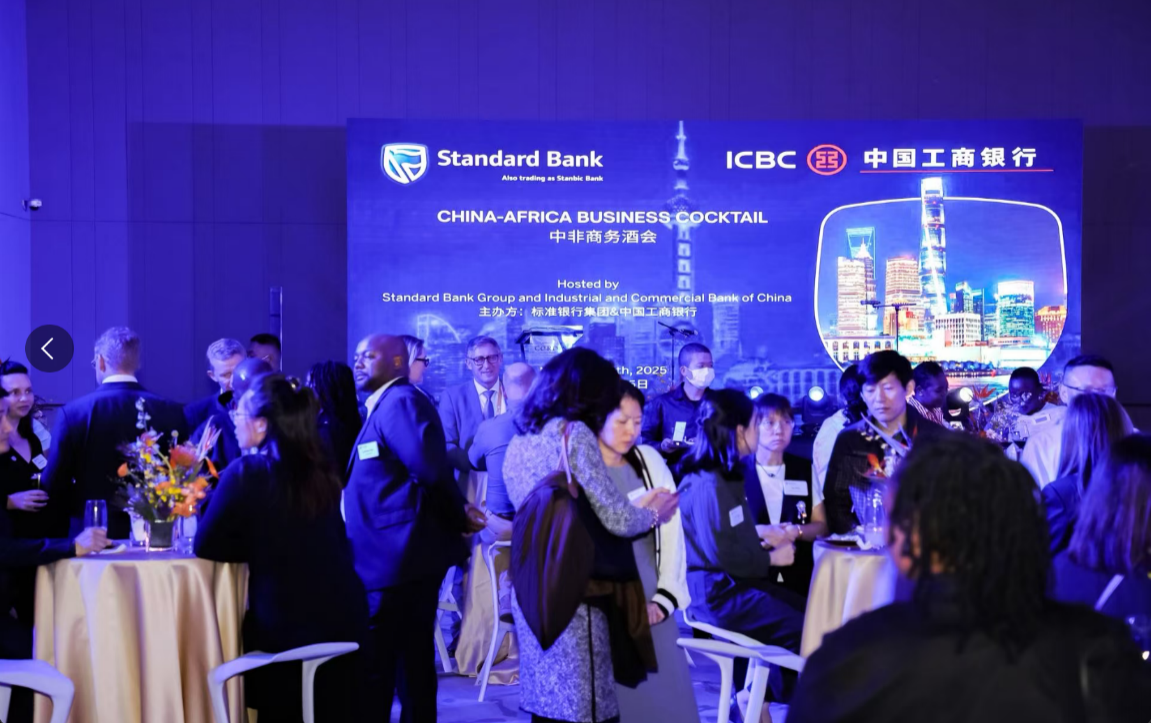
Core Viewpoint - The strategic partnership between Industrial and Commercial Bank of China (ICBC) and Standard Bank Group has facilitated the participation of African businesses in the China International Import Expo for eight consecutive years, promoting high-quality economic and trade development between China and Africa [1][2]. Group 1: Strategic Cooperation - ICBC and Standard Bank Group have collaborated to invite and organize clients for various events during the expo, including a customer appreciation event and a themed supply-demand matching meeting for food and agricultural products [2]. - The partnership aims to leverage the expo as a high-level platform to enhance cooperation in the agricultural sector between China and Africa [2]. Group 2: Future Plans - ICBC plans to summarize the successful experiences from the expo and continue to utilize the strategic cooperation advantages with Standard Bank Group [2]. - The company aims to explore a regular trade negotiation mechanism between China and Africa, promoting deeper and more practical economic cooperation [2].

中国工商银行助力南非标准银行落地CIPS直参项目
Ren Min Wang· 2025-11-20 01:45
Core Viewpoint - The successful launch of the CIPS (Cross-Border Interbank Payment System) project by the Industrial and Commercial Bank of China (ICBC) in collaboration with Standard Bank Group marks a significant advancement for RMB clearing networks in Africa [1][2] Group 1 - ICBC has established a strategic partnership with Standard Bank Group, becoming the largest single shareholder and facilitating the direct participation of Standard Bank in CIPS [1] - The project aims to enhance the RMB clearing infrastructure in Africa, with a memorandum of cooperation signed during the China-Africa Economic and Trade Investment Forum [1] - The CIPS system at Standard Bank successfully went live, making it the first local bank in Africa to achieve direct participation in CIPS [2] Group 2 - The collaboration between ICBC and Standard Bank has led to the completion of system setups and the successful approval from the South African Reserve Bank for the CIPS system [2] - The first large RMB payment transaction has been completed, indicating the operational readiness of Standard Bank as a CIPS direct participant [2] - Future efforts will focus on strengthening the cross-border settlement and payment clearing system to support Sino-South African and Sino-African economic cooperation [2]
以金博会为重要实践窗口 深圳工行展示金融创新成果
Nan Fang Du Shi Bao· 2025-11-19 23:04
Core Viewpoint - The 19th Shenzhen International Financial Expo showcases the innovative financial products and services of the Industrial and Commercial Bank of China (ICBC) Shenzhen Branch, emphasizing its commitment to supporting the local economy and aligning with national financial strategies [6][7][14]. Group 1: Technology Finance - ICBC Shenzhen Branch presented a comprehensive financial service system tailored for technology enterprises, addressing the unique financing challenges faced by high-tech companies [8][9]. - The bank introduced a "Science and Technology Product Family" that activates the value of intellectual property and equity assets, including the first copyright pledge financing in Shenzhen [9]. - A "three-in-one" review mechanism was created to focus on future value indicators rather than current revenue, enhancing the evaluation of technology firms [9]. Group 2: Inclusive Finance - ICBC Shenzhen Branch's inclusive finance initiatives have led to a historic loan balance exceeding 200 billion yuan, with an annual growth rate of 43% [10][12]. - The bank showcased three major products: "Business Quick Loan," "Online Loan," and "Digital Supply Chain," which cater to various financing needs of small and micro enterprises [10]. - The "Park e-loan" product was highlighted, which quantifies soft strengths like patent counts and R&D investment to assess loan eligibility [10][11]. Group 3: Sports and Financial Integration - The bank's participation in the 15th National Games exemplifies the integration of sports, finance, and culture, offering themed financial products to enhance community engagement [13][14]. - ICBC Shenzhen Branch launched a series of financial products related to the National Games, including themed debit and credit cards, aimed at converting spectator enthusiasm into tangible benefits for residents [13].

提升县域跨境金融服务质效
Jing Ji Ri Bao· 2025-11-19 22:19
Core Insights - The Industrial and Commercial Bank of China (ICBC) Jinhua Branch is actively participating in the economic and financial service reform pilot in Jinhua, Zhejiang Province, focusing on enhancing cross-border financial services to support the local economy [1] Group 1: Cross-Border Financial Services - ICBC Jinhua Branch is implementing policies to improve cross-border financial services, directly benefiting local enterprises [1] - The branch has processed over ten thousand high-level open pilot business transactions, promoting cross-border trade and investment [1] Group 2: Currency and Risk Management - The bank has conducted extensive outreach, serving over a thousand enterprises to increase awareness of RMB settlement, aiming to boost the proportion of goods trade settled in RMB [1] - A new "exchange rate hedging market monitoring system" has been developed, allowing companies to monitor exchange rates more efficiently, enhancing their ability to manage risks associated with exchange rate fluctuations [1] Group 3: Financial Innovation - The Jinhua Branch has pioneered the implementation of a multi-central bank digital currency bridge business, expanding the application of digital RMB in cross-border scenarios [1] - The branch has successfully launched a pilot program for derivative guarantee and credit enhancement services for cross-border financial service platforms, providing small and micro enterprises with more convenient and cost-effective exchange rate hedging services [1]
保险爱银行?2025年三季度保险投资超37万亿,银行股仍是第一重仓,工行、农行等均被增持...
13个精算师· 2025-11-19 16:01
Core Insights - The insurance companies' investment yield has increased, with total investment funds surpassing 37 trillion yuan for the first time, driven by a significant rise in stock investments and a focus on banking, energy, and transportation sectors [1][6][7]. Investment Performance - The average annualized financial investment yield for life insurance companies reached nearly 5%, with a median exceeding 4.7%, marking an increase of approximately 1 percentage point compared to the previous year [3][6]. - The total investment funds of insurance companies exceeded 37 trillion yuan, with life insurance companies managing over 33.5 trillion yuan and property insurance companies nearly 2.4 trillion yuan [6][8]. - Equity investments accounted for 23.4% of total funds, reaching a recent high of over 8.4 trillion yuan [4][6]. Stock Investment Trends - Direct stock investments surged over 55%, with the amount reaching 3.6 trillion yuan, an increase of approximately 1.3 trillion yuan year-on-year [8][10]. - The growth in stock investments is attributed to regulatory measures encouraging long-term capital market participation [10][12]. Sector Preferences - Insurance funds are heavily invested in banking, energy, transportation, and telecommunications sectors, with banking remaining the top sector, accounting for about 50% of total investments [15][20]. - By the end of Q3 2025, the market value of bank stocks held by insurance companies exceeded 3.35 trillion yuan, reflecting an increase of nearly 700 billion yuan since the beginning of the year [20][22]. Major Holdings - Companies like Ping An and China Life have increased their stakes in Agricultural Bank and Industrial and Commercial Bank, respectively, indicating a continued preference for stable, high-dividend stocks [17][23]. - The investment strategy focuses on long-term stable dividend income, particularly in industries with solid profitability [15][16].



【西街观察】五年期存款产品退潮,迟来的银行负债端“自救”
Bei Jing Shang Bao· 2025-11-19 15:02
Core Viewpoint - Recent adjustments by various banks to long-term deposit products have sparked widespread market attention, reflecting a tightening trend across the banking industry in response to ongoing net interest margin pressures [1][2] Group 1: Bank Adjustments - Several small and medium-sized banks, including village and private banks, have canceled or suspended five-year fixed-term deposits, while state-owned and joint-stock banks have also stopped offering five-year large-denomination certificates of deposit [1] - Some village banks have lowered interest rates on multiple term deposit products, with reductions of up to 10 basis points [1] - The current adjustments across various banks are a direct manifestation of the sustained pressure on net interest margins, indicating a proactive "correction" by the banking system to optimize deposit structures and reduce liability costs [1] Group 2: Net Interest Margin and Profitability - The net interest margin, a critical indicator of bank profitability, has dropped to a historical low of 1.42%, highlighting severe profitability pressures faced by the banking sector [1] - Banks are urged to lower loan rates to benefit the real economy, but they are simultaneously confronted with a growing trend of "regularized" deposits, making it difficult to reduce liability costs [1] - The disparity between declining loan rates and stable deposit rates is squeezing banks' profit margins and affecting their operational stability [1] Group 3: Regulatory Perspective - The People's Bank of China aims to guide commercial banks in lowering deposit rates through a self-discipline mechanism, not to eliminate certain deposit products but to address the bottlenecks in interest rate transmission [2] - The push for the orderly exit of high-cost long-term deposits will help banks build a more reasonable liability structure that responds more sensitively to changes in the Loan Prime Rate (LPR) [2] - This approach enhances policy transmission efficiency and reserves necessary policy space for future rate cuts, ensuring macroeconomic adjustments can effectively reach the real economy [2] Group 4: Wealth Management Trends - The decline of five-year fixed deposits should not be viewed merely as "shrinkage of savings" but as a signal for optimizing wealth allocation during a declining interest rate cycle [2] - The overall trend towards a more accommodative monetary environment makes traditional long-term savings less suitable for market changes [2] - The scale of the bank wealth management market has returned to 32 trillion yuan, with public fund total assets exceeding 36 trillion yuan, and trust asset management also surpassing 32 trillion yuan, providing more diverse asset allocation options for savers [2] Group 5: Market Rebalancing - The retreat of five-year fixed deposits represents a rebalancing of "price" and "quantity," as well as risk and efficiency, within the process of interest rate marketization [3] - As banks' liability structures become more flexible and robust, and as savers adopt a more rational and diversified wealth management perspective, the bottlenecks in interest rate transmission can gradually be alleviated [3]
2026年银行二永债年度策略:供需两弱下的逆风局
Shenwan Hongyuan Securities· 2025-11-19 13:42
Core Insights - The report indicates a challenging environment for perpetual bonds in the banking sector, with both supply and demand expected to remain weak in 2026 [2][3] - The net supply of perpetual bonds is projected to stabilize at a low level, with significant contributions from TLAC bonds [2][3] - Demand for bank perpetual bonds is facing challenges due to regulatory changes and market conditions, impacting their attractiveness [2][3] Supply - The net supply of perpetual bonds has decreased significantly, with 2025's issuance at 1.38 trillion yuan, down from previous years, and net financing dropping to 363 billion yuan [8][12] - The supply is expected to remain low in 2026, with net financing projected to be around 400-500 billion yuan, characterized by a decline in large banks' issuance and an increase from smaller banks [2][3] - TLAC bonds are anticipated to provide some relief to the supply side, with a projected net supply of around 300 billion yuan in 2026 [2][3] Demand - Bank perpetual bonds continue to be a crucial component of the credit bond market, but demand is weakening due to regulatory changes and market dynamics [2][3] - The implementation of new accounting standards for insurance companies may reduce their investment capacity in perpetual bonds, although the overall impact is expected to be manageable [2][3] - The demand from banks for self-managed investments is likely to stabilize, while mutual funds may face challenges due to new fee regulations, impacting their allocation to perpetual bonds [2][3] Valuation - The report highlights the potential for a shift in the relative valuation of perpetual bonds due to weak supply and demand dynamics [3][3] - Credit spreads for perpetual bonds may face upward pressure if participation from funds and insurance companies diminishes, with projected spreads for 3-year AAA-rated bonds in the range of 25-60 basis points [3][3] - The valuation of different bond types is expected to diverge, with higher-grade bonds potentially facing upward pressure on spreads [3][3] Strategy - The report suggests a tactical approach to trading opportunities in high-grade bank perpetual bonds, with a focus on price differences between new and existing bonds [3][3] - For mid-sized banks' perpetual bonds, it is recommended to actively monitor value propositions while being cautious of non-redemption risks [3][3] - TLAC bonds are noted for their dual value in both allocation and trading, with a particular emphasis on floating rate bonds [3][3]
AI重塑银行数字竞争力,机制与人才变革正在进行时
2 1 Shi Ji Jing Ji Bao Dao· 2025-11-19 09:26
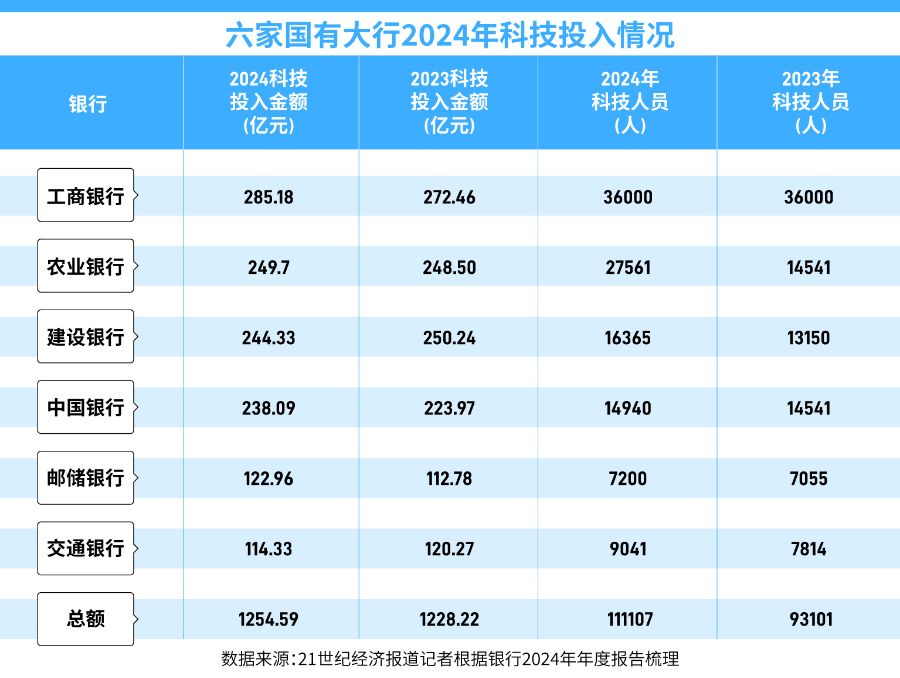
Core Insights - The banking industry is entering a new phase of digital finance development driven by AI applications, enhancing the integration of technology and business operations [2] - There is a significant increase in technology investment among major banks, with a focus on optimizing governance structures and resource management [3][4] - AI is reshaping competitive dynamics in the banking sector, enabling smaller banks to leverage technology for innovation and growth [2] Technology Investment and Governance - In 2024, the total technology investment by six major state-owned banks exceeded 120 billion yuan, marking a 2.15% year-on-year increase, with a total of over 111,000 technology personnel, up 19.34% from the previous year [3][4] - The technology investment of these six banks accounts for over 50% of the total technology spending in the banking industry, which exceeds 200 billion yuan [4] - Some banks, such as China Construction Bank and Ping An Bank, have reported a decrease in technology investment, indicating a shift towards optimizing technology resource management [5][6] AI Application and Innovation - AI applications are accelerating the integration of business and technology, with various banks launching innovative projects across different scenarios [2][6] - Smaller banks like Qingdao Bank and Hunan Bank have demonstrated significant innovation capabilities through AI, winning multiple awards in recent fintech competitions [2] Talent Development and Resource Allocation - The proportion of technology personnel in major banks has increased, reflecting a growing emphasis on talent as a core resource for digital finance development [9][10] - Banks are adopting dual pathways for cultivating composite talents, focusing on both external recruitment and internal mechanisms to enhance the integration of technology and business [11][12] - The shift towards "business-technology co-creation" is emphasized, with banks encouraging deeper involvement of business units in technology development processes [13]