Guolian Minsheng Sec(601456)

Search documents
油价走出熊市了吗?(国联民生宏观林彦)
Jin Shi Shu Ju· 2026-01-23 10:34
Group 1 - The core view is that 2025 was a year of significant decline for crude oil prices, contrasting with the strong performance of precious metals like gold and silver, with Brent crude oil prices dropping approximately 20% [2] - The oil market faced multiple bearish factors, including reduced demand due to U.S. fiscal cuts and trade tariffs, and increased supply from OPEC and U.S. producers [2][3] - The oil price dynamics in 2026 are expected to be influenced primarily by supply and demand interactions, with a potential stabilization of prices as bearish factors diminish [3][6] Group 2 - Supply-side pressures are expected to ease in 2026, as the growth of non-OPEC production, particularly from the U.S., is anticipated to slow down due to rising costs and reduced capital expenditure [6][9] - The U.S. active rig count is declining, indicating a weakening growth momentum in oil production, with EIA predicting a slowdown in U.S. crude oil production growth in 2026 [9][12] - Non-OPEC countries like Brazil and Guyana are also expected to see a slowdown in production growth, with high-cost projects becoming less economically viable in a low-price environment [12][17] Group 3 - OPEC+ is likely to regain pricing power in 2026, as their spare capacity has significantly reduced, and they have a strong incentive to maintain stable production levels to support prices [17][20] - The fiscal breakeven price for core OPEC members is relatively high, which increases their desire to stabilize oil prices amidst low price environments [20][23] - OPEC+ has already taken steps to pause production increases in early 2026, aiming to consolidate market balance and prevent further price declines [23][26] Group 4 - Demand-side factors are showing signs of improvement, with reduced tariff impacts and potential fiscal expansion in major economies expected to boost oil demand [34][36] - The anticipated implementation of fiscal and monetary policies in the U.S. and Europe could stimulate economic recovery, thereby increasing oil consumption [34][41] - Emerging market economies are also expected to contribute positively to global oil demand, providing a solid support base against fluctuations in developed economies [36][41] Group 5 - Overall, the probability of a significant decline in oil prices in 2026 is reduced, with expectations of Brent crude prices fluctuating between $60 and $70 per barrel [41][43] - Geopolitical risks remain a concern, as conflicts in key oil-producing regions could lead to supply disruptions, potentially pushing prices above the upper range [43]



证券板块1月23日跌0.07%,广发证券领跌,主力资金净流出16.44亿元
Zheng Xing Xing Ye Ri Bao· 2026-01-23 09:04
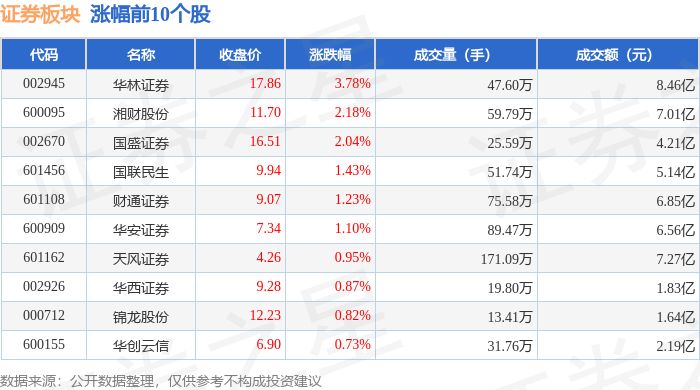
Market Overview - The securities sector experienced a slight decline of 0.07% on January 23, with GF Securities leading the drop [1] - The Shanghai Composite Index closed at 4136.16, up 0.33%, while the Shenzhen Component Index closed at 14439.66, up 0.79% [1] Individual Stock Performance - Notable gainers included: - Huayin Securities (002945) with a closing price of 17.86, up 3.78% and a trading volume of 476,000 shares, totaling 846 million yuan [1] - Xiangcai Shares (600095) closed at 11.70, up 2.18% with a trading volume of 597,900 shares, totaling 701 million yuan [1] - Major decliners included: - GF Securities (000776) closed at 22.31, down 1.24% with a trading volume of 580,600 shares, totaling 1.3 billion yuan [2] - Tushin Securities (002736) closed at 12.56, down 1.02% with a trading volume of 586,200 shares, totaling 740 million yuan [2] Fund Flow Analysis - The securities sector saw a net outflow of 1.644 billion yuan from institutional investors, while retail investors contributed a net inflow of 1.15 billion yuan [2][3] - Key stocks with significant fund flows included: - Guotai Junan (601211) with a net inflow of 180 million yuan from institutional investors [3] - Huayin Securities (002945) had a net inflow of 86.16 million yuan from institutional investors [3] ETF Performance - Financial Technology ETF (516100) saw a decline of 5.40% over the past five days, with a current PE ratio of 76.53 and a net subscription of 21.78 million yuan [5] - Securities ETF (515010) decreased by 1.29% over the past five days, with a PE ratio of 17.02 and a net redemption of 76.32 million yuan [5]




国联民生投行业务后劲十足:IPO排队第六、新报辅导第四、新三板挂牌第一!
Xin Lang Cai Jing· 2026-01-23 06:58
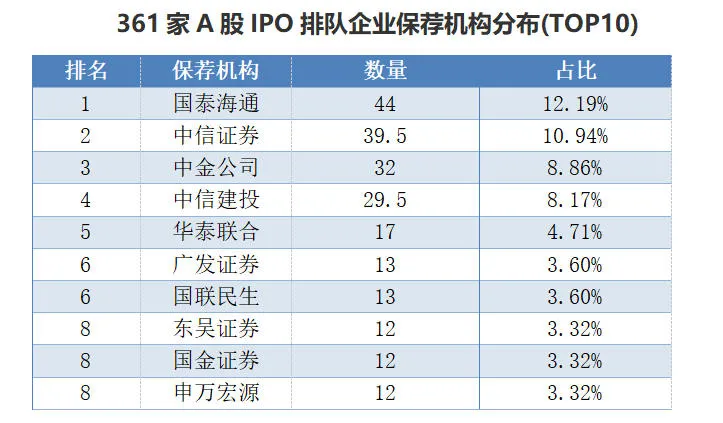
Core Viewpoint - Guolian Minsheng (601456) expects a significant increase in net profit attributable to shareholders, projecting a net profit of 2.008 billion yuan for 2025, representing a year-on-year growth of approximately 406% [1][13]. Investment Banking Performance - The investment banking segment of Guolian Minsheng has shown remarkable growth, with a strong pipeline of IPO projects. As of the end of 2025, there are 361 companies queued for IPOs in the A-share market, with Guolian Minsheng ranking sixth with 13 companies [1][19]. - The company completed five IPO underwriting projects in the A-share market in 2025, ranking seventh in terms of the number of projects and underwriting amounts exceeding 3 billion yuan, also placing seventh in the industry [7][19]. New Third Board Market - In the New Third Board market, Guolian Minsheng led the underwriting and sponsorship with 27 new listing projects, achieving a market share of 8%, confirming its strong collaborative and professional service capabilities [2][16]. - The company ranked first among main underwriters in the New Third Board market for 2025, with a total of 27 projects [3][17]. IPO Guidance - In terms of IPO guidance, Guolian Minsheng ranked fourth with 24 new guidance projects in 2025, amidst a total of 410 new guidance projects across the market [4][18]. Strategic Development - Following the merger with Minsheng Securities, Guolian Minsheng has focused on integrating technology, finance, and industry, enhancing its comprehensive financial service capabilities through a strategy centered on "collaborative empowerment" and "internal growth" [6][18]. - The company aims to be the "most industry-friendly investment bank," providing tailored financial solutions across various stages of enterprise development, including equity financing, bond financing, mergers and acquisitions, and financial advisory services [12][22]. Future Outlook - Industry experts predict that Guolian Minsheng will achieve better results in the IPO market in 2026, especially as the A-share market is expected to recover [13][23].
国联民生证券:国内客座率涨幅扩大 看好国际航线2026年继续扩张
Zhi Tong Cai Jing· 2026-01-23 06:20
Core Viewpoint - The report from Guolian Minsheng Securities indicates a sustained tight supply-demand relationship in domestic routes, with expectations for moderate price increases in 2026 due to regulatory measures aimed at addressing low ticket prices. The international routes are anticipated to benefit from inbound tourism, leading to a gradual recovery in both volume and pricing by 2026 [1] Group 1: Supply and Demand Dynamics - In December, the demand growth rate for the entire industry continued to exceed supply, with domestic passenger load factors increasing and international load factors showing a slight decline [1] - The combined ASK/RPK for six listed airlines in December showed a year-on-year increase of +6.6% and +9.1%, respectively, indicating a robust demand environment [1] - Domestic routes maintained low supply growth in December, with ASK/RPK increasing by +4.2% and +7.2%, achieving a passenger load factor of 85.7%, which is the highest level recorded for December [1] Group 2: Pricing Trends - December saw a slight year-on-year increase in domestic ticket prices, while international ticket prices experienced a decline [2] - The industry aircraft utilization rate remained high at 7.6 hours in December, with a slight decrease of -0.1% year-on-year, while wide-body aircraft utilization increased by +3.2% [2] - Domestic economy class ticket prices, including fuel surcharges, showed a year-on-year increase of +0.1%, while international ticket prices fell by -11.6% [2] Group 3: Fleet Expansion - The fleet of the six airlines grew by 0.4% month-on-month in December, with a total of 3,386 aircraft managed, reflecting a cumulative growth of +4.0% compared to the end of 2024 [3] - The majority of new aircraft deliveries were narrow-body models, particularly the A320 series, with 24 new narrow-body aircraft introduced in December [3]
调研速递|冰轮环境接待国联民生证券等3家机构调研 数据中心液冷、核电业务受关注 HRSG产品2025年营收预计达10亿
Xin Lang Zheng Quan· 2026-01-22 10:25
Core Viewpoint - Ice Wheel Environmental Technology Co., Ltd. is actively engaging in various sectors, focusing on advanced energy and power solutions, with significant developments in data center liquid cooling systems, nuclear power technologies, HRSG products, and thermal management solutions. Group 1: Business Overview - The company provides comprehensive temperature and energy management solutions across a wide temperature range from -271°C to 200°C, with products including various types of compressors, absorption chillers, industrial heat pumps, and heat exchange equipment [2] - Its products serve multiple industries such as food cold chain, industrial refrigeration, commercial air conditioning, energy and chemical sectors, aerospace research, rail transportation, data centers, nuclear power plants, and metallurgy [2] Group 2: Data Center Liquid Cooling Systems - The company has deepened its layout in data center liquid cooling systems, with its subsidiary Dunhan Bush providing cooling equipment for major domestic and international projects [3] - Dunhan Bush has a 131-year history and is recognized in the HVAC sector, with products included in the Ministry of Industry and Information Technology's list of advanced applicable technologies for green data centers [3] Group 3: Nuclear Power Sector - The company is focusing on nuclear power technologies, having developed innovative solutions for nuclear island cooling and heat recovery, and has recently won a bid for a floating small modular reactor cooling project [4] - Dunhan Bush is a leading service provider in the nuclear island refrigeration market, with over 20 years of experience and has served multiple nuclear power stations in China [4] Group 4: HRSG Products - The joint venture with Yantai Modern Ice Wheel Heavy Industry Co., Ltd. is experiencing strong demand for HRSG products, with expected revenue of over 1 billion yuan in 2025 [5] - The HRSG business has established strong competitiveness through collaborations with major companies like GE, Siemens, and Mitsubishi [5] Group 5: Thermal Management Solutions - The thermal management sector is a key focus for the company, benefiting from policies promoting urban renewal and carbon neutrality, with technologies aimed at reducing energy consumption and carbon emissions [6][7] - The company has developed various technologies, including absorption heat exchangers and flue gas waste heat recovery systems, which have received national recognition and awards [7] Group 6: AIDC Cooling Solutions - The company is addressing cooling needs in AIDC (Artificial Intelligence Data Centers) with lithium bromide absorption chillers that utilize waste heat from gas turbines, enhancing energy efficiency [8]

研报掘金丨国联民生:维持宁波银行“推荐”评级,中收高增30%+表现亮眼
Ge Long Hui· 2026-01-22 07:40
Core Viewpoint - Ningbo Bank has maintained stable revenue and profit growth over 25 years, with a remarkable increase of over 30% in non-interest income [1] Group 1: Financial Performance - Revenue and profit growth has been stable over 25 years [1] - Non-interest income has shown a significant increase of over 30% [1] - Steady growth in deposits and loans, with a high proportion of new deposits being demand deposits [1] Group 2: Cost and Asset Quality - Liability costs are expected to decline, supporting a gradual stabilization of interest margins [1] - Non-performing loans remain low and stable, with continued emphasis on cost control [1] Group 3: Strategic Focus - The company has consistently implemented a strategy of "large banks cannot do well, small banks cannot do" [1] - Market-oriented operations are a key feature, with a focus on high-quality operational areas [1] - Credit scale growth is higher than the industry average, and asset quality remains stable [1] Group 4: Service Development - Recently, the company has actively provided comprehensive services to corporate clients [1] - There is a strengthened focus on developing wealth management in the retail sector, marking a new phase in banking operations [1] Group 5: Investment Recommendation - The report maintains a "recommended" rating and suggests active monitoring of the company [1]

研报掘金丨国联民生:维持新乳业“推荐”评级,有望在2026年原奶周期触底向上中受益
Ge Long Hui A P P· 2026-01-20 09:01
Group 1 - The core viewpoint of the article is that New Dairy Industry is expected to benefit from the upward cycle of raw milk prices by 2026, as indicated by the research report from Guolian Minsheng Securities [1] - The current price-to-earnings (PE) ratios for New Dairy Industry are projected at 23, 19, and 16 times for the years leading up to 2026, maintaining a "recommended" rating [1] - The China Dairy Association's eighth member conference highlighted the need for the dairy industry to adapt to demographic changes and emphasized deep processing of dairy products as a key strategy to enhance resilience and value in the industry [1] Group 2 - The upward cycle of raw milk prices is expected to favor midstream dairy companies, particularly New Dairy Industry [1] - Industry competition is improving, with the intensity of competition in ambient temperature products being greater than that in low-temperature products, which may benefit New Dairy Industry [1] - The company is anticipated to leverage strategies of "promoting sales and introducing new products," with the expected increase in average prices from the cycle likely to offset cost pressures [1]

IPO 排队第六、新报辅导第四、新三板挂牌第一,国联民生投行业务后劲十足
Cai Jing Wang· 2026-01-20 08:07
Core Viewpoint - Guolian Minsheng (601456) expects a significant increase in net profit for 2025, projecting a net profit of 2.008 billion yuan, representing a year-on-year growth of approximately 406% [1] Group 1: Performance Highlights - The investment banking sector performed well, with a robust pipeline of IPO projects. As of the end of 2025, there are 361 companies queued for IPOs in the A-share market, with Guolian Minsheng ranking sixth with 13 projects [1] - In the New Third Board market, Guolian Minsheng led with 27 projects, capturing a market share of 8% among newly listed companies, indicating strong synergy and professional service capabilities [2] - The company completed a business restructuring and rebranding in 2025, focusing on "industrial investment banking, technology investment banking, and wealth investment banking," achieving significant integration effects [5] Group 2: IPO and Underwriting Performance - In 2025, Guolian Minsheng ranked seventh in A-share IPO underwriting, completing five IPOs with an underwriting amount exceeding 3 billion yuan [5][7] - The company ranked fourth in the number of new IPO counseling projects, with 24 companies [3] - The company aims to provide comprehensive financial services tailored to clients' diverse capital needs, emphasizing its strategy of being the "most industry-friendly investment bank" [8] Group 3: Strategic Focus and Future Outlook - Guolian Minsheng is actively exploring the deep integration of technology, finance, and industry, enhancing its comprehensive financial service capabilities through "synergistic empowerment" and "internal growth" [4] - The company is optimizing its industry grouping mechanism to expand coverage of key and forward-looking industries, focusing on high-growth potential projects [9] - Market experts predict that with the recovery of the A-share market in 2026, Guolian Minsheng is likely to achieve better results in IPOs and other market activities [9]
研报掘金丨国联民生:维持石头科技“推荐”评级,割草机器人等新品类或贡献增量
Ge Long Hui A P P· 2026-01-20 07:43
Core Viewpoint - Stone Technology is expected to maintain high growth in Q4 2025 despite intense competition and a high base, but profitability may be under pressure due to changes in product structure and global competition [1] Group 1: Company Performance - The company has established a leading position globally, which provides a foundation for expected performance elasticity [1] - Projected net profit attributable to the parent company for 2025, 2026, and 2027 is estimated to be 1.4 billion, 2.32 billion, and 3.27 billion yuan respectively [1] Group 2: Valuation Metrics - The corresponding price-to-earnings (PE) ratios for the company based on the closing price on January 19, 2026, are projected to be 29, 17, and 12 times for the years 2025, 2026, and 2027 respectively [1] Group 3: Strategic Focus - The company is advised to focus on subsequent product layout and cost reduction and efficiency improvement pace [1] - New product categories, such as lawn mowers, are expected to contribute incremental growth [1]

IPO排队第六、新报辅导第四、新三板挂牌第一,国联民生投行业务后劲十足
Cai Jing Wang· 2026-01-20 07:17
Core Viewpoint - Guolian Minsheng (601456) expects a significant increase in net profit for 2025, projecting a net profit of 2.008 billion yuan, representing a year-on-year growth of approximately 406% [1] Group 1: Performance Highlights - The investment banking sector performed well, with a robust pipeline of upcoming IPO projects [1] - As of the end of 2025, there are 361 companies queued for IPOs in the A-share market, with Guolian Minsheng ranking sixth in the industry with 13 companies [1][2] - In the New Third Board market, Guolian Minsheng led with 27 projects, achieving a market share of 8% [4] Group 2: IPO and Underwriting Achievements - In 2025, Guolian Minsheng completed 5 IPO underwriting projects in the A-share market, ranking seventh with an underwriting amount exceeding 3 billion yuan [7][9] - The company ranked fourth in the number of new IPO counseling projects, with 24 companies [5] - The company’s strategic focus on "industry investment banking, technology investment banking, and wealth investment banking" has led to significant integration effects since the merger with Minsheng Securities [6][7] Group 3: Strategic Initiatives - Guolian Minsheng is actively exploring the deep integration of technology, finance, and industry, enhancing its comprehensive financial service capabilities [6] - The company aims to provide tailored financial solutions across various stages of enterprise development, focusing on equity financing, bond financing, mergers and acquisitions, and financial advisory services [10] - The company is optimizing its industry grouping mechanism to expand coverage of key and forward-looking industries, targeting high-growth potential projects [11]