
CPIC(601601)

Search documents
迎接ESG大考,险企数据中心碳排高丨ESG强信披来了
2 1 Shi Ji Jing Ji Bao Dao· 2026-01-21 11:26
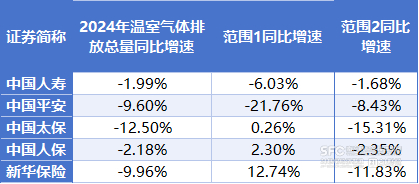
Core Viewpoint - The upcoming ESG assessment for A-share listed insurance companies is drawing significant market attention, with a deadline of January 21, 2026, for the disclosure of their latest annual ESG reports [1] Group 1: ESG Reporting and Standards - Five major A-share listed insurance companies, including China Life, Ping An, China Pacific, China Property, and New China Life, are required to disclose their ESG reports within three months [1] - The release of China's first financial ESG evaluation national standard provides a clear scoring framework for the insurance industry [1][2] Group 2: Carbon Emissions and Green Investments - All five insurance companies have shown a downward trend in annual total carbon emissions, with the highest reduction reaching 12.5% [1][3] - The total scale of green investments by these five companies has reached 1 trillion yuan [1] - China Life leads in total carbon emissions at 67.61 thousand tons, significantly higher than the lowest emitter, China Property, at 1.76 thousand tons [4] Group 3: Customer Service and Complaints - New China Life has experienced a significant increase in complaints, with a year-on-year surge of 71.52%, totaling 134,293 complaints [1][15] - The complaint volume per billion yuan of premium for New China Life is 0.87, which is relatively high compared to other companies [14][15] - The insurance industry is facing scrutiny regarding customer service quality as part of its ESG social dimension [14]






《Brand Finance 2026年全球品牌价值500强》榜单发布:7家中国保险业品牌上榜,中国平安位列第32名
Xin Lang Cai Jing· 2026-01-21 10:54
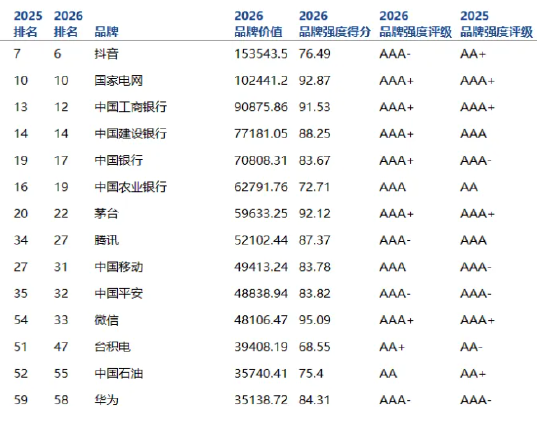
Core Insights - The Brand Finance 2026 Global Brand Value 500 report was released on January 20, 2026, in Davos, Switzerland, highlighting the performance of various brands globally [1][5]. Group 1: Chinese Brands Performance - A total of 68 Chinese brands made it to the list, with the insurance sector showing strong performance, featuring 7 insurance companies [1][5]. - The top Chinese insurance brands included Ping An (32nd), China Life Insurance (104th), and China People's Insurance (145th) [1][5]. - Among the 7 insurance brands, 6 experienced an increase in brand value, with China People's Insurance seeing a significant growth of 12%, reaching a brand value of $16.82 billion and moving up 5 places to rank 145th globally [1][5]. Group 2: Brand Rankings and Values - Notable rankings include Douyin at 6th with a brand value of $153.54 billion, State Grid at 10th with $102.44 billion, and ICBC at 12th with $90.88 billion [2][6]. - Other significant brands include China Construction Bank (14th), Bank of China (17th), and Agricultural Bank of China (19th), all maintaining strong brand values and ratings [2][6]. - The report indicates that the brand strength scores and ratings for these companies reflect their competitive positioning in the market, with many achieving AAA or AA ratings [2][6].
保险板块1月21日跌1.03%,中国人保领跌,主力资金净流出3.28亿元
Zheng Xing Xing Ye Ri Bao· 2026-01-21 08:54
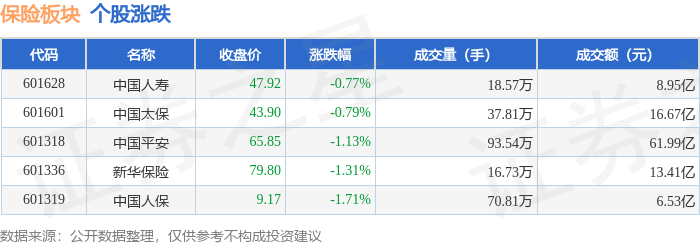
Core Viewpoint - The insurance sector experienced a decline of 1.03% on January 21, with China Life leading the drop, while the overall market showed slight gains in major indices [1] Group 1: Market Performance - The Shanghai Composite Index closed at 4116.94, up 0.08% - The Shenzhen Component Index closed at 14255.12, up 0.7% [1] Group 2: Individual Stock Performance - China Life (601628) closed at 47.92, down 0.77% with a trading volume of 185,700 shares and a turnover of 895 million yuan - China Pacific Insurance (601601) closed at 43.90, down 0.79% with a trading volume of 378,100 shares and a turnover of 1.667 billion yuan - Ping An Insurance (601318) closed at 65.85, down 1.13% with a trading volume of 935,400 shares and a turnover of 266.619 million yuan - New China Life (601336) closed at 79.80, down 1.31% with a trading volume of 167,300 shares and a turnover of 1.341 billion yuan - China Re (601319) closed at 9.17, down 1.71% with a trading volume of 708,100 shares and a turnover of 65.317 million yuan [1] Group 3: Capital Flow - The insurance sector saw a net outflow of 328 million yuan from main funds, while retail investors contributed a net inflow of 416 million yuan - The detailed capital flow for individual stocks shows varying trends, with China Pacific Insurance experiencing a net inflow of 116 million yuan from main funds, while Ping An Insurance faced a significant net outflow of 384 million yuan [1][2]
中国太保:2025年累计原保险保费收入为4616.76亿元,同比增长4.43%
Cai Jing Wang· 2026-01-21 06:05
Core Insights - China Pacific Insurance (CPIC) reported a total premium income of RMB 258.115 billion for its life insurance subsidiary, CPIC Life, for the period from January 1, 2025, to December 31, 2025, representing a year-on-year growth of 8.1% [1] - The property insurance subsidiary, CPIC Property, recorded a total premium income of RMB 203.561 billion during the same period, showing a slight year-on-year increase of 0.2% [1] - Combined, both subsidiaries achieved a total premium income of RMB 461.676 billion in 2025, reflecting a year-on-year growth of 4.43% [1]
4Q25人身保险业利率研究专家咨询委员会例会点评:预定利率研究值或已筑底确认,中期再迎“炒停售”季概率较低
ZHONGTAI SECURITIES· 2026-01-21 05:37
Investment Rating - The report maintains an "Overweight" rating for the industry [1]. Core Insights - The current preset interest rate for ordinary life insurance products is 1.89%, a slight decrease from the previous value of 1.90%, indicating a narrowing decline in the preset interest rate research values over recent quarters [4]. - The report highlights that the long-end interest rates have stabilized since 2025, with a gradual upward trend established in the second half of 2025, suggesting a positive outlook for the industry [4]. - The report emphasizes the implementation of a dynamic adjustment mechanism linking preset interest rates to market rates, which is expected to guide companies in prudent pricing and asset-liability management [4]. - The likelihood of a "buy-stop" season in 2026 is considered low, as the preset interest rate research value is close to the maximum allowable rate for current products, making significant adjustments unlikely [4]. Summary by Sections Industry Overview - The report notes that the preset interest rate research values have shown a decreasing trend, with recent declines of 21bps, 14bps, 9bps, and 1bps, indicating a gradual stabilization [3]. - The financial regulatory authority has issued guidelines to link preset interest rates with market rates, which is expected to enhance the industry's pricing strategies [4]. Market Trends - The report indicates that the 5-year LPR remains at 3.5%, the 5-year fixed deposit benchmark rate at 1.3%, and the 10-year government bond yield at 1.85%, all showing stability compared to the previous quarter [4]. - The report suggests that the insurance sector has experienced a positive cyclical recovery since December of the previous year, with expectations for improved performance and valuation recovery [4]. Investment Recommendations - The report recommends continued attention to key players in the insurance sector, including China Life, China Pacific Insurance, Ping An Insurance, New China Life, China Property & Casualty Insurance, and AIA Group, as they are expected to benefit from the anticipated market conditions [4].
睿远基金旗下产品最新重仓股曝光:傅鹏博加仓寒武纪,赵枫买回美的
Sou Hu Cai Jing· 2026-01-21 03:57
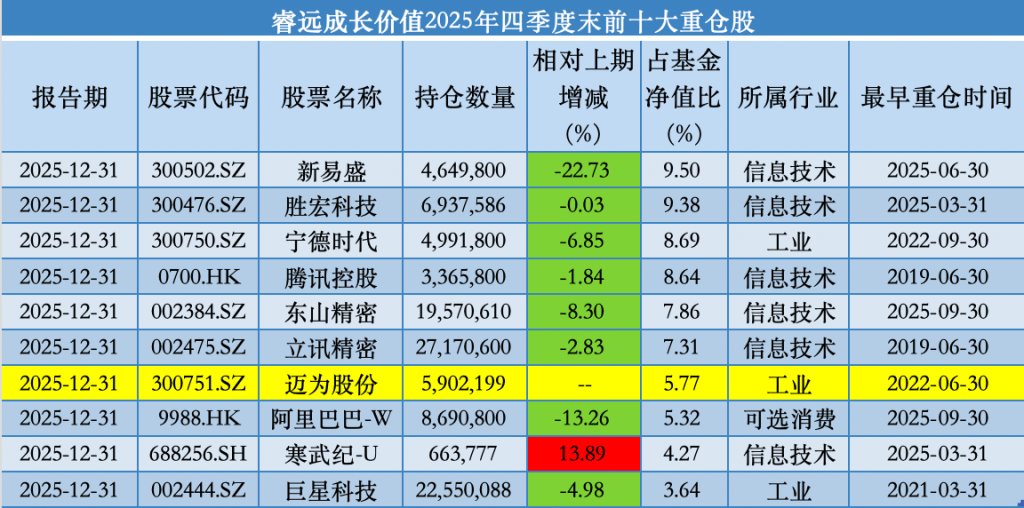
Core Viewpoint - The report highlights significant changes in the investment strategies of Ruiyuan Fund's star fund managers, with notable adjustments in stock holdings and performance metrics for the fourth quarter of 2025. Group 1: Fund Performance and Adjustments - Ruiyuan Growth Value Mixed Fund experienced a net redemption of 136.2 million shares, marking the second-highest redemption in its history, with total net assets decreasing from 23.629 billion yuan to 21.087 billion yuan [3][4] - The fund's stock allocation increased slightly from 89.93% to 90.48%, while the proportion of Hong Kong stocks in the fund's net value decreased from 27.92% to 20.14% [3][4] - Ruiyuan Balanced Value Three-Year Holding Fund's stock allocation reached a three-year high of 90.66%, with a slight increase in the proportion of Hong Kong stocks to 41.99% [10] Group 2: Stock Holdings and Changes - The top ten holdings of Ruiyuan Growth Value Mixed Fund included New Yisheng, Shenghong Technology, and Ningde Times, with New Yisheng seeing a 22.73% reduction in holdings [4][5] - Ruiyuan Balanced Value Three-Year Holding Fund saw significant changes, with the re-entry of Midea Group into the top ten holdings and reductions in holdings of companies like Lixun Precision and China Ping An [10][12] - The fund managers noted a shift in focus towards sectors like photovoltaic and semiconductor high-end equipment manufacturing, while reducing exposure to companies with weak fundamentals [6][10] Group 3: Future Outlook and Strategy - The fund managers expressed optimism about the market, anticipating that the return on equity assets will remain attractive compared to other asset classes, with potential returns exceeding 10% for leading companies [11][13] - They plan to focus on companies with strong fundamentals and competitive advantages, particularly those expanding overseas, as this is expected to drive future growth [13][14] - The report indicates a structural market environment with limited risks of significant downturns, while opportunities for excess returns remain [8][13]




中国太保20260120
2026-01-21 02:57
Summary of China Pacific Insurance Conference Call Company Overview - **Company**: China Pacific Insurance (中国太保) - **Industry**: Insurance Key Points Financial Performance and Taxation - The actual tax rate for Q3 2025 increased mainly due to the higher proportion of property insurance profits and seasonal differences in tax-exempt income from government bonds, but these factors are not expected to have a lasting impact on the company's net profit [2][3] - The overall performance for Q4 2025 is expected to remain stable across life insurance, property insurance, and asset management sectors, with a focus on strict cost control to enhance profit sustainability [3][10] Life Insurance Market Outlook - The 2026 life insurance "opening red" is expected to benefit from increased insurance demand due to macroeconomic conditions and a shift of bank deposits towards insurance products, which are perceived as attractive due to their guaranteed returns and expected income characteristics [2][4] - The aging population and declining birth rates in China are increasing the importance of commercial insurance [4] Sales Strategies - The agent channel employs a "first quarter red" strategy, focusing on segmented customer management to enhance sales efficiency by targeting high-net-worth, mid-to-high-end, and end customers with tailored products [2][5] - The bank insurance channel is progressing steadily, emphasizing the expansion of major bank networks and leveraging resources from joint-stock banks, with both channels performing better than expected [2][7] Value Rate and Product Mix - The value rate is influenced by differences in insurance types, payment methods, and the proportion of bank insurance business. The increase in the proportion of participating products has a lower value rate compared to protection products, but the rise in regular premium business is expected to positively contribute to the overall value rate stability [2][8] Agent Workforce and Capacity - The agent workforce remains stable at approximately 180,000, with core personnel making up less than 30%. The company is focusing on enhancing the quality of new recruits to improve sales capabilities [9] Cost Control and Long-term Strategy - The company has been proactive in managing expenses, reducing non-compliant costs, and ensuring that short-term business growth does not compromise long-term development [10] Bank Insurance Channel Development - The bank insurance channel has seen significant growth since its re-launch in Q4 2021, with a focus on diversifying channels to mitigate risks and capitalize on high-net-worth customer opportunities [11][12] Non-Car Insurance Business - The non-car insurance sector is expected to face challenges in premium growth due to regulatory changes, but improvements in the combined cost ratio are anticipated [20] Investment Strategies - The company plans to adopt a barbell strategy in fixed income asset allocation, exploring innovative assets to enhance interest income, while maintaining a focus on dividend value strategies in equity investments [21][22][23] Future Considerations - The company is adjusting its asset management strategies to account for the unique liability characteristics of floating yield products, aiming to optimize the balance between fixed income and equity investments based on market conditions [24] Conclusion - China Pacific Insurance is navigating a complex market environment with a focus on strategic growth in life insurance, effective cost management, and innovative investment strategies to ensure long-term sustainability and profitability [2][3][10]
资金动态20260121
Qi Huo Ri Bao Wang· 2026-01-21 02:33
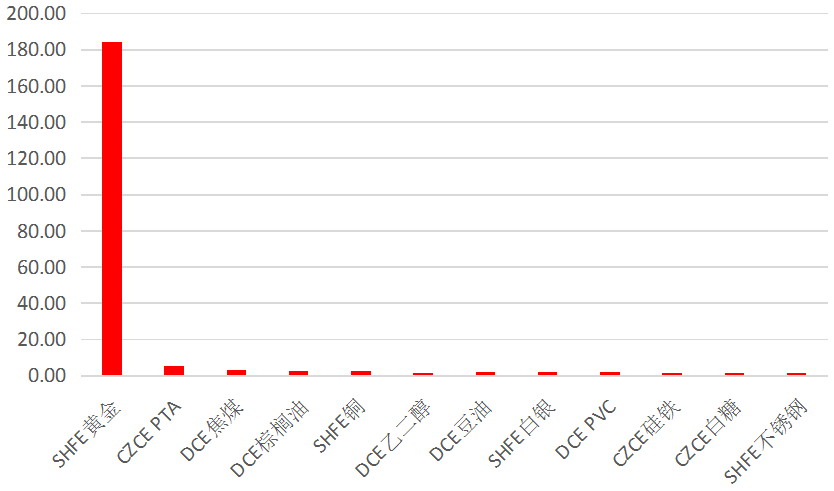
Group 1 - The main inflows in commodity futures yesterday were in gold, PTA, coking coal, palm oil, and copper, with inflows of 18.432 billion, 0.516 billion, 0.302 billion, 0.275 billion, and 0.249 billion respectively [1] - The main outflows were in lithium carbonate, iron ore, live pigs, rubber, and styrene, with outflows of 2.755 billion, 0.665 billion, 0.399 billion, 0.260 billion, and 0.208 billion respectively [1] - Overall, the commodity futures market experienced significant inflows due to the main contract rollover, with a notable focus on non-ferrous metals, particularly gold, copper, and silver, while observing outflows in lithium carbonate and tin [1] Group 2 - The agricultural, chemical, and black metal sectors showed outflows, with particular attention to the inflows in iron ore, live pigs, and rubber, while PTA, coking coal, palm oil, and ethylene glycol saw significant outflows [1] - The financial sector highlighted the focus on the CSI 500 index futures and 10-year treasury futures [1]
ETF资金榜 | 港股通互联网ETF 广发(520630):净流入1171.28万元,创近1年新高-20260120
Xin Lang Cai Jing· 2026-01-21 01:55
Group 1 - The Hong Kong Stock Connect Internet ETF, Guangfa (520630.SH), experienced a decline of 0.78% on January 20, 2026, with a trading volume of 30.8275 million yuan [1] - The fund saw a net inflow of 11.7128 million yuan, marking a new high in nearly one year [1] - The fund's latest share count increased by 11.5 million shares, surpassing 220 million shares, while the total fund size exceeded 220 million yuan [1]
科技驱动理赔全面提速
Jin Rong Shi Bao· 2026-01-21 01:44
Core Insights - The insurance industry has significantly improved claims processing speed and service efficiency by 2025, with "fast and full compensation" becoming a standard service feature [1][2][3] Group 1: Claims Processing Efficiency - In the life insurance sector, Xinhua Insurance reports that claims for small medical insurance under 5,000 yuan are settled in an average of 0.5 days, with 17% of claims processed within one hour and 70% within eight hours [1] - Ping An Life achieved a record claim payment in just 8 seconds, while ICBC-AXA's medical insurance claims can be settled in as little as 8 minutes for major claims [1] - China Life Property Insurance processed a claim in just 2.5 minutes, demonstrating strong emergency service capabilities even in complex disaster scenarios [2] Group 2: Digital Transformation and Technology Integration - The rapid improvement in claims speed is attributed to the implementation of digital transformation strategies and advanced technologies in the insurance sector [3] - Ping An Life introduced the DeepSeek model for intelligent claims review, achieving 93% of automated claims processed within 60 seconds [3] - China Life Health's intelligent claims review increased by 33.2% year-on-year, with an intelligent input rate exceeding 69% [3] Group 3: Expanded Insurance Services - Insurance services are evolving beyond mere financial compensation to encompass comprehensive health management and proactive risk reduction [4] - China Pacific Insurance aims to bridge the digital divide by providing personalized services for the elderly and vulnerable groups, reaching 947,000 people through online claims services [4] - The integration of technology is reshaping every aspect of the claims value chain, from reporting to payment, creating a more efficient and customer-friendly insurance service environment [4]
