GWMOTOR(601633)

Search documents
魏建军:长城汽车固态电池仍处于技术开发和验证阶段,具备商业价值上车至少需要五年【附固态电池行业技术发展情况】
Qian Zhan Wang· 2026-03-19 01:52
Core Viewpoint - The chairman of Great Wall Motors, Wei Jianjun, clarified that recent market speculation regarding the European certification and entry of their solid-state batteries is inaccurate, emphasizing that the technology is still in the development and validation stage and will take at least five years to achieve commercial viability [2][3]. Group 1: Technology Development - Great Wall Motors is focusing on the development and validation of materials and systems for solid-state batteries, with a particular emphasis on the sulfide route, which is currently the main technology being pursued [3][10]. - The solid-state battery technology is recognized as the next generation of power battery technology, offering higher energy density and safety compared to traditional lithium batteries, with theoretical energy densities reaching 400-500 Wh/kg [3][12]. - The production of solid-state batteries involves complex processes, including mixing and dissolving raw materials to obtain the required films, followed by the deposition of solid electrodes and densification treatments [5]. Group 2: Industry Challenges - The solid-state battery industry faces significant technical challenges, particularly related to the solid-solid interface, which is considered the most difficult technical bottleneck [7][15]. - Current solid-state battery technologies include sulfide, oxide, and polymer routes, with sulfide and oxide being the most prominent in China [10]. Group 3: Production Plans and Timelines - Several companies in the solid-state battery sector have announced production plans, with Great Wall Motors aiming to complete the development of a 10Ah 400 Wh/kg solid-state cell by the end of 2025 and to achieve mass production of the first generation of semi-solid-state batteries in 2026 [12][14]. - Other companies, such as BYD and SAIC, plan to start mass production of solid-state batteries around 2027, with energy densities exceeding 400 Wh/kg [12][14]. - The Chinese solid-state battery industry is expected to gain momentum starting in 2024, with a significant increase in new patents, indicating a leading position globally [12][15].

Great Wall Motor eyes plant options in South Africa
Reuters· 2026-03-18 18:09
Core Viewpoint - Great Wall Motor (GWM) is exploring options for establishing a manufacturing presence in South Africa, including potential partnerships with other automakers like Mercedes-Benz and Nissan, or acquiring an existing plant [1][2][3]. Group 1: Manufacturing Strategy - GWM is considering sharing a manufacturing facility or acquiring an existing plant in South Africa, as building a new plant would take considerable time [3]. - Discussions have been held with Mercedes-Benz and Nissan regarding potential plant options, indicating GWM's proactive approach to local production [2][6]. - The company plans to engage with the South African government during an upcoming auto show to further discuss local production strategies [3]. Group 2: Product Development - GWM has launched a new plug-in hybrid variant of its Haval H6, aiming to capture a growing market segment focused on hybrid and electric vehicles [7]. - The company is assessing which vehicle model to produce locally, with a focus on a new global product codenamed EC15, which is believed to offer better localization and export opportunities to Europe [4]. Group 3: Market Position - GWM currently holds a 5% market share in South Africa and ranks sixth in vehicle sales, indicating a competitive position in the local automotive market [7].

从大到强关键一跃:魏建军倡议中国汽车行业要“立信”
第一财经· 2026-03-18 08:19
Core Viewpoint - The transition of China from a major automotive power to a strong automotive nation faces significant challenges, despite its established status as the world's largest automotive producer and exporter [1][6]. Group 1: Industry Status and Challenges - China has maintained its position as the world's largest automotive producer and seller for several years, with a notable shift from meeting domestic demand to serving global markets, particularly in the electric vehicle sector [6][10]. - The automotive industry is currently experiencing intense price wars, driven by short-term performance pressures, which threaten the long-term health of the industry and compromise product quality [8][9]. - The industry's profit margins are under severe pressure, with the automotive manufacturing profit expected to decline to 4.1% in 2025, marking the lowest level since 2015 [9][10]. Group 2: Solutions and Recommendations - To address the challenges, the industry must focus on rebuilding trust and establishing a long-term perspective, moving away from price competition to value-based competition [14][23]. - Companies are encouraged to prioritize compliance and integrity, ensuring product quality and investing in research and development to regain consumer trust [16][24]. - Collaboration within the supply chain should be emphasized, fostering a cooperative environment rather than a zero-sum game, to enhance stability and resilience in the industry [16][24]. Group 3: Long-term Vision - The concept of "public trust" is highlighted as a foundational value that can guide the industry towards sustainable growth and high-quality development, aligning with national economic goals [21][24]. - The automotive sector's contribution to GDP is significant, and its public trust level directly impacts China's international manufacturing reputation [24]. - Emphasizing integrity and compliance is not merely a cost but a long-term competitive advantage that can strengthen the industry's position in the global market [24].
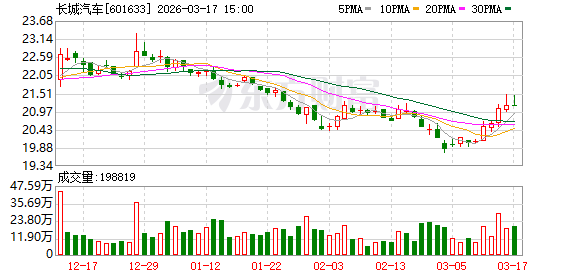
长城汽车跌0.33%,成交额3.03亿元,后市是否有机会?
Xin Lang Cai Jing· 2026-03-18 07:29
Core Viewpoint - Great Wall Motors is experiencing fluctuations in stock performance, with a recent decline of 0.33% and a total market capitalization of 180.31 billion yuan. The company is focusing on expanding its electric vehicle (EV) production and enhancing its smart driving technology [1][12]. Company Overview - Great Wall Motors Co., Ltd. is located in Baoding, Hebei Province, and was established on June 12, 2001. It was listed on September 28, 2011. The company primarily engages in the production and sale of automobiles and auto parts, with automotive sales accounting for 86.37% of its revenue [8][20]. - As of September 30, 2025, the number of shareholders is 137,500, a decrease of 22.95% from the previous period. The average circulating shares per person is 0, unchanged from the previous period [20]. Financial Performance - For the period from January to September 2025, Great Wall Motors achieved operating revenue of 153.58 billion yuan, representing a year-on-year growth of 7.96%. However, the net profit attributable to shareholders decreased by 17.20% to 8.64 billion yuan [9][20]. - The company has distributed a total of 34.70 billion yuan in dividends since its A-share listing, with 8.95 billion yuan distributed over the past three years [21]. Stock and Market Analysis - On March 18, the stock price of Great Wall Motors fell by 0.33%, with a trading volume of 303 million yuan and a turnover rate of 0.23%. The average trading cost of the stock is 23.90 yuan, with a current support level at 21.04 yuan [1][7][19]. - The main capital flow shows a net outflow of 16.49 million yuan today, with a total industry net outflow of 1.136 billion yuan over the past two days [4][16]. New Energy Vehicle (NEV) Growth - In 2024, Great Wall Motors' NEV production and sales are expected to continue rapid growth, with annual production and sales surpassing 10 million units for the first time, achieving 12.888 million and 12.866 million units respectively, marking year-on-year increases of 34.4% and 35.5% [2][13]. - NEVs accounted for 40.9% of total new car sales, with pure electric vehicle production and sales reaching 7.758 million and 7.719 million units, reflecting year-on-year growth of 15.7% and 15.5% [2][13]. Smart Driving Technology - The company's smart driving system, Pilot, has reached Level 3 capabilities, with plans to achieve Level 4 by 2020. Current products include partial driving assistance features and human-machine interaction systems [3][14].
乘用车行业月报:2月淡季销量同环比下滑,新车周期有望驱动市场回升
GUOTAI HAITONG SECURITIES· 2026-03-18 05:45
Investment Rating - The report assigns an "Overweight" rating for the automotive sector, indicating a positive outlook for the industry [6][31]. Core Insights - The report anticipates a rebound in automotive sales driven by seasonal demand recovery, the introduction of new products and technologies, and the upcoming Beijing International Auto Show in April [2][23]. - In February 2026, China's passenger car wholesale sales reached 1.518 million units, reflecting a year-on-year decline of 14% and a month-on-month decline of 23% [10][23]. - The wholesale sales of new energy passenger vehicles in February were 723,000 units, down 13% year-on-year and 17% month-on-month [10][23]. Summary by Sections 1. Overall Market Performance - In February 2026, the total wholesale sales of passenger cars in China were 1.518 million units, with a year-on-year decrease of 14% and a month-on-month decrease of 23% [10]. - New energy vehicle sales were 723,000 units, showing a year-on-year decline of 13% and a month-on-month decline of 17% [10]. 2. Key Automotive Companies BYD - In February, BYD delivered 190,000 vehicles, a year-on-year decrease of 41% and a month-on-month decrease of 9% [11]. - The company launched its second-generation blade battery and megawatt charging technology, which significantly enhances charging efficiency [11]. Geely - Geely delivered 206,000 vehicles in February, marking a year-on-year increase of 1% but a month-on-month decrease of 24% [12]. - The company achieved a remarkable 138% increase in new car exports, totaling 61,000 units [12][13]. Changan - Changan's February sales reached 152,000 vehicles, with a month-on-month increase of 13% despite a year-on-year decline of 6% [14]. - The company reported significant growth in its new energy vehicle sales, which reached 42,000 units [14]. Great Wall Motors - Great Wall Motors delivered 73,000 vehicles in February, reflecting a year-on-year decrease of 7% and a month-on-month decrease of 20% [17]. - The company is advancing its high-end product strategy with the introduction of new models [17]. Li Auto - Li Auto delivered 26,000 vehicles in February, showing a year-on-year increase of 1% but a month-on-month decrease of 5% [18]. Leap Motor - Leap Motor's sales reached 28,000 vehicles in February, a year-on-year increase of 11% [19]. Xpeng Motors - Xpeng delivered 15,000 vehicles in February, reflecting a year-on-year decrease of 50% and a month-on-month decrease of 24% [20]. NIO - NIO delivered 21,000 vehicles in February, a year-on-year increase of 58% [22]. 3. Market Outlook - The report suggests that the automotive market is expected to recover in March due to the release of new models and technological advancements [23].


乘用车行业月报:2月淡季销量同环比下滑,新车周期有望驱动市场回升-20260318
GUOTAI HAITONG SECURITIES· 2026-03-18 05:24
Investment Rating - The report assigns an "Overweight" rating for the automotive sector, indicating a positive outlook for the industry [6][25]. Core Insights - The report highlights that the wholesale sales of passenger vehicles in China for February 2026 were 1.518 million units, representing a year-on-year decline of 14% and a month-on-month decline of 23%. However, it anticipates a recovery in sales due to seasonal demand, the introduction of new products and technologies, and the upcoming Beijing International Auto Show in April [2][23]. - Recommended stocks include NIO, Geely Automobile, Leap Motor, BYD, Xpeng Motors, Great Wall Motors, and Changan Automobile [6][23]. Summary by Sections 1. Overall Market Performance - In February 2026, the wholesale sales of passenger vehicles in China were 1.518 million units, down 14% year-on-year and 23% month-on-month. The wholesale sales of new energy passenger vehicles were 723,000 units, also down 13% year-on-year and 17% month-on-month [10][23]. 2. Key Automotive Companies BYD - In February, BYD delivered 190,000 vehicles, a decrease of 41% year-on-year and 9% month-on-month. Overseas sales reached 101,000 units, up 50% year-on-year [11][12]. Geely Automobile - Geely delivered 206,000 vehicles in February, a slight increase of 1% year-on-year but down 24% month-on-month. Export sales reached 61,000 units, up 138% year-on-year [12][13]. Changan Automobile - Changan delivered 152,000 vehicles in February, down 6% year-on-year but up 13% month-on-month. New energy vehicle sales were 42,000 units, up 6% year-on-year [14][15]. Great Wall Motors - Great Wall delivered 73,000 vehicles in February, down 7% year-on-year and 20% month-on-month. New energy vehicle deliveries were 13,000 units [17]. Li Auto - Li Auto delivered 26,000 vehicles in February, a 1% increase year-on-year but a 5% decrease month-on-month. The new model, Li L9 Livis, is set to launch in Q2 2026 [18]. Leap Motor - Leap Motor delivered 28,000 vehicles in February, an 11% increase year-on-year but a 13% decrease month-on-month. The A10 model is set to begin pre-sales [19]. Xpeng Motors - Xpeng delivered 15,000 vehicles in February, a 50% decrease year-on-year and a 24% decrease month-on-month. The 2026 X9 electric version was officially launched [20][21]. NIO - NIO delivered 21,000 vehicles in February, a significant increase of 58% year-on-year but a 23% decrease month-on-month. The penetration rate of intelligent driving features improved [22]. 3. Market Outlook - The report suggests that the automotive market is expected to rebound in March due to the release of new models and technologies, alongside the seasonal demand recovery. Nearly 30 new models are set to be launched or announced in March [23].
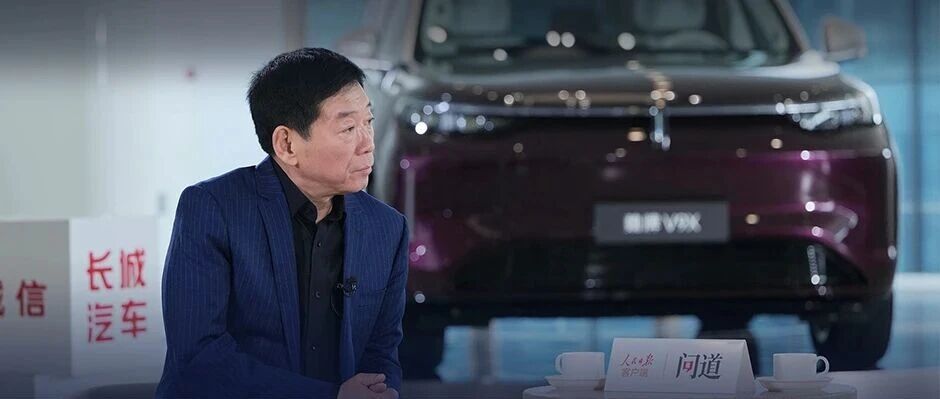
长城汽车魏建军谈“反内卷”:公信力才是中国汽车核心竞争力
Zhong Guo Jing Ying Bao· 2026-03-17 14:21
Group 1 - The core viewpoint emphasizes the importance of "public credibility" as the key competitive advantage for the Chinese automotive industry, moving beyond mere technology and scale [2][3] - The Chinese automotive industry is transitioning from a "manufacturing power" to a "manufacturing strong power," with challenges such as internal competition and supply chain issues [3][4] - The industry must focus on "industrial output" rather than just "product export," integrating local culture and contributing to local economies [4][5] Group 2 - The current competitive landscape is characterized by excessive internal competition and price wars, which detract from the original purpose of vehicle manufacturing [6][7] - Companies are urged to adopt a "public credibility value system," prioritizing long-term trust and quality over short-term gains [7][8] - Long-term strategies should include not engaging in price wars and maintaining quality standards, as excessive cost-cutting can harm brand reputation [8]
香港交易所消息:3月11日,贝莱德对长城汽车H股的多头持仓比例从8.57%降至7.65%
Xin Lang Cai Jing· 2026-03-17 11:39
香港交易所 消息:3月11日, 贝莱德 对 长城汽车 (02333.HK)H股的多头持仓比例从8.57%降至 7.65%。 ...
魏建军:车企用无底线的价格战提高市占率,长城不会这么做;文远知行Robotaxi GXR预计下月初在新加坡开放公众运营丨汽车交通日报
创业邦· 2026-03-17 10:13
Group 1 - CEO Wei Jianjun of Great Wall Motors stated that the company will not engage in reckless price wars to increase market share, emphasizing a long-term strategy that protects the rights of employees, dealers, and suppliers [2] - XPeng Motors announced the rollout schedule for its second-generation VLA across different models starting March 19, with the P7 Ultra being the first to receive the update, followed by G7 and X9 Ultra [2] - WeRide's Robotaxi GXR is set to begin public operations in Singapore on April 1, following a trial phase in collaboration with Grab in the Punggol area [2] - Cao Cao Mobility has launched over 3,600 virtual pick-up and drop-off points for its Robotaxi service in Hangzhou, aiming to enhance operational scale and coverage in key urban areas [2]


承认中国皮卡存在竞争力!福特CEO法利:我们把比亚迪皮卡拆开之后,还是不知道他们怎么赚钱【附皮卡行业市场分析】
Qian Zhan Wang· 2026-03-17 08:32
Core Insights - Ford's CEO Jim Farley recently tested two Chinese plug-in hybrid pickups, BYD Shark 6 and Great Wall Cannon Alpha, acknowledging their significant market competitiveness while emphasizing their distinct nature compared to traditional fuel pickups [2][3] Group 1: Market Competitiveness - Chinese pickups, such as BYD Shark 6 and Great Wall Cannon, showcase advanced plug-in hybrid technology, combining powerful performance and cargo capacity with energy efficiency and smart technology [2] - Farley noted that these vehicles cater to consumers who need pickups but prefer electric attributes without high-frequency heavy loading or towing requirements [2] - Great Wall Cannon is viewed as a strong competitor in this niche market, indicating a shift in consumer preferences towards more modern and stylish designs [2] Group 2: Traditional Automaker Advantages - Traditional automakers like Ford and Toyota maintain significant advantages due to decades of experience in work-oriented pickups, particularly in chassis technology, towing performance, and load adaptability [2] - Farley humorously remarked on the challenges of understanding the profitability of Chinese pickups, highlighting the unique advantages of Chinese automakers in supply chain integration and cost optimization [3] Group 3: Chinese Pickup Market Evolution - The Chinese pickup market has experienced a revival due to gradual policy relaxations and diverse consumer demands, with exports showing explosive growth [10] - Data from the China Passenger Car Association indicates that by December 2025, national pickup exports are projected to reach 28,000 units, marking a 12% year-on-year increase [10] - The importance of pickups in the Chinese market is underscored by the fact that while passenger vehicles account for 85% of the market, commercial vehicles, including pickups, represent only 15%, indicating significant growth potential [10]