GWMOTOR(601633)

Search documents
16只L3自动驾驶产业链概念股曝光
2 1 Shi Ji Jing Ji Bao Dao· 2025-12-16 05:45
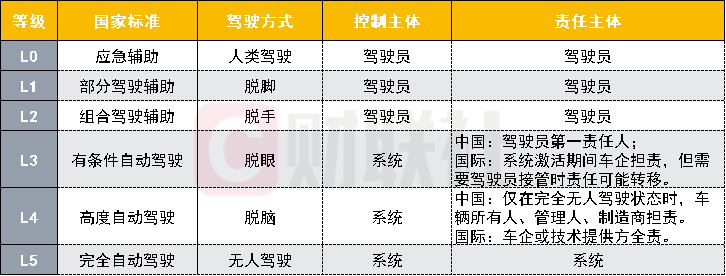
Core Insights - The news highlights a significant breakthrough in the commercialization of L3-level autonomous driving in China, with the Ministry of Industry and Information Technology officially granting the first conditional licenses for L3 autonomous vehicles [1][3]. Group 1: Market Activity - Several companies in the autonomous driving sector saw their stock prices surge, with Hanxin Technology reaching a 30% limit up, and other companies like Wanjie Technology and Zhejiang Shibao also hitting their daily limits [1]. - The market enthusiasm is driven by the recent regulatory approval for L3-level autonomous vehicles, indicating a shift from testing to commercial application [1]. Group 2: Regulatory Developments - The Ministry of Industry and Information Technology has approved two models for L3-level autonomous driving, which will operate in designated areas of Beijing and Chongqing, marking a critical step towards commercial deployment [1][3]. - The L3-level autonomous driving classification allows vehicles to take over driving tasks under specific conditions, although drivers must remain alert and ready to take control [1][2]. Group 3: Industry Competition - Major automotive companies are competing to establish timelines for mass production of L3 vehicles, with many setting 2025-2026 as a crucial period for development [3][4]. - Companies like GAC Group and Huawei are actively testing their L3 technologies in major cities, preparing for commercial launch [4]. Group 4: Policy and Infrastructure - The recent policy changes have facilitated the expansion of testing areas for autonomous vehicles, with cities like Shanghai and Beijing designating extensive road networks for trials [3]. - The ethical guidelines released by the Ministry of Science and Technology further clarify responsibility in case of accidents, which is essential for the industry's growth [3]. Group 5: Investment Opportunities - The news lists several companies involved in the autonomous driving sector, providing insights into their market capitalization and stock performance, indicating potential investment opportunities [6].





A股,大跌!
中国基金报· 2025-12-16 05:33
Market Overview - The A-share market experienced a collective decline on December 16, with the Shanghai Composite Index falling to 3820.85 points, down 1.22%, the Shenzhen Component Index down 1.88%, and the ChiNext Index down 2.35% [2][3] - The total trading volume in the Shanghai and Shenzhen markets was 1.12 trillion yuan, a decrease of 606 billion yuan compared to the previous trading day [4] Sector Performance - The smart driving sector saw significant gains, with multiple stocks in the automotive sector rising sharply. Notable stocks included Wanji Technology, which recorded a 20% increase, and several others achieving the daily limit of 10% [15][16] - Consumer sectors, including restaurant tourism and commercial retail, continued to rise, with several stocks hitting the daily limit. For instance, Yonghui Supermarket and Baida Group both recorded a 10% increase [9][10] - Conversely, the large technology sector experienced a downturn, while precious metals, communication equipment, and chemical sectors led the declines [4][5] Notable Stocks - In the smart driving sector, several companies such as North Car Blue Valley and Changan Automobile saw increases of over 5% [18][19] - The hospitality sector also showed strength, with Junting Hotel rising nearly 7% and other hotel stocks following suit [11][12] Regulatory News - On December 15, the Ministry of Industry and Information Technology announced the approval of the first batch of L3-level autonomous driving vehicles for trial operations in designated areas of Beijing and Chongqing [20]




汽车行业点评:L3落地,自动驾驶商业化进程加速
Ping An Securities· 2025-12-15 23:30
Investment Rating - The industry investment rating is "Outperform the Market" [8] Core Viewpoints - The approval of the first batch of L3 conditional autonomous driving vehicle licenses by the Ministry of Industry and Information Technology marks a significant step towards the commercialization of L3 autonomous driving in China [2][3] - The current L3 vehicles have operational limitations, with one model capable of operating at a maximum speed of 50 km/h in congested traffic and another at 80 km/h on highways, but both are restricted to specific areas [3] - The commercialization of intelligent driving is expected to accelerate by 2026, with various companies planning to launch autonomous driving models and services during that year [3] Summary by Sections Industry Overview - The report highlights the transition of L3 autonomous driving technology from testing to commercial application, as indicated by the recent approvals [2][3] Regulatory Developments - The Ministry of Industry and Information Technology's approval signifies a policy advancement that supports the production of L3 vehicles, laying the groundwork for future commercialization [3] Market Opportunities - The report anticipates a key opportunity period for intelligent driving in 2026, with advancements in algorithms and the rollout of Robotaxi services [3] Investment Recommendations - Recommended companies include Horizon Robotics, Seres (Huawei ADS-enabled vehicles), Li Auto, Great Wall Motors, and Xpeng Motors, as they are positioned to benefit from the upcoming developments in the autonomous driving sector [3]



汽车行业周报:汽车反内卷新政出台,行业价格乱象有望纠正-20251215
CHINA DRAGON SECURITIES· 2025-12-15 09:34
Investment Rating - The report maintains an investment rating of "Recommended" for the automotive industry [2]. Core Viewpoints - The introduction of the automotive anti-involution policy is expected to correct price irregularities in the industry, with the potential for marginal recovery in profit margins across the supply chain [5][15]. - The National Market Supervision Administration released the "Guidelines for Compliance with Automotive Industry Pricing Behavior," which aims to regulate pricing practices from production to sales [5][15]. - Major automakers such as BYD, BAIC Group, and Xpeng Motors have expressed their support for the new guidelines, indicating a collective effort to address unreasonable competition [5][15]. Industry Dynamics - The automotive sector is witnessing a shift towards L3 and L4 autonomous driving technologies, with companies like Ideal Auto planning to launch their first L4 model within three years [5][24]. - The market is seeing new model launches, including the Geely Lynk 10 EM-P and Dongfeng Lantu Zhaiguang L, among others [5][31]. - The automotive sector's performance has outpaced the broader market, with the automotive index showing a gain of 0.16% compared to a decline of 0.08% in the CSI 300 index during the week of December 8 to December 12, 2025 [5][36]. Data Tracking - In November 2025, retail sales of passenger vehicles reached 2.225 million units, a year-on-year decrease of 8.22%, while retail sales of new energy vehicles increased by 4.03% to 1.321 million units [5][47]. - The penetration rate of new energy vehicles in retail sales reached 59.4%, up 6.99 percentage points year-on-year [5][57]. - The inventory coefficient for automotive dealers was reported at 1.57 in November 2025, indicating a significant increase compared to the previous year [5][70]. Investment Recommendations - The report suggests focusing on companies in a strong new product cycle, such as Great Wall Motors, Seres, SAIC Motor, and Xpeng Motors [5]. - It also highlights supply chain leaders and companies involved in humanoid robotics and intelligent driving as potential investment targets [5]. - For commercial vehicles, it recommends focusing on leading companies like Weichai Power and Yutong Bus, which are expected to benefit from the industry's recovery [5].
【月度排名】2025年11月皮卡厂商批发销量排名快报
乘联分会· 2025-12-15 08:40
Core Viewpoint - The article highlights the strong performance of the pickup truck market in China, with significant year-on-year growth in both sales and production, driven by key players like Great Wall Motors and the increasing demand for electric pickups [2][3]. Pickup Truck Sales - In November 2025, the pickup truck market sold 56,000 units, marking an 18.8% year-on-year increase and a 16.8% month-on-month increase, reaching a five-year high [2]. - From January to November 2025, total sales reached 537,000 units, reflecting a 12.1% year-on-year growth [2]. - The production in November 2025 was 52,000 units, up 8% year-on-year, with a total production of 527,000 units from January to November, showing a 14.5% increase [2]. Key Players in the Market - Great Wall Motors continues to lead the pickup market, with stable performance both domestically and internationally [2]. - Other strong performers include Changan Automobile, SAIC Maxus, JAC Motors, and Zhengzhou Nissan, with notable growth in exports [2]. - The domestic retail market shows a "one strong, many strong" pattern, with Great Wall, JMC, Zhengzhou Nissan, Radar, and Jiangxi Isuzu performing well [2]. Regional Demand - The main demand for pickups is concentrated in the Southwest and Northwest regions, which accounted for 45% of total demand in November 2025 [2]. - The performance in the Beijing-Tianjin-Hebei region is weaker compared to the western regions [2]. Export Performance - In November 2025, China exported 32,000 pickups, a 54% year-on-year increase and a 19% month-on-month increase, with total exports reaching 268,000 units from January to November, up 22% year-on-year [3]. - Exports accounted for 45% of total pickup sales in 2024, rising to 57% in November 2025 [3]. New Energy Pickup Trucks - In November 2025, sales of new energy pickups reached 8,000 units, a remarkable 152% year-on-year increase and a 40% month-on-month increase [3]. - Cumulatively, 67,000 new energy pickups were sold from January to November 2025, reflecting a 335% increase [3]. - Major contributors to new energy pickup sales include BYD, with 3,594 units sold overseas, and other brands like Geely and Changan also showing significant sales [3].

研判2025!中国雾灯行业产业链、市场规模、竞争格局及发展趋势分析:行业市场规模持续上涨,未来有望向智能化升级[图]
Chan Ye Xin Xi Wang· 2025-12-15 01:35
Core Viewpoint - The fog light industry in China is experiencing significant growth, with the market size projected to increase from 1.88 billion yuan in 2015 to 5.11 billion yuan in 2024, reflecting a compound annual growth rate (CAGR) of 11.7% [1][7]. Industry Overview - Fog lights are essential automotive lighting devices used in adverse weather conditions to ensure driving safety. They are categorized into front and rear fog lights, with specific color and design features [3][4]. - The industry chain includes upstream components such as metals, plastics, LED chips, and optical lenses; midstream involves manufacturing fog lights; and downstream applications cover passenger cars, commercial vehicles, and new energy vehicles [6]. Market Dynamics - The growth of the fog light market is supported by government policies mandating the installation of compliant fog lights in vehicles, which has increased the installation rate [1][7]. - Rising living standards and the increasing number of vehicles, particularly the surge in new energy vehicles, are driving new demand for fog lights [1][7]. Competitive Landscape - Domestic companies like Xingyu Co., Ltd. and Huayu Vision are expanding rapidly in the mid-range market while gradually entering the high-end sector. Numerous small and medium-sized manufacturers focus on niche markets due to limitations in technology and funding [8]. Industry Trends 1. **Technological Innovation and Smart Development**: The adoption of LED technology is expected to enhance performance, with improvements in brightness, color temperature, and precision in light distribution. Laser fog lights may emerge as a new breakthrough due to their superior penetration and brightness [12]. 2. **Global Expansion**: Chinese fog light manufacturers are poised to accelerate their overseas presence, leveraging a complete supply chain and competitive pricing to capture global market share [12]. 3. **Increasing Industry Concentration**: The industry is expected to consolidate, with weaker companies facing potential elimination, while stronger firms may expand through mergers and acquisitions, enhancing overall competitiveness [13].


8点1氪丨被罗永浩指责收高价“祸害客人”,涉事酒店回应;全国劳动力人口平均年龄达39.66岁;马斯克或成全球首位万亿美元富豪
3 6 Ke· 2025-12-14 23:57
Group 1: Company Performance - Huayi Brothers has reported a cumulative loss of 8.2 billion yuan over the past seven years, with its current market value being less than one-tenth of its peak [3] - In Q3, Huayi Brothers achieved a revenue of 62.6 million yuan, a year-on-year decline of 31.61%, and a net loss attributable to shareholders of 39.5 million yuan [3] - Lululemon's stock price has dropped by 46.40% this year, resulting in a market value loss of approximately 25 billion USD, leading to the resignation of CEO Calvin McDonald [8] Group 2: Industry Developments - The average age of the labor force in China has reached 39.66 years, indicating a gradual maturity in the aging process of the population [2] - The global largest automotive safety testing center has been put into operation in Ningbo, Zhejiang, featuring multiple Guinness World Records [6] - The National Market Supervision Administration has issued guidelines prohibiting car manufacturers from selling vehicles at a loss, aiming to enhance price compliance in the automotive industry [4] Group 3: Strategic Moves - Kweichow Moutai has introduced a volume control policy to alleviate financial pressure on distributors, halting product distribution until January 1, 2026 [4] - SpaceX is reportedly seeking to go public with a target valuation of approximately 1.5 trillion USD, which could make Elon Musk the world's first trillionaire [2] - OpenAI has adjusted its compensation policy to prevent talent outflow by removing the "vesting cliff" for stock options [11]






每经品牌100指数上周震荡“蓄力”
Mei Ri Jing Ji Xin Wen· 2025-12-14 12:55
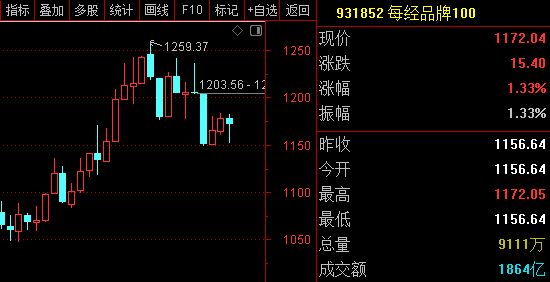
Market Overview - A-shares continue to show volatility as some funds delay allocation, with the Every Day Brand 100 Index experiencing a weekly decline of 0.49% [1] - The A-share market's adjustment may be nearing its end, with daily trading volume exceeding 1.7 trillion yuan, and the Shanghai Composite Index down 0.34% while the Shenzhen Component Index and ChiNext Index saw increases of 0.84% and 2.74% respectively [4] Economic Environment - The Federal Reserve lowered interest rates by 25 basis points to a range of 3.50% to 3.75%, marking the third rate cut of the year, with a neutral to dovish tone in the meeting's guidance [4] - Domestic economic indicators show resilience, with November exports remaining strong and CPI continuing to recover; important meetings in December are set to outline economic strategies for 2026 [5] Company Performance - Great Wall Motors reported a 4.57% year-on-year increase in November vehicle sales, totaling 133,200 units, with new energy vehicle sales reaching 40,113 units [6] - The company is optimizing its global business layout, establishing nine R&D bases and five software development centers worldwide, and has exported to over 170 countries [7] Strategic Initiatives - Great Wall Motors is enhancing its global influence through its "ecological going out" strategy, with plans to deepen its presence in Latin America and other markets [7] - The company is set to launch new high-end models, including the new luxury SUV under the Wey brand, expected to be available in the first half of 2026 [8]
12月首周国内乘用车销量承压,出海持续加速
SINOLINK SECURITIES· 2025-12-14 12:37
Investment Rating - The report suggests a focus on opportunities arising from the themes of international expansion and smart technology, particularly in the automotive sector [1]. Core Insights - Short-term domestic demand is low, with retail sales of passenger vehicles declining year-on-year. However, exports of passenger vehicles have shown strong growth, indicating that international markets will be a long-term focus for the industry [1][12]. - The smart technology and robotics sectors are accelerating, with significant advancements in intelligent driving and AI integration in vehicles [15][18]. - The report recommends investing in companies like BYD, Geely, and Li Auto for international expansion, and companies like Horizon Robotics and Top Group for smart technology and robotics [1][18]. Summary by Sections Weekly Perspective - Domestic demand is weak, with November retail sales of passenger vehicles down 15.8% year-on-year. The report notes that the expected policy incentives have not yet materialized, contributing to this decline [11]. - Passenger vehicle exports reached 594,000 units in November, a 50% increase year-on-year, indicating a robust international market [12]. Industry Data Tracking - The Shanghai Composite Index decreased by 0.08%, while the automotive index increased by 0.16% this week. Notable stock performances included Superjet Co. (+39.0%) and Huamao Technology (+28.5%) [2][19]. - In November, wholesale passenger vehicle sales were 2.991 million units, a 1.7% increase year-on-year, while new energy vehicle sales were 1.694 million units, up 17.6% [4][34]. Industry Dynamics - The report highlights the rapid development of smart technology in vehicles, with over 60% penetration of L2 and above driving assistance systems in the market. The trend towards AI-driven smart cockpits is also noted [15]. - Robotics technology is advancing, with new products being launched by domestic manufacturers, indicating a shift towards commercialization in this sector [16][18].

每经品牌100指数震荡“蓄力” 多只成分股周市值增长超百亿元
Mei Ri Jing Ji Xin Wen· 2025-12-14 06:01
Core Viewpoint - The A-share market continues to exhibit volatility as year-end approaches, with the "cross-year market" key window gradually approaching, supported by positive policy signals for 2026 [1][7]. Market Performance - The main board market experienced fluctuations, with trading activity remaining high, exceeding 1.7 trillion yuan. As of December 12, the Shanghai Composite Index fell by 0.34%, while the Shenzhen Component Index rose by 0.84%, and the ChiNext Index increased by 2.74%. The Every Day Brand 100 Index fell by 0.49%, closing at 1172.04 points [2]. Component Stocks - Notable performers included Haidilao, which saw a weekly increase of 5.56%. Additionally, Baidu Group-SW and 11 other component stocks had weekly gains exceeding 2%. Tencent Holdings experienced a market value increase of 54.9 billion yuan, while China Ping An, Meituan-W, CATL, Baidu Group-SW, Shanghai Pudong Development Bank, and Zijin Mining all saw market value increases exceeding 10 billion yuan [4][5]. Economic Environment - The Federal Reserve lowered interest rates by 25 basis points to a range of 3.50% to 3.75%, marking the third rate cut of the year. The meeting's tone was neutral to dovish, with projections indicating only one rate cut in 2026. Domestically, November exports remained resilient, and CPI growth continued to recover. Upcoming important meetings in December will focus on expanding domestic demand and fostering new growth drivers [6]. Future Market Outlook - Prior to the initiation of the "cross-year market," the market is expected to undergo adjustments. However, with the accumulation of new positive factors, the adjustments may be nearing an end, and a short-term upward trend in the market is anticipated [7]. Company Focus: Great Wall Motors - Great Wall Motors reported a November sales volume of 133,200 vehicles, a year-on-year increase of 4.57%. The company sold 40,113 new energy vehicles in November. The Haval brand's wholesale sales in November were 75,000 units, a decrease of 3.8% year-on-year, while the Tank brand saw a 19.6% year-on-year increase in wholesale sales [8][9]. - Great Wall Motors is enhancing its global business layout, having established nine R&D bases and five software R&D centers worldwide. The company has exported to over 170 countries and regions, with more than 1,400 overseas sales channels [9]. - The company is also advancing its high-end platform, with a new luxury SUV expected to launch in the first half of 2026. Analysts predict continued growth for Great Wall Motors' overseas operations, driven by new product launches and the establishment of direct sales channels [9].