
GWMOTOR(601633)

Search documents
长城欧拉5上市,魏建军强调长城坚持“技术本善”
Zhong Guo Qi Che Bao Wang· 2025-12-17 02:39
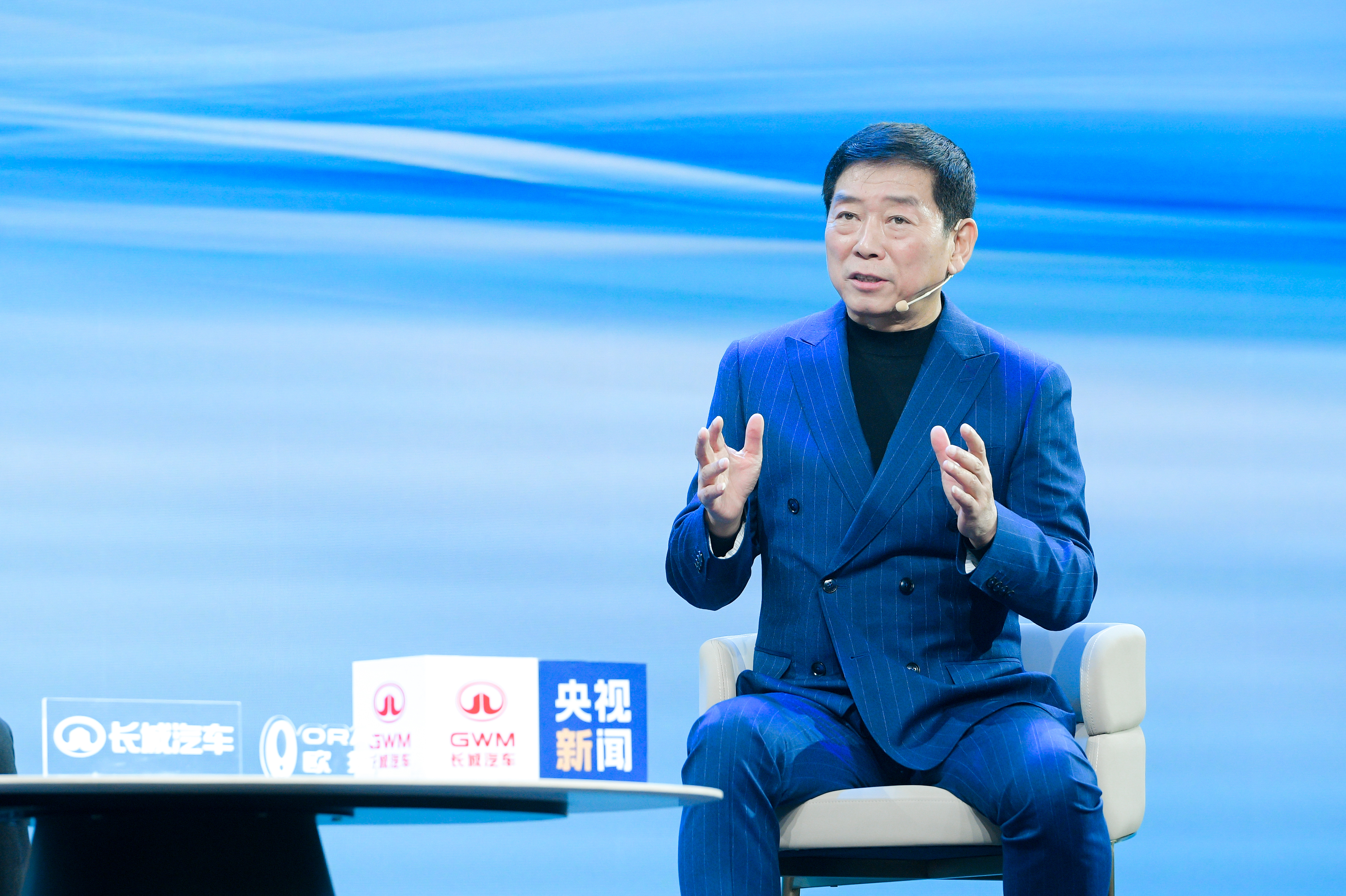
Core Viewpoint - The launch of the new A-class pure electric SUV, Great Wall Ora 5, marks a significant step for Great Wall Motors in expanding its electric vehicle offerings and enhancing user experience through innovative technology and design [1][3]. Group 1: Product Launch and Pricing - Great Wall Ora 5 was officially launched on December 16, with five configurations priced between 99,800 to 133,800 yuan, and a limited-time trade-in price starting at 91,800 yuan [1]. - The vehicle is the first mass-produced model from Great Wall's new platform, which aims to provide a comprehensive layout adaptable to global markets [1][3]. Group 2: Brand Evolution - The Ora brand is transitioning from a single pure electric vehicle brand to a "multi-power global fashion boutique car brand," responding to diverse user needs [3]. - The new platform will enable the launch of various vehicle types, including SUVs and sedans, emphasizing user choice [3]. Group 3: Technological Innovation - The Ora 5 features a high level of component commonality and integration, significantly improving R&D and production efficiency while delivering tangible value to users, such as lower ownership costs and enhanced product quality [6]. - The vehicle is equipped with the third-generation Coffee Pilot Ultra driver assistance system, which has safely driven over 230 million kilometers, equivalent to more than 5,600 laps around the Earth [10]. Group 4: User Experience and Safety - The Ora 5 incorporates advanced safety features, including a second-generation battery with double the national standard pressure resistance and a 24-hour early warning system for battery anomalies [17]. - It has received a "five-star health car" certification for its performance in air quality, health protection, and green travel, with nearly zero benzene and formaldehyde levels [17]. Group 5: Market Positioning and User Commitment - The Ora brand has entered over 50 countries and regions, with 600,000 users globally, emphasizing its commitment to delivering real value to customers [22]. - The "Smart Travel Worry-Free Gift" offers up to 5 million yuan in driver assistance guarantees, reflecting the company's confidence in its technology and commitment to user safety [22].

真·自动驾驶要来了,但它可能没你想的那么好
3 6 Ke· 2025-12-17 01:23
Core Viewpoint - The approval of two new vehicles for L3 conditional autonomous driving marks a significant milestone in the domestic market, transitioning from testing to mass production capabilities, which is expected to invigorate the entire autonomous driving industry [1][12]. Group 1: Industry Impact - The recent news has led to a surge in stock prices for companies related to autonomous driving, indicating a strong market reaction and excitement within the industry [3]. - The approval signifies a shift in focus for car manufacturers from merely developing driver assistance systems to fully embracing autonomous driving technologies [3][12]. - The Ministry of Industry and Information Technology (MIIT) is now the approving authority, which indicates a more formalized regulatory framework for L3 vehicles compared to previous local government approvals [9][12]. Group 2: Technical Specifications - L3 autonomous driving allows vehicles to operate independently under certain conditions, relieving drivers of the need to control the vehicle, and placing liability on the manufacturers in case of accidents [7][12]. - The two approved vehicles are the Changan Deep Blue SL03 and the Arcfox Alpha S6, utilizing advanced technologies from Horizon Robotics and Huawei, respectively [13]. - The operational parameters for these vehicles are still limited, with the SL03 restricted to a maximum speed of 50 km/h on specific roads, and the Alpha S6 allowed up to 80 km/h but also limited to a single lane without overtaking [19][21]. Group 3: Future Outlook - The national standards for L3 autonomous driving are expected to be released for public consultation early next year, which may lead to a rapid increase in the number of L3 vehicles available in the market [15]. - There is an anticipation that 2024 could be a significant year for the mass production of L3 vehicles, as more manufacturers are likely to enter the market [15]. - Despite the advancements, the experience of L3 driving may still be conservative compared to current L2 systems, focusing on safety over efficiency, which may affect consumer adoption [17][21].


福田摘冠,江淮/江铃并列,跃进暴涨1.4倍!11月轻卡销量近18万辆 | 头条
第一商用车网· 2025-12-16 15:59
Core Viewpoint - In November 2025, China's commercial vehicle sales increased by 24% year-on-year, with the truck market growing by 26%, slightly above the overall commercial vehicle market growth. The light truck segment, being the largest in the truck market, showed a mixed performance, raising questions about its competitiveness in the final month of the year [1][3][6]. Summary by Sections Overall Market Performance - In November 2025, the truck market sold 338,400 units, a month-on-month increase of 9% and a year-on-year increase of 26%. The light truck market sold 179,500 units, with a year-on-year growth of 7%, marking a "10 consecutive months increase" [3][4][6]. Light Truck Market Analysis - The light truck market's year-on-year growth of 7% in November was lower than the overall truck market's growth, indicating a recent decline in performance compared to earlier months. Cumulatively, from January to November, the light truck market grew by 6%, also lagging behind the overall truck market growth [6][28]. Historical Context - November is typically not a peak sales month for the truck market, with average sales in the last decade around 150,000 units. The 2025 November sales of 179,500 units ranked third in the last ten years, indicating a decent performance but not exceptional [8][10]. Company Performance - In November, nine companies sold over 10,000 light trucks, with Foton leading at 37,000 units, followed by Changan and Great Wall. The top five companies accounted for 56.07% of the market share [13][14][20]. - Year-to-date, Foton maintained the highest cumulative sales at 403,100 units, with a market share of 22.11%. Other notable companies included Changan, Great Wall, and Jianghuai, each exceeding 150,000 units in sales [20][21]. Growth Trends - Among the top ten companies, eight reported year-on-year sales increases in November, with Leap Motor and BYD showing significant growth rates of 142% and 70%, respectively. The overall light truck market growth was outpaced by several companies [18][19][23]. Market Share Changes - Compared to 2024, companies like Leap Motor and BYD saw notable increases in market share, while others experienced declines. The competitive landscape shifted, with Jianghuai and Changan moving up in rankings [26][28].




今日新闻丨鸿蒙智行、小鹏、理想获得L3级道路测试牌照!激光雷达巨头Luminar申请破产!欧拉5、红旗HS6 PHEV上市!
电动车公社· 2025-12-16 15:50
Core Viewpoint - The article highlights the recent launches of electric vehicles, including the Hongqi HS6 PHEV and Ora 5, along with significant developments in the autonomous driving sector and challenges faced by the lidar industry [1][3][20]. Group 1: Hongqi HS6 PHEV Launch - The Hongqi HS6 PHEV was launched on December 16, with a price range of 178,800 to 228,800 yuan [1][3]. - The vehicle features a family design style with a closed vertical grille, dimensions of 4925/1970/1740mm, and a wheelbase of 2925mm, positioning it as a mid-to-large SUV [2]. - It is equipped with a 110kW 1.5T engine and two electric motor options (168kW and 369kW), with battery capacities of 23kWh and 40kWh, offering a pure electric range of 148/225/248km depending on the version [7]. - The vehicle's performance includes 0-100 km/h acceleration times of 7.9/8.3/4.8 seconds and WLTC fuel consumption rates of 5.1/5.4/5.9L/100km [7]. - The competitive landscape for large SUVs is intense, with rivals like Silver River M9 and Funyun T11 offering advantages in size and features [9]. Group 2: Ora 5 Launch - The Ora 5 was also launched on December 16, with a price range of 99,800 to 133,800 yuan, and an additional limited-time trade-in subsidy of 8,000 yuan [10][11]. - The vehicle maintains the design style of the Ora Good Cat, featuring retro mechanical lines and dimensions of 4471/1833(1844)/1641mm, with a wheelbase of 2720mm, classifying it as a compact SUV [13]. - It includes a 150kW electric motor and battery options of 45.3kWh and 58.3kWh, providing CLTC ranges of 480km and 580km respectively [17]. - The Ora 5 targets a younger demographic with its design and features, including the integration of lidar technology at a price point below 120,000 yuan [19]. Group 3: Autonomous Driving Developments - Companies including Hongmeng Zhixing, Xiaopeng, and Li Auto have received L3-level road testing licenses for autonomous driving, allowing for regular testing on specific roads [20][21]. - The L3 license is conditional and does not imply full autonomy, as it is primarily for testing purposes, with no company currently possessing a civilian L3 capability in China [23]. Group 4: Lidar Industry Challenges - Luminar, a leading lidar company, has filed for bankruptcy protection, with a peak valuation of $5 billion now reduced to an estimated $1-5 billion, while liabilities range from $5-10 billion [24]. - Volvo, Luminar's largest customer, ceased collaboration due to unmet contractual obligations, highlighting the importance of technology in the lidar market [26].



长城汽车推出全新平台,首款量产车型欧拉5正式上市
2 1 Shi Ji Jing Ji Bao Dao· 2025-12-16 15:44
南方财经12月16日电,长城欧拉5今日正式上市。新车共推出5款配置,限时换新价9.18万元起。长城介 绍,长城汽车正式推出面向全球市场的全新平台,欧拉5即该的首款量产车型。 ...
限时换新价9.18万元起,长城欧拉5上市
Bei Jing Shang Bao· 2025-12-16 14:54
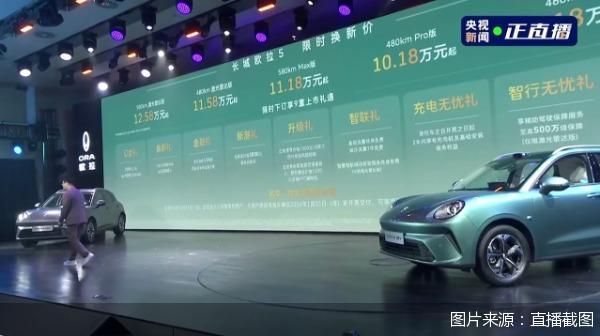
Core Viewpoint - Great Wall Motors has officially launched the Ora 5, a new A-class pure electric SUV under its Ora brand, with a price range of 99,800 to 133,800 yuan, and a limited-time trade-in price starting at 91,800 yuan [1][3] Group 1: Product Launch - The Ora 5 is the first mass-produced model built on Great Wall Motors' new platform, which emphasizes "multiple powertrains, multiple categories, and multiple forms" to adapt to different markets and usage scenarios [3] - The vehicle features the Coffee Pilot Ultra driver assistance system, supporting city NOA functionality without relying on high-precision maps, and includes memory parking capabilities [3] - The smart cockpit is equipped with the Coffee OS 3 system and a 4nm automotive-grade chip, integrating multi-modal AI large models [3] Group 2: Safety and Battery Technology - The new model is equipped with the second-generation short-blade battery and includes various passive and health safety configurations [3] Group 3: Brand Strategy - Great Wall Motors plans to expand the Ora brand from a single pure electric brand to a multi-power global direction, with future products covering SUVs, sedans, and various categories to enhance platform versatility and product coverage [3]
长城欧拉首款SUV欧拉5上市:9.18万元起 CLTC续航480公里起
Feng Huang Wang· 2025-12-16 13:55
凤凰网科技讯 12月16日,长城汽车(601633)旗下欧拉品牌首款SUV车型欧拉5正式上市。新车共推出 5款配置,官方指导价区间为9.98万至13.38万元。在包含订金抵扣、置换补贴等上市权益后,其起售价 为9.18万元。 车内配备10.25英寸液晶仪表与15.6英寸中控屏,搭载Coffee OS系统并接入AI大模型,支持多轮语音交 互及主流手机互联。动力方面,车辆搭载最大功率150千瓦的电机,并提供容量分别为45.3kWh与 58.3kWh的磷酸铁锂电池组,对应的CLTC续航里程为480公里与580公里,支持快充与对外放电功能。 欧拉5定位为紧凑型SUV,车身尺寸长宽高分别为4471/1833(1844)/1641mm,轴距为2720mm。外观延续 品牌家族化设计语言,采用圆形前大灯与贯穿式尾灯。部分高配车型提供激光雷达选项,搭载长城汽车 第三代Coffee Pilot Ultra辅助驾驶方案,支持高速与城区导航辅助驾驶及记忆泊车等功能。 ...
「禁止亏本卖车」,价格猫腻要藏不住了
36氪· 2025-12-16 13:35
Core Viewpoint - The automotive industry is on the brink of a significant reshuffle due to the introduction of the "Automotive Industry Pricing Behavior Compliance Guidelines," which aims to end the ongoing price war and establish clearer pricing regulations [5][10]. Group 1: Compliance Guidelines - The guidelines prohibit car manufacturers from selling vehicles below production costs and require clear pricing and delivery terms [8][16]. - Multiple car manufacturers, including BYD, Xpeng, and Changan, have expressed support for the guidelines, emphasizing the need to eliminate price fraud and unfair competition [11][13]. - The guidelines detail nine prohibited behaviors, including disguised price reductions and excessive discounts, which could lead to legal risks [16][18]. Group 2: Market Impact - The price war has severely impacted the industry's profit margins, with the overall profit rate for the automotive industry dropping to a historical low of 4.4% in 2025 [26][28]. - The average gross profit per vehicle in the automotive supply chain is only 14,000 yuan, and over 52.6% of automotive dealers are experiencing losses [28][29]. - The ongoing price war has led to a decline in consumer confidence, with a significant increase in the number of potential buyers delaying their purchases due to price fluctuations [32][34]. Group 3: Consumer Behavior - Consumers are increasingly associating vehicle prices with quality and features, with the percentage of buyers believing "you get what you pay for" rising from 13% in 2023 to 34% in 2025 [34]. - The expectation of continuous price reductions has led consumers to postpone purchases, as they believe waiting will yield better deals [35][36]. - The end of the price war is expected to lead to more rational competition in the automotive market, improving product safety and quality [36].


长城汽车为什么不用一体压铸?魏建军回应:成本高 维修性差
Feng Huang Wang· 2025-12-16 12:47
Core Viewpoint - The chairman of Great Wall Motors, Wei Jianjun, discussed the reasons for not adopting integrated die-casting technology, citing high costs and poor repairability of aluminum, which could lead to increased insurance premiums. He emphasized that traditional automakers have also avoided this technology [1] Group 1: Company Insights - Great Wall Motors has chosen not to implement integrated die-casting technology due to its high costs and the poor repairability of aluminum, which is recognized by insurance companies [1] - The company plans to enhance communication with users by actively researching their needs and identifying potential risks, rather than waiting for standards to improve [1] Group 2: Industry Perspectives - Wei Jianjun highlighted a prevailing issue in the industry where some companies mislead users and engage in excessive promotion [1] - He proposed that automakers should act as "technical translators" and risk "advisors" for users, indicating a shift towards more transparent communication [1] - The company intends to upgrade its internal "Anti-Deception Guide" for car purchases into a dynamic "Technical Value Assessment System," which will be integrated into the sales training program [1]

中国车企,“巴”握未来
Zhong Guo Qi Che Bao Wang· 2025-12-16 07:01
Core Insights - Chinese automotive companies are making significant strides in the Brazilian market, showcasing a strong commitment to local production and market penetration [1][5][10] Group 1: Company Developments - GAC International made its debut at the São Paulo International Motor Show, presenting its full range of models, while BYD's Tengshi brand launched its flagship models Z9GT and D9 in Brazil [1][3] - Geely and Renault announced plans to double their local production in Brazil through a joint venture, investing 38 billion Brazilian Reais (approximately 10.5 billion RMB) to enhance their electric vehicle offerings [3][9] - Avita officially entered the Latin American market with the launch of Avita 11, partnering with CAOA Group for comprehensive market support [4] Group 2: Market Potential - Brazil, as the sixth-largest automotive market globally, is experiencing growth driven by a population of over 200 million and an expanding middle class, making it a key target for global automotive companies [5][10] - The Brazilian automotive market is projected to see a 5% increase in sales by 2025, reaching 2.765 million vehicles, with a 7.8% rise in production [5][6] Group 3: Electric Vehicle Growth - The electric vehicle segment in Brazil is rapidly expanding, with a projected 90% increase in sales for electric vehicles in 2024, reaching 177,000 units [6][7] - Chinese companies dominate the electric vehicle market in Brazil, holding a 76% market share as of October 2025, with BYD leading in monthly sales [6][7] Group 4: Policy and Regulatory Environment - Brazilian government policies are catalyzing the shift towards electric vehicles, with incentives and tax benefits aimed at increasing the share of electric vehicles to 30% of total sales by 2030 [7][8] - The government is also implementing import tariffs on electric vehicles to encourage local production, effective from January 2024 [7] Group 5: Strategic Approaches - Chinese automotive companies are adopting differentiated strategies in Brazil, with some focusing on full localization of production, while others, like Geely and Renault, are leveraging partnerships for quicker market entry [8][9] - The establishment of local production facilities is expected to enhance the supply chain for electric vehicle components, further solidifying Brazil's role as a hub for Chinese automotive companies in Latin America [10]

