
PSBC(601658)

Search documents
重点领域贷款增量创新高 服务实体经济“挑大梁”
Jin Rong Shi Bao· 2025-11-04 02:06
Core Insights - The six major state-owned banks in China reported stable loan growth and effective support for key sectors of the economy in their Q3 reports, demonstrating leadership in addressing weak links in the economy [1][2]. Loan Growth and Focus Areas - The total loan volume of the six major banks has shown steady growth, with targeted lending in key areas such as manufacturing, strategic emerging industries, and agriculture [4][5]. - Industrial and Commercial Bank of China (ICBC) reported a significant increase in loans, with RMB loans from domestic branches rising by 2.04 trillion yuan [4]. - Agricultural Bank of China (ABC) prioritized county-level resource allocation, with a loan balance of 10.90 trillion yuan and a growth rate of 10.57%, which is 2.21 percentage points higher than the bank's average [4]. - China Bank's loans for manufacturing and strategic emerging industries grew by 12.10% and 26.29%, respectively [4]. Support for Agriculture and Small Enterprises - Postal Savings Bank of China focused on agricultural finance, with an agricultural loan balance of 2.47 trillion yuan and inclusive finance loans exceeding 1 trillion yuan [5]. - ABC's loans for rural industries and construction reached 2.74 trillion yuan and 2.47 trillion yuan, with growth rates of 22.8% and 9.7% respectively [4]. Technology Loan Growth - The six banks have significantly increased their loan scales in the technology sector, with ICBC's loans for strategic emerging industries exceeding 4.2 trillion yuan and technology enterprise loans surpassing 2.7 trillion yuan [6]. - Agricultural Bank and China Bank also reported technology loan balances exceeding 4.7 trillion yuan [6]. AIC Equity Investment Development - Several banks have initiated AIC equity investment pilot projects, with ICBC covering 18 pilot regions and establishing 38 funds with a subscribed scale exceeding 45 billion yuan [7]. - China Bank has set up 16 equity investment funds focusing on key emerging industries, with a total subscribed scale of 11.76 billion yuan [7]. Risk Management and Control - The six banks have enhanced their risk management frameworks, particularly in agricultural loans, to ensure asset quality remains stable [8]. - ABC has integrated risk control measures throughout the loan process, utilizing financial technology to improve risk identification and management [8]. - Construction Bank has implemented monitoring measures for loan usage to prevent misuse of funds, ensuring compliance with policies [10].







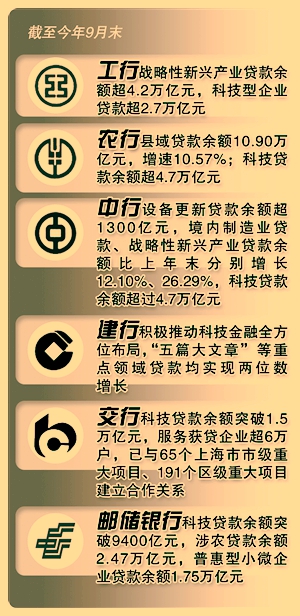
普惠、绿色、科创三大领域信贷增量显著
Jin Rong Shi Bao· 2025-11-04 02:01
Core Viewpoint - The major state-owned banks in China have reported stable performance in Q3, with a focus on supporting high-quality development of the real economy through optimized credit allocation and increased lending in key sectors [1][2]. Group 1: Credit Allocation and Key Sectors - The overall trend in credit issuance for the year has been characterized by "total growth + structural optimization," with significant support directed towards inclusive small and micro enterprises, green development, and technological innovation [1][2]. - As of the end of Q3, the Agricultural Bank of China reported a balance of inclusive loans at 4.33 trillion yuan, with an increase of 731.1 billion yuan, while the balance of green loans reached 5.8 trillion yuan [2]. - The China Construction Bank's green loan balance stood at 5.89 trillion yuan, reflecting an 18.38% increase from the beginning of the year [2]. Group 2: Consumer Loans and Spending - There has been a notable increase in consumer loans, with the Industrial and Commercial Bank of China reporting a debit card transaction volume of 13.8 trillion yuan and credit card spending of 1.4 trillion yuan in the first three quarters [4]. - The China Bank's personal consumption loan balance grew by 26.11% year-on-year, reaching a significant increase in consumer spending [4][5]. - The Postal Savings Bank has implemented measures to boost consumption, resulting in a more than 10% year-on-year increase in loans for non-housing consumption [5]. Group 3: Digital Transformation and Future Outlook - Experts anticipate that the credit structure will continue to optimize, with a dual focus on consumption and inclusive finance, supporting stable growth in public enterprises and promoting domestic demand [6]. - The integration of digitalization in credit services is expected to enhance efficiency and precision in loan approvals, with the application of AI and big data technologies further reducing credit risks [7]. - Future credit allocations are likely to prioritize green, low-carbon, and digital economy sectors, aligning with national policy directions [6].
零售贷款增速显著跑输对公,民生兴业平安个贷增速为负!哪家对公强?
Xin Lang Cai Jing· 2025-11-04 01:00
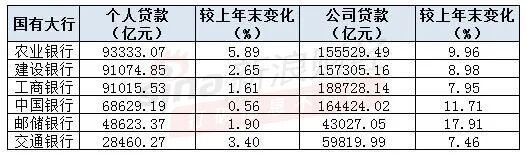
Core Viewpoint - The report highlights that corporate loans continue to drive the growth of bank credit, significantly outpacing retail loans in the first three quarters of 2025, with state-owned banks showing a notable increase in corporate lending compared to retail lending [1][5][11]. Group 1: State-Owned Banks Performance - Among state-owned banks, Agricultural Bank of China leads in personal loan size at 93,333.07 million yuan, with a growth of 5.89% compared to the end of the previous year [3][5]. - Postal Savings Bank shows a remarkable increase in corporate loans, with a growth rate of 17.91%, while its personal loans grew by only 1.90% [5][7]. - The overall trend indicates that personal loan growth is lagging behind corporate loan growth, with only Agricultural Bank exceeding a 5% increase in personal loans among the major banks [5][11]. Group 2: Joint-Stock Banks Performance - Several joint-stock banks, including Minsheng Bank, Industrial Bank, and Ping An Bank, reported negative growth in retail loans, while their corporate loans continued to grow positively [1][11]. - For instance, Ping An Bank's personal loans decreased by 2.10% to 17,291.92 million yuan, while its corporate loans saw a decline in bad debt rates [11][12]. - In contrast, China Merchants Bank reported a retail loan balance of 36,966.19 million yuan, with a modest growth of 1.43%, but its corporate loans grew significantly [9][13]. Group 3: Retail Asset Under Management (AUM) - Despite the challenges in retail loan growth, several banks reported strong growth in retail AUM. For example, China Merchants Bank's retail AUM reached 16.6 trillion yuan, growing by 11.19% [1][15]. - Shanghai Pudong Development Bank also reported a significant increase in personal financial assets, with a growth of 19.07% to 4.62 trillion yuan [15]. - Management teams from various banks emphasized their commitment to enhancing retail market share, indicating a long-term strategic focus on retail banking despite current market conditions [15][16].



券商三季度末持股市值逾660亿元 重仓布局高端制造与科技赛道
Shang Hai Zheng Quan Bao· 2025-11-03 18:16
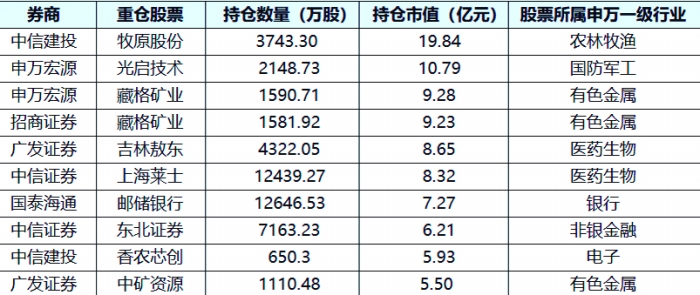
Core Insights - The report highlights that 44 brokerage firms have invested in 351 stocks, with a total holding value exceeding 66 billion yuan as of the end of Q3 [2][3] - High-end manufacturing and technology sectors are identified as popular investment directions for brokerages, reflecting a shift towards structural opportunities in the equity market [2][3] Brokerage Holdings Overview - The top 10 stocks held by brokerages by market value include Muyuan Foods, Guangqi Technology, and Cangge Mining, with holdings exceeding 1 billion yuan for several stocks [3][4] - The distribution of holdings indicates a strong focus on sectors such as machinery, pharmaceuticals, electronics, and basic chemicals, with the highest number of stocks in machinery equipment (35 stocks) and pharmaceuticals (28 stocks) [3][4] Trading Activity - Brokerages have entered 186 new stocks, with notable new positions including Postal Savings Bank and China Foreign Transport, each exceeding 30 million shares [4] - A total of 69 stocks saw increased holdings, particularly in the basic chemicals and transportation sectors, while 61 stocks were reduced, indicating a selective approach to portfolio management [5][4] Self-Operated Business Performance - Self-operated business remains the largest revenue contributor for brokerages, with a reported income of 186.857 billion yuan in the first three quarters, marking a 43.83% year-on-year increase [6][7] - Major brokerages like CITIC Securities and Guotai Junan reported significant growth in self-operated income, driven by a recovering equity market and strategic asset allocation [6][7] Market Trends and Analysis - Analysts note that the active trading environment and increased margin financing have positively impacted brokerage performance, with a significant rise in average daily trading volume [7] - The shift towards equity assets and the reduction in bond investments reflect a broader trend of rebalancing within the brokerage sector [7]


前三季度42家上市银行非利息收入同比增长5% 手续费及佣金净收入实现正增长 投资净收益增速放缓
Zheng Quan Ri Bao· 2025-11-03 16:21
Core Viewpoint - Non-interest income is a crucial component of banks' revenue structure, reflecting operational resilience amid pressure on net interest income. The performance of non-interest income among 42 listed banks in A-shares for the first three quarters shows a total of 1.22 trillion yuan, a year-on-year increase of 583 billion yuan, representing a growth rate of 5% [1][2]. Summary by Category Non-Interest Income Growth - In the first three quarters, 18 banks reported year-on-year growth in non-interest income, with 16 banks increasing the proportion of non-interest income in total revenue [1][2]. - Notably, Zijin Bank, Changshu Bank, and Zhangjiagang Bank, all located in Jiangsu, exhibited remarkable growth rates of 54%, 35%, and 22%, respectively, contributing significantly to their total revenues [2][3]. Performance of Different Bank Types - Among the six major state-owned banks, all reported year-on-year growth in non-interest income, with five achieving double-digit growth rates. In contrast, only one national joint-stock bank saw an increase [2][3]. - The non-interest income growth rates for major state-owned banks were as follows: Agricultural Bank (21%), Postal Savings Bank (20%), Bank of China (16%), China Construction Bank (14%), and Industrial and Commercial Bank (11%) [2]. Fee and Commission Income - The total net fee and commission income for the 42 listed banks reached 578.2 billion yuan, a year-on-year increase of 4.6%, with over 60% of banks reporting growth in this area [4][5]. - Noteworthy increases in fee and commission income were observed in Changshu Bank and Ruifeng Bank, with growth rates exceeding 364% and 162%, respectively [5]. Investment Income Trends - The total investment net income for the listed banks was 477 billion yuan, reflecting a year-on-year growth of 21%, although this growth rate has slowed compared to the previous year's 24% [6]. - The investment income of many banks was impacted by fluctuations in the bond market, particularly affecting smaller banks such as city commercial banks and rural commercial banks [6].

前三季度42家上市银行非利息收入同比增长5%
Zheng Quan Ri Bao· 2025-11-03 15:48
Core Insights - Non-interest income is a crucial component of banks' revenue structure, especially under pressure on net interest income, reflecting operational resilience [1] - In the first three quarters of this year, 42 listed banks in A-shares reported a total non-interest income of 1.22 trillion yuan, an increase of 58.3 billion yuan, or 5% year-on-year [1] - The growth in non-interest income is driven by the performance of wealth management businesses and the overall market activity, although investment income has been affected by fluctuations in the bond market [1][6] Non-Interest Income Growth - Among the 42 listed banks, 18 reported a year-on-year increase in non-interest income, with 16 banks seeing an increase in the proportion of non-interest income in total revenue [1][2] - Notably, Zijin Bank, Changshu Bank, and Zhangjiagang Bank, all from Jiangsu, showed remarkable growth rates of 54%, 35%, and 22% respectively, contributing significantly to their total revenues [2] - State-owned banks demonstrated strong growth in non-interest income, with Agricultural Bank, Postal Savings Bank, Bank of China, China Construction Bank, and Industrial and Commercial Bank reporting double-digit growth rates [2][3] Fee and Commission Income - The total fee and commission income for the 42 listed banks reached 578.2 billion yuan, a year-on-year increase of 4.6%, with over 60% of banks reporting growth [4][5] - Notable increases in fee and commission income were observed in Changshu Bank and Ruifeng Bank, with growth rates exceeding 364% and 162% respectively [4] - State-owned banks also reported growth in fee and commission income, with major banks like China Merchants Bank seeing a 0.9% increase, driven by significant growth in various subcategories of income [5] Investment Income Trends - The investment net income for the 42 listed banks totaled 477 billion yuan, reflecting a year-on-year growth of 21%, although this growth rate has slowed compared to the previous year [6] - The fluctuations in the bond market have particularly impacted the investment income of smaller banks, such as city commercial banks and rural commercial banks [6] - Analysts suggest that differences in client bases and operational strategies between state-owned and smaller banks are influencing their respective non-interest income growth [3][6]


3Q25保险资金重仓流通股深度跟踪:逆势继续加仓银行,减仓电力设备及有色金属
ZHONGTAI SECURITIES· 2025-11-03 12:34
Investment Rating - The report indicates a positive investment outlook for the banking sector, while suggesting a reduction in exposure to the power equipment and non-ferrous metals sectors [3][4]. Core Insights - The insurance funds have continued to increase their holdings in banks despite a low interest rate environment, while reducing their positions in power equipment and non-ferrous metals [3]. - As of October 2025, the new money investment yield for insurance funds is estimated at 2.77%, showing a recovery of nearly 10 basis points from the bottom [6][17]. - The total market value of insurance funds' holdings in A-shares reached 6,510 billion yuan, with a notable presence in 633 A-share companies [60][62]. Summary by Sections Insurance Fund Allocation Trends - Insurance funds are increasingly allocating to stocks, with a significant rise in stock investment proportion to 8.8% by the end of Q2 2025, reflecting an 8.9% increase from the previous quarter [18][20]. - The total stock investment by insurance companies reached 6,406 billion yuan in the first half of 2025 [20]. Sector Performance and Holdings - In Q3 2025, the banking sector had the highest market value held by insurance funds at 3,165.2 billion yuan, followed by public utilities and transportation [62]. - The report highlights that 26 out of 28 sectors experienced growth, with TMT and new energy sectors showing significant strength [59]. Key Stock Recommendations - The report suggests focusing on companies such as Xinhua Insurance, China Life, China Property Insurance, China Ping An, AIA, China Taiping, and China Pacific Insurance as potential investment opportunities [5]. Changes in Holdings - In Q3 2025, insurance funds increased their holdings in 11 sectors, including banking, communication, steel, computing, and food and beverage [69]. - Conversely, they reduced their positions in 18 sectors, notably in power equipment, non-ferrous metals, transportation, coal, and electronics [6]. Regulatory Environment - The report notes that regulatory measures are encouraging long-term capital to enter the market, with insurance funds being a focal point of this initiative [28]. - The China Securities Regulatory Commission has mandated that from 2025, 30% of new insurance premiums should be allocated to A-share investments [32].






上市银行信披考评出炉:光大、华夏、浙商提级,上海银行降级
2 1 Shi Ji Jing Ji Bao Dao· 2025-11-03 10:57
Core Viewpoint - The quality of information disclosure is a crucial indicator of the quality of listed companies and serves as an important basis for investors' decision-making. The Shanghai and Shenzhen Stock Exchanges have emphasized the importance of information disclosure quality and have implemented comprehensive evaluations of listed companies' disclosure practices [1][3]. Group 1: Regulatory Framework - In March, the Shanghai and Shenzhen Stock Exchanges released guidelines focusing on enhancing information disclosure regulation, punishing financial fraud, strengthening cash dividend supervision, and promoting the enhancement of investment value for listed companies [1][3]. - The evaluation criteria for information disclosure quality include eight aspects: normative disclosure, effective disclosure, investor relations management, return to investors, social responsibility disclosure, penalties and regulatory measures, support for exchange work, and other factors recognized by the exchange [3][5]. Group 2: Evaluation Results - Among the 42 A-share listed banks, all received ratings of B or above, with 22 banks rated A. Most banks maintained their ratings from the previous year, with only six experiencing changes [3][6]. - The banks rated A include major state-owned banks such as Industrial and Commercial Bank of China, Agricultural Bank of China, and China Bank, as well as several joint-stock and city commercial banks [6][7]. Group 3: Impact on Capital Activities - The evaluation results of information disclosure will influence the review of refinancing and mergers and acquisitions for listed banks, establishing a strong market incentive and constraint mechanism [5][8]. - Both the Shanghai and Shenzhen Stock Exchanges provide various supports and conveniences for companies rated A, such as exemptions from post-review for temporary reports and reduced inquiry rounds for restructuring audits [8][9]. Group 4: Commitment to Improvement - Several banks, including Hangzhou Bank and China CITIC Bank, have publicly committed to further enhancing their information disclosure quality following their A ratings, emphasizing transparency, effective communication, and governance [10][11]. - China CITIC Bank has highlighted its commitment to investor rights protection, having distributed over RMB 170 billion in cash dividends and planning to increase its mid-term dividend payout ratio [11].



贴心服务零距离,养老金融护航“夕阳红”
Xin Lang Cai Jing· 2025-11-03 08:57
Core Points - The article highlights the challenges faced by elderly individuals in accessing banking services due to the digital divide, emphasizing the importance of warm and accessible service from financial institutions [1] - Postal Savings Bank's initiative to provide door-to-door services for elderly customers demonstrates its commitment to "elderly finance" and deep service for this demographic [4] Group 1 - The elderly customer faced a critical situation when her husband's bank card was locked, and they were unable to visit the bank due to health issues [1] - Postal Savings Bank staff quickly initiated a "green channel" and home service process to assist the elderly couple, showcasing their responsive customer service [2] - The successful completion of the password reset at the customer's home alleviated the couple's distress, highlighting the effectiveness of the bank's personalized service [2] Group 2 - The bank's home service not only resolved immediate banking needs but also illustrated a broader commitment to serving the elderly population with care and respect [4] - Staff provided thorough assistance during the home visit, ensuring that the elderly customer understood each step of the process, which reflects the bank's dedication to customer-centric service [4] - The ongoing focus on the financial service needs of the elderly will lead to continuous improvements in home service processes, reinforcing the bank's mission to deliver warmth and convenience to this demographic [4]

“温情”与“守护”同频共振|邮储银行成都分行延伸服务触角,把金融温度送到百姓心坎
Xin Lang Cai Jing· 2025-11-03 08:57
Group 1 - Postal Savings Bank of China (PSBC) emphasizes customer-centric services, as demonstrated by their response to a bedridden customer in Chengdu who needed urgent assistance with activating his social security card [1][3] - The bank has established a "special group customer ledger" to ensure that customer requests are addressed promptly, highlighting their commitment to continuous service [1] - PSBC is actively engaging with the community by providing financial education, particularly targeting vulnerable groups such as the elderly, to help them recognize and avoid financial scams [2][3] Group 2 - The bank's initiatives include on-site financial knowledge sessions in local communities, making financial education accessible and relatable to residents [2] - PSBC aims to enhance its service delivery by moving service points closer to customers and deepening financial knowledge dissemination [3] - The bank's approach is to provide timely, warm, and in-depth financial services to safeguard customers' financial well-being [3]