Bank of Chengdu(601838)

Search documents
稳定币热度升,券商保证金利率下调
HTSC· 2025-06-09 01:50
Investment Rating - The report maintains an "Overweight" rating for both the banking and securities sectors [11]. Core Insights - The implementation of the Hong Kong "Stablecoin Regulation" on August 1, 2025, is expected to boost the financial sector, particularly benefiting banks and securities firms involved in the stablecoin ecosystem [2][14]. - The report highlights a positive outlook for banks, securities, and insurance sectors, with banks being prioritized for investment opportunities [2][14]. - The anticipated reduction in life insurance preset rates in Q3 2025 is expected to resolve the cost-revenue mismatch in insurance products, enhancing sales momentum [2][41]. Summary by Sections Banking Sector - The Hong Kong "Stablecoin Regulation" is set to take effect on August 1, 2025, which will regulate stablecoin activities and establish a licensing system [3][17]. - Standard Chartered Bank is participating in a sandbox test for stablecoin issuers, while ZA Bank is the first digital bank in Hong Kong to provide reserve banking services for stablecoin issuers [3][18]. - The banking index rose by 1.68%, outperforming the CSI 300 index, with notable gains from banks like Nanjing Bank (+11.61%) and CITIC Bank (+5.65%) [15][16]. - Recommended quality stocks include Nanjing Bank, Hangzhou Bank, Chengdu Bank, Shanghai Bank, and招商银行 (China Merchants Bank) [4][46]. Securities Sector - The report notes a surge in interest in stablecoin concepts, which has positively impacted the non-bank financial sector, particularly securities firms [2][38]. - Several securities firms have announced a reduction in margin interest rates to 0.05%, following the decrease in deposit rates by major banks [39][40]. - The approval of equity changes for multiple securities firms by the CSRC is expected to enhance market sentiment and provide structural opportunities [3][38]. Insurance Sector - The report anticipates a likely reduction in life insurance preset rates in Q3 2025, which is expected to improve the cost-revenue dynamics of insurance products [41][44]. - The insurance sector has shown resilience, with stocks like New China Life Insurance rising by 12% [41]. - Recommended insurance stocks include China Pacific Insurance, Ping An Insurance, and AIA Group [42][46].





社交平台现“贷款互换”:谁在替银行完成消费贷任务
Zhong Guo Zheng Quan Bao· 2025-06-05 21:08
Core Insights - The article highlights the increasing trend of bank employees exchanging consumer loan tasks to meet performance targets, indicating a competitive and pressured environment in the consumer loan sector [1][2][3] - The consumer loan market is experiencing intense competition, with banks facing challenges in customer acquisition due to product homogeneity and regulatory constraints [4][5][6] - There is a growing emphasis on risk management and the need for banks to focus on genuine consumer demand while preventing excessive credit issuance [7][8][9] Group 1: Task Exchange Among Bank Employees - Bank employees are increasingly seeking to exchange consumer loan tasks to meet performance metrics, with many resorting to social media for assistance [1][2] - The exchange typically involves basic tasks like consumer loan limit assessments, but can also include more complex tasks such as loan disbursement and face-to-face processing [2][3] - Employees often prefer to collaborate with colleagues from the same city to meet specific local requirements, such as social security and housing fund contributions [2][3] Group 2: Competitive Landscape - The consumer loan market is characterized by a high degree of product similarity, with many banks offering similar interest rates and loan terms, leading to intensified competition [4][5] - Some banks are lowering approval standards to attract customers, which can lead to increased risks associated with creditworthiness [5][6] - The pressure to meet performance targets has led some employees to consider partnerships with loan intermediaries, despite the associated risks of material verification and fund misallocation [4][5] Group 3: Risk Management and Future Directions - The article emphasizes the importance of risk management in consumer lending, highlighting credit risk and operational risk as significant concerns for banks [7][8] - Banks are encouraged to adopt a customer-centric approach, leveraging technology and focusing on specific consumer needs to enhance service offerings [8][9] - Future competition in the consumer loan sector is expected to shift from price-based competition to a focus on comprehensive service offerings and consumer engagement [8][9]


机构:红利资产后续或仍有进一步上涨空间,国企红利ETF(159515)回调蓄势
Sou Hu Cai Jing· 2025-06-05 05:30
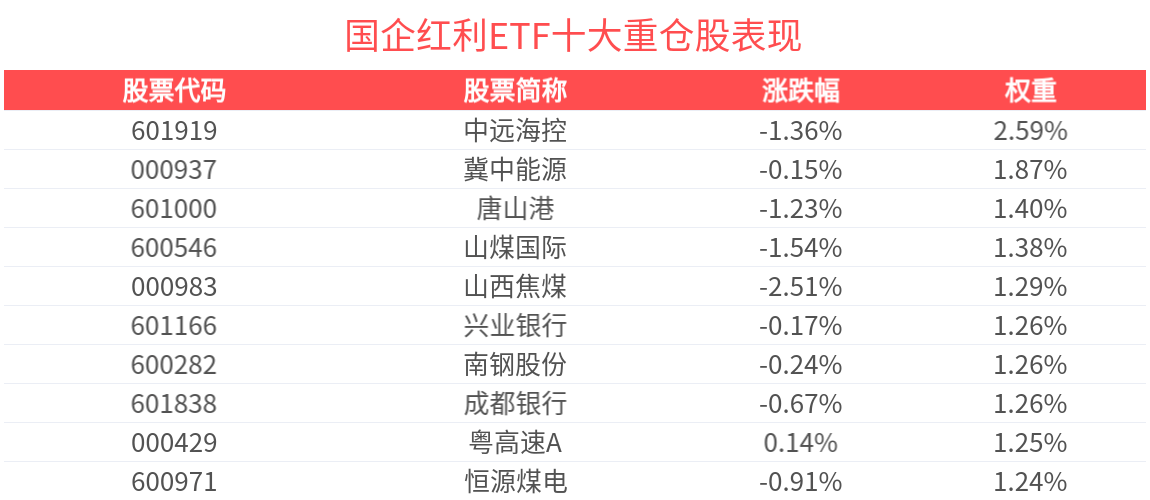
Core Viewpoint - The China Securities State-Owned Enterprises Dividend Index (000824) has experienced a decline of 0.66% as of June 5, 2025, indicating a mixed performance among its constituent stocks, with some stocks rising while others fell significantly [1][2]. Group 1: Index Performance - The China Securities State-Owned Enterprises Dividend Index (000824) has decreased by 0.66% as of June 5, 2025 [1]. - The National Enterprise Dividend ETF (159515) has also seen a decline of 0.54%, with the latest price at 1.1 yuan [1]. - Notable gainers include Ninghu Expressway (600377) up by 1.75%, and notable losers include Caibai Co., Ltd. (605599) down by 6.15% [1]. Group 2: Market Analysis - Recent reports indicate that dividend assets have rapidly "shrunk," with the exception of the banking sector, which has shown lackluster performance [1]. - The proportion of stocks with a Sharpe Ratio higher than the index among dividend assets has reached an extreme historical low, suggesting a potential market adjustment followed by upward movement [1]. - Despite the rising valuation levels of dividend assets, there remains significant room for further increases when compared to historical peaks [1]. Group 3: Top Holdings - As of May 30, 2025, the top ten weighted stocks in the China Securities State-Owned Enterprises Dividend Index include COSCO Shipping Holdings (601919) and Jizhong Energy (000937), with the top ten accounting for 15.83% of the index [2].



成都银行: 成都银行股份有限公司关于召开2024年年度股东大会的通知
Zheng Quan Zhi Xing· 2025-06-04 11:11
证券代码:601838 证券简称:成都银行 公告编号:2025-034 成都银行股份有限公司 关于召开2024年年度股东大会的通知 本公司董事会及全体董事保证本公告内容不存在任何虚假记载、误导性陈述 或者重大遗漏,并对其内容的真实性、准确性和完整性承担法律责任。 重要内容提示: (三) 投票方式:本次股东大会所采用的表决方式是现场投票和网络投票 相结合的方式 (四) 现场会议召开的日期、时间和地点 召开的日期时间:2025 年 6 月 25 日 9 点 30 分 召开地点:四川省成都市西御街 16 号成都银行大厦 5 楼 3 号会议室 (五) 网络投票的系统、起止日期和投票时间 网络投票系统:上海证券交易所股东大会网络投票系统 序号 议案名称 网络投票起止时间:自2025 年 6 月 25 日 至2025 年 6 月 25 日 采用上海证券交易所网络投票系统,通过交易系统投票平台的投票时间为股 东大会召开当日的交易时间段,即 9:15-9:25,9:30-11:30,13:00-15:00;通过互 联网投票平台的投票时间为股东大会召开当日的 9:15-15:00。 (六) 融资融券、转融通、约定购回业务账户和 ...
成都银行(601838) - 成都银行股份有限公司关于召开2024年年度股东大会的通知
2025-06-04 11:00
证券代码:601838 证券简称:成都银行 公告编号:2025-034 成都银行股份有限公司 关于召开2024年年度股东大会的通知 本公司董事会及全体董事保证本公告内容不存在任何虚假记载、误导性陈述 或者重大遗漏,并对其内容的真实性、准确性和完整性承担法律责任。 2024年年度股东大会 (二) 股东大会召集人:董事会 (三) 投票方式:本次股东大会所采用的表决方式是现场投票和网络投票 相结合的方式 (四) 现场会议召开的日期、时间和地点 召开的日期时间:2025 年 6 月 25 日 9 点 30 分 股东大会召开日期:2025年6月25日 本次股东大会采用的网络投票系统:上海证券交易所股东大会网络投票 系统 召开地点:四川省成都市西御街 16 号成都银行大厦 5 楼 3 号会议室 重要内容提示: 一、 召开会议的基本情况 (一) 股东大会类型和届次 (五) 网络投票的系统、起止日期和投票时间 网络投票系统:上海证券交易所股东大会网络投票系统 网络投票起止时间:自2025 年 6 月 25 日 至2025 年 6 月 25 日 采用上海证券交易所网络投票系统,通过交易系统投票平台的投票时间为股 东大会召开当日 ...
沪农商行涨停!银行股集体走强,转债摘牌加速稀缺性凸显
2 1 Shi Ji Jing Ji Bao Dao· 2025-06-03 09:34
Core Viewpoint - The A-share banking sector has seen significant stock price increases, with several banks reaching new highs, indicating strong market performance and investor interest in bank stocks [1][3]. Group 1: Stock Performance - On June 3, the banking sector led the market with notable gains, including Shanghai Rural Commercial Bank reaching a price of 9.86 yuan per share, a 10.04% increase, marking a three-year high [1]. - The overall market saw the Shanghai Composite Index rise by 0.43%, with the banking index showing a substantial upward trend since the end of 2023, moving from a low of 2841.87 to over 4200 points [3]. - The influx of new capital from insurance funds, ETFs, and foreign investments has contributed to the upward momentum in bank stocks, as these investments favor the stable returns and high dividend yields offered by banks [4]. Group 2: Convertible Bonds - The rise in bank stock prices has led to an increase in warnings regarding convertible bonds, indicating a higher likelihood of conversion, which is beneficial for banks as it reduces financing costs and bolsters core Tier 1 capital ratios [1]. - Several banks, including Nanjing Bank and Hangzhou Bank, have issued announcements regarding the potential redemption of their convertible bonds, reflecting a trend of accelerating bond redemptions this year compared to the previous year [5][6]. - The scarcity of bank convertible bonds is becoming evident, with the total outstanding amount potentially decreasing from 170 billion yuan to around 100 billion yuan due to upcoming redemptions [7]. Group 3: Market Dynamics - The demand for bank convertible bonds remains strong among bond investors, driven by their defensive characteristics and the potential for absolute returns in a favorable market environment [8]. - The current market conditions suggest that if macroeconomic factors do not meet expectations, the performance of dividend stocks may improve, further enhancing the appeal of bank convertible bonds [8].
金融人·事|14年估值大逆转:从“被歧视”到“香饽饽”的城商行样本
Xin Lang Cai Jing· 2025-05-30 13:39
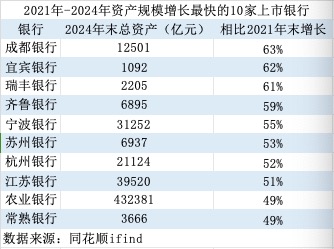
Core Viewpoint - Chengdu Bank has emerged as the fastest-growing commercial bank in China, with total assets increasing by 63% from 2021 to 2024, significantly outpacing other listed banks amid a general slowdown in credit demand in the banking sector [1][3]. Asset Growth - From 2021 to 2024, the total assets of listed banks in China (including Hong Kong) grew by 33%, while Chengdu Bank's total assets reached 1.33 trillion yuan, making it the first city commercial bank in Western China to exceed one trillion yuan in assets [2][3]. - Chengdu Bank's market capitalization nearly doubled to 82.2 billion yuan by May 30, 2024, compared to the end of 2021 [2]. Loan Composition - As of the end of 2024, Chengdu Bank's government-related loans accounted for 53.1% of its total loans, reflecting a strategic focus on public sector financing [3][8]. - The bank's corporate loans exceeded 600 billion yuan, more than doubling since the end of 2021, with corporate loans making up over 80% of total loans [3][4]. Sector Focus - The primary driver of Chengdu Bank's loan growth has been in the leasing and business services sector, which includes financing for government-related projects and infrastructure [5][10]. - By the end of 2024, loans in the leasing and business services sector reached 281.9 billion yuan, a nearly 27-fold increase since 2015 [13]. Risk Management - Chengdu Bank has maintained a low non-performing loan (NPL) ratio of 0.66% as of 2024, the lowest among listed banks, attributed to the stability of its government-related loans [15][19]. - The bank's NPL ratio has decreased by 1.7 percentage points since 2015, while its provision coverage ratio has increased significantly, providing a buffer for future profit releases [19]. Market Position - Chengdu Bank's valuation has improved, with its market capitalization growing by 90% since the end of 2021, reflecting a shift in market preference towards banks with strong government-related loan portfolios [17]. - The bank's strategy of focusing on public sector financing has positioned it favorably in a changing economic landscape, where certainty in loan performance is increasingly valued [17][18].
红利行情发力!杭州银行、成都银行联袂再创历史新高 年内11只银行股创新高
2 1 Shi Ji Jing Ji Bao Dao· 2025-05-30 06:17
Core Viewpoint - The banking sector is experiencing a strong rally, with significant price increases and multiple stocks reaching historical highs, driven by macroeconomic factors and changes in fund management strategies [1][2][3]. Group 1: Banking Sector Performance - The banking sector rose by 0.95% on the last trading day before the Dragon Boat Festival, with a year-to-date increase of 9.6% [2]. - All 42 bank stocks in the sector closed in the green, with notable gains from CITIC Bank, Chongqing Rural Commercial Bank, and others, where CITIC Bank saw the highest increase of 3.12% [2]. - Hangzhou Bank and Chengdu Bank reached new historical highs, with prices hitting 16.58 yuan and 19.46 yuan respectively [2]. Group 2: Investment Trends and Fund Management - The strong performance of bank stocks is attributed to their defensive characteristics amid a complex global economic environment, making them attractive to risk-averse investors [2][3]. - Recent regulatory changes by the China Securities Regulatory Commission emphasize performance benchmarks for fund managers, which may lead to increased allocations to bank stocks as managers seek to align with benchmarks [3]. - Currently, the proportion of bank holdings in active funds is only 3.81%, while the weight of the banking sector in the CSI 300 index is 13.67%, indicating a significant deviation that may prompt fund managers to increase their bank stock holdings [3]. Group 3: Convertible Bonds and Market Dynamics - The rise in bank stock prices has alleviated the issue of low conversion rates for bank convertible bonds, with Hangzhou Bank opting for early redemption of its convertible bonds [5]. - Suzhou Bank also triggered early redemption of its convertible bonds, with a redemption price of 101.35 yuan per bond, reflecting a broader trend in the banking sector [6]. - The market for bank convertible bonds is expected to shrink significantly, with only 10 remaining in circulation and no new issuances since 2023, leading to a potential "gap" in the market [7].

银行股配置重构系列四:为何本轮重点推荐优质城商行?
Changjiang Securities· 2025-05-26 15:36
Investment Rating - The report maintains a "Positive" investment rating for the banking sector, particularly favoring high-quality city commercial banks [11]. Core Insights - In the current macroeconomic environment, government leverage expansion is the clearest direction for bank operations, with state-owned banks and city commercial banks focusing on government-related business as a core strategy for balance sheet expansion [2][7]. - Leading city commercial banks are accelerating their market share acquisition, with their performance growth consistently outpacing the banking industry, driven primarily by relatively high-speed balance sheet expansion [6][10]. - The asset quality of city commercial banks, primarily engaged in government-related business, is currently the most stable, with expectations for a decline in the net generation rate of non-performing loans this year [2][9]. Summary by Sections Macroeconomic Environment - The current macroeconomic environment favors government-related business, with city commercial banks focusing on local government, urban construction, and local state-owned enterprises [7]. - The demand for government-led financing continues to expand in key economic regions, such as the Chengdu-Chongqing area and Shandong province, despite concerns about export pressures in the Yangtze River Delta [7][8]. Competitive Landscape - The competitive dynamics between state-owned banks and leading city commercial banks are evolving, with state-owned banks experiencing a significant increase in credit market share due to macro policy guidance [8]. - Regulatory measures are being implemented to protect the net interest margins of state-owned banks, indirectly slowing their loan issuance and creating a more favorable competitive environment for city commercial banks [8][9]. Asset Quality and Loan Performance - City commercial banks have maintained low non-performing loan rates due to their focus on government-related loans, which have seen reduced risk following recent debt restructuring efforts [9]. - The tightening of risk control and loan issuance in retail banking is expected to lead to a slight decrease in the net generation rate of non-performing loans this year [9]. Investment Outlook - The report is optimistic about city commercial banks becoming the core focus for institutional investors in the banking sector, with expectations for their valuations to rise above 1x PB [10]. - Specific banks, such as Hangzhou Bank, are anticipated to lead in valuation increases due to their regional economic strength, asset quality, and performance growth [10].


存银行,还不如买银行股?
第一财经· 2025-05-26 01:26
Core Viewpoint - The decline in domestic deposit rates has diminished the attractiveness of traditional savings, leading to a "substitution effect" where bank stocks are favored over deposits, resulting in strong performance in the banking sector [1][3][10]. Summary by Sections Deposit Rate Decline - Since 2025, domestic deposit rates have been continuously decreasing, with the one-year fixed deposit rate falling below 1%, marking a historical low [3]. - The diminishing returns from traditional savings have reignited discussions around the benefits of investing in bank stocks instead of saving [3]. Dividend Yield Comparison - As of May 23, 2025, among 42 A-share listed banks, 31 banks have a dividend yield exceeding 4%, with some banks like Ping An Bank and Minsheng Bank surpassing 8% [3]. - The significant yield difference has prompted a "substitution effect," where investors see greater returns from bank stocks compared to deposits [3]. Strong Performance of Bank Stocks - The banking sector has shown robust performance, with a year-to-date increase of 7.66%, outperforming the Shanghai and Shenzhen 300 Index, which has declined by 1.34% [3][4]. - Investors, including insurance funds and public funds, have increased their holdings in bank stocks significantly [4][5]. Insurance and Public Fund Involvement - Insurance funds have been the primary players in increasing bank stock holdings, with a 27.2% holding ratio as of Q1 2025, up 4.3 percentage points from the end of 2023 [5]. - Public funds have also increased their allocation to bank stocks, with the proportion rising from 1.2% to 2.5% by the end of Q1 2025 [5]. Sector Performance Disparity - There is a noticeable divergence in performance within the banking sector, with regional banks like Qingdao Bank and Chongqing Rural Commercial Bank showing strong gains, while some larger banks have underperformed [7]. - As of Q1 2025, state-owned banks experienced a 1.5% decline in revenue, while city commercial banks saw a 3% increase [8]. Asset Quality and Non-Performing Loans - The non-performing loan generation rate for large banks has increased, while it has decreased for joint-stock and rural commercial banks [9]. - Regional banks, benefiting from local economic support, maintain lower non-performing loan ratios compared to national banks [9]. Future Outlook - Analysts believe that high dividend strategies will continue to drive bank stock prices in the short term, while net interest margins and asset quality will be critical for long-term performance [11][12]. - The banking sector is facing challenges from asymmetric interest rate cuts, which may pressure net interest margins but could also lower funding costs in the long run [12].