
CHINA COAL ENERGY(601898)

Search documents
山西见证!中国中煤携手华为,矿鸿开启煤矿智能化新时代
Sou Hu Cai Jing· 2025-07-12 03:37
Core Insights - The article highlights the revolutionary impact of the "Intelligent Control System for Coal Mining Based on Minhong" on the coal mining industry in Shanxi, marking it as a significant step towards the intelligent transformation of the sector [1][3] Group 1: Technological Innovation - The Minhong project, led by China Coal Energy Group, aims to develop intelligent mining technologies and has successfully completed industrial trials at the Daming Coal Mine [3][7] - The project addresses the fragmentation of communication protocols and the reliance on foreign operating systems, which have hindered the intelligent development of coal mining [5][9] - The Minhong system has established a new industrial IoT architecture that allows direct communication between devices, significantly improving data interaction efficiency [9][11] Group 2: Hardware Development - The Minhong project has achieved breakthroughs in the autonomy of core components, including the development of key devices such as circuit boards and control systems [11][12] - A notable innovation is the mobile driving cabin, which enables remote monitoring and operation of underground equipment, enhancing operational efficiency and reducing errors [11][12] Group 3: Software Advancements - The project has developed the Minhong operating system and various modules that allow for real-time data sharing and fault monitoring across different equipment [13][14] - The implementation of the Minhong system has led to significant improvements in monitoring capabilities, allowing for quicker fault detection and repair, thus enhancing safety in coal mining operations [13][14] Group 4: Collaborative Efforts - The collaboration between China Coal and Huawei has been crucial in the successful implementation of the Minhong project, with Huawei providing comprehensive technical support [15][16] - The partnership has set a benchmark for intelligent coal mining development in Shanxi and offers a replicable model for the national coal industry [16]

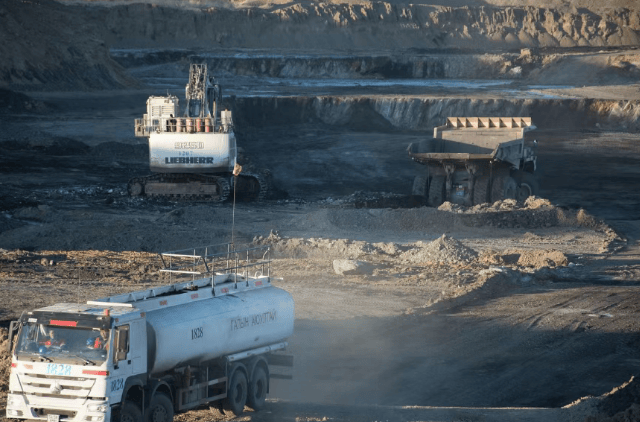
从完全成本角度看中煤能源和晋控煤业的竞争力
2025-07-11 01:13
Summary of Conference Call Records Industry Overview - The conference call primarily discusses the coal industry, focusing on companies such as China Shenhua, Shaanxi Coal, and Zhongmei Energy, as well as the dynamics of the coal market in China [1][2][3]. Key Points and Arguments - **Rising Production Costs**: The average unit cost of thermal coal is projected to be 181 RMB in 2024, which is higher than the 80 RMB during the 13th Five-Year Plan but lower than in 2023 [1][2]. - **Cost Drivers**: Major cost increases for leading companies like China Shenhua and Shaanxi Coal are attributed to rising labor costs and other related expenses, including maintenance, safety, and special reserves [1][3]. - **Special Reserves**: The release of special reserves has been identified as an effective way to lower production costs. Companies like China Shenhua and Zhongmei Energy have successfully reduced their special reserves to enhance performance [1][5]. - **Cost Variability Among Companies**: There are significant differences in cost changes among coal companies. For instance, Shaanxi Coal's costs increased mainly due to depreciation and labor costs, while Zhongmei Energy managed to dilute production costs through new efficient capacity [1][3][6][7]. - **Resource Tax Impact**: The increase in resource tax rates in regions like Shanxi and Inner Mongolia has raised the complete cost of coal production by at least 10 RMB per ton, putting pressure on profitability [1][12]. - **Profitability Metrics**: The profitability of the thermal coal industry is heavily influenced by selling prices. For example, at a selling price of 600 RMB per ton, the profit is approximately 50 RMB, while at 1,000 RMB, the profit increases to about 100 RMB [1][13]. Additional Important Insights - **Cost Composition**: The complete cost in the coal industry consists of production costs, taxes, and additional expenses, with resource tax accounting for 80-90% of the tax component [2][4]. - **Performance of Different Companies**: In 2024, Shaanxi Coal had the highest net profit per ton at 208 RMB, while China Shenhua had a lower net profit of 128 RMB, indicating differences in cost control and pricing strategies [3][14]. - **Market Sentiment**: Current thermal coal prices are around 620 RMB, which is slightly lower than the 13th Five-Year Plan period but comparable to early 2023 levels. The market shows optimism regarding future prices, particularly in the metallurgical coke sector [17][18]. - **Investment Recommendations**: The call suggests focusing on leading companies such as Shaanxi Coal, Zhongmei Energy, and China Shenhua, which have strong competitive advantages and high dividend yields [3][18]. This summary encapsulates the critical insights from the conference call, highlighting the coal industry's cost dynamics, profitability, and investment opportunities.

中证沪港深互联互通中小综合能源指数报1985.04点,前十大权重包含洲际油气等
Jin Rong Jie· 2025-07-10 08:55
Group 1 - The China Securities Index series includes the CSI 500, CSI Hong Kong-Shanghai-Shenzhen Small Comprehensive Index, and CSI Hong Kong-Shanghai-Shenzhen Comprehensive Index, categorized into 11 industries to reflect the overall performance of different industry securities [1][2] - The CSI Hong Kong-Shanghai-Shenzhen Small Comprehensive Energy Index has shown a 2.88% increase over the past month, a 7.73% increase over the past three months, and a 6.22% decrease year-to-date [1] - The top ten holdings in the CSI Hong Kong-Shanghai-Shenzhen Small Comprehensive Energy Index include China Coal Energy (11.12%), Jereh Oilfield Services (6.61%), Meijin Energy (4.44%), and others [1] Group 2 - The market share of the CSI Hong Kong-Shanghai-Shenzhen Small Comprehensive Energy Index is distributed as follows: Shanghai Stock Exchange 52.20%, Shenzhen Stock Exchange 24.29%, and Hong Kong Stock Exchange 23.51% [2] - The industry composition of the index shows that coal accounts for 37.32%, coke for 18.96%, fuel refining for 12.62%, oil and gas extraction for 12.35%, and oilfield services for 9.14% [2] - The index samples are adjusted biannually, with adjustments occurring on the next trading day after the second Friday of June and December [2]


中证香港300资源指数报2664.33点,前十大权重包含兖矿能源等
Jin Rong Jie· 2025-07-10 08:25
Group 1 - The core viewpoint of the article highlights the performance of the China Hong Kong 300 Resource Index, which has shown a 2.39% increase over the past month, a 22.23% increase over the past three months, and a 9.29% increase year-to-date [1] - The index is composed of securities from various industry themes such as banking, transportation, resources, infrastructure, logistics, and leisure, reflecting the overall performance of different thematic listed companies in the Hong Kong market [1] - The index's top ten holdings include China National Offshore Oil (29.27%), PetroChina (13.19%), Zijin Mining (10.84%), China Shenhua Energy (9.38%), Sinopec (9.08%), China Hongqiao Group (4.51%), China Coal Energy (3.47%), Zhaojin Mining (3.08%), Luoyang Molybdenum (2.86%), and Yanzhou Coal Mining (2.39%) [1] Group 2 - The industry composition of the index shows that oil and gas account for 51.92%, precious metals for 15.97%, coal for 15.72%, industrial metals for 14.86%, rare metals for 0.91%, and other non-ferrous metals and alloys for 0.62% [2] - The index samples are adjusted biannually, with adjustments implemented on the next trading day following the second Friday of June and December each year [2] - In special circumstances, the index may undergo temporary adjustments, such as when a sample company is delisted or undergoes mergers, acquisitions, or splits [2]




中证香港300上游指数报2572.51点,前十大权重包含招金矿业等
Jin Rong Jie· 2025-07-08 08:31
Group 1 - The core index, the China Securities Hong Kong 300 Upstream Index (H300 Upstream), reported a value of 2572.51 points, with a 2.22% increase over the past month, a 25.04% increase over the past three months, and a 9.20% increase year-to-date [1] - The index reflects the overall performance of theme securities listed on the Hong Kong Stock Exchange, selected based on the China Securities industry classification [1] - The top ten holdings of the H300 Upstream Index include China National Offshore Oil Corporation (28.81%), PetroChina Company Limited (12.85%), Zijin Mining Group (10.9%), China Shenhua Energy Company (9.29%), Sinopec Limited (8.93%), China Hongqiao Group (4.48%), China Coal Energy Company (3.4%), Zhaojin Mining Industry Company (3.06%), Luoyang Molybdenum Company (2.89%), and Yanzhou Coal Mining Company (2.35%) [1] Group 2 - The industry composition of the H300 Upstream Index shows that oil and gas account for 50.95%, precious metals for 16.02%, coal for 15.56%, industrial metals for 14.84%, oil and gas extraction and field services for 1.07%, rare metals for 0.89%, and other non-ferrous metals and alloys for 0.67% [2] - The index samples are adjusted semi-annually, with adjustments implemented on the next trading day following the second Friday of June and December each year, with provisions for temporary adjustments in special circumstances [2]
煤炭开采行业周报:高温来袭,对煤炭市场影响如何?-20250706
Guohai Securities· 2025-07-06 12:31
Investment Rating - The coal mining industry is rated as "Recommended" [7] Core Views - The coal supply-demand relationship continues to optimize under high-temperature conditions, with port coal prices rising and inventory decreasing [4][72] - The production side shows a tightening trend, with a decrease in capacity utilization in Shanxi and a reduction in transportation volumes [4][72] - The demand side is supported by power plants replenishing inventory in anticipation of increased consumption due to high temperatures [4][72] Summary by Sections 1. Thermal Coal - Port coal prices increased to 623 RMB/ton, up 3 RMB/ton week-on-week [4][72] - Inventory at northern ports decreased by 797,000 tons week-on-week [30] - Daily consumption at coastal power plants rose by 80,000 tons week-on-week [24][72] 2. Coking Coal - Supply of coking coal has improved, with capacity utilization rising by 1.04 percentage points [5][41] - Coking coal prices at ports remained stable, with the average price at 1,230 RMB/ton [42] - Coking coal inventories at production enterprises decreased by 586,200 tons week-on-week [47] 3. Coke - Coking enterprises are experiencing a decline in production rates due to rising costs from coking coal prices [50] - The average profit per ton of coke is approximately -46 RMB, indicating a decrease in profitability [54] - Steel mills are replenishing raw material inventories, leading to a reduction in coke inventories [62] 4. Anthracite - Anthracite prices remained stable, with the price at 820 RMB/ton [68] - Demand from non-electric sectors remains weak, with procurement primarily focused on long-term contracts [68] 5. Key Companies and Profit Forecasts - Key companies to focus on include China Shenhua, Shaanxi Coal, and Yanzhou Coal, all rated as "Buy" [8] - The report highlights the strong cash flow and asset quality of leading coal companies, emphasizing their investment value [7][8]



如何看待“反内卷”对煤炭的影响?
Changjiang Securities· 2025-07-06 09:11
Investment Rating - The report maintains a "Positive" investment rating for the coal industry [10]. Core Insights - The current profitability of the coal industry is better than that before the supply-side reform in 2016, but coking coal profitability is lower than thermal coal, indicating a stronger necessity for reform [7][8]. - The "anti-involution" measures in the coal industry are expected to primarily involve production limits and capacity exits, which could raise the price baseline in a favorable demand environment. However, the current demand pressure is greater than in 2016 [6][7]. - Short-term price elasticity may be limited due to high inventory and suppressed demand, but unexpected demand improvements could lead to price rebounds [6][7]. Summary by Sections Market Performance - The coal index (Yangtze) increased by 1.67%, outperforming the CSI 300 index by 0.13 percentage points, ranking 11th out of 32 industries [21]. - As of July 4, the market price for Qinhuangdao thermal coal was 623 RMB/ton, a weekly increase of 3 RMB/ton [21]. Thermal Coal Analysis - Daily coal consumption in 25 provinces reached 573.3 million tons, a week-on-week increase of 3.3% [22]. - The inventory of power plants was 125.22 million tons, with a usable days count of 21.8 days, a decrease of 0.4 days week-on-week [22]. Coking Coal Analysis - The price for main coking coal at Jingtang Port was stable at 1230 RMB/ton as of July 4 [21]. - Coking coal inventory increased by 0.55% week-on-week, indicating a need to monitor supply recovery and seasonal demand [22][53]. Investment Recommendations - Recommended stocks include long-term stable profit leaders such as China Coal Energy, China Shenhua Energy, and Shaanxi Coal and Chemical Industry [8]. - Growth-oriented companies include Electric Power Investment and New Hope Liuhe, while flexible growth stocks include Yanzhou Coal Mining and Huayang Co [8].
高温催动日耗抬升,去库深化煤价走强
Xinda Securities· 2025-07-06 08:31
Investment Rating - The investment rating for the coal mining industry is "Positive" [2] Core Viewpoints - The current phase is seen as the beginning of a new upward cycle in the coal economy, with a resonance between fundamentals and policies, making it an opportune time to accumulate coal sector investments [10][11] - The underlying investment logic of coal capacity shortages remains unchanged, with a short-term supply-demand balance and a long-term gap still present [10] - The trend of coal prices establishing a bottom and moving to a new platform is expected to continue, with high profitability, cash flow, return on equity (ROE), and dividends from quality coal companies [10][11] - The coal sector is viewed as undervalued, with overall valuation expected to improve, supported by high premiums in the primary mining rights market and a public fund allocation that is currently underweight in coal [10][11] Summary by Sections Coal Price Tracking - As of July 5, the market price for Qinhuangdao port thermal coal (Q5500) is 616 CNY/ton, a week-on-week increase of 2 CNY/ton [28] - The price for thermal coal from Shaanxi Yulin (Q6000) is 600 CNY/ton, up 5.0 CNY/ton week-on-week [28] - The international thermal coal price at Newcastle (NEWC5500) is 64.8 USD/ton, down 0.3 USD/ton week-on-week [28] Supply and Demand Tracking - The capacity utilization rate for sample thermal coal mines is 94%, an increase of 1.1 percentage points week-on-week [46] - The capacity utilization rate for sample coking coal mines is 83.82%, an increase of 1.3 percentage points week-on-week [46] - Coastal provinces' daily coal consumption increased by 18.80 thousand tons/day (+9.90%) while inland provinces' daily consumption decreased by 0.60 thousand tons/day (-0.16%) [47] Investment Recommendations - Focus on stable and robust performance companies such as China Shenhua, Shaanxi Coal, and China Coal Energy [11] - Consider companies with significant rebound potential like Yanzhou Coal, Electric Power Energy, and Guanghui Energy [11] - Pay attention to high-quality metallurgical coal companies such as Huabei Mining and Pingmei Shenma [11]
大能源行业2025年第27周周报:夏季或高温少雨,煤炭去库有望延续-20250706
Hua Yuan Zheng Quan· 2025-07-06 08:18
Investment Rating - The investment rating for the coal industry is "Positive" (maintained) [4] Core Viewpoints - The report anticipates high electricity coal demand due to less rainfall and higher temperatures in summer 2025, leading to a continued reduction in coal inventory [4] - The average temperature in major coastal cities from July 1 to July 5, 2025, was 30.2°C, which is 2.7°C higher year-on-year, indicating a significant increase in electricity consumption [4][30] - The report suggests that the coal supply-demand balance has begun to rebalance, with coal prices at historical lows, and recommends focusing on companies with high long-term contract coal ratios [4] Summary by Sections Section 1: Coal Demand and Supply - The report highlights that summer 2025 is expected to see high electricity coal demand due to elevated temperatures and reduced rainfall, particularly in the Yangtze River basin [4][19] - The average temperature for the first half of 2025 was slightly higher than in 2024, with significant increases noted in central and eastern China [8][19] - The report predicts that the reduction in coal inventory will exceed expectations due to weak hydropower output from reduced rainfall [4][30] Section 2: Investment Recommendations - The report recommends focusing on leading coal companies such as China Coal Energy and China Shenhua Energy, which have a high proportion of long-term contracts and flexible pricing [4] - It also suggests paying attention to Shaanxi Coal and Yanzhou Coal Mining [4] Section 3: Temperature and Rainfall Analysis - The report indicates that the first half of 2025 experienced slightly less rainfall compared to the previous year, with most regions showing normal or reduced precipitation levels [13][19] - The forecast for summer 2025 suggests a significant overlap of high-temperature and low-rainfall areas, particularly in southern China, which may exacerbate drought conditions [19][27] Section 4: Inventory Trends - The report notes that coal inventory at ports has been continuously decreasing, driven by high daily consumption at power plants during the summer peak [4][30] - The report emphasizes that the ongoing high temperatures and increased electricity demand will support the trend of coal inventory reduction [4][30]
《世界能源统计年鉴2025》煤炭相关梳理-20250706
GOLDEN SUN SECURITIES· 2025-07-06 03:06
Investment Rating - The report maintains a "Buy" rating for key coal companies including China Qinfa, China Coal Energy, and AnYuan Coal Industry [3][6]. Core Insights - The global coal production is expected to reach a historical high of 924.2 million tons in 2024, with a year-on-year growth of 0.9%. The Asia-Pacific region continues to expand production, with India and Indonesia increasing output by 7% and 8% respectively [7]. - Global coal demand is projected to grow to 165.06 exajoules (EJ) in 2024, reflecting a year-on-year increase of 1%. However, demand in Europe is declining rapidly, with a decrease of 7% [7]. - The report highlights the stability of coal prices, with Newcastle port coal prices at $110.85 per ton, up 4.35 dollars per ton (+4.08%) from the previous week [34]. Summary by Sections Coal Mining - The report indicates that coal prices at European ARA ports have risen to $107.25 per ton, an increase of 3.90 dollars per ton (+3.77%) [34]. - The report emphasizes the importance of monitoring coal production and demand trends, particularly in the Asia-Pacific region, which is driving growth [7]. Investment Recommendations - Key recommended stocks include China Coal Energy, China Shenhua, and the turnaround story of China Qinfa. Other notable mentions are Shaanxi Coal and Energy, and Yancoal Energy, which show potential for growth [3][6]. - The report also suggests keeping an eye on AnYuan Coal Industry, which is undergoing significant changes in its shareholder structure and asset swaps [3]. Market Trends - The report notes that global coal trade volume is expected to reach 35.99 EJ in 2024, marking a year-on-year increase of 1.3%. Indonesia remains the largest coal exporter, accounting for 29.8% of total exports [7]. - The report provides a detailed analysis of coal price movements, indicating a stable trend in shipping coal prices [30].