YONGHUI SUPERSTORES(601933)

Search documents
永辉超市:北京市场经营满三个月调改店均已盈利
Zheng Quan Ri Bao· 2025-08-26 06:11
Core Insights - Yonghui Supermarket has completed the renovation of its Lugou store, marking the reopening after over two months of adjustments, bringing the total number of renovated stores nationwide to nearly 170 [2] - The renovated stores in Beijing have entered a profitable phase after three months of operation, with an expectation to reach around 20 renovated stores in the Beijing market this year [2] - The product replacement rate at the Lugou store has been increased to over 50%, with over 80% of the product structure aligned with the standards of the competitor, Pang Donglai [2] - The proportion of imported goods in the renovated Lugou store is nearly 20%, and the optimization of omnichannel services is a key feature of the renovation [2] - The renovation reflects the company's upgraded quality retail strategy, focusing on product strength, customer experience, service enhancement, and community integration [2] Company Strategy - Since May 2024, Yonghui Supermarket has initiated the learning of the Pang Donglai model, focusing on a business model centered around quality and customer satisfaction [3] - The company has undergone a comprehensive restructuring in product supply chain transformation, service and customer experience upgrades, employee welfare, and organizational culture [3] - The renovation efforts have progressed to a scale and systematic phase, moving from initial pilot projects to broader implementation [3]


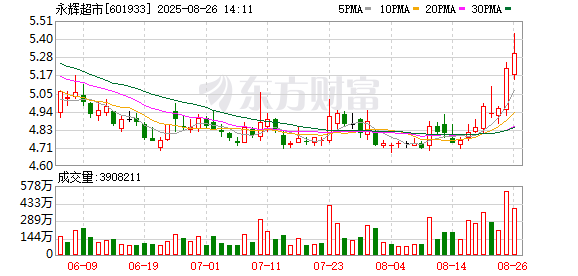
“胖改店”在京扎堆开业
Bei Jing Shang Bao· 2025-08-26 06:02
Group 1 - The core point of the article is the reopening of the Wumart Supermarket at Xinjiekou, which is the first "Fat Wumart" store in Xicheng District, set to officially open on August 29 [1] - The store has undergone upgrades in three dimensions: product structure, service experience, and employee benefits, with the product structure now closely resembling 80% of the "Fat Donglai" model [3] - The store has significantly expanded its baking and ready-to-eat food processing areas, offering dozens of freshly made food items daily and providing tasting services [3] Group 2 - To cater to local tastes, the store has introduced various traditional Beijing snacks and specialty foods [3] - A one-stop convenience service area has been set up at the entrance, offering over ten basic services including self-service tea machines, emergency medicine cabinets, and blood pressure monitors [3] - Employee benefits have also been enhanced, with salaries increased to over 1.5 times the original, profit-sharing opportunities, and annual leave of 10 days after one year of service [3] Group 3 - The article mentions the reopening of the 12th "Fat Yonghui" store in Beijing, which has also added local snacks and freshly made tofu [3] - Yonghui Supermarket has reported a noticeable improvement in sales after the store renovations, with stable stores in Beijing entering profitability within three months of opening [3] - Yonghui plans to have around 20 "Fat Yonghui" stores in Beijing by the end of the year and is pursuing a fundraising initiative of up to 4 billion yuan for store renovations and debt repayment [3] Group 4 - According to Lin Xianping, a member of the Chinese Urban Expert Think Tank Committee, extensive renovations require significant investment and resources, which can enhance a company's competitive position in the retail industry [4] - The ultimate competition in the retail sector is not merely about replicating models but involves a comprehensive contest of financial endurance, product depth, and organizational resilience [5] - The future of the domestic retail market is expected to be diversified and differentiated, with retailers needing to explore new business models and technology applications to adapt to changing market conditions and consumer demands [5]
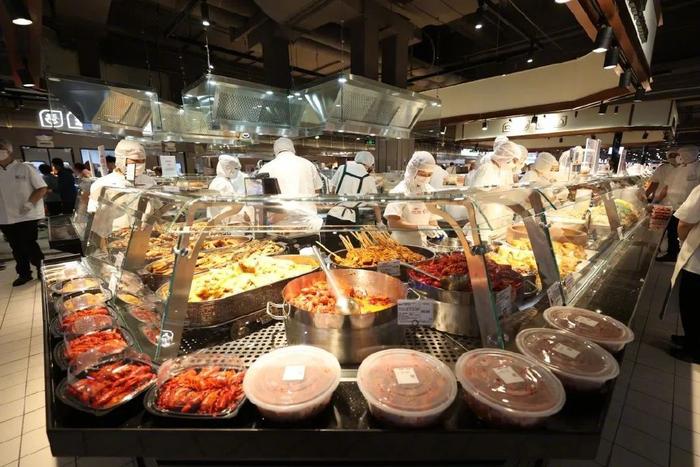
超80%实现与胖东来对标!永辉超市鲁谷店调改开业
Xin Lang Cai Jing· 2025-08-26 04:16
Core Insights - Yonghui Supermarket's Luqu store in Beijing has reopened after a two-month self-adjustment period, marking the total number of adjusted stores nationwide to nearly 170 [1] - The adjustments were inspired by the successful model of Pang Donglai, focusing on product selection, customer experience, employee training, and community interaction [1] - The Luqu store has increased its product turnover rate to over 50%, with over 80% of its product structure aligned with Pang Donglai's quality-price ratio standards [1] Company Developments - The Luqu store has served over 50 million families, emphasizing its role as a community staple [1] - The reopening of the Luqu store coincides with the renovation of the Yanjiao Shangshang City store, creating a dual-store opening strategy in the Beijing and surrounding areas [1] - Another store, the Daxing Kangzhuang Tianjian Plaza store, is expected to complete its adjustments by September [1]
叶国富和胖东来,都难救永辉超市?
商业洞察· 2025-08-26 04:03
Core Viewpoint - Yonghui Supermarket reported a significant decline in both revenue and net profit in its mid-year financial report, indicating challenges in its transformation efforts and operational strategy [3][5]. Group 1: Financial Performance - In the first half of the year, Yonghui Supermarket achieved revenue of 29.948 billion yuan, a year-on-year decrease of 20.73% from 37.779 billion yuan [8]. - The company recorded a net profit loss of 241 million yuan, compared to a profit of 275 million yuan in the same period last year, marking a 187.38% decline [5][8]. - Since 2021, Yonghui Supermarket has been in a continuous state of net profit loss, accumulating losses exceeding 9.5 billion yuan from 2021 to 2024 [8]. Group 2: Operational Challenges - The revenue decline is attributed to the closure of long-term loss-making stores and the ongoing transformation strategy initiated in the second half of 2024 [8][9]. - In the first half of the year, Yonghui Supermarket closed 227 loss-making stores, leaving a total of 552 operational stores across 26 provinces and municipalities [8][9]. - The company incurred additional costs related to lease and personnel compensation, product clearance, and asset write-offs during the store closures, further straining its financial position [5][9]. Group 3: Strategic Transformation - Yonghui Supermarket established a reform leadership team led by Ye Guofu, founder of Miniso, to guide its transformation efforts, which have yet to yield market-accepted results [5][14]. - The company is focusing on a supply chain reform, including the acceleration of direct sourcing contracts with suppliers, which has led to a reduction in the number of suppliers by approximately 50% [10][14]. - The overall gross profit margin for the first half of the year was 20.80%, a decrease of 0.78 percentage points compared to the same period last year [10]. Group 4: Debt and Financial Pressure - As of the end of the first half, Yonghui Supermarket's debt-to-asset ratio reached 88.21%, the highest since its listing in 2010 [17]. - The company reported short-term borrowings of 3.989 billion yuan and accounts payable of 6.092 billion yuan [17]. Group 5: Competitive Positioning - Yonghui Supermarket is attempting to emulate the successful operational model of "Pang Donglai," focusing on customer service and product quality, but faces challenges in execution and employee satisfaction [19][20]. - Analysts suggest that while many traditional supermarkets are mimicking Pang Donglai, Yonghui's brand strength and consumer trust still require significant improvement [20][21].

15元“商超大食堂”硬控打工人
3 6 Ke· 2025-08-26 00:15
Core Viewpoint - The trend of supermarkets transforming into affordable dining options for workers is gaining momentum, as they provide cost-effective meals that cater to the needs of the working class [1][10][22]. Group 1: Consumer Behavior - Workers are increasingly turning to supermarkets for meals, with many able to spend as little as 20 yuan for a full day's worth of food [1][3]. - A family of four can enjoy a meal at a supermarket for around 50 yuan, averaging 10 yuan per person, highlighting the affordability and convenience of these dining options [3][5]. - The shift from traditional dining options to supermarket food courts is evident, as many workers abandon expensive takeout and office dining [7][10]. Group 2: Supermarket Innovations - Supermarkets are adapting to consumer preferences by redesigning their spaces to include food courts, with examples like the "海淀食堂" in Beijing, which can accommodate over 70 diners [8][10]. - Major supermarket chains like Yonghui and Wumart are launching various dining concepts, including self-service and community dining options, to attract more customers [11][13][15]. - The introduction of affordable meal options, such as 19.9 yuan self-service meals, is becoming a common strategy among supermarkets to draw in consumers [10][14]. Group 3: Market Trends - The rise of online shopping is leading to a decline in foot traffic in traditional malls, prompting many to pivot towards food services as a means of survival [18][20]. - Data indicates that over 65.7% of urban residents prefer online shopping, with younger demographics showing even higher rates, which is reshaping the retail landscape [18][20]. - Supermarkets are increasingly integrating dining services to enhance customer experience and drive additional sales, as dining can lead to increased purchases of groceries and other items [21][22]. Group 4: Challenges and Opportunities - While supermarket dining options are gaining popularity, there are concerns regarding food quality and customer experience, with some consumers noting the need for improved taste and variety [24]. - The "supermarket + dining" model shows potential for growth, but success will depend on continuous improvement in service and menu offerings to meet diverse consumer preferences [24].
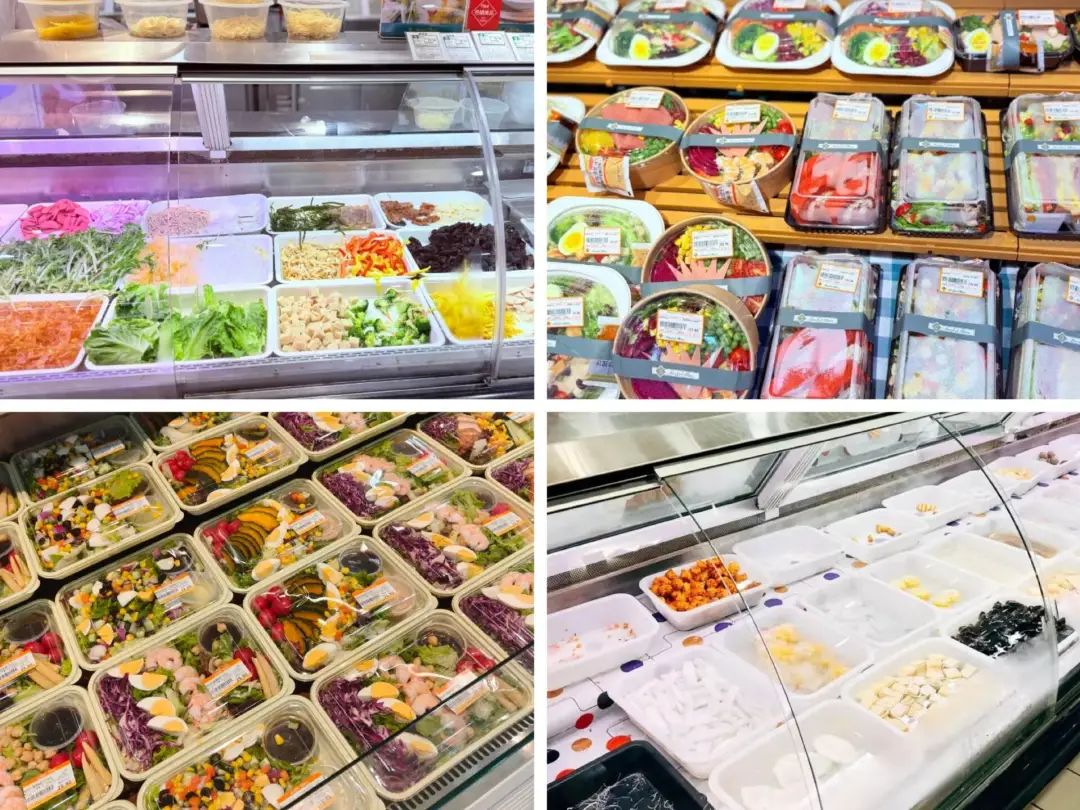
部分“胖永辉”已进盈利期 今年门店量有望达20家
Bei Jing Shang Bao· 2025-08-25 16:06
Core Viewpoint - Yonghui Supermarket is actively transforming its stores into "Fat Modified Stores" to enhance profitability and competitiveness in the retail sector, with a significant number of stores undergoing renovation and a focus on improving product offerings and customer experience [1][2]. Group 1: Store Transformation - Yonghui Supermarket will open its 12th "Fat Modified Store" in Beijing on August 26, contributing to nearly 170 modified stores nationwide [1]. - The company plans to continue its store renovation efforts, with the expectation that sales will improve significantly post-renovation [1]. - The management indicated that stores in a stable modified state have already entered a profitable phase within three months of opening [1]. Group 2: Financial Strategy - Yonghui Supermarket is pursuing a private placement to raise up to 4 billion yuan for store renovations, working capital, and debt repayment [1]. - The company anticipates that while the transformation may lead to short-term financial pressure, profitability is expected to improve significantly in the fourth quarter [1]. Group 3: Product Strategy - The company is enhancing its private label products based on the supply chain experience of "Fat Donglai," with over 80% of the product structure aligned with this model [2]. - A specific product, a microcapsule fragrance enzyme laundry detergent priced at 19.8 yuan, has been upgraded to include features like antibacterial and anti-mite properties [2]. - Yonghui's customized products, such as a special edition of fresh milk from Yili, have seen significant sales, with over one million units sold within four days [2]. Group 4: Industry Insights - The transformation in retail requires substantial investment and resources, which can enhance a company's competitive position in the industry [2]. - The future of retail will be characterized by diversification and differentiation, necessitating continuous exploration of new business models and technology applications to meet evolving market demands [2].
北京第12家“胖永辉”明日开业,经营满三个月的“调改店”已开始盈利
Bei Jing Shang Bao· 2025-08-25 14:17
Core Viewpoint - Yonghui Supermarket is actively transforming its stores, particularly through the "Fat Transformation" initiative, aiming to enhance profitability and adapt to market demands [1][3][4]. Group 1: Store Transformation - Yonghui Supermarket's 12th "Fat Transformation" store in Beijing is set to open, featuring local snacks and freshly made products, bringing the total number of transformed stores nationwide to nearly 170 [1]. - The company plans to open additional transformed stores in Yanjiao and Daxing, with a total of around 20 "Fat Yonghui" stores expected to be operational in Beijing this year [3]. - Management has indicated that stores that have undergone transformation have shown significant sales improvement compared to pre-transformation levels, with profitability expected to improve in the fourth quarter [3]. Group 2: Financial Strategy - Yonghui Supermarket is pursuing a private placement to raise up to 4 billion yuan for store renovations, working capital, and debt repayment [3]. - The company has reported that transformed stores in Beijing have reached profitability within three months of opening [3]. Group 3: Product Strategy - The company's private label products are being upgraded based on supply chain experiences, with over 80% of the product structure aligned with competitors [4]. - A specific product, a microcapsule fragrance enzyme laundry detergent priced at 19.8 yuan, has been enhanced for better functionality and has gained consumer attention, with over one million units sold in four days [4]. Group 4: Industry Insights - The retail industry is characterized by competition not just in business models but also in financial endurance, product depth, and organizational resilience [5]. - Future retail development is expected to be diversified and differentiated, requiring supermarkets to continuously explore new business models and technology applications to meet evolving consumer demands [5].
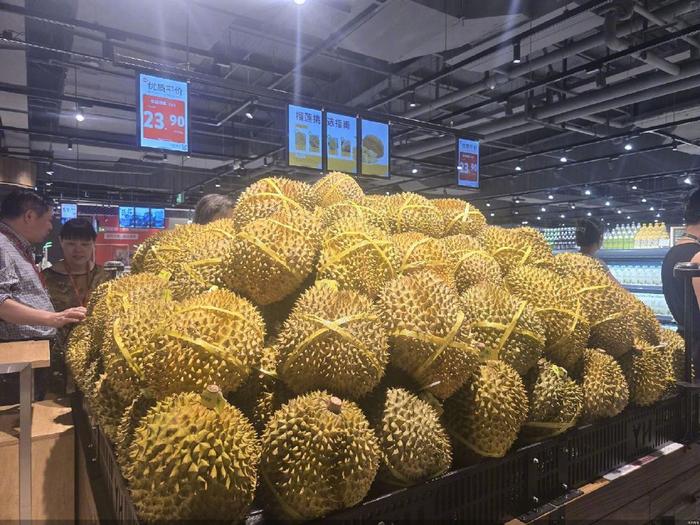
北京第12家“胖永辉”明日开业 经营满三个月的“调改店”已开始盈利
Bei Jing Shang Bao· 2025-08-25 13:43
Core Viewpoint - Yonghui Supermarket is actively transforming its stores, particularly through the "Fat Transformation" initiative, aiming to enhance profitability and adapt to market demands [1][4][5]. Group 1: Store Transformation and Performance - Yonghui Supermarket is set to open its 12th "Fat Transformation" store in Beijing, which will feature local snacks and freshly made products, bringing the total number of transformed stores nationwide to nearly 170 [1]. - The company plans to open around 20 "Fat Yonghui" stores in Beijing by the end of the year, with stores that have been operational for three months already entering a profitable phase [4]. - The management indicated that sales in transformed stores have significantly improved compared to pre-transformation levels, and they will continue to push for store transformations and closures in the second half of the year [5]. Group 2: Financial Strategy and Investment - Yonghui Supermarket is pursuing a private placement to raise up to 4 billion yuan (approximately 0.56 billion USD) for store renovations, working capital, and debt repayment [4]. - The company is experiencing short-term challenges due to transformation costs but expects a noticeable improvement in profitability by the fourth quarter [5]. Group 3: Product Strategy and Consumer Engagement - The company is upgrading its private label products based on the supply chain experience of "Fat Donglai," with over 80% of the product structure aligned with this model [5]. - A specific product, a microcapsule fragrance enzyme laundry detergent priced at 19.8 yuan, has been enhanced for better performance, and a customized milk product has achieved over 1 million sales within four days [5]. Group 4: Industry Insights and Future Trends - The retail industry is characterized by competition not just in business models but also in financial endurance, product depth, and organizational resilience [6]. - Future retail development is expected to be diversified and differentiated, requiring supermarkets to continuously explore new business models and technological applications to meet evolving consumer demands [6].
永辉超市大规模闭店,零售巨头怎么了?
Sou Hu Cai Jing· 2025-08-25 13:06
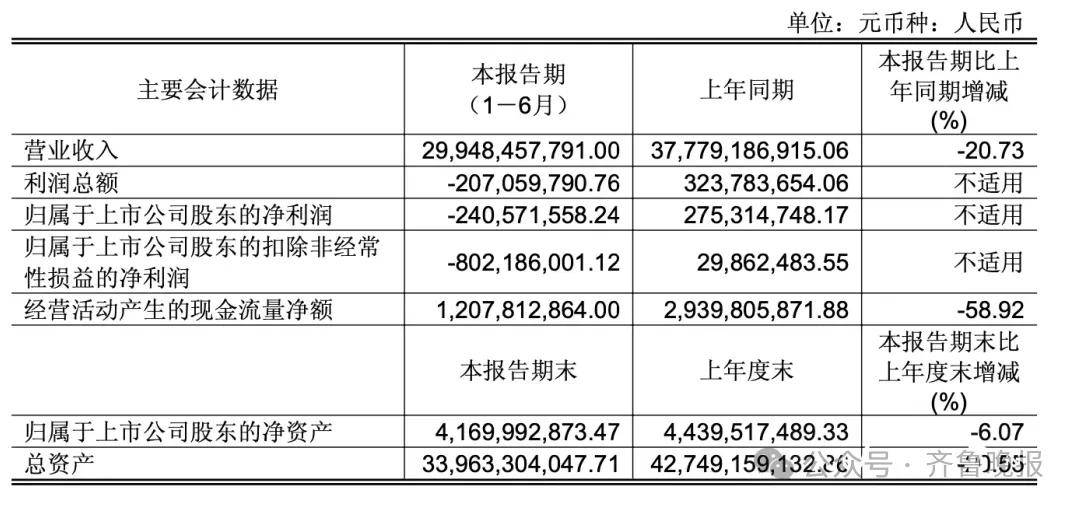
Core Viewpoint - Yonghui Supermarket is facing significant challenges, evidenced by the closure of 227 stores in the first half of 2025, nearly matching the total closures of 232 stores in the entire previous year, indicating a severe operational crisis [1] Financial Performance - Yonghui Supermarket reported a revenue of approximately 29.95 billion yuan in the first half of 2025, a year-on-year decline of 20.73% [3] - The company incurred a net loss attributable to shareholders of approximately 240.57 million yuan, a stark contrast to a profit of about 275.31 million yuan in the same period last year, marking an increase in losses by 516 million yuan [3] - The net cash flow from operating activities decreased by 58.92%, dropping to approximately 1.21 billion yuan [3] - The net assets attributable to shareholders decreased by 6.07% to approximately 4.17 billion yuan [3] Store Closures and Strategic Changes - The closure of 227 stores in the first half of 2025 is part of a broader strategic transformation initiated in the second half of 2024, focusing on shutting down long-term loss-making stores [4] - Factors contributing to store closures include ongoing operational losses, contract expirations, and equity transfers [4] Transformation Efforts - Since May 2024, Yonghui Supermarket has been implementing a transformation strategy inspired by the business model of "Pang Donglai," aiming to enhance competitiveness through store adjustments [4] - As of August 21, 2025, the company has completed adjustments in 162 stores, with a target of 200 adjusted stores by September 30, 2025, and full completion by 2026 [4] Online Business Performance - In the first half of 2025, Yonghui Supermarket's online business revenue was 5.49 billion yuan, reflecting a year-on-year decline of 29.97%, accounting for 18.33% of total revenue [6] - Despite a reduction in losses of 34.75 million yuan compared to the previous year, the decline in online business remains a significant pressure point for the company [6] Shareholder Changes - In September 2024, a subsidiary of Miniso, Jun Cai International, acquired 29.4% of Yonghui Supermarket's shares for 6.27 billion yuan, becoming the largest shareholder [6] - The company's founder, Zhang Xuansong, has resumed the role of chairman, while Miniso's founder, Ye Guofu, has taken on a non-independent director role, leading the reform group [6] Market Context - The large-scale store closures are attributed to both internal strategic adjustments and external pressures from market competition and the rise of e-commerce [6] - The future performance of Yonghui Supermarket hinges on its ability to successfully implement store adjustments and develop its online business to reverse current trends and regain its position in the retail industry [6]
前瞻全球产业早报:阿里发布编程平台Qoder
Qian Zhan Wang· 2025-08-25 11:59
Group 1 - Ride-hailing platforms such as Didi Chuxing, T3, and Cao Cao have announced a reduction in commission rates to improve driver rights [2] - Starbucks is expected to receive a non-binding acquisition offer for its China business within two weeks [3] - South Africa will launch its first new underground gold mine in 15 years, with West Wits Mining planning to start production next year [4] Group 2 - NIO's founder Li Bin stated that the pricing range for NIO vehicles aligns with the average prices of Mercedes-Benz, BMW, and Audi [5] - Yonghui Supermarket reported a revenue of 29.948 billion yuan for the first half of the year, a year-on-year decline of 20.73%, and a net loss of 241 million yuan [6][7] - Alibaba launched the Qoder programming platform, which can search 100,000 code files and significantly reduce development time for e-commerce websites [8] Group 3 - Bilibili achieved a total revenue of 7.34 billion yuan in the second quarter, marking a 20% year-on-year increase, and reported its first half-year profit since its IPO [10] - The South Korean government plans to increase R&D spending to a record 25.1 billion USD by 2026 [10] Group 4 - OpenAI announced plans to establish its first corporate office in India later this year [11] - Tesla raised the price of its Cyberbeast model from 99,990 USD to 114,990 USD, an increase of 15,000 USD [12] - Morgan Stanley predicts that OPEC may reduce production again in early 2026 due to expected oversupply in the oil market [13] Group 5 - Meta and Google have signed a six-year cloud agreement valued at over 10 billion USD [14][15] - OpenAI's Chief People Officer will leave the company to pursue personal goals related to the transition to general artificial intelligence [16] - Nvidia has joined the FugakuNEXT supercomputer project in Japan [16]