
SMIC(688981)

Search documents
芯片ETF景顺(159560)开盘跌1.06%,重仓股中芯国际跌0.43%,寒武纪跌1.19%
Xin Lang Cai Jing· 2025-12-18 01:41
Group 1 - The core viewpoint of the article highlights the performance of the Invesco Chip ETF (159560), which opened down by 1.06% at 1.584 yuan on December 18 [1] - The major holdings of the ETF include companies such as SMIC, Cambricon, and Huagong Information, with varying performance; for instance, SMIC decreased by 0.43%, while Zhaoyi Innovation increased by 0.65% [1] - The ETF's performance benchmark is the CSI Chip Industry Index return, managed by Invesco Great Wall Fund Management Company, with a return of 60.58% since its establishment on November 9, 2023, and a return of 0.60% over the past month [1]




芯片ETF天弘(159310)开盘跌0.25%,重仓股中芯国际跌0.43%,寒武纪跌1.19%
Xin Lang Cai Jing· 2025-12-18 01:41
Core Viewpoint - The chip ETF Tianhong (159310) opened with a slight decline, reflecting the overall performance of its major holdings in the semiconductor sector [1] Group 1: ETF Performance - The chip ETF Tianhong (159310) opened down by 0.25%, priced at 1.993 yuan [1] - Since its establishment on April 18, 2024, the fund has achieved a return of 99.96%, with a monthly return of 0.58% [1] Group 2: Major Holdings Performance - Major holdings in the ETF include: - SMIC (中芯国际) down by 0.43% - Cambricon (寒武纪) down by 1.19% - Haiguang Information (海光信息) down by 0.99% - Northern Huachuang (北方华创) down by 0.84% - Lattice Semiconductor (澜起科技) down by 0.79% - Zhaoyi Innovation (兆易创新) up by 0.65% - Zhongwei Company (中微公司) down by 1.13% - OmniVision (豪威集团) down by 0.60% - Chipone (芯原股份) down by 1.45% - JCET (长电科技) down by 0.92% [1]

阿里、百度、京东、小米、中芯国际,集体下挫
Di Yi Cai Jing Zi Xun· 2025-12-18 01:41
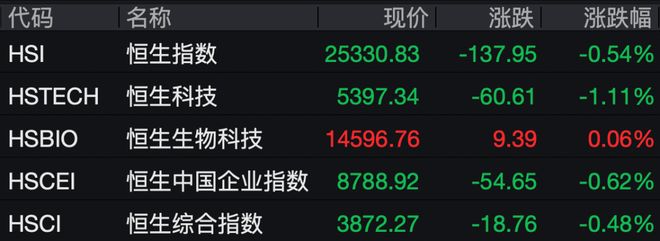
Market Overview - The Hang Seng Index opened lower by 0.54%, closing at 25,330.83, down 137.95 points [2] - The Hang Seng Tech Index fell by 1.11%, reaching 5,397.34 [2] - The Hang Seng China Enterprises Index decreased by 0.62%, ending at 8,788.92 [2] - The Hang Seng Composite Index dropped by 0.48%, closing at 3,872.27 [2] Sector Performance - Most technology stocks experienced a pullback, with SenseTime down over 3%, and Xiaomi Group and Xpeng Motors both declining over 2% [2] - Alibaba saw a decrease of nearly 2%, while Kuaishou, Baidu Group, SMIC, NetEase, and JD Group also fell [2] Notable Stock Movements - SenseTime (1.900) decreased by 3.55% [3] - Xpeng Motors (70.600) fell by 2.35% [3] - Xiaomi Group (40.380) dropped by 2.04% [3] - Alibaba (143.100) declined by 1.99% [3] - Li Auto (63.000) decreased by 1.72% [3] - Kuaishou (64.100) fell by 1.69% [3] - Baidu Group (116.900) decreased by 1.43% [4] - SMIC (64.000) dropped by 1.16% [4] - JD Group (111.400) fell by 0.80% [4] Company News - China International Capital Corporation (CICC) saw a rise of over 7% following the announcement of a stock swap merger with Dongxing Securities and Xinda Securities [4]

SEMI称中国半导体设备销售三年内都将居于首位,半导体设备ETF(561980)单日上涨2.21%
Sou Hu Cai Jing· 2025-12-18 01:32
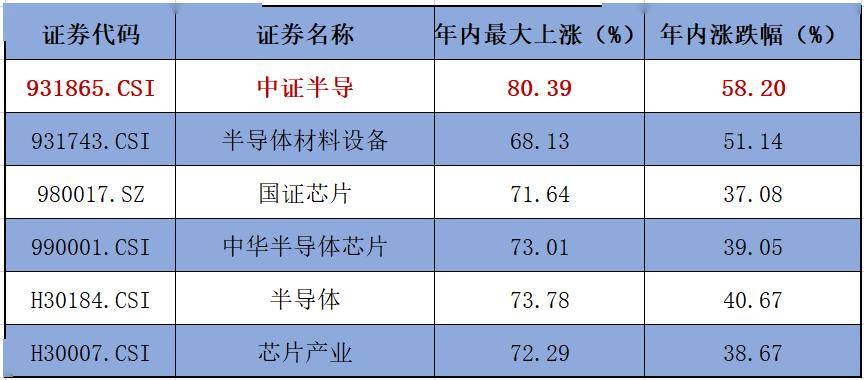
Group 1 - The International Semiconductor Industry Association (SEMI) predicts that global semiconductor manufacturing equipment sales will reach $133 billion in 2025, a 13.7% increase year-on-year, driven primarily by investments related to artificial intelligence [1] - The wafer fabrication equipment (WFE) sector is expected to set a record of $104 billion in 2024, with a projected growth of 11.0% to $115.7 billion in 2025, supported by stronger-than-expected investments in DRAM and HBM [1] - China is expected to maintain its leading position in semiconductor manufacturing equipment sales through 2027, despite a slowdown in growth, with local chip manufacturers continuing to invest in mature processes and some advanced nodes [1] Group 2 - Galaxy Securities emphasizes that the long-term development logic of the semiconductor sector remains unchanged, with supply chain security and self-sufficiency being key trends [2] - Open Source Securities notes that the demand for semiconductor equipment is strongly determined by the acceleration of storage expansion, with China's storage capacity expected to reach 1 million wafers per month by 2030, accounting for about 20% of global capacity [2] - The trend towards localization in advanced logic is clear, with capital expenditures expected to grow at a compound annual growth rate of over 35% in the next three years, further driving equipment investment [2] Group 3 - The semiconductor equipment ETF (561980) tracks the China Securities Semiconductor Index, focusing on key upstream sectors such as equipment, materials, and design, with over 90% of its composition in these areas [3] - As of December 17, the China Securities Semiconductor Index has seen a year-to-date increase of over 58%, outperforming similar semiconductor indices, indicating strong resilience in the upcoming semiconductor upcycle [3] Group 4 - On December 17, the market opened lower but closed higher, with the semiconductor equipment ETF (561980) rising by 2.21% and attracting a net inflow of approximately 6 million yuan, bringing its latest scale to 2.509 billion yuan [5]
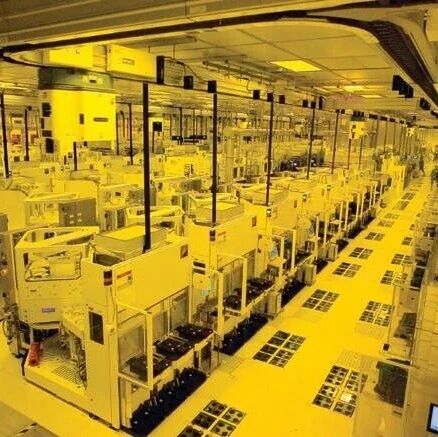
2026晶圆代工:先进制程受益AI浪潮,成熟制程开启国产替代新周期(附PPT)
材料汇· 2025-12-17 15:57
Group 1 - Advanced process: Demand recovery, AI and mainstream consumption drive high growth [3][30] - Global foundry market revenue is expected to grow YoY by 27% in 2025, driven by GPU/ASIC demand and stable consumer electronics orders [6][30] - The advanced process segment is experiencing a significant increase in wafer consumption due to the complexity of high-end chips [7][9] Group 2 - Mature process: Strong expansion, localization, and specialty processes seek incremental growth [3][30] - Chinese fabs are benefiting from the recovery in consumption, with some wafer manufacturing prices increasing, indicating a shift away from price competition [31][33] - By 2030, China's mature process capacity is expected to exceed half of the global market share [34][41] Group 3 - Key targets and valuations: SMIC is maintaining an aggressive expansion pace, with plans for new factories and increased monthly capacity [55] - The domestic AI chip market in China is projected to grow over 60% by 2026, with local companies increasing their market share significantly [18][20] - The local supply chain is expected to strengthen as international IDM companies collaborate with domestic fabs, enhancing their technological capabilities [42][47]

存储芯片涨价潮来袭!AI驱动“以存代算”,哪些上游材料商将率先受益?
Jin Rong Jie· 2025-12-17 12:15
Group 1: Market Overview - The global storage chip market is experiencing significant structural changes due to a shortage and price surge, leading major PC manufacturers to raise product prices, with Dell increasing prices across its commercial computer range [1] - The driving force behind this price increase is the shift in AI development from training to application, resulting in a surge in demand for storage chips as they become strategic components in AI infrastructure [1] - Omdia forecasts that semiconductor industry revenue will reach a record high of $216.3 billion by Q3 2025, with a quarter-over-quarter growth of 14.5%, driven by storage chips and AI accelerators [1] Group 2: Industry Insights - Northeast Securities reports that the storage industry has passed its cyclical bottom, benefiting from the real demand explosion driven by AI infrastructure, leading to continuous chip price increases [2] - The demand for materials is expected to rise due to the expansion of domestic storage chip manufacturers [2] - The report from Zhongyou Securities highlights the increasing demand for plating solutions and photoresists in the storage chip sector, driven by advancements in HBM and 3D NAND technologies [2] Group 3: Key Companies in Storage Chip Sector - Zhaoyi Innovation (兆易创新) is a leading storage chip designer with a market share of 18.5% in global NOR Flash and has begun mass production of DDR4 DRAM in collaboration with Hefei Changxin [2] - Lanke Technology (澜起科技) holds over 40% market share in DDR5 memory interface chips and benefits from the increasing penetration of AI servers [2] - Baiwei Storage (佰维存储) specializes in embedded storage and PCIe SSDs, with products suitable for AI PCs and cloud service providers [3] Group 4: Storage Modules and Controllers - Jiangbolong (江波龙) is a leading domestic storage module company with over 100 million self-developed controller chips deployed [4] - Shannon Chip (香农芯创) is a core agent for SK Hynix, entering the Alibaba Cloud supply chain with its enterprise SSDs [4] - Demingli (德明利) focuses on self-developed storage controller chips and has accelerated the domestic replacement of its products [4] Group 5: Packaging and Manufacturing - Changdian Technology (长电科技) is the third-largest packaging and testing company globally, with a 25% market share in storage packaging [6] - SMIC (中芯国际) is a key player in domestic storage chip manufacturing, providing foundry services for NOR Flash and embedded storage chips [6] - Huahong (华虹公司) specializes in unique process storage chip foundry services, supporting production for IoT and automotive electronics [6] Group 6: Upstream Equipment and Materials - Northern Huachuang (北方华创) supplies core equipment for storage chip manufacturing, with growing orders for etching and deposition equipment [7] - Tuojing Technology (拓荆科技) leads in PECVD equipment, facilitating the expansion of storage capacity for major manufacturers [7] - Yake Technology (雅克科技) is a leading supplier of storage chip materials, breaking overseas monopolies and entering the supply chains of major global storage manufacturers [7] Group 7: Supporting Chips and Ecosystem - Jucheng Co. (聚辰股份) holds over 30% market share in DDR5 SPD chips, supporting platforms like NVIDIA H100 [8] - Guoxin Technology (国芯科技) is a leader in RAID storage chips, enhancing data security and performance for enterprise storage systems [8]


图解丨南下资金连续14日净买入小米,共计138亿港元
Ge Long Hui A P P· 2025-12-17 10:23
Group 1 - Southbound funds net bought Hong Kong stocks worth 7.909 billion HKD today [1] - Notable net purchases include Xiaomi Group-W at 1.063 billion HKD, Meituan-W at 750 million HKD, and Alibaba-W at 543 million HKD [1] - Southbound funds have continuously net bought Xiaomi for 14 days, totaling 13.84687 billion HKD, and Meituan for 6 days, totaling 5.55796 billion HKD [1] Group 2 - Net sales were recorded for China Mobile at 514 million HKD and China National Offshore Oil Corporation at 132 million HKD [1] - Alibaba-W experienced a 1.3% decline with a net purchase of 1.43 billion HKD [3] - Tencent Holdings saw a 1.4% increase with a net purchase of 2.10 billion HKD [3]







百元股数量达167只,一日增加11只
Zheng Quan Shi Bao Wang· 2025-12-17 09:45
Market Overview - The average stock price of A-shares is 13.65 yuan, with 167 stocks priced over 100 yuan, an increase of 11 from the previous trading day [1] - The Shanghai Composite Index closed at 3870.28 points, up 1.19%, while stocks priced over 100 yuan had an average increase of 7.08%, outperforming the index by 5.89 percentage points [1] Performance of High-Value Stocks - The highest closing price among stocks over 100 yuan is Kweichow Moutai at 1433.10 yuan, up 0.78%, followed by Cambrian and C Muxi at 1315.60 yuan and 829.90 yuan respectively [1] - In the past month, stocks priced over 100 yuan have averaged a 7.96% increase, while the Shanghai Composite Index has decreased by 3.01% [2] - Notable performers include Feiwo Technology, Zhenray Technology, and Changguang Huaxin, with increases of 109.92%, 85.35%, and 82.29% respectively [2] Stock Distribution by Industry - Among the high-value stocks, the electronics sector is the most represented with 67 stocks, accounting for 40.12% of the total [2] - The computer industry has 17 stocks, making up 10.18%, while the machinery equipment sector has 15 stocks, representing 8.98% [2] Institutional Ratings - Two stocks, SMIC and BGI Genomics, received buy ratings from institutions, with BGI Genomics being newly covered [3] Notable High-Value Stocks - A detailed list of high-value stocks includes Kweichow Moutai (1433.10 yuan, +0.78%), Cambrian (1315.60 yuan, +3.27%), and C Muxi (829.90 yuan, +692.95%) [3][4] - The trading volume and turnover rates for these stocks vary, with C Muxi showing a turnover rate of 0.85% and a net inflow of 17.86 billion yuan [2][3]


研报掘金丨中邮证券:维持中芯国际“买入”评级,国产替代加速,资本开支持续高位
Ge Long Hui A P P· 2025-12-17 08:54
Core Viewpoint - The report from Zhongyou Securities indicates that the demand for "Local for local" remains strong, with high capacity utilization rates maintained. [1] Revenue Breakdown - In Q3 2025, the revenue of SMIC is categorized by region, with China, the US, and Eurasia accounting for 86%, 11%, and 3% respectively. [1] - The revenue from the China region saw a quarter-on-quarter increase of 11%, primarily due to accelerated industry chain transitions and increased demand from the domestic market. [1] Capacity Utilization and Guidance - The company's capacity utilization rate reached 95.8% in Q3 2025. [1] - Looking ahead to Q4, despite it being a traditional off-season with a slowdown in customer inventory buildup, the ongoing effects of industry chain transitions are expected to keep the season from being too weak. [1] - The revenue guidance for Q4 is projected to be flat to a 2% increase quarter-on-quarter, with production lines remaining fully loaded. [1] Profitability and Capital Expenditure - The gross margin guidance is set at 18%-20%, consistent with the guidance provided for Q3. [1] - The expected annual capital expenditure is projected to remain flat year-on-year, with an annual expansion of 50,000 12-inch wafers in monthly capacity. [1] - The company maintains a "Buy" rating. [1]
公司问答丨金宏气体:已与中芯国际、海力士等行业头部企业建立长期稳定的合作关系 本年度累计新增二十余家半导体客户
Ge Long Hui· 2025-12-17 08:11
Core Viewpoint - The company has established long-term stable partnerships with leading semiconductor firms and has significantly increased its customer base in the semiconductor sector this year [1] Group 1: Partnerships - The company has formed partnerships with major semiconductor companies including SMIC, SK Hynix, ChangXin Storage, Xiamen United, and Northern Integrated Circuit [1] - The company has added over twenty new semiconductor customers in the current year [1]
