Midea Group(000333)

Search documents
电商家电专家白电拉美专家周日双交流
2025-10-27 00:30
Summary of Key Points from Conference Call Industry Overview - The conference call primarily discusses the home appliance industry, focusing on the performance of major players like JD.com and Midea in the Chinese and Latin American markets [1][3][4]. Key Insights and Arguments - **Sales Performance**: In October 2025, JD.com reported a 2% year-on-year decline in total appliance sales, with specific categories like air conditioners, washing machines, and refrigerators declining by 7%, 1%, and 15% respectively. However, categories such as vacuum cleaners and small kitchen appliances showed growth, with vacuum cleaners increasing by 28% and washing machines by 35% [1][2]. - **Impact of National Subsidy Policy**: The reduction in the national subsidy policy significantly affected sales, with the number of participating provinces decreasing by nearly one-third. This led to a 40% year-on-year decrease in sales driven by subsidies [1][4][7]. - **Sales Targets for Double Eleven**: JD.com set a sales target of approximately 220 billion yuan for the Double Eleven shopping festival in 2025, reflecting a 1.8% year-on-year increase. The overall discount intensity has weakened compared to the previous year, primarily due to reduced national subsidies [1][6]. - **Midea's Performance in Latin America**: Midea's air conditioning segment in Latin America saw an 8% year-on-year growth, while refrigerators grew by 2%. However, washing machines experienced a 10% decline due to quality issues [3][13][14]. - **Market Dynamics**: The overall growth in the Americas was hindered by tariffs and product recalls, yet it remains Midea's largest overseas market, accounting for about 50% of its international sales [14][25]. - **Competitive Landscape**: Midea leads in market share in several categories in Latin America, particularly in window air conditioners, where it exceeds 60%. However, it faces strong competition from Korean brands in the refrigerator and washing machine segments [17][18]. Other Important but Overlooked Content - **Inventory and Pricing Pressure**: Midea's inventory levels are growing slightly faster than sales, indicating unmet sales targets. This could lead to price competition as retailers may need to manage their stock levels [24][25]. - **Future Strategies**: Midea plans to enhance its competitiveness in the washing machine and refrigerator segments in Latin America by increasing production capacity and investing in brand development [18][22]. - **Response to Market Challenges**: Midea is preparing for potential price wars, especially with the entry of other Chinese brands like Xiaomi into the market. The company is confident in its ability to adjust margins to maintain competitiveness [25][26]. - **Performance of Small Appliances**: In the small appliance sector, brands like Roborock and Xiaomi showed significant growth, with Roborock's vacuum cleaner sales increasing by 31% in October [8][9][10]. This summary encapsulates the critical insights from the conference call, highlighting the challenges and strategies within the home appliance industry, particularly focusing on JD.com and Midea's performance in both domestic and international markets.

银华基金马君旗下银华中证A500ETF三季报最新持仓,重仓宁德时代
Sou Hu Cai Jing· 2025-10-26 21:39
Core Insights - The Silver Hua Fund's A500 ETF reported a net value growth rate of 23.39% over the past year [1] Fund Holdings Summary - New additions to the top ten holdings include Xinyi Semiconductor and Zhongji Xuchuang [1] - The largest holding is CATL, accounting for 3.91% of the fund's portfolio [1] - Major reductions in holdings include: - CATL: decreased by 51.19% to 341,100 shares valued at 137 million [1] - Kweichow Moutai: decreased by 56.72% to 73,700 shares valued at 106 million [1] - Ping An Insurance: decreased by 53.84% to 1,326,800 shares valued at 73 million [1] - China Merchants Bank: decreased by 53.69% to 1,530,100 shares valued at 62 million [1] - Midea Group: decreased by 52.51% to 621,200 shares valued at 45 million [1] - Dongfang Caifu: decreased by 53.64% to 1,555,900 shares valued at 42 million [1] - Industrial Bank: decreased by 53.15% to 2,075,900 shares valued at 41 million [1] - Longjiang Power and BYD have exited the top ten holdings [1]







泰康基金魏军旗下泰康中证A500ETF三季报最新持仓,重仓宁德时代
Sou Hu Cai Jing· 2025-10-26 21:39
Core Insights - The TaiKang Zhongzheng A500 ETF, managed by Wei Jun, reported a net value growth rate of 23.61% over the past year [1] Group 1: Fund Performance - The fund's top ten holdings saw the addition of new stocks, including Xinyi Technology and Zhongji Xuchuang, while major reductions were made in holdings like CATL and Kweichow Moutai [1] - CATL remains the largest holding at 3.77% of the fund's portfolio, despite a 50.56% reduction in shares held [1] Group 2: Changes in Holdings - New entries in the top ten holdings include: - Xinyi Technology (300502) with 132,000 shares valued at 48 million [1] - Zhongji Xuchuang (300308) with 118,100 shares valued at 48 million [1] - Significant reductions in holdings include: - CATL (300750) with a 50.56% decrease, now holding 350,900 shares valued at 141 million [1] - Kweichow Moutai (600519) with a 50.59% decrease, now holding 83,200 shares valued at 120 million [1] - Ping An Insurance (601318) with a 50.58% decrease, now holding 1,427,800 shares valued at 79 million [1]
餐饮、潮玩及家电行业周报-20251026
Haitong Securities International· 2025-10-26 13:38
Investment Rating - The report assigns an "Outperform" rating to multiple companies including Pop Mart, Anta Sports, Haidilao, and Midea Group, while Budweiser Asia is rated "Neutral" [1]. Core Insights - In September, total retail sales of consumer goods in China reached 4.1971 trillion yuan, reflecting a year-on-year increase of 3.0%. Excluding automobiles, retail sales amounted to 3.7260 trillion yuan, up 3.2% year-on-year [6][7]. - Pop Mart reported a significant revenue growth of 245%-250% in Q3, with domestic revenue increasing by 185%-190% and overseas revenue by 365%-370% [6][7]. - Haidilao launched its first sushi restaurant in Hangzhou, focusing on diverse dining options and achieving high customer turnover [6][7]. - Midea Group plans to invest at least 50 billion yuan in R&D over the next three years, targeting advanced technologies [6][7]. - TCL Huaxing's 8.6-generation printed OLED production line commenced construction, with a total investment of approximately 29.5 billion yuan [6][7]. Weekly Performance Summary - Top performers in the F&B sector included Chagee (+8.5%), Xiaocaiyuan (+5.8%), and Yum China (+5.3%). In the home appliance sector, Sanhua (+12.3%), Roborock (+7.7%), and Haier Smarthome (+5.4%) showed strong performance [2][7]. - Underperformers included Helens (-5.7%), Mixue Group (-8.1%), and Guming (-10.1%) in the F&B sector, while Pop Mart experienced a decline of -16.3% in the trendy toy industry [2][7].

「隐形冠军」神话终破灭
投资界· 2025-10-26 08:32
Core Viewpoint - The article discusses the concept of "hidden champions," small and medium-sized enterprises that dominate niche markets but remain largely unknown to the public. It highlights the decline of these companies in Germany and Japan due to various economic challenges and the rise of Chinese companies in the same space [4][14][36]. Group 1: Definition and Characteristics of Hidden Champions - Hidden champions are defined as companies that hold a top two global market share, have annual sales below $10 billion, and are not widely recognized by the public. This definition has evolved to include companies with annual revenues below $50 billion [5][14]. - As of 2023, there are 3,406 hidden champions globally, with Germany having 1,573, the highest number, followed by the United States and Japan [5][9]. Group 2: Economic Decline of German and Japanese Hidden Champions - Germany's economy has faced significant challenges, with GDP declining by 0.2% last year and a further 0.3% drop in the second quarter of this year, marking a rare occurrence of consecutive annual GDP shrinkage since 1950 [16][19]. - The automotive industry, a cornerstone of Germany's manufacturing sector, has seen a dramatic increase in bankruptcies, with over 80% growth in the number of bankrupt companies since 2021 [16][19]. - Major automotive companies like Bosch and Volkswagen are planning significant layoffs, with Bosch cutting 13,000 jobs and Volkswagen planning to lay off 35,000 employees by 2030 [19][21]. Group 3: Rise of Chinese Companies - Chinese companies are increasingly taking over roles traditionally held by hidden champions in Germany and Japan, with 300 German companies acquired by Chinese firms between 2014 and 2020 [32]. - China has developed a robust ecosystem of hidden champions, with over 14,000 specialized small and medium enterprises and 1,500 single-item champion companies [33][34]. - The number of identified hidden champions in China has increased from about 100 to 300 in the past five years, indicating a significant growth in this sector [34]. Group 4: Challenges Faced by Traditional Hidden Champions - German and Japanese hidden champions are struggling with digital transformation, with many companies lagging in adopting new technologies and innovations [26][28]. - The reliance on traditional business models and a lack of sensitivity to new industries have hindered their ability to adapt to changing market conditions [28][29]. - The emergence of electric vehicles and the energy crisis in Europe have further exacerbated the challenges faced by these companies, leading to a decline in their market positions [22][24].



工业世界迎来Copilot时刻!未来工业环境中人类的最强辅助
Xin Lang Cai Jing· 2025-10-26 04:53
Core Insights - The article highlights the transformation of manufacturing into a smart factory era, emphasizing the integration of AI and automation technologies to enhance operational efficiency and productivity [1][3][5]. Group 1: Smart Manufacturing as a Competitive Edge - A Deloitte survey indicates that 92% of U.S. manufacturing executives believe smart manufacturing will be a key driver of competitiveness within the next three years [3]. - Nearly half of the surveyed executives prioritize operational efficiency as the main value of adopting smart manufacturing [3]. - 78% of executives plan to allocate over 20% of their existing budgets to smart manufacturing initiatives [3]. Group 2: AI and Automation in Production Processes - The unmanned workshop of Shangmei showcases a fully automated production process, utilizing AGV robots and AI systems for material handling and packaging [3]. - Industrial robots at Shangmei perform 252,000 standardized operations daily, creating an efficient and precise production system [3]. Group 3: Digital Transformation and Integration - Companies are focusing on the cosmetics industry's production characteristics by integrating IoT, 5G, big data, and AI to create a digital collaborative system across the entire supply chain [5]. - Schneider Electric and Microsoft launched the Industrial Copilot system, combining AI with industrial automation to enhance productivity and redefine human-machine collaboration [5][7]. Group 4: Key Technologies Driving Industrial Intelligence - The digital twin simulation optimization system developed by Wuhan Huagong Saibai Data System Co., Ltd. enables comprehensive digital mapping and optimization of manufacturing processes [7][9]. - This system has led to production efficiency improvements of 10-25% and operational cost reductions of 10-20% in various manufacturing sectors [9]. Group 5: Challenges in the Transformation Journey - Talent shortages are a significant challenge, with 35% of executives citing the adaptation of existing employees to smart factories as a primary concern [11]. - Information security risks, including unauthorized access and intellectual property theft, are also major obstacles [11]. Group 6: Future Prospects of Industrial AI - The industrial AI market is projected to grow from $43.6 billion in 2024 to $154 billion by 2030, with a compound annual growth rate of 23% [12]. - The Chinese government has elevated the application of AI technologies to a national strategic level, promoting intelligent integration across all industrial elements [12].
科技周报 | 谷歌芯片实现量子计算新突破;苹果iPhone Air开售
Di Yi Cai Jing· 2025-10-26 03:55
Group 1: Quantum Computing Breakthrough - Google has announced a significant breakthrough in quantum computing with the Willow chip, marking the first successful hardware implementation of a verifiable algorithm that outperforms the fastest classical supercomputers by 13,000 times [1] Group 2: iPhone Air Launch - The iPhone Air officially launched on October 22, but its market reception was notably cooler compared to the iPhone 17 series, with only 13 customers in line at a flagship store [2] - The iPhone Air 256GB version has a market premium of 350 yuan, while the 1TB version has a premium of 500 yuan, making it the least premium model in the iPhone 17 series [2] Group 3: Tesla's Optimus V3 Announcement - Tesla's CEO Elon Musk announced that the Optimus V3 humanoid robot will be launched in the first quarter of next year, with plans for a production capacity of 1 million units in the V4 phase and potentially up to 100 million units in the V5 phase [3] Group 4: Honor Robotics Progress - Honor Robotics team won the Manipulation challenge at the IROS 2025 competition, and the company aims to invest $10 billion over the next five years to build a global AI terminal ecosystem, focusing on AI and robotics [4] Group 5: Meituan's S-team Expansion - Meituan's CEO announced the addition of two new members to the S-team, focusing on hardware and software services, indicating a routine adjustment in leadership without structural changes [5] Group 6: New Stone's Funding - New Stone, a driverless vehicle manufacturer, completed over $600 million in Series D financing, with plans to deploy 5,000 driverless vehicles in the UAE by the end of next year [7] Group 7: Game License Approvals - The National Press and Publication Administration approved 166 game licenses in October, with 159 for domestic games and 7 for imported games, marking the second-highest number of approvals this year [8] Group 8: Peng Brain Technology Funding - Shenzhen Peng Brain Technology, a subsidiary of Skyworth Group, announced the completion of several million yuan in angel financing to advance brain-computer interface technology [9] Group 9: Ecovacs Financial Performance - Ecovacs reported a 25.93% year-on-year increase in revenue to 12.877 billion yuan and a 130.55% increase in net profit to 1.418 billion yuan for the first three quarters of 2025 [10] Group 10: Midea Group's Subsidiaries Performance - Midea Group's subsidiaries, Hekang New Energy and Kelu Electronics, reported significant revenue and profit growth in the first three quarters of 2025, with Hekang achieving a 98.61% revenue increase [11]



融通基金何天翔旗下融通100A/B三季报最新持仓,重仓宁德时代
Sou Hu Cai Jing· 2025-10-25 15:25
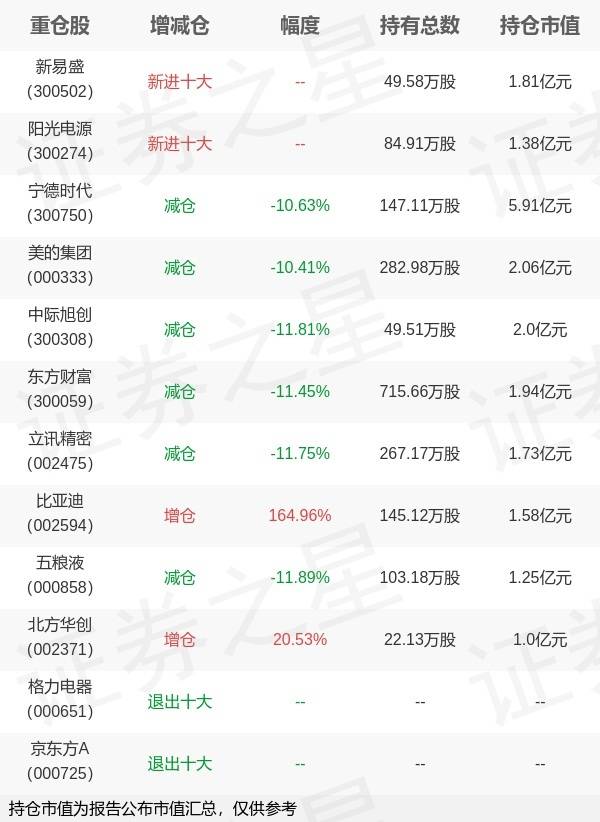
Group 1 - The core viewpoint of the article is that the Rongtong ShenZhen 100 Index Fund, managed by He Tianxiang, reported a net value growth rate of 25.61% over the past year, with significant changes in its top holdings for the third quarter [1] Group 2 - The fund's largest holding is CATL (宁德时代), which has a holding percentage of 11.64%, despite a reduction in shares by 10.63% to 1.4711 million shares, valued at 5.91 billion [1] - New additions to the top ten holdings include Xinyi Semiconductor (新易盛) and Sungrow Power (阳光电源), with holdings of 495,800 shares (valued at 1.81 billion) and 849,100 shares (valued at 1.38 billion) respectively [1] - Other notable changes include a reduction in holdings for Midea Group (美的集团) by 10.41% to 2.8298 million shares (valued at 2.06 billion) and for Luxshare Precision (立讯精密) by 11.75% to 2.6717 million shares (valued at 1.73 billion) [1] - The fund has exited from previous top holdings such as Gree Electric Appliances (格力电器) and BOE Technology Group (京东方A) [1]



36氪X尼尔森IQ「国货未来 超级品牌」揭晓|未来十年,谁将定义国货的「超级品牌」?
36氪· 2025-10-25 09:27
Core Insights - The concept of "super brands" is dynamic and evolves with consumer expectations and market conditions [2][5] - The transition from "buying domestic products" to "daily consumption of domestic brands" raises questions about what defines a "Chinese super brand" in a competitive landscape [3][6] - The growth logic of domestic brands is diversifying, moving beyond price competitiveness to focus on cultural resonance and technological innovation [6][9] Brand Evolution - In the past, "super brands" were defined by visibility and market dominance, but today they must establish a deeper connection with consumers [5][6] - The current market demands brands to have both "hard technology" and "soft power" to succeed [6][9] Trends Defining Future Super Brands - **Trend 1: Influence as a Core Asset** The focus has shifted from mere visibility to being chosen by consumers, emphasizing the importance of brand value in consumer decision-making [9][10] - **Trend 2: Agile Growth Strategies** New brands are finding opportunities in niche markets by addressing specific consumer needs and adapting quickly to feedback, contrasting with the previous "big and comprehensive" approach [11][12] - **Trend 3: Cultural Resonance and Value Expression** Modern consumers seek brands that offer meaningful experiences and emotional connections, transforming products into vehicles for personal expression [12][13] Brand Rankings and Insights - The "Influential Brand List" highlights established brands like Moutai and Yili, showcasing their strong market presence and consumer recognition [16][19] - Emerging brands are also recognized for their growth potential, indicating a shift in consumer preferences towards brands that resonate culturally and emotionally [8][11] Research Methodology - The evaluation of brands was based on a combination of consumer survey data and retail performance metrics, providing a comprehensive view of brand influence in the market [44][45] - The collaboration between 36Kr and NielsenIQ aims to identify brands with long-term value and future impact, reflecting the evolving landscape of Chinese consumer goods [44][46]




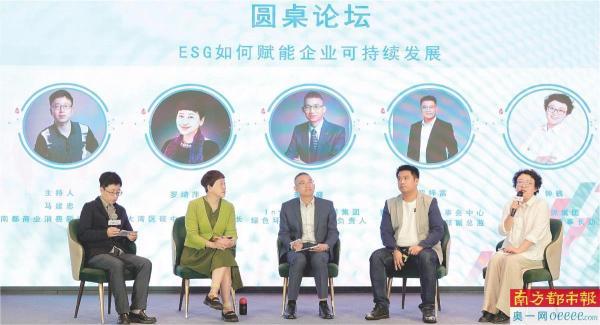
ESG不应被视为成本负担 而是高效的风险管理和价值投资
Nan Fang Du Shi Bao· 2025-10-24 23:15
Core Viewpoint - The 2025 ESG Annual Report highlights the increasing importance of ESG practices among Chinese companies, with a significant focus on the need for standardized and transparent disclosures in response to regulatory pressures and market expectations [2][5][6]. Group 1: ESG Disclosure Trends - A total of 5,506 A-share listed companies exist, with 2,572 disclosing ESG reports, resulting in a disclosure rate of 46.71%, an increase of approximately 5 percentage points from 2023 and 12 percentage points from 2022 [6]. - Central state-owned enterprises lead in ESG disclosure with a rate of 95.67% for 2024, while private enterprises lag significantly at 32.8% [6][10]. - The consumer sector shows a notable disparity in ESG reporting, with some companies engaging in selective disclosure, often omitting critical data [5][6]. Group 2: Industry-Specific Insights - The liquor industry boasts a 95% disclosure rate, but quality issues persist, with many reports lacking essential data and third-party verification [10][11]. - In the beverage and dairy sector, 48.15% of companies disclosed ESG reports, with notable innovations in packaging and carbon neutrality initiatives [13]. - The seasoning industry has a low disclosure rate of 33.3%, with a collective absence of supply chain carbon management practices [15]. Group 3: Regulatory and Market Implications - Future regulations are expected to enforce stricter verification requirements for ESG disclosures, particularly concerning Scope 3 emissions and pollution metrics [8][9]. - Companies with strong ESG performance may benefit from reduced financing costs and enhanced market value, while poor performance could pose significant investment risks [8][9]. - The emphasis on anti-corruption and business ethics disclosures is increasing, with future regulations mandating transparency in these areas [9]. Group 4: Challenges and Opportunities - Small and medium-sized enterprises face challenges in aligning with ESG practices due to limited resources and lack of communication with government bodies [4]. - The next five years are critical for implementing carbon management policies at various governance levels, presenting both challenges and opportunities for companies [8]. - The consumer sector's ESG practices are evolving into a regulatory-driven phase, necessitating improved data quality and transparency [9].